#164 - Six Ways Around Ireland: Multi‑Craft Ireland Circumnavigations with Rob Henshall


 Apple Podcasts

 Spotify

 Overcast

 Castro

 PocketCasts

 RSS Feed
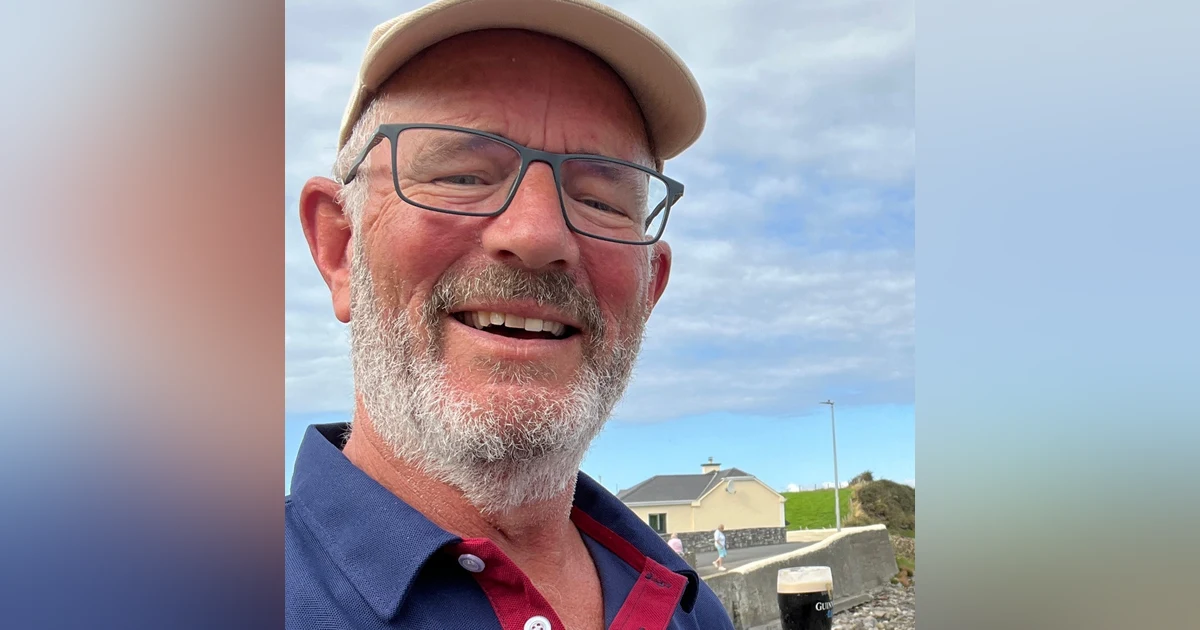
Today's episode of the Paddling the Blue podcast features Rob Henshall, who has circumnavigated Ireland six times in six different craft — from a Nordkapp kayak to a Contessa sailboat, plus a laser dinghy, a windsurfer, and more. Rob shares how he started on the water, the minimalist gear that carried him around the island, and what kept him going through 66 days and countless challenges.
Along the way he recalls near‑misses (including a foggy night with a container ship), close encounters with dolphins, Guinness-courage and pub moments, and the lessons learned across multiple expeditions.
00:09 - Introduction to Paddling the Blue
01:50 - Meet Rob Henschel
04:34 - Early Adventures in Sea Kayaking
07:44 - The Dream of Circumnavigation
10:35 - Overcoming Doubts and Challenges
13:25 - Essential Equipment for the Journey
15:30 - Setting Off on the Adventure
19:55 - The Duration of the Journey
21:32 - Memorable Moments at Sea
22:50 - Capturing the Experience
26:20 - Awe-Inspiring Scenery
26:54 - The Nordkapp Connection
28:08 - Next Adventures on the Horizon
40:48 - Lessons Learned from Each Journey
43:23 - Connecting with Rob Henschel
44:29 - Future Guests on Paddling the Blue
46:00 - Closing Remarks and Reflections
0:01 Welcome to Paddling the Blue. With each episode, we talk with guests from the Great Lakes and around the globe who are doing cool things related to sea kayaking. I'm your host, my name is John Chase, and let's get started paddling the blue. Welcome to today's episode of the Paddling the Blue podcast. Rob Henschel has circumnavigated Ireland in more types of craft than likely any person. Six separate trips, each in a different boat type. A kayak, a laser dinghy, a windsurfer, a longboat, a catch, and most recently, a sailboat. And today we talk about that early experience in a kayak and how the different trips compared and contrasted. Before we get to today's conversation with Rob, I offer a wide range of programs in the Great Lakes and beyond, from paddling skills, instructor certifications, workshops, CPR classes, wilderness first aid, guided trips, and more.
0:52 If you're interested, visit paddlingtheblue.com, click the courses and trips link at the top of the page, and let's get out and paddle together. And James Stevenson and Simon Osborne at OnlineSeaKayaking.com continue to produce great content to help you evolve as a paddler and as a coach. And you'll find everything from basic strokes and safety to paddling in tides, surfing, coaching, documentaries, expedition skills, and incident management, and even more. And if you're not already a subscriber to OnlineSeaKayaking.com, here is your opportunity to just get started. Visit online sea kayaking.com use that coupon code ptb podcast to check out and you'll get 10% off just for being a member of the paddling the blue community and while you're there be sure to visit the community section where you'll find an interview with me so thanks to simon and daniel for hosting me on their one of their recent meetups and for those of us who also enjoy paddling whitewater boats be sure to check out online whitewater.com they're offering the same discount the listeners with the coupon code PTBpodcast at checkout.
1:50 Enjoy today's interview with Rob Henschel. Welcome, Rob. Thank you for joining Paddling the Blue today. How are you? Great, John. Thanks very much indeed. Delighted to be with you and honored, I suppose, in a way. Well, thank you again for joining me today. Let's start with a little bit about what drew you to water? Well, that's a lovely question. I do have a rather lovely answer to that. And as a child, we holidayed, camped in a caravan and tent up in North Donegal. And I must have been only probably about two, three years old. I was put out in the tent. It was an old Icelandic tent along with one of my sisters.
2:32 And we'd sleep on a camp bed and sleeping bag. Coincidentally, the very sleeping bag that I took with me around Ireland on my first trip. And this was a lovely place on Luxwilly called Ballymastocker Bay and the sound of the sea would just swish, swish and swish me to sleep every night. And the sea got into my soul and it never really got out of it, being able to get rid of it. And also I was very fortunate to live on the shores of Belfast Lock as a child. So I grew up with boats and messing about in the sea.
3:13 And I never really looked back. I was sort of sailing from a very early age and messing about in clinker dinghies. Going out fishing, catching mackerel and stuff like that for dinner. Eventually I built my first canoe, a five-class canoe, when I was over at school in England, and then when I left school I had that back at home and I paddled off into Belfast Lough by myself. Relatively inexperienced, and paddled along the shores. Dreaming of further adventures. And then as they got a bit more proficient, I'd set off across Belfast Lock itself. It was only a few miles across, but it was still a great adventure.
3:56 And then paddle back again. And that was just sort of the start of it. But then I met a lovely man called Robert Livingston when I was at college in Belfast after school, studying, what was I doing? Business studies. It's such a long time ago, I've nearly forgotten what I was studying. And he was in charge of the canoe club. So we did a lot of paddling together, both abroad and on the sea. And we had some good adventures together in groups. And I sort of improved my proficiency, as it were, in sea kayaking. And I never really looked back from there. What were some of those early abroad adventures?
4:39 It was with the Canoe Club from the Northern Ireland Polytechnic and two successive years. We took a minibus and a trailer load of kayaks to events on rivers in North Spain and also a bit of paddling in France as well on the way and on the way back. So it was a good adventure. I was pretty useless, but I loved it and really enjoyed it. Well that sound of the sea like you said it got into your soul and never left that's wonderful so why paddling well I think it was something that I could do by myself, and I didn't have to depend upon anybody else to be doing the activity with me like sailing in a dinghy that required a crew I could then go, paddling by myself and I joined my own company Good night.
5:35 So tell us about that first boat that you built. Well, I can't even remember what I called it. I think I called it, it was a bit of a barge really, but it was actually built from a mold that we made from boats. And I can't remember the people involved, but the boat was involved in the original film that was made by the UK people that went over to paddle the Grand Canyon. Now, it's a long story, but I don't know the story really. There was a group from the UK, day, probably back in the early 70s, late 60s, early 70s, they paddled the Grand Canyon. And the school that I was at just happened to have one of the boats on loan and we stole a mould off it, took a cast off it and built the mould and made a number of canoes from that mould.
6:25 But it was very strong canoe, very well made to the extent that it was very thick and strong. And it would have been a slalom-type canoe, whitewater slalom-type canoe. So it wasn't particularly, certainly not a sea kayak, you know, which I moved towards, you know. Now, when you say canoe, I want to make sure that we're level-setting for our audience. I know that the word canoe and kayak are often interchanged, and now are we talking more of a kayak style or an open canoe? We're talking kayak style. Okay. Not open canoe. Although I do open canoe. I love open canoe. Sure great skills I love it any boat is a good boat right.
7:06 So now you've circumnavigated Ireland in many different types of craft and likely more than just about anybody, more different types of craft. So I understand kayak, a laser dinghy, windsurfer, sailboat, longboat, catch. Wow, that's quite a range. So am I missing anything? Well, just probably the last one, which was just last year, which was the Contessa 32, which is a sloop, yeah? And I sailed with that solo, which is lovely, yeah. All right. Now, when did you get the bug for saying, I need to do a circumnavigation? Well, that would have been sort of embryonic in the early days of when I had my first little kayak paddling as a young teenager. and the idea of paddling around Ireland, seemed obvious and logical to me, that you could just keep going one day and just keep going and going and going.
8:07 I would mention this idea to my parents and my sisters, siblings, which I had quite a few. They would laugh me down all the time. Every summer holiday when I came home from school I'd be saying, I'm going to think about doing this this year. I didn't. I didn't get around to it. I didn't have enough equipment, didn't have the right boat or anything like that. But sooner or later, I did acquire those bits and pieces and the skills too. And I came back one summer holidays from college, when I was over there in a college in England, studying leisure and recreation.
8:49 And I said to my mom and dad, listen, this is it, I'm going to go for it this year. And again, they all doubted me and stuff, but they just gave me more determination. And I got my last bits of equipment together. In fact, my father getting me an inflatable roller, which would have been used, I suppose, for dinghies and things like that, possibly sometimes. That was a sign for me that, okay, I think he thinks he knows I'm going to go now. It was a very handy little piece of extra equipment, which got me a lot of problems sometimes being alone, getting my craft over rocks and beaches and things like that. And that's how it sort of came about I'd done a little bit of solo paddling, enough in the kayak that I got in the Nordkap to realise that I actually really could do this, although I did have my own doubts I suppose deep down and.
9:45 But I didn't really know that much about sea kayaking, to be honest. You know, I mean, I had my proficiency, had my sea proficiency or something like that. And I'd been away on a couple of expeditions with my friend Robert I was telling you about. We'd done trips out from Mackel out to Clare Island, Inishterk, Inisboffin and onward, and also the Aran Islands and things like that. So a couple of, you know, week to 10-day holidays and things like that with groups of people. But to be honest, I preferred it by myself. I preferred being by myself. And I went around the Donegal Coast by myself and thoroughly enjoyed it as a sort of a preamble the year before going off. I thought, this is it. This is good.
10:30 So how did you know that your skills were where they needed to be? To be honest, I didn't. And as a result, I have suffered for the last 50 years with imposter syndrome. I don't know if you're familiar with that term. I am, yes. And that's probably one of the things which sort of kept me going in other activities, not the sports or my adventures, still trying to prove to myself that I am good enough and always doubting that I'm not that great. But I'm not sure how I came to the point that I knew that I was actually good enough, because I still don't even feel that I was good enough.
11:13 But I still managed to paddle the whole way around Ireland without capsizing, put it that way. All right. That's a success. And I think that's pretty successful. You know that I've got one hell of a recovery stroke, you know? And I obviously could roll and can roll quite well. But I mean, even practicing rolling just before I left. I broke my paddle and still managed to get up with just half the paddle, do you know what I mean? But that paddle that I broke actually turned then into my second paddle, turned into a split, which I made myself at home in the garage. Okay. Out of necessity. My spare paddle was, yeah, out of necessity and probably lack of funds.
11:57 And the actual paddle that I did use was a Lendl Seamaster. I don't know if you would remember that. I know the name Lendl. It was a chunky split paddle. Yeah. Yeah. But it was a Seamaster, it was called. So it had a sort of like an Eskimo elongated type. Yeah. Okay. But it was a split paddle, so it was already quite heavy. And I wasn't familiar enough with the good equipment that was around at the time that I could have got a considerably lighter paddle. So I was paddling the whole journey with this really heavy split paddle as my main paddle which I think was really a bit stupid you know what I mean? But it was a lack of awareness in relation to what other equipment was available like.
12:41 The spray decks that I had for the Nord Cap I used two, there were two nylon ones not neoprene but they were just nylon and so I used two and I wore a life jacket which I thought was a good move but the life jacket wasn't like an expedition buoyancy that there were around at the time. It was actually, what do you call it, standard, it's a BSI 3595 life jacket. Now, it's sort of a British term for, you know, the buoyancy is at the front, do you know what I mean, and at the neck. So I think that that's the style that we would refer to here as a horse collar.
13:23 Yes, probably, yeah, that's a little thing, yes, yeah. Okay. And so the equipment that I had was really pretty basic, except for the boat, which was brilliant, you know? And like I mentioned earlier, my sleeping bag, it was a sleeping bag that I had since I was a child. And my tent, my tent was the tent that I bought in a local supermarket, I suppose, what you would call a Walmart, you know what I mean? Yeah. Okay. But this was, and this was, you know, really basic as well. It was a two-piece, but it was a lot of fun. I suppose a two-man tent, but it had two poles, you know, basically two poles up and a ridge pole, which carried the inner, and then a flight sheet went over the top of that.
14:05 So it was all pretty basic stuff. And I look back amusingly now at the equipment that I had. I even had an umbrella with me. And that wasn't to keep the rain off. It was for a bit of downwind assistance but i gave that up after about a few i gave that up after a few a few if you, a few near near misses or whatever and you're nearly capsizing with with it blowing out turning inside out sort of thing like that you know but it's all good fun all right good learning yeah so here you are with with two nylon spray decks a heavy paddle that you're using is your primary paddle another one that you've broken sawed off put back together and you're using that as a split paddle on your deck.
14:51 You've got a horse-collar PFD, a child-sized sleeping bag, a tent that you bought at a supermarket, and a Mary Poppins sale. Absolutely. All right. Hilarious. This sounds like a great adventure. But you've got a Nordkapp. Excellent. Absolutely. The Nordkapp made the difference, I think. All right. And even though the paddle was heavy, it worked well. Yeah. It's not necessarily the equipment. It's what you make with the equipment. And you were able to make the circumnavigation. So that's what's in. And you did it with a smile on your face, I'm guessing. although there may have been times that that wasn't the case. Absolutely. I was happy by myself most of the time, but there were times of desperation when you're in a bit too much pain and the weather's against you for a lot of the time and too often you get too much headwind too often in a row.
15:47 It can be very depressing and you want to give up, but you know you can't for yourself and for your just got to keep going. You do keep going. Sure, now where did you take off from? So I took off from home, which was on the shores of Belfast Lock, and literally went down through the shore gate, which we called it, straight into the sea, and turned left, and kept going. So I was going around anti-clockwise. Okay. And I had no idea at the time how many other people had actually paddled around Ireland, whether it was a common thing that was done or not. I'd heard of a group the previous year from a college in North Wales called Bangor Normal College.
16:32 There was a group of three fellows that paddled around, but they went in a clockwise direction. And then there was a guy the year before that, I think, in 79, a guy called Tom Daley. He paddled on his solo. By himself, but he paddled in a clockwise direction. But I had no idea that when I was setting off that I was doing something for the first time, as in an anti-clockwise solo circumnavigation. I had no idea, but it was only decades later that I realized and found out that was a fact. Yeah, I interviewed Tom quite a while back, and so that was an interesting journey as well. And why did you choose anti-clockwise?
17:15 Do you really want to know why? It was because my parents and family were on holiday in Donegal a couple of weeks after I would have started. If I'd gone the other way, if I'd gone clockwise, I would have missed them on holidays. So I managed to get a day off and spent a day with them. And I met up with them in County Donegal where they were on holiday a couple of weeks after starting. So that's the real reason. Yeah, and there's nothing wrong with that, right? It was a time when there wasn't as much information available. Only a few people had paddled around that were known at that particular time. And so there probably wasn't enough information to know what the preferred route was, whether it was clockwise or anticlockwise.
17:59 I knew the preferred route in relation to sailing was clockwise. Okay. Mainly so that you have coming up the west coast, you have any bad winds or whatever behind you rather than beating into them. So, but it's irrelevant really in relation to canoeing, I think, you know? Okay. Although bikers would still say that, yeah, anticlockwise, it certainly wouldn't be done so frequently. And it's more challenging, yeah. All right. Now, how did you communicate along the way? I'm horrible. I didn't. When I say I didn't, I did a little bit. Okay. I had a stock of postcards, pre-stamped postcards with me.
18:40 And I would find a letterbox very occasionally and send off an up-to-date of where I was to my parents, but by post which they probably arrive a week later with them. It was crazy. Certainly, I'm in these parts of Ireland where the telephone system wasn't that great, and this is long before any other form of communication. I did telephone occasionally if I came across a a coin box. Okay. Coast cards. That's my communication method. Okay. It's crazy. Yeah. Yeah. And you just hope that it gets to the person in time. Going off. Yeah. Well, it was, it was more, it was more of an update each time as to, you know, where it got to, where it'd been, you know? Sure.
19:27 And sometimes people would mess, be laying messages for me or something. And, um, I was, I was a bit selfish, I think, in relation to letting, and keeping them at ease, as it were, as to that I was, in fact, okay. But after a while, I think they probably got used to the fact that I was away and were not going to communicate that much and that I was surviving okay. So how long did the trip take? That's a long time ago now. It was 66 days. Okay. I left on the 23rd of July. So I was paddling on into the autumn a bit. The 26th of September was when I finished.
20:09 And I remember now I took the actual paddling days were 45 paddling days, and I would have taken 21 days off in all over the July, August, September. And the days off with bad weather holidaying I suppose yeah and a couple of days flu as well yeah. Under the weather a couple of days. Yeah, no sense in hurrying around, right? You might as well take some time off, like you said, for holiday, and you wake up in the morning and say, today's not the day that I should be paddling based on the weather, so stay on shore. Absolutely. And of course, this was in the days and the times when people weren't doing expeditions to break records or to do things quicker.
20:57 Do you know what I mean? Yeah, a lot of people in the last few years have been in relation to paddling around Ireland and I've been trying to break records all the time, and I was there for a holiday. I was there to enjoy myself, and certainly there's no intention at all to try to do it quickly or anything like that. I was on a college holiday, even though I knew by this stage that when I was nearly finishing that I was going to be late back anyway, but I'd already managed to ring the college in the range and tell them that I wasn't going to be back in time. Is it okay? told them what I was doing and they said wow that's great keep going see you when you get back and so yeah it was one great holiday you know, which I think you're allowed to have on kayaks, yeah. Do you remember any of those specific moments that were most memorable? Finishing.
21:51 It had to be finishing, really, I think. The weather had turned cold the last week, and coming up the East Coast, just easy enough paddling. There was quite a lot of headwinds, a lot of hard work. Finishing was great, just realizing that my dream had come true, and that was actually magical. There are times when you're out by yourself and you come across a pobous dolphin and you've been paddling with the killer whale for a bit and things like that. You feel so blessed and you sort of start to feel at one with the environment that you're in when you're paddling on good days, especially if you've got the wind with you.
22:34 I think it's very joyous occasions sometimes when you're paddling at all. Generally, it was absolutely amazing. Yeah. Super. Now, were you able to carry a camera with you? And do you have any photos to look back on? Very, very few, unfortunately. I did carry a camera, again, very, very poor camera. I'm trying to remember what it was called, but it wasn't even 36 mil, you call it? No, but this wasn't. This was less than that, so the slides were very small. So a very small camera in a waterproof housing. And I forget what the scale of them was, but they have degraded in time, that's unfortunate.
23:20 A couple of years ago, I sent them all off to try to go along with many of my other 36mm slides from other expeditions to get digitized. The quality was, unfortunately, the pin back was very, very poor, and I've since lost the USB stick with all the expedition photos on, so I'm going to have to search the house and eventually find them. Hopefully I'll find them again. but certainly I know my camera was very substandard, which is such a pity really. Yeah, but I do hold some great visual memories in my mind. The headlands, there's some great headlands as you're paddling around. And I think you tend to remember the bad headlands when you've had a bit of difficulty, like a tough grounding of Marlon Head.
24:08 At the very northern tip of Northern Ireland, of Ireland. And I stayed up right away, but I had very strong winds and tide against me, so I had to paddle across to get shelter. And I learned my own loop head. I thought for a while in my discussions with other people about loop head, oh, this must be called loop head for a reason. It almost felt that I was looping my fanatic when I was passing it. The headlands are great. But the biggest problem, I think, was, well, all the headlands are potentially problematic, but it'll all depend on wind against tide, you know, tide direction, and so on.
24:48 And it's always best, obviously, to be rounding any headland with the tide, and hopefully with the wind as well. And, you know, many of the headlands are quite tough, but it was all any tough time, I think, was countered by the solitude of the good times. Paddling in really calm water. I went across Donegal Bay, there was hardly breath of wind. I did maybe 32 miles straight crossing and there wasn't a ripple on the water. That was just amazing. When you come across something like a mandarin tucked, in the middle of Donegal Bay, I think this is a bit odd, but incredible. That's amazing.
25:30 Yeah, aside from those headlands, Malonhead, Loophead, you know, those tough times, in addition to Donegal Bay, any other particular moments that just left you awestruck? I think any time that you manage to get to the shore when you've had a tough day, there was that sense of relief rather than being awestruck. But some of the North Mayo coast is spectacular. There's a place called Sleave Tui, Donegal, which runs around to Sleave League, plus Glenn Columkill. And it's very beautiful, very majestic cliffs, caves, and arches, you know, a lot of places totally inaccessible from the mainland.
26:20 So as a sea kayak, you're going and paddling on places where people rarely have ever paddled past and through before, you know? So I think that is, you know, it's a bit like climbing a mountain for the first time. I mean, these are the early days of sea kayak in Ireland. And so you were literally, you were canoeing on, kayaking, sorry, on a burgeon territory, you know. So it's really beautiful, you know. It's a nice feeling there. Do you still have the Nord Cap? Ah, funny you should say that. I do. All right. But I had my first hip operation back in 2010.
27:02 Where are we 2018 and i discovered that after the operation my hip wasn't quite the right shape and there's a bit of sort of metal or something that's sticking into the side of the seat and i find it very uncomfortable to to sit here now i've had my other hip done i don't think that, about it's going to balance up but now i've got hold of another valley kayak aquanaut i don't know if you've heard of that i i actually have one yes new valley canoe products you have one Okay, so that's what I've got now. Yeah, lovely, great. Okay, I don't think they're that common. I think they've stopped being made. But it's just wonderful to paddle. And with sort of a Greenland Lomo five-glass paddle, that's only a few ounces.
27:46 And, you know, and asymmetric blades, which you can just, you know, just so light. The equipment nowadays is just so good. So good, you know? Yeah. So you've made a few upgrades since then. Obviously, a proper spray deck. Oh, yes, yeah. But I don't get out enough, though. As I get older, when I retire from sailing, I think I can keep kayaking, which is something good, you know? But we'll see how it goes. All right. So speaking of sailing, you've, as we talked about earlier, you've circumnavigated in many different types of craft. So when was that next circumnavigation after the kayak, and what craft did you use for that next one? The next, I used a laser. Yeah? Are you familiar with the laser sailing diggy? Yes.
28:28 Yeah, small boat as well. Just a standard, bog standard laser. Yep, yep. So I put a couple of little hatches in the front of that, in the front of the cockpit. I had a small, what we'd term as blue barrels, do you know what I mean, that would fit inside the cockpit. A dry barrel, equivalent of a large BDH container. I don't know if you know. And yeah, so I just off I went. All right. And how long from the kayak trip to that one? Oh, this trip was really quick. It was three weeks actual sailing. Yeah, so it was 21 days actual sailing, and I think I was away for about 26 days, so it was under a month, you know. But it was, again, it was a holiday.
29:11 It was something that had never been done before, so it was just really a bit of an experiment. But there were times I'd fly around. But it turned out actually to be the toughest of all the trips that had been on physically and mentally in relation to the physical aspect, there was quite a lot of energy that was acquired all the time sailing the boat, and I lost a lot of weight, and my bum would get really sore. Uh what do you call it salt sauce bomb i had a dry suit which was good a two-piece dry suit which is good but it's sort of it wore through nearly and one thing or another, but i have a couple of great stories on the stadium unfortunately they were one day after the other i was caught in a storm off my brandon down and kerry and i was very lucky very lucky that I didn't get dashed up on the rocks.
30:09 It actually got too windy to even sail even fully heavily reefed down and capsized gear inside the boat kept shifting forward and the boat would catapult and I landed on the side of the boat or even the daggerboard and sort of hurt my rims badly. And it was a rather unpleasant experience. But I got out of it okay. I managed to just let the sail fly completely and managed to steer a little bit and avoid the cliffs of Sauce Creek. And I went to Brandon and got into a place called Brandon Harbour. or whatever.
30:58 But then the next day, I then had a feed of Guinness up in a pub. I'd actually been to before when I was kayaking and they actually recognized me. It took a lot of my gear up to dry out and stuff. Got the forecast for the next day. Good feed of Guinness. Great forecast for the next day. So I set up fairly early with wind hoping to make a big cross into the Aran Islands. But the wind sort of came and didn't come and disappeared and the sea fog come in and crossing over then from, from Kerry Head. At the mouth of the Shannon, there was a sea mist came down and it didn't depart.
31:42 The wind just went and the sea mist came down. And it was already getting a bit late. And I could hear the shore, but I couldn't see the shore. I could hear waves breaking on the shore and they slowly get further away. So I thought I was getting sailing further away from the shore but eventually it basically got dark and it's committed then to to sailing or drifting through the night then in the distance i could hear this sort of thumping sound just got louder and louder it was rhythmical it was pitch dark at this stage and fossil resistance was amazing but this thumping sound was the sign for propeller going through the water and it got louder and louder and louder and louder and closer and closer.
32:28 And I was absolutely. I wouldn't say panicking, but I was actually filled with quite a bit of fear. The sand was really coming down on me, and I didn't know what to do quite, really, because I didn't want to get out the torch out of the cockpit, because if I got swamped by waves from this boat or whatever, just as it was coming down on me, then I would have got into more difficulty. I got my torch out and shot it on the sail, and the beam from the torch could hardly reach the sail. The fog was that dense and the sail was getting louder and louder.
33:09 Eventually, I eventually looked up and there was this sort of red glow about 100 metres away up in the sky and it was the, what do you call it. The superstructure of a trot of a container ship, just glowing sort of orange in the mist. And it passed by literally with feet to spare. And I collapsed back into the boat, stretching my feet across into the water and tried to get off to sleep as the propeller accelerated away.
33:51 So there seemed appeared to be slowing down that I might have been might have somehow appeared on on their radar, but it didn't I well I don't know now I never found out but they missed me and it was a beautiful moment shortly after that when I lay down with my feet across the boat my head almost just off the. And a big, came right up beside my head, a couple of dolphins, and they're right, right, right beside me. And it was as though they were coming to tell me that, look, Rob, don't worry, we were here all the time. We'd have pushed you out of the way.
34:33 And where Transplata was, I was in the middle of the Shannon Estuary, and I had nightmares for Motsaf because of this. And I recovered eventually from it, but it was probably one of the worst experiences that I had afloat by myself, nearly getting run down by a container ship. Yeah, that's terrifying. The fog was still there. Yeah, the next day the fog was still there and I don't think I got to where I originally intended the Aran Islands till about maybe four o'clock the afternoon the next day and again, all in total non-pissibility.
35:19 I hadn't a clue where I was, to be honest. I should have, but I hadn't a clue. No GPS with me or anything like that and I was on the back of, arrived at the back of Inishmore, Inishmore Island and then sailed around the island once the thorough was to land in the camp and rest. It was Kilmerfee Harbor. It was a great trip, but it was a tough one mentally because of that. But it had its rewards as well. It's got a great way of, when you're by yourself, you can sort of spiritually connect with everything there is around you. And with the waves, the winds, the sea, the boat that you're in, you sort of, seagulls, dolphins, whatever, you sort of become in union with everything.
36:05 And so that's an absolutely wonderful experience. That's an impressive story. So after the Brandon incident, Mount Brandon and Brandon Harbour, You said you sought out a Guinness, it sounded like. How long after the incident with the container ship did you also say, I need to go get some more confidence of Guinness? Oh, the next night. Yeah, probably when I landed in the set-up camp, I do have a tendency to find and try to find the nearest pub. It's always quite interesting because you're meeting amazing people. But the funny one actually about that incident was I did go to a pub and I met a fisherman and he couldn't understand why he didn't have an anchor.
36:47 And he said, could you not even have a rock with a long rope you could have dropped down? I don't think he really understood the sort of craft that it was on. Yeah. Now, you mentioned, I think it was in Brandon, where you said that they had recognized you. So, you went into a pub, they had recognized you. How much time had elapsed from the kayak circumnavigation to the laser circumnavigation? Nine years. Nine years, yeah. All right. And then you moved. I left an impression, yeah, yeah. And then you moved from there to a windsurfer a number of years later. Yeah, yeah. Just two years later. Okay. And I actually went to the same pub as well. I actually went back to the same pub.
37:27 And then going, oh, not you again. Yes, so windsurfing, yeah. I learned to windsurf, I could make windsurfing 10 years, or no, less than that. I was windsurfing from the early 80s. Yes, from the early 80s. So I've been windsurfing about 10 years. and again when I was sort of canoeing when I was kayaking and sailing on the laser I was sort of dreaming you know well you can surf this and so as I was as I was sailing around I was genuinely thinking that this is this is possible and started looking into the possibility of doing that.
38:15 And it's a rather unique achievement, I think. It was, again, all my trips have been solo and self-sufficient and not supported by land up sea. And the windsurfing logistics was such that I thought it was possible to do unsupported in any way. So I had a dry bag, quite a large dry bag. I can't remember how many liters, but I could take quite a lot of equipment in it. And I sort of had it sort of velcroed and strapped on the front of the board. And then I had a meat, sorry, probably about 20 litre rucksack on my back. And then it's in a bomb bag as well with some essentials in it, you know, like credit card and one thing, another tobacco.
39:04 And yeah, so I set off again. It was from Belfast Lock for that trip. Played with bad weather, either too much wind or no wind at all. But I managed to do it. Can't remember offhand on time it took. For that trip, was that longer than the kayak trip or shorter than the laser trip? It was longer than the laser trip and shorter than the kayak trip. It was probably around about six weeks, I think. And again, it was very exciting. Yeah. You mentioned that the laser was possibly your toughest. For me, that windsurfing trip, that just sounds like the one that is just the most intense. I mean, that's impressive circumnavigation for sure, as all are.
39:54 Okay. But no, I think if the conditions were right, if the wind was right, it was easy. You know, the board would be going well, you'd be hooked into the heart and your harness would be hooked into the windsurfing boom. You know what I mean? Yeah. And you could sit down and relax almost. Yeah. The difficulty with the windsurfing was when they became calm and there wasn't enough wind to hook in. And so it was very, very tough on the balance. Especially with the weight of my equipment on the board as well. It made the board very, very unstable. It was just a very tricky balance all the time if the wind was too light.
40:34 So days when there was no wind were exhausting. I could have maybe only traveled maybe 10 or so miles, whereas on a good day I could travel 50, 60 miles and not feel any effort at all from doing that. Of all the trips that you've done, what would you say if you summarized the similarities of each of those trips? Well, obviously, because I've known them in the same location, it's visiting the same pieces of coastline often. The same islands or new islands or intentionally going to places that you've visited before or intentionally not going to them. The solitudes, the fact that you were undergoing an adventure which was so special to yourself, you not only achieved those, but the journey itself was so rewarding on each of them.
41:29 They were all very rewarding in that context. That pub that you visited on the kayak trip and the laser trip, your most recent trip just last year on the sailboat on the Contessa, did you visit the same pub? I didn't. It was crossing my mind so much, but I was wanting to get home, as it were, coming up to the west coast, and it was brilliant weather. I had lovely weather, so I had to make good use of the wind at the time for that particular day that I would have been passing there, and it would have been coming in a little bit too much and taking up a day that I could have spent advancing northwards back towards Sligo, where it started from.
42:16 All right. Well, maybe on your next trip. So, is there a next trip in mind? Well, I kept saying this time that this is definitely the last trip. And I'm at the age now when I think the risk increases with your balance on board deck. The risk is a lot higher, although I'm more safety conscious now I'm older. I'm actually heading to Norway this May, but I'm going with somebody else on my boat. They're coming with me and hope to sail to Lofoten and do a lot of exploring up there, maybe towards the Nordkap. It's sort of a spiritual return, really, I suppose, after Nordkap, after what Valley Canoe named their boat, Nordkap.
42:59 Your first circumnavigation in a Nordkap and heading to Nordkapp now. Yeah, that's a nice sort of rounding the circle as it were, completing the circle. But I hadn't thought of it and tested it that way, but yeah. After six circumnavigations all in a different craft, that's a very, very impressive record and congratulations on that and I really appreciate you taking the time to share those stories with us. How can listeners connect with you if they've got additional questions or just like to connect with you? I'll give you my email, John. Okay. if they wish to individually talk to me. It's Rob Henshaw. Or 11, as in 11, at gmail.com. All right.
43:42 Excellent. Anybody wants to write to me or talk to me or whatever, or I think my Facebook, what do you call it, your profile or whatever on Facebook might have even a phone number on there, a mobile number. All right. Well, we'll put links in the show notes. You can find me on Facebook Messenger. You can find me on Facebook Messenger too. All right. Actually, we will put links there in the show notes. So folks are going to make that connection with you. And again, I really appreciate you taking the time. And obviously you've got other circumnavigations in the longboat and in the catch, and we didn't really even get a chance to talk about the Contessa, but those are all wonderful, amazing trips at the same time. And again, thank you very much.
44:23 Yeah, I do have one final question for you. Who else would you like to hear as a future guest on Paddling the Blue? John, there's a lady, a really tough lady from the same county, of eminent moment here in Northern Ireland, a lady called Elaine Alexander, but to most people she's known as Shooter. She's paddled around Ireland by herself. She's done a lot of paddling on expeditions round about the place. She may have been to Greenland, she may have been to La Foden itself, and certainly Norway. She's an amusing character, a very, very tough paddler. She might be very interesting to talk to.
45:05 Excellent well we will we'll look her up and talk to you about making the connections there and you know and thank you again i i we appreciate it and you're on your way to to nordcap next are you taking any of that original equipment uh the maybe the child-sized sleeping bag or no the sleeping bag was gone i think that's one gone but it did it came it also came on, I think it came, no it didn't, it was just the one expedition, but it was probably one of the first fiber pile, no not fiber pile, what do I mean? Holofill, Holofill type sleeping bags. They would have been from 19, I would have got it, probably 1959, something like that, yeah?
45:47 Okay. So it was that old, but it is long gone. All right. Well, Rob, thank you very much for taking the time. I appreciate you all listening to your story and sharing that with the world. Not at all, John. It's been a pleasure. Thank you very much. If you want to be a stronger and more efficient paddler, Power to the Paddle is packed with fitness guidance and complete descriptions, along with photos of more than 50 exercises to improve your abilities and enjoy your time on the water. The concept and exercises in this book have helped me become a better paddler, and they can make a difference for you too. The exercises in the book can help you reduce tension in your shoulders and low back, use the power of your torso to create leverage and use less energy with each stroke, use force generated from your lower body to make your paddling strokes more efficient have the endurance to handle long days in the boat drive through the toughest waves or white water protect your body against common paddling injuries and while you're at it you might even lose a few pounds and who wouldn't mind that so visit paddlingexercises.com to get the book and companion dvd.
46:46 Thanks to Mike Conroy from way back on episode 97 for making the connection with Rob. It's always a pleasure to talk with the early pioneers of our sport who did things that few thought would be possible at the time. That is an impressive number of circumnavigations, and you never know, there may be another in Rob's future. I wonder what type of craft he would choose next. As a reminder, you can find programming and trips for me at paddlingtheblue.com. I hope to see you on the water. And if you're not already a subscriber to onlineseacayaking.com or onlinewhitewater.com, have a chance to use that coupon code PTB podcast to check out and you'll get 10% off just for being a member of the Paddling the Blue community. Thank you as always for listening and I look forward to bringing you the next episode of the Paddling the Blue podcast. Thank you.
47:33 Thank you for listening to Paddling the Blue. You can subscribe to Paddling the Blue on Apple Music, Spotify, or wherever you find your favorite podcasts. Please take the time to leave us a five-star review on Apple Music. We truly appreciate the support. And you can find the show notes for this episode and other episodes, along with replays of past episodes, contact information, and more at paddlingtheblue.com. Until next time, I hope you get out and paddle the blue.


