#157 - How a class project packrafting in Nepal led to a kayak career with Alex Lalonde


 Apple Podcasts

 Spotify

 Overcast

 Castro

 PocketCasts

 RSS Feed
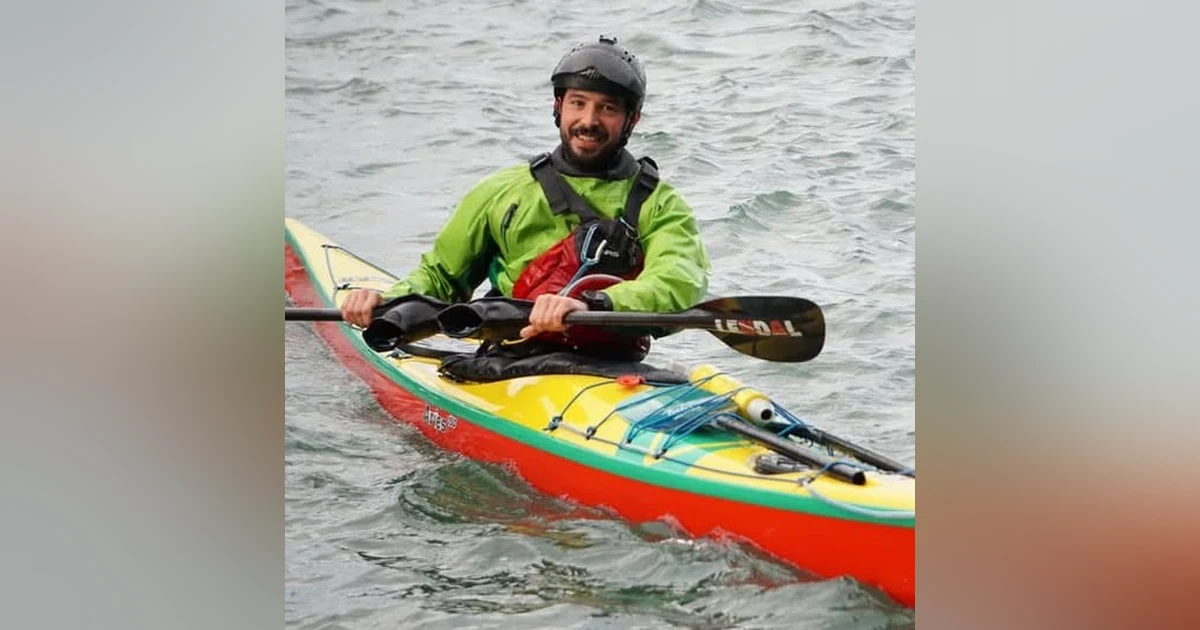
Alex Lalonde joins today's episode of the Paddling the Blue podcast to talk about about his path from packrafting whitewater rivers in Nepal to taking over the iconic Body Boat Blade instruction and guiding company. Alex shares stories from a 40-day Nepal expedition, favorite paddles and venues in the Pacific Northwest, and the challenges of reopening a specialty paddle shop.
- Karnali river
- Burrows Island
- Allan Island (private, permission required to visit)
- Deception Pass
- Cypress Island
- Matia Island
- Sucia Island
- Patos Island
- Body Boat Blade International
00:09 - Introduction to Paddling the Blue
01:32 - Alex Lalonde’s Paddling Journey
05:45 - Guiding in the Pacific Northwest
09:35 - Taking Over Body Boat Blade
11:02 - Favorite Paddles in the Northwest
13:02 - The Allure of the San Juan Islands
16:02 - 40 Days in Nepal
24:34 - Cultural Encounters in Nepal
36:08 - Navigating Regulations in Nepal
38:24 - Lessons from the Expedition
43:31 - Launching the Paddle Shop
47:12 - The Importance of Specialty Retail
50:21 - Connecting with Alex Lalonde
0:01 Welcome to Paddling the Blue. With each episode, we talk with guests from the Great Lakes and around the globe who are doing cool things related to sea kayaking. I'm your host, my name is John Chase, and let's get started paddling the blue. Welcome to today's episode of the Paddling the Blue podcast. Alex Lalonde's journey to paddling business owner began with a class project to packraft several whitewater rivers in Nepal, which led to taking over leadership of one of the most iconic guiding and instruction brands in kayaking in Body Boat Blade. Alex talks about his 40-day experience in Nepal, favorite paddles in the Pacific Northwest, and how they're building the Body Boat Blade brand. Before we get to today's conversation with Alex, James Stevenson and Simon Osborne at OnlineSeaKayaking.com continue to produce great content to help you evolve as a paddler and as a coach.
0:50 You'll find everything from basic strokes and safety to paddling in tides, surfing, coaching, documentaries, expedition skills, and incident management, and more. Their newest course is Playing in the Rocks, led by two previous guests of the show, Laura Zelliger and Kelly Marie Henry. So if you're not already a subscriber to OnlineSeaKyaking.com, here is your opportunity to get started. Visit OnlineSeaKyaking.com, use the coupon code PTBPODCAST to check out, and you'll get 10% off just for being a member of the Paddling the Blue community. And for those of us who also enjoy paddling whitewater boats, please be sure to check out onlinewhitewater.com. They're offering the same discount to listeners using the same code PTBpodcast to check out.
1:32 Enjoy today's interview with Alex Lalonde. Hey Alex, thanks for joining me on the Paddling the Blue podcast. Hey John, thanks for having me. Yeah, so I appreciate your time and love to have an opportunity to get a chance to connect with you here and learn a little bit more about you. But tell us a little bit about you as a paddler. A little about me as a paddler well i am primarily a sea kayaker but have a pretty varied background that covers pretty much the full spectrum of paddle sports i started out as just a flat water. Kayaker canoer and moved to whitewater rafting pretty soon after i got into into paddling just caught the bug of white water and just continued to find ways to get into anything that floats whitewater kayaks and a bit of whitewater canoeing some whitewater paddleboarding and then eventually found my way to the ocean so yeah primarily sea kayaker but yeah i have just a love for pretty much anything that floats yeah they're all boats and doesn't matter what we're paddling as long as were out there on the water having a good time that's right yes now what was it that drew you specifically to sea kayaking and said that was going to be the niche for you so i had a there's a an experience from my very first time paddling on the ocean i was a student at suny plattsburgh state school in new york and our our paddle sports course that we were doing had a trip to
3:07 the coast of Maine as sort of the like capstone for that course. And our very first day out in the water was paddling from the mouth of the Kennebec River out to Seguin Island. And it's about a three mile crossing with some current and you're sort of going out into the Atlantic Ocean. And I remember very distinctly. Paddling through swell and kind of just feeling that like pulse of the ocean and just sort of like looking around and being like wow this is it just sort of felt the power and the beauty of where i was and so it was really the environment that kind of like gripped me and just kind of feeling the the life that was there that that moment kind of hooked me and from from that trip I just continued to pursue paddling in cool places on the ocean and yeah, kept kind of gravitating back to it, even though it wasn't until much later, many years after that, that I lived anywhere near the ocean.
4:12 Yeah. And you're paddling on this thing and you got, like you said, swell and waves and you're thinking this thing's alive. Yeah. Yeah. And it wasn't terribly big swell either. If my memory serves, it was about four foot swell, which isn't certainly not small. But, you know, kind of since then, I've paddled much bigger swells as, you know, all perspective, I guess, but it felt massive. You know, I felt like I was just in, you know, the waves might as well have been 15 feet. You know, I just, it felt very, yeah, it was, it was life altering for sure. Certainly. Now, what brought you from New York out to the Pacific Northwest? The easy answer is work. I was just looking for kind of the next seasonal gig.
4:57 I think at the time I was kind of moving between seasons, working seasonal jobs. And I was looking to go to the West Coast. I hadn't really spent any time on the West Coast at that point in my life. And I had some friends who had worked in this zone in the San Juan Islands. And so I reached out to them and said, hey, what did you think? And they were like, yeah, it was great. You'd love it. And I had no other questions. And so I drove my van out there and I never left. All right. And what were those first years like of guiding out in the Pacific Northwest? They were great. So two of the best summers of my life, guiding in the islands.
5:40 You know, the vibe out here with guiding is very, yeah, it's very laid back. You know, the summertime here is the weather's amazing. You know, you can pretty much camp without a tent almost the whole summer. So a lot of nights slept under the stars and it was when i moved out here that i met shauna and leon the original owners and founders of bodyboat blade and got to do some training with shauna, and so sort of had made some cool connections like right when i got out here and yeah it it was the summers of guiding were were years that i look back on really fondly and now were you were Were you guiding with Body Boat Blade at one of those times?
6:25 No. The company that I ended up working for used me as a guide trainer when I moved out here. So I had been, you know, working on, you know, building my certifications and training with coaches, you know, in the UK and kind of all over the States. And through the guide training that I was doing for the company I was working for, the owners of that company were personal friends with Shauna and Leon and hired them to do like a bodyboat blade guide training. And when Shauna and at the time she was working with Calvin Kroll, who I know is a person that you've interviewed.
7:11 Sure. They came and all of a sudden just kind of like connected on oh you've paddled with with so and so and you've done you know i they've been doing a lot of british bcu stuff at the time you know i've been working a lot in that program so we had a lot of mutual friends and and a lot of people who i had mentored with were colleagues of shauna and leon and so there's this kind of cool connection there and, through the guide training they were able to sort of see what i had been doing with people and And I think just hit it off and they had offered at that time, I took it a, I didn't take it seriously, but they had, they were at the time trying to sell their company and they had, they had made an offer to me like, Hey, do you want to buy a kayak company?
7:55 And I was just, you know, kind of like waved them off like, yeah, yeah. The kayak guy that lives in his van is gonna gonna buy a kayak company shirt but that was sort of the initial connection there was just a simple guide training and you know some conversation over a couple of days and and then you know i saw them a few more times over that first summer that i was there but it was mostly just in passing well and and here you are now any work with yeah yeah but you know to you know to on your question i i never worked directly with them in their company it was more just you know kind of that personal connection and i don't know right place right time slash you know we've had very similar approaches and just as we were talking it just i don't know it seemed to kind of make sense that we were gonna go somewhere yeah and that connection was made and And here you are now, you've taken over the reins of Body Boat Blades.
8:54 So what was it like taking over an iconic business like that? It was terrifying at first. They built a massive legacy and a huge following. And, you know, in their day and even still are some of the most accomplished expedition paddlers and coaches to ever do it. So, you know, I was up for the challenge, but I definitely felt the weight of taking that brand over. And I think if it hadn't been for some of the people that I was surrounded by at that time, I may have folded under the pressure, but I was lucky enough to be, you know, actively working with some really high level people.
9:42 And just, I think people wanted to see the brand succeed and, and, and to continue on. So yeah. Yeah, but there was definitely a lot of skepticism from people who were diehard followers of Sean and Leon. I had to do a lot of proving myself, and Sean and Leon had my back at every turn, which was amazing. They had a lot of stake in my success as well. Very cool. So tell me about some of your favorite paddles that you do up there in the Pacific Northwest. My favorite paddle depends on the type of objective we're going for.
10:24 My favorite day paddle has got to be a lap around Burroughs and Allen Island. There are two small islands just to the west of Anacortes. And it's where, when I was working for Anacortes Kayak Tours, the tour company here, it's where we ran most of our day trips. And there's just something about that little section of the islands there there's a lot of cool wildlife there's a good amount of current that flows through the island so given you know the right wind direction you can get some cool waves to surf and and you can make it a whole day adventure but you can also make it fairly short by just kind of cutting in between the islands and zooming back to where you started deception pass has also got to be one of my favorite venues to go to you know it's it's a fairly quick paddle to get there but for anyone who's been there or seen videos of it it's a pretty dynamic place and there's a lot of fun that can be had there and then if we're talking overnight stuff because the san juan islands is a destination for overnight paddling and camping.
11:35 Cypress Island is probably my top choice for going and setting up a campsite and spending a weekend. And after that, if I was to continue on, I'd go up north of Orcas Island up to Clark, Masha, Susha, and Patos Islands, the string of islands that's at the north end of the San Juan Islands. They're also some of my favorites. So what is it that really makes the San Juan so special for you? The appearance of the San Juans from shore is that they're quite placid. The water is you know you know it's a it's an inland sea so there isn't big swells and big crashing waves all the time there's days where you walk out of the shore and it's just flat glassy calm and but every single day there's water rushing through back and forth because of the tide and so even on a flat calm day you can go and find dynamic moving water that you know for me He is, you know, I, you know, am a little bit of a thrill seeker.
12:43 Uh, you know, I like to challenge myself and paddle and, you know, and water that makes me think about it. And so I, I think that was part of what initially had really attracted me to, to the area and the longer I'm here, the more I discover about the, you know, about wildlife and, you know, just kind of the, the history of the area is a lot of, you know, native history, indigenous history, you know, mixed with kind of Spanish, Spanish conquests and English colonial, you know, stuff going on. And, you know, all kinds of, you know, westward expansion, history stories.
13:24 So it's just, it's a place that's just very, yeah, it's really interesting. Just the more time we spend here. I guess I've never associated the English and the Spanish with the area. So the Spanish were the first sort of European explorers to come through here. They named a lot of the San Juan Islands and waterways and things like that. So there's, you know, The Orcas Island is named after the Viceroy of Spain. San Juan was the, I believe, the captain of the, of something. The whole story. Lopez Island, Rosario Strait, Strait of Juan de Fuca.
14:08 So there's, there's lots of, yeah, sort of Spanish discovery here, but they never, I don't believe they ever really settled here. And then it was the English that, that came in, General Vancouver. They ended up setting up camps here and having a bit more of a cultural impact. Okay. Yeah, I guess it makes sense now that you start to go through some of the names and that just hadn't really associated it. I think of more of the First Nations as opposed to anything else for the area. Yeah, totally. Totally. And, you know, there's certainly, there's a lot of that history here as well. And so you've had an opportunity to do a, you know, to really see a lot of things and experience a lot of things. And outside of the Pacific Northwest and outside of New York and Maine that you'd mentioned earlier, one of the things I'd love to be able to have a chance to talk about is you did a trip for 40 days pack rafting in Nepal.
14:57 So tell us a little bit about that. Describe that trip for us. That trip was, again, one of just, yeah, a life-altering experience. It was, that trip was my, mine and another student of expeditionary studies, our capstone project, our senior expedition. We each planned half of the trip to sort of fulfill the requirements of our capstone. But basically we were planning a yeah you know almost two month long trip together in the in nepal and we traveled there with inflatable boats pack rafts from the brand alpaca raft for for those that are familiar with it and we chose to do that because we had in our research We had read a bit about, you know, how if you go whitewater kayaking in Nepal, you can rent plastic boats from rafting companies.
16:00 And, you know, the boats can sometimes be great. They can sometimes be really beat up. With plastic boats, you got to deal with transporting them. A lot of the like local buses won't let you put kayaks on them. So you have to end up having to hire private transportation. So as we were going through a lot of that research, we had been introduced to pack rafts already. So they were on our radar. And we were like, well, what if we took pack rafts? And we reached out to Alpaca. They offered to get us a couple of boats at a really good price. And then we, we said, we're going to paddle through the winter to train for this trip and only paddle in the pack rafts. Like we're not going to paddle hard shell kayaks.
16:46 Cause if we're going to do this in Nepal, we better be dialed in our pack rafts. All right. We spent the winter paddling in upstate New York in the wintertime and springtime, and then most of the way through the summer as well, just in our inflatable packrafts. So a little bit of the sort of why we chose packrafts there. But the trip to Nepal was, yeah, kind of meant to be a, you know, when you think of Nepal, you think of the mountains and trekking. You don't necessarily think about it as a paddling destination. And in doing research for our capstone project, we came across a guidebook for whitewater kayaking in Nepal, and it showed us how much water was flowing out of those mountains and that there was actually quite a rich river community, paddling community in the country.
17:48 So it kind of was attractive in that way and that it was like a kind of a at least to me at that time seemed like a really obscure place to go paddling i don't know maybe that is a big reason why we chose to go there let's go somewhere that is completely foreign to us that you know when someone's like you're going kayaking where uh you know when you tell them what you're doing so, yeah it's a pretty ambitious trip to take on i mean uh you know some of your your contemporaries in class may have been, you know, let's go down to the Carolina coast or let's go to Colorado or something like that. And you're like, no, let's go to Nepal. Yeah. Yeah. A lot of, you know, a lot of the paddlers and, and, you know, the program has paddlers, skiers, and climbers.
18:33 And so, you know, based on the path that you're, that you kind of forged for yourself in the program, you, you know, you do generally are doing a, a trip within one of those three categories. And yeah, a lot of the paddlers are, you know, a lot of paddlers go to Maine or to the UK, you know, places where we travel to in the program. And one of the hard requirements of the senior expedition is that it has to be i'd have to go back and look to be to to be certain about this but it has to be like more than 100 miles from some place that you've been before so the idea is that you're going somewhere new you're planning an expedition somewhere that you haven't been before so, We sort of took that and went, what's the farthest we could go?
19:23 So, yeah, you know, we had a lot of options. Obviously, in the U.S., we could have gone a hundred different places without leaving the country and met all the requirements. But yeah, Nepal felt like the right choice. So neither of you had ever been to Nepal before, correct? That's correct. All right. So how did the trip logistics and planning come together for something like that halfway across the world? Well, we relied heavily on the guidebook that we found. It's just Whitewater Kayaking Nepal. It was written by a couple of British guys who spent a good amount of time there. That book really ended up being our Bible for figuring out how to navigate the country as a kayaker.
20:04 There's a lot of really good tips in there for how to travel with your kayak what companies to like what rafting companies are in the cities that you can go and get information from there was a lot of information in there about certain you know a lot of the rivers that be ran there you know it's just they're coming right out of the mountains so the rapids change year to year with the monsoons so you can go to these rafting companies and say hey this has anything changed, We're going off this guidebook that was written in the mid-2010s, or actually, I think actually a bit earlier than that.
20:45 So we were able to get some really good information just from that. Because it was our capstone project for our school program, we had to do quite a bit of writing and research on the country, on the risks that were there, sort of how we were going to... You know, how we were going to organize ourselves and, you know, make sure that we were following a plan and staying safe while we were doing it. So that guided a lot of our research. And, you know, it turned out to be, I think, you know, between the two of us, we had about 200 pages of, you know, sort of research paper on the history of Nepal, paddling history in Nepal, and then what our expedition was going to look like.
21:29 Were you doing day trips? No, it was all expedition paddling. So it was all overnight. We did five different rivers when we were there. The longest stretch that we did was eight days. The shortest stretch that we did was four days. And yeah, so we were essentially just bouncing from river to river. We landed in Kathmandu. And from there, we took a local bus to the Trisuli River and started there. It's kind of a big water, mostly class three run. So we did four days on that river. That was sort of our warmup. And then from there, we just, when we got to a takeout, we'd spend the night or sometimes a couple of nights in the village where we, where we ended.
22:18 We'd wait for the next bus to come through and we just keep, we just kept going west. So we went as far as we as far west as we could go reasonably and then kind of paddled our way back towards Kathmandu. So what was it like going through some of the villages and meeting the folks in those villages? Oh, it was great. The people there really were the kind of highlight of the trip. The Nepali people are so incredibly nice and very welcoming. Their whole philosophy is, you know, it's in their greeting, namaste, you know, which is, I believe the translation is, you know, I see a God in you and, you know, they are very just, I think all the people that we met really, they saw us and it was, there was no question coming to our home, you know, let us feed you, you know, let us, you know, host you and entertain you.
23:25 And we didn't spend a whole lot of time in the big cities there. So most of our time was spent in these little villages that were just along the rivers and. Anytime we were getting off the river, you know, there was always a swarm of children that would kind of come find us and, you know, take our paddles and jump in our kayaks and, you know, you know, sort of pretend to paddle them on shore. And so it gave us an opportunity to, you know, sort of communicate through the paddle and, you know, they certainly weren't the first kayakers that they'd seen, but, you know, it clearly gets, it gets the, the community excited when, when paddlers are coming through. And I think that in part, you know, inspires some people to then, you know, go work for some of the rafting companies.
24:06 And so it's a, it's a cool way to connect with people. Cool. Now, did you see many other paddlers along the way on your trips, on your rivers? We did. We ran into one kayak group from, it was a group of kayakers from Alberta. And they were doing some stuff that was way harder than what we were doing. I think they had run the upper Carnali, which if you're listening to this episode, go watch some videos of people kayaking the upper Carnali. It's insane. But they were really cool guys. We ended up seeing them a couple more times throughout our trip. We ran into them in Pokhara at a movie night randomly later on in the trip.
24:49 And then we also ran into a couple of rafting trips that were on a couple of the rivers. Which were primarily like u.s and and european you know people being guided by nepali folks so and those were those were cool to to run into as well the company that we ran into both times were. Companies that we had connected with when we were in katmandu asking for beta so when we saw them we recognized the guides and they recognized us and sort of they invited us to come and hang out with them and party with them. And one of the fun stories I like to tell about running into the, this rafting company is the, the raft teams were sort of passing us as we were paddling down and, uh, They invited us to come stay at their campsite that night. So we paddled down and we met them at their camp.
25:45 And the guides were wanting us to sort of stay separate from the customers that they were guiding. All right. But they told us we need to go get food for dinner. So come with us. And we're like, okay, whatever that means. We'll just follow you guys into the jungle. And we hiked up this fairly steep hill in the river valley. And about 20 minutes or so we get up to this plateau and there was a livestock farm and some shacks and some people living up there and i think it may have been cousins of of one of the guys that lived up there and they were asking for chicken and we thought oh cool they'll you know get some chicken and.
26:30 Take it back and cook it. And while we're sitting there listening to them talk, one of the guys starts chasing after some live chickens and kind of jumps and dives and catches one. And we're like, oh, this is what they meant by they're going to get some chicken. So catch two live chickens and there's, you know, sort of holding them by their, you know, by their feet or their, their neck, wherever you hold a chicken when you're, you know, wrangling it. And then we walked back down the hill and we passed through another sort of shack. It wasn't a village, it's just sort of a shack that someone was living in on the side of the river.
27:10 And it was another auntie of one of the guys that was there and they offered us Roxy, which is the local swill of Nepal. It's like a millet wine. And so most of the time that's served to you in a old soda bottle so really sanitary stuff, you know high high high brow stuff over there but it was really cool there was just again like sort of just showing you know it's very friendly you know we were just two white guys kind of following them around and but you know got to just sort of see what it was like kind of living along the river and you'll be welcomed into their home so then we carried on from there back to camp and we got back to camp the guy who was carrying the chickens stopped short of camp and you know he's like i got you know i'm gonna start preparing dinner and as we're walking away we see him you know pull out a big machete and just.
28:16 Butchered the chickens right there. I'm like, all right, okay, cool. This is, this is how they do it on these, these rafting trips. And it turns out the chickens were for the guide meal. They weren't, you know, being fed to the customers, but, but we got to partake in it, which was cool. You know, they were just making a chicken curry doll bot, you know, type dinner for, for themselves, which they included us in. And so it's just kind of like that, that experience was one of the, one of the really cool experiences we got to have just sort of connecting with people, you know, from land, then on the river and just sort of getting to see and experience just the whole kind of, it felt like we were getting to experience sort of all sides of, you know, being in the country and not just, we didn't feel like we were just tourists there anymore.
29:04 Yeah. You're getting the backstage tour at that point. Yeah. Yeah. Yeah, that's cool. What did you learn about yourself on that trip? I think the biggest takeaway for me was the importance of that, you know, paddling is a context in which you can go to some really cool places. And yeah. What I mean by that is Nepal is this beautiful, vibrant country, which, you know, people from all over the world travel to, to get to see and experience, you know, all the, all the places that are there by a kayak is really kind of a unique way to see the country.
29:47 And I've taken that view of traveling for paddling with me kind of since then really sort of you know kayaking is the re you know the the vehicle that's getting me there but it's really just my way to like see and experience culture and the people and and the place so i think that is my biggest takeaway from that trip without going back and looking at my journal because i probably learned a few other things about myself while i was there all right what surprised you about nepal i was surprised by the variety of wildlife that was there i didn't know this until we learned this while we were planning but there are crocodiles and hippos and panthers and all kinds of jungle critters that you would not expect to be there and there was a particular river that we were looking at paddling that went through this sort of wildlife refuge uh name of which has escaped me it's in the sort of i think the mustang region of the country sort of on the west side of the country but the river not a particularly challenging whitewater run but went to a really remote section of the country and looked really beautiful but all of the information that we found was, you know.
31:13 Beware of crocodiles and hippos and all these really dangerous animals that we really just didn't want to encounter while we were there. So we ended up putting that one in the. Yeah, so yeah, surprised by the wildlife that was there. Did you run across any of that wildlife? We didn't. The most foreign wildlife that we came across were the monkeys. Yeah, monkeys everywhere. But we did see evidence of some kind of wild cat. We're not sure what it was, but one of the rivers that we went down, we did on a number of the beaches see big paw prints that belonged to some sort of cat. Thank you.
31:59 Did you have a chance to interact with the monkeys at all? They have a habit of interacting with you in the cities when you've got something to eat or drink. Okay. Monkeys will kind of just jump on you and try to take stuff out of your hands. Or if you set your drink down, they'll swoop in and grab it and run away with it and start drinking it. And we did watch a couple of monkeys steal soda bottles filled with Roxy and run away and get a little tipsy. But in the wild no they they pretty much kept it themselves we saw them quite a bit you know jumping around in the trees but from memory we didn't really have any wildlife you know sort of face-to-face wildlife encounters we saw lots lots of livestock but nothing nothing wild that that came up to us did you have to negotiate any any regulations or anything along the way in the country nothing super out of the ordinary getting in and out of the country was really simple for us and you know we were there on a 90-day visa so you know you can travel into the country you don't have to fill out on you you just fill the paperwork out there in the airport so you know we needed to carry our passports around so if we did encounter anything you know they could see that we had a visa.
33:16 And we did at the takeout of the Berry River into the Carnali River, which ended us in the. Longest single strut suspension bridge in the world. And where we took out was right underneath that bridge. And at the top of the bridge was Nepali military. And they, we kind of had to like scramble and bushwhack from the river up to the road there so that we could walk into the village. And when we got to the top of the bridge, we were met by a handful of men with assault rifles and a lot of questions.
33:57 And but they looked at our passports and you know talked amongst themselves and then just kind of shoot us away and we found out later that they were looking for people smuggling tigers across the border from i believe india as we were quite close to the border of india and apparently there's a lot of poaching of you know endangered animals going on at least at that time i'm not sure what the situation is now, but that was really the only run-in that we had with authority or any kind of, you know, you know, needing to prove that we were there lawfully. And it was pretty obvious that you weren't carrying a tiger at that moment.
34:39 We think so. We had some pretty big duffel bags. So, you know, I, uh, we, we could have been, uh, smuggling, you know, half a tiger each or something, but, um, but yeah, we, we assumed that they watched us paddle in. And then, you know, we spent, you know, probably a couple of hours on the beach, just drying everything and, you know, relishing in our, the, the end of our river run for that week. And yeah, and then we just packed everything up and, and hiked up the hill. That's a pretty cool experience to have as your, your capstone project. So, um, how did you, what, what did you take from that, that you've been able to carry through to your other expeditioning? I think the thing that has, you know, that, that expedition showed me was that come up with a great plan for a trip.
35:26 And then when you get there, you just kind of, you know, you have to adapt and react to what's happening in front of you. And so, you know, we, for our project, We had to have a day one to day 40 written out plan. So we had a whole itinerary for every single day. And that plan got crumpled up and thrown out the day that we got there. And so the order in which we ran the rivers that we did ended up being very much based on water levels and where the water levels were good at that time. We were there in October and into November, which is just the tail end of the monsoon season. So the, when we got there, the water levels were still quite high.
36:09 And then six weeks later at the end of our trip, the water levels had dropped pretty significantly. So some of the runs that were looking a bit intimidating to us at the beginning had opened up and dropped down to levels that felt comfortable for us. So, you know, since then, you know, I haven't, I haven't done another expedition quite as big as that one since then, but the ones that I have done, and I think just in general, my approach to, you know, planning expeditions is, you know, come up with your best plan and then, you know, be ready to throw it out on the first day. Sure. And that, yeah, that's really stuck with me. Yeah. And that can apply whether it's multi-day trip or a day trip, but you always have a plan A, B, and C and expect to expect the unexpected.
36:55 That's right. Yeah. So it sounds like a pretty inspiring trip. I mean, who inspires you as a paddler? There's a lot of people that inspire me. I feel really fortunate to have the opportunity to work with some of the best paddlers in the world on a fairly regular basis and people who are doing things that are sort of inspiring daily. Some of the people who I feel inspired by in no particular order, my good friend, Goodney from Iceland, he's a really hardworking guy. Him and I have had an opportunity to work together a handful of times now and, you know, getting to work with him and toss ideas around him has been, has helped me a lot in my personal life, but, and also in business and, you know, him and I have continued to work together.
37:49 I have grown quite close now to, uh, Laura Zolliger and Amber Champion. Two badass women on the west coast here who have, you know, being able to work with them has just been, you know, they've accomplished so much in what they've done with paddling and just in their personal lives and getting to bump shoulders with them and, and work with them has been really inspiring in a lot of ways. And continue to be inspired by my mentors, Steve Maynard, who was my mentor at Plattsburgh State. I continue to be inspired by him, John Carmody.
38:34 He's another mentor of mine. And, you know, people who are still very active and sort of pushing themselves, but also pushing the coaching bar, if you will, they are, in my mind, the highest level coach that I've been able to work with. And, you know, they're, they're just continuously trying to push themselves and learn more. And, you know, the forever student mentality is, is the, you know, sort of what I gain from them. Cool. Well, you get some, definitely get some good mentors and some good company there. Goodney was a guest on episode 57 for us. And Laura Zelliger was a guest on 61 and Amber Champion on episode 112.
39:17 So three alumni of the podcast. Yeah. Yeah. Yeah. And, and, you know, they're, I've listened to their episodes. They're, you know, it's really cool leading up to this interview to sort of get to see, you know, I went through, I didn't listen to every episode, but I scrolled through all the episodes and got to see how many people who I've known or have heard of. And, and, oh, cool. So I've got a lot of, a lot more episodes to listen to the episode. Well, we'll keep them coming for you, too. So those experiences and those people that have inspired you and mentors really helped to shape your paddling career as well. And that continues to take off as part of Body Boat Blade.
39:59 Now, tell us about the paddling shop part of your business. Yeah, the paddle shop is new. As of this year, we opened in April when we bought Body Boat Blade. And when I say we, I am referring to myself and my wife, Sarah. There at the time was a retail store along the business but we decided at the time that that wasn't going to be the right thing for us to take on so we left it on the table five years later handful of northwest paddle shops have shut down and it seemed like the right opportunity for us to. Bring that part of bodyboat blade back so we now have a brick and mortar and an online store our brick and mortars in anacortas and we're doing our best to sell all things kayaking you know we don't have every brand of every item there's certainly things that we're missing so if you're listening and you're looking for something let us know.
41:00 But but yeah it's been a really cool new chapter for bodyboat blade and a huge learning opportunity for me who has no experience in the retail field never worked a day of retail in my life so lots of lots of new things to learn new systems and and really it's been a cool way to kind of complete the circle of interaction with our community and kind of bring people in a bit closer to. You know, into the fold, you know, we've, we've been able to have lots of really cool experiences with people on the water and, you know, inevitably the questions come up of, you know, where do you get that piece of gear or how can I, how can I get that gear? What, what are you wearing? I want to buy that.
41:49 And, you know, so now we get to like have these kind of full circle experiences with people in that way of, you know, they come to a course with us and they're looking to, you know, upgrade their gear or maybe they're just getting into the sport and they want to know what to get so that they you know get the right thing the first time and we get to help them out with that. And and then we get it in the on the opposite side we get people now walking into the shop they come in like hi you know uh i've been interested in kayaking and and you know want to get into it and so well great we can set you up with a course or or a trick if you'd like to, you know learn more about the sport and and learn what it's all about and then we can also get you the gear that you need to make sure that you're well set up and dress properly and have the right gear.
42:39 So it's been a really cool way for us to just kind of continue connecting with the paddling community here. Cool. Well, congratulations on taking that step. And out of curiosity, so we all, you know, those of us that are close to paddling, you know, really have a strong understanding of how the specialty retailer makes paddling. And And that's a really important segment of the sport to be able to have a shop that you can go to and then people who paddle and it can help you and support you. But in an environment where five other shops have closed, why did you decide this is the time to open a new one? That's a really great question, John. And I think really it is out of what I feel is, you know, if we lose those shops, you know, we're not just losing a place to buy equipment.
43:30 We're also losing knowledge and community and, you know, a place for people to connect. You know, sort of a lifeline, you know, these, all of these shops have been, are still, you know, lifelines in the paddling community. And so I felt particularly pushed by that realization or mindset or what, you know, whatever it is. And it was when, you know, our, our, what I would call our local shop, Kayak Academy closing down really ended up being the catalyst for, you know, where are people going to go if, if, you know, there's now nowhere to, nowhere for us to go to try things on, to talk to somebody about buying, you know, buying gear about, you know, about paddles, about boats, going to try things on, you know, touching and feeling things, which since the shop has been opened, I can't tell you how many times I've heard that comment of, it's so nice that I can just come in here and touch it and try it on.
44:35 And because looking online, you can only get so much information. And, you know, if you're doing your own research, The, the amount of information out there is overwhelming on what's the right piece of gear and what's the right, the right thing to wear when I'm paddling in this, this area or this time of year and what kind of boat should I get and, and all that stuff. So we get to fill that void for people and keep some semblance of that, that lifeline alive. So we'll see where it goes. obviously you know we're in our first year of business now and it looks like we're going to make it to a second so hopefully this is just a a phase of time where you know things are just shifting but i do believe that there is still despite the overwhelming presence of online shopping that there is still and hopefully always will be a need for that specialty store where people can go and connect with their their local paddle shop yeah i mean for some things online shopping might be great but for others it's it's kind of like getting a haircut over the phone you just miss something and without having having the opportunity to talk to someone and see the gear and all that so congratulations on taking that step and for everybody who's listening make sure you continue to support your lifeline and support your specialty retailers and help them thrive so, Thank you for doing that. How can listeners connect with you, Alex? You can connect with me through our website, www.bodyboatblade.com and
46:05 through our contact form there. You can email us directly at info at bodyboatblade.com. You can also find us on Instagram, Facebook, just bodyboatblade and then send us a message or check out what we're up to there. And yeah, those are the best ways to get in touch with us. Very cool. Well, we'll make sure we put links in the show notes for people to connect with to you. And then you mentioned a couple of other rivers. You meant the upper Carnali. And so we'll have to talk to you about finding some videos and getting those out there so people can see that. Just kind of get a feel for themselves and what that time in Nepal was like. And I know you weren't on the upper Carnali. You said that was a little crazier than you wanted to be. We'll give people an idea of what that looks like.
46:47 All right. Cool. Hey, one other question for you. Who else would you like to hear as a future guest on Paddling the Blue? I would love to hear Steve Maynard and you have a conversation together. Steve was mentioned a couple of times in the episode. He was my mentor when I was a student at SUNY Plattsburgh. Very accomplished paddler and outdoors person, traveled the world doing all sorts of multi-sport activities and overall just a very interesting and interesting person who I think you'd have a great conversation with. Cool well i'll make sure we uh we connect offline and get in touch with steve so again thanks for thanks for the opportunity i appreciate you telling me about some of your favorite paddles in the pacific northwest sharing your 40 days pack drafting in nepal and we absolutely wish you the best in continuing to grow bodyboat blade and make that specialty retailer as well as the guiding business thrive so thank you alex thank you so much john appreciate it.
47:45 If you want to be a stronger and more efficient paddler, Power to the Paddle is packed with fitness guidance and complete descriptions, along with photos of more than 50 exercises to improve your abilities and enjoy your time on the water. The concept and exercises in this book have helped me become a better paddler, and they can make a difference for you, too. The exercises in the book can help you reduce tension in your shoulders and low back, use the power of your torso to create leverage and use less energy with each stroke, use force generated from your lower body to make your paddling strokes more efficient, have the endurance to handle long days in the boat, drive through the toughest waves or white water, protect your body against common paddling injuries, and while you're at it, you might even lose a few pounds. And who wouldn't mind that? So visit paddlingexercises.com to get the book and companion DVD.
48:30 Thanks to Alex for joining today's episode and sharing his experience and story and some of that great information about the Pacific Northwest. Best of luck to Alex and Sarah in rebuilding the retail side of their business. They've certainly got their hands full with a couple businesses and also being new parents. Not sure if you caught it, but Alex dropped the names of four other paddlers, Calvin Kroll, Laura Zelliger, Goodie Paul Victorson, and Amber Champion, all previous guests to the show. Pretty cool how we have just such a small family. You'll find links to Alex's website and his socials along with those special places he mentioned in the Pacific Northwest by visiting the show notes for this episode at paddlingtheblue.com slash 157. If you're not already a subscriber to OnlineSeaKyking.com or OnlineWhitewater.com, what are you waiting for?
49:15 Your coupon code PTBpodcast to check out. You'll get 10% off just for being a member of the Paddling the Blue community. That's OnlineSeaKayaking.com and OnlineWhitewater.com. Thanks again for listening, and I look forward to bringing you the next episode of Paddling the Blue. Thank you for listening to Paddling the Blue. You can subscribe to Paddling the Blue on Apple Music, Google Podcasts, Spotify, or wherever you find your favorite podcasts. Please take the time to leave us a five-star review on Apple Music. We truly appreciate the support. and you can find the show notes for this episode and other episodes along with replays of past episodes contact information and more at paddlingtheblue.com until next time i hope you get out and paddle the blue.


