#171 - 36 years of record breaking kayaking around Ireland with Mick O'Meara encore

 Apple Podcasts

 Spotify

 Overcast

 Castro

 PocketCasts

 RSS Feed
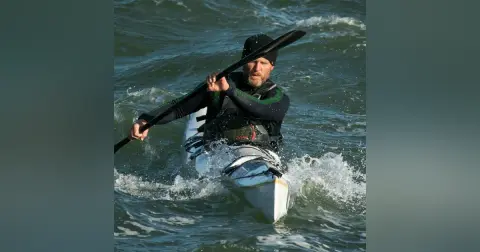
Today's episode of the Paddling the Blue podcast is an encore conversation with Mick O'Mara about his multiple circumnavigations of Ireland — from a 1990 team effort to his solo 2015 record and his latest 20-day rebreak. Mick discusses preparation, training, expedition strategy, managing solo vs. team dynamics, gear choices, and overcoming physical setbacks.
Before we get to our encore presentation with Mick:
James Stevenson and Simon Osborne at onlineseakayaking.com continue to produce great content to help you evolve as a paddler, and as a coach. You’ll find everything from basic strokes and safety to paddling in tides, surfing, coaching, documentaries, expedition skills and incident management, and more. If you’re not already a subscriber to Onlineseakayaking.com, here’s your opportunity to get started. Visit onlineseakayaking.com and use the coupon code PTBPODCAST at checkout and you’ll get 10% just for being a member of the Paddling the Blue community.
For those of us who also enjoy paddling whitewater boats, be sure to check out OnlineWhitewater.com, they’re also offering the same discount to listeners. Use the code PTBPODCAST at checkout and explore.
And, I would love to help you put those skills to work. I offer a wide range of programs in the Great Lakes and beyond, from paddling skill development, instructor certifications, workshops, CPR and wilderness first aid, guided trips, and more. There’s still lots of time left in 2026 and I am working on the 2027 calendar. Let me know what you would like to see. Visit www.paddlingtheblue.com and click the Courses and Trips link at the top of the page, and I hope to see you on the water.
Enjoy today’s encore episode with Mick O’Meara
00:09 - Encore with Mick O’Mara
02:49 - Scouting the First Kayak
05:54 - Chasing Speed on Water
06:54 - Around Ireland, Team Edition
12:12 - Solo Circumnavigation Challenge
21:05 - Weather and Mental Tests
29:45 - Teamwork on Expeditions
33:44 - A Pint or Two
37:57 - Advice for Big Trips
41:31 - Back, Fitness, and Future Goals
46:16 - Choosing the Right Kit
51:59 - The Must-Have Luxury
55:57 - Contacting Mick O’Mara
0:02 Welcome to Paddling the Blue. With each episode, we talk with guests from the Great Lakes and around the globe who are doing cool things related to sea kayaking. I'm your host, my name is John Chase, and let's get started paddling the blue. Welcome to today's episode of the Paddling the Blue podcast. Today, I'm sharing an encore presentation of a conversation that I had in 2021, going back five years with Mick O'Mara. And at that time, we talked about his multiple journeys around Ireland, including a 1990 team record of 33 days and a second record in 2015. That time, solo, when he circumnavigated the island in 23 days. Well, we talked about his thoughts on preparation and training, keys to a successful expedition, whether you're solo or as part of a team and maintaining a true sense of adventure along the way.
0:48 Well, news broke last week of Mick breaking his own record, this time with a 20-day circumnavigation around the island. What's even more mind-blowing is that this record is a full 36 years after his first. So congratulations, Mick. You are a testament to the benefits of working hard to reach your goals. So before we get to our encore presentation with Mick, James Stevenson and Simon Osborne at OnlineSeaKayaking.com continue to produce great content to help you evolve as a paddler and as a coach. And you'll find everything from basic strokes and safety to paddling in tides, surfing, coaching, documentaries, expedition skills, and incident management, and more. So if you're not already a subscriber to OnlineSeaKayaking.com, here is your opportunity to get started.
1:30 Visit online seacocking.com use the coupon code ptbpodcast to check out and you'll get 10% off just for being a member of the paddling the blue community and while you're there be sure to visit the community section where you'll find an interview with me a big thanks to Simon and Daniel for hosting me on their meetup and for those of us who also enjoy paddling whitewater boats be sure to check out onlinewhitewater.com they're also offering the same discount to listeners just use that same coupon code ptbpodcast to check out and explore and I would love to help you put those skills to work. I offer a wide range of programs in the Great Lakes and beyond from paddling skill development, instructor certifications, workshops, CPR and wilderness, first aid, guided trips, and more.
2:11 So there's still lots of time left in 2026 and I'm working on the 2027 calendar. So let me know what you'd like to see. Visit paddlingtheblue.com, click the courses and trips link at the top of the page, and I hope to see you on the water. Enjoy today's Encore episode with Mick O'Mara. Hi Mick, how are you today? Good, John. Thanks for having me. Oh, thank you for joining us. I appreciate it. So Mick, tell us, where are you from? From Waterford, Ireland. I've lived here all my life. I never felt the need to move away. So I was just born in the city here. I come from a family with just myself, two sisters, mom and dad. And yeah, that's it. From Waterford, Ireland. All right. So how did you get your start as a paddler?
2:54 I started off paddling through the scouts and it was, I suppose most people will have a go at being in the scouts at some stage. And we were lucky enough that there was a Christian brother actually who taught in a local school. He was into kayaking and he had a trailer with a couple of kayaks on it. So he came along to one of the scout camps. We had an opportunity to try it there because I suppose back, God, I hate to think of how long I'm paddling now, but it's probably about 40 years at this stage and slightly more. It was a difficult thing to get a go on a kayak, whereas now there's kayaks everywhere. So it was a great opportunity and I just loved it from the time I got into it.
3:37 I always liked water sports and I did a little bit of athletics before that when I was younger. But as soon as I got into kayaking, I just thought this is the best thing ever. So did you start on rivers, inland lakes? How did you get your start there? The first we started was, there was a couple of kayaks up the back of a monastery up in Mount Menoray in County Waterford, believe it or not, a Cistercian commune there. And there's a reservoir there. We used to pull the kayaks, these two kayaks out onto this reservoir that was so cold, we'd sort of just paddle around for a bit there. Then we started doing a little bit on lakes. And one of the scout camps that we were on, we were just learning skills and we did a little bit of a bank slide. It was a sort of steep bank coming down into the lake, and this is the best thing ever, was to sit into the kayak at the top of this kind of a bank and slide down into the water.
4:28 And I can still remember, John, my first capsize, and I'll never forget how still and how quiet it got. And then all of a sudden thinking, oh no, you're underwater, and it's only you are going to get yourself out of this, you know? And it was just that calmness, that still. And that's So we started there, then we started moving on to maybe some of the rivers, the River Barrow, which is not too far from where I am here in Waterford, shooting a few weirs. And I mean, at that stage, oh, I don't think there was even plastics out there. The dancer wasn't even invented. You know, plastic hadn't hit the kayaking world, so everything was in fiberglass, so you were always trying to kind of take care of your boat.
5:10 So no one was running a lot of these sort of, you know, rocky rivers and stuff like that because your boat was just going to get wrecked. But we started from there and then progressed on. A lot of the way that I came into sea kayaking is the fact that we have the Atlantic Ocean pretty much on our doorstep here down in Waterford as well. So you're not waiting for water to be on rivers and stuff and waiting for flood and waiting for the rain. The sea is just outside there. So it was actually quite easy to get into that as well. So I suppose in the early days of paddling, I was more, I was kind of into kind of everything, bit of racing, bit of sea kayaking, bit of river kayaking, you know, that's the way it was here. So what got you interested in going fast?
5:51 God, I always kind of wonder what is fast. I wouldn't be certainly the fastest paddler around the place, John. But I suppose in the early days, I got into a little bit of racing. Through contact with other people, I like the idea of being able to push yourself. I like the idea of being able to kind of go fast in a kayak down a river or on the sea. I kind of got the bug for racing. And at the time, it was sort of open singles racing. So they'd have a kind of an open cast for general purpose kayaks. You start into that and then I got into a little bit of white water racing so you're doing you're using the down river boat and then from that you move on to a bit of K1 and then you move into K2 and then, And then you start looking to maybe go fast on the sea. You know, you just kind of transfer that sort of, I won't say a need, but that buzz you get from actually pushing yourself.
6:42 You can kind of, you can branch into any of the areas of kayaking and transfer that. So speaking of pushing yourself, so that kind of transitions us as you've circumnavigated Ireland twice, once in 1990 with a four-person team. And then a second time setting the speed record around Ireland at a blistering 23 days solo. So let's start with the experience of paddling around Ireland, and I'd like to compare the two trips. Take our listeners on a tour around Ireland by kayak. What's that experience like? It's an amazing country here, John. I suppose one of the reasons I never really went too far away is that Ireland has everything you'd want.
7:23 It's a great place, and it has all the weathers. It can be fantastic. It can be lovely and warm and sunny, and then it can be just stormy and cold as well like we have. But I'll tell you, I'll go back to the trip in 1990 when we went around. Through the Scouts, I met a few guys that I still paddle with today, a lot of my close friends. And we were from down here. And we sort of started paddling together up and down the coastline. We have the River Shure here, the Estuary. We would have paddled from Waterford down to Tremor quite a bit here. It's kind of a 25-mile paddle. So we started pushing kind of longer distances, and we were well able for that. And then a few, one of us, I think Brian, I think was first of all, Brian Fanning, got a sea kayak.
8:05 And this is a great thing altogether because we went from using kind of general purpose 13-foot fiberglass posts paddling out to islands and stuff like that to actually getting into a proper sea kayak that didn't leak and actually had hatches in it. Somebody, I think we eventually bought a VHF radio. I mean, this is going back, John, in a time when, you know, everybody has loads of money now and everybody has everything. But at the time, you know, a VHF was a real luxury. We decided we'd have a go at going around Ireland. Actually, this was a great adventure altogether because we wouldn't have been what you'd call the classic sea kayakers with all the gear and all the safety and all the knowledge. It was more adventure, I think, we had in us and, you know, the willingness to go out and kind of have a go and have a bit of crack at it as well, you know.
8:48 So off we went, I think it was on 28th of April, 1990. We'd all got our hands on sea kayaks at this stage. I think it was a kind of a version of the North Cap we had at the time. Arrived down at the pier and for more with way too much gear. Kayak was completely packed half your gear was still at the side wondering how they were ever going to get this stuff into the hatch anyway, we had, and we had jeans and we had shirts because we called them disco clothes we were ready to party the whole way around we had all this kind of stuff, but look, do you know what off we went, four of us took off and sure, we made it down to y'all the first day we went off the next day, packed up again off we went and did another kind of we're aiming for kind of 30, 35 miles a day or whatever you could manage.
9:30 We just saw it as a series of day paddles. And before you knew it, John, you know, you're down to the southwest, you move on, and it means some days you'll have a reasonable day. Some days you'll have a headwind. Some days it's going to be raining, and some days it's going to be sunny. That's the way it goes with expedition paddling. But I think our experience through the scouts and stuff like that and just camping in general kind of gets you through that because when you do long trips like that, it's not just about paddling. It's about being able to get off the water and operate as a team as well. You've got to cook your dinner. You've got to be able to pitch your tent. You've got to be able to look after yourself and get on the water again. To me, in expeditions, the paddling is almost the easy bit because when you're out there, you're doing what you're naturally good at.
10:11 But the other stuff is hard, getting up in the morning. So when you have a team going around, and this is why our team worked so well back in 1990. Is that not everyone was the best paddler. But as a team, you worked well together because someone had to get you out and kick you up out of bed in the morning. Someone had to do the kooking. Someone had to be able to break camp and do stuff like that. So we eventually got around. I think it was in 33 paddling days. And we had a few days off and we had a couple of points every night. It was that sort of a trip. It was great, great fun. And we got back. And we all survived it, which is a good thing. Because there was no major calamities along the way. We busted a set of paddles. We dropped a boat on a set of paddles, I think it was, up in Kilki or something like that.
10:55 And we had a couple of rough days. We had to take a day off, one or two days off, when we hit Nordic Winds on the West Coast. But overall, it was a fantastic adventure. And then, kind of from that trip around, we decided to go off to Iceland. Again, we swim on a Wednesday night at the local pool here, and we planned this. We said, God, that'd be a great old place to go to. And we didn't know how we were going to get there. So it turns out that one of the guys, Fergus, his sister worked for a shipping company here. And we kind of realized that we could actually get boats up there. So that was the first thing. And then we decided, should we have a go again, saved a few bogs, got a bit of money together. And off we went up there. And we got around most of the coast of Iceland, but we ran out of time.
11:37 So we went from Reykjavik right up around the top in a clockwise direction, finished stuff in the place and hope I think they call it down on the southeast coast and we shipped the boats home. I mean I wasn't going to sort of go along the south coast and have to bail out there and leave all my gear there you know. So we kind of pulled out in a logical place up there but it was a great adventure as well and it was that sense of adventure that kind of kept us going. And then you talk about the Ireland trip then that I did. When you come back and do this in 2015 I had gone through a couple of Irish sea crossings in the meantime with me a good paddling buddy Brian Fanny here a fantastic paddler as well, and I think I've been across the area at this stage I think seven times I've crossed at this stage in a kayak done the routes down here from Ross Lear to Fishguard a couple of times, crossed the Hollyhead and done the north the north channel crossing as well from Donoghadee which is near Belfast over to Port Patrick in Scotland, And so I always had that thirst for sort of just pushing yourself and just training.
12:37 It's an excuse to train as well. And you're not looking for any sort of, I don't know what it is, are you actually kind of searching for yourself? It's probably trying to be the best you can be. And when you do these crosses, you always get this great sense of achievement that, jeez, I've actually stepped into a kayak in Ireland, and here I am in England after coming here by kayak, you know? And it's funny, when you land on the beach over across there. Nobody knows you've come from Ireland. They probably think you've just come around the corner, you know, and you're up to doing kind of 50 miles over the last nine or 10 hours or whatever. And it's a great sense of satisfaction. So, look, over the years then, I had kids and I wanted to do something. And 2015 just turned around to be the year. Actually, Jeff Allen, who you'd met there, Jeff and Harry went around and sort of made a story out of, let's say, our record.
13:27 We had a record. we were the only ones we were after really doing it I think in a long time back in 1990 and we did it in 33 days which is a reasonable time, and it was and you got to be lucky with the weather John so Jeff and Harry then made a big they kind of made a story out of going we're going after Michael Amara's record and we're going to try and break the record but we never saw it as a record I mean gee if you just go out and do a paddle, unless you start going on about a record we never called it a record but it was the fastest probably time that anyone had done it in, so that's fair enough so the lads did it So in the turns, which I was looking at at the time, because I was paddling a Nigel Foster legend, which I still have. And Nigel Foster is over your way the last few years, but he designed this fantastic, I think it was a Weineck he designed first of all, and then a legend.
14:14 And I think there's another one, a silhouette. And there were kind of three similar boats, but fantastic kayak. But I kind of saw these new boats that were coming out, and I wanted to have a boat. So anyway, Jeff and Harry did that. They finished up in Ardmore the trip they did it I think it was in 25 days Harry phoned me he said Mick can we come down and stay with you tonight we're on our way back to the UK he said. I said, yeah. So the lads came down. We had a mighty session. A load of drink. Great crack. And a load of lies being told. Tall tales, we might say. But when the guys did that, that sort of said to me, you know what? I'm going to have a go at this because after paddling over the years and doing, let's say, the devices to Westminster with Jim Morrissey and stuff, and we were successful in that over a couple of years, I knew that I could do better than 33 days.
15:03 And I knew that the lads kind of were, they'd put it out there now at this stage, that this was the time of her grabs, 25 days, this is the record. So I decided, you know what, I'm going to have a go at this, at some stage. So in the meantime, I have back problems, thanks to my mother. I have, as they call it, degenerative disc disease, which basically means that I have no discs in the first kind of few lumbar vertebrae in my back. And my back was giving me hassle. And it was getting painful to paddle. I thought, oh no. Is this it? Like, you know what I mean? Is this going to happen to me every time I paddle now? I get these bloody back problems, you know? So I went about it. Got a sore throat. Got a nerve cut on my back. Where I don't really feel some of the pain. It was kind of bone rubbing on bone, you know? Sounds worse than it is, but at least that. Sounds painful.
15:51 Yeah. And you know what? I still have back pain every day, John. I get up every day and I have a stiff back. And I got a stretch and stuff like that. But do you know what? It's better than what it was. So I said, there's no time like the present. I'm going to go around Ireland, right? And it also turns out I had support from my family. And Una was very good. She said, off you go. I had three young kids at the time. And I said, look, I'm going to try and do this. And I'm going to have a go. And I said, my back pack up as well. Because I always remember Sean Mourley going around all the years ago. And Sean was pushing hard. And I think he was up in Donegal one day. And he just knew he was back with season up. And he ended up completely crippled up there, where he had to go back down to Jim Morrissey's house and hang out there for about two weeks, I think it was, because he was destroyed.
16:34 So I was always kind of cognizant of that's the world, that that kind of stuff can happen to you. So I didn't make a big deal about going on the trip. I trained hard for the thing, got myself a turn. And I said to my friends, look, lads, I'm going to have a go at this. Nobody was able to get off work at the time. That's the reason I did a solo. It's not that I really set out to do it solo. But I said, look, I'd have a go. If my backpack's up, come and get me. And we'll say nothing about it. And at least I would have tried it, you know. So I took off in June because I had a business at the time, sea paddling, which was basically kayak touring and stuff on the coast. You have taken out beginners and stuff. And I said, look, I can't be gone in the middle of the summer at the high season.
17:14 So I took off in early June. Weather still wasn't fantastic, but I went off and did it. I had a kind of a rough schedule. I thought, look, if I can do this, I'll get around 20 something days. And that was the plan. So I went away, and the first two, three days, they were hard. But I got out, I was able to get into the boat the next day. And then four days later, I was down in Valencia, and I thought, do you know what? I'll give it a go for another few days now, see how I go. And then next minute, over to Shannon, up the West Coast. Then I kind of thought, Jeannie Mack, I'm going well here, and the back is holding up. So all the way around, and I got around in 23 days. I was delighted with that, John, because it was something I wanted.
17:56 I set out to do and at least I got over the finish line, because I say to anybody about you know when it comes to racing or expeditions or any that kind of a thing you've got to be able to cross the line first of all before you can start talking about times and all this kind of carry on because you have to survive the course, and at that time in 2015 the weather was basically brutal here, For summer, I mean, look, it wasn't winter storms, you can't go out with that at all. But for summer weather, I thought, oh, come on, you know. I mean, I didn't one day, John, in the 23 days paddle in a t-shirt. That's how bad it was. Wow. And it was just cold, and it was just miserable. And it was wet at the whole west coast. I think Joe Leach was out on the course at the same time.
18:38 Joe is a lad over, and he was having a go. And I mean, he was out there in the same conditions. It was just hard the whole time. But it was great to get it done. and then coming down the east coast look at that stage i thought look i'm on it's a reasonably i'm on for a reasonably good time around the place but the weather went against me and some days i thought. The wind is on my nose it's not just slightly off to my nose it's actually 12 o'clock coming straight at me and it seemed to be like that nearly every day, and there was a huge depression in the atlantic at the time, coming down i thought i'll get onto the east coast now and i'm in off the atlantic now and i'm kind of okay at least i'm away from the west coast and this thing pushed Southerlies up into me the whole way down, I'll never forget it.
19:20 Of where you're supposed to be coming down and taking it relatively I won't say relatively easy, it was the hardest paddling because it was just a pure slog like eight or nine hours a day into that, you know? This is why I like, I love the idea of the Irish trip, is that you've got the challenge of the Atlantic there. And the thing with the Atlantic and the thing with weather is that you just never know what's going to happen, right? Unless it's a really settled kind of a period of weather you're in. So when you're out there you're fairly exposed to anything that can come across, you know sometimes in the summertime you just get a pattern of low pressure coming across on the conveyor belt depending on where the jet stream is just coming in one after another and after another and after another you know so you have that sort of, uncertainty to deal with so no matter how fit you are how well prepared you are there's always that key variable there and that's the bloody weather always pieces you can't control, this is it and you know you could be half fit, And you could do a great time around Ireland. And you could be fit as a fiddle.
20:22 If that weather decides you're not going to do it, you're not going to do it. And that's the beauty about the Irish coastline. And also, John, like when you go out, depends on what day you go out, the coastline looks different every day. I mean, you could paddle around Ireland a hundred times, and it would look different to you the hundred times you do it. Because whether the sun is shining or the tide is in or out or what way the wind is blowing or the temperature, it kind of takes on, you know, it has a different character every day that you go up and down that coastline. So aside from the weather, what were your biggest challenges on that solo? And I say for anyone, look, the weather is, I think your own head, think your own confidence.
21:04 I know myself, I suppose, enough at this stage to know what I can do, what I can't do. But the difficult thing, I think, about solo paddling is that you have to ask the questions, but you are the one who has to come up with the answers to the questions as well. So you don't have any buddies there. And so you have this always, this will I, won't I? Will I go, won't I go? You get up in the morning time, you look at sea, you think, okay, will I, won't I? And, you know, you can prepare all you want, John. You can get all the gear you want. You can have all the stuff, all the preparation, the whole world done here. But you have to have the confidence then to actually execute this and go and do it.
21:45 And there were some days there when you wake up and, you know, the tent is flapping. You wake up, you think, oh, no. And then you have this whole will I, won't I and even though you're getting ready and you're packing up the tent you know what I mean, you're still kind of thinking you're almost afraid to look out at the sea because you're thinking you know what, should I be doing this, shouldn't I because when you are on your own you are on your own, that's it. And look, you can carry a VHF which you can carry a personal locator beacon and all that kind of stuff but you can't really put your safety into somebody else's hands and think I'll look sure I'll be grand, I'll just call up the coast guard because sometimes, your EPIRB might fail, they do, it happens, and your VHF might fail, and nobody might see a flare, and you don't want to be out there then on your own, but you can't get back in your kayak or something like that, hoping for the best that a fishing boat will come by or something like that.
22:33 So they're the big challenges, I think, on the thing, you know, is just basically having the mental toughness, I think it is, to not only paddle every day, but also then to get in and cook for yourself, camp out, and take it on the next day again, and then do that day after day after day, you know. Were there any points along the way where you lost that confidence? No, but there was days when I thought, I shouldn't be helping this. You know what I mean? You kind of end up in a day and you kind of think, oh, gee, why did I do this? Because you're on the edge, and especially when the weather is not great, John, there are the days that you're kind of thinking, you know, should I be at this carry-on?
23:17 You know, I know you're thinking about your kids, and every now and again. You feel this wave of upset coming at you. Out of the blue and you realise that this is fear coming up to try and kind of challenge you but there's no time for fear, you know I've heard rock climbers talking there was one guy commentating on somebody climbing up that is it that El Capitan is it the one that, the famous one and he said that you haven't got time to deal with fear you just got to pack it away and get on with the job you can think about it later on, and that's the way it was some days that because if you start thinking about that then you start making mistakes, you know, you lose it then, and you start getting stiff, you lock up, and that's when, if you think you'll fall in a lot of the time, you actually will fall in, and I say that to beginners at times, like, don't actually, don't think about falling in, so, yeah, there was, I suppose, one day, I was after getting down to Dursey, it was only on about the fourth day or the fifth day, down the west coast there, and I had the morning session, it was okay the wind had come up then, and I got on the water and I paddled out the gap between Dursley Island and the mainland and I was gone about a mile or two miles and the boat I was into a headwind and the boat was up and down banging and slapping and I just said to myself this is ridiculous like.
24:38 I shouldn't be out this. This is just stupid now. And it's really kind of taken a risk. And I said to my own mind, okay, I'll tell you what I'm going to do. I'm going to do another mile here or whatever. And I'm going to see how it goes. And as I got further along, I suppose I just started getting used to the conditions. And I realized that they were what they were. And they weren't really going to get any worse. So I kept going. But you do have those times, John. You know what I mean? Where, you know, you kind of think twice about what you're at. So did you have any off-water days for that trip? I had two. I had two up ready to cross Donegal Bay. The wind had been just, oh, just, the weather had been just terrible the whole way up the west coast.
25:22 Terrible in the sense that, look, I could still paddle. It wasn't that, I mean, it's not like it's a winter storm which you can't go out in. But fog and just mist and stuff like that. And the day before I was getting ready to do Donegal Bay, I paddled till about half past ten the night before in fog all day. Got up the next morning at half past five to get on the water for about seven o'clock because I knew that there was a weather from coming in. The wind was going to kind of veer around from southwest to west. And it was actually coming up to about a force five, maybe a force six. And I thought, OK, if I get up around Eris Head, which is quite an exposed headland. On the Eris Paddle here, This is a place you don't want to kind of get stuck up there because there's nothing there.
26:04 If I get up around there, when the wind veers, at least it might be behind me a bit more. So, you know, you get up around there, crossed Eris there, really, really, you know, the conditions were just getting windier and windier and windier. And I eventually got across and I kind of got in behind a cliff. And I just had to sit there for a few minutes and think, Jeannie, Mark, like, what am I at? And on the way down to a place called Ballycastle, I saw a water spout, John. I mean, I was so kind of, you know, you'd be so, it's like you'd be bewildered with the weather. It's so bad at you. You know, you're just getting battered by this. You're constantly, you're on high alert the whole time. You know, one eye on the water, one eye on the cliff thinking, listen, I can't, I can't actually go in here. This is just, this is just not an option to capsize here. But there was a water.
26:50 And I saw this kind of a whirl. It was probably just a kind of an eddy coming off the thing, but it actually lifted water off the sea, like a tornado. And I thought, I don't believe what I'm seeing here. It's the wind that strong, you know. So I got down and I said to myself, look, the wind was getting out of hand the next day. And I said, look, I'm going to go down to Barry Castle here and I'm going to just basically take the day off tomorrow because I knew I was going to be forced off the water. But that day turned into two days because the wind was kind of then gone back northwest again. And I was heading, or northerly, I was heading off over to Donegal. So on the third, two days later, I got up at five o'clock in the morning and I went across Stonygold Bay. I crossed that first one nearly 40 miles. And then in the afternoon, I did another 20 up to Iron Moor. So that was about a hundred kilometer a day.
27:36 And that was the biggest day I think I put in the trip. But there was a lot of anger there. I was stuck for two days. I was like, I was just, you know, I was ready to go at that stage again. So what was your favorite part of that trip? Do you know what? Getting home. Well, do you know what? Realistically, I suppose, it was getting home, and it was getting home to see the kids and getting home to see the family. It was great to come in because, you know what? Well, it's 23, 25, 30 days. You kind of have enough of the sea as well. And actually, that was the best day in one way because I was kind of finished, and I knew I'd made it at that stage. But getting off the water every day, John, is the best part as well Because even though you love paddling, once you've put in nine hours or eight hours or nine hours or even 10 hours on the day, it's nice to pull the kayak up the beach and go, right, see you. I don't want to see you tomorrow.
28:27 And put your clothes on you. Get warm and get ready for a nice, nice sleep. You know what I mean? So that for me are the favorite parts. And also, look, the coastline is amazing here as well. So, I mean, you know, when you ask about favorite parts of the trip, it's obviously going to be the days that the weather is better. And that you'd have a calm sea and you'd have a blue sky and you'd see some wildlife and you can paddle without wearing a kag and stuff like that the whole time. I mean, they're the best days. But unfortunately on that trip like that, as I said to you, I brought along, I have a coca tash, a touring jacket there. And I said, I'll take it with me just in case. And I had a pair of salad pets as well that I got off. I inferred to Jeff Allen and he gave them to me the time he was here.
29:13 And I wore those a lot more than I thought I was going to. And I was glad of them. So if we compare that, the solo trip to your team trip, what challenges did you face as a team? Team trips, John. The nice thing about teams is that you have company there. And you have extra people lifting boats. And you have more people there if something goes wrong. And you just have, it just means you have people around you. It's good fun. And we were lucky in one way that we had known each other so long that we knew, look, we knew each other. And we knew that, I mean, as I say to people, if you remember picking somebody to go paddling with on a thing, just get to know them when they're cold and they're tired and they're hungry.
29:58 And you'll see the other side of a lot of people like that and what you don't want in a trip is somebody that's going to flip out when this happens because sometimes it's just going to happen to you. You're going to get cold, the weather is going to do something unexpectedly, you're not going to have the food or somebody is going to forget something or the food is buried down the back of the hatch or something like that and you're going to have off days as well and what you don't want is somebody completely freaking out that happens because that's no good for anybody. So you'd want to pick your team members, like everybody has their own skills as well but the temperament is very important. And I say anybody that goes off on any expedition with anyone, whether you're a mountaineer or whether you're hiking or whether you're kayaking or biking or whatever, that's an important thing.
30:38 So the difference with that was that, yeah, but you don't have control of yourself as well. So if you want to take off like a hair someday, you've got to think, it's not you, you have to think of the team here. So the team is, you know, is as weak as the weakest link. Okay, so you're going to have some of this, you're going to have some of the team that are faster paddlers than others. But then those other people that might be the fastest paddlers could be the people that actually hold this thing together, maybe through good humor, or that they're better at camping skills, or that they're just more level-headed and stuff like that. So it's important that your team has that balance of skills, or has that kind of full complement of skills, and it doesn't necessarily, everybody doesn't have to have.
31:21 The exact same skill set, for example. But as long as you as a team perform together, that's what it is. And again, the team, look, if you're having a really bad day, some days your mind can start playing games. It's just nice to be able to bounce stuff off of somebody else or have a give out about the weather and curse the weather with somebody else rather than you doing it to yourself the whole time. And that's the difference in solo stuff is that you're there on your own. You're 100% responsible for what happens because there's nobody else there to kind of take you out of the situation, and that's why I think the stakes are high and you have to be kind of more careful, you have to be better prepared you have to be better physical shape you've got to have your homework done in terms of navigation and kind of all that kind of a thing because there's no one there to say hey I forgot to check the map, did you have a look at that last night that's not there, and then John, you know the other thing about it is that people say to me like would you not be lonely.
32:15 On solo patterns and stuff like that but, I'm happy in my own company. I'm not a loner, and it's not that I dislike people, but I'm okay if you said to me, listen, you've got to spend a week on your own on some island. I'd kind of go, okay, that's all right. It's not quite utopia, but I wouldn't mind it, you know? Whereas others need social contact the whole time. So I think you have to have a personality that kind of lends itself to that kind of solo stuff as well. And I can paddle on my own. And I paddle with the lads down here a bit, but I can go off training myself as well. And I can do a three-hour paddling session. I don't even think about what am I going to think about for three hours. I don't know what I think about.
32:56 Sometimes I just go into maybe a bit of an old daydream. That allows you to do solo stuff like that. So it's not about just the skill. It's about having the head to be able to say, hey, can I do this on my own here 20 days in a row or 25 days in a row without anybody else around me, you know? Excellent advice. Nice. So let's get to the question that our listeners really want to know, which is, you mentioned the first one, you had a number of pints along the way. So doing a 23-day speed record around the island, did you have a chance to get a few pints then? You know what? The first day I came down, I took off. And you know, I was a bit upset taking off as well, because it wasn't the intention to do a solo.
33:37 But I thought, look, you don't know, there's too many people, John, having things hitting him and too many people getting sick and too many people getting bad news. You don't know what's around the corner. And I just said to myself, look, I've got the opportunity to do this. I was going to start a PhD. I'd been accepted to do a PhD by the supervisor literally the night before I took off. And I knew that for the next four years I was going to be stuck into studies and stuff like that. So I thought, you know what, sometimes if the opportunity is there, just take it and go. Because you don't know when the opportunity will come again. But I took off anyway, went off on my own. Kids were on the beach waving off. I was really upset. You know, just for the first couple of minutes going off, because I thought, Jesus, I'm going off on my own. This is kind of nuts.
34:20 What am I doing? All this kind of stuff is going through your head, even though you know exactly what you're going to do, but you have that. So I got down to Ballycotton the first day after having the most bumpy weather. It was crazy even the first day. It was like the first day I set the scene for the rest of the trip. Just this, you know, just this real bouncy sea and stuff like that. But that night I ended up in Ballycotton. I thought, look, I'll sneak up for a quick pint. So that was one thing. And then I met two lads, Andy and Jeff, who were paddling around. They took off a bit ahead of me. And when I came into Brandon down on the West Coast, I didn't know the guys were going to be there. I came around the corner, pulled into this small pier, and here there was two sea kayaks there, two inyucks there.
35:02 The guys had been in for more a few days beforehand or maybe a week beforehand. So I had one or two there, and that was about the end of it then. No more then. And it wasn't because I didn't want any. It was that messy. I didn't get the opportunity. So did you get a chance to see the family along the way at all no okay no and it was easier for me and actually you know meeting people i don't know it's kind of, Does it upset the kind of rhythm you have doing the solo? And funnily again, not to be talking too much about mentioning Sean Morley's name, but Sean did that trip around the coast, Ireland and England there years ago.
35:43 And I remember I sent Sean an email or something and I said, listen, Sean, hey, give us a shout when you're in some warrior, you know, down this neck of the woods when he was passing by. And he sent a mail, I think it was a couple of days later, and he said, look, Nick, sorry to miss you, but he said, look, I was just basically in the groove, he said. I think that's what he said to me, or he wrote something, and I kind of fully got it. Because he was just, it just probably didn't suit him. He probably got in late. He just wanted to put his tent up. He wanted to get up and get his breakfast the next day, and he wanted to just move on. And he didn't want all the kind of hullabaloo that goes with meeting people and stuff like that, you know? So no, I didn't meet anybody along the way, no. I picked up food. I picked up food. I sent, I think it was two parcels of food along the way, and I picked those up because you can't carry all your stuff, John, in a kayak.
36:31 Well, look, if you have a huge kayak, but I think food dumps or I think food pickups, I think are acceptable as long as you're not meeting somebody every day, you know, because again, then it gets into, is this a solo trip or are you being supported by people meeting you every day? So I decided that I was taking pretty much eight days food with me and I said, look, I'll take six days and two days just in case and that's what I basically carried. And then have a self-sufficient. But if you have your gear with you, then all you're really picking up is a bit of stuff. Look, you might come along the island or you come into a local community or just along the way, pull into a pier. If there's a little shop there, you can go up and get yourself a slice of pan of bread or stuff like that and pick up little bits like that. So you're going to be self-sufficient like that.
37:13 And the rest of it then was really getting your hands on water. Water is the heaviest thing. So you're going to pick up a few litres of that every day as you go along, you know. I see. So what recommendations would you have for others who have their sights set on a big circumnavigation? What advice? Are we talking about solo or a group? Let's go solo. But you know, the solo thing, I think the solo thing is absolutely doable, but it's not good for people who like the company of others. Because it can be lonely, and it is lonely because you don't know where you're going to end up. and many a night I camped out and there was nobody around. So it's just you in your tent. You're sitting there and it's only really you and your thoughts.
37:56 So that would be the first thing I'd say because I think people don't think of it that way. They'll have all the gear, they'll do all the prep, but you have to think about how you deal with this, how is your head going to deal with this, and are you going to be okay, especially after having a rough day on the sea. So look, and also I suppose the real thing about solo is that you have to have the answer to everything. So there's no one there to pull you out. There's no one there to give you a plaster if you forgot your first aid kit. There's no one there to supply you with food. You have to be self-sufficient, which means that you have to be clued in enough to be fit enough to do this, to be good enough, be smart enough to actually think it out, be kind of prepared for every eventuality really.
38:43 Because again, you're on your own. And I think if you think about that and you prepare properly, I think anyone can execute a solo trip. Again, you know, you have to look at where you're going and are you good enough a paddler to handle it? Is your boat good enough? Is your fitness good enough? Are your preparations good enough? And have you got enough supplies and stuff like that to do it? But if you prepare, of course you can do it. You know, team stuff, I say the advice I would say to anybody about team stuff, John, is that make sure you know who you're going with. Because you think you know people. You might have paddled with them, do an hour paddle, a two-hour paddle here and there, met them for a weekend and stuff like that, went out and had a few beers.
39:28 That's not the person you're going to see on day seven or day eight or day ten of a trip when the weather's been crappy. It's been raining. You haven't food. You haven't had a pint in a while. You're just living in, you know, you're living in this kind of, you know, this old miserable conditions. That's where people kind of, that's where you have to be careful that people don't kind of lose the plot and everyone, and a big row breaks out because that's what can wreck a trip on you. And then, you know, also if you're putting a team together, I would say that, make sure that the team have the necessary skills to carry out the trip. So again, it's not about picking the four fastest paddlers, or five or however many, are the four slowest paddlers or the four best people that are cooks but make sure that you have the range of skills between you that you can actually do what needs to be done on a daily basis and that you have a kind of, an easy going approach to stuff because if you go out there with a kind of a.
40:28 If you go out there and you can't accept that the weather has gone against you and that you didn't get the 13 wells in that you were supposed to have got in today, you know you have to be able to just accept stuff as it happens on the trip and I, accept the good stuff but I accept the bad stuff as well if it happens and move on, tomorrow's another day and you can kind of restart again, you know. So what's next for you from a paddling perspective? Well, it'd be nice to be able to get out in the water here at the moment. Do you know what? I trained last year. I trained really hard because I finished a PhD and I spent a lot of time sitting down in the last four years, even in the summer. So I was out to get in a new boat. I'm paddling a Ninyuk Ultra at the moment, which is the brand new design out from Rob Feli, made by Kernfield Kayaks there in the UK.
41:16 The ultra is the new version of the classic inyuk that you might be familiar with but this is 20 feet long, super gear carrier fantastically stable and a great cruising boat really moves well on the water so last year, i wanted to just get fit again and i wanted to do something i thought look will i do a crossing around ireland wasn't really an option at the time you know what i mean but i I said I'll do something else. So I had a look at paddling around Achille Island. And Achille Island is a 40-mile route up the northwest of Ireland there. So I had my sights set in that all summer.
41:57 And I eventually got to do it on the 18th of October last year. Because the weather was pretty flaky all summer here. And I thought, look, Achille is someplace that you're not going to go out there because it's about as west of Ireland as you're going to get. But I had a go at that and I took it on. and even though the weather was cold and the evenings were closing in and stuff like that I did that 40 miles knocked it out in 6 hours and 6 minutes, And I thought to myself, okay, I can still do this, you know. And it was kind of to prove to myself, you know, that I could kind of get myself back fit again with a view that I might take on the Ireland trip again. Because I thought the last time, I didn't set out last time to break records.
42:43 I set out the secret if I do it because my back had been so bad, you know. And I went from a point a few months before I did the Ireland trip of like every time I pull on the paddle on my right-hand side, I'm going to get a twinge in my back. That's the way I was. I thought, oh, no, don't tell me. You know, don't tell me I'm done. I can still paddle, but when I wanted to put a bit of anger into the paddles, it was just hurting me too much, you know. And then I took off on the trip to complete it, really. And I was lucky enough to do a fast time. Now, I still had to paddle hard and stuff like that, but I think if I was going to do it again, I might think about actually going out to try and see, could I take a few days off at that time? So I'd like to do that. I don't know if I'm going to get the opportunity.
43:28 You know, I've got a family and stuff like that. But you know what? I'll start training for it. You know, I'm fairly fit. I'm okay at the moment and stuff like that. And I might start putting in a few long paddles. And again, if the opportunity arises, then I'll be ready. Because Curtin Across in the UK there now, Rob Feli is designing another new boat because the Inuit Gultra is just that bit long. It's 20 feet long. Some people don't like the idea of a 20-foot sea kayak. It's just they can't get their heads around it. You know, it needs to be kind of 18 feet. So he's developing, and we're collaborating a bit on it, of developing a new sea, a new kind of fast sea kayak that's going to be kind of out there with the lake of the Taran and stuff like that. And...
44:12 If that's ready, I might have a go on that. So you'd never know what would happen this year, maybe June, July, you know. But it's only if I get the opportunity, John. Anything can happen in the meantime, you know. Well, that's certainly interesting. We'll have to watch for that development possibly in the future. It could happen, you know. I mean, look, the coastline around here is great. And I love paddling, John, same as anybody. And the lovely thing about me living here where I am and Tremor here in Watford is that The sea is only two miles away from me, even less than that. And I can get a kayak on the roof, get on the water, get an hour-long paddle in or maybe do a few intervals or do whatever out there to keep it interesting and come home again.
44:54 So the whole thing takes an hour and a half, you know. So I'm blessed in the way that we have that here. So I'm able to train and we keep training. And then, look, if you get yourself fit in terms of if family allows me to do it, things are right and if the weather is right, you could just decide, listen. I'm going to take a go at this again and maybe spend two and a half weeks or whatever length of time it's going to take and give it a go, you know? So tell us about the kit that you use for your trips. The boat I use, I mean, for Iceland, we went off to Iceland. We initially had paddled an Orcap, then I moved on to a Nigel Foster Legend, which I've had for years and years, went on to a turn, and I have the Ultra at the moment, the Inuk Ultra. As I like the idea of, boat design pushing on John. I just look around at the manufacturers and stuff like that and there's so many manufacturers out there and all they're doing is creating the same version of the same old designs that are sitting there for the last 40 years.
45:58 So it's a high volume version or a middle volume or a short version or a long version or a skinny version of the same bloody boat. So I like the idea that John Willis went out and designed the Tarn and that was a kind of a radical kind of a change. It's like the front of a whitewater racer to the back of a sea kayak with that kind of skimmed off hull on the thing. But you know it's kind of, it's just pushing it on from the norm. And then with Rob doing the Ulta as well, and he also designed the Inuk duo, which the two lads, Ollie Hickson I forget the other man's name, came down from Greenland in, the voyage of the Finmen. George Barton. George, yeah. Sorry, yes. I hope George does not listen to this now. He's killing me for not remembering his name.
46:39 But that And that was Rob's boat as well. So I've got the single version of that boat that he has there. So I like the idea of that. And that's why I'm paddling the ultra now is that I like the idea of this kind of like people trying to innovate, going out with, you know, taking on and bringing out these radical designs. That's what I have at the moment. So boat is most important. So when you ask me about kit, okay, you've got to have a kayak that's going to do the business for you. You've got to have a kayak that you can handle. And you've got to kind of have a kayak that you can handle in rough stuff. So all these boats, all these skinny boats, all these fancy surf skis, everybody likes the look of them when they're on the car, but you've got to be able to handle that in rough conditions or conditions that you're going to encounter out there. So I'm lucky enough, I came from a K1, bit of a K2 background, so I had reasonable enough balance.
47:23 I was able to paddle that boat. So your boat is one thing, it has to be able to do it, it has to be watertight, it has to be strong enough, it has to have enough volume to carry the gear. In terms then of paddles, I've been using carbon fiber wings for a long time. I mean, I moved to a wing paddle there years and years ago and I never looked back, you know what I mean? And I have several sets of paddles there, anything from kind of marathon racing paddles up around kind of 800, 775, 800 square centimeters down to a kind of a medium blade, you know, something like the Epic, the small middle wing or that kind of thing. And again you got to be able to use wing paddles John because the standard flat paddle is great the wing paddle is really only good for one thing and that's going forwards, so you get a good powerful forward stroke for things like sculling and supports and stuff like that it's not as good as a flat paddle so you got to be confident enough with that so like unless you're able to use a wing I give it time to learn it stick with the flats if that's what you're doing you know and then as for other kind of kit, I would paddle a lot of time in just standard old thermal vests So many brands out there are Heli Hansen.
48:28 Any sort of thing like that. I don't use dry suits because I just get too hot. They're too cumbersome. I actually hate too much gear. I actually like the idea of just padding in the T-shirt and maybe some sort of a pair of shorts or something like that. I hate too much kit on me. I just feel totally restricted. But again, if I am going out into ruffer stuff like that, I got some coke, that stuff. And I'm not sponsored by anybody, John. That's the other thing I say. When I mention these names and things like that, I pay for everything I get. I've never got anything for free. And I don't go kind of go looking for gear and stuff like that. But I did, look, I do look at Coke at that stuff as being the best stuff out there. You know, the Gore-Tex, it is amazing stuff.
49:11 And it's bloody expensive. And that's why we don't have too much of it here. But, and I use that and maybe a pair of solid pets. Standard enough spray deck, an ordinary neoprene spray deck. But that's the kind of, the case. And then when I'm camping, Out, I use a Hillybird tent. I mean, Hillybird is great stuff. Again, it is ridiculous money, but it's worth it. And one of the things that I say, one of the things I say, John, is that, you know, for anybody on an expedition, if it all goes wrong, you need to have something to get into the night where you can crawl in and be safe and be okay. And, you know, this idea of bringing rubbish tents and things that are half fallen asunder and that are 25 years old and all that. I mean, for me now, that would crack me up completely.
49:59 So I'd always make sure that I'd have a good tent. And there's plenty of lightweight stuff there, but a tent that's going to work and it's going to do the business for you and it's going to protect you. And also in terms of a good sleeping bag as well. So, Western Mountaineer, and again, you know, that stuff is really, really fantastic. It's over your neck of the woods there, but it works. And, you know, a jet-biled cooker, I like the idea of expedition food. That's the brand I would use as well. Again, I don't get this for nothing. I'm only telling you what I use. But expedition food is freeze-dried stuff. So, it means that you can carry a good few dinners with you, and all you have to do is add water. And it means that you can move fast, and you can move life. And you don't have to try and go to a shop, and you're not looking for fresh vegetables and stuff like that, which takes, it's not so much the weight of it, it's the time it takes you to get it.
50:45 So at least that if you have a lot of freeze-dried stuff with you and maybe kind of dry food, all you need to do is add water and then you can keep moving. And then by using something like a jet boil, it's instant. It happens fast. And it means that then you can spend less time eating and more time on the water or resting as well, you know? So no matter how light and fast you're trying to travel, what's the one piece of luxury kit that you have to take on your trips luxury. Do you know i suppose my camping pillow i'd say if you want to you know if you want to talk about a piece of kit i mean look a few bars of chocolate a few bits of fruitcake is is, is always good lovely stuff like that but if you're talking about a piece of gear i mean look i just see i see camp i see you expedition as three parts of it.
51:33 There's the paddling end of things, there's the sleeping end, there's the eating end of things. That's all you've got to think about really. And you've got to be comfortable. I mean, after putting a hard day on the water, you've got to sleep well too. And I think a good pillow, I've got an inflatable pillow, I don't know who makes it, I think Exped, I think it is a little light little thing. And it's only something that's just blow up, but it's really nice and you get a good night's sleep on the thing. Yeah. So that would be one. I think anything, John, I think anything, John, that just helps you be efficient. And you have to take out, you know, you have to take a kind of a lean. I know we're almost kind of looking at taking this from a manufacturing thing, but you've got to be lean and you have to look at stuff and think, okay, look, Do I need to take all this stuff that I have? Do you really need it?
52:23 If you don't, well, then don't take it with you. And anything that's in your boat or with you needs to be part of the team. You know what I mean? It needs to be there for a reason, and it needs to be good, and it needs to work, and it needs to do what it's supposed to do. Because you can't afford to have kind of rubbish with you and stuff that's going to let you down. Because a lot of the time, you might be in a position just to walk down to the local shop. So you know what I mean? Your gas stove has to work, and your cooking stuff, has to work and your food has to work for you and you got to think about all this kind of thing and all your gear has to work for you, and that allows you then to kind of get on with the job and not be relying or not be hoping for the best that, the gear might just stay going or not stay going you know.
53:05 I have to agree with you on that uh inflated inflatable pillow i can't tell you how many trips i'd been with rolling up clothes and tucking them into a bag and using that as a pillow and other kinds of goofy scenarios. And then I decided I put the money down and bought an inflatable pillow and it changed my life. I'm telling you, they're great. And you know, if that's what you need to do, or you need to get out, spend something for a good camping mat. I mean, you know, it costs a lot of money, all this stuff, the Thermarest, and I think it's that, all that Neoware things. You know, I don't have one of those. I have one of the lower spec ones, but they're a lot of money. They might be $200, they might be 250, whatever they are. But you know something, if it means you're going to sleep well get one just spend the money because it makes because when you've battered yourself all the day and you've killed yourself out on the water you need to get a good night's sleep and there's nothing better than getting into your tent in the night time knowing that you're not going to wake up in a puddle of water in the morning and you're knowing that you're going to sleep well and knowing that you're going to wake up somewhere refreshed the next day to be at least to be able to take on the following day you know, so i would be i'm not a gear junkie I wouldn't be one of these people now who would be kind of swapping and changing gear the whole time.
54:16 But anything I would get, I would try and get the best that I could afford at the time. And then mind it and look after it. And all this stuff, if you look after stuff, you'll have it for years. Oh, absolutely. Good gear that you buy good gear and look after it. You're right. You'll have it forever. Yeah. I mean, I remember a guy was in the Scouts years ago and he gave me the best piece of advice for a tent. He said, there's two things he said. Remember, key, you'll have a tent for a long time. He said, the first thing he said is always dry it out when you've used it. Don't ever put it away wet, he said. And the second thing he said is never loan it to anybody. And he said that's how your tent and that's how you'll have your tent for a long time and he was so rich you know yeah.
54:56 So, Mick, this has been great. How can listeners reach you if they have any other questions? I have the website. I still have the email address. I have the website down at the moment because I gave up doing the paddle touring. I have a website, seapaddling.com. So that's S-E-A-P-A-D-D-L-I-N-G.com. It's down at the moment. I'm just re-looking at it. But they can get me on that email address at info at seapaddling.com. That's the easiest way to get me. All right. One final question that I have for you, Mick. It's a question that I ask all of our guests on the show, and that is, Mick, who else would you like to hear as a future guest on Paddling the Blue? I'll tell you who I've been interested in, and I've come across the website a good few times over the last few years.
55:39 It's a guy called Mark Sundin, and Mark is in Australia. He runs a business there called Expedition Kayaks, and they're over in Sydney there. But he has, you know, if you look at the website there, they're always reviewing boats, comparing stuff, looking at kind of fast sea kayaks, kind of pushing on and challenging the norms, I suppose you might say, you know. And Dave also, he's done, you know, with a few of his buddies, done the Bass Strafe crossing there between Australia there and Tasmania. And so I think he'd be an interesting character. yeah he'd have a lot of opinions and stuff and i think it'd be worth uh, i think it'd be worth the chat very much so yeah that sounds great i'll have i'll take an opportunity to connect with mark and i've had a previous interview with beau miles from australia and we'll we'll go back down under and learn a little bit about bit from mark as well.
56:31 Yeah absolutely yeah so mick i really appreciate your time today it's been fantastic learning about your personal experiences and your personal background as a paddler and your experiences on both trips going around ireland And I love your philosophy, getting to know people when they're cold, when they're tired, and really making sure that you can be inside your own head for a long period of time. Yeah. Okay, thanks, John. Great. Thank you. Thank you. If you want to be a stronger and more efficient paddler, Power to the Paddle is packed with fitness guidance and complete descriptions, along with photos of more than 50 exercises to improve your abilities and enjoy your time on the water. The concept and exercises in this book have helped me become a better paddler, and they can make a difference for you too.
57:16 The exercises in the book can help you reduce tension in your shoulders and low back, use the power of your torso to create leverage and use less energy with each stroke, use force generated from your lower body to make your paddling strokes more efficient, have the endurance to handle long days in the boat, drive through the toughest waves or white water, protect your body against common paddling injuries, and while you're at it, you might even lose a few pounds. And who wouldn't mind that? So visit paddlingexercises.com to get the book and companion DVD. I really enjoyed that conversation with Mick and was happy to be able to go into the archives to bring it back to the top of the list. I hope you enjoyed it too. Mick is really a great person, quite humble about out his success. A big thanks to our partners at OnlineSeaCayaking.com for extending special offers to you.
58:00 Visit OnlineSeaCayaking.com, take advantage of the great video programming from James and Simon and other talented guests, including many previous guests of Paddling the Blue, and to that coupon code PTBpodcast to check out and get 10% off just for being a member of the Paddling the Blue community. Until next time, thank you as always for listening, and I look forward to bringing you the next episode of the Paddling the Blue podcast. Thank you for listening to Paddling the Blue. You can subscribe to Paddling the Blue on Apple Music, Spotify, or wherever you find your favorite podcasts. Please take the time to leave us a five-star review on Apple Music. We truly appreciate the support. And you can find the show notes for this episode and other episodes, along with replays of past episodes, contact information and more at paddlingtheblue.com.
58:46 Until next time, I hope you get out and paddle the blue.