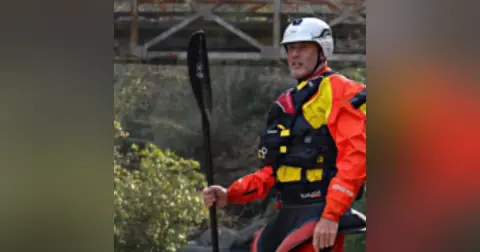
#174 - Performance Paddling with Chris Hipgrave encore

 Apple Podcasts

 Spotify

 Overcast

 Castro

 PocketCasts

 RSS Feed
Today's episode is an encore presentation with Chris Hipgrave about performance paddling and the balance of physical, technical, and mental skills across disciplines—from slalom and wildwater to surf ski and sea kayaking.
We cover surf ski racing (including the Gorge Downwind Championships), expedition guiding in Bhutan and Antarctica, forward-stroke technique, training motivation, and practical advice for pursuing big paddling goals.
00:09 - Encore with Chris Hipgrave
02:09 - Paddling Background
02:43 - Performance Paddling
04:03 - Surf Ski Life
06:23 - Gorge Downwind Classic
09:00 - Wildwater Explained
12:03 - Slalom Roots
13:20 - Sprint Lessons
14:51 - Olympic Leadership
20:28 - Forward Stroke Tips
22:27 - Bhutan Expeditions
27:28 - Antarctica Guiding
32:48 - Goal Setting Advice
34:56 - Future Guest Choice
0:02 Welcome to Paddling the Blue. With each episode, we talk with guests from the Great Lakes and around the globe who are doing cool things related to sea kayaking. I'm your host, my name is John Chase, and let's get started paddling the blue. Welcome to the Paddling the Blue podcast. If this is your first time, welcome, and I'm glad you've tuned in. And if you're a regular listener, thank you as always for the continued support. For the last few episodes, I've been digging into the archives to serve as a few guests from the early days and make sure their voice is heard. And today I'm bringing you an encore performance of my interview with Chris Hipgrave. Now over the years, Chris has become a good friend. He's truly a man of many talents, equally at home in a sea kayak, wild water boat, surf ski, and probably anything else that floats.
0:44 He's the North American sales manager for P&H Piranha Kayaks and the driving force behind the Gorge Downwind Championships. Chris has a great philosophy on performance paddling, and I'm glad you're here to listen. Before we get to today's conversation with Chris, James Stevenson and Simon Osborne at OnlineSeaKayaking.com continue to produce great content to help you evolve as a paddler and as a coach. You'll find everything from basic strokes and safety to paddling in tides, surfing, coaching, documentaries, expedition skills and incident management, and more. And if you're not already a subscriber to OnlineSeaKayaking.com, here is your opportunity to get started. Visit OnlineSeaKayaking.com, use the coupon code ptbpodcast to check out and you'll get 10% off just for being a member of the Paddling the Blue community.
1:28 And for those of us who also enjoy paddling whitewater boats, which Chris is also equally comfortable in, be sure to check out the online whitewater.com. They're also offering the same discount to listeners. Use the coupon code ptbpodcast at checkout and explore. And I'd love to help you put those skills to work. I offer a wide range of programs in the Great Lakes and beyond from paddling skill development, instructor certifications and workshops, CPR, wilderness first aid, guided trips, and more. Just visit pedalingtheblue.com, click on the courses and trips link at the top of the page, and I hope to see you on the water. Enjoy today's Encore interview with Chris Hipgrave. Hello, Chris. Welcome to Paddling the Blue. Hey, John. Thanks for having me.
2:09 So, Chris, give us a little bit of information on your personal paddling background. Well, it's a long history. I started paddling when I was very young. I started in a slalom kayak. And I was six years old, I think. And I did my first slalom race when I was nine. And then from there, it was just kind of a landslide of different types of paddling, racing, exploring, and just generally having fun in my kayak through today. So I've been paddling for about four decades now. So you've got quite a background, quite a wide range of experience. And you gave me a term earlier that I really liked, and that was performance paddling. So what got you started in performance paddling, Chris?
2:50 I think it was a soft entry. I don't think I really understood, what I was doing, but starting off in slalom, obviously there's, a great deal of performance involved there and i kind of break my performance paddling up into three buckets, there's the physical the mental and the technical you've got to mention those are three glasses you've got to keep filling those glasses up with your physical technical and mental knowledge in order to be the best paddler you can, and those glasses if i those glasses start empty right so as a slalom paddler I started filling up those glasses with those three pieces of knowledge and then a slalom lost my interest and I went elsewhere.
3:34 Those glasses were suddenly empty again. So it was a chance to fill them up again. So that term that we use, performance paddling, for me, every time I turn another corner and find something else that grabs my attention, the goal is to fill those three glasses up and and to become a performance paddler in that particular that particular area whether it's expedition paddling whitewater surfski sea kayak whatever it is you know my goal is to try and be the best paddler i can. So what's filling your glasses right now? Right now, surf ski is a big part of my life. Surf skis are these really long, skinny sit-on tops. So my day-to-day boat is 21 feet long, but only 17 inches wide at the waterline.
4:20 And it's a composite boat. It's a sit-on top, and it's designed for racing in the ocean primarily. So I do a lot of racing, not just in the ocean, but also flat water. So that's learning that's learning the forward stroke the perfect forward stroke from which you might know which we always talk about in sea kayaking, but at the highest level it's executed there by our olympic sprint paddlers so you've got that aspect then we also know how to surf swells and that type of stuff when we're racing in the ocean, it's a really multi-dimensional sport it's really really fun so that's that's a big pursuit right now, and then i had a few injuries last year so this year i'm also turning my attention later in the year to to doing some more creek racing some of this class five racing which is really really fun, and then at the end of 2020 i'm heading back to antarctica to, to do some more sea kayak guiding down there so that's my that's my goal in 2020 those are my three three big buckets very cool so tell me so tell me about some of your, uh, some of your surf ski history here.
5:27 I found surfski pretty late, pretty late in life. But all of the other sports I've done and all of the other competitive sports I've done within paddling have all kind of been loner sports. So what I mean by that is when they say go in slalom, you're on the course by yourself. When they say go in wild water, it's just you and the river. Surfski is very different. no there might be two three four five hundred people all lined up on that start line and when they say go we've all got to figure it out and it's really really fun being around people and to me that was the draw, just just to mix it up shoulder to shoulder rather than being just you and the river or you and the chunk of water, yeah that really attracted me to it and it didn't take long for it to suck me in and i ended up going down the surf ski rabbit hole so i've only been doing SIRSKI for less than 10 years. It's been a really fun journey.
6:23 So what are some of your favorite races that you've done? Oh gosh. My single favorite race has to be the Gorge Downwind Championships. It's on the Columbia River near Hood River, Oregon. I know it sounds crazy referencing a river, but the Columbia River is massive. So it's hundreds of thousands of cubic feet per second, CFS. Of moving forward to heading towards the Pacific Ocean. But in the summer, they have the hot desert to the east of the Cascades and you've got the cold Pacific over there by Portland. So you get huge, huge winds coming up the Columbia River Gorge going against that current. So you get these huge swells moving upstream on the Columbia River.
7:07 So we're using our surf skis for that and it's super fun. i, mean you can have these huge slugs of these huge swells which you would normally associate with the ocean but you're on a freshwater river that's a mile wide, so that is by far my favorite race of the year and of course it helps it's in north america, yeah so i'm i'll be heading back out there again this summer for sure, so what is it about that specific race is it just the water the environment uh what what is it that drives you on that one uh all the above. It's uh it's an amazing location so you've got as you're paddling you've got snow snow capped mount hood to your right snow capped mount, adams to your left that doesn't that doesn't hurt no sure of course you're you're paddling fresh water which is really really neat and unique for a surf ski race where you would normally be in the ocean, you can literally paddle to a coffee shop or to a brewery.
8:03 Like get out of your boom, five minutes later, you're eating or drinking and having fun. And it has hundreds and hundreds of people from all over the world. So it gives us a chance to compare ourselves and to learn from the best people, in the sport. It's a really, really cool environment. So you mentioned that a lot of the other races were just you in the river. And although you've got other people in the race with you, it's still you in the river. You're still inside your head. Yeah. Correct. I raced pretty serious just over a decade and wild water races for anywhere from 15 to 25 minutes typically and it's us on the river, but you'll start at intervals.
8:45 So you'll start and a minute behind you, the next person will start. The minute behind them, the next person starts. You never really know how you're doing until you see the results. But you're right, it's you and it's the river. So you're still very much in the moment. So for our listeners' benefit and for my benefit, can you give a little definition of wild water so everybody knows what we're talking about? Well, wild water is a non-Olympic discipline governed by the International Canoe Federation. And we use four and a half meter composite kayaks. And they're shaped like lawn darts. They're shaped like lawn darts. They've got really, really wide back ends and really, really sharp front ends.
9:30 And they're shaped like that to meet rules and we race down whitewater as fast as you can the guy with the fastest time wins it's that simple, there's no there's no firm route it's a start line and a finish line so you so you need to learn the river you need to learn where the fast whitewater is where the shortcuts are you, know all this while paddling a composite boat that that's feather weight while trying not to break it on the rocks and the whitewater yeah i'd imagine that's, that's quite a challenge. Fun. Really, really fun. Yeah. You mentioned that's like a 15 minute down river sprint. Yeah. I mean, typically, so we race two disciplines, sprint and classic. The classic race used to be around 25, 20, 25 minutes when I first started more these days, it's down around 15 minutes.
10:19 And then there's the sprint discipline. Sprint is all out. And those are typically 45 to 60 seconds. I am not very good at the sprint. I'm definitely more of a distance guy. So I kind of focus more on the classic stuff. What kind of distance will you cover over that 15 to 25 minutes in a downriver race? So I live on the Nantahala River. So we have a, it's the Nantahala runs 250 days a year. It's eight miles long. So that's kind of my typical training run. And so that eight, it's 8.2 miles top to bottom. And no, without killing myself, that's a 48 minute paddle.
11:01 So you're going pretty fast. The shape that you mentioned so you said four and a half meter long shaped like a lawn dart composite boat what's the the idea behind the shape so give us a little bit of the idea of physics there, uh well actually it's shape purely based on history so wild water's been around at the international level since the 1940s then those rules made sense that the boat had to be four and a half meters long 60 centimeters wide, but as manufacturing technology composite technology came in and people and hydrodynamics we realized we could get faster boats, but those rules those boats have to meet those same rather arbitrary rules that were written a long long time ago so that's why we have these shapes so with the water line the boat is still very narrow and with very little rocker for maximum speed, but, those big walls, those big 60 centimeter widths that we have to meet are well out of the water.
12:00 So that doesn't slow us down, but it gives us a lot of secondary stability. So you've got some other experience. You mentioned slalom. So tell us a little bit about your slalom background. I was terrible at slalom. So Olympic slalom is the, I'm sure many of your listeners have seen it, but it is one of the two Olympic canoe and kayak disciplines. Races are fairly short and you're going through these gates and you have to go through the gates in sequence on white water. And some gates you paddle are going upstream and some are going downstream. Red gates are up, green gates are down.
12:40 And yeah, it's a really dynamic acrobatic sport these days. Back when I started, slalom races were in the two to three minute range. But these days, they're half that or less. And these days as well, we're seeing them done a lot, artificial slalom courses. Whereas, again, 100 years ago, there was no such artificial slalom course. It was all done on natural rivers. But watching it today is phenomenal. These guys are just incredible athletes, powerful, fast, acrobatic. Yeah, it's a beautiful sport to watch when it's done well. Yeah. It is quite amazing to watch. And you had also mentioned sprint racing as well. So you get some slalom sprint, the downriver wild water, the surf ski. Tell us a little bit about your sprint background too.
13:30 Actually, I don't really have any sprint background. So sprint is always somewhere that I look for places to learn. The forward stroke is something we're always trying to perfect, whether we're a sea kayaker, a wild water paddler, or a surf ski paddler. And the Olympic sprint guys are the most invested in the perfection of that forward stroke. So sprint has always been someplace where I've always turned to for my inspiration, whether it's talking to coaches, talking to athletes, sitting in on trainings, getting videoed by a good coach. It's an incredible resource to look at.
14:14 To a degree, the longest sprint race is three and a half minutes, whereas the shortest surf ski race is probably 45. So there are some things that we have to look at with a grain of salt. But yeah, the sprint forward stroke is truly beautiful. Again, when it's executed correctly and we've seen some really interesting progression of the forward stroke over the last decade or so as well at the Olympic sprint level. So it's been fun taking some of that over to surfski and wild water as we continue to play with our forward strokes. Yeah, and you've got some experience in the Olympic sport as well, right?
14:56 Yeah after the athens olympics in 2004. Ended up getting hired by usa canoe and kayak which is at the time was the national governing body under the u.s olympic committee so i got hired by them as the olympic high performance director, for olympic slalom and olympic sprint for the beijing quad so we spent the last the next four years hiring coaches and working closely with the olympic committee, to execute execute a searching olympics so i got to go to beijing a handful of times and and to work with work with some obviously amazing athletes at the very pinnacle of their careers, it was it was a very interesting four years it's not not a four years i would care to repeat but it was very very interesting, So, what was your role specifically in that? As Olympic High Performance Director, honestly, I found myself being the no guy.
15:59 The athletes wanted more, you know, the coaches want more, the Olympic Committee wanted more, you know, and it's just more money, more time, more resources, more results. And I was the guy that had to find the balance in all of that to try and keep everybody happy in the chain. So yeah like i said it was a very interesting opportunity and one i'm grateful that i had i learned a lot but it's not not something that i would ever choose to do again wow stressful times i'm hearing i'm hearing, yes yeah it was very stressful and and somewhat disappointing, i think before that opportunity i very much viewed the olympic as really the pinnacle of the sport and it's almost unattainable level of athletic accomplishment, but then had a getting to look under the curtain behind the curtain at what the sport was about what the olympics was all about kind of took the uh took the luster, off of what it is and seeing seeing the athletes used as pawns as as as people in suits bargain about money and tv rights and all that kind of stuff, and finding out that that very much drove a lot of the narrative of the Olympics.
17:15 Again, kind of a change in my mind. About what the Olympics really are. Yeah, you're right. We have this picture in our head of what's going on behind the scenes and from that, seeing what truly goes on behind the scenes gives you a much different picture of it all. Sure. And to be clear, the pursuit of excellence in any sport should be should be, applauded by anybody regardless of the sport and even canoe and kayak it's an amazing journey and it's a journey that everybody should try and try and do whether they're trying to whether they're trying to be the best driver, or whether they're trying to be the best best sprint athlete doesn't matter, what it is it's a pursuit and they should be applauded, so i definitely don't want to take anything away from that and chase it and if your dreams are to go go to the olympics absolutely absolutely, go for it but there's very very few people that actually make it that far, yeah well to get back to that pursuit of excellence as you mentioned that you were bringing some of the learning from sprint into your surf ski life so tell us a little bit about some of that learning and some of the things you're bringing into the from the forward stroke there so, i think i mentioned earlier that i break my, i break my pools of knowledge into three glasses, so the physical.
18:35 Technical and mental aspects of it so from a sheer technical standpoint an efficient forward stroke is a fast stroke, and that's gonna gonna that's gonna propel you to the front pack in surf ski you need to be fast and have a really efficient forward stroke so again Again, as I've mentioned, sprint is a very great place to look. For that level of knowledge. So, that's where you can feel some of these aspects of the forwards and a plan to surfski. But he isn't done on a linear playing field. Olympic sprint is generally the water's dead flat, whereas surfskis are designed for the oceans.
19:19 So it's a three-dimensional playing field. So that forward stroke has to be adaptable. It has to be able to work when you're flying down a swell at 20 miles an hour, you're sprinting to get on a swell, or you're trying to outrun a wave that's about to break you. So it has to be a very adaptable forward stroke. And so that's the technical side of things. And then there's a physical side, the ability to physically put in that power, that physical ability to push that boat forward again to accomplish the same things that we've just talked about and then of course the mental side you know, do you have the do you have the mental fortitude to, commit to drive down that huge three meter swell into surf or is your brain saying hell no, and so you need to train your brain in order to do that kind of stuff so these are all.
20:17 What I've just covered is at a very high level, but those are essentially the three buckets that I like to work on that I bring to surfskate and I work on day-to-day, month-to-month. So assuming someone has the physical ability and the mental fortitude to go forward with that, for some of our listeners who might be looking to improve their forward stroke, are there any specific nuggets of wisdom that you might have that you want to pass along to anyone? Yeah i there's so i i actually get to teach forward stroke a good bit i find myself doing it more and more at sea kayak symposiums, and the number one piece of feedback that i would give anybody is that paddling forward is not the act of pulling the paddle through the water it's actually the act of creating an anchor with the paddle, and then pushing the boat forwards with your lower body with your legs and that's as simple as that sounds that that is the biggest broken uh broken chain that i see uh that i see, most people doing in but not just in sea kayaks but sea kayaks surf skis whitewater you name it so let's let's go back to the racing for just a little bit what is it about racing that why do you race, That's a great question. And it's a question my wife asked me not long ago.
21:31 She was, what motivates you to do that day? Again, the pursuit of excellence drives me. Knowing what my training plan says I should do and knowing why I'm doing that particular exercise that day and how it can make me a better paddler, I find massively motivating. And that's the hard journey. Training is the hard journey. It's waking up when it's rainy and snowy and crappy and you don't want to be out there. That's the hard bit. But the easy bit is race day. You've done all the hard work and now it's a chance to see if you can put it all together. See if you can beat that guy that's beating you. See if you can get on him for the first time. See if you can set a PR.
22:13 Whatever it is, racing is almost the day. And I really, really enjoy being tested. I'm a very competitive naturally being first. I don't like being beaten. Even if even if it's driving to work um so who, so so yeah i think that i think that's what it is so you talk about the motivation the planning the execution and one of the things that we were talking about before the interview was a lot of the other pursuits that you've done around the world and how those really relate to performance paddling and we mentioned that your expeditions to bhutan so tell us a little bit about those and how those translate to your racing life into the three buckets?
22:56 I call everything that I try to do at a high level performance paddling. There's no difference between trying to win a Sursky race, or trying to put together a great paddling trip, first descent in the Himalayan mountains in Bhutan. It's all a journey to get to that easy day. So it's that preparation, it's the planning, it's the research, finding out what you need to do and then flawlessly executing it while also having the adaptability, within that structure to change challenges that are going to get thrown your way. So to me, that's all performance paddling. And you touched on my two trips to Bhutan.
23:41 The Bhutan kingdom in the Himalayas is about the size of West Virginia. And during one of those trips, we had a chance to do a pretty major first descent where we came into the country and figured out how to get as far upstream as we could, really close to the base of some unclimbed 20,000 foot mountains. And we successfully paddled down that river. It sounds very simple, what I've just described, the outcome, but it took months and months and months of preparation in order to get there. And that preparation is no different than trying to get on the podium at a race. So were you there as a state-sponsored trip, or how'd you end up getting to Badan?
24:22 Some really good friends of mine, Nick and Maria Williams, they got a contract with the Bhutanese government. So neighboring Nepal has some similar infrastructure in terms of similar natural wonders. Basically, they have lots and lots of rivers. And in Nepal, there's tons and tons of whitewater rafting going on. but all of those businesses in Nepal are owned by Westerners. So the Nepalese do all the hard work and all the money leaves the country. So Bhutan wanted to put in adventure tourism, but they wanted to set it up as being state-owned so that the tourists would come in, they'd have similar experiences on some amazing whitewater rivers, but the operations would be owned and operated by the Bhutanese.
25:10 So the Bhutanese benefited from their own resources. so absolutely amazing so they reached out to nick and maria and they said will you come over here and will you we'll give you a car we'll give you some folks drive around the country, we'll drive around the country and paddle all of our rivers many of which had never been paddled before and tell us what we've got and what where we should put some rafting operations and of course they said yes that was how i ended up in bhutan twice and, gosh what a and it was such a special journey absolutely amazing place. And so how has that worked out for the Bhutanese? I think well. I think even just this year, Bhutan was rated the number we used to go by National Geographic.
25:52 And the folks I still talk to in Bhutan, the Bhutanese, my friends over there that I still chat with, they say it's going pretty well. And adventure turrets definitely started to take off in a controlled fashion. So whether it's whitewater, birding, climbing, trekking, all taking place there, but in a very controlled and sustainable fashion. Sadly, it isn't necessarily happening across the border in Nepal. It's quite an interesting approach that the Bhutanese government stepped in and wanted to take that step and wanted to have ownership of it, not necessarily as a governmental body, but have the residents, the citizens have ownership of the tourism?
26:38 Bhutan itself is a very, very special place. It's a kingdom, but the king of Bhutan notably stood in front of the United Nations and told them that he was more concerned about gross national happiness than about gross national product. That was his most famous speech that he gave. It's an incredibly where national dress and national dress is still worn. Buddhism is still widely practiced across the country. Just some very, very special people with some very, very special values are there. It truly is a magical country. It's one that I would very, very much like to get back to one day.
27:21 My wife and I actually got married there. I think of what we could accomplish as a society if we focused on gross national happiness. Isn't that the truth? Earlier in the interview, you mentioned your race plans for the year and you also kind of slipped in at the end there, guiding in Antarctica. So tell us a little bit about the guiding processes coming up. I guide for a company called Aurora Expeditions. Aurora operates some of the smallest boats down in Antarctica. So we're all based on essentially these teeny weeny ice-hardened cruise ships, but this isn't this isn't your mom and dad's cruise ship so i think when we say cruise ship you think of these things going up and down the caribbean, with buffets and drinks and all that kind of nonsense now that's that's not what these guys are about aurora is a 100 activity company so if you're if you're traveling with aurora whether it's the arctic antarctic or elsewhere, you're getting off the boat you're you're skiing you're snowshoeing, you're kayaking.
28:24 At the very least, you're in a zodiac looking at some amazing wildlife. So I'm a sea kayak guide for Aurora. So I get to go down to Antarctica and share that very, very special place with some really, really cool people. That sounds like a pretty terrible gig to have to endure. It's awful, John. I would highly encourage you not to go. So how did you get- It truly is an amazing place. I've had a chance to travel, safely, as you can guess. And Antarctica is the one place where I can honestly say it's almost unfathomable that you're on the same. It's so alien down there. So alien.
29:07 So how did you get hooked up with Aurora? again friends okay knowing the right, knowing the right people so a friend of mine up here bob pal a friend a guy paddler with a time he did his thesis on antarctic, and so he was guiding through aurora and, data down there for his thesis i always thought that was a really cool thing to do, and i had a point in my life where i realized i could do it so bob introduced me to people and introduced me to a guy called uh al backer who runs kayaking adventure trips all around the world, al and i hit it off and boom oh i was guiding in antarctica it's not you know you still got you still have to, get some qualification to back that up from the coast guard and that kind of stuff but but yeah i've never looked back it's truly an amazing place, yeah i imagine that this not just an aca certification and an online course to the coast guard so what kind of qualifications do you And that I'm needing.
30:08 Right. So the first one is obviously the ability to safely guide people's sea kayaking. So that does come with experience, firstly. But secondly, having a piece of paper that says you can do it also helps. So for us here in America, that would be through the ACA. Elsewhere, it might be British canoeing or whatever the qualification might be in your country. The next piece is the Coast Guard STCW. so it's the stcw is executed in north america by the u.s coast guard, but it's actually global qualification and you spend five days learning how to deal with anything that might come up on a ship so one one day for example we were in firefighting gear learning how to put out fires on a ship, then you also deal like with uh, another day we're learning how to deal with contagion which is obviously a good thing to think about today, because we're in the middle of this corona outbreak.
31:06 So what if that happened on a ship? How would you deal with that? So that's a five-day pass and fail course through the Coast Guard. And then the big one is actually an online test that you take through the International, Antarctic Treaty of IOTO. Basically you need to prove through a test that you've that you've got the knowledge to know. Do around certain wildlife like how far can you approach a whale for example, what should you do at penguin colonies so this is wildlife aspect and then there's the sit then there's the location aspects when you when you rock into the beach at salisbury plain on south georgia island where can, you go where where are the risks where are the avalanches likely to happen that's an exhaustive exhaustive test that takes on a good day five four to five hours.
32:04 Even after you've done all the all the reading to back it up, So I can certainly see now, aside from the physical beauty and just the sheer intensity of the place, I can certainly see how that's another one that fits into those three buckets for you of the physical, mental, and technical, and then combines all the motivation, the planning, and the execution, the things that you love about paddling. Yeah, I think that's the draw. When you're guiding guests in Antarctica, you can't get it wrong, right? The water's right at freezing. You've got ice moving around. you've got big mammals swimming around in the water. It's an environment that deserves a great deal of respect. So, it's fun getting those three buckets filled up and then going down there and doing a great job.
32:48 So, Chris, we've got lots of listeners that have lots of different goals. And so, I'm curious, what advice would you give to someone who's either considering racing or undertaking a big expedition goal or just has some huge goal in life that they'd like to accomplish through paddling any specific advice that you have for them, first things first write that goal down and share it with your friends because your friends and family can then hold you accountable as you move towards that major goal, secondly i would say create little which will move you on a path towards your major goal and again share those with your friends and family so they can hold you accountable and then as you move through those goals back it up with knowledge knowledge is power.
33:31 Think about those three glasses, those college that I've talked about, the technical, the physical, and the mental. There's a lot of resources online, books, et cetera. Talk to coaches, anyone else that might be able to help you move through those incremental goals, towards your big major goal, and it will happen for you. Well, Chris, I really appreciate your time. I really appreciate listening to the wisdom that you have here. Chris, how else could listeners contact you? I've got a website, ChrisHipGravedome, where I try and blog about some of my exploits, though I admit I have been particularly lazy about putting anything, up to date out there the last couple of months.
34:11 But I'm also on Facebook. You can find me on Facebook, and I'm on Instagram, posting pictures from my adventures at HipGraveChris. Yes. And Chris, what's the next big adventure for you? Well, the next big adventure is trying to get the coronavirus, John. Yes. Once we get through that, my next big goal will be the Gorge Downwind Champs, in the summer, back out in the Hood River. And then I'll be back in Antarctica this winter guiding again. So there's a bunch of races and a bunch of stuff in between, but those are the two big ones this year. Well, Chris, again, thank you. And I know that I'm going to go away and spend some time here thinking about how I can fill those physical, mental, and technical buckets as well.
34:56 So, Chris, one last question for you. Who else would you like to hear as a future guest on Paddling the Blue? That's a great question, John. And the name that immediately came to mind with a friend of mine called Carter Johnson. Carter is one of the most passionate paddlers I know that happens to also have a pocket full of world records. In various various crazy parts of this sport and he's just a wonderful wonderfully engaging, and interesting individual i think you'd really enjoy talking to, fantastic i will i'll collect the contact information from you and as well you've given me some other information here that i'll make sure i get in the show notes so our listeners can take advantage of that knowledge and fill their own buckets, chris again thank you very much for your time today i really appreciate learning from you and i know our listeners are really going to enjoy the interview as well so Well, thank you. Thank you, John. It was a pleasure.
35:50 If you want to be a stronger and more efficient paddler, Power to the Paddle is packed with fitness guidance and complete descriptions, along with photos of more than 50 exercises to improve your abilities and enjoy your time on the water. The concept and exercises in this book have helped me become a better paddler, and they can make a difference for you, too. The exercises in the book can help you reduce tension in your shoulders and low back, use the power of your torso to create leverage and use less energy with each stroke, use force generated from your lower body to make your paddling strokes more efficient, have the endurance to handle long days in the boat, drive through the toughest waves or white water, protect your body against common paddling injuries, and while you're at it, you might even lose a few pounds. And who wouldn't mind that?
36:31 So visit paddlingexercises.com to get the book and companion DVD. I hope you enjoyed today's Encore episode with Chris Hipgrave. As I said at the beginning, a man of many talents. I personally like his focus on the three buckets of physical, mental, and technical knowledge. As a reminder, if you're not already a subscriber to onlineseekhiking.com or onlinewhitewater.com, use that coupon code PTBpodcast to check out at either of those two sites and you'll get 10% off just for being a member of the Paddling the Blue community. And you can find programming and trips for me at paddlingtheblue.com. Click that courses link at the top of the page and I hope to see you on the water. Thank you as always for listening and I look forward to bringing you the next episode of the Paddling the Blue podcast. Thank you.
37:15 Thank you for listening to Paddling the Blue. You can subscribe to Paddling the Blue on Apple Music, Spotify, or wherever you find your favorite podcasts. Please take the time to leave us a five-star review on Apple Music. We truly appreciate the support. And you can find the show notes for this episode and other episodes, along with replays of past episodes, contact information, and more at paddlingtheblue.com. Until next time, I hope you get out and paddle the blue.