#170 - Rapids to round Ireland with Wild Atlantic Warrior Jon Hynes encore

 Apple Podcasts

 Spotify

 Overcast

 Castro

 PocketCasts

 RSS Feed
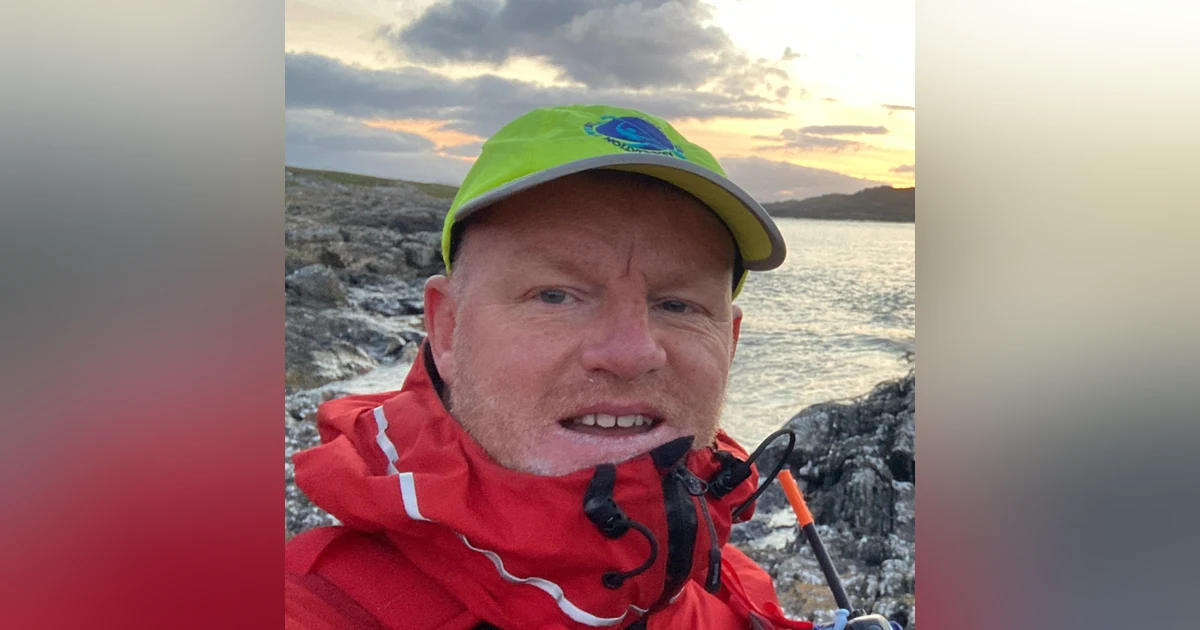
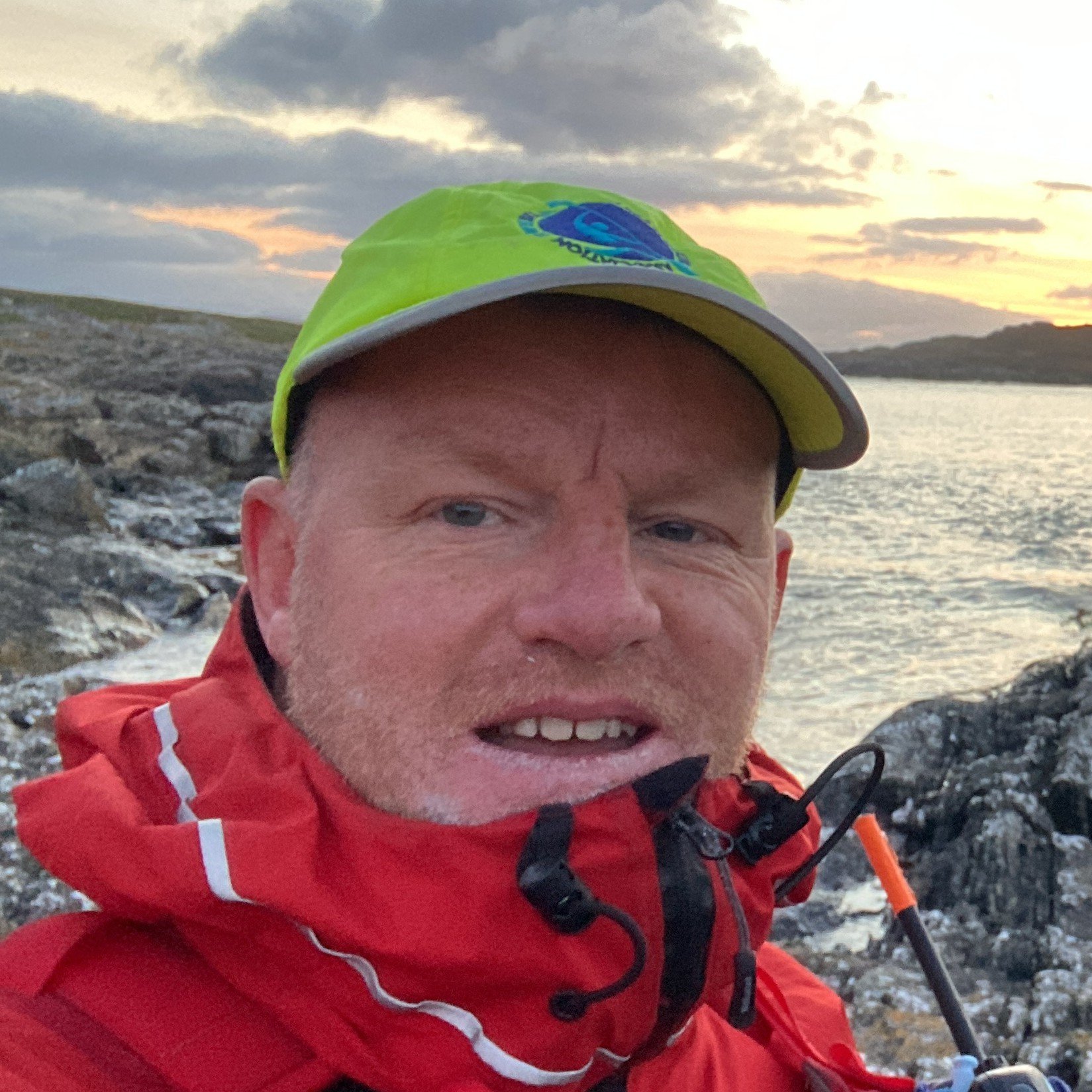
Today's encore episode of Paddling the Blue features Jon Hynes sharing stories from the Cork coastline, his love for Fastnet Rock, and his solo crossings, plus why adventure, preparation, and resilience matter.
He discusses teaching philosophy, “train dirty” skill-building, environmental stewardship for paddlers, and practical tips for planning large expeditions. The episode is a mix of inspiring adventure, coaching insight, and a call to care for our coasts.
Learn:
- Wild Atlantic Way-Ireland's Spectacular Coastal Route
- Kinsale Outdoor Education Centre
- Fastnet Rock
- Royal National Lifeboat Institution
- Irish Canoe Union
Connect:
00:09 - Encore with John Hines
03:45 - From Whitewater to Sea
05:09 - First Sea Kayak Baptism
08:37 - Outdoor Education Careers
11:51 - Sea Kayaking’s Future
16:01 - Round Ireland Lessons
21:07 - RNLI Service
22:26 - Solo Cork Coastline
26:33 - Solo Paddling Debate
27:33 - Ireland’s Best Paddle Spots
30:28 - Kite Surfing Winter Joys
31:57 - Community Over Certificates
34:57 - Roaringwater Bay Adventures
35:55 - Music, Writing, and Balance
37:21 - Life Behind the Scenes
38:23 - Expedition Gear Essentials
39:48 - What’s Next Ahead
41:10 - Reach Out to John
0:02 Welcome to Paddling the Blue. With each episode, we talk with guests from the Great Lakes and around the globe who are doing cool things related to sea kayaking. I'm your host, my name is John Chase, and let's get started paddling the blue. Welcome to today's episode of the Paddling the Blue podcast. Today's release is an encore episode from the archives of a really fun conversation with John Hines. And John is someone who is truly living life to the fullest. Every social media post has a smile on his face, exploring new things and old favorites, and always finding ways to help others. He's the epitome of an adventure athlete and all-around good person. Before we get through our chat with John, James Stevenson and Simon Osborne at OnlineSeaKyaking.com continue to produce great content to help you evolve as a paddler and as a coach.
0:45 And you'll find everything from basic strokes and safety to paddling in tides, surfing, coaching, documentaries, expedition skills, and incident management, and more. So if you're not already a subscriber to OnlineSeaKyaking.com, here is your opportunity to get started. Just visit OnlineSeaKhiking.com, use the coupon code PTBpodcast at checkout, and you'll get 10% off just for being a member of the Paddling the Blue community. And while you're there, be sure to visit the community section where you'll find an interview with me. Big thanks to Simon and Daniel for hosting me on one of their meetups. And for those of us who also enjoy paddling whitewater boats, please be sure to check out OnlineWhitewater.com. They're offering the same discount to listeners with that same code PTBpodcast to check out.
1:26 And I'd love to help you put those skills to work. I offer a wide range of programs in the Great Lakes and beyond from paddling skill development, instructor certifications, workshops, CPR and wilderness first aid, guided trips, and more. And there's still lots of time left in 2026, and I'm currently working on the 2027 calendar. So let me know what you'd like to see, and we'll see if we can make it happen together. Visit paddlingtheblue.com, click the Courses and Trips link at the top of the page, and I hope to see you on the water. I hope you really enjoy today's Encore episode with John Hines. He's a great guy. Hello, John. Welcome to Paddling the Blue. Hello, John. It's really, really nice to talk to you, and it's a real pleasure to meet you on the podcast. Yes, I appreciate the opportunity.
2:08 So you've had quite an extensive experience in both sea kayaks and whitewater kayaks, and I know you started, I think you started as a whitewater kayaker, is that right? Yeah, little did I know my early childhood formative experiences and some really basic kayaking that would take me to where it has over the, what is it, the last 38 years now and really, really, look back at those childhood experiences with a lot of funness, particularly some great role models and mentors in Limerick Canoe Club who kind of took this young guy under the wing and brought him everywhere for a while. So what was it about paddling that attracted you as a youngster? Well, I grew up in a kind of a rural setting in County Limerick and, you know, running across fields and climbing trees was quite normal as a child.
2:52 But I have a very vivid memory of my cousin, James. He was a very successful cable paddler. And my uncle, John, used to bring me to watch him race in the famous Liffey Descent. And I remember looking at it going, I have to do that. So after badgering my parents for a while, they finally phoned up the local canoe club and And they took me on and away I went. And I also had a lot of childhood experiences in the scout movement and some brilliant adventures at tents and, you know, exploring coastline and so on. So that really cemented a love of the water. I suppose the other thing that was really formative was my parents used to bring me on holidays to West Gork to a place called Skull every summer.
3:34 And early morning boat trips, catching mackerel, climbing rocks, and eventually getting my own kayak. Those memories are pretty vivid these days. Wonderful. And they've brought you to where you are today. So during your youth, you had quite an extensive whitewater paddling experience, I understand. So tell us a little bit about where that took you. Yeah, that's right. When I got into outdoor education, I did a year-long training course and pretty quickly I found, oh, you can work as an instructor. And I'd never really realized that when I was in secondary school. So once I got into that, I got a job in a well-known outdoor center here called Capinalee Outdoor Education Center. And it's in a beautiful part of southwest Ireland in Kerry.
4:15 And I was lucky enough to hit that center at a time when there were many other brilliant outdoor people. And we were kayaking before work during work and after work and we just lived and breathed kayaking for a long time so I had the kind of good fortune to be in the right place at the right time and I was really motivated to push myself hard, so I got into freestyle kayaking I was chasing rainwater all over Ireland and pretty soon then that led to trips abroad and, spent many many summer seasons in the French Alps. I've been to Nepal on many trips, the Zambezi, and just a lot of really hardcore adventures. And then taking responsibility for people on those trips as well was something I really enjoyed.
4:59 It wasn't always the easiest of jobs, I might add. And, you know, we had a fair few bumps and scrapes along the way, but I really, really enjoyed that phase of life. So it's interesting. So what made the switch to sea kayaking for you? I won't say it was instant, but I certainly remember my boss at the time, Donald Dowd. He came up to me one day at work. I was only a young guy at the time and I thought I knew it all about kayaking, how naive I was. And he said, what are you doing for your summer holiday? And I said, I don't really know. He says, well, do you want to come sea kayaking on the west coast of Ireland? And without realizing what that meant, I just said yes. And whoa, did I have a baptism of fire on that week.
5:40 Our first day crossing out Dinnish Boffin was in massive seas in this ocean cockpit, Nordkap that I'd never paddled before with a fixed gag and tons of gear. So, but he knew enough to push me into my outer adventure zone, but not push me past that. And that week was just the most amazing experience. So that was the first time I guess I became aware of the environment and the power of the coastline, the dynamics of the sea, the beauty of the nature, and also the pristine nature of our coastline. And it took me a while more to kind of wash the whitewater phase out of my career. And, you know, sometimes that had big landmarks in it with the odd bit of tragedy as well.
6:23 So there was kind of a natural turn when my first daughter was born, Aoife. And I kind of pushed the kayaking as far, the whitewater as far as I wanted to go. And then sea kayaking just began to consume me after that. And I've not turned away from it ever since. So I'm curious, before going on that first sea kayaking trip, what was your perception of sea kayaking? I knew there was something special there. The idea of expedition was something that I was really curious about, but I didn't really have the knowledge or the skill set yet to kind of embark on that. So it was really, I was relying on the likes of Donald to kind of showcase or show me the way on that. But my perception was curiosity and that it, it perhaps at the time appealed to the elder paddler, which I was quickly corrected on.
7:13 So what surprised you most on that trip? Well, I suppose the youthful naivety thought, oh, I can handle myself on a grade four or grade five rapid. But usually if you swim in one of those rapids, you can hopefully swim out quick enough. But when you're a couple of miles out to sea and it's raging, it's kind of a slow, patient exit to get back to safety. So outdoor recreation as a career now that's it's interesting because it seems to be a much more i guess i'll say a viable career in in ireland and the uk, than it is here in the u.s so tell me about that. Yeah, we could spend a whole week speaking about that particular topic. But yeah, look, I started out in this because I didn't really know I wanted to do when I left school.
7:58 I just happened upon it. But over my career, it has evolved into quite a defined sector and it is pretty well resourced. There are things that we'd like to improve, but it's a very powerful learning tool, not just for the young, for people of all ages and classes. And I'm deeply passionate about sharing what I've learned from the power of outdoor education with others. It isn't always about the winner or the first to the top of the mountain. It's about just being in nature and I suppose the well-being or the presence that it can bring. I'm really interested in that and how people operate outdoors. So tell us about your experience with the outdoor centers.
8:40 I suppose we always look back on our youth somewhat with rose-tinted glasses. But I spoke there previously about my few years with the Cap'n Lee and that was, it really was an amazing time. There was such energy about, we had a vision for the centre and how we wanted to teach. People were dedicated to their job and they pushed hard, passionately to do their best by their students. So that kind of gave me an early benchmark of how things should be or could be. And after I left there, I wanted to get into more responsibility. So I took a job as an activity manager up in Killary Adventure Centre on the west coast of Ireland. And slowly but surely, I started to work my way through the ranks and...
9:24 I had other jobs, like I was a development officer for our national governing body here with Canoeing Ireland for a few years. And then I ran my own outdoor business for 13 years. So I set up H2OC kayaking. I had a G-Town surf school. And so I've had so many experiences. But as I kind of came into 2011-12, I was kind of looking for something more. And there wasn't much security in the kind of business I had at the time. We'd been through some up and down times with the recession. So I went back to college and studied outdoor education in a well-known institute here. And that sort of set me up to move into the public sector where I was really fortunate to come and work for Cork Education and Training Board.
10:07 And I now managed two of our state-funded outdoor centers for them. For those who are not in Ireland or in the UK, either of the two, I suppose, tell us a little bit about how the outdoor, sorry, how the adventure center model works. That's not something that's common here in the US. Yes, and this is one of the curious things about outdoor education. If you travel around the world, there are various models of provision. So I suppose the foundation of outdoor education could be traced back to, say, the scouting movement or the emergence of camping in the UK as a kind of a holiday concept in the 1920s and 30s. But outdoor education centers, their roots here in Ireland go back to the late 60s and early 70s.
10:48 So we kind of have two models of provision here in Ireland. We have 12 state funded outdoor education centers, and then we have a whole network of fantastic commercial or private outdoor centers. So it does mean that our society here have pretty good access to a range of activities and programs across age groups and social classes and so on. So what activities might one find at an outdoor center? So our two centers in Kinsalen and Scull here in Cork, they're primarily known for sailing, but sea kayaking. We do a lot of powerboat training. We do rock climbing, orienteering. And more recently, we've really begun to focus on camp craft skills and environmental outdoor education.
11:32 And I suppose educating the upcoming generations that all these opportunities are here for you. we need to look after them. And also, if you spend time in them, you can also enhance your mental health and, you know, get better at making decisions and all the typical benefits that one expects from spending time outdoors. So tell us, how do you see the sport of sea kayaking advancing over the years? Or how have you seen it advancing over the years? Yeah. And this is something that really intrigues me a lot. I would be really excited about where sea kayaking is in terms of innovation. You know, there are national governing bodies all over the world. They all have schemes that allow people to come into the sport and to be trained well and to ultimately stay safer out in their activity, but also to extract, you know, a lot of fun and learning for themselves.
12:21 So there's been a lot of advances in that space in recent years, I sometimes am a little bit concerned about maybe the over-focus on maybe people wanting to get the best bit of video for YouTube or who paddled in the biggest seas. And so that sometimes worries me that people are competitive by nature to seek that footage. And sometimes there seems to be a lot of emphasis on how to climb back into your boat. Well, maybe if they spent more time focusing on staying in the boat for starters. And I mean that Humorously, but I really am interested in where we're going. I mean, with the advent of the likes of online sea kayaking, it's a really innovative space that Simon and James have developed there.
13:01 But there are also so many exciting providers, not just in Ireland and the UK, but all over the world, where if somebody's ambitious and they want to go to a specialist in, Greenland rolling or expeditioning or the first aid side of things, there are multiple providers to choose from. So I see us as a very strong community. But I have one aim that I would hope to try and advance in the coming years is I do think we can do more to look out for our coastlines and to make sea kayaking as environmentally friendly as we possibly can. And unfortunately, we use a lot of materials in the makeup of our equipment that sometimes doesn't match with the sustainability side of things. Watch this space, John. Are there other ideas that you have to help with that?
13:46 Yeah, I've never been a big fan of, you know, trying to enforce rules and that. I think it's really good if people are consulted and asked, how would you like to do this? What's the best way to do it? But definitely some sort of easygoing code of conduct that we can self-enforce would be good. I mean, there are so many initiatives like Surfers Against Sewage were the kind of first ones to do it, but the Clean Seas group. So if everybody did their little bit along the way in reflecting on how they use their camping practices, maybe ethical choices around sourcing their equipment, we could make sea kayaking an even more responsible place and play our small part in what is a climate emergency. So what do you think are the barriers that are preventing people from thinking that way?
14:30 I sometimes think that our sport can be a little clannish but that's no different to mountaineering or any other adventure activity for that matter so i guess one thing that binds us all together is the sea and i mean it's well documented internationally that some groups and industries use the sea as a dumping ground, we use it for our enjoyment and well-being and and for adventure, so if if sea kayakers could have a common space to agree that yeah we really need to look out for it i think that would help us an awful lot but there are lots of really good silos of activity like that happening but i would like to see some form of informal code that would bind us together and and look after our space more, and from a teaching standpoint how do you see teaching advancing and changing over the years that's a.
15:21 One thing that would concern me slightly is sometimes if you ask a kayaker, well, what experience do you have? Well, they might say I've got level this cert or level that cert. And even though I'm involved in sea kayaking education and I train and assess people, I do think it's important to just step away from that. It is fantastic to get proper training and to be safe and to plan well. But the true essence of the sport is about expeditioning and journeying and sometimes pitting oneself against nature and the sea, so not to lose sight of that, so I really, I'm a big advocate for putting the tent in the boat, planning well, and going into uncertainty to see what happens.
16:02 So you and Sean Cahill did an Around Ireland journey in 2015. And you did a brilliant documentary. It was just a fantastic, fantastic watch. And I will make sure I put that in the show notes here for folks to check out as well. But you had a message in there and it kind of spoke to what you just mentioned. So tell us a little bit about that message you had for the everyday paddler. Well first of all thank you for your kind words about the documentary it's it's like the gift that keeps on giving, you know we made it with love for the sport of sea kike and we gave it out for free we never sought fame or fortune or or money out of it so it's achieved that, tenfold for us but i guess the reason that we did that was both of us were introduced to the sport by amazing people and if it wasn't for them we wouldn't be where we are now, i guess we were just kind of saying to people that, you might have a dream in your head about sea kayaking.
16:57 It may not necessarily be about paddling around Ireland, any adventure, but make that dream a goal and sit down and get a poster or sit down with a friend and map it out, make a list, make a plan. I'm a really big believer in training dirty to battle easy. In fact, I had a really interesting conversation with Jeff Allen once about what's the best way to train for an expedition and get fit. I think he was quite right in saying and just get get in the sea as much as you can get beaten up by the sea a bit sea swimming would be a great way of doing it so um, i guess i love the uncertainty of that but my advice to people is just plan in detail contrary to what people might think on my training for around ireland, i actually didn't do as much long distance paddling as you might assume but i did a lot of dirty.
17:43 Dirty sea kayaking i did thousands of rolls lots of surf kayaking and just getting my confidence. Levels high. So the first day we went around Ireland, without being arrogant about it, I kind of had a feeling, yeah, I'm going to be okay here. What might you recommend for the average everyday paddler to prepare for something like a round Ireland expedition or something large in general? Start small, you know, build yourself up incrementally. You know, there's so many factors to think about. You really have to think about all the dynamics of the sea, the wind, the weather, the tides, the influence they have on the coastline, localised effects, and you need to get comfortable in those conditions. Your equipment set up as well has to be well tested.
18:25 If you go on long trips like that, you've got to be prepared for being cold, wet, hungry, tired, and needing to draw on your resilience. And whilst it might not be pleasant at the time. If you can see through that and push beyond that uncomfort, when you get back off it, then you'll be left with a powerful memory for the rest of your life. So yeah, I kind of like those moments where you're in adversity. So you mentioned train dirty to battle clearly or cleanly, excuse me. To battle hard, yeah. Battle hard. Okay. All right. And you said that's kind of what you focused on for your skill building. As a paddle sports instructor, how do you employ that in your instruction?
19:06 I think some people might say I have a bit of a brand for that. So, yeah, look, there's a concept out there of, you know, training in your comfort zone. And if you do that, you're probably not going to learn too much. So the challenge of my job is to, me paddlers, have a quick assessment of where they're at, make a shopping list of what it is they need to work on. But to bring them outside their comfort zone to their adventure zone and sometimes to bring them right outside to the edge of their adventure zone. But never crossing over into disaster zones. It takes a degree of confidence and courage to do that some days and don't always get it right because not only are you looking after somebody's physical well-being on the water but also their mental and emotional well-being too.
19:50 So I'm really interested to get that mix right with people and we talk a lot beforehand. We're very active out in the water but we also take time out to review and evaluate and look at what do we need to do the next time when we go out. But yeah, I'm really interested in seeing how people respond to the environment and my teaching. All right. So back to the, uh, to the Round Island trip or, or any large expedition. So use that one as an example. So what skill level or how would you, how would a person be able to gauge that they're ready? So when you had that moment on that first day and you said, yeah, I'm okay with this. What was it that got you to that point? Yeah, I'd be big into getting a poster out and, you know, doing a mind map of, you know, your goal in the middle and then having bullet bubbles all for all the different skill sets that you need.
20:39 Navigating and paddling in fog over long distances, open crossings. That's a pretty big one you have to get right for any major expedition. Sequencing of gear, testing out the food. So it's really, to put it simply, John, it's leave no stone unturned before you set off. And if you've built that mental mind map in your head, well, it certainly makes things a lot easier. I'd be very cautious about heading off, without having that level of preparation. So you have some involvement with the RNLI as well. Yes, that was a really interesting chapter in my life. So when I changed jobs in 2017, I'm fortunate enough to work just a couple of hundred meters from our local RNLI station.
21:22 And it'll always been a goal of mine to give something back to the sea for something that's been so kind to me over the years. I think it's well documented on previous podcasts here. You've had some amazing Ornalloy people on. And it is a really unique service where it's entirely voluntary. There's very little ego, if none at all, involved in it. And the people that crew those boats come there selflessly. So I had five amazing years of service with them. And unfortunately, due to health reasons, I had to retire from the boat crew last year. I was probably one of the youngest crew members ever to get a hip replacement. So, but yeah, during the five years, I came across some pretty interesting stuff at sea.
22:03 I think one of the things I enjoyed most was the camaraderie of heading off on a shout with three other expert crew members by my side and just seeing what are we going to? What do we need to do? And hopefully getting a result. And many of those would be very successful results. And then sometimes there are some sad moments when, unfortunately, we have to pick up people that have sadly passed. So you recently paddled the Cork Coastline. Tell us about that trip and why it was important to you. Well, I was always curious about solo. I've done lots of solo paddling, but always kind of day trips and so on. And that's a bit of a dilemma for me as well, because as someone who teaches sea kayaking professionally, you know within those systems that we teach solo paddling isn't really encouraged and it can be somewhat of a divisive issue for people but how and ever, what I paddle in my own time is a separate thing John.
22:59 But to answer your question I suppose first of all I made a commitment my wife had been unwell for a period of time and thankfully she's fine now but, After that sort of time, I had to get back out there and do something for myself. So I was always curious about my core coastline that I live on here. And it's an amazing county and a superb coastline. So really, I just wanted to attack it alpine style and see how fast I could go. And now that I have it done, I'm looking at it and go, OK, I need to go and do it again because I know I can shave a lot more time off it. But yeah. What I really enjoyed was the solitary time, the peace, the quiet I had.
23:41 An orca whale jumped up in front of me near Darcy Sound coming through the Mizzen Tide Race. It was enormous. I had to brace many times through that Tide Race. And when I got through it, I felt like I'd just won the World Cup. It was just a really brilliant four and a half days at sea and met some nice people along the way, as you always do on the Irish coastline. And also, I'm a big fan of falcon sails. You may know Patrick Forrester there. He's built some amazing kit. And I used that sail for some of that trip, not all of it. But I'm curious to go and do more solo paddling with a sail. So how was this trip, the Cork Coastline, different from your round Ireland trip? What was the different experience?
24:26 Well, I guess I didn't have my sidekick with me, Sean Cahill. And, you know, for anybody that's watched the documentary, I guess you'll have a sense that we're really close. We meet up several times every year and we do a lot together. We know how each other ticks. So it did feel a bit bizarre being on a trip without him. But I have a very busy life, as many people do. I spend an awful lot of time on my phone on laptops admitting other people's, adventures. So it was a great disconnection from tech. In fact, I spent very little time texting or talking to other people on that trip. And I was singing aloud at sea, just enjoying nice sunrises and sunsets. And yeah, it's kind of hard to describe, John. It was just, it was so immersive.
25:10 So did you see something different in the coast that you didn't see on that first trip? Yes, there was one very special day. It was the second day of the trip. And I had nervousness about doing the Miz and crossing. It's 27 kilometers from one side to the other. And the last time I'd done that crossing, it took us nearly nine hours and I'd actually didn't think we were going to make it because we had to do it in quite strong winds. But on that day, when I was on my own on the core coastline trip, I had said to my wife earlier by text, I don't think I'll do it today. I think I might just take a roundabout route and go via Sheepshead. But something was calling me as I came to it. And when I came through a gap near Crowhead, I just saw the very faint outline of Mizzen across the bay.
25:59 And I just turned my kayak right and went for it. And it was such a liberating three hours. And I think I did the whole crossing in three and a half hours or so. And then to finish it off by coming through a massive tide race on my own. Yeah, it was probably one of the most powerful solo moments I've had in a sea kite. So just a very empowering trip. Yeah. I think if people are listening well here, they'll probably gauge that that might determine the next chapters of my sea kayaking career. All right. Well, I may ask and we'll see if you'll spill anything on that one. So solo you mentioned solo and in controversy sometimes so let's let's kind of unpack that a little bit what do you see as the controversies and how to overcome that.
26:44 Well okay one doesn't have to look too far there unfortunately are several sea kayaking accidents every year and yeah i think we all set out you know we have responsibilities to come home to our loved ones and so on and nobody intentionally sets out to to come to harm's way but we do have a responsibility to plan our trips well and to train ourselves properly, either with a provider or through our clubs and so on. So the decision to go solo, it's a personal choice. I'm not really into saying to people, you can't do that or you shouldn't do that. People should be equipped with the correct decision making themselves. It's happened all through time. One only has to look at the Inuit culture and, even that famous book, The Story of Finmen.
27:26 So it does happen, but be careful how you go about it, would be my advice to anyone. All right. So that Cork trip, that sounds like it was just a really fantastic experience for you. What are some of your other favorite places to paddle in Ireland? So the Fastenet Rock, I really would encourage any of your listeners, if you're not familiar with it, go to Google after this podcast and Google the Fastenet Rock. So I have a little story for you here that might help people understand my fascination with this. So when I was a child, as I said, my parents used to bring me on holidays to Scal in West Cork. And where we used to stay in my bedroom every six seconds my bedroom would light up at night from the Fastnet Rock which was about 12 miles away from that, so that was kind of burnt into my childhood memories but I went to the Fastnet Rock in 1996 with my friend Donald Dowd it was an amazing experience to go from childhood to actually being there and since then I've made at my business to go out there every season and sometimes several times a season.
28:31 We don't always get to land, but I've landed many times. Last summer, we had pretty amazing weather here in Ireland on two high pressures. And so I got to land in it again. And I just felt at this point in life, I want to make a commitment to the Fastenet Rock. So I actually have a pretty nice tattoo of the Fastenet Lighthouse on my leg that I'm really proud of. But I have still other islands I've got Bull Rock, which was amazing. Check that one out. The Skelligs. We had a superb trip to the Skelligs last summer. People will be familiar from that, with the Star Wars movies. But then we've also got the Blaskets, the Salties, the Inish Gies. So, you know, We have a beautiful book here as well that I think Kevin mentioned on his podcast with you, the Ilan book.
29:16 So if somebody is interested in coming to Ireland, that's always a good start point. Order that book and start taking the highlights or to the ones you want to tick off. As a self-professed map nerd and one who just reads guidebooks for fun, that Ilan is fantastic. Yeah, yeah. It is a great read, very enjoyable. Thank you, yeah. And I suppose the other thing then is I got into kite surfing five years ago. I've always had a fascination with surf sports. As I said, I owned a surf school for many years. And again, I had some naivety. I had a good friend of mine, Tommy, and he got into kite surfing before me. And he said, you're missing a trick here, John. You got to come try this.
30:00 And I guess foolishly, I didn't want to be a beginner all over again and go through all the school of hard knocks. But I finally relented and got into that. And it's, I guess, on the days where it's too windy to go sea kayaking here, we just go kite surfing now. And it's just another way of connecting with the sea. Even though there's a bit of tech involved in it with the gear, it's one of the purest ways of harnessing wind and surf. And that's led to many amazing adventures around here as well. So tell us a little bit about kite surfing. I'm seeing more and more of that. Let's go into that a little bit more. Well, people think that it's a really hard sport to learn. Some people have varied experiences. Some people crack it within a month, the basics, and others take six months, and others walk away in frustration.
30:45 We're very proud of our coastline here in Ireland. You know, we're on the edge of Europe, the west coast of Ireland, the wild Atlantic way as it's known. It's known for its raw beauty. You know, we just get these bowling ball low pressures coming across from the Caribbean and that light up our coastline quite a lot. So there are days when it's too rough to go sea kayaking, as I say. So, yeah, it's just one of those coastlines that lends itself really well to sea kayaking. And it kind of changed my view of Irish winters as well. I used to view them as cold, dark, miserable times, but it actually shifted that view. And I actually can't wait for winter to come when the seas get big and it gets pretty wild out there. So kitesurfing is, it can be a pretty, I know people might laugh at this.
31:31 I find it quite a spiritual experience because there's so much speed in it, a lot of adrenaline. But when you get a chance to go on a wave, it is like a canvas and it's up to you to draw whatever you want on that wave. I like the fact that it doesn't use any petrol or, you know, it's such a quiet sport in some ways as well. And even though I'm 50 now this year, I can still feel like I'm 25 again. Always a good feeling. Yeah, yeah. So what message do you have for paddlers in general? A little bit like what I said to you earlier on, you know, be ambitious. There's so much that impacts on our lives these days.
32:12 Technology social media the i suppose climate anxiety would be another one that's really impacting young people these days so being in nature through sea kayaking is one of those ways that you can enhance your life, and it isn't always about the level five certificate or. You know, who'd paddle the biggest wave. It's the sense of community that you can feel in a kayak club or a paddling group. That early morning sunrise, glassy oily seas, seeing a dolphin rise beside you, moments around a campfire with friends trading stories. I'm just really interested in the well-being aspect that sea kayaking can bring to groups and communities.
32:55 Do you think that that movement is coming back i do yeah like the successes in mountaineering i'm kind of. They're they're pretty much all done now at this stage and and now it's just who can do it faster but i still think there are boundaries to be explored in sea kayaking so, when the guys paddled from greenland back to scotland i mean that that was just an amazing breakthrough boundary and i'm curious to see what people will do next and look at alexander doba and his three trips across the Atlantic. There's so many amazing opportunities that can yet be done. What do you see as the great undone challenge? Well, I would imagine the Pacific is probably one. I mean, I think there is a lady rowing across the Pacific at the moment solo.
33:42 She's probably, I don't know, a thousand miles east of Australia. So yeah, I think that's probably one. I mean, the Atlantic's been done several times now between Pete Bray and Alexander Doba. But obviously the big circumnavs are all there and you know freya has done some amazing things for the sport and then clearly as climate change happens as well that's going to change the poles and the seascapes and the ice caps there so. I really don't know and that's part of the joy of adventure is the uncertainty, yeah i've had many guests we've talked about taking the adventure out of the adventure, and sometimes programming it so much that I forget to see what's around me and I forget to really experience it.
34:27 I think that's a really good point. I speak about that sometimes with the instructors that work with me, that it is important to plan the activities and cover off, you know, some of the uncertainties, but let's not over sterilize it as well. People need to get mucky and wet and cold the odd time and experience a bit of hunger. And that way, when they get back to the campfire and get a nice warm sleeping bag, they appreciate the experience they've gone through that day. And sometimes that's where the best learning comes from. You said it. it. Roaring water. Tell us about roaring water. Yeah, I'd love to be able to wave a magic wand. And if there's listeners there around the world right now that are curious about that, it's an amazing place to see kayaking.
35:10 I suppose in some ways you could relate it a little bit like the west coast of Scotland. It does have some strong tidal flows, but a myriad of islands and no two days are the same. There's some amazing history there around the islands. People still speak Irish out in Cape Clear. There's stories of piracy. And obviously, you know, Ireland has a very colourful history and, you know, some tough times around the famine and so on. So it's a way you can sort of transport yourself back in time. And I guess the thing I like about it most is that no two days are the same and I never take a day out there for granted. So where is this area? So it's right down the southwest tip of Ireland. So it would be near Mizzenhead, which is our most southwesterly point.
35:55 It's pretty easy to get to you can fly into cork airport there are local providers there, you know our friends jim kennedy from atlantic sea kayaking or we can help you out with our outdoor center and, also give a great shout out to the local west cork kayak club down there who do an awful lot of great work to keep people out in the water and enjoying the sport of paddling a couple things you mentioned earlier one singing you said you were singing along the way what do you sing, well don't ask me to sing in your podcast or your ratings will drop. Yeah, music is a big passion of mine. What do I sing? Well, I'm a big fan of the Cranberries, an Irish band from Limerick where I grew up.
36:38 I don't know. Over the last few years, I wouldn't be a particularly religious person, but I would be spiritual. So I have enjoyed a lot writing about my adventures. And that's something that I've been trying to perfect and hone. And I just recently signed up to a master's in outdoor education, sustainability and well-being. And whatever about the academic journey, that's one of the things that I'm enjoying a lot is the, you know, the craft of writing about adventure. And hopefully I can produce something that might be along the lines of the video that people might someday pick up and find interesting. And you also mentioned your laptop and phone and all these sorts of things.
37:21 So do you mean to tell us that the life of an outdoor educator is not all outdoor? Well, fortunately or unfortunately, my job is to manage two busy outdoor centers. And when we're at the height of our season, we had 14 or 15 instructors working in each of them last season. I'm surrounded by amazing people at work every day who are experts in their field. My job is to make sure that the bookings come through for them, that they've got the correct resources and logistics to bring large numbers of people out into all these activities that we do. And the ultimate bit then is that I'm responsible for their health and safety every day.
38:02 So I try to seek a healthy balance between the admin work. And I guess I am fortunate I get to cherry pick the sea kayaking courses I'd like to teach. And that keeps me fresh. Each year then, one of my goals is I never stand still. Every year, I'll always take on a new training course or assessment and qualification to keep myself fresh and relevant. So when you go on an expedition, what are your, let's say, three must-have pieces of kit? I love this question. The Kelly kettle. I'm not sure if all your listeners will be familiar with that. Check it out online. But it's a very basic stove for heating water. And you can use any dry fuel that your sticks or twigs that you find in the coastline.
38:46 So that's always a really good conversation point because people are curious what's that so, we spoke about you know reducing our footprint and and sea hiking around so rather than heating water off gas I tried to do it that way now if I'm in a hurry I'll bring a gas canister, so that would be one piece of kit I'd always bring with me I'm in love with my epic carbon wings they just feel like an extension of the body so that that has to go everywhere with me and, my sleeping bag like in my Therm-a-Rest. We're very proud of Therm-a-Rest here in Ireland. They're made here in Cork. It's a brand that I've had a long association with. So yeah, that goes nowhere without me. All right. All right. And then one novelty or luxury item that you must have. Whew.
39:34 Yeah, I have a pretty natty pair of Polartec leggings that my wife wants me to get rid of. They're not too kind to look at, but they're toasty when you get off a cold day on the sea. All right. So what's next for you? Yeah, well, as I mentioned, I'm always curious around learning. Yeah, this master's program that I'm engaged in now with the Atlantic Technological University, I've been waiting for this program to come around for a while. There's some really interesting people on it. So it's not that I'm going to stop sea kayaking while I'm doing that. Of course, I'm going to keep paddling. And I do have big plans for that space.
40:14 I'm at a point in life now where I'm aware that I am aging. I still feel amazingly young, but I want to do something more for the sport. You know, as I said, James and Simon are doing something amazing there with their online sea kayaking at the moment. And I feel I can maybe play my part in the sport to shape the future, particularly around our conscientiousness and how we look after the environments we paddle in. So that's a chapter that I'm really interested in. And I'm also really fortunate that, you know, my wife is into sea kayaking as well. And when we go paddling together, it's not about training or assessments or, you know, the business of sea kiking. It's about something we share passionately together. And thankfully, our two daughters, Aoife and Sinead, really love being around the sea and surfing and sailing and so on.
41:03 It's, you know, I'm at that time in life where I'm kind of watching that joy unfold in them. When you can inspire the next generation, that's a win. Perhaps, perhaps, yeah. Thank you. So how can listeners reach you? Well, yeah, I've got a bit of a footprint on social media there. So if they're on Instagram, just look up Wild Atlantic Warrior and you'll find me there. They can email me at johnhines at icloud.com. You'll find me at John Hines on Facebook. So I'm really fortunate. A lot of paddlers come to Ireland. They find me on the net. They reach out a few months beforehand. I'll freely give them help and advice. I had some great paddlers over from Brittany last summer and we're going over to meet them and, Anybody that's planning around Ireland, you know, just just give us a shout.
41:52 I'm happy to talk and share what I know or where I can help you out. Yeah, just just give me a call. All right. So I have one final question for you, and that is a question that we ask of all of our guests here on the show. And that is, who else would you like to hear as a future guest on Paddling the Blue? Yes, John, when when I when I heard that we were going to be meeting up and recording this, I gave this some thought and apologies to anybody that I haven't named here for this one. But my number one vote goes to Donald Dowd, and, he might not be known throughout the world, but he's a really interesting man of the sea, and he's had some amazing principles around the outdoors, and not just restricted to sea kayaking, he's a passionate orienteer and mountaineer and sailor as well.
42:36 So if you get the chance, I'll give you his contact details and check him out sometime. Time. Fantastic. Well, I appreciate that. And I've appreciated the opportunity to speak with you and I'll appreciate the opportunity to start to talk with Don O'Dowd as well. Yeah. Well, thanks for having me on and keep up the great work with your podcast because I've spoken to so many of my students on the courses and they really enjoy listening to it. So it adds to our sense of global community. That's fantastic. I'm really, really happy to hear that. That's the reason that I've done this because it's a fun project for me and I'm really glad people get a lot out of it as well. Good job. Good job. Thank you. Thank you.
43:17 If you want to be a stronger and more efficient paddler, Power to the Paddle is packed with fitness guidance and complete descriptions, along with photos of more than 50 exercises to improve your abilities and enjoy your time on the water. The concept and exercises in this book have helped me become a better paddler, and they can make a difference for you too. The exercises in the book can help you reduce tension in your shoulders and low back, use the power of your torso to create leverage and use less energy with each stroke, Use force generated from your lower body to make your paddling strokes more efficient. Have the endurance to handle long days in the boat. Drive through the toughest waves or white water. Protect your body against common paddling injuries. And while you're at it, you might even lose a few pounds. And who wouldn't mind that?
43:57 So visit paddlingexercises.com to get the book and companion DVD. John and I have a lot in common through shared outdoor pursuits. Of course, there's paddling. But mountain biking and adventure racing are things that I've done quite a bit of as well. and John's really into each of those too. In fact, I started paddling because of adventure racing. Paddling is one of the disciplines and we realized early on that we were pretty terrible at it. So we bought boats, made all the mistakes and started improving and here we are today. So thanks to John for the opportunity to interview and thanks for all the things that you do for the paddle sports world. As well, thank you to our partners at OnlineSeaKyaking.com for extending special offers to you. Visit OnlineSeaKyaking.com, take advantage of the great programming from James and Simon and other talented guests, including previous guests of the Paddling the Blue show.
44:43 Enter the code PTB podcast to check out and get 10% off just for being a member of the Paddling the Blue community. Until next time, thank you as always for listening and I look forward to bring you the next episode of Paddling the Blue. Thank you for listening to Paddling the Blue. You can subscribe to Paddling the Blue on Apple Music, Spotify, or wherever you find your favorite podcasts. Please take the time to leave us a five-star review on Apple Music. We truly appreciate the support. And you can find the show notes for this episode and other episodes, along with replays of past episodes, contact information, and more at paddlingtheblue.com. Until next time, I hope you get out and paddle the blue.


