#177 - 124 Days Kayaking Russia's Kamchatka & Chukotka to the Bering Strait with Ivan Klochkov


 Apple Podcasts

 Spotify

 Overcast

 Castro

 PocketCasts

 RSS Feed
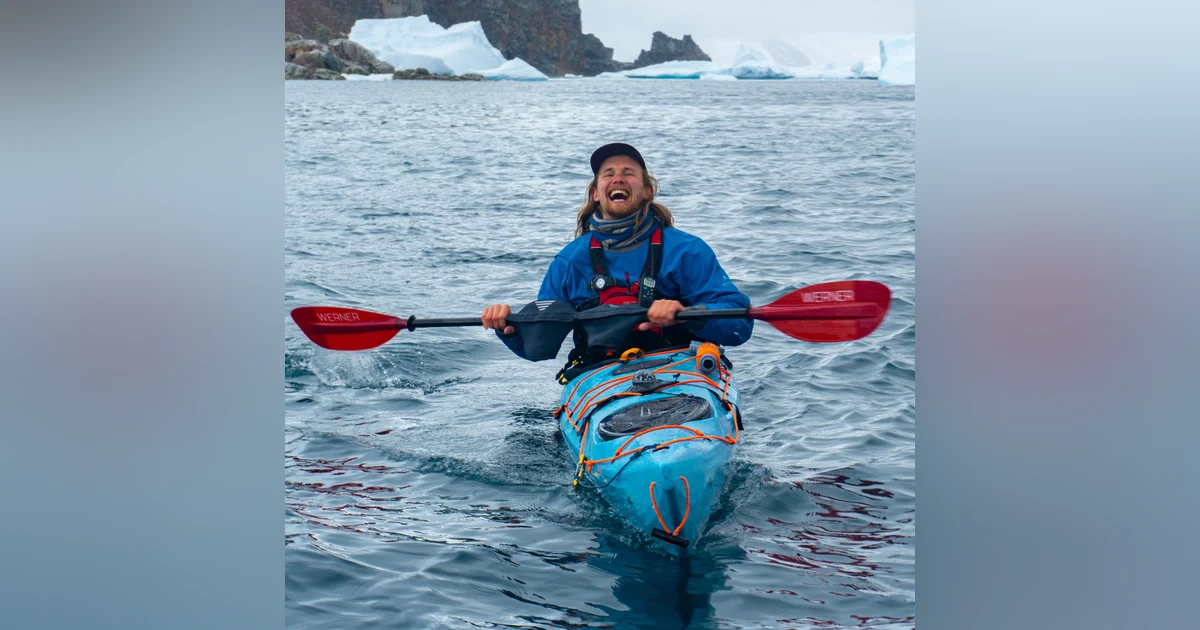
Today’s guest is Ivan Klochkov. Ivan recently completed a 124-day 3,800 km sea kayak journey along the Kamchatka Peninsula, one of the most remote coasts and one of the most unique and wild areas of the world. Today, we talk about the paddling scene in Russia, his inspiration for the trip, his route, planning and resupply strategy, gear choices (including his sail and bear protection), and the physical and mental challenges of a long solo expedition. It’s an incredible look into an amazing region
00:09 - Paddling the Blue
01:46 - Meeting Ivan and His Kayaking Roots
03:57 - The Thrill of Canoe Polo
06:37 - From Whitewater to Sea Kayaking
08:18 - Russia’s Growing Paddling Scene
11:33 - Unexplored Russian Coastlines
13:38 - Discovering Remote Kamchatka
19:28 - Mapping a 124-Day Expedition
21:42 - Inspiration for the Journey
25:39 - Changing Coastlines and Conditions
30:02 - Encounters in Arctic Villages
34:27 - Resupply Across Remote Regions
38:41 - Planning Without Reliable Maps
41:12 - Unexpected Beauty and Sailing
44:54 - The Mental and Physical Challenges
49:28 - Camping Among Kamchatka’s Bears
54:19 - Gear Built for a Long Expedition
59:41 - What Comes After the Expedition
01:02:47 - Sharing Russia Through Vostok Expeditions
01:05:25 - Thanks, Recommendations, and Farewell
01:07:26 - Reflections on Ivan’s Journey
0:02 Welcome to Paddling the Blue. With each episode, we talk with guests from the Great Lakes and around the globe who are doing cool things related to sea kayaking. I'm your host, my name is John Chase, and let's get started paddling the blue. Welcome to today's episode of the Paddling the Blue podcast. Today's guest is Ivan Klutchkov. Ivan recently completed a 124-day trip along the Kamchatka Peninsula in Russia, one of the most remote coasts and one of the most unique and wild areas of the world. And today we talk about the paddling scene in Russia, his inspiration for the trip, and of course, the trip itself. It's an incredible look into an amazing region and a great interview. Before we get to today's conversation with Ivan, James Stevenson and Simon Osborne at OnlineSeekHiking.com continue to produce great content to help you evolve as a paddler and as a coach.
0:50 And you'll find everything from basic strokes and safety, to paddling in tides, surfing, coaching, documentaries, expedition skills, and incident management, and more. So if you're not already a subscriber to OnlineSeaKyaking.com, here is your opportunity to get started. Visit OnlineSeaKyaking.com, use the coupon code PTBPODCAST to check out, and you'll get 10% off just for being a member of the Paddling the Blue community. And for those of us who also enjoy paddling whitewater boats, be sure to check out OnlineWhitewater.com. They're offering the same discount to listeners using that same code PTB podcast to check out. And I'd love to help you put those skills to work. I offer a wide range of programs in the Great Lakes and beyond, from paddling skill development, instructor certification workshops, CPR and wilderness first aid, guided trips, and more.
1:36 So visit paddlingtheblue.com, click the courses and trips link at the top of the page, and I hope to see you on the water. Enjoy today's interview with Ivan Kluchkov. Hello, Ivan. How are you today? Hey, John. Yeah, it's great. Good to hear you. Excellent. Well, thank you very much for joining me. I appreciate it. We got an exciting trip to talk about that you've just recently completed. But before we really dig into that, I'd love to know, why are you a paddler? Yeah, I come from a paddling, from a kayaking family. My dad is a relatively well-known kayaker in Russia. So he brought me into kayaking when I was something around five years old or something like that so, I've been doing it yeah since early early childhood I don't remember my first training my first role yeah it's been it's been forever okay all right now when you, mentioned your father being a well-known kayaker and, in Russia tell me a little bit about him and and how he really engaged you in the sport, yeah his background was uh just uh some some different sorts of water tourism like in early 2000s and then he started doing whitewater kayaking pretty much as early as it appeared in russia.
2:52 In in uh you know you know like uh sometime in early 2000s when the The first, plastic whitewater kayaks appeared in Russia. He started doing this. And he's been doing that for many years. He's also been a captain of the first Russian national canoe polo team. That's an amazing sport as well. They were basically like the godfathers of canoe polo in Russia. So, yeah, he did all of that. And when I grew up just to be able to hold the paddle, he started training me. That's great. Now, do you also participate in Canoe Polo? Yeah, yeah, actually I did. I was the captain of the first youth team, first kids team in Russia.
3:38 So I was like really a small kid and it was the first kind of children team, like youth team in Russia. It was a very exciting time. Wow. So tell me a little bit about that sport. That's something we've not talked about at all on the Paddling the Blue. And I'd love to hear a little bit about Canoe Polo. Yeah, it's actually an amazing sport because it's a team sport and it's a kayaking. Like the mix of kayaking and water polo and i love it so much and i actually miss it the reason why we started doing this because we lived in moscow, and in moscow there are not too many whitewater rivers or like big oceans or seas whatever around so when it's, winter time we spend a lot of time in pools like doing pool sessions and practicing rolls and stuff but then And doing that, every week throughout the whole winter maybe is kind of boring.
4:38 I don't really remember the year, but they started playing Canoopolo and they actually invited Canoopolo coach from Netherlands to train them. And then they went out for the first world competition, the first Europe competition. And it's an amazing game Because you get to the point when you have extreme, crazy control of the boat. Yeah. You can push the bow of the canoe polo kayak under the kayak of your opponent. You can push them. You can pull them. It's a very contact sport. Hand roll is a must. Like if you do hand rolls without the paddle all the time because you have to catch the ball and, you know, protect it. And so it's very fun.
5:29 It's a lot of fun. Yeah. I mean, like you mentioned, great for skill development and it looks like a very aggressive sport. Yeah, yeah. I mean, like, my dad got some injuries from some competitions, like, because the way the game starts is crazy, because, like, we have two teams lined up, like. On different sides of the field, and then they just, the two sprinters, they charge towards the ball that the referee throws in the middle of the field. So, like, they're basically charging towards each other and then they're crashing into each other. And you can push the opponent if the opponent has a ball.
6:10 So, it's like, it's full on. It's a lot of fun. And, yeah, it gives you a lot of skills in controlling your kayak. Sure. Sure. Now, how did you transition from canoe polo to sea kayaking? Yeah. Well, we did a little bit of everything, actually. We did whitewater kayaking a lot. We did canoe polo in, you know, like in winters when it was off-season. And we also did sea kayaking, you know, like quite opportunistic. Whenever we had a little project about some little trip, we often combined whitewater and sea kayaking in one trip. So because there are some places in Russia where you can do that.
6:52 So yeah, but the significant shift to sea kayaking happened in 2016. It was 10 years ago when I first came to Kamchatka as a young student and found a kayaking job there. It was a very interesting time in my life when I didn't really know what I wanted to do with my career. There was a situation when I was about to quit university because I didn't want to do hospitality management. That was the thing that I studied and I was like. Not really excited about doing that for the rest of my life. So when I arrived to Kamchatka just for a personal trip, like a student without too much money in my pocket, just, you know, kind of couch surfing and hitchhiking, I found a job in a local company.
7:45 And I was a kayaker, you know, for many years already. So I had a lot of experience in kayaking, but not necessarily in guiding. So when they offered me a job i was like wow you can do this you can do this thing this guiding thing when you get to visit amazing places and you even get paid wow, i didn't know that it was a thing you know so that's how sea kayaking started okay so tell us about the paddling scene in russia, yeah a paddling scene is growing it's it's a relatively small community compared to some, you know, Western countries like Canada or US for sure.
8:27 But there is a significant growth in recent years. And I really like that. And I hope, I like to think that I'm taking part in this growth because I'm trying to popularize this kayaking. My dad and I, we have a little business. We do sea kayaking trips in the remote areas. And we try to, you know, kind of educate people about the sport and bring new people we run safety courses and stuff so whitewater kayaking scene is slightly smaller than sea kayaking scene just because of the threshold you know like you have to train a lot more and it's more i would say that for most of the people it's more it this whitewater kayaking thing looks more extreme than than sea kayaking, so like to a certain degree But yeah, so the kayaking scene in Russia is growing pretty fast.
9:24 I think. Before COVID, there were lots of foreign kayakers who would come and do some amazing expeditions in Russia. After COVID, it kind of stopped. So maybe there is a little feeling of isolation, but, you know, Russia is an amazing big country with some incredible paddling spots and incredible coastlines. And there are lots of people who explore them with kayaks. Yeah, I think that I'm probably not alone in my view of what the scene might be like in Russia. And I think a lot of folks don't see how vibrant that scene actually is.
10:05 And so it's interesting to hear that. And how about access to equipment? The scene is very vibrant indeed, because there are lots of big coastal cities. There are lots of kayakers who get to travel to different remote parts of Russia from Moscow and St. Petersburg. There is a big scene of kayakers there. Regarding the equipment, we do have kayak shops in Russia who somehow maintain. A big variety of different products from boats to dry suits to PFDs. Pretty much i would i wouldn't say like all the possible brands but the majority of brands you can get it's maybe i would say it yeah sometimes it's about a bit more pricey uh.
10:56 For russian to get that gear due to shipping costs and you know the logistics, very complicated nowadays sure but yeah you still can do it and there are some russian brands who, try to do try to try to make some gear like boats and some little things like poggies and bfds and they're getting better yeah all right what do you think the world would not expect about uh paddling in russia, Well, I would say that it's one of very few places in the world where there are regions that are completely untouched in terms of sea kayaking. Okay.
11:39 There are many places where there were no renowned confirmed expeditions carried out by anyone. Like Russian kayakers, like foreign kayakers, there were just no one were in those places. It's like, you know, the northern coast of Russia, like the Russian Arctic, the northern coast is extremely hard to access and to, you know, do. It's extremely hard to organize something there, but it's doable and it's waiting, for some kayakers to come and do some stuff. For instance, that eastern coast of Russia, like that Russian Far East, the one that I paddled along.
12:23 I was paddling and in most of the places I realized that the last kayakers who were there were John Turk and Misha Petrov in the year 2000, 26 years ago. So I would say that there are a lot of places are still waiting for kayakers to explore them. And there are many. First descents, so to say, that are waiting. So it's yeah so much unexplored territory that uh that we we don't even realize that how uh interesting that could be sometimes yes absolutely no data no photos from there no, examples of how people can do something there so it's it's out there waiting all right so kamchaka so tell us a little bit about chimka kamchaka.
13:14 Yeah, Kamchatka is a unique place. It's a big, big and wild peninsula with extremely, low density of humans living there. Their population is something around maybe 300,000 people on all of that vast territory. And most of them are concentrated in just two cities in Petropoulos, Kamchatka and Yelizov, which are just, you know, very next, like next to each other. And the rest of the territory is just wild, wild nature. And it's extreme. It's very, it's a unique combination of Pacific coast and lots of volcanoes and rivers full of salmon.
14:00 And yeah, it's like extremely dense population of brown bears, Kamchatka brown bears. And it's a unique place indeed. It's beautiful yeah definitely an area of the world that's that's certainly remote and. Kind of hard to find so i think just for reference for our listeners so north of japan all the way in the the east coast i guess you might say, of russia kind of looking at alaska and so the aleutian chain of islands that stretches and basically hits right in the middle of the kamchatka peninsula, yeah yeah so kamchatka peninsula was uh, closed for regular visitors even uh for russian people for many years so in, uh well in in times of soviet union that was a closed territory during due to some military, restrictions or whatever like there was a military basis so if you were if you lived in moscow in that time and you wanted to go to kamchatka you needed some invitation from there from your relatives or maybe.
15:06 Some companies or your boss would send you there and give you the papers that will allow you to visit. So it's only opened properly, later, in late Soviet Union. I'm not quite sure, but not that long time ago. And then after, like in the 90s, it opened up for foreign tourists. So it's been untouched for many years. So anybody's free to travel there now? Yes. Okay. So now it's open, like some foreign people will come even nowadays. So it's open now. All right. Do you see much tourism there?
15:47 Well, it grows. It certainly grows. I started working there as a guide in 2016, and it's been a growth since then. When COVID happened, international tourism kind of slowed down for obvious reasons, and there were less foreign people who were coming. But now, every now and then, I see foreign people there. A lot of tourism is happening because lots of Russians go there. So. You know, like if you compare Petropavlov-Kamchatsky, the capital, the major city, like to how it looked like 10 years ago, it's a big change.
16:35 Lots of new hotels, like lots of infrastructure. Sure a few kind like a several kayaking companies and all that, all right and now you say russians go there and now is it becoming a a tourism spot for russians yeah okay sure and for me, different activities yeah people go surfing people go heli skiing kayaking like my dad and i we run a kayaking company there all all all sorts of stuff like outdoors yeah so a lot of adventure tourism i might i might say then, yeah yeah a hundred percent all right so what makes the what makes chemchak a special, Well, it's just that unique combination of volcanoes and Pacific Ocean and incredible coastline and some insane hiking routes and wildlife.
17:28 You get all those amazing creatures like orcas and whales and brown bears. Fishing is amazing because there are lots of salmon rivers. And. It's also very different from one part to another. When you move from south to north, it changes. The landscape changes, the geology changes. You can spend your life exploring this place and you will not see one third of it, I think. It's vast, it's beautiful, and it's very diverse. And you mentioned the population, so I'd read that less than one person per square kilometer.
18:13 Yeah, yeah, yeah. And then it's funny to compare the number of people to the number of brown bears. It's quite funny, yeah. So tell us about your route. So you were 124 days on this expedition and over 3,800 kilometers, if I read that correctly. So tell us where you started, where you went, and kind of give us the layout. Yeah, so on May the 1st, I started my trip in Chalaktyrsky beach, which is just outside of Petropoulos-Kamchatsky. It's a very, you know, popular place. People go there just to check out the Black Sand beach and, you know, waves and, you know, there are a few surf camps there.
18:54 So it's just outside of Petropoulos-Kamchatsky. And then I headed north and. I've been on a trip for 124 days paddling along the Pacific coast, then along the Bering Sea coast of Kamchatka and then Chukotka. So there is a second amazing place north from Kamchatka is Chukotka. So then I paddled along the coast of Chukotka and I reached the Bering Strait. On September 1st. So on September the 1st, I was at Dzerzhnev Cape. Cape Dzerzhnev is the easternmost continental point of Eurasia and the easternmost continental point of Russia.
19:42 And then I paddled by the Dzerzhnev Cape and finished my expedition in the village of Volen in the northern coast of Chukotka, just around the corner, just around the Dzerzhnev Cape. So the whole expedition took me 124 days, which is exactly four calendar months. And it's just a coincidence. So I started May 1st, finished September 1st. It wasn't on purpose. I wasn't trying to do it like that. It's just a coincidence. So the paddling days were the number of paddling days when i.
20:24 Was actually paddling was 85 85 days that was days on water and sometime something like over 30 days or you know waiting for good weather resupplying in villages just you know, some rest days and most most of them were just like waiting for the weather okay so what what was your inspiration for the trip, The inspiration, yeah, like the first thing I want to mention is the amazing John Turks, Misha Petrov's expedition in the year 2000. It's an amazing story when John and Misha, and John's partner, by the way, like in the beginning, they probably together with his wife, Misha.
21:07 But then his wife had to go back home due to some injury. I don't quite remember. She couldn't continue, unfortunately. So they reached the village of Providenia in Chukotka, and then they crossed to St. Lawrence Island to Gamble. So that expedition happened 26 years ago, and it was a big inspiration for me. I actually reached out to John and told him about my idea and in three days he responded. And he said, yeah, that's a great idea, wish you a lot of tons of luck and gave some advices about the expedition.
21:47 And I was so happy to receive the message from him. I was really surprised how fast he responded. So yeah, so that 100%, it was. My inspiration for this expedition, because when I looked at the coast and I was dreaming about doing something big, I was wondering how far one can go during one summer season, how far north you can get. And then when I started studying the examples of some expeditions who were carried out in this region, basically the only one I could find is this, and this project that he did was amazing. So that was the inspiration.
22:30 Yeah, and then I also want to mention that just from my polar guide job, I met a lot of amazing kayakers who shared their stories with me, who had stories from their personal projects and big expeditions that they did. I have a good friend of mine from Canada who, along with his brother. They paddled from, I think it was from Brazil to Florida, did like some crazy big adventure that they did russell and people like him who i met were, like big inspiration were a big inspiration for me so i started thinking about what, how like my story what what my story can be and like how can it look like what can i do and then obviously working as a guide on kamchatka for 10 years i, obviously wanted to do something big in my like my favorite region yeah yeah well this is definitely something big and then you're you've had some great inspirations, john was a guest for us on episode 42 and a great guest and absolute legend in the sport and then russell henry joined us for episode 63 talking about seven months across the caribbean from, belém brazil to to florida and again also amazing expeditions and you've certainly followed in the footsteps and done some, done some pretty cool things too here so So tell us a little bit about what you experienced along the trip.
23:58 The experience along the trip was very diverse. As much as the coastline is diverse, the experience was very different from month to month and from place to place. I started this expedition in May. It's pretty early for Kamchatka. Maybe it wasn't in use. Maybe you could see that this winter on Kamchatka was the record breaking snowfall. Like in last 50 years locals couldn't remember that much snow in winter, So when we started the expedition, and I forgot to mention that the first 627, to be precise, kilometers, I paddled together with my dad.
24:48 So the idea was that he would kind of back me up on this first stretch from Petropaulsk-Kamchatsky to the village of Ust-Kamchatsk to the north. That first stretch was we understood that it will be really challenging because there's still a lot of snow it's very cold, and the coastline is very harsh a lot of big swells big surf landings every evening being you know you have to break through massive swells to get out in the sea every every morning, and yeah it's we understood that it will be a challenge so the the beginning of the trip was, I would say, the most challenging part due to the cold, the snow and massive swells.
25:37 Because that stretch of Kamchatka Peninsula is very exposed to the Pacific Ocean. You get a crazy fetch. Basically, all that massive. Vast Pacific Ocean just breaks into that Kamchatka coastline. And there is no protection. So that was quite challenging. And then as you move north, you get to the Bering Sea, which is really renowned for, you know, very harsh weather and massive storm systems. And yeah, but there were some places that were a bit more sheltered because they were protected by big peninsulas or Karaginski Island, for instance.
26:25 There is a big island that protects the Karaginsky district of that coast. The beginning was quite cold and rough. Then in June, the spring came and the sun started to heat everything up. There was less snow and a bit more chilled, a bit more easy beaches for landing. And then at some point, I reached very north of Kamchatka, Alutovsky district, which is absolutely stunning and wild and absolutely fantastic. Like it's one of the highlights of the trip for me and then chukotka you know the chukotka is a whole different like it's a different universe it's a whole different story because it's very beautiful very diverse as well and it's also full of.
27:16 We call them national villages like national villages where a lot of indigenous people, live like chukchi people and we call like in in russia like Eskimo people like living on that coast and they still hunt whales they still hunt walrus and they make like baydaras like big boats from walrus skins and you get to meet all those amazing humans and, you know see completely different different landscapes in nature so it was very diverse it was it was changing all the time so tell us about some of those the people experiences that you had along the way? Well, yeah, I think it's, you know, like I think it can be a theme for a separate talk, you know, it's just.
28:05 People who lived in the Arctic for thousands, thousands of years and you get to meet them and they still have a lot of, you know, the traditions. They keep hunting whales. They keep growing out in the sea to feed their families. I met some incredible people. I met whalers. I met dog mushers who, you know, you get to meet a guy and he is wearing like deer skin, you know, like a jacket. And he tells you, hey, you see this brand new, you know, LG washing machine?
28:46 You go, yeah, yeah, I can see it. Yeah, nice washing machine. Yeah, I brought it on my dog sled last winter from Providenia, you know, like, and it's far away. So there are some people who live a very, you know, life that is very different, to life that you are used to living maybe in a town or in a city. So there are very remote communities, very small communities too. Like there are maybe some villages where, you know, 200 people live or 300 or something like that. And they live in wild and harsh places. and very, very close to nature, very connected to nature. And it's very inspiring to, you know, to meet such people.
29:33 So with the remoteness of the terrain all along the coast, and when you roll up in a kayak, what kind of reception do you get? You mean when you land in some village? Yeah, you're landing in a village that rarely sees anybody from outside that village. Yeah, yeah. Well. The infrastructure there is... Like it's very remote so they get to fly out or fly in on a helicopter maybe like once in two weeks or something like that sometimes more frequently sometimes less frequently every now and then the ship will come so they they, they still you know get to get some people coming and going but they were super excited like most of them were super excited to see someone in a kayak Like, in some villages, like people would tell me, hey, I met a kayaker like some time ago.
30:28 Yeah, it was like in 2000, there was some American guy. And you go, oh, John Turk? And they go, oh, yeah, his name was John. Yeah, so that like they were super stoked to see like a kayak coming like 26 years after the last time they saw someone in a kayak. And yeah, I got very warm welcomes and people there are super, super, hospitable, like they, you know, without any questions, like food, shelter, sauna, you know, some advices about, you know, what was going to be along the way, like when you go, you know, further north. And they would call to the next village and say, hey, this guy is kayaking to your village.
31:14 He will come in a week or 10 days, meet him. He will need this and that. So they were super, super friendly. I almost bring myself into tears when I talk about it and when I remember these days when I spoke to those people. So, yeah, on Kamchatka and Chukotka, all those communities are super, super friendly to travelers because they live next to the sea and they know how it is. Like, they know exactly what you have to go through to, you know, paddle in those regions. Right. That local knowledge, absolutely invaluable. I mean, everywhere in the world that's going to be valuable, but there, when there's no other information than local knowledge.
32:03 Critical and critically important 100 yeah so now, the villages i'm thinking that they're probably not real close to one another you've got to like you mentioned you know this they'd call from one village to another he'll be there in seven days ten days something like that so how did you manage refueling along the trip yeah so, when i when i was preparing for the expedition i i started to i started preparing like a year and a half in advance like the it started like the full-on preparation. So I calculated the route just kind of visualizing the trip and putting points in the places where I think I will have a camp or, villages that I will visit and.
32:50 Do some resupplying. So the biggest stretches were something around 600 kilometers. The biggest stretches, there were two stretches like that. that one, both of them on Kamchatka. So that's basically like maybe 12, 14 days of kayaking. And when I was planning that, I managed to organize a few stashes, like a few kind of drops of supplies along the way. Just because out of my guising career in Kamchatka, I had lots of friends who knew, you know, people who knew people who knew people. And some relatives or friends of mine, they were living in those remote communities.
33:33 So I managed to ship some adventure food and some camping gas and all those, little things that you cannot get in a shop in a very remote village. There's a very limited variety of products that you can buy there. So I did my homework and I did my best to ship those kind of crates with stuff that I will need along the way. It all worked out, almost everything worked out well. So the problem at some point was that I kind of was overcoming my own schedule. So one of those shippings arrived to a place when I already passed it. So I had to reship it.
34:22 To the last place where I shipped stuff. So, and then I had a lot of adventure food, like to really like take a bath in adventure food, camping gas and all that, you know, some, you know, uh, you know, camping stuff. So, yeah, that's how I did it in the villages. You could buy like some stuff that you will need, like fresh bread or, you know, some canned meat or whatever you, whatever you need. And so, yeah. So in the villages, you do find a supply is pretty plentiful there. Yeah. Not everywhere. It varied from village to village because the further you go north, the more complicated it is for people to get stuff in their shops and, you know, like, you know, there's groceries.
35:12 So in some villages you would arrive and you would see like, wow, it reminds like times from Soviet Union, you know, like when it's just the empty shells and not too much you can get. But in some villages, you would arrive and you go, wow. It's even more diverse than in my local shop in Moscow. Because maybe the entrepreneur who runs the shop has some advantages or connections and has better logistics than some other villages, maybe. So it varied. But most of the times he could get the basic stuff and it was not a problem. All right. So now...
35:58 In terms of research, you're fortunate to have had a lot of friends who have friends who have friends who have family members that are living in these different villages. But there's probably not a lot of information about the entire coastline other than maybe Google Maps and elsewhere. What other resources might you have used? Yeah, pretty much. Like you said, I was visualizing the trip, studying the Google Maps and some alternatives to Google Maps tests, looking through satellite imagery and pointing out the capes, the surf landing beaches, maybe some protected spots. And just measuring like, okay, I imagine that I can paddle like 30, 40 kilometers per day average.
36:43 And so I was just measuring, okay, if I start here and after 40 kilometers, where should I land? And then I would put a pin on the map to the place where I think I can land safely. And then that's how I did it. So I basically calculated. Almost 4,000 kilometers of the coast using those maps. And I also had access to some cool Russian websites where you can change layers on maps and you can study old Soviet maps, very detailed. Every little rock is named and you have very detailed information about almost every part of the coast.
37:26 So I combined that with the satellite imagery and kind of visualized the whole route, made the Excel spreadsheet with, my kind of schedule, like, okay, day one, cape this to village that, day two, cape this to bay that. And it was kind of layered to the calendar. So I kind of tried to foresee when I will visit certain points, like, okay, I think, you know... Considering all the spare days and bad weather and some changes.
38:07 I can reach this village on May 21. And then I need the shipping of supplies earlier than that and so on and so forth. So that's how it was. So what did you find that was unexpected along the trip? Unexpected? And, you know, the first thing that comes into my mind, I was very surprised how diverse and different the coast is and how beautiful it is. It may sound very straightforward, but even with my 10 years of guiding, and. I thought that I'm kind of used to those landscapes and used to, this kind of environment, environment i was amazed and absolutely mind blown with the beauty of the coast and i didn't expect that variety that that, how different the coast will be so you go from crazy, rocky terrain like raising straight from the sea with big swells then you come to some sheltered very flat uh bays with you know like dozens and dozens of kilometers of just like flat you know, rocky beaches then you reach you know to a certain cape and then everything changes and it's like towering cliffs and korek koreak mountain range with you know, towering cliffs and waterfalls and so,
39:38 i couldn't even though i i kind of thought that it will be beautiful i i wasn't ready to the real thing, you know, like when I saw it with my own eyes I wasn't ready for that, I didn't expect that it would be that beautiful. And then I, I was really hoping for following winds because the trend in the weather in this region, so you get a lot of southerlies on Kamchatka and Chukotka as the summer rolls along. The southern wind usually brings good weather, so I was hoping for that. And yeah, I was really surprised how it really worked.
40:19 Like I could use winds with my sail. With kayaks here okay so now so the sale let's talk a little bit about that so yeah i mean good good thought in bringing that sale and knowing you were going to have southerly winds so tell us how that worked for you yeah so i was. I was studying the you know what's, the options are out there on the market you know how to mount a, kayak sale i i saw it somewhere online like in some instagram videos and i was like wow that's interesting and i reached out to australian australian company, because i had some people who, live in australia and they could help me to bring the piece of gear to the ship that i was working on in antarctica so that's that's how it went and this piece of gear was like amazing it changed it, it kind of opened a new dimension of sea kayaking for me i was so so excited when i got it and then we did some tests in the black sea together with my dad before the expedition and i was like wow this is magic you know, and it was really you know it was really uh for me it was uh yeah it was a change of the game and now it's really hard for me to imagine like some big expedition without a sail uh.
41:42 Like in sea kayaking All right. Well, there's a testimony for sure for, uh, for giving that a try. So what kind of challenges did you experience along the way? Well, the challenge, I think the first thing that comes into my mind is maintaining that routine for days and days and days and days. The first thing that you expect is breaking through big surfs will be hard, or fighting against the winds will be hard. But for me, I think the hardest part was to get into that routine of setting up a camp, cooking meal, then, you know.
42:28 Taking the camp apart, like putting everything in the kayak every day, like hours and hours. You spend hours and hours on that, you know, simple things to, you know, sleep and set up a tent, put it back in the kayak again, do it again. And like whatever kilometers you paddled that day, you have to do it. And working out that routine and making those processes effective was a challenge. Especially because I didn't have a lot of solo kayaking experience before I started. Like I didn't have like big solo trips in my career. So it took some time. And I think another challenge was not to focus on the finish when you paddle.
43:11 You try not to think about, oh, I have like 2,506 kilometers left, because it's kind of hard to comprehend that scale and to think about how big the distance is that you have to paddle and that you have ahead of you. And it was a challenge to set up your mind properly and set up really simple goals, breaking all those big distances and big goals into smaller ones. And you focus on, okay, we have 40 kilometers to paddle today. Let's focus on that. We'll not look beyond the horizon because you can go crazy if you think about it every day.
43:57 Or just focus on small little things and even breaking those smaller things. Into even more smaller things like okay, it's a hard paddling day yeah I will paddle for two more hours and then I will, eat a sneakers bar and that's the motivation and that's the scale I want to, I will kind of exist in now and then, like step by step with all those little goals he reached a bigger goal so that was a challenge as well that is so consistent with so many of my guests that we've talked about long trips and it's it's think about each day, as as a as a trip as opposed to i've got 3 800 mile or kilometers to paddle i've got 40 kilometers to paddle that's that's my trip for the day yeah that's great advice otherwise otherwise you can get crazy.
44:54 You mentioned a snickers bar anything you were craving along the trip that now once you're done you're like i have to get this oh dang yeah i don't know why but i was like i had some protein bars. With different tastes and I was, you know, just had them in my PFT, in my pocket and, I was just pulling out one and it said like some raspberry cheesecake tastes and I'm like biting it and it tastes nothing like cheesecake. It kind of tastes like some protein stuff. Who are they fooling? Yeah, I'm like, dang. I just, when I finish, I will go to nice coffee shop with a good coffee and good cheesecake and i'll just enjoy it with my wife and it will be amazing but it will be in three months from this point i guess, all right yeah just so those little little you know things like fresh good fresh bread and, you know good coffee yes things like that you mentioned uh kamchatka bears earlier so tell us about the bears years.
46:03 Yeah, so if you're traveling on the Kamchatka coast, there is no chance that you will not meet a brown bear. Like, they're literally everywhere. And you have to be ready for that. It's their territory and you're a guest, so you have to respect that. It was a big challenge when I was planning the trip because, like I said, most of the trip was solo. And when we travel with our guests on a kayaking trip that we lead we organize like bare watches throughout the night like people would sit next to a campfire like, one or two hours you know make shifts and you know everyone is, you know safe and they feel comfortable and you know they sleep well when you travel alone.
46:49 It's yeah it's not possible and you have to sleep sometimes and I had to I had to deal with that So, I was doing a lot of research about what things out there can help me. And I found this portable bear fence from Canada. And I shipped it from Canada through a friend of mine. And it's basically connected. You can connect it to a regular power bank with USB cable. and then you set up like a little fence around your tent and it's an amazing piece of gear. It worked a few times like a few times the bear would just come and poke and poke, his nose into the fence and yeah just like scream and run away i was super scared like it happened like four or five in the morning i was kind of sleeping in my tent like waking up and then i had like a bear just, roaring like next to my head oh because because that that that fence is it's not super big like it's not you know it's not like 100 meters of uh.
48:00 You know space it's just really maybe 15 10 something like that square meters so your tent is in the middle and to the to the very fence from your, tent is maybe like maybe meter and a half two meters maybe so, the bear poked its nose and just roared because he was like afraid or kind of you know, scared so i was very scared i ran out from my from my tent like with a bear spray and ready basically ready you know to fight uh i thought i was i was gonna die. I just saw him running away so the bear fence worked extremely well and, yeah there were nights where i was not using it due to terrain like to the soil was not, wet and kind of firm enough to hold the the, the sticks the the poles of the fence so there were a few nights where when the bears would just almost you know, get into my tent and i was just like screaming at them and just chasing them away using mighty right mighty's russian strong language.
49:10 Yeah they understand it they understand it quite good so apart from the bear fence i was carrying like usual bear protection devices like a bear pepper spray, and some, you know, flares. The marine flares, the red fires that you can set out and then just scares the bear away, some bangers, like the little rockets that you shoot, like different colors and whatever. I also used the portable movement detectors, just powered with simple AA battery, very cheap ones from some internet shop. I think it was just a Chinese movement detector.
49:55 So when I was camping or maybe staying in little huts along the coast, I would just set that movement detector on my kayak because I was really concerned about the bear kind of destroying my kayak if I was asleep or away or like in a hut. So I set up that movement detector so it will just make a loud noise if it falls or if it detects some movement in front of it. So that was another thing. So I had a lot of stuff except the rifle, except the fire, everything else I had. All right. So tell us about the kit that you used.
50:38 The kit for the kayaking gear? Yes. Sweet. Yeah, I used a Brian Grizzly kayak. Basically the new version of Brian Kodia, the famous model. As far as I understand, a lot of big expeditions were made using this kayak. John Turk used Brian as well. Oh my idea was that i need the firmest the toughest polyethylene like the toughest plastic boat i can get like so it will not be damaged by like sharp rocks and, all that stuff that there's plenty on places in kamchatka and chukotka where you can easily break the boat so and which boat was that again brian greezley brian greezley that's, a i think that's as far as i understand that's the new version the the latest version of prion kodiak the the older.
51:37 The older model the german the german boat based on the quality of the plastic, and its robustness and the volume so the packing volume you can pack a lot of gear in this boat it's very it's you can load a lot of stuff. So that was the idea. And it's quite stable and quite good just in paddling straight and just maintaining the speed. I cannot imagine a better boat for a trip like this. Great. And is that a boat that you used previously? No, I shipped it specifically for this expedition. I did some tests before I, set out, and I was really satisfied. Yeah, it was great.
52:23 Excellent. And for the dry suits, I used NRS Navigator. The one with the neoprene neck gasket. That was very important for me to have neoprene neck gasket, so I will not, like, you know, the latex. I think I would have to replace it at some point and it will just scratch my skin a lot and so, I wanted to have like neoprene neck gasket and the idea was that it should be Gore-Tex so the only dry suit out there that fit all those both of these things is NRS and it worked great.
53:05 I had some kind of under the armpits just because of paddling for 100 plus days I started the, membrane started to wear out a little bit but I did some patches the Gore-Tex patches and AquaSeal and it was sealed again it was, not an issue at all so it worked well I used some immersion research products as well like the spray skirt was immersion research the poggies, the underwear, like the fleece kind of stuff that you put on yourself before you put a dry seat. I used immersion research as well.
53:50 The paddle was a carbon paddle with ergonomic shaft from Select XTR, if I remember correctly. Yeah, the sail was Flat Earth kayak sails from Australia. A lot of watershed dry bags that. My friends helped me to ship from states because i needed, i carried a lot of film gear i carried like a drone and camera and photo camera and stuff like a lot of power banks and not a lot of but you know just enough to you know power it all so, i needed some good water protection yeah so i basically yeah i spent a lot of time picking the best piece of gear on the market and shipping it to my place and it took it took a lot of efforts, it certainly sounds like a well-planned expedition you know everything from thinking about the the small things like making sure you've got a neoprene gasket at the neck so it's not chafing you for 124 days i mean uh it sounds like you planned it well, yeah i mean it was a big excel spreadsheets with all of the pieces of gear from the socks, and dry suit to paddle leash and, carabiners and everything it was on that list and then I was sitting there and just thinking okay what is the best piece of gear that fits this particular you know thing and you know kind of where can I get it how can I make it how can I get maybe a discount on that and what have I,
55:22 what I have to buy, what I can get from some brand. In exchange for some photos. It took a lot of time. So, what's next? Wow. What's next? Well, I think that the expedition is not over yet. I will feel that it's over and it's completed as soon as I will tell about it properly. Like, I want to make a little movie about it. I want to share all the, you know, stories and photos. Maybe the diary of the expedition. and maybe it will kind of...
56:07 Transform into a book or something like that so i would really want to work on that i have a whole winter ahead so i'm very excited about it, and then once it's over i think i will think about the next big project i'm looking at russian arctic russian north russia's northern coast because, i feel like i'm with experience, that i that i got in this last expedition and, with some connections that I got on Chukotka and some other places I feel like there is a chance that, I can organize and plan something big in those untouched and very remote places and see how far I can go but, it's a matter of maybe a year, to start preparing for that I don't want to.
57:02 Make some statements okay next year we'll do this or do that because it's yeah i i want to plan it properly and then i will announce it so maybe continue the trip from yelen up across the uh the north coast, yeah well i when i was landing in, uh valian on the very last day of expedition i kind of looked at the coasts that continued the, that you know to the to the west from from valian and i had mixed feelings the first thought was like oh thanks god i'm not i don't have to go that way, thanks god that's the finish because it was september and you know the you know ice was coming and it was really cold and rough and like it it it it was obvious that the season is closing and, uh the you know the weather is uh the weather windows are very beginning becoming more tight and tight and tight and yeah.
57:58 You had a feeling that okay we need to get out of here but, Like the next day when I had like a little, you know, rest and next morning I was walking on the beach, I was like, wow, that's beautiful. Like that coast out there is beautiful and it's waiting. So kind of started to look in that direction and thinking, oh, okay, what months, what months can I go there? And asking locals, okay, what is the ice is doing like in this, in this place when it's, when it's open, when the water opens up and all those questions. So, yeah, that was definitely on my mind. That's definitely exciting, and we'll look forward to the next installment to see where it takes you next. So you mentioned that you and your father have an expedition company. So tell us a little bit about that and how people can connect with you.
58:46 Yeah, so we run a family kayaking company in the Far East of Russia. Well, basically, not only in the Far East, but in different places in Russia. It's called Vostok Expeditions. Vostok translates in English like East. So Vostok Expeditions, that's our company. And we run trips on Kamchatka Peninsula, in Chukotka. We run trips on Lake Baikal, on Kuril Islands, on Commander Islands. So we basically like to explore really remote and wild places in Russia, which we are, as kayakers, are excited to visit. And we take people there. So that's what we do. I also work as a polar guide in different companies in the Arctic and in Antarctica, so that's another thing that I do, and, I think the best way to get in touch is like for people like from states or from some other Western countries is Instagram.
59:45 That's where I can receive messages and stuff. Also my email, like where I can share it. I think it's in my Instagram as well. Okay. Well, we'll put links in the show notes to your Instagram handle. And is there a website for Vostok Expeditions? Yeah. VostokExpeditions.com. excellent all right we'll make sure we put links there as well and you'd also mentioned some uh some russian maps earlier that you were able to use for your trip is that something that's available on the internet yeah yeah that's that's a website called nakartya.me nakartya.me, that's translates from, russian as on the map and you basically open it and, you can tick layers and change them and some of them some of those layers are soviet like topo, maps like one one two kilometers like a scale, very very precise and very detailed so, i i can send you the link as well like it's it's it's a very nice tool to use great we'll include that as well so ivan this has been fantastic i've loved hearing about the trip and your planning and your excitement for it this has been been really good and so thank you very much for joining us today, i do have one final question for you and that is who else would you like to hear as a future guest on peddling the blue.
1:01:02 Yeah, John, I just wanted to say thank you so much for inviting me. I'm really excited to share the story of this expedition to my foreign friends, to my foreign kayaking friends. It's a great opportunity. So thank you so much for inviting me. My recommendation and my request, I would love, love, love to hear you talking to Eric Boomer. Really really amazing kayaker and very you know inspiring person for me and I've been following him for a long time so, if you could record something with him that would be amazing fantastic well we will connect offline and talk about, getting in contact with Eric actually I think John Turk may have also had an expressed interest in hearing Eric so we'll do everything we can to get Boomer on the show so thank you very much And again, thank you for the opportunity to learn from you and hear about your trip.
1:02:01 And I wish you the absolute best. We'll look forward to seeing what's coming up. Sweet. Thank you so much, John. Keep in touch. Thank you. Cheers. Cheers. If you want to be a stronger and more efficient paddler, Power to the Paddle is packed with fitness guidance and complete descriptions, along with photos of more than 50 exercises to improve your abilities and enjoy your time on the water. The concept and exercises in this book have helped me become a better paddler, and they can make a difference for you too. The exercises in the book can help you reduce tension in your shoulders and low back, use the power of your torso to create leverage and use less energy with each stroke, use force generated from your lower body to make your paddling strokes more efficient, have the endurance to handle long days in the boat, drive through the toughest waves or white water, protect your body against common paddling injuries, and while you're at it, you might even lose a few pounds. And who wouldn't mind that?
1:02:52 So visit paddlingexercises.com to get the book and companion DVD. What an interesting trip and what an interesting person. I really enjoyed learning about paddling in Russia. It's an area of the world that we've only talked about a bit and it certainly sounds like there's so much untapped potential, and such a vibrant paddling scene that I just don't think we would have expected. I really enjoyed Ivan's description of the landscape and the people he met along the way. He really put a lot of effort into planning his trip, and it paid off. So congratulations to Ivan. Visit the show notes for this episode at paddlingtheblue.com slash 177 to learn more about the Kanchapka and Chukokta, Chukokka, there we go, peninsulas.
1:03:32 Ivan has graciously passed along some great resources. And if you're interested in learning more about the region, definitely check them out. Also, if you're interested in visiting and exploring Kamchatka with an expert, Ivan's your guy. So check out Vostok Expeditions in the show notes as well. If you're not already a subscriber to OnlineSeaKyaking.com or OnlineWhatWater.com, use that coupon code PTBpodcast to check out. And remember, you'll get 10% off just for being a member of the Paddling the Blue community. As a reminder, you can also find programming and trips from me at paddlingtheblue.com. I hope to see you on the water. And thanks again for listening, and I look forward to bringing you the next episode of the Paddling the Blue podcast.
1:04:12 Thank you for listening to Paddling the Blue. You can subscribe to Paddling the Blue on Apple Music, Spotify, or wherever you find your favorite podcasts. Please take the time to leave us a five-star review on Apple Music. We truly appreciate the support. And you can find the show notes for this episode and other episodes, along with replays of past episodes, contact information, and more at paddlingtheblue.com. Until next time, I hope you get out and paddle the blue.


