#165 - Crossing Nicaragua: 16 Days of Human-Powered Adventure with Caleb McIntyre


 Apple Podcasts

 Spotify

 Overcast

 Castro

 PocketCasts

 RSS Feed
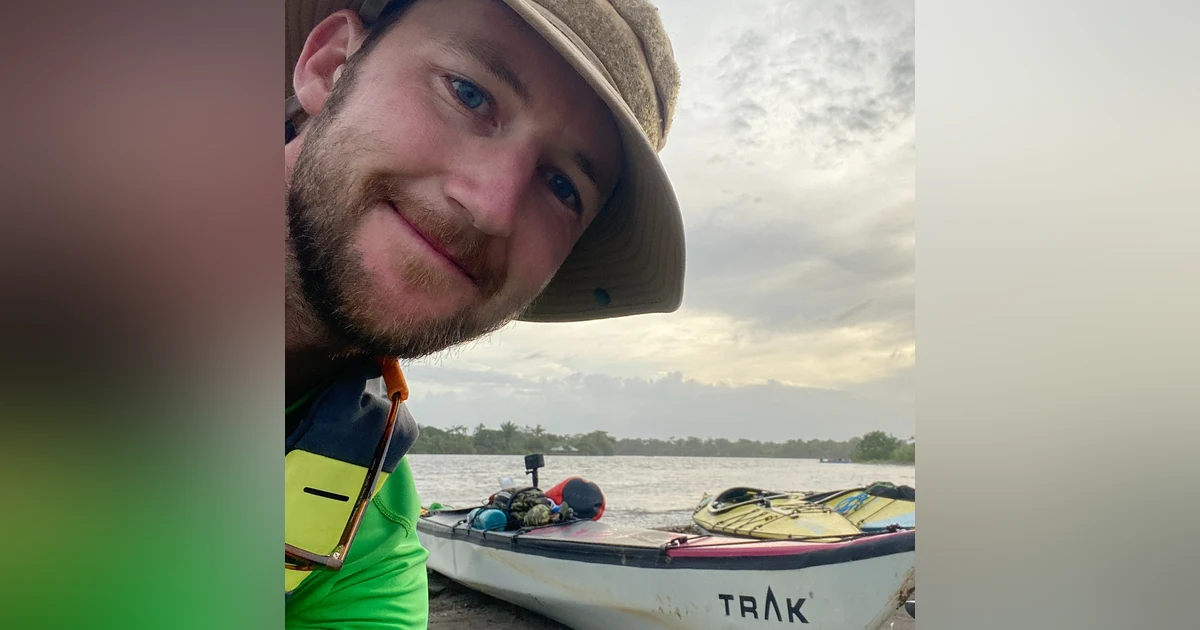
Caleb McIntyre recounts a life-changing 16-day (mostly) human-powered crossing of Nicaragua — mixing kayaking and cycling to move from the Pacific to the Caribbean. He describes logistical challenges (customs, transporting kayaks), dramatic lake crossings, time in remote archipelagos, crocodile filled rivers, and the unique culture and people he met along the Rio San Juan.
The episode highlights expedition planning, risk management, and how packable TRAK kayaks made the trip possible, while reflecting on how the journey rekindled Caleb’s love of adventure and shaped his perspective as a paddler and parent.
- What I found while crossing Nicaragua by kayak (Trak blog)
- Rat Race Adventures
- TRAK Kayaks
00:09 - Welcome to Paddling the Blue
01:54 - Interview with Caleb McIntyre
10:31 - Decision-Making in Outdoor Leadership
16:01 - The Call to Adventure
20:45 - Myths About Nicaragua
35:36 - Crossing to Ometepe
38:57 - Challenges on the Water
45:28 - Encounters with Locals
57:29 - Reflections on Adventure
01:00:17 - The Versatile TRAC Kayak
01:06:16 - Future Guests and Closing Thoughts
0:01 Welcome to Paddling the Blue. With each episode, we talk with guests from the Great Lakes and around the globe who are doing cool things related to sea kayaking. I'm your host, my name is John Chase, and let's get started paddling the blue. Welcome to today's episode of the Paddling the Blue podcast. Caleb McIntyre joins today's episode to recount his life-changing experience crossing Nicaragua, mostly by paddle. The trip was an opportunity for Caleb to return to a place he'd experienced before and fell in love with previously. And the trip really provided the chance to get deep into the country and for his group to truly immerse themselves in the landscape and in the people. I really think you're going to enjoy Caleb's enthusiasm and his ability to help you experience the trip along with him.
0:42 Before we get to today's conversation with Caleb, James Stevenson and Simon Osborne at OnlineSeaKeyaking.com continue to produce great content to help you evolve as a paddler and as a coach. And you'll find everything from basic strokes and safety to paddling in tides, surfing, coaching, documentaries, expedition skills, and incident management, and more. So if you're not already a subscriber to OnlineSeaKyaking.com, here is your opportunity to get started. Visit OnlineSeaKyaking.com, use the coupon code PTBPODCAST at checkout, and you'll get 10% off just for being a member of the Paddling the Blue community. And while you're there, be sure to visit the community section where you'll find an interview with me. And thanks to Simon and Daniel for hosting me on their meetup.
1:25 And for those of us who also enjoy paddling whitewater boats, be sure to check out onlinewhitewater.com. They're offering the same discount to listeners with the coupon code PTBpodcast at checkout. And I would love to help you put those skills to work. I offer a wide range of programs in the Great Lakes and beyond, from paddling skill development, instructor certifications, workshops, CPR and wilderness first aid, guided trips, and more. Just visit paddlingtheblue.com and click the Courses and Trips link at the top of the page, and I hope to see you on the water. Enjoy today's interview with Caleb McIntyre. Hey, Caleb, welcome to Paddling the Blue. Hey, John, thanks for having me. Yeah, absolutely, absolutely. So we've had a chance to talk a couple of times in the past and get connected.
2:07 But I recently saw that you did a pretty cool trip through Central America. So I wanted to talk a little bit about that. But before we do that, let's talk about how did you get your start as a paddler? Thanks, John. I grew up being spoiled in the Pacific Northwest. I grew up on Vancouver Island where I saw people with kayaks and canoes. And I was involved in youth programs like scouts and I joined cadets. But I'll admit it probably wasn't until I was in my early twenties that I took sea kayaking seriously. I. Like many other people who grew up here, I had this perception that sea kayaking was for, quote, old people, that it was something that you did when your knees started giving out and you couldn't do more extreme sports, which, of course, I was drawn to as a young person.
2:51 But I think that perception was quickly shattered as soon as I had the opportunity to do some proper expedition sea kayaking, particularly on the open west coast of Vancouver Island, where the conditions can be pretty serious, pretty high stakes. I had the chance to get my role, get into surfing, rock gardening, and then eventually realized that as a young person, sea kayaking could be an avenue for me to get employment in the outdoors. And so I eventually pursued certifications in sea kayaking here in British Columbia. And I worked as a guide and mostly as an instructor for outdoor development programs like Outward Bound. And sea kayaking really was an avenue for my own personal development as an instructor as as an as an educator but it's also been something that has remained a real influence in my in my personal life and my own hobbies so it's it's still with me very much so from an early age yeah that's a pretty terrible place to grow up isn't it it's rough man for sea kayaking yeah you know you know it so now tell us a little bit about the guiding experience and uh and Particularly, let's start with the training.
4:01 You mentioned you had done some certification for guiding. What does that look like out in the Pacific Northwest? Well, I'm sure it shares a lot in common with best practices that the sea kayak industry has in the United States and in other parts of the world, in Europe and Japan and others. Ultimately, in British Columbia, sea kayaking remains largely industry managed. There's no federal regulations in Canada around sea kayaking, but there was a risk of that being so after some accidents happened, I believe in the late 90s or early 2000s, don't quote me, but ultimately it was the first time that there was a fatality involved in sea kayaking.
4:45 And I think at that time, the Canadian government authorities were wondering, what is this activity? You know, we've got tourists coming around the world to go sea kayaking in our waters. And there is a risk to life. What's going on here? And at that time, the Sea Guides Alliance of British Columbia was formed. All of the industry partners and guides identified that, you know, yes, we need to set high standards for instruction, for guiding people. Qualifications for those professionals. And if we self-regulate, we'll hopefully prevent any future fatalities. We'll raise a high bar and we'll create a sustainable profession that become globally renowned.
5:27 And I think that's still the goal of the Seacock Guides Alliance of BC. And as a young person, I found the qualification process arduous and expensive. It felt like I had to jump through a lot of hoops to prove myself now that i'm you know a more seasoned guide i i absolutely grateful that i had to jump through all of those hoops and prove myself through multiple courses and and tests and i think as you age you and you've gone through some some some close calls you look back on your training and you're really grateful for it all and you're grateful for the scenarios that you had to play out in a controlled environment because when when real you know as they say you know crap hits the fan it's all all you have is your training to fall back on and so i yeah i'm really grateful for it and it was something that i did like i said earlier just mostly to get employment in the outdoors i didn't necessarily have a strong passion for paddling initially.
6:29 I think for me, sea kayaking has always just been about a vehicle for exploration. You know, the skills have generally been secondary to the why, you know, to the reason I go outdoors. And I think of my own passion for human power travel, being in my own body, getting out of my head a little bit. Sea kayaking is perfect for that. It's just such an efficient way to move. Absolutely. So that's, that's why I, that's why I, that's why I still do it, even though I'm not a guide anymore. You know, it's, it's one of my favorite ways to move through, through this planet. Yeah. I mean, you're right. It's the skills help you be able to enjoy that environment better because you aren't necessarily worried about and thinking about doing all the things that you're doing to, to be there.
7:16 You have, you have the skills, knowledge, and abilities to be able to support yourself in that environment. Therefore, you can immerse yourself in that environment even more. So well said. Absolutely. Like we can't undervalue the skills because if you don't have them, you're not going anywhere. Or if you are, you're going to get in trouble. And we've all seen that before, right? Sure. Yeah, the Sea Kayak Guides Alliance of British Columbia has got a pretty well-developed program in this. So congratulations on going through that. Out of curiosity, how do you think the decision-making, the leadership pieces, the risk management pieces that they taught and you've experienced through that, how has that helped you outside of paddling? It's a really good question. There's a lot in common, you know, and when you go through guide training or you go through first aid training and you're trained for those high consequence scenarios where there's risk to life in limb, If you've even gone through that training and you haven't done the scenario-based stuff where you're thrown into a situation where there's simulated risk, where there aren't actually lives at stake, but there very well could be, you're really tested and you'd be put into a stressful scenario and you get a chance to see how you'd actually respond.
8:36 And there are many times in life outside of our work in the outdoors where we're faced with very real situations where we have to keep that level head or we have to kind of remove ourselves from everybody else's stress we have to put those voices of doubt aside shut them off and fall back on our training and i and i think there's also there's an element there around self-care and self-mastery and they you know in a first date scenario they say like you know assess the scene you got to take care of yourself as a first dater and as a guide if you don't have mastery over your own vessel over your own gear over your own paddle you're not going to be able to be much use and so i.
9:24 I appreciate that if you're going to pursue outdoor leadership, yeah, it's an honor and a pleasure to be able to get paid to take people outside. But that comes with a responsibility to be the best paddler you can be, the best leader that you can be. And like I said, to be on top of your stress game, you know, and really pay attention to how you react to other people's stress, how you allow other people's energy to impact your own and to be ideally that steady rock for yourself but for your team for your clients whoever it might be and if i that find that for myself even as a parent now you know recognizing how much my energy the way i respond to stress to situations will influence my my toddler my son and i am grateful that in my life as an outdoor a professional, I've had to learn to keep a level head, you know, and be aware of my emotions, be aware of my reactions and to be that source of stability and that source of calm.
10:31 And ultimately that belief that I could get myself and I can get this team to this situation and out the other side. Yeah. Yeah. So you were able to put those skills to work recently. So you had the opportunity to join a trip through Central America. And so tell us a little bit about that trip. Central America is a beautiful place. It's, you know, geographically, it's that zone ultimately between Mexico and Colombia. And it's warm, it's beautiful, and it's largely underdeveloped economically.
11:12 But culturally, it's so rich. And i had the pleasure of traveling there kind of on a bit of a solo you know soul searching, adventure that some of us are lucky to do when we're in our early 20s and it was a very pivotal pivotal moment for me in terms of my personal development and my connection to community i could go on about that trip but ultimately 10 years exactly down the line i was sitting at my desk at track kayaks, reflecting on how much I miss solo adventures, how much I miss just doing things for myself since becoming a dad. It's so much of my personal time if outside of work is just put towards family.
11:52 I very, very rarely have a chance to ask, you know, what does Caleb want to do this weekend? Or where does Caleb want to paddle this month? You know, I don't really get much time for that right now in my life. And so when I got a call, first it was started with an email from... From Jimmy, the owner of Rat Race Adventures, which is a very unique outdoor adventure company out of the UK. Their tagline, I think, is Extraordinary Adventures for Ordinary People. And that might sound kind of gimmicky, but if you take a look at the trips that these folks run, they are extreme. They are ultra-marathon races, circumnavigations, huge distances over very short periods of time for people who do not want a typical vacation.
12:36 And this is you know as a guide myself i thought wow it's amazing that companies like this actually exist and you know that there's a clientele that is looking for this level of challenge you know these are not people who just want to sit on a beach during spring break these are people who want to run across countries and up and down mountains and all that kind of stuff anyway jim reached out because as he is being the owner of a company like rat race he's always looking for new destinations to run trips and at the time he needed a kayak a seaworthy kayak he could take to micronesia which is a tiny little collection of islands that form a country he's going to explore an ancient nearly sunken city and anyway long story short he had a great time loved the kayak we had a great call after and and the conversation evolved to where i hoped it would go.
13:27 And and jim said you know i've actually got an idea for a fleet of these kayaks there's a trip that i want to run in nicaragua and of course having been to the country before having a lot of romanticism around this around the place immediately my spidey senses kind of kicked in and i just kind of had this feeling of like i i need to be there i need to go on this trip you know it's one thing to be able to hook up a fellow paddler with some pretty sweet kayaks for an epic trip it's another thing, to be actually be able to participate in that. And I didn't ask. I was hopeful, but I didn't ask. But I came into work about three weeks out, maybe four weeks out from the intended start of the Nicaragua adventure.
14:12 And Jim said, you know, Caleb, why don't you come down? Why don't you join us? And you can help bring some of the kayaks for the fleet, bring some down from Canada. And i admit i i was scared because an opportunity like this this kind of offer might be once in a lifetime but it's not so easy now you know i've got a family at home i've i have a full-time job pretty strong responsibilities at track so for me to consider leaving two and a half weeks leave my my partner alone with our baby and leave my post at track hq i was nervous but to be honest with you, John. I just went ahead and bought my plane tickets before I ever asked permission. I just, I just knew it was almost on a spiritual level.
14:54 I was like, okay, it's exactly 10 years since I went to this country on an admittedly transformational personal experience. I'm being invited to return and to cross the country by human power under my own steam with a group of probably absolutely amazing humans. I can't say no. And if anybody said no, I'd tell them to screw off because this is this is an absolute gift from the universe so i bought my tickets i got lucky i got good a good price on them even last minute i told my partner honey i got this trip it's a work trip in nicaragua i think i gotta go i have to go looked at me i yeah i said i have to go and she knew the story and she said i guess you gotta go and and nolan the founder of track i i showed him the itinerary i told him what the offer was that i said nolan i got to go.
15:45 And he said, I think so. I think you got to go. And it was a full on everybody supporting me. So I feel incredibly grateful for that at this phase of my life to have the opportunity and excuse to rekindle my own sense of adventure after having to. Put that on pause since becoming a dad. I don't know about you, John, if you have kids or anybody else listening, but once you have kids, your relationship with adventure and the outdoors does change. Certainly. Become a little bit more aware of your fragility and you become more aware of those who rely on you and your, so your risk tolerance changes. And I didn't necessarily like that. You know, I felt like I'd lived 31 years to get a risk tolerance that I felt really comfortable with. And then all of a sudden I had a baby and I'm don't feel as confident to do the things that I've spent all of these years in learning how to do, you know, whether it's sailing or whitewater or backcountry skiing, you know, all of these, all these, these risk management decisions, they, the factors change, but yeah.
16:44 I felt really empowered to go on this trip and I knew that I'd have a really strong team. I wasn't going to be going alone. There was going to be a lot of expertise and it was familiar territory. It was a country I knew, a language I speak enough of to survive and an adventure that I knew I would be retelling myself and others for many years to come. Very cool. And it was, but it was a bit of a quick pack job to be honest with you, you know, and I wasn't just bringing one kayak. I had to bring three kayaks with me in a bag, plus all the paddling gear I needed for Nicaragua. And if, and anyone who's listening, if you've ever been to particularly Central America, but a lot of Latin American countries aren't known for their incredible selection of high protein, nutrient rich snacks, you know?
17:33 So like a lot of the things that we rely on as outdoor professionals, like dehydrated meals and granola bars and protein balls and all of these types of these types of snacks and foods like you just can't find them down there so i in anticipation for that i probably took an additional 20 to 30 pounds worth of snacks to be honest with you i didn't mess around because i just knew the high new based on the route plan just how much paddling we were doing and not just paddling there was there was a cycling component as well which was it was pretty intense but the paddling was by far the most, the biggest wild card in this country. As far as we knew, the route that we are intending to do had never been attempted by kayak before.
18:14 I'm sure that, you know, hundreds of years ago before the Spanish arrived and conquered the region ruthlessly, that indigenous people would have crossed those great lakes of Nicaragua, no problem, and traded on the various islands. But since that Spanish conquest, there hasn't been any record of people attempting to paddle across those great lakes and you you can kind of understand why when you get there. They are very similar to your own backyard, John, the Great Lakes of North America. Large bodies of water. You don't really see the other shore. Lots of fetch from the trade winds, which are not far away, you know, from ripping across the Caribbean.
18:56 And so pretty much every day you'd expect to see sheep in the pasture every day on those lakes. It's white cappy and tight swell, you know, tight periods like you guys are used to on the Great Lakes. So that was, as a West Coast boy, that was not something I was used to, not something I was anticipating. And it was definitely concerning, I'll say, upon getting our eyes on the water for the first time. There's a lot of question marks of like, if this whole trip was in vain, it's like if it was, it was all completely impossible. People i'd love to hear i'd love to talk about the trip in detail here in just a moment but tell me before we get into that dispel some of the myths of nicaragua and what people should really know about the country such a good question john well like many countries in latin america there's a history of colonization a history of independence and revolution and struggle a political struggle between the influences of colonial powers including the united states and more socialist movements, communist movements that have swept through the region.
20:04 In short, it's a history of violence and upheaval and civil war. And I think of incredible resilience of the people and of their culture and their care for each other. So I think people have this idea that these countries are scary and war-torn and dangerous and... And impoverished. And some of those things are true. These people are poor. Many of them will never leave the villages they were born and raised in. But it's far from dangerous. Kind people, generous people, they have everything they need in terms of their community and their access to food and shelter. I mean, you don't see homeless people like you do in North America.
20:45 They take care of each other down there. And there's challenges with corruption within the government. and that is something that the locals kind of keep hush-hush amongst travelers. But as a foreigner in Nicaragua, I always felt safe. I always felt welcomed and appreciated for the value I was bringing to the country. And even when we were passing through regions that really never see gringos, the response was always a smile. You know, I think people in Nicaragua are grateful that people from around the world want to see their beautiful country and want to spend their money there and help rejuvenate that country as it still recovers from from eras of civil war and we saw evidence of that when we were there you know we were hiking we hiked the highest peak in nicaragua while we were there that was part of our itinerary and if you stepped off the beaten track of that trail you would encounter if you weren't careful you would encounter landmines from from the civil war era between the contras and and and the more socialist groups but the country has by and large been very cleaned up.
21:46 And one thing that's special about Nicaragua is there is not drug cartel activity like you would expect in places like Mexico and El Salvador, for whatever reason, the government there. And I think the people as well have been very resistant to those types of influences and. Generally i consider it a very welcoming and appealing place to travel and cheap very inexpensive so there's a there's a lot of benefits there but of course it is a little more rugged and i think you know if you are used to staying in hotels you know three and four star hotels you were you'll probably be a little bit disappointed on what's in terms of what's available for comfort accommodations and food is going to be simple it's going to be typical local, fresh, healthy food that is similar to what locals eat.
22:37 You know, you're not going to find a lot of cheeseburgers and fried chicken in Nicaragua, but I'll tell you what, you're going to eat well, you're going to eat healthy. It's going to be a lot of fresh fruit and you're not going to have a hard time finding a Coca-Cola if that's important. Well, it sounds like a great way to travel for sure. And from the pictures, and we'll include links to the blog that you wrote about the trip. The pictures were spectacular and the story as well. So let's talk a little about that uh you've had a few literal landmines along the way as you'd mentioned but i know that you show up at the at the airport a bunch of kayaks and bags you get all that stuff on the plane hump it all off the plane and have to go through uh through customs and everything so tell us what that process is like with a with a bunch of boats and bags going through customs and the figurative landmine that you might have faced there oh man i'm.
23:23 I will admit it was a lot easier than I thought it would be to take three 16-foot kayaks and put them on a plane. I thought it was going to be a nightmare. And luckily, I did have to pay for extra baggage, and I did pay overweight fees on a couple of bags. And that cost some money, but a lot less than it would have cost for me to rent these boats or import them. So I've talked to people who talk about, oh, it's cost so much. And I think it's going to cost you a couple hundred dollars at most to pay for an extra large oversized bag, depending on how you move a folding kayak. 100% worth it. I'm not going to complain about the baggage fees because of what it empowers on the other side.
24:07 That being said, when you fly into a country like Nicaragua with a totalitarian government, you need to be prepared for some questions to be asked. And sometimes you need to be prepared to pay some fees and duties. When local entrepreneurs in Nicaragua want to import product, if they fly it in from wherever, they have to have all of that product inspected at the airport, and they often are required to pay a tax on what they import. Now, when I showed up in Nicaragua, I showed up with three kayaks, and two of them were virtually brand new. They were for the fleet for rat race. One of them was my personal kayak, so it would have been a little beat up. It still had some silt on it or some sand from previous week.
24:49 But the other two were virtually brand new and and and i don't know if you know what it what's what a track kayak looks like on the bag but it's you know it's carbon fiber and aluminum tubing and frames and hydraulics and you know like taken apart it i imagine that the inspector with the you know the machine was like i don't know what that is but we definitely need to look. So they flagged it they took all three cocks they opened them up and the you know in the in the limited spanish that we were able to communicate there was a question like what is this yeah like an erector so i pull i pulled out a picture of the of the track website and and like walked them through it and they like i could they could see i could see the the wheels turning in their brains like really it's a kayak okay man if you say so and they said this one's yours clearly because they could tell it had been used but these two these are staying with us and immediately i was like oh no here we go because i have 16 days in nicaragua to complete this whole trip with a bunch of other people and we need these boats like we cannot afford even a couple of hours of wasted time waiting you know waiting to get a hold of some some baggage that's been confiscated so as soon as this happened it was a bit of a red flag like you said a bit of a landmine and a concern because there was track kayaks that were going to be arriving from panama from the united kingdom them and they were all going to be flying into the same airport and potentially all getting flagged.
26:16 So luckily we had someone on our team, and I think this is a good learning for anyone who wants to do unique expeditions abroad, particularly involving things like kayaks, is we had a member of our team who was fluent in Spanish. He was from Panama. He had been familiar with these types of procedures. And to be honest with you, we found our way to the giant warehouse where our kayaks were being held. Along with lots of other products that was to be imported into the country. And we sweet talked our way in there and we had a nice letter and we told the director of customs what our plans were and we were going to explore their beautiful country by human power and it was going to be an international sensation and apparently that worked and they very quickly you know kind of accelerated the process they didn't charge us anything they gave us special paperwork that said that these kayaks were being temporarily imported and after that we were actually able to streamline the importation of all the other track kayaks to come after so that was great very grateful we had that talent on our team and at least a silver-tongued devil from panama able to kind of make it work and that was you know big celebration but it did set us back to be honest a few of us were waiting back while everybody else was kind of getting in position for the start of the human-powered element that could have gone a lot worse but kind of you know ultimately set us up and from there it was you know our goal was to reach the highest point nicaragua human power to the west coast the pacific coast and then human power ourselves all
27:47 the way to the caribbean coast in 16 days and that turned out to be possible but super daunting ultimately this is a paddling podcast so i'll briefly skip over the the biking component but the ultimate. Kind of takeaway is that regardless of whether you're moving by kayak or bicycle the human powered method of travel is you know an exquisite way to move it's just the right pace you just get to absorb everything sure seeing the country from the water was incredible seeing it from a bicycle from two wheels was also wonderful it was probably the best days of cycling i've ever had i do love biking it's my next it's my i think it ties with paddling in terms of my favorite made a move through this planet but i i do highly recommend bike travel in a place like nicaragua you're gonna you're gonna be able to use off-road routes you can be able to stay off the pavement and you'll be able to use the benefits of you know modern map apps to plan a route that really keeps you off the beaten track and gives you a really unique perspective on a country like nicaragua and you can you know realistically you know we crossed you know from our day where we we left from the Pacific coast and across the watershed, uh, into the, into the, you know, watershed that flows east into the Caribbean.
29:02 That only took us one day of riding. So it's, you know, it's a relatively small country that you can cross on two wheels very efficiently. So what kind of distance did you cover over the 16 days? The 16 days in total was about, about 600 kilometers. Okay. 200 kilometers were on the river about another 200 kilometers on the lake and about another just over another 200 that were that were peddled okay so walk us walk us through and like you said let's talk the paddling pieces walk us through some of the highlights we won't be able to go day by day through all 16 days but take us through some of the highlights that you really experience on that trip absolutely well as i mentioned nicaragua has a couple of very large lakes that are effectively great lakes in the Central America context.
29:52 And they are fierce. Like I mentioned, potential for lots of fetch, very strong waves and wind. And... I think there was a lot of potential that, as I mentioned, that this trip would have been completely impossible. We were prepared to have to wake up long before sunrise to be able to have somewhat calm conditions. And the crossings involved in the itinerary were minimum 20-kilometer crossings in some cases, with the potential for crossings up to 30 kilometers or more without any land. And I, even as a sea kayak professional, had never considered a crossing that long. Just had never had any reason to consider that kind of crossing and there was every reason to say that this trip would have been a would have been a failure so what was it was necessary to make sure that we could finish even if we weren't going to be able to do every aspect of the trip human powered was for us to have pretty much a local on call with a with a safety boat which is pretty much an open-top fishing boat that was available on call in case we needed to bail out.
30:56 I'd say the highlight of the trip for me was being able to see the country of Nicaragua from the cockpit of a kayak at that pace. When you're off the road, you kind of end up seeing the backyard view, right? You see where people do their laundry on the lakeshore. You see where kids are playing after school. You see the fishermen cleaning their nets, you know, in the afternoon after the morning's catch. And you see... A real version of a country that is very different than what is going to be on the tourist path you know that most gringos are going to witness you're going to get waved at by a lot of people who have never seen a kayak before you're going to watch you know grown men just drop their tools and stop and stare at you because they've just never seen this form of movement before so we were a bit of a spectacle and sometimes I was a bit uncomfortable with that you know it was it's kind of funny to think like here we are a bunch of gringos we're flying halfway across the world in some cases for two and a half weeks to go witness this country and and move in a way that people have been traveling on in this landscape for thousands of years.
32:10 I think especially when it came to being on the Rio San Juan, jumping ahead the lake was special in that we were blessed with incredibly good weather for the crossings. And in fact, one of the guides, the locals that we'd hired to be available on standby that, God forbid, a squall picked up while we were in the middle of a 30-kilometer crossing, they asked us, which saints did we pray to, being a very Catholic country? Because the conditions that we had while we were in Nicaragua, especially for the lake portion, were unseasonably calm. There's every reason that there is going to be way too rough out there for us to make these crossings.
32:52 And one thing I'll mention is that I am a professional sea kayaker, but several of the participants that joined me on this trip from the UK were, they were very fit, but they weren't experienced sea kayakers. They didn't have, you know, years of, of paddling experience to have us, you know, excellent forward stroke. I mean, none of them knew how to roll a kayak, nevermind, you know, had practiced a re-entry or a cowboy scramble. So, you know, we had very fit paddlers who were very keen and very ready to charge, but no. Some very some variables to consider you know were they going to be able to handle really rough waters and so we had a go or no go decision at one point if you look at the map you'll see you'll see that to cross to the island of ometepe which is a gorgeous volcanic island in the middle of of lake nicaragua the largest of the great lakes it's very unique island it looks like something out of a video game map it's two volcanoes joined at the hip one's very young uh you almost still smoking the other ones ancients covered in jungle and it's one of the most important places i've ever been to in my life having been there twice now but the crossing to this island was going to be arguably the most daunting and probably the most significant and there was a go no go moment where we'd already paddled nearly 30 kilometers that day all beams seized the whole way lots of weather cocking you know our left arms were sore from dealing with these trade winds and our
34:25 our team was really deliberating like do we do we decide to make this committed crossing. Which could be four to five hours of non-stop paddling into the wind and if we don't make it we have to maybe bail out into an open top fishing boat with our collapsible kayaks it was not an outcome that any of us wanted but also we came this far with the intention of making this crossing none of us wanted to give up either you know myself especially you know i i had it in my mind that no matter what i was going to make this crossing but you know as with paddling you got to do what's best for the pod. So we left the beach actually anticipating that we might call it, you know, that we might give up and pack up our boats and take a shuttle to Ometepe.
35:12 But as we left the shore, something miraculous happened. And this is, I think, where the guides asked us, you know, what saints did we pray to? Because it's almost, just as we'd kind of given up on the prospect of making this 20-kilometer crossing, the winds just kind of dissipated. And all of a sudden, the waves started chilling out like faster than I could have anticipated. It was something divine. And I'm talking like two hours later, we're in the middle of the crossing, probably 10 kilometers offshore. And it's glass, John. I don't even know if I could properly explain it because it doesn't really make sense like in the way that water behaves.
35:53 Like it usually would take a lot longer for a sea state to calm down. But it's almost as if some supernatural forces were at play and really wanted us to make this inaugural crossing to Ometepe. By the time we got there, the sun was maybe 15 minutes from going below the horizon. There was this epic glow, sun setting over volcanoes. And we landed on a beach that some locals were playing at, a bunch of kids going for a swim with their parents. I remember I came up, I was one of the last people to bring my kayak up on shore because I wanted to get a roll in to cool down. I popped my skirt and a buddy passed me an ice cold beer, Nicaraguan beer.
36:37 And I usually don't drink. And it was one of the most refreshing things I'd ever had in my life. And I remember feeling like, wow, that was at that time the longest day of flat water paddling I'd ever had and the longest crossing that I had ever done. And it was to return to arguably one of the most significant places of my own youth. So it was a huge, almost like a rewrite of passage. And there's pictures of us, you know, cheersing to that moment with the mainland of Nicaragua in the background. And I think that'll be forever the most memorable moment of the trip. But of course, despite that being a big accomplishment, it was one of just many more 20 plus kilometer crossings.
37:17 And eventually we would have to leave the safety of that island, you know, it's protected shores of Omotepe and make our way across the rest of that inland sea. And there was a big question mark. If you look at the map, you know, it's the route map that is linked. You'll see there's a big question mark kind of in the very smack bang in the middle of the lake. If you zoom in with a satellite image, you'll see it was effectively a rock, a glorified rock called Isla de Zanate, which is a place where colonies of birds would hang out, but it's not known as a place for humans to spend any time. We know that fishermen would often anchor their boats in the lee of the island to hide out from storms, but there had never been a place that any local had spent time on on foot.
38:04 Was a potential stopover point. It would be a 30-kilometer non-stop as the coral fly crossing from Omotepe to potentially find this rocky outcrop, which according to satellite images had some trees on it. But it would be a big wild card. It would be in the middle of the lake, a 30-kilometer crossing minimum in either direction. And even if we could land on this piece of karst in this volcanic landscape, we might slice our boats up and there might not be enough trees on shore for us to set up hammocks to sleep. So we might just end up marooning ourselves on a rock in the middle of an inland sea with no means of escape. And the forecast, despite it having been unseasonably calm for the two days prior, was expected to return to 20 knot winds plus.
38:52 So we would have been potentially locked on this. Well, that sounds like a definite reason to go there. It was definitely a reason to go there i mean if i was there with maybe a couple of buddies seasoned paddlers and we were like okay we're gonna do this we're gonna absolutely do this we're gonna free the first people to paddle into nothing because we couldn't see this rock from umatepe you know 30 kilometers away a rock that is maybe 20 feet off the ground you know like we would have been we'd probably been several hours before we got a glimpse of it if we were able to hold our course and there's no charts for this region you know we're largely relying on on our phones and gps honestly john it was the time in the trip where we had to give up on our goal of doing the whole thing by human power and i admit that on this podcast as much as the mission was to complete the entire coast to coast of nicaraco by human power with the time we had available it just wouldn't have been feasible you know it might have been possible but there's also a chance that it could be life-threatening and.
39:52 Or it would have meant that we couldn't complete the trip at all. You know, we might have hurt ourselves or hurt our equipment to the point where we couldn't complete. And so all of us collectively said, as much as we love the human powered element of this trip, and we're going to continue to honor that everywhere else that we can, we're going to give up that superficial objective for the grander mission of getting from one side of the country to the other. And so we took what is a more conservative approach. We made the mainland, we returned to the mainland of Nicaragua. It was only a 22-kilometer crossing of nonstop open water, which we were kind of, the wind was at our backs, the storm was kind of growing as we crossed, and we did get across before things got too spicy, which I'm grateful for. And luckily, because we had packable kayaks, a fleet of 10 kayaks, we could pack them back down into bags, throw them into a fishing boat, all of us, and get back across this lake into the protected islets of the Solentenami archipelago.
40:47 So this was kind of our refuge where we waited out the storm that was to follow and this is a very rarely visited corner of nicaragua that i admit if if i could go back i would spend more time there if i could go back with a with a kayak that i could bring in a bag i'd probably skip everything else i'd already done just go straight to that archipelago because it's it's something. Really special rather than nicaragua there's very few people who live there it's only accessible by these little boats and the bird life was something that i the only like i'd only seen that kind of biodiversity and that intensity and density of life particularly bird life in the amazon and what was the name of that archipelago again that archipelago is called solente solente salente and it's in the kind of the bottom right hand corner of the largest lake in nicaragua and like i said a place that very few nicaraguans go never mind tourists a real gem within central america And if you're a bird lover and you're a wildlife lover, I think it's a place that can't be missed within Nicaragua.
41:50 And that was kind of our last stop on the Big Lake and a chance for a rest day. We had some injuries. You know, there's always foot injuries, it feels like, with paddling trips. And there was some big bugs. We had some mystery spider bites on people's hands that were festering. You know, some pretty gross stuff. We're grateful we had a medic on the trip. I can imagine that if we didn't have a medic, the trip would have taken a lot longer as we waited for people to recover from various infections and things. But everybody was a huge trooper and we were able to get off the lake on our target time, that's as we got closer and closer to the caribbean as we've made our way further east, nicaragua becomes more and more remote you see fewer and fewer if any tourists we were definitely the only gringos we saw in this in this in this corner of nicaragua and it's also an area where you kind of have to follow the rules a little bit more carefully.
42:46 And I mean that because when you get to this corner of Nicaragua, you get pretty close to the Costa Rican border. And the river that we were planning to paddle out to the Caribbean, which is called the Rio San Juan. There's lots of Rio San Juans around the world, but this is the one in Nicaragua. It flows out of Lago, Nicaragua, into the Caribbean over 200 kilometers of jungle. And I was really looking forward to this Cause I don't know about you, John, but as much as I love sea kayaking, I, I secretly love river paddling even more. Maybe it's cause I'm lazy and I just like a little current, but I love watching the world pass by at that pace and having that linear path to follow.
43:28 It's kind of like a, it's like a trail, but it's water. And I was so looking forward to it. Well, you know, I mean, crossings, crossings can be exciting, but they really do keep all the interesting stuff at the shore. Yeah. I mean, I like finishing a crossing, you know, it's a, it's a real type two fun, but rivers, you never really want them to end. Like you just wish it could keep going on forever. Cause there's just, it's just a treat around every corner. Though I, this is, you know, if there's any part of the story that I find most interesting, it's probably the river because I'm a Canadian, I'm a spoiled, you know, rural, rural boy who grew up with clean water around me. And, you know, you go to a place like Nicaragua that doesn't have the infrastructure to afford its citizens waste management systems and sewage treatment and, you know, freshwater filtration and all of the things that we take for granted in North America and Europe and in the Western world in general.
44:22 When you go to Nicaragua, you really get a wake-up call because that river, the Rio San Juan, effectively serves as the sewage management system for pretty much the entire eastern seaboard or the entire eastern part of the watershed for Nicaragua. You know, everything that flows into the lakes and into the rivers, it eventually all goes into the Rio San Juan. So as we got closer and closer to the headwaters and the kind of last urban center in Nicaragua, before you head up to the Caribbean and San Carlos, the water changed color and it got murky and brown and it started to smell different. And I stopped going for swims and I stopped rolling my kayak to cool down. And I also stopped swimming to go for a pee because the river is infested with crocodiles of all shapes and sizes. And I had never seen the crocodiles.
45:13 I've seen alligators, but I'd never seen crocodiles. And they are truly, I think, what dinosaurs are inspired by. And as soon as I saw them on the shoreline and I saw how big they could be, I didn't really want to be dangling my feet in the water to take a break. It definitely changed our relationship with the landscape and became just a little bit more... Austere you know it was dirty water that had the potential to get you sick the shoreline was murky and mucky and deep there weren't sandbars to land your kayaks on there weren't eddies to hide in and take refuge in it was just a non-stop moving conveyor belt for the most part with with a lot of risks involved and so it changed it was a different kind of paddling trip than i'd been that i'd done it kind of combined you know a passion for paddling with a bit of a reality check in terms of the way that countries like nicaragua function but it was also a really beautiful way to see the way that people live in this part of the world completely unreliant, on modern civilization despite the dirty water and the things trying to eat you let's let's talk a little bit about some of those people experiences you must have had some fantastic people experiences along that river oh man i i a river is a river right you know you start at one end and you get to the other and.
46:30 You know, most of us thinking you don't really need a guide for a river. I think this trip proved to me that that's not necessarily true. I think if in the future, if I ever had the opportunity to paddle down a river with someone who knows it, I always would do it. Because every river has its way of flowing throughout the seasons, depending on the water level. And if you have someone who knows a river like the back of their hand, like one of the local guides that we did Mateo spoke no English but he knew that river like it was his you know it's like it's his like it's his personal way to work every day because it is it's the way he travels and he helped us find the the fastest ways to move it's a pretty large river and at times doesn't flow as fast as you'd like it to sometimes you're facing pretty strong headwinds that can nullify the power of the current so Mateo helped us identify the strongest current within the river And that was hugely helpful, especially when we were facing headwinds that felt like they were stronger than the current.
47:32 You know, Mateo was able to help identify the parts of the river that were moving fastest. And that really helped us meet our kilometer objectives because we had a limited time to complete that river. So Mateo was clutch, and sometimes his niece was there with us. And keep in mind they're in like a small little riverboat, and she's chopping up fresh fruit. That was really nice. but the it's the people on the shoreline that i think were most interesting as i mentioned these people are are thriving despite any kind of connection to modern civilization they are clearing jungle by hand often having controlled burns moving all of that burnt lumber out of the way constructing their own homes by hand they are planting coconuts and bananas and whatever else they can they are you know bringing cattle down on barges and and farming pigs and cows and goats and whatever else they can and they're raising their kids effectively in the jungle you know that's why as a new dad i had always kind of tugged at my heart because i end up really missing my son it was my first time ever being away from my family but often we would paddle by little tiny villages or even just one shack you'd see it on on the shore and a kid would come running out and would would run along the shoreline for as long as they possibly could trying to keep up with us you know yelling and screaming and laughing because of course they'd never seen a bunch of gringos float by their house in these colorful kayaks and the most common response from
49:06 the adults they would just all of them would just stop whatever they're doing and stare because again we were a bit of a spectacle and. It was really for me humbling. You know, we, we get so fussy about everything has to be so, you know, perfect. And we're often worried about, you know, our, our kids safety, you know, walking on sidewalks and, and, you know, hold my hand across the street kind of thing. And meanwhile, I'm watching, watching these kids, like, you know, little toddlers play on the edge of a, of a raging river full of crocodiles. And they're just, you know, waving at us from the shoreline. And, you know, I think about, you know, if that was a kid in North America, their mom would be screaming at them, going to pick them up and, you know, keep them away.
49:49 You know, but there it's just a different relationship with nature, a different relationship with risk, you know, and... And I wonder too, I wonder how much better off young people are growing up in a wild environment like that where they, yeah, it's dangerous and it's raw and the consequences are real. But, you know, kids learn how to thrive as humans, you know, and how to be confident in their natural environment. So that was really inspiring for me just to see how comfortable a lot of these little kids are in a place that we consider wild and a place that we consider a place we travel for an experience. This is just their backyard you know and what's what's again unique about this river is it forms the border between nicaragua and costa rica which you know these are not countries that friendly or friendly countries but there is smuggling activity that happens you know whether it's humans trying to make their way north or there is gold that is prevalent within this jungle and within this this river area and so we've been told that there is smuggling activity that happens, and for that reason the the river is patrolled so every hour or two as we're paddling down the river our guide would out of nowhere sometimes quickly you know pull off the side of the river and we have to really be paying attention that we didn't miss our turn because we'd all have to get off the you know pretty much we have to pull off to the side of the river again very few eddies so we're like paddling hard and just hanging on to a dock or a piece of ropes that's thrown out for us and And all of us would raft up, we'd wait on the shore,
51:20 we'd effectively share our paperwork. With members of the Nicaraguan army. And they would review it, they'd see the manifest of who we were, our nationalities, what our purpose of our trip was, they'd verify it. And eventually, in five or ten minutes, they'd send us on our way. And luckily, we never had any issues with these kind of military checkpoints. You know, we, we'd always made sure to put our cameras away. We, you know, turn our GoPros off and stash them. At one point, our first military checkpoint, I thought it was pretty cool. And I remember I had my GoPro on the deck of my kayak and I was filming and a young man in fatigues and an AK 47 pointed at me and yelling at me in Spanish.
52:02 And they said, Caleb, put your, take your GoPro off. You know, they, they don't, they don't want to be on camera. I totally respected that. So that's a good thing. Good thing to know is, you know, ultimately this is a controlled waterway. You can't just go down as a tourist without, you know, having. You have to ultimately have permission and you need to go through these checkpoints and you need to stop at every one and they need to see that you've passed the other ones in between. So I, I will say that if I had just been a random gringo who thought I could float down this river by myself, I probably would have gotten in a lot of trouble because I wouldn't have known where to pull off what the little tributaries to go paddle up to go out of the military checkpoint.
52:43 And, and I don't know, I imagine if we had skipped one, what would have been the consequences? You know, would they come chasing after us with their AK-47s and arrest us and take our kayaks? I don't know. But generally, we were, you know, respected. And, you know, we'd done our paperwork ahead of time. And we were able to move very smoothly. And at one point, the river actually, the Rio San Juan divides in two. You know, most rivers, they just have more tributaries adding to them. And they just get bigger and bigger and bigger. This river is unique in that it actually splits into two. and one half flows into Costa Rica and the other half continues up northward and continues to form the border of Nicaragua. So you don't want to miss that turn.
53:25 You've got your last turn off to stay in Nicaragua. And at that point, it was kind of the final stretch. And we started to smell the Caribbean Sea. It almost felt like I could hear it before I could, but it was just so close and started to flatten out and slow down a little bit. And I'll admit, I was tired at this point. I was sunburned, John. Like, I was super sunburned. I am used to paddling in the Pacific Northwest, and sure, we have long, beautiful days in the summertime, but I've never really messed around with, you know, sunscreen on anything but my face. But in Nicaragua, your hands, you know, if they're not covered, if you're not wearing gloves on your hands, like... Your hands just get mangled from paddling. The tops of my hands, I looked like a leopard. They were so burned and bubbled and peeling.
54:11 And the inside of my hands, luckily I was blister-free because I was using a Greenland paddle the whole time. But a lot of my colleagues had multiple gnarly blisters and your hands are all pruney from this, you know, just warm, wet, you know, it's an interesting place to be paddling all day, every day. That's a big lesson. If I was to return to the tropics to paddle, i would always wear gloves not like neoprene paddling gloves just like maybe like cycling gloves or just something just to keep the sun off off the top of your hands because they just get mangled so i was i admit by the time we were smelling the caribbean and we were finding our, way through the lagoons that are the kind of this it's like a maze to find your way out of the river by the time we we saw the caribbean on the horizon i was ready to go home i was missing my family I you know I'd done the hardest longest crossings of my life I'd I'd paddled down arguably one of the grossest water bodies ever and yet so beautiful at the same time and all of my colleagues they saw you know the first sandbar they could they pulled their kayaks up and got out popped their skirts and gave each other hugs and celebrated but I I'll admit John I I wasn't really done until I paddled the Caribbean proper and so I I followed the the river out into the sea maybe a bit naively supposedly.
55:32 And of course, if you've ever paddled a river out to sea, you know, it can get pretty rippy. It can, you know, the currents can converge. You got all this current from the river flowing out to sea. You've got all of these, the rip currents from the waves and the Caribbean at this time of year is not a calm body of water. It is ruthless and aggressive and shallow and, you know, nasty waves. And I went out there thinking, here, here I am. I'm going to have this romantic end of the trip moment. And I got out there and my kayak just starts drifting sideways and I'm getting literally sucked out to sea, you know, and I'm thinking, this is the last thing I want. I just paddled for 15 days straight.
56:14 All I want to do is be done. And I, here I am trying to be a hero and I'm getting sucked out to sea and, and nobody out, no one's going to follow me out here. So I, I was, I was smart and I ended up just charging back to shore, digging in deep. I surfed a wave into shore and I popped the skirt and I said, okay, we're done. We did this thing. We went coast to coast and... Yeah, I remember kind of recording a voice message for my family at the time, just letting them know how grateful I was. Because, you know, again, once you become a parent, your relationship with the outdoors changes, and the value of the time away from your family to just be in your own body, to just be your own self, to kind of rekindle that sense of childish adventure that is what often gets us into the outdoors and gets us into paddling in the first place.
57:01 I just, I'd missed it, man. And, and at the same time, I had the, it was the first time in my life that I actually got to feel what it feels like to really miss my family. You know, I'd never been away. I'd never had a family to miss, you know, and I'd never been away from my family long enough to really miss them. You know, to that every time I saw a little kid, I thought of my son, you know, and that was a blessing, I think, for myself as an adventurer to realize that, yes, I am a paddler. Yes, I am an adventurer. Yes, I need to continue to do these things that make me feel alive. And I have so much more to live for. I have a family back home that misses me and loves me. And I can hold both of those truths in my mind at the same time.
57:47 And I don't know. I'd like to say that I would have got there to that realization without a trip like this. But I don't know for sure. And I'm back at it again. I'm back home working full time, nine to five, doing the dad life grind, which is beautiful. But i'm really grateful that i can reflect back on a on a trip not so long ago you know within the last couple of months still and will always just kind of forever be just in the back of my mind that's reminding me that i am yes i am a dad yes i am a professional yes i am in this phase of life but i am also still that kid who went to nicaragua when he was 20 and had a transformational experience i am still the outdoor educator and the guide and the paddler i am still an adventurer who likes to push myself and to take risks and to do hard things i still got it you know i still have the fitness and the capability and the risk management and yeah so i'm i'm really more than anything grateful for that opportunity to just kind of step back into time and to you know i I think for myself, I, as a paddler, this hooked me on, on a different kind of paddling because I, as I alluded to, I'm blessed.
59:03 I live in a part of the world that is a Mecca for sea kayaking. And I could live my whole life here and never see at all. But to be honest, now that I've had a taste for the travel paddling, you know, having the opportunity to just put a kayak on a plane, have it, pick it up on the other side and, and, and say, take me to the beach, you know, and to be able to travel that way, I'm kind of hooked and I can't wait to see what comes up next. I'm working with friends and colleagues to ideate the next place to travel to paddle. And it might not always be a Latin American country like Nicaragua. I dream of doing similar trips in Europe, in the UK, Scandinavia.
59:46 Honestly, parts of Asia. I'd like to see places that are normally tourist traps and get off that tourist trap path by using a portable kayak. So it's kind of changed the way I perceive travel and it's changed the way I perceive paddling. I think it's just that for me, I'm just kind of scraping the surface now. I've realized like there's a lot that can be seen from the deck of a kayak. Sure. And with the boats you've got, you can get to a lot of different places. So that's fantastic and love hearing about the trip and the experience. What an amazing journey that sounds like it was for you. And great that you have that wonderful, grateful feeling for all the things that you do have and for the family that is supporting you.
1:00:28 So you mentioned the boats. I've mentioned that a couple of times. And so very capable craft. And you've kind of proven that of the capability of the craft. You've been able to use that same craft in a sea kayak environment or open water environment, and then in river environment. Tell us just a little bit about the TRAC kayak and its design. Well, TRAC is a folding skin on frame kayak, 16 feet long. It's got hard chines, V-shaped hull, designed kind of on that traditional Greenland kayak. Ultimately borrows from the origins of kayaking skin on frame, except instead of using bones and antlers and driftwood and animal hides for, you know, we're using aircraft grade aluminum for the frame, carbon fiber ribs.
1:01:12 Polyurethane skin that's heat welded together and radio frequency welded and hydraulic jacks. Which create the tension for you to be able to insert two halves of the kayak into the skin and then use those jacks to create the tension and also adjust the rocker so the track is the only kayak in the world that can adapt to different conditions depending on where you want to use it or what conditions you find around the corner so it makes it a very versatile boat very capable boat a lot of people think that it doesn't have storage and that's not true it actually does have a considerable amount of storage we use ultimately flotation bags that double as gear bags so you can use the gear flotation bags to store up to 60 liters worth the gear forward and aft and usually i carry a couple other smaller dry bags behind my seat maybe one on the deck so it has the same storage capabilities as a typical hard shell sea kayak it's just going to be loaded slightly differently and it has a payload of 350 pounds so it's certainly capable for for most multi-day expeditions that people are doing similar to fiberglass boats in most cases so on that on those crossings you can i don't know how to describe it but you can you basically lower the rocker track out a little bit better and then when you get on the river jack that thing up and then when you get out to that that end and you have to surf in crank it up a little bit more and have a little bit of fun absolutely you know you nailed it i mean i it's it's one boat to rule all the conditions and i think the trip unintentionally gave us a taste of a little bit of everything
1:02:42 you know from flat water to moving water to some serious surf conditions and. You know, some people say, oh, it doesn't have a skeg, doesn't have a rudder. You know, I think there's lots of debates on that. Don't need to talk. You have a whole podcast about that. The main thing to say is that, you know, in the circumstances where you would normally drop a skeg on a boat in those, in, in, when it comes to the track, you just lower the rocker all the way down to get more, more stern in the water. And being that it's a, you know, deep V-shaped boat that tends to do the trick in terms of, you know, keeping your stern planted and following seas. You could also experiment with the opposite when you're going into conditions or you're facing steeper seas. Just jacking up the rocker slightly can give you a lot more confidence, a lot more maneuverability when the wind and waves are throwing you around.
1:03:25 And I will say like the rocker potential in a track kayak is massive. Like if you want to jack the rocker all the way up, you've got a serious banana boat, a serious playboat that I've seen people paddle in class three in. Very capable for surfing. And it's a very easy kayak to roll. It's not a tricky a lot of the packable boats are impossible to roll that like the track is a sea kayak first and foremost that just happens to be packable i like to say that you can transport it on the roof if that's what you prefer you don't have to put it into a bag but it is sized for air travel so the idea with the bag is that it meets standard airport travel dimensions but it's also you know it fits in the back of a smart car i think about people who own track kayaks in dense places like Hong Kong and they, you know, they store all of their paddling gear in a, in a tiny closet with the track.
1:04:15 So it's a lot of different applications. It might not be for everybody. You might not have a need for a packable boat. But if you have a dream of paddling abroad or even just taking a kayak with you on vacation in your van, or you live in a tight little space and you don't want to have to be reliant on kayak rentals or you use public transit, like the track is everything you would want and dream from a regular sea kayak, a hard shell performance sea kayak, and a little bit more because that adjustable rocker is arguably a lot of fun. Cool. I will say it's not a gimmick. Like once you get to try it, you kind of wish every boat had it. Awesome. Well, we'll put links in the show notes so people can check out track kayaks as well. So Caleb, how can people reach you if they've got questions?
1:04:57 Oh, man, I love some questions. I've been meeting with people recently about the trip. There's other people who are thinking about kind of repeating aspects of the trip in Nicaragua and other countries like it. So if you'd like some tips and tricks about dealing with customs, best practices for packing a track kayak, or any packable boat for that matter, what to expect in terms of amenities and gear and stuff like that you know feel free to reach out to me i'm on instagram at caleb.mcintyre you can also i'm usually the person at track hq who answers the info at email so if you just email info at track kayaks.com or caleb at track kayaks.com i'd love to have a chat with you i i'm happy to set up like a one-on-one video call i like to make myself available just because there's a lot of us who are dreaming now of going further with kayaking but it's still a relatively novel sport or niche within this sport so please reach out i'd love to chat with you and and share some some dreams of paddling elsewhere excellent well like said we'll put we'll put links in the show notes so folks can uh can reach out to you and make that connection uh caleb one last question that i have for you and that is who else would you like to hear as a future guest on paddling the blue, Oh, man, I think you really need to interview Jim Mee from Rat Race Adventures, the owner of the company that, you know, he's the person who ideated this trip across Nicaragua.
1:06:16 He just wanted to see if it was possible. But Jim's been doing trips like this all over the world. And I think you need to ask him about his kayak trip in Micronesia to the ancient city of Nandmapur. I think I'm saying that right, but I might not be. It's known as historically as the Venice of the Pacific. Uh it's ultimately a civilization that no longer exists anymore but they got to see it and this is a place that very few people even know exists never mind take the journey to see and i'd love i want to hear his story about exploring it from from the kayak so reach out to jim me from rat race adventures awesome we'll do that caleb thank you very much for the opportunity to hear about your trip with uh with rat race to nicaragua and the experience that you had and i appreciate your time. Thank you.
1:07:01 Thank you, John. Happy paddling. Thank you, too. If you want to be a stronger and more efficient paddler, Power to the Paddle is packed with fitness guidance and complete descriptions, along with photos of more than 50 exercises to improve your abilities and enjoy your time on the water. The concept and exercises in this book have helped me become a better paddler, and they can make a difference for you too. The exercises in the book can help you reduce tension in your shoulders and low back, use the power of your torso to create leverage and use less energy with each stroke, use force generated from your lower body to make your paddling strokes more efficient, Have the endurance to handle long days in the boat, drive through the toughest waves or white water, protect your body against common paddling injuries, and while you're at it, you might even lose a few pounds.
1:07:44 And who wouldn't mind that? So visit paddlingexercises.com to get the book and companion DVD. You can really hear Caleb's enthusiasm for paddling and for experiencing the environment and the people around him. He's a great storyteller who has a knack for taking us along with him on the trip. At times, the water may have been pretty gross and things were trying to eat him, but still the trip of a lifetime and he knows what's really important in life. Visit the show notes for this episode at www.paddlingtheblue.com slash 165 where you'll find Caleb's story with photos and other links to learn more about rat race and track kayaks. And as a reminder, you can find programming and trips for me at paddlingtheblue.com. Click that trips and courses link at the top of the page and I hope to see you on the water.
1:08:27 And if you're not already a subscriber to onlineseekayaking.com or onlinewetwater.com remember you can always use that coupon code PTBpodcast to check out and you'll get 10% off just for being a member of the Paddling the Blue community thanks as always for listening and I look forward to bringing you the next episode of Paddling the Blue. Thank you for listening to Paddling the Blue. You can subscribe to Paddling the Blue on Apple Music, Spotify, or wherever you find your favorite podcasts. Please take the time to leave us a five-star review on Apple Music. We truly appreciate the support. And you can find the show notes for this episode and other episodes, along with replays of past episodes, contact information, and more at paddlingtheblue.com.
1:09:08 Until next time, I hope you get out and paddle the blue.