#126 - 189 days around the UK and Ireland by Kayak with Felipe Behrens

 Apple Podcasts

 Spotify

 Overcast

 Castro

 PocketCasts

 RSS Feed
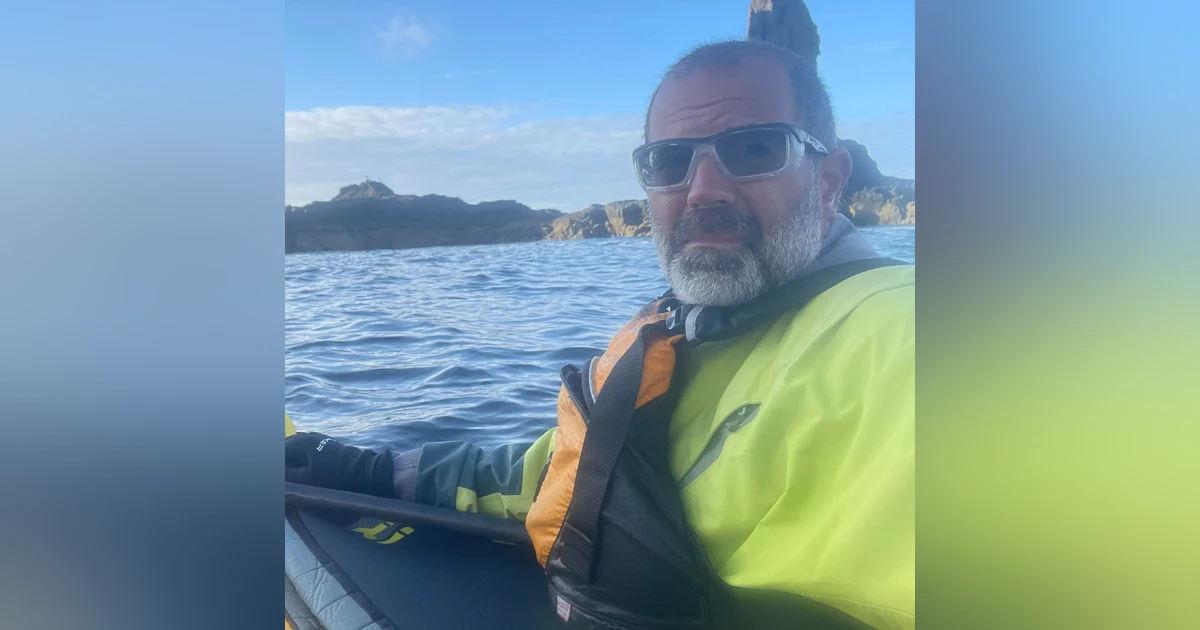
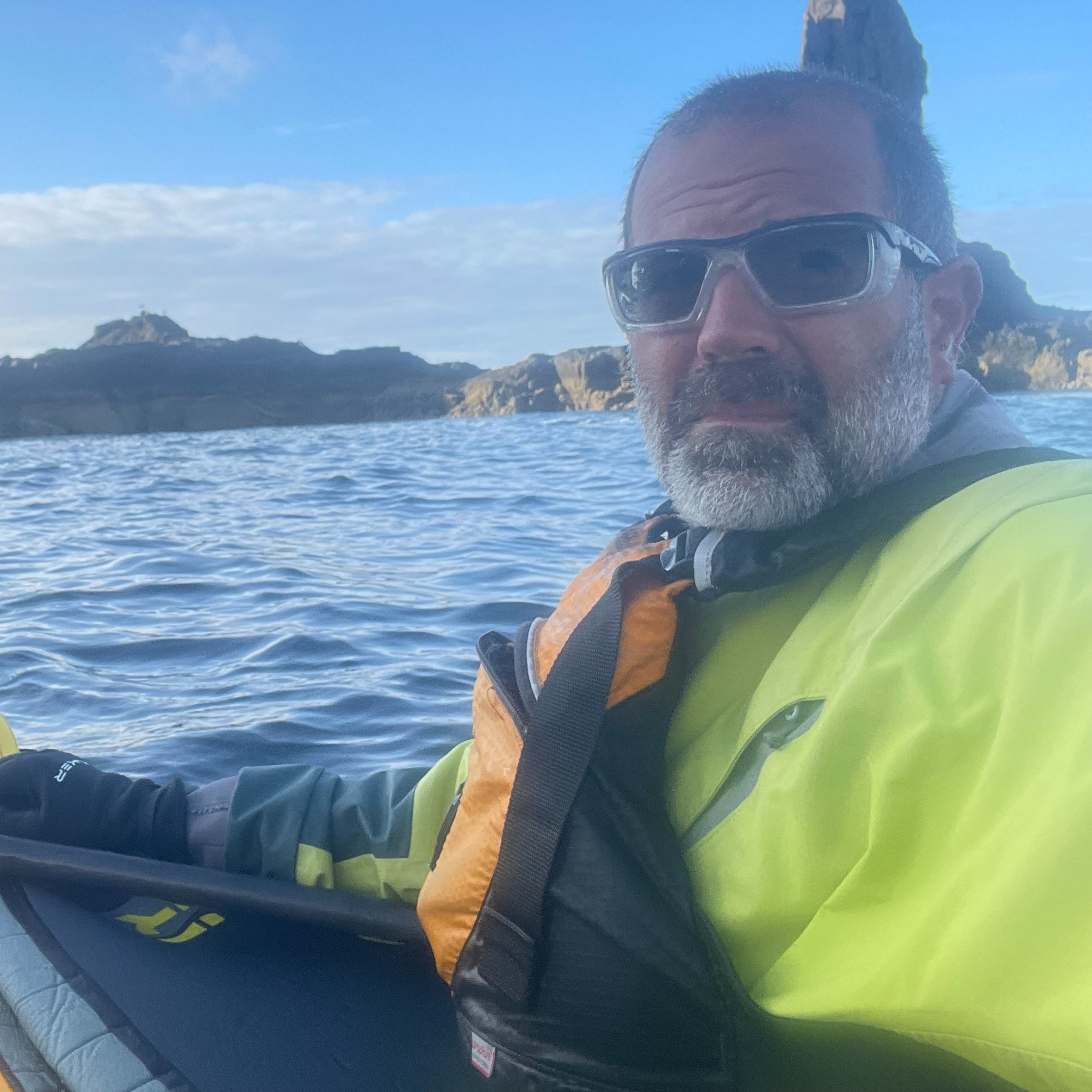
Felipe Behrens joins todays thrilling episode of Paddling the Blue , fresh from his incredible 189-day kayaking journey around the UK and Ireland. Felipe shares the story of his ambitious expedition, highlighting his meticulous skill-building process that prepared him for this monumental adventure.
Throughout the episode, Felipe recounts his experiences, the challenges he faced, and the vibrant kayaking community that supported him along the way. From navigating the treacherous waters of the Pentland Firth to the welcoming shores of Ireland, Felipe’s journey is both inspiring and informative.
Don't miss this captivating story of resilience, exploration, and the pursuit of kayaking dreams.
Connect:
Learn:
- Paddling in Circles-Sean Morley's 2004 UK and Ireland expedition (from Expedition Kayak)
- Pentland Firth
- Intracoastal Waterway
00:09 - Welcome to Paddling the Blue
01:27 - Meet Felipe Behrens
03:10 - Early Paddling Experiences
03:56 - Transitioning to Sea Kayaking
06:53 - Learning to Roll
09:07 - First Multi-Day Adventure
09:52 - The Florida Challenge
11:35 - Preparing for Long Trips
13:50 - Next Steps After Florida
14:51 - Planning for Puerto Rico
18:05 - Cold Weather Experience
21:47 - The 189-Day Expedition
22:58 - Planning the UK and Ireland Trip
30:00 - Highlights of the Journey
33:59 - Challenges of Long Crossings
36:06 - Paddling Around Ireland
40:25 - Decision-Making on the Water
41:44 - Memorable Moments
43:46 - Future Adventures
45:58 - Connecting with Felipe
48:39 - Closing Thoughts and Gratitude
0:01 Welcome to Paddling the Blue. With each episode, we talk with guests from the Great Lakes and around the globe who are doing cool things related to sea kayaking. I'm your host, my name is John Chase, and let's get started paddling the blue. Felipe Behrens is today's guest on the show. He joins me fresh off his epic 189-day expedition around the UK and Ireland. And today, Felipe and I talk about the trip, of course, along with his well-thought-out progressive skill-building process that led up to this amazing experience. Before we get to Felipe, first, a big thanks to everyone who has helped us out with contributions to offset the cost of running Paddling the Blue. If you're interested and able in helping out, please visit www.paddlingtheblue.com support.
0:46 And speaking of help, James and Simon at onlineseekhiking.com continue to produce great content to help you evolve as a paddler and as coach. You'll find everything from basic strokes and safety to paddling in tides, surfing, coaching, documentaries, leadership skills, expedition skills, incident management, and so much more. And if you're looking to improve your role or find your role, they also have a 36 lesson rolling course. You can find it all in one place at www.onlineseekhiking.com. So if you're not already a subscriber, visit OnlineSeekHiking.com. Use the coupon code PTBPODCAST at checkout and you'll get 10% off just for being a member of the Paddling the Blue community.
1:27 Enjoy today's episode with Felipe Behrens. Hi, Felipe. Welcome to Paddling the Blue. Thank you so much. I appreciate you joining me today. Fresh off a huge trip, right? That's right. Yes. So many of my guests start paddling as kids. Often it seems like scouts is where it comes from, but your story is a little different. You started paddling a little bit later in life. Yeah, I started a little bit later. When I finished graduate school, I moved to South Florida and I hadn't really given much of a thought to paddling because I was studying in Gainesville, which is in the middle of Florida, far away from the ocean and then when i moved to south florida i was living close to the beach and i thought well you know maybe maybe paddling might be something i want to get into and i bought my first kayak on craigslist it was a small sit on top kayak one of those maybe eight feet long you know it's made of plastic and it's got the the holes where the water just pops in and out with the waves yeah And I started paddling around Key Biscayne, which is where I live.
2:39 And I would go around the island on the weekend on this little kayak. And eventually... Over the years, my mother moved to South Beach after my stepdad retired. And one of the things I thought was, well, if I'm going to go visit them, instead of getting on the car and being stuck in traffic, why don't I just paddle over there? It might be an easier thing to do than to just be riding on the car. I might just be riding on my kayak. All right. So I started paddling this little kayak. This was maybe nine feet long. I would paddle from Key Biscayne to South Beach, spend the weekend with my mom, and then eat lunch, and then paddle back. So how long was that trip?
3:23 That trip from my house to South Beach and then back is about 10 miles, so five miles each way. It's a short trip. Okay. It's a much longer trip on the car. Now, intercoastal waterway or open ocean? Just going along the ocean side of â what's it called? Yeah, it's just on the ocean side, not on the intercoastal waterway. But the waves here in Miami are never really very big because the water is very shallow. So yeah, unless the wind is blowing 30 miles an hour, you don't really have anything in the way of waves here. So then you graduated from the sit-on-top? Yeah. So after I had that sit-on-top for a while, I wanted to maybe get something where I could go on a few trips.
4:06 A little bit south of Miami, about 12 miles, there's an island called Boca Chida Key, which has a little campground on it and people usually go there by sailboat and they they camp there and i thought well you know what it's uh it's close enough that i could probably make it there on my kayak but you know a little nine foot kayak i can't really fit any gear in it on a sit on top. So i bought a a tempest 170 which is a proper sea kayak, and craigslist again yeah exactly again on craigslist i bought it on on craigslist from a guy who lived up in melbourne and when i went to drive there to see the kayak i told him that i would buy it but you'd have to drive it back to me in south florida because i only own a prius and i can't fit the kayak on a prius and i didn't have anything to put it on the roof and i didn't want a drive with a 17-foot kayak on a Prius on the highway on the roof.
5:05 So he drove it back down, and then I graduated to this bigger kayak. And I did a couple of trips to Boca Chita, and eventually then I said, well, you know what? Maybe I could go as far as Key Largo on this kayak. Key Largo is about 45 miles away. And so I thought, well, okay, well, I'm going to pick a three-day weekend, see if I can paddle all the way down to Key Largo on this kayak. And I found a weekend in the winter and paddled down first to Boca Chita. And then on the second day, I paddled down to another small island that's, I think it's like a spoil island. Army Corps of Engineers was digging and then they piled up the dirt on the side of the main barrier island, created a tiny little island there that you could camp on.
5:52 And that was about 14 miles to Key Largo. And and so then on the third day i made it all the way to key largo to a place called john penny camp, which is a little state park there so that was my my first multi-day trip that i managed to do was a three-day trip down to key largo so you had three days to do it so you got down there in three how'd you get back three days well the way i got back is i asked my mother to come pick me up. So she came to pick me up on the she has a bigger car so i put it on the roof of her car and, drove it back all right so was that like a a big culture shock going from that nine foot sit on top to the to the tempest it was because the the sit on top is it's a much wider kayak and the tempest is a proper sea kayak so yeah it was it was it was a very different feeling to paddle that kind of thing it goes a lot faster than the sit on top sure and but the one thing i didn't yet know how to do was I didn't know how to roll the kayak.
6:53 And that always gave me a little bit of pause because my thought was, well, if I roll over, if I fall in the water, what am I going to do if I can't get back into the kayak? Because I never took any kayaking classes or anything. So at first, I started looking at some YouTube videos on rolling on the kayak. And I was looking, seeing how people did their technique and all. And I put the kayak on the Tempest on a swimming pool and I figured, okay, I have the video on my phone. Maybe I can watch it and see if I can do it. So I tried a couple of times and was having absolutely zero success in being able to do it.
7:34 And then I thought, well, okay, so I got to find a place here where I can take some classes to learn how to roll the kayak. And I found a place in Key Largo that had a little kayaking school where they teach you how to roll the kayak. So I went there for a few times to learn how to roll with an instructor and took maybe three classes before I managed to nail my first roll. And then after I managed to roll the first time, I then learned that I had to also learn how to roll it on the opposite side and do all the motion backwards, which was a little bit disconcerting so so you made the you made that leap that good step of of finding an instructor and kind of speeding the process up now did you did you continue that education beyond the role.
8:21 Not not in terms of of you know going to towards getting some kind of certification because i figured that uh you know i'm not really teaching anybody so i don't really need to get certified I just need to know how to do it. I did a few other courses with a guy called Tom Nichols. He has a company called River and Wind Kayaks, and he sometimes comes to St. Augustine to teach a few courses. So whenever he's up there in North Florida, I'll attend some of his courses. And with them, I'd learn how to do the self-rescue, how to rescue somebody who's on the water, how to empty the water out of their boat and that kind of stuff. Okay. Yeah, I've been to a few classes to learn that. So you did continue that education then? Yes. Yeah, I did continue that education.
9:07 After I learned how to roll, then the next expedition that I decided to do was a trip during Christmas and New Year's. I decided I was going to go all the way to Marco Island on the opposite side of the Everglades. That was a 10-day trip. So I started from my house, and then I just paddled down to Key Largo. And then from Key Largo, I went to the Everglades, to a place called Flamingo Point. And then from there, paddled up the Gulf Coast all the way to Marco Island. That was a 10-day trip. So you started, so you went five miles, and then 45 miles, and now in three days, and now you're up to 10. And then in 10 days, I did 300 miles, which was pretty good.
9:49 Wow. Yeah, that's a big leap. So how did that all then grow into the crazy long distance expeditioning that you've been on here? Yeah. So after I did the trip to Marco Island, and I didn't do any trips for a couple of years, but I was always looking at some kayaking videos on YouTube and stuff and seeing that people do go on these long adventures. And I thought, oh, you know what? I would want to do that at some point. At the time I was working for this company here in Miami, I decided that if I wanted to do a long trip, I'd have to bank up some vacation time over a period of a couple of years because in the company I was working, they would let you roll the vacation for up two years.
10:36 And so I started thinking, okay, well, what could I do with two years worth of vacation time? What kind of trip could I do? And my first thought was, well, you know what, why don't I go around Florida because I've heard of this race called the Florida Challenge where people race around Florida. I started looking at the distance and thought, well, okay, well, it's 1,200 miles. And if I do the trip at the end of the year, not only can I take my vacation time, I can also string in a couple of holidays as well. So there might just be enough time to do that. So that's what I did. I started just before Christmas. So I managed to get the Christmas Eve, Christmas Day, the New Year's, and the Martin Luther King holiday. And then I bridged all those gaps with vacation time from work for two years' worth of vacation time.
11:28 And so that was a 47-day adventure to paddle around Florida. So how did you know that you were ready to do a 47-day adventure going from five miles to three days to 10 days to 47 days? Well, my thought was that paddling around Florida is not going to be technically very difficult because if the weather is rough, you can paddle on the intracostal waterway. So I thought, okay, this is going to be a trip where I can practice my endurance to see if I can go on a long enough trip. And since I have the time, it's just a matter of putting in the effort and doing it.
12:10 So that was my first idea was, okay, I'm going to do a long trip, and it's going to be just a trip just to see if I can handle the time that it takes to do it. So that's how I looked at that. So most of the distance along the east coast of Florida, I paddled in the intrapostal waterway. There were a few days when I went out in the ocean and it wasn't too rough, but then I stayed mostly on the intrapostal waterway. And then once you get to the top of Florida, then you have to paddle up a river called the St. Mary's. You paddle up the river for about 80 miles until you get to a jump off point where you have to do a really long portage to the Sewanee River, where you can then get on that river and paddle down all the way to the Gulf.
12:59 That's about 200 miles of river pattern that you have to do. And then from there you paddle along the gulf coast down to the all the way to the everglades and then around the end of florida and then back up to my end so i actually started and ended both my house where i usually launch to go paddling so for those who are not familiar with florida we've made a reference a couple of times to inter intercoastal waterway so that's a series of basically barrier islands that that are along the coast that allow you to paddle inside those barrier islands and protect yourself from the open ocean. Yeah, correct. So from Miami all the way to New York, along the East Coast of the United States, you have an intrapostal waterway and you can paddle on the sheltered waters all the way up to New York, if you want.
13:50 So Florida, 47 days, and you decided, great, you've done that. So what's next? Yeah. So after that, then I thought, okay, I did this trip. What could I do next? And then my thought was, okay, well, I need to go paddle somewhere where I can get a bit of surfing practice. Because if you're in Florida, you don't really, especially in South Florida, you don't really get very many waves. It's very shallow. And yeah, you just don't get surfing waves here. So then my thought was, well, okay, well, maybe I can, maybe like, what's the closest place I can go to? But I also don't have that much vacation time. So I thought, well, okay, well, maybe I can go to Puerto Rico.
14:34 And Puerto Rico kind of fit in nicely because this was also during the time of the pandemic. So you couldn't really go anywhere outside the United States. So I thought, okay, well, Puerto Rico might be a good place to go because it's considered a domestic destination. But the problem was, well, how am I going to get the kayak there? It's an island. And for that trip, a couple of years back, for the Florida trip, I had purchased a... I upgraded from the Tempest... A fiberglass kayak because i i don't have a place to store the kayak here in my house like i don't have a covered place and i didn't want to leave the the fiberglass kayak outside so i i started looking for a three-piece kayak and i found a company called rock pool that made a three-piece kayak called the taran so they had a three-piece variant of it and i thought well okay this is And this would be great because if I buy a three-piece kayak, I can just keep the three pieces inside the house.
15:38 And in that way, they don't get exposed to the elements when I'm not using them. And it's also going to be a pretty good benefit if I want to travel with it. So it's going to be a lot easier to transport it. So for the Puerto Rico trip, what I did was I wrapped all three pieces of the kayak in bubble wrap. And then I had it dispatched on a pallet by container ship all the way to Puerto Rico. So what I did was I shipped the kayak, topped the plane. And then once I arrived in San Juan, I went to the port there. And then I picked up the kayak there. And then I had a really good time with an Uber driver.
16:18 He had the Uber extra large van. And I said, look, we're going to fit an 18-foot kayak in your trunk. Little did he know it was three pieces Yeah, little did he know it was three pieces And it actually fit in with a bit of room to spare, believe it or not Oh, that's great So it was actually pretty good I put the three pieces inside the kayak and drove back to the hotel All right. Wow So using the different logistical opportunities So you paddled Puerto Rico, you get some waves in, Exactly, yeah The point of going to Puerto Rico was It's not a very long trip It's about 350 miles, so you can do it in just over three weeks.
16:59 But the north coast of Puerto Rico gets exposed to the Atlantic swells that roll in from the Atlantic with the trade winds. So the north coast of Puerto Rico gets quite a bit of waves. And so then I got some good practice there and paddling on some big swells there. That was the main objective of the trip. On the south side of the island, you don't get as many waves. but the only issue there is that you're paddling against the wind. So it's quite a slog to make it along the south side of the island. In fact, on the north side, I think it only took me three days. It took me two weeks to paddle the south side. Wow. Same distance, roughly? Yeah, same distance. Okay.
17:43 Wow, that is a lot of time into the wind then, I guess, if it took you two weeks to do that. Now, were there some days off the water for that? Yeah, I had six days out of the water because there was a tropical storm that rolled through. So I had to sit out for about six days. Didn't want to try and brave the waves for that one. No, that was a little bit too big, I thought. Yeah. All right. So now you've decided you've got some waves in. And so is that when you made the big leap to go to Vancouver? Yes. Then I decided I was going to make a big leap to do a trip where I wanted to get some cold weather experience. And I thought, well, okay, well, where could I go paddle and get some cold weather experience? And I knew that there's a big kayaking community on the Pacific Northwest.
18:31 And I started researching and I saw that there have been lots of people that paddle around Vancouver Island. And I thought, okay, well, maybe I can do that. My concern was, okay, well, from the Pacific side, the waves get really big there with big storms. So one of the things I thought was, well, maybe I try to find somebody who I could do that section with me. And I found this company called Skills, and they were running a summer trip from St. Joseph Bay all the way to Cassis on the Pacific side. And the trip went around the Brooks Peninsula. So I thought, okay, well, if I book a trip with them, I can have some paddling partners to do the most isolated and dangerous portion of the trip, which is going around the Brooks Peninsula.
19:20 Which I was told at the time was that you need to plan for about five days of sitting around waiting for a weather window to make it around the peninsula because it sticks out into the Pacific and it catches a lot more of the swells and winds. The only issue though, was that because their trip left from St. Joseph Bay, which is on the northernmost side of Vancouver Island, and I was going to be starting my trip from Seattle, Washington, I had to make sure that I got there in time to catch them. Otherwise, they were going to leave without me. Okay. You had to time it perfectly. Exactly. I had to time it perfectly. So I gave myself, I think it was 25 days to get there, starting from seattle and yeah it worked out with just one day to spare oh wow okay.
20:12 So now how long was that trip total so that trip was two months that was it was just over a thousand miles so it was a little bit shorter than florida but but the weather is a lot rougher so yeah you don't you take a lot more rest days than you do in florida sure you're you're dealing with big swell you're dealing with big swells on the on the pacific side and when you're paddling along the the johnstone strait you're dealing with a lot of headwind as well so the progress is very slow and you're dealing with very big tidal ranges as well yes so you have to time the tides to be able to make it through the the the sounds on the on the east side of the island yeah and cold water which is much different from what you're dealing with in florida yes it's a lot it's a lot colder Especially for someone from Florida, the water feels a lot colder.
21:03 I remember doing my first roll in the cold water with the dry suit. And I think I managed about three rolls before I said no more. My head is starting to get brain freeze. So how did you know that you were ready for that one? Just because of all the differences of what you've experienced in Florida. And yeah, you had Puerto Rico, but it's still warm water. Right. Yeah, it's still warm water. But I thought, well, okay, well, I'm going to try to do a trip on cold water this time. So I bought a dry suit just especially for that trip. All right. I hadn't used a dry suit before. So that was an interesting experience there, having with the dry suit, learning that you have to burp all the air out, all that. Yeah.
21:44 So you go from that one. So there's two months. You make the huge leap, 189 days around the UK and Ireland, doing the whole thing. So I guess the first question is, how much vacation time did you have to bank to get 189 days? So I didn't, I left my job. Okay. Permanent vacation. Yeah. Yeah. Permanent. Yeah. It's a permanent vacation. Yeah. Yeah. One of the things I was always thinking was, you know, I turned 40 this year and I'm not married. I don't have a wife and kids. And, you know, I don't. Need a lot of money to live. I don't have very expensive habits, except for kayaking.
22:32 I thought, well, you know what? Maybe I can afford to take an extended break from work and go do something interesting that most people will never do in their lives, is what I thought. That's a big one. Yeah. I thought, hey, you know what? I'm turning 40. I'm going to give myself this trip as a birthday present for me for turning 40. That's what I thought. Cool. So how long did it take to plan the trip? So I started planning the trip almost as soon as I finished the Vancouver Island trip. In fact, I had been talking with Justine during the trip and she's paddled around Ireland before. And she was suggesting, if you can take 30 or 40 days off of work, you can go around Ireland.
23:18 And i thought well yeah but no i want to do something i want to do a big trip so i thought well you know what maybe maybe i can go around uh the uk and then i thought well you know maybe i can do both then if i if i if i leave work you know i can you know take maybe six months and try to go around both so then the first thing i started looking was you know has anyone ever done that because i saw the people have gone around ireland they've gone around the uk but have they them both and i saw that there was the the first people who did it was a group of three guys, back in the 1980s and they wrote a book about their adventure so i i bought that book and started reading to try to get some idea of well first of all where would i start the trip from you know i wanted to see where they started from and maybe i try to do the same thing so i saw that They started in London so that they could get to the west coast of Ireland in June when the weather is more settled there.
24:14 That was their logic. So I thought, okay, well, if I do that, if they did that, then I probably have to do something similar to that. And then I did some more research and I found out there was another guy called Sean Worley who did the kayaking around the UK and Ireland. I think he did it back in 2004. He's got the entire trip written up on his website. I think it's called Paddling in Circles. I read up about his trip to see how he did his trip. He went quite above and beyond because he also went to the Orkney Islands and the Shetlands on his trip. Yes. Originally, I thought maybe I could do that as well. But when I was on the trip and when I got northern Scotland, my thought was, well, it's already August.
25:01 It's probably going to take me another month to go all the way up the Shetlands and back. And the weather isn't quite cooperating. So I said, you know what, I think I'm going to start heading back to London to finish the trip. He gave me a lot of contacts of people for me to reach out to when I would be paddling around the UK and Ireland. And so he was a very useful contact to have to give me help along the way. Yeah. Sean's a good guy. Yeah. Yeah. He was a good guy. And another person who also reached out to me and told me that they would help me out was a guy called Mike Conray. I think you might've interviewed him. I did. He actually paddled around Ireland. I think it was, was it last year or the year before? Last year. Yeah.
25:44 Yeah. Last year. And he was giving me some pointers as well about the West coast of Ireland. and I think he was saying that one of the things he told me that gave me some reassurance that I could do the trip was that the west coast of Ireland. Because the coast has a lot of indentations and sounds and fjords. You can always find a place to tuck in that's sheltered from the swells and the wind. And he said that when he was paddling along the west coast of Ireland, he didn't have to do a single surf landing. And I thought, wow, really? And in fact, that turned out to be the same thing for me as well. Or even though when you're paddling out in the swell, you're paddling through some really big swells. when you actually come in for the landing, you can find a good sheltered place that you don't have to do a surf landing with 10-foot waves.
26:34 That's great. That's great. So you started in London. So kind of walk us through the trip in brief. Yeah. So I'll walk you guys through the trip. So the first thing that I had to decide was, am I going to bring my kayak all the way to the UK and then bring it back? Or do I just get a kayak there in the UK itself? And the kayak that I used for this trip was the Rockpool Terran. And because the factory of the Rockpool is in the UK, I thought, well, you know what? Maybe it might just be easier for me to just buy a kayak there. And then I don't have to go through the hassle of shipping the kayak across the Atlantic because when I shipped my kayak to Puerto Rico, it took five days.
27:14 If I shipped it to the UK, it was going to take at least a month to get there. Plus, I'd have to deal with customs and all that. So I thought, you know what? It's probably easier to just buy the kayak in the UK. So about a year and a half before the trip, I called Mike Webb, who's the owner of Rockpool, and I told him that I wanted to put in an order for a new boat. All right. So yeah, I put in the order for the boat. And then the first thing I did when I got to the UK was to drive all the way to Wales to pick up the kayak. I rented an SUV with a nice, good, big flat top, and I brought some sponges to put on the roof of the car to put the kayak on.
27:56 So I got to London, got the car, drove all the way to... Anglesey picked up the kayak and then drove back to london to to start the trip and i found a just well at first my idea was i was going to start on the thames west of london before getting into london because i figured that it was going to be way too difficult to drive into london the problem is if you are west if you're west of london then you have all of the the locks on the thames that you'd have to paddle through and i when i got to the first lock i i actually walked up to the first lock to see what the situation would be there when i when i got to the lock how i was going to have to deal with it and the first thing i discovered was that you're not allowed to paddle through any of the locks and and from where i was there were going to be 13 locks to be able to get to the a place where the river becomes tidal.
28:57 And I thought, well, you know what? That's going to be 13 fortages that I have to do. So I don't think that's going to work. So I drove into London to pass the last lock. The last lock, I think, is called Teddingson. So I started just downstream of the last lock on the Thames. And yeah, so I started my trip from there. And the first day when I paddled, the first thing I discovered was that even though I was past the last lock, there's a big barrier on the Thames that they've built on the river to protect flooding. And whenever the high tide is coming, they raise that barrier.
29:40 And I actually got to the barrier when it was up. So all of a sudden, I discovered that there was no place to go because the river was blocked. Oh, no. Yeah exactly i had to you know for a while i was just sitting there wondering what to do until i i just i saw that i started looking on the on the gps map and i saw that there was a yacht club. Just on my side of the barrier and so then i went there and stopped there for the night i basically just showed up at the yacht club and said hey guys i i'm paddling around the uk and island this is my first day and i got nowhere to go because i'm not going to be able to get to the place where i was planning to and and and this was it was early march so it was still getting dark fairly early and yeah i got to the yacht club just already after sundown it was already getting dark okay they were gracious enough to take you in they were they were gracious enough to take me in there all right so take us give us a couple of highlights of the of the trip, so a couple of highlights let me think i mean i would say that one of the highlights of paddling around the uk is that the coastline is very varied you get all kinds of different environments that you you paddle through so you got you got white sandy beaches you got cliffs you have tidal.
30:55 Races and you have and you have big swells as well from from the atlantic so paddling around the uk you get exposed to pretty much all the different types of paddling of sea kayaking conditions that you can imagine. So that's one of the highlights of paddling around the UK. And then the other thing that's also really good about paddling in the UK is that there's a lot of people in the UK that practice the sport. So... Because I was posting on Facebook every single day about my journey, a lot of people reached out to me and said, Hey, you're coming close to where I live. Come stay with me for one night. Or if you need to do laundry or something like that, come on up and we'll get you sorted. Okay.
31:42 Yeah, so that was one of the things that was really surprising and really nice to find out is that the folks in the UK and Ireland are really happy to help you on your journey. I thought that was, it was, it was really nice. Yeah. Now, did you do a full circumnavigation of, of each island or did you do the whole complex, I guess, the whole archipelago? Yeah, I did the whole complex. So, so I started in London. I paddled along the South coast all the way to Cornwall. Then I paddled up the coast of Cornwall. Then I jumped to Wales across the Bristol channel. And then after going all the way around Wales, I went out to Liverpool. And then from there, I went almost to the border with Scotland before I jumped across the IRC via the Isle of Man. Okay.
32:30 So instead of doing one really long, something like 75 miles to paddle across the IRC in one go, I did in two chunks. So the first chunk from England to the Isle of Man is fairly short. It's 35 miles. And then from the Isle of Man to Ireland is about 50 miles. So both of those are pretty doable with daylight in the late spring, early summer. And prior to this trip, what was your largest open water crossing? So prior to this trip, my longest open water crossing had been... My longest paddle had been 50 miles. I did 50 miles on one of my Florida legs.
33:13 But in terms of crossings, it was probably 25 miles when I crossed from Vancouver Island back to Washington State. My longest crossing had been 25 miles. So on this trip, my longest crossing was 50 miles. And my longest paddle was just under 60 miles in one day. All right. So, you'd had some experience with longer crossings. It's not like going from five miles to 50 miles. No. Although the 50-mile crossing was the first time when I started a crossing where I couldn't see the other side. So, I was paddling out into the horizon. That was a little bit unsettling at first because you're just paddling and you don't see absolutely anything. Yeah.
33:59 It's just the horizon line that you're paddling into. So you made the leap across and then went around Ireland. And then I went around Ireland. So I started going south. I arrived in Northern Ireland, a place called Newcastle. And then I paddled south past Dublin, then along the south coast of Ireland. I stopped for two days in a place called Kinsale, where there's another contact there called John Hines. He's a big paddler and he's paddled around Ireland. And so he also gave me some very good information along the West Coast there for me to keep an eye on certain places. Yeah. Also another previous guest of the show. Oh, okay. Good. Yeah.
34:42 It was funny. We were going over the map of the West Coast of Ireland. And he was saying, look, on this point, you have to watch out for clappers against the rocks. and when I passed by that section I was getting huge clappers with the swell reflecting off the walls of the cliff. Then I came to another section that he pointed on the map and said look, over here on this place you need to watch out for big breakers and boomers on the rocks because when the swell comes in, it barrels in and lo and behold when I paddled right by there, yep, I saw the barreling waves that I had to stay away from and then, I was planning on going on the the outside of the bell mullet peninsula and he said nope don't go there that's where all the surfers go it's not a good place to go if you have even some moderate wind so i followed his advice and stayed on the inside of bell mullet peninsula there to go around i wasn't gonna after he got the first two places where he warned me about were exactly the way he he said they were it wasn't about to go to the places he said don't go here yeah local knowledge Always a win Yeah, Local knowledge is always a big win So you made your way around Ireland Yeah, made my way around Ireland I went all the way, as far as Belfast So I didn't quite complete the circle around Ireland We won't tell anybody Yeah.
36:06 And then from there, from Belfast, then I jumped back to Great Britain, but already in Scotland there. And then I paddled up the west coast of Scotland. I went around the west coast of the Isle of Skye because they had some very interesting rock formations there. They have some really big stacks that you can paddle really close up to, which are quite impressive to see. And then I continued north, and then I went around two capes on the north of Scotland. So you have on the West Coast, you have Cape Wrath, and on the East Coast, you have the Pintman Firth. And both of those capes have massive tidal flows there, so you have to time it exactly right for when you're going to go around each one of those capes.
36:51 I actually got kind of lucky that the weather was very cooperative when I was there. So when I went around Cape Wrath, it was exactly slack tide, and it was dead calm wind, so it was perfectly flat. And then when i ran around the pentman firth in two hops so i left from the northernmost town in scotland called the torso and i went from there to a little harbor called the john o groats, where i paddled with the tide on that section and it was one of the most surreal experiences paddling with the tide. For, I think it was a distance of about 20 miles, which I covered in less than three hours. I think it was two hours and 40 minutes of paddling with the tide.
37:35 Wow. And the, yeah. And the interesting thing is that you don't really feel that you're going very fast because you're going with the water. So relative to the water, it doesn't feel like you're moving very fast. It's only when you look at a fixed point, like at the lighthouse or the cliffs that you realize just how fast you're moving. So i paddled to the this little harbor called john o'groats and then i waited there for two days until i had the calm weather and the and the slack tide and then i paddled around the pentland first with the with the slack tide so i got very lucky there all right i didn't have to deal with the massive tide races there is uh if the if the flow is against you there you there's no way that you're going to make it through against the tide and then made your way down the east coast and then i made that and then i made my way down the east coast which i thought was going to be the easiest portion of the trip but that was the portion of the trip where i got the most amount of headwind of the entire trip especially on the on the east coast of scotland the the coast it's it goes from northeast to southwest which is exactly the the direction that the prevailing wind goes.
38:48 The prevailing wind goes from the southwest to the northeast. Oh, perfect. So, yeah, exactly. So, you're paddling dead-headed into the wind for quite a long distance there. So, I think I had a few days there when I was only doing about five miles in one day. Wow, but working as hard as any other day. Exactly, yeah, working as hard as any other day. Yeah, what you have to do there in those days is you have to pick your weather window during the day and paddle during that weather window when the wind is not quite as strong. Otherwise, you also have to sit out for a few days there, waiting until you get better conditions.
39:29 So of the 189 days, how many days off the water? I think I was out of the water maybe one out of every four days because of the wind. The longest I was out of the water was 10 days, and it was around March. It was along the south coast of England. I started fairly early in the year because I wanted to give myself enough time to make sure that I would finish the trip. I didn't want to feel like I was pressed for time because I started in March. I was still getting some of those winter storms rolling in from the atlantic and i was in a town that i was stuck for 10 days and they were having, there was a really big storm that rolled through and we were having something like 20-foot waves.
40:19 From the storm. So yeah. That's a reason to stay off the water. That's a reason to stay off the water. Yeah. The thing is though, if you stay out of the water for too long, your head starts play a few tricks on you and you start feeling a certain lack of confidence because you keep looking at the weather forecast, like you're looking at a slot machine almost, hoping that you're going to get better weather. And then after 10 days, you start thinking, man, you know what? I waited so long, I kind of want perfect conditions now to get out. And in the UK, you hardly ever get dead flat conditions. So you just have to, at some point, you just got to tell yourself, okay, these conditions are good enough that I can do it. All right.
41:02 The most difficult decision of deciding whether to go or not, it's not when the weather is really rough or when it's really calm. It's right when it's in that in-between kind of condition, when you look at the conditions and you think, yeah, you know what, I can probably do it, but if I get into some kind of serious trouble, I'm not going to have anybody there to help me out because I'm paddling on my own. So I would say that the difficult decision in paddling is not when it's very rough, it's when it's marginal, when you have to make the call, do I go or do I not go? Okay. It's making that right choice. It's making that right choice. What's the most memorable part of the trip for you?
41:44 Most memorable part of the trip? I would say that the times that when I think back on the trip, the part that I enjoy the most was probably the west coast of Ireland. Just because you have the big swells. But I remember one day in particular when I was paddling there, where I had left from the Aran Islands, and I was going to make it around this peninsula. It was right on the section where John Hines warned me about the big breakers. And when I was paddling there, and I was looking at those breaking waves, and I was thinking, gosh, this is a really rough place to be, to be paddling on your own. Because I think the forecast had said that the waves were going to be seven feet.
42:24 I was thinking that seven feet is close to the coast, but because there was this peninsula that jutted out into the ocean and you have to paddle around the peninsula, at the very tip of the peninsula, the waves must have been closer to 12, 13 feet there. And I felt that I was kind of at the limit of my ability of what I'm comfortable paddling. Yeah. What would you do different if you did it again? Probably maybe would want to paddle more sections with folks along the way. Rather than solo yeah rather rather than just solo yeah the the few times when i paddled with people i i thought those were some of the most enjoyable times of the trip where i could you know talk to somebody else on the water rather than just being out there for 10 hours just, stuck with my own thoughts did you go into the trip with the expectation of doing it solo.
43:19 I thought that i would probably get to paddle with a few folks here and there but But the expectation was that I was going to paddle most of it solo. Yeah. All right. All of my adventures have always been solo just because it's difficult to find somebody to go with you for the whole way. Sure. Yeah. Hey, how'd you like to do a 189 day trip? That's the trouble. I just got the time. So what's next? My thought is that probably next I would want to paddle somewhere warm. Yeah, one of the things that I felt paddling around the UK is that paddling in the cold day after day after day, it gets a bit difficult. So my thought is I would want to paddle somewhere warm.
44:00 I was thinking of maybe of paddling around Cuba because it's right next door to me. But for that, I would have to figure out how you can go there legally as an American. There are ways to do it, but you have to get special permission. So that would be, That would be something I would like to do is probably maybe one day out around Cuba. And there, the big challenge would be how to make it across the Strait of Florida because that would be by far my longest crossing if I did it. That's about, I think it's about 110 miles. I don't know if I could paddle for 30 hours. My longest paddle on the UK trip was 13. So that would be about double. Okay. Yeah. In terms of time.
44:44 That's a big commitment. That's for sure. That would be a big commitment. Yeah. I was thinking like, okay, if I paddle from Florida to Cuba, I'd have to go as far west as the Dry Tortugas because the tide is going to carry you eastward. Sorry, not the tide, the Gulf Stream is going to carry you eastward. So I would have to go as far as the Dry Tortugas. So then I can paddle due south and drift east to get to Cuba. And then to paddle back, I'd have to leave from Cuba and then paddle due north and then just drift and then arrive somewhere on the Keys. I saw that there were three guys who paddled from Havana to Key West. So it is doable.
45:28 There's somebody who's done it. So I'm not trailblazing that. Yeah. They were previous guests of the show as well. Oh, really? They were previous guests of the show? Yeah. Okay. Yeah, so I've seen that people have paddled from Cuba to Key West, but never from Key West down to Cuba. So if I did that, I would be the first one to do it, I think. It might be. It sounds like you've already put some thought into it, thinking of the dry tortugas and your route and all that. So maybe we'll hear about that one someday. Yeah. Very cool. So how can listeners connect with you? So I have a website called aroundonmykayak.com. So people can log on to the website. They can find my email there, which is fbarons at aroundonmykayak.com.
46:13 And they can also connect with me through my Facebook page with the same name, Around On My Kayak. And if they're in Miami, I would love it if they could call me up because the kayak that I used in the UK, I am bringing it home with me by container ships. And I'll have two kayaks here at home. I'll have my three-piece and I'll have the kayak that I use there. All right. Well, if you're listening and you're thinking of going to Florida, connect with Felipe and you can paddle one of those two boats. Yep. All right. Felipe, thank you. This has been great having an opportunity to hear about your trips, hear about where you started, hear about Florida, hear about Vancouver, and then making the big leap to 189 days around UK and Ireland.
46:58 That's a pretty cool trip. Congratulations on a great accomplishment and an amazing set of life experiences from it. That's for sure. Yeah, thank you so much. Yeah. Got one final question for you. Who else would you like to hear as a future guest on Paddling the Blue? I would like to hear from Jay Rose. He's a kayak dealer here in South Florida. He lives in Naples, and he is a master craftsman for repairing boats. He's the go-to guy if you ever have cracks on your boat that you want fixed. He's the go-to person to get your boat fixed here in South Florida and all over the United. People send him boats from all over the U.S. Super. Well, we'll connect with Jay and see if we can get him on the show.
47:41 All right. Thank you. You're welcome. So thank you again. This has been great talking to you and I look forward to maybe paddling together sometime in Florida or somewhere else in the world. For sure. Yeah. Thanks. All right. Thank you. If you want to be a stronger and more efficient paddler, Power to the Paddle is packed with fitness guidance and complete descriptions, along with photos of more than 50 exercises to improve your abilities and enjoy your time on the water. The concept and exercises in this book have helped me become a better paddler, and they can make a difference for you, too. The exercises in the book can help you reduce tension in your shoulders and low back, use the power of your torso to create leverage and use less energy with each stroke, Use force generated from your lower body to make your paddling strokes more efficient.
48:24 Have the endurance to handle long days in the boat. Drive through the toughest waves or whitewater. Protect your body against common paddling injuries. And while you're at it, you might even lose a few pounds. And who wouldn't mind that? So visit paddlingexercises.com to get the book and companion DVD. Thanks to Felipe for sharing this trip and for talking through his impressive and very smart skill building process that he used to make this dream happen. It was well thought out and put him in a position for success. He also made great use of some very experienced resources for all these trips, showing what a great and giving community of paddlers that surrounds us. Felipe has got a book coming out detailing his trip around Vancouver Island, and we're going to add a link to the show notes for this episode, number 126, when that book is available.
49:07 And we'll also include links to some of the resources Felipe used for his trips in those show notes. A big thanks again to our partners at Online Seek Hiking for extending a special offer to you. Visit OnlineSeekHiking.com and to the code PTBpodcast to check out and get 10% off just for being a member of the Paddling the Blue community. Until next time, thanks again for listening. I really appreciate you and I look forward to bringing you the next episode of Paddling the Blue. Thank you for listening to Paddling the Blue. You can subscribe to Paddling the Blue on Apple Music, Google Podcasts, Spotify, or wherever you find your favorite podcasts. Please take the time to leave us a five-star review on Apple Music. We truly appreciate the support.
49:48 And you can find the show notes for this episode and other episodes, along with replays of past episodes, contact information, and more at paddlingtheblue.com. Music.


