#130 - Building Extreme Expedition Kayaks with Rob Feloy

 Apple Podcasts

 Spotify

 Overcast

 Castro

 PocketCasts

 RSS Feed
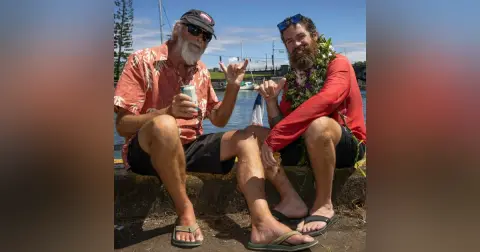
In today's episode of Paddling the Blue, we are talking with renowned kayak designer and builder Rob Feloy. Rob shares the intricate process of creating kayaks specifically designed for some of the world's most extreme paddling expeditions, including famous crossings from Greenland to Scotland and from California to Hawaii.
Rob shares insights into the specialized design considerations that go into making trans-oceanic craft, emphasizing the importance of sealed cabins and self-righting capabilities for prolonged periods at sea. Rob also sheds light on the complexities of fitting advanced technology and redundancy systems into his kayaks to ensure safety and reliability.
Don't miss Rob’s reflections on past projects and the lessons learned, giving us a glimpse into the blend of innovation, tradition, and meticulous craftsmanship embodied in his creations.
Connect:
Learn:
- Inuk Kayaks
- Kirton Kayaks
- Cyril Derreumaux's CA to Hawaii kayak
- Voyage of the Finnmen
- Daniel Davy ("a proper Naval Architect)
00:09 - Introduction to Paddling the Blue
01:50 - Meet Rob Folloy
03:59 - Early Beginnings in Kayak Building
07:49 - Transition to Ocean Kayaks
12:02 - Designing the First Inuk
13:53 - Expedition Experiences
18:36 - Learning from Expeditions
27:26 - Building the Trans-Tasman Kayak
46:30 - Complex Electrical Systems
53:43 - Design Considerations for Stability
57:54 - Materials and Construction
01:01:15 - Testing and Stability Trials
0:01 Welcome to Paddling the Blue. With each episode, we talk with guests from the Great Lakes and around the globe who are doing cool things related to sea kayaking. I'm your host, my name is John Chase, and let's get started paddling the blue. Welcome to today's episode of Paddling the Blue. You may not be familiar with Rob Folloy's name, but you may know some of his kayaks. Rob has designed and built kayaks for some of the world's most extreme paddling expeditions. And just to name a few from previous episodes, Rob built the boat that Patrick Winterton and Ollie Hicks used on the Shetland bus, the double used by Ollie Hicks and George Bullard to cross from Greenland to Scotland, Cyril Darylmo's kayak, Valentine, that has crossed from California to Hawaii and as of this recording is making its way across the Atlantic.
0:45 You can catch those conversations with Patrick on episode 68, Ollie Hicks on episode 72, and Cyril on episode 71. But today we're going to talk about the process that goes into creating one of these extreme expedition craft. Before we get to today's conversation with Rob, James and Simon at OnlineSeaKyaking.com continue to produce great content to help you evolve as a paddler and as a coach. You'll find everything from basic strokes and safety to paddling in tides, surfing, coaching, documentaries, expedition skills, and incident management, and more. And if you're looking to find or improve your role, they also have a 36-lesson rolling course, and it's all in one place. So if you're not already a subscriber to OnlineSeekHiking.com, here is your opportunity to get started.
1:30 Visit OnlineSeekHiking.com, use the coupon code PTBPODCAST to check out, and you'll get 10% off just for being a member of the Paddling the Blue community. And a big thanks to everyone who's helped us out with contributions to offset the cost of running Paddling the Blue. If you are interested, you can also help by visiting pedalingtheblue.com support. Enjoy today's episode with Rob Falloy. Hello, Rob. Thank you for joining us today. John, hello, and I've apologized for being rather elusive previously than you've been chasing me. No worries. No worries. I appreciate you not considering me a pest and joining me today for an episode of Paddling the Blue. Thank you. You're welcome.
2:11 So, Rob, tell us a little bit about you and your background. How did you get started building kayaks and paddling? oh goes back a long long time I guess I built my first kayak was one of those little you know plywood stitch and glue kit boats you could get I built that when I was 10 or 11. I think previously I my my dad had when we first moved to Devon which was a long time 60 odd years ago we he bought one of those mirror dinghy kits which was a stitch and glue sort of two-man dinghy and he sort of built that in our garage with myself and my brother helping although I'm sure we weren't much of a help because I think I was probably six and even my brother was younger you know but that sort of I that was the sort of got me going then I you know I built this little ultra sports plywood canoe and then when I went to I went to sort of a pretty interesting school, sort of secondary school and I was I was sort of keen on paddling I didn't do very much then but I when I got there I sort of pestered them about you know having a canoe club at the school and luckily there was a guy called Alan Binge who was the maintenance man at the school
3:45 was a was a paddler I mean we're going back in you know in the mid-1960s here there weren't many paddlers around so luckily and he was also a trained boat builder before he worked there and. So he agreed to this and then first we didn't have any canoes, so we had to build them. Oh, no. So we built a sort of bunch of stitch and glue kick boats to start with and then somewhere, I don't know where he got, he got a mould for a single slalom canoe from somewhere and we built some slalom, glass fibre slalom kayaks so we could paddle on the river.
4:30 There's a really nice river, the River Dart, which is just here where I live. It's one of the UK's sort of best whitewater rivers, really. So I was very lucky to be here. Yeah, so I spent most of my time at school. Building kayaks or paddling one way or another. That's an early start. Especially getting that spark at age six with your father. Yeah. You know, so I've really done little else than work on the sea, around the sea, either with boats, either building or sailing or stint commercial fishing.
5:20 And a long, my main sort of career was yacht surveys. Okay. Okay, that's sorted. Must have done 30 years. So that, those first fiberglass boats, you know, as I said, you know, the first exploration with fiberglass and everybody's in a small closed room with fumes and not trying to, not knowing that they should open the room up. Oh yeah, you wouldn't be able to do it now. I mean, I don't, I don't think, no, you can't, you can't do it now. No, I mean, a friend of mine does, works at a local school doing design technology you know i think that's what it's called now okay make you think and i talked to him a while ago about yeah why don't you build some kayaks he said no you can't you know can't do that we can't have resin we can't have fumes we can't have fiberglass or anything okay i mean yeah no it doesn't doesn't fit into the modern ethos yeah so i guess that early exposure and then And at six and then at 10, building your own first boat and then continuing through school, that's, I guess, how you transitioned to becoming the world's leading trans-oceanic boat builder.
6:34 Yeah, that's a very grand title, John. Maybe I'm the only one. I don't know. You've earned it. You know, there's, yeah, yeah. It's a sort of long thing. I spent, I spent quite, I, I've had lots of lucky breaks in my life, you know, just fortuitous meetings and so on to move on to the next thing. So I spent quite a while building, working for people, building, you know, big ocean racing yachts and racing multi-hulls and so on. And and that was that was a very fortuitous meeting I was the last boat I built when I was last kayak I built when I was at school with this lifelong friend Alan it was was my first Inuk actually which is the my my sort of kayak brand name was a really sort of very long thin sort of s you know inuit style kayak but made out of cold molded veneer.
7:49 Which I've still got the boat, and it's sort of a veneered, it's a round bilge Inuit kayak rather than hard china. It's very narrow, but it's all veneered mahogany, the whole thing. Well, that must be beautiful. Veneered mahogany. And I say it myself, it is a very beautiful, stunning boat. I was paddling that down through harbour locally, There was a really, very interesting little trimaran there, which I paddled over to have a look at. Guy popped his head out from inside the boat. You know, we started chatting.
8:33 He was looking at my kayak and said, oh, that's really nice. Where did you get that? And so I said, you know, I bought that, built it. And he said, oh, okay, I've got a project happening in Bristol. Do you want a job? And that guy was a guy called Nigel Irons. I don't know who said, but he's retired now. But he was one of the world's leading multi-hole designers. Okay. became one of the world's leading master hall designers and built yeah designed and built loads of sort of real or specialist boats and and so on so i had great opportunity to you know i just had the right place at the right time and went start started working for for nigel that's great that's great and learned a lot then yeah sure so what what goes well that let's talk that first Inuk.
9:37 How did you design that? What process do you go through to design a boat like that? Well, that was very much, it's probably not the process you normally use. I mean, that boat was based on the boat, the kayak that Alan had at the time, who was taking us canoeing, was a Percy Blandford-designed sort of touring kayak. And that was, again, that was a cold-moulded hull and a canvas deck. So that would have been a boat from the 50s. When you say cold-moulded.
10:18 Well, cold-moulding is the process. You make a framework plug for the hull. So basically a set of cross-sections and then you put batons over that so you make a sort of like a caged frame to make the shape and then you take strips of veneer. And you sort of have to have a keel strip, and then you glue the veneer onto the keel strip, and then you bend it over the former, and then you hold it on with staples. Okay. In this, you know, the old-fashioned way is staples. You know, modern ways, you'd vacuum bag it, but you'd staple it down, and then you work your way along, and each bit of veneer you have to fit, and then you come back going, you know, you put it on diagonally, and you come back going the opposite diagonal, and then you glue the next layer onto the first layer, and you staple that down and make sure there are no voids.
11:22 Okay. And you work your way along, and then you go back again. So normally you'd have three layers. You might have four or five layers on a thicker hull, but three layers. So you're building up, and each little strip of veneer is glued to the one below it and the next one. so you're sort of moulding the veneer over a former. Got it, okay. It's incredibly time-consuming. That sounds it. I think it took me a year to make that boat. Okay. So that was the method. So Alan had the boat. I quite like the rounded shape, but I sort of...
12:07 It was, I thought, right, I'm going to make it a lot narrower. So four inches narrow. So I took some formers off the original, just two or three sort of shapes to get the sort of basic round thing and then cut them down, made them narrow. Drew out the other sections. I wanted a lot more rocker on it. So this boat had a very straight keel line. So I sort of just looked at that and it was all done by sort of eye. Okay then on then i also wanted much more lower volume on it so altered the the gunnel line and in fact on that boat i'd sort of made the hull a bit deeper wanted it and to get it as low as possible i then i then floated it and marked where the waterline was and decided you know with with enough weight in there to take up for for me the paddler and so on and where i wanted the the gunner line and marked it all and cut it all down to that so it was a very sort of suck it at sea sort of style approach okay to to do that but it worked it worked pretty well it's a it's an ultra low volume boat i mean the the aft deck i've got probably three quarter of an inch of freeboard that's it okay so a more intuitive feel uh with that design much more yeah yeah for that that and i've always done that really in in in many sense but you know later on i've moved
13:41 on to you know cad computer design okay and and so yeah i i pretty a lot of my later boats were all cad designed. So you've had some expedition experience, just a little, in terms of your boats. So tell us about some of the expeditions that your trans-oceanic boats have been on. Well, I guess, yeah, I think in terms of that sort of style of boat, I think you can, really need to split them down into what you're calling trans-oceanic boats, which would be, you know obviously across oceans or or very long crossings and then there there are I you know I think you know there are certain there are certain sort of long crossings that people have done a few hundred miles that you can do in what most people would consider a kayak maybe you know but But when you're getting past, I don't know, say four or five days at sea, my view would be that you really have to have a craft that has some form of sealed cabin on it.
15:06 Some form and that's self-writing, you know, something that's much more akin to ocean rowing boats, you know, something where the paddler can get into a relatively safe space, be sealed in there, and the boat is self-writing and essentially like a mini sort of safety pod. You know a conventional kayak however you try and modify it and so once you get to the point of having to sleep in it and spend days in it afloat you're yeah my my view would be this.
15:55 You're extending your sort of safety margin certainly you know or rather you're reducing your safety margin really considerably you know so so so like the i i think you interviewed ollie hicks didn't you yes i did we talked about the voyage of the finnman yeah so they yeah one of their their cross the longest crossing was 300 odd miles you know four or five days i think they did it in four but the the allowance was you know five six days for that crossing possibly, that although that was in a double and we'd made little sort of tents that went over the cockpit so you could sort of get down and you could sleep in it and you could seal it, you know i think anything much longer than that you the paddler is going to have a problem with actually being able to sleep, you know, getting exhausted, getting cold, getting hypothermia, you know, all those sort of issues.
16:59 So, you know, the ocean boats all have, you know, a sealed cabin on them. So they're essentially... You know you can't i they're sort of quite different really to what most people would consider a kayak agreed uh so sorry i digress there no so i think i think the i think the the the three boats the ocean ocean car you know ocean boats i've done would be the first one was Peter Bray's boat. He crossed the Atlantic in, I think, 2001.
17:41 And that was sort of my first foray into that. And that was actually really a redesign because he had tried it the year before and he'd had a kayak that someone else had built for him. And there were a few issues with that boat and you know i'm not in the business of dissing anyone i'm sure about that but i think there were a couple of real fundamental issues with it and the boat nearly sank within the first i think 24 hours off newfoundland and he's i think he spent something like 30 hours tied to a navigation boy before he got rescued.
18:36 And they came to me after that, and that was really through a sailing contact. Okay. So a guy called Tony Bullimore, who I'd done a lot of work with at times, and I sort of worked on building some of his race boats, racing yachts, and so on. And he was a sponsor for that, for their trip. So after the after Pete's first failure he he'd said to get hold of Rob said he's done a lot of work for me sailing boats and he said he's he's a really keen keen canoeist I think he knows about it I don't think I'd ever talked about paddling with with uh Tony but so that's how that came about and they had they had a mold for the original boat and then so we we took that and then we chopped it about and redesigned it a bit no actually not the main sort of dimensions pretty much the same but a lot of the detailing and the ways and where the hatches went and the cabin and access and the cockpit layout and various other things.
19:57 Sure. I imagine each one of those attempts with different paddlers is a learning experience for you as well. You've taken something from each one and added that or redesigned that. Absolutely. Absolutely. There's never one right way of doing anything, Sean. Right. You know, I'm always, you know, interested in how other people tackle a problem. And there's normally a number of different solutions to whatever the problem is. You know, I'm not dogmatic about that sort of thing. There's never a right way of doing something.
20:38 You know, there's several right ways. There's always plenty of wrong ways of doing it. Right. And it can be quite easy to make mistakes, Yeah, there's never a right, there's never a single right way. So you learn a lot from each other. And also, interestingly, I mean, I think some of the things I learned is the communication of what you're actually trying to achieve with the design and so on. And making sure that is, the boat is actually built exactly the way you want it or also as as you're building the boat there are you know there can be details that that come up that you've you've worked through a design and then as you're building it you think hmm actually we might just tweak this here or this isn't going.
21:39 To quite fit because one of the one of the real challenges with this these ocean kayaks is how small they are yeah these are tiny tiny boats i mean they're like pete's boat i think was 23 foot long pretty big for a kayak but not for a boat uh like cyril's you know hawaii crossing boat was actually i think just slightly shorter than that and actually trying to fit and they're only you know because you're kayaking them there is a sort of predetermined width really you know i think you know cyril's boat is a is just about two foot six at the cockpit okay it's a little bit wider not much a little bit wider at the cabin but there's a sort of you can't get much wider because you can't paddle right so you're you're getting a pretty small boat i mean even compared to like an ocean rowing boat an ocean rowing boat is way bigger even a even a single ocean rowing boat i mean the you know the width they're at least sort of like five feet wide just because you've got to you've got to get the oar locks right you know far enough apart to row.
22:57 You know so the boats are quite a lot wider the 10 cabins tend to be a bit higher you've got a lot more volume anyway even on the smallest of them and so the little ocean kayak kayaks trying to fit everything into such a small space and be able to get the paddler in you know things you know some things you you just have to move by, parts of an inch a few millimeters you know there might only be clearance for a time so when you're actually building it it's it's easier to do that those little adjustments than if you've done a design and and sent it off to someone else to build and then if you're in that process you know there's quite a lot of back and forth from the builder to the designer you know the builder coming back and saying, hmm, Rob, not sure I can fit this in here.
23:56 Yeah, I imagine there's a lot of communication with the paddler as well. Absolutely. And that is really important. Sorry, I'll just backtrack one little thing. So the three boats, so I did Pete's boat, and then I did a double kayak for the Trans-Tasman crossing so that was two guys justin and james two australians who approached me and they wanted to do the crossing of the tasman sea from australia to new zealand and they previously done quite a few trips together various not big ocean stuff but various expeditions themselves, So from being school boys, you know, when they were quite young to school boys, they went all the way down the Murray River, I think.
24:50 Okay. And then they did the Bass Strait crossing and they were pretty young. I mean, I can't remember how old they were when they did the Tasman, but in their 20s, you know, they were pretty young. But they'd done a lot of stuff together. So they wanted to do it as a double crossing, you know, a double kayak. Right. So that adds another level of complication. You've got two people and two people you know they have to be able to get around the boat, and you know if you've got a boat that is no no wider than three feet wide you know a narrow cabin and two cockpits you know just the logistics of getting in and out the cabin and getting from one cockpit to the other with two of you is actually quite tricky yeah that must have raised the complication quite a bit.
25:39 Exactly. So, so we did, I did that boat. That was a successful crossing. They, they made that, they had a few, few hiccup and we had a few issues with that build I'll come back to. And then the other one I did was Cyril's one, so he paddled from, uh. California to hawaii in 2022 so i think you did an interview with him yes and he had there was a sort of full start on on that one he had he tried it the year before and so on but he successfully made it in 22 which was great and i was lucky enough to be out there to meet him which was fantastic so those are the three and he's he's currently on route to we we sort of went down to the canaries to do some pre-trip checks and tests and stuff and wave him off just before Christmas.
26:34 Yeah, he's on route. Yeah, as we're recording this, he's about, think about 18 days in, 17 days in. Yeah, yeah, and he's not having an easy time of it, actually. Yeah. The weather patterns at the moment this year are really unusual and you know it's normally meant to be northeast trades so a sort of essentially downwind route down across to the Caribbean and you know a lot of the time he's had either southerlies or headwinds so he's it's there's a lot of strange weather patterns in the North Atlantic at the moment but hopefully that's settling down in, And he'll start to make a bit more progress.
27:20 Yes. We'll continue to watch his progress. Yeah. Yeah. So... Communication with the builders. So the boat, the trans-Tasman boat, was built in Australia, so we designed it here. And actually, what I say is we, I've always, I've sort of worked with a small team for a long time, either on building boats or designing them. So there's a really good good friend Daniel Davey who's a he's a proper naval architect unlike me you know he's proper qualified naval architect and designs all sorts of things you know you know big ships to race boats and you know he's uh but he's has has always worked worked with me on the on some of the design aspects and certainly on some of the more complicated CAD stuff so so on Cyril's boat it was a full CAD design program and that and that's.
28:29 Sort of beyond beyond a mere mortal like me when you get into software like Rhino and things it's unless you're using it every day it's just so complicated I can use it but Dan will do something in half an hour that it might take me a week to do okay so so there and another like another good friend ginge simon murphy we we worked on boat building projects for years in fact well i was at school with with simon so you know we go back that far and we've worked on lots of boat building projects so he's he's he's always worked on on the build when we've when we've done build projects together so we've got a lot of sort of group experience you know team experience that goes back years and years.
29:26 So it's not it really is not just me say the on the trans-tasman boat we we actually sent the design out to Australia builder that Justin and James got out there who were good good guys, But one of the sort of issues they had when they finally had it and they were doing some test paddling is they sort of came back and said, yeah, you know, the boat's going okay, but it's got this sort of, it does seem to have this sort of roll, you know, when we're paddling it. It's sort of rolling from side to side quite a bit, more than we want. And, you know, we sort of spent a lot of time talking to them about this and whatever.
30:12 And I eventually went out to Australia to have a look at the boat. And I sort of got there and there was a section yeah we looked at the boat we had for a paddle and yes it was sort of rolling quite a lot and there was a section of the deck in their garage that they cut out where the hatch was and I sort of looked at that thought well this is this seems to be uh did this come out of the boat and they said yeah and i said well it's that's massively heavy you know that is really a lot thicker and and there's more laminate on that it just it's the whole boat built of this you know it's the cabin and they said yeah yeah the builders so i sort of looked at and thought no you know it was like at least 50 percent no probably more than we'd expect way more okay, and there was a sort of I think what happened there was a sort of chain of events that would come down so we'd sent stuff out there they'd looked at it they've you know and they I think the builders had just thought oh god this is yeah this is a trans-ocean boat you know needs to be stronger than that so they'd upped.
31:33 Some spec okay and then their suppliers then they were buying materials from their suppliers and their suppliers had done the same thing they sort of said you know oh you want 200 gram carbon do you for that oh well look we've got i tell you we've got 300 here smart you know that it's not going to add a lot to the weight but we've got a good supply of 300 gram so so the builders up the spec and then the suppliers sort of up the spec and then they they got a core we built it with a you know respect it with a like a two mil core in there and i think they put a 12 mil core in just keep getting top heavier and then because it's a thick core you can't bend it.
32:25 So it's a cut core you know curve so the the core has knife cuts so when she saw cuts through it so it will bend around a compound curve but when you do that you fill what is a lightweight like foam core you fill all the cuts up with what is actually fairly heavy resin paste, you know so the core instead of weighing virtually nothing actually ends up being really quite heavy and then they got uh, The electrics on it were done by a couple of guys who did fishing boat electrics.
33:08 And they were really good quality stuff, but it was all in these really solid sort of waterproof boxes, that were all bolted to the cabin roof inside. So they're super watertight, super strong, and super heavy you know so there's all this weight up on the top of the cabin. And the and the boat is way heavier and the you know most of the surface area is is quite high up because of the cabin and everything so the whole center of gravity of the boat is was way up, which was the role so we had to do uh we reshaped the side of the hull put some foam, on and reshaped i sort of did that with dan over the phone and he did the he did the computer work and sent us some templates and we put the foam on and cut it and made these sort of sort of sponsons if you like that on the side of the hull made the hull a little bit wider not not a lot a few inches each side and sorted problem sorted we don't know but that was that's what i mean that the sort of communication thing unless you know it can go wrong and that was one thing i learned a lot on that project so when you build a boat like that do you often have to build multiple boats to get to the right one no i've
34:39 never done that okay no they're always they've always they have always worked fingers crossed yep no but they are they are iterations okay if you like you know each boat you learn something from it so the next one you think oh okay i could you know there are things we could change on that. Next time. But each boat has worked nicely, but I think, but each boat is an improvement on the previous one. So it was Cyril's boat, Valentine, that he paddled from California to Hawaii. He's paddling the same boat now across the Atlantic? He is. Yeah. Okay. Did you make changes between the two trips?
35:23 Uh, not a lot, actually. No, no fundamental changes. Okay. One thing that Cyril did most of these actually because he the boat was in california with him at one point i was going to go out there but that didn't didn't come off but it was really some couple of couple of sort of repairs small repairs couple of changing a few things and then replacement and upgrading of equipment really so he one of one of the things he did change was the rudder tubes for the rudder lines that was one of the issues we had on the his first crossing yes was we put hydraulic tubing it basically is what it what it was just like a six mil nylon tube through that that takes the run the lines from the cockpit back to the rudder.
36:20 It runs in just like a single run through the cabin and through the bulkheads, comes out at the back, take the rudder lines. In fact, there are two on each side because there's a hand steering and foot steering. And the issue he had with that was there was... A small leak on one of the tubes where it, where it exited the stern deck. And it, it had somewhere, I think on the first, cause he'd had the boat for a year, the adhesion of the epoxy to the nylon, as it went through the little bulkhead of that had, had just pulled and the tube, what the tube was all still in place because that was one of when, when he had that sort of little leak into the aft compartment, which was a little small sealed compartment.
37:15 He'd looked and there was no obvious, you know, like the tube hadn't pulled out or anything. But I think it had just, the seal had just broken. So there was a very small amount of water capillarying through that, through the seal, like a little tiny drop every now and again, pillaring through but over a period of you know five seven days they actually ended up with a reasonable amount of water in that half compartment which then he had all the issues of getting the water out right and so on and at the time of course when he discovered it we really didn't know whether it was a serious leak as in a hole or you know we didn't know how fast the water was coming in and and cyril couldn't assess that so you know we had we were the concern was that there was you know a significant hole the reality was that actually once it's bailed out which he did manage to do and was very innovative about doing that you didn't have to fix it because it only came in very very slowly and only came in under certain conditions when the boat was under sort a sea anchor when it was rough and the water was sort of essentially washing over that stern part of the boat continuously.
38:42 So it was sort of underwater most of the time and then it seems to sort of drip in slowly but once it was there he could just empty that out every few days it was fine but that was so so he replaced all those tubes there with a with a composite tube through, And the nylon had stretched slightly, so that it was slightly looped. And I hadn't realized that that was something that it would do over time. So the cabling, the rudder cables obviously need to run in a nice clean line to reduce any friction.
39:26 And because the rudder tubes were slightly looped because they'd stretched lightly, there was there was a degree of friction in the tube which made the steering harder so i think we've i think that's been resolved he's sort of re replaced the water maker the water maker is an issue actually i have this the water makers are always an issue for me he has two water makers one is one that runs off an electric motor so it's they're catadyne they they're basically there aren't many water makers around in the world small ones anyway that you could put in.
40:06 A kayak it's basically the same one that all the rowers use them you know every rowing boat has the same same one in it same model most of the other trans ocean kayaks use the same same model i think so it has an electric motor that powers the uh the reverse osmosis system for making the water right and cyril's one on his first crossing the electric motor packed up after about a week unfortunately i mean it was it was the same one that he'd had previously so it wasn't a brand new one but luckily he has a manual backup pump as well so he used that the whole time.
41:01 So this one is a new one refitted, they're new electrics, well not all electrics but new batteries. And some switching just to make sure everything is going. So hopefully the watermaker will just carry on working, but it's something I do. It should be possible to make, it is possible to make a waterproof electric motor these days, like 100% waterproof. It should be able to run underwater. is and not these these water makers don't have you know they're the electric motors aren't waterproof so you know water in a small kayak is a pretty inevitable thing right so try trying to you know fit and locate them where they will work and they won't get damp is is a major issue yeah there's some pretty unique design design considerations that you have to think about with a boat like this that you wouldn't necessarily think about with another you know regular i'll call it a regular kayak oh yeah yeah no yes you're trying to fit i mean things like i mean the watermaker is quite you know it's a relatively big thing and it weighs like 11 kilos okay you know so you've got to put it on the bottom of the boat you can't stick it
42:32 up you can't you know you can't stick it up on the cabin top, you know, that would really significantly affect the stability of the boat. So, so it has to, you know, it has to go down in the bilges. So, you know, it's, it's going to, there is the danger of it being damp in there, you know, so you have to have a sealed compartment for it and you have to be able to access that and you have to make sure you can clean it and you have to be able to access it to pump it and so on so i mean cyril's boat you know it's a tiny tiny little kayak but it's got i think 12 separate watertight compartments in it most of which not all of them actually but a lot of them are pumped as in there's a bilge pump okay so you can with a manifold so there's pumping to each compartment and you can't you can't just have a pump and then lots of feeds to different compartments and then try and then expect to be able to pump them because what will happen is the pump will just draw from the compartment that has the least resistance in it.
43:53 So if you've got a compartment full of water and a compartment full of air. It will just pump the air. It won't pump the water. So you have to have a switching system so that you pump each compartment separately, from the others individually so you can't pump two at once well you could pump two at once if they're both full of water but as soon as one gets empty it won't pump the one with the water in, you know so you have to have this quite a sort of complicated manifold system so you can pump, compartments separately and then are there is there redundancy built in with redundant pumps like you mentioned the the water maker you have a electric water maker and then you have a backup manual watermaker you also have backup manual pumps i'm guessing as well redundancy is the key to the whole thing every single important thing on on this has a backup so the watermaker's got in fact the watermaker's got three backup there's a the watermaker itself has a manual backup to that and the power water maker you can actually convert it to a manual one if you want but it is quite a long-winded and complicated process but you could do that if you and so Cyril has the tools and equipment to be able to do that so essentially he's got three water makers.
45:26 Pumps there are four I think so there are two manual pumps there's a manual pump in the cockpit manual pump in the cabin electric pump in the cockpit and then there's a separate portable manual pump which he carries in the cabin as well so there's you know there's a lot of redundancy there the electrics are quite complex but there's a lot of redundancy in that so there's there are two solar panels and they're cost on this on cyril's boat they're custom made panels as a You get GB sole that make panels exactly to the shape and size that you want them.
46:09 Again, because the kayak is a very small thing. There's very little space on the deck to put solar panels. So that was one of the design criteria in the first place, was to design the deck with some flat panels. Clear space to incorporate solar panels because you have to have enough area to get a reasonable amount of charge so there's a couple of solar panels i think they're 100 watt and 170 watt then there are two batteries they go through each panel has a controller mppt controller, and then each controller has a battery management system so this is just going to the batteries and within that system we can change or Cyril can change so he can charge both batteries off one panel he could charge each battery separately off each individual panel and you could reverse those so the forward panel can charge one battery or it could charge the other one etc.
47:24 Each MPPT controller could be swapped so if one goes down you can run each solar panel off the other one and each management system for the batteries is also swappable so you could swap one out and use it to charge the other batteries so you could have one battery down one solar panel down one mppt down and one controller down which is all very unlikely that any of those fail but each one of those could fail and there's still a completely workable fully functional electrical system on it and that is actually quite complicated to do absolutely but it's it's important you can't now if you have a twin battery system and only a single controller or a single panel you know there's no point having twin batteries because as soon as the one of the controllers if the controller goes down you can't charge either of the batteries so.
48:35 Yeah so redundancy in pretty well everything i mean it's got two obviously he's got a couple of paddles the boat has the hobie drive i think you you talk to him about that which is the sort of you you essentially pedal it with your feet right so there's two there's two of those plus some spares to repair that system. There's redundancy on the electronics as well. There's a sort of fixed VHF, GPS chart plotter system which has AIS in it and there's a separate portable VHF.
49:19 There's also a VHF with AIS on that so that one of those could go down. Yeah, there's the EPIRB system and the SAMP phone, SAMP communication system, you know, for emergencies. And there, that's all sort of doubled up as well. So there's extra, so there's a lot of redundant, everything pretty well. Anything that's vital is pretty well doubled up. So with all the specialized items that are in a boat like this and the redundancies that are built into it, what normal because i'll call it a normal item might paddlers be surprised to find in one of these types of boats that they can also find in their local shop.
50:07 Oh i think you know the paddles are pretty standard the the sort of paddling equipment that Cyril uses, you know, clothes, kags, hats, you know, all that stuff is all pretty standard. I mean, the Hobie Drive is a standard off-the-shelf item. Okay. You just buy, you know, they make loads of, you could just buy that unit. I mean, they were very cooperative with us in terms of helping us make sure we could fit it in the boat, which was a bit, just fitting the drive system into it was quite a challenge.
50:51 I bet. Because the ergonomics are completely different. So when you're paddling, you're sat reasonably upright. You know, your feet are low down in the cockpit. And in this case, you had foot pedals for the rudder, which would be pretty similar to a, you know, there's a lot of standard sea kayaks with rudders and foot pedals. So that's quite conventional, most kayakers would recognize that. But when you're using the pedal system, your feet are obviously a lot higher because it's.
51:31 The pedals are on arms up if you like so and then you you have you're sat you're sat lent much further back you know so you're leaning back with your feet up sort of or not quite chest height but right so like a recumbent bicycle sort of yeah exactly so that actually means the cockpit It becomes quite complicated to design to incorporate both things and fit it into a little space. But that has, you know, it's not impossible, but it just means that you can't use a conventional spray deck.
52:14 Right. Because your feet are up, you know, where the spray deck would normally be, your feet would be above it. So so in fact cyril doesn't really use a spray deck we did make we did make spray decks and and so on for it but he found on the on the hawaii crossing that he didn't really use it and, the cockpit volume is pretty small so even if it it gets water in it can be pumped out quite easily and he's got some like fabric side protectors like dodgers down the side that when he's, particularly when he's peddling that he can have those in place and that protects him from any sort of waves coming in from the side.
53:01 So the cockpit itself is quite a protected environment. Which is, I think, which is, I mean And which is why I quite favor like a stern cabin configuration for these boats. All of my, well, all of them, there's only three. You know, it's not like it's an extensive design portfolio, you know, but the three that I have designed have all had stern cabins on them. And I sort of quite favour that from the point of view of protection for the paddler.
53:43 So you're sat in the cockpit and the cabin is behind you. Okay. And most of these crossings sort of by default are really essentially downwind crossings. You know, most of the time the weather is from behind you, the waves will be from behind you and so on. So that gives that means the paddler is quite protected so any waves coming up behind have to come over the cabin you know to get you it helps the paddler but it gives you quite a psychological. Protection as well if you like you're in a quite a nice protected little environment in your cockpit, and and i've talked a lot to cyril about this and he's you know that's he he says he he gets out and he gets into the cockpit and the you know he's he's even when he's paddling he's almost leaning against the the main hatch into the cabin uh his head is the top of the cabin is a sort of head level you know so and then he's got side screens there and he said you know when he's paddling even when it's you know it's quite rough and it's quite windy you know you can hear waves crashing the boat and occasionally there'll be some some water over or some spray over but where he is he's in this little little protected space so he's he sort of feels quite protected paddling,
55:17 And I think if you've got a forward cabin, which there are a lot of advantages to having a forward cabin, but the few boats I've seen, people have always then put up some sort of fabric protector behind them to try and keep the weather off. So why not use the boat instead? Yeah. I mean, there are some downsides. You have to try. There's a lot more windage at the back. of the boat with the cabin. So if you're getting a crosswind rather than a stern wind, it's trying to blow the stern off.
55:58 In other words, what is quite often a usual kayaking problem with you're paddling with a crosswind, the bow is trying to head up into wind. So we tried to counteract that by the shape of the hull it's much deeper at the stern there's much more lateral resistance on the hull at the stern of the boat and it's got quite a large under stern rudder on it which adds more, lateral resistance and we do have a dagger board on the boat so that you can raise and lower that to adjust, essentially adjust the lateral resistance so that the boat stays reasonably neutral in a crosswind which it does seem to do but you have to incorporate that if you didn't do that then the boat would be pretty unmanageable in a crosswind some fascinating design considerations that go into uh into these kinds of boats what's uh what's your material of choice well carbon fiber really yeah i think they've all been carbon, They've all been quite high-tech already. Epoxy, carbon, sandwich construction, either foam core.
57:16 On Cyril's boat, we used a cork core, which is a great material, actually. And vacuum-bagged. So Cyril's boat is all carbon laminate, carbon inside and outside of a cork core. And it's vacuum bagged, vacuum consolidated, and heat cured. So it's a reasonably high spec construction. How long did it take to build? About three months. Okay. Not long. There's quite a lot of preparation before, so getting materials in place and all that sort of thing.
58:02 But the actual build time for most of it was was three months and then there was a bit of fiddling about so we actually unfortunately we we built it just as the run-up to covid started so there was a complications we were hoping that cyril would join us towards the end of the build so he'd spend some time with us and so on testing here before we shipped the boat and and doing any mods and so on but we actually pretty well finished most of the main build and the installation of all the equipment and that sort of thing literally two days before we had lockdown in the UK.
58:53 Oh, wow. So the boat was then in the yard where we built it in the shed, as it were. It was just, it was in there literally under lock and key for three months. We had no access to it, you know, so that messed up the first crossing completely. We couldn't ship the boat out until July or August instead of March. And what does that boat weigh before you add all the electronics and all the other things? Ah, yeah. I thought you were going to ask something. I did do some little bit of checking on that.
59:38 I'm pretty sure that the bare structure of the boat. So there's hull, deck, cabin, the cockpit, all the various bulkheads. Right inside there's lots of bulkheads there's a like a bunk top there's quite a lot of internal structure as well that was all about 75 kilos okay yeah it's not not super light but certainly not heavy i mean two of us could pick it up once you started adding the equipment so the batteries the. Electrics the solar panels the bilge pumps various fittings the rudder you know all that stuff it was it was 210 kilos and then you add the paddler so cyril's about 75 so it's so the the bare structure all the gear and equipment and the paddler was 285 kilos okay and and then you've then you've got to take all the additional stuff like food water cyril's clothes all that sort of portable equipment that you might take on paddles that you know that sort of thing that that puts it up to 500 kilos wow so it's design waterline where and where cyril left both times i mean pretty well when he left the canaries
1:01:09 just now it was at about 500 kilos. Possibly maybe 510 but you know that's it give or take so you know you go from a bare structure at 75 kilos and the finished boat that's in the water leaving with the paddler and everything on is 500 kilos yeah so when you do your tests do you do them at at 500 kilos you load them full so you have an understanding of how it's going to paddle. Yeah, yeah, absolutely. We did a whole bunch of different sort of tests of different weights. But really when we're doing...
1:01:52 You know, there's like sea trials, if you like, and stability tests and that sort of thing and self-writing tests and everything. We put additional weights in the boat, try and make it pretty much as it would be for Cyril. So we did, actually, that's one of the bits I really enjoyed the most, actually, was the testing. So unfortunately, we didn't do it here with Cyril because we started doing the testing when we could get the boat out again and we were out of full lockdown, but there was all that travel restriction. You couldn't fly anywhere.
1:02:35 It was really difficult. So we did a lot of the testing over here at the time. So we put the boat in the water with some friends. We weighed a load of stuff to go in and then we tried to capsize it And we did a lot of stability things. So I'd be in the cockpit and I'd have three or four people on the boat trying to pull it upside down and let it go. Or I'd go in the cabin and they would try and turn the boat over and all that sort of just messing about, really, John. You know, it's great fun. Absolutely. It must be quite a challenge to capsize a boat of that size that way.
1:03:17 You can't, actually. Not without a crane. Okay. You can't... It won't... They are so... Self-writing i was about to i was about to say stable and it's probably not the so when you sit in in them the boat will have and you're paddling and you're on the sea the boat will roll with the waves a bit probably only 10 degrees no not a lot but but not when you're paddling a conventional kayak the biggest weight of the whole thing is the paddler by a long way and when you're paddling it the paddler is controlling the boat and and the paddler is always upright pretty well you know and the boat might move under them or they or they can move the boat you know that that's.
1:04:11 In in these boats you know the paddler's 75 kilos and and the boat is 400 and something the boat controls the paddler right you know so if it has a a bit of a roll on it you know it's rolling to 10 degrees or something there's nothing the paddler can do to stop that it doesn't matter if you lean the other way it makes no difference yeah you know the boats do it right so it's it's an interesting challenge you know for anyone who's who's you know a regular paddler is that you just have to paddle it and let the boat roll and you just go with the roll and keep paddling it's very counterintuitive it takes a little while to get used to but it will own it'll only really go that far unless you get a real big wave to knock it further on onto its side and And I don't think none of the three boats that I've done have ever gone more than onto their side, actually.
1:05:25 I think possibly... I think Pete got knocked down to about 90 degrees a few times on his North Atlantic crossing. And just, you know, James had a pretty nasty storm at one point. And, you know, they said they got sort of knocked over onto the side a few times. But, you know, no more than onto the side. And it sort of pops up. None of the boats have ever rolled. okay and i'd i'd sort of i'd be surprised if they would in a sense that they're really tiny and again there's they're even much smaller than like the rowing boats a few rowing boats get rolled but because they're so small they're more like a little cork like a little cork bobbing around in this creepy sort of maelstrom i think they you know my feeling is even if it's quite a large breaking wave the boat would probably just get knocked down on its side just go off surfing sideways you know then they pop up very uncomfortable you're really not wanting to be in and for that we have you know there's inside the boat there are strapping points strong points and webbing straps you know so if it gets really nasty the idea is the paddler actually straps themselves down to the
1:06:59 bunk you know you're with about three straps okay so you're not flying about so that would be that would be the day if you if you capsize the boat If you rolled it. It would, it's so self-righting that it would roll up so violently that you'd be thrown around inside there really very nastily. And there are, there's not a lot of stuff, but there are electronics and various other things you could go crashing into. Sure. Ah, so no. So I think actually Pete, when he tested, because I did some testing and then he did some more, he was really determined to do a full roll, get the boat to roll her.
1:07:48 So he got a whole bunch of people on ropes and various things. And they did manage to roll it over, but it actually... It rolled over and came up so quickly the other side that actually it caught someone and threw them right over. Oh, wow. And really they got a bit hurt because it comes up very quickly. I mean, the only way you could really do it is have a small crane and some ropes and pull it over. But I think it's a sort of pointless exercise, really. I've got a few little videos of us trying to capsize it. It's quite funny.
1:08:31 Well, this has been fun learning about the design process and things that go into creating a craft like this. I appreciate you sharing all that with us. Where can listeners connect with you? I've got a little website, rob.inookkayaks.co.uk is the web address. And if you just type in Inuk kayaks in Google or something, you will find my sort of website. And that's got various things of lots of the other boats I've done and regular kayaks. And there's a couple of little menus there with special projects and so on. So there's some information there. And then I think there's some links to Cyril's website with a lot more on the site.
1:09:18 That particular boat on that okay yeah you design uh design craft that are a little closer to the craft that most of our listeners paddle so we'll make sure we include links to in a kayak so folks can see those yeah yeah i've done i've done a lot more of those i mean i've done dozens and dozens. Regular sea kayaks yeah yes one for uh a famous one for sean morley as well yeah we did that one That was for his round Britain and Ireland expedition, which was quite an epic, really. No one else has done it subsequently. He did that in 2004, I think. Yeah. Yeah. So that was, we sort of designed that boat for him, which is still in production with Curtin Kayaks, a little plug for Curtin Kayaks.
1:10:06 Yeah. We'll include a link to Curtin as well. Yeah. Well, good. So i will put links to that in the show notes and so folks can connect with you and then one final question for you who else would you like to hear as a future guest on paddling the blue well as you brought up sean yeah i would think sean morley would be a really interesting guest agreed you talked to he's he's got a huge wealth of experience on. Paddling in all disciplines yes all disciplines of paddling and expedition paddling so i would i would yeah get hold of sean if you can all right he's in your neck of the woods he's in california these days yes well i'll connect with you and we'll work on connecting with sean i appreciate that opportunity it's been it's been great chatting with you john well in fact i've done all the chatting haven't i it's uh it's about you and it's about the you know folks having the opportunity to learn from you and the design process and it goes into some of the fantastic boats that you've created so we appreciate that well thank you and i hope people find it interesting thank you.
1:11:20 If you want to be a stronger and more efficient paddler, Power to the Paddle is packed with fitness guidance and complete descriptions, along with photos of more than 50 exercises to improve your abilities and enjoy your time on the water. The concept and exercises in this book have helped me become a better paddler, and they can make a difference for you, too. The exercises in the book can help you reduce tension in your shoulders and low back, use the power of your torso to create leverage and use less energy with each stroke, use force generated from your lower body to make your paddling strokes more efficient, have the endurance to handle long days in the boat, drive through the toughest waves or white water, protect your body against common paddling injuries, and while you're at it, you might even lose a few pounds. And who wouldn't mind that? So visit paddlingexercises.com to get the book and companion DVD.
1:12:05 There is certainly a good bit of science that goes into creating Rob's Kayaks, but even more, there's intuitive feel, critical thinking, and live testing, just as happens with any boats. We may not deal with the same complexities on the trips most of us take, but there's some great learning in thinking about our boats and the kit and the redundancies that we need to create just on a smaller scale. If you've not listened to Patrick Winterton from episode 68. Cyril Daramo from episode 71, and Ollie Hicks from episode 72, be sure to check those out. In addition to the skill and tenacity of the paddlers, Rob's boats made those trips a success. Thanks again to our partners at OnlineSeaKyaking.com for extending that special offer to you. Visit online sea kayaking.com, enter the code PTB podcast to check out, and you'll get 10% off just for being a member of the Paddling the Blue community.
1:12:53 Until next time, thanks as always for listening, and I look forward to bringing you the next episode of Paddling the Blue. Thank you for listening to Paddling the Blue. You can subscribe to Paddling the Blue on Apple Music, Google Podcasts, Spotify, or wherever you find your favorite podcasts. Please take the time to leave us a five-star review on Apple Music. We truly appreciate the support. And you can find the show notes for this episode and other episodes, along with replays of past episodes, contact information, and more at paddlingtheblue.com. Until next time, I hope... Music.


