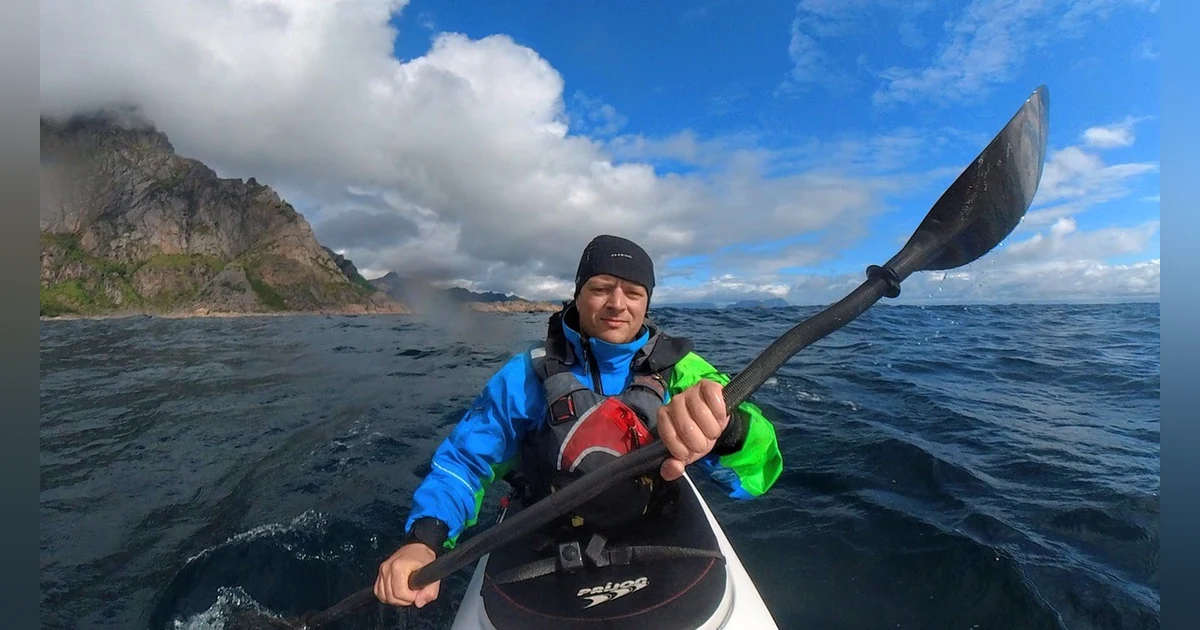
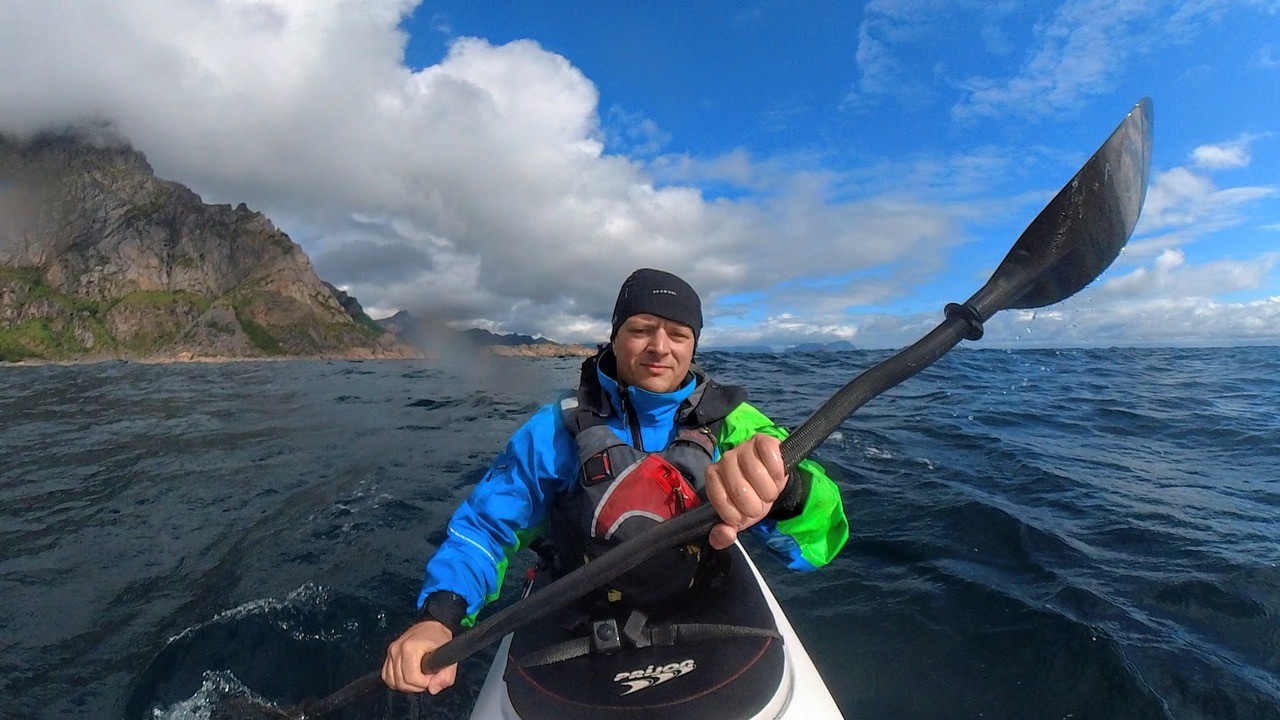
#136 - Patrik Skovjasa - Adventures with the Danube Kayaker

 Apple Podcasts

 Spotify

 Overcast

 Castro

 PocketCasts

 RSS Feed
Join us for today's episode of Paddling the Blue as we journey with Patrik Skovjasa as he transforms from a novice stumbling in cold waters to an adventurer on the Danube River and beyond. With tales of lost wedding rings and solo trips spanning across Europe, discover the challenges and beauty of paddling all 10 countries the Danube touches, and what it's like having a dog as your kayaking companion.
00:09 - Introduction to Paddling the Blue
01:20 - Meeting Patrick Scoviasa
02:50 - Early Paddling Adventures
06:22 - The Journey on the Danube
10:25 - Crossing Borders and Challenges
13:11 - Memorable Encounters
17:17 - Camping and the Wild
23:21 - Preparing for New Adventures
26:34 - Exploring Exotic Waters
27:43 - Haida Gwaii Experience
33:22 - Tips for Paddlers
35:10 - Resources for Future Trips
36:29 - Future Guests and Farewell
0:01 Welcome to Paddling the Blue. With each episode, we talk with guests from the Great Lakes and around the globe who are doing cool things related to sea kayaking. I'm your host, my name is John Chase, and let's get started paddling the blue. Welcome to today's episode of Paddling the Blue. Today's guest is Patrick Scoviasa. Patrick has built quite an expedition resume, from his first mishap in a kayak on his first outing to a three-part solo of the Danube River and several trips since. And one of his trips even include a dog. So we're going to talk about his trips today. Before we get to our conversation with Patrick, James and Simon at OnlineSeaKayaking.com continue to produce great content to help you evolve as a paddler and as a coach. You'll find everything from basic strokes and safety to paddling and tides, surfing, coaching, documentaries, expedition skills, and incident management, and more.
0:49 If you're not already a subscriber to OnlineSeaKayaking.com, here is your opportunity to get started. Visit OnlineSeaKyking.com, use the coupon code PTBPODCAST to check out, and you'll get 10% off just for being a member of the Paddling the Blue community. For those who also paddle small boats, their newest offering, Online Whitewater, and they're also offering the same discount to listeners. So check out Online Whitewater at OnlineWhitewater.com. Again, use the coupon code PTBPODCAST to check out and explore and enjoy. Enjoy today's episode with Patrick Scoviasa. Hello, Patrick. Welcome to Paddling the Blue. Hello, Jim. Thank you for inviting me. You're welcome. I appreciate the opportunity.
1:31 I've watched your videos for a while here, and you've done some amazing things. In just a few years, you've built quite the expedition list. So, what inspired you to start paddling? Actually, I got sea kayak as a gift from my wife. As i as i tried on early spring on lake near our house i capsized on your first trip yeah on my very own trip so it was funny but this was the reason why i find my friend who teach me pedaling so actually it was like good opportunity to find help and uh became paddler.
2:24 Faster so that first experience of capsizing was your immediate awareness of i need to develop some skills. It was a little bit weird because I also lost my wedding ring. It was just really cold water. It was my start with pedaling. Yeah. Yeah. You learned a lot in that first day. Yeah. Then I started training on Daniel River and I set my goal to be able to, to pedal on the Danube River alone. Maybe it was not a big deal for somebody, but I was scared from the Danube River.
3:13 It's the second biggest river in Europe. And I started in early spring. It was cold. But after a few months, I feel very cold. So how long from that first capsize to your trip on the Danube, your big trip? I think my first big trip was next season. I pedaled from Passau in Germany back to the Breitslava, our capital city. It was roughly 400 kilometers. It was like special moment because I realized that this is something what I want to repeat it. Okay.
4:04 The sense of freedom on the river. That's pretty impressive. So in just a few months went from your first capsize on your first day to that 400 kilometer solo. So how did you build your skills to become prepared for that first 400k solo? First of all, as I meant, I found Tomáš, my friend, who teached me pedaling. I joined a little group and we trained on Danube and later on in my first summer times on Adriatic Sea to become more familiar with pedaling on the sea.
4:54 And I have a problem to find somebody who wants to join me for more days. So I start pedaling alone. I repeat it many times. Now, Slovakia, is that a landlocked country? Yeah. We don't have sea. Yeah. But we have a few big rivers, like the New River, and I really like to paddle on Adriatic Sea, which is just a few hours of driving. Okay. But you can't necessarily just go out your back door from your home and have a paddling destination very close by.
5:40 Yeah, I live near the river. Okay. It's a branch of the Danube River, so I can pedal a few kilometers and I am on a big river. Okay. So when was that that you first got the kayak? What year? I think it was roughly 10 years ago. Okay. All right. So as we're recording this in 2025, so roughly 2015, you received that kayak and then you You went through the process of building your skills with that 400-kilometer solo, and then you set your sights on a much larger trip.
6:22 So tell us about your big Danube trip. So I pedaled the whole Danube River, but it was not as one trip, but like three consequent summers. Okay. And last stretch was 800 kilometers. It was from border of Bulgaria to the Black Sea and how long was that trip? It was three and something weeks, so almost one month. But the entire trip was 2,500 kilometers?
7:03 Yeah, something like that. Some part of the Danube I do more than once. I try to pedal on, you know, I try different ways, especially in Danube Delta. You can pedal there two, three weeks And still using another waves And you did that 2,500 kilometers over the course of three years So three successive summers, you said? Yeah, two summers So when most people think of the Danube They imagine Viking cruise ships and barges So tell us about the beauty that we don't see the river is like second largest river and how to say each part of the river is different in germany and in austria there is like a lot of buildings and a lot of human activities but from Slovakia down it's much nicer I mean more natural and everywhere is something nice in Slovakia and in Hungary I like the gravel beaches like never ending beaches many kilometers like very nice in Bulgaria you can find sandy beaches warm water warmer than in sea during in the summer,
8:36 so very clean water. A lot of wildlife. I also like Danube inland delta. It's part of the Danube river between Slovakian and Hungary and border. It's looked similar to delta. A lot of wildlife. It actually is very close to my house. So I like it there, especially during the winter, because nobody is there. So it's not all cruise ships and barges. Yeah, there are some marine traffic, sorry, river traffic, but it's a wide river, so it's not a big deal. Okay.
9:23 And on the lower part of the river, the Danube is so wide that you maybe didn't see the traffic. And where did that three-year trip start and end again? I started with Slovakian part. My first trip was from Vienna to Budapest, then Austrian part from Passau to Bratislava. Then, I think, German part from Ingolstadt to Passau. Then, Bratislava to Vidin. It's in Bulgaria.
10:09 And last time, the last stretch from Vidin to Plexi. Now, how many countries did you cross through on that trip? Or for that whole length or the whole trip? I think it's 10 countries, 10 different countries. Okay. So what are some of the challenges in passing through all those different countries? On the lower part, some countries weren't a part of the Schengen. Some border controls was difficult because you have to go to the mainland and find the police station and such a lot of not interesting work.
10:57 Did you run into any challenges with those country entries? Yeah, especially Croatia and Serbian border. They don't like each other because of Balkany wars. And it's difficult because you are either in one country or in another. You can just go from one side of the river to another because it's illegal. And sometimes I have trouble with police, but nothing special happened. No almost trip-ending moments or anything like that.
11:38 I noticed many of your videos show you with a flag on your boat. And there was one segment in one of your videos about the Danube with a large group of kayaks lined up on a beach, and they all had flags. And that doesn't seem to be common elsewhere. Is that common along the Danube? Yeah, it's interesting. Every year, there is... It's called Tour International Danubian. It's like regatta, which start in Ingolstadt, then pedal to the Black Sea, Iger. And I joined them on some parts. So regatta. Okay. On the pictures.
12:20 Yeah. Is that common to carry a flag on your boat? I think it's necessary in Serbia. It's low you you you need to wear a serbian flag but when i paddle on on the danube river i also wear slovakian flag it's interesting that for example in serbia there are a lot of slovakian communities. People go to me and ask me, in my language, a thousand kilometers from Slovakia, so it was nice.
13:01 Some people invite me to the home to have dinner or sleep in their house, so it was nice. So speaking of people, tell us about some of the most memorable people experiences that you encountered along that trip. Usually, I join somebody. For example, I joined a couple of Czech couple. They peddle on canoe. And I peddle one stretch of this big trip with my dog. And they help me. Because for my dog, it was much better in canoe than in kayak.
13:46 So you put the dog in the canoe and paddled along with them? Yeah. Okay. And we met at the evening on some beach, and it was nice to have. Interesting. So one of those trips, and how long was that trip with your dog, that portion? I think around 500 kilometers. It was Serbian part. Okay. All right. So let's talk a little bit about that. But so you've got a dog for 500 kilometers and a kayak. Where'd you put the dog? When it was not windy, he was like on the top of the kayak behind me. Really?
14:28 He liked it. He very soon learned to jump. And during the bad weather, he was inside the kayak between my legs. And i removed the day hatch okay so he was able to put head outside from the kayak okay i i've not i've not interviewed somebody who who carried a dog with them on their kayak on a long expedition that's very unique. Yeah, but it was not a good idea, to be honest. Okay. Because they have a lot of...
15:11 So I have a lot of troubles with wild dogs. They were very aggressive, not to people, but to my dog. I have a lot of incidents, so it was not a good idea. Well, I will make that note to myself, not to bring a dog on my next trip. Oh it's dependent countries in these countries i mean on balkan people catch catch dog give them vaccines and release them back so you you you can find room of uh 50 dogs and it can be a little dangerous if you have dog because the they want to eat your dog okay yeah there are a couple that helped you out with the dog and they had a canoe and give the dog a little bit more room.
16:03 Tell us about some of the other memorable people experiences that you came across. I met a lot of good people in Serbia. It was the part when I joined this regatta and the organizer of the Serbian part of this regatta was from Vojvodina. It's part of Serbia, but a lot of people still talk in the Slovak language, so it was a good chance to speak to the people. It was sometimes hard to talk to people because they don't speak English. In Serbia, Bulgaria, Romania, it's like nobody speaks English, so it was sometimes really hard to speak.
16:50 To talk to some complicated topics. And these people speak Slovak and a little bit German, so we can talk a lot. So they showed me Serbia, invited me to many events, like areas in some local family. So it was nice. What challenges did you face along the trip or series of trips? On the lower part, I think lower the Belgrade, they have wind, Koshawa.
17:37 It's wind blowing from Black Sea. And sometimes it's too strong and it's still blowing so you have to start every morning and pedal if it's possible and later waiting for. Wind becomes slower Now did you camp most of the way on the trip? Yes, almost all the time I camped on the shore. With exception of those times that people invited you to stay and that sort of thing. Does the Danube, at large points, does it feel wild?
18:21 Only a few cities lying on the shore. And from Slovakia, it's really wild. Okay. And under the Iron Gate, the last dam, it's like really wild. There is almost nothing. Yeah. Again, vastly different from what we normally think of when we think of the Danube. Only German and Austrian part is, there's a lot of urbans, a lot of cities, sometimes roads along the river.
19:01 But then it's really nice. And so you passed through a lot of farmland and such then from then on. Yeah. How about wildlife experiences along the trip? A lot of birds from Serbia. Also, I'm sorry, I forgot the name of the bird. The big white. Sorry, I don't remember the English name. Okay. Okay. I think I saw some pelicans in some of your pictures. Yeah, yeah, yeah. Pelicans. Okay. So I saw big groups of pelicans.
19:41 And in the Danube Delta, there are like millions of birds. Nothing completely out of the ordinary. I know. Mosquitoes. Okay. And on the lower part, it's like mosquito hell. So it's worse than, I don't know, I peddle on many places on Earth, but I never ever see so many mosquitoes like on Daniel River. Well, that's the unfortunate burden, I guess. Yeah. Sometimes, also during the day, it was like dark because so many mosquitoes. How did you plan that series of trips?
20:24 Hmm not i think nothing special i just uh make time plan and just just go okay so you didn't try and pre-plan anything like this is where i might stay or any kind of research that you need to do ahead of time or it's just get in the boat and head down river and see where it takes you yeah on on the daniel river it's not difficult planning because you just go in one direction, If it's too bad weather, you just land and camp and wait until it became better. So it's easy when you compare it to sea.
21:06 Okay, good. And so from 2015, when you got your first boat, when did you start this trip? Next year. Oh, the next year, okay. Okay. So you did successive over the next three years from there to complete that one and ending up in the Black Sea. Now, how did that feel, ending in the Black Sea? Mm-hmm. So it was a good feeling, of course, but it happened to me on the end of each trip that I start thinking to the next trip. But that I think to the sea, that definitely I will continue on sea.
21:52 Okay. So you were planning along the way what your next trip was going to be. Yeah. All right. And we'll talk about that in just a moment. What else did you kind of think about? How did you occupy yourself in addition to the paddling as a soloist? I i read a lot during the free times i mean when i don't pedal i hike a lot every day i walked maybe 20 kilometers explore the country the last stretch i have to to work so i have computer with myself with solar panel and sometimes i have to make stop and do something okay because not not every time it was so easy to ask in my job to go somewhere to one month yeah that's a lot of time to to get off now you mentioned that you would hike for quite a way up to 20 kilometers a day which is quite a hike considering you're also paddling How many hours would you average paddle?
22:58 I tried to paddle at least 50 kilometers every day. It was not so hard because the Danube part, sometimes I pedal more than 100 kilometers. It was good conditions and then I make day off. Wander around like when i pedal next to some nice cities so i i make a day off and explore the city even uh you know only a only a year into into paddling and to be doing a trip that's a month long and continuous paddling throughout the day even up to 100 kilometers a day that's that's a big trip that's a that's a lot to ask of yourself how did you physically prepare yourself for it, just just pedal do you do any training outside of paddling in that time i i think that's i i pedaled so uh so so much that i i don't have time to do nothing else so you mentioned that you were you're thinking about your next trip as you're completing that trip so where was the next trip But I think that I pedal Adriatic Sea.
24:20 I want to try to pedal some bigger tribon on the sea, and I try Adriatic Sea because I was familiar with this sea. I paddled from Reka to Dubrovnik, to the outer island. And it was, you know, like at the moment when I realized that this is something what I want to continue with. And how was that trip different from the Danube? Oh, it was a sea trip, so it was much more difficult from a planning point of view. because it was, I think, 700 kilometers.
25:04 Also, weather on Adriatic Sea can be challenging and can change weather, can change very fast there because from each side are mountains. There's a lot of katabatic wind almost every day. So probably the wind was biggest challenge. Okay but we we we peddle every day and that one you did with others yeah on this trip i was with one friend didn't know each other i just asked community on facebook and one guy joined join me because not nobody wants to join me for 20 days i think okay so you're 20 days yeah that's That's a long time to spend with somebody that you'd met for the first time on the trip. So how did you get along?
26:04 We paddled together, but this guy don't talk with me too much. He was very quiet. Okay. So he was just a good companion. Do you still paddle together on other trips? No. I think we didn't meet again. So you paddled the Danube, you paddled the Adriatic Sea, and then you went to Lofoten Islands? Yeah, but before the Lofoten Islands, I have a period of my paddling when I went to the tropics each year.
26:47 First year, I went in Thailand. Okay. It was like my first exotic expedition. I was here with two other guys from Slovakia, and it was absolutely amazing. I really liked the wildlife in Thailand, on the sea and also on the rivers, rainforest. A year after I pedaled on the Philippines on folding kayaks.
27:29 I bought two folding kayaks, a single and double kayak, find people on Slovakia and we pedaled on the Philippines. How long were those trips? originally it was planned for six weeks but it was during the COVID and a lot of things changed first time they rejected me to cross the border and I had to go home but two weeks later I tried, again and finally go to the to the philippines but other guys don't want to join me anymore because they're scared that something can can happen so we we left only three guys and then your most recent trip was completely different than the others Haida Gwaii in Canada yeah Haida Haida Gwaii was like I think my best trip.
28:40 Mega adventure we were lucky to have excellent conditions wildlife was amazing like a lot of whales bears, sharks I'll bet yeah that's a completely different experience altogether and how did you plan that trip. Like these big trips, I go through a lot of previous expeditions. Make a really good map with campings. I read a lot of books about Haida, create WhatsApp group and talk together.
29:23 Because one guy was from Canada and two others from Slovakia, but from different cities. And how did you assemble that group? One guy was my friend. So initially because he was scared from this place because it's so remote, so wild and, you know. And the Canadian guy, he's originally from Slovakia. And one guy from Slovakia introduced him to me, and the other Slovakian guy was his friend.
30:07 So tell us a little bit about that experience. Actually, it looks very easy. If I compare it with expedition British Columbia coast, we had XA and Radar. So we even don't use a dry suit, maybe twice, on the west side because of big waves. But it was sunny almost all the time without rain in the rainforest. We have a lot of animals around.
30:47 We have a lot of time, so we go through all the... watchman sites. So we like to meet the First Nation people and talk to them. And they teach us about the country around. So it was really nice. So share one of those experiences with us. On Haida Gwaii, sometime in the past, it was a site with people who guard the island.
31:30 And now it's like places for visitors. It's usually just one house somewhere in the wild with at least two people who lives there during the summer. And you can call them with radio and ask to land. And if they have time, you can land and talk to them. They will show you the place, some historical things, pictures. And these watchman houses are located all throughout the islands?
32:12 Yeah, through the World National Park. And how do you find out about that? There are a lot of guidebooks about Heidegger, so it's not so hard. Okay. And it was really nice because some of these people were isolated many weeks because it already changed. And we were the first people who they meet after a long period of time. So it was like special because it was really light that they see somebody after a few weeks because it's really hard to go there also with a motorboat. Okay.
32:59 It's more than 200 kilometers. You mentioned guidebooks. Do you have a favorite that you'd recommend? Yeah. On the British Columbia, there are Wild West Coast books And these are really, really good guidebooks. Okay. But there is no Haida Gwaii section, only the main coast. What do you want people to know about paddling your part of the world? I think important is choose the best season. I don't like to paddle here during the summer because it's too warm and too hot.
33:41 So maybe choose autumn I like September, October here just write you can camp everywhere except Germany and Austria camping there is not so easy because everything is private land and you can camp everywhere it can look good for camping I think. It can be private land. Okay. So what resources might be available to paddlers that you could point people to that they could use to understand the area more and think about their own trips? They can try my blog.
34:26 A lot of information about paddling on the Danube River. Then choose the part of the Danube River because it's 2,500 kilometers long. My part of the Danube River, I can recommend Danube Inland Delta is the part between Slovakian and Hungarian border, which I meant before. Are there other resources in addition to your blog? Just the map. On the Danube River, I use just the map. I think there is nothing special, like guidebook or something like that.
35:10 So what is your blog address? Where can people find you? www.danubekayaker.com, Well, that's simple. People can find that. Where else can listeners contact with you? They can write me on WhatsApp or Signal to my Facebook page. Well, make sure we put links to those in the show notes so people can reach out to you and definitely a link to Danube Kayaker so people can learn about the trips that you've had. What's next for you? I planned to peddle the Alaska, the part from Prince Rupert, when I finished two years ago. And I want to continue to Glacier Bay on Alaska. When is that one planned?
35:56 So next summer. Next summer. All right. So we're recording in 2025. So summer of 25 or summer of 2026? 26. 26. Fantastic. All right. So like I said, we'll make sure we get links to your website and other contact points that people can reach out to you. And I appreciate the opportunity to talk to you and learn about your trip down the Danube, your multi-year trip down the Danube, as well as some of the other experiences that have come along the way. You've really built quite a resume over the last few years. So congratulations on that. I do have one final question for you. And that is, who else would you like to hear as a future guest on Paddling the Blue? I can recommend to talk to Tomáš Novotny, who joined me last summer.
36:43 He was able to pedal high-dug wire after just a few months of preparation with me, and it was amazing. That's a pretty committing remote atmosphere in order to develop skills in that short period of time. Yeah, he trained very hard because I tried to make it hard for him. I tried to convince him to don't do this because I think that it's not possible without at least a few years of training. I would agree. Thank you for the opportunity. I appreciate the chance to talk to you and learn about your trips and wish you the absolute best on future trips, including Alaska.
37:29 Thank you, John, for inviting me. If you want to be a stronger and more efficient paddler, Power to the Paddle is packed with fitness guidance and complete descriptions along with photos of more than 50 exercises to improve your abilities and enjoy your time on the water. The concept and exercises in this book have helped me become a better paddler and they can make a difference for you too. The exercises in the book can help you reduce tension in your shoulders and low back, use the power of your torso to create leverage and use less energy with each stroke, Use force generated from your lower body to make your paddling strokes more efficient. Have the endurance to handle long days in the boat. Drive through the toughest waves or whitewater. Protect your body against common paddling injuries.
38:10 And while you're at it, you might even lose a few pounds. And who wouldn't mind that? So visit paddlingexercises.com to get the book and companion DVD. Thank you to Patrick for joining us and sharing his experiences. Patrick's done a nice job of documenting some of his trips through video. And I will add a link to the YouTube videos as well as a link to his blog in the show notes. Thanks again, as always, to our partners at Online Sea Kayaking and now Online Whitewater for extending a special offer to you. Visit OnlineSeaKayaking.com or OnlineWhitewater.com and to the code PTBPODCAST to check out and get 10% off just for being a member of the Paddling the Blue community. Until next time, thanks again for listening and I look forward to bringing you the next episode of Paddling the Blue.
38:52 Thank you for listening to Paddling the Blue. You can subscribe to Paddling the Blue on Apple Music, Google Podcasts, Spotify, or wherever you find your favorite podcasts. Please take the time to leave us a five-star review on Apple Music. We truly appreciate the support. And you can find the show notes for this episode and other episodes, along with replays of past episodes, contact information, and more at paddlingtheblue.com. Until next time, I hope you get out and paddle the blue.


