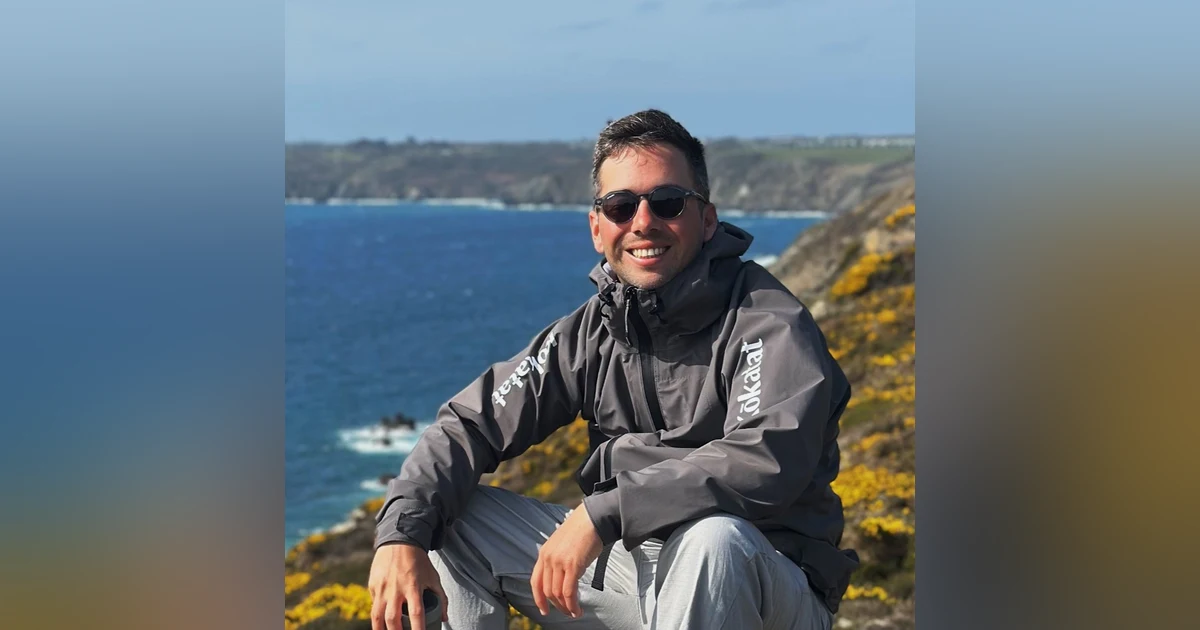
#137 - Exploring the Waters of Cornwall by Sea Kayak with James Roberts

 Apple Podcasts

 Spotify

 Overcast

 Castro

 PocketCasts

 RSS Feed
In this episode of Paddling the Blue, John talks with James Roberts, co-owner of Sea Kayak Cornwall, to explore the sea kayaking opportunities that Cornwall offers. James shares his journey into paddle sports coaching and discusses some of the must-experience kayaking spots in Cornwall, including the iconic Land's End, mysterious old mining caves, and exhilarating tide races.
We explore the diversity of the paddling landscape, from surf and rock hopping to serene estuaries teeming with wildlife. James also highlights the challenges and rewards of a career in paddle sports and reveals his passion for teaching and personal growth in the sport.
Discover Cornwall's paddling venues, including major crossings like the 50km journey to the Isles of Scilly, and the cultural and geological richness that makes Cornwall a world-class kayaking destination.
00:09 - Welcome to Paddling the Blue
01:35 - Conversation with James Roberts
03:53 - Journey to Sea Kayak Cornwall
08:16 - Coaching Programs Offered
10:50 - Exploring Cornwall’s Paddling Destinations
15:21 - The Mining History of Cornwall
18:20 - Must-Do Paddles in Cornwall
20:36 - Crossing to the Isles of Scilly
22:21 - Favorite Paddling Locations
27:27 - Personal Projects and Challenges
35:55 - Developing a Coaching Voice
39:12 - Working with Paddlers
41:42 - Future Expeditions and Goals
43:26 - Tips for Paddling Playfully
45:32 - Future Guest Recommendations
48:01 - Closing Thoughts and Goodbye
0:01 Welcome to Paddling the Blue. With each episode, we talk with guests from the Great Lakes and around the globe who are doing cool things related to sea kayaking. I'm your host, my name is John Chase, and let's get started paddling the blue. Welcome to today's episode of Paddling the Blue. If you're a long-time listener, welcome back. And if this is your first time, thanks for joining us. Today's guest is James Roberts, and James is a co-owner of Sea Kayak Cornwall, where he's found his niche in paddle sports coaching. And today we'll talk about some of his favorite must-do places in Cornwall, if you're ever going to have the opportunity to visit. We'll talk about old mining caves, paddling through tide races in the dark to Lundy, crossing from Land's End to the Isles of Scilly, and more.
0:45 Before we get to today's conversation with James, James Stevenson and Simon Osborne at OnlineSeaKayaking.com continue to produce great content to help you evolve as a paddler and as a coach. And you'll find everything from basic strokes and safety to paddling in tides. Surfing, coaching, documentaries, expedition skills, and incident management, and more. And if you're not already a subscriber to OnlineSeaKyaking.com, here's your opportunity to get started. Visit OnlineSeaKyaking.com, use the coupon code PTBpodcast at checkout, and you'll get 10% off just for being a member of the Paddling the Blue community. And for those who are also paddling small boats, their newest offering is Online Whitewater, and they're also offering the same discount to listeners.
1:27 So check out Online Whitewater at OnlineWhitewater.com. Again, use the coupon code PTBpodcast to check out and explore. Enjoy today's episode with James Roberts. Hello, James. Welcome to Paddling the Blue. Hello, John. Thanks for having me, and thanks to Joe for the invite. Yes, yes. So I've got a first question for you. Your profile on Sea Kayaking Cornwall labels you as the new school trickster. So how did you get that name? I guess that's my willingness or keenness to play in a sea kayak. I started with a bit of a background at university doing lots of whitewater kayaking and freestyle kayaking.
2:11 And I like to try and take that into the surf environment, into sea kayak. So surfing, pirouettes, rock hopping, that's my, my bag. All right. All right. Yeah. I read that one of your, uh, one of your favorite things is performing freestyle tricks in a sea kayak in the surf. Yeah. I mean, pop outs, pirouettes in the surf, really good fun and, uh, such a great environment to hone your skills. Very cool. That sounds like a good time. So now you you're with Sea Kayak in Cornwall. So tell us a little bit about your history leading up to that. Great. So I started kayaking in Cornwall. I'm Cornish. When I started kayaking with my family, we bought us kids some general purpose fiberglass shells.
2:56 I had a 90 degree left-handed wooden paddle and I'm definitely right-handed. So it's quite an awkward start into kayaking. And we had great opportunities at school. I was part of a local comprehensive sports college and as part of PE lessons we got to go kayaking, sailing, climbing. Didn't really know anything different but that opportunity was amazing at a young age. Following that at the age of 18 I undertook a watersports apprenticeship at a local watersports centre called Elemental and worked there for five years progressing kayaking skills and sailing and coasteering and other activities in Cornwall.
3:41 And after five years there, I was ready for the next step. So I applied for a job at Sea Kayak in Cornwall and it was the right place, right time. They were looking for somebody to join the team. And I got to work for Simon Osborne, Jeff Allen and Sean Rogers and really just absorb loads of information about coaching and sea kayaking in the local area and progress that. Got taken under their wing, found myself in 2023 in the position to become a co-owner and director of Seek Ike in Cornwall as various people left to move on to different projects.
4:24 And I'm now running coaching sessions and Paddle UK and... Providership awards, as well as our fleet of expeditions. That's fantastic. Those are some strong wings to learn under. Yeah, it was a really good opportunity. They've got a really different style. But great range of experience and just being able to work under them and absorb a load of information was really useful in my early career. Absolutely. Absolutely. Now, how would you say that that shaped your career? Oh i still like to stay true to my individual style yeah and try to focus on who i am and not copy their coaching techniques or tactics but just being able to learn from them allowed me to gain my own coaching voice and build some confidence in different conditions working with them but also hearing different feedback and being observed from them and being challenged by them was something that was really important in my development so what was that progression like from from just kind of starting in the in as a paddler and then growing through the coaching scheme it takes a long time john uh it's to get to make a career in paddle sports it's quite a challenging thing working for five years in multi-activity in cornwall isn't paid terribly well
5:55 so to do it as a career is is pretty challenging and it's very seasonal here in Cornwall so lots of people will just work for the summer season and then you have to find other things to do for the winter and perhaps as a result lots of people will lose interest in the coaching early on unless they're surrounded by good mentors. But I'm fortunate to be in a position where I could balance that with university and other projects in the winter and slowly make it more of a year round job, which is really nice. It takes a long time to forge a career in the outdoors and get the experience for the various qualifications, but it's been really worthwhile and really rewarding to be where I am now.
6:45 Absolutely absolutely now what is the what is the primary season there and the summer season i'm guessing so our main season or seacock and cornwall's main season of operation would be march until november which is quite a long season i know elsewhere in the uk they're able to operate year round but cornwall's local catchment area is quite small and we're quite far south in the uk It's a long drive down. Our busiest season, I would suppose, would be from March until October. So there's some quieter months either side of that. And in the winter, there's loads of time to work on personal projects, develop the business and the website, and also have a little bit of time to give the body a rest. Sure.
7:32 Yeah. Although you mentioned it's not a terribly long season. It's in March to November, certainly a good amount of time. And to be able to spend a consistent time on the water throughout that entire season, it does wear on you. That's certainly true. Yeah. It's pretty full on and you notice it towards the end of the season on the body. It's just, you're building strength throughout the year and you get a mid-season fitness level, which is really good. But towards the end, you get various repetitive strain injuries that are important to watch out for and just that feeling of fatigue, not being able to recharge is quite important to monitor. Sure. What's the range of the types of programs that you might run throughout the season?
8:16 It's huge, John. We have introduction courses, intermediate courses, intermediate, advanced, advanced plus. They align with the Paddle UK courses, but they are very much our own courses, Monday to Friday or a weekend two-day course. And then we have specific clinics. So there's surf clinics, rescue clinics, our expeditions. Expeditions we run expeditions in greece in scotland in the isles of scilly and on top of that. It's offering the paddle uk awards so the ck leader training ck leader assessments part of the work we offer and of course the symposium in october yeah yeah it's quite a range as you mentioned it's all over the from beginning to end effectively yeah and the symposium is always a nice event in october it kind of marks the end of our main season and it's a massive gathering of paddlers we've got quite a good international following and in the last few years there's there's been huge demand from german paddlers so it's almost a sea kayaking germany cornwall symposium which is is really nice to have that mix in clients and just work together with loads of coaches during the symposium there's about 13 different options to choose from and that's offers a range from advanced surf
9:51 to intermediate journeys sea kayak fishing or on medical planning So there's really something for everyone at all levels. And we have a barbecue. We have pizza rods come down and sell pizzas during the event. And we organize some talks in the evening. For me, that end of the season is a really nice way to wrap things up. Certainly. Sounds like a great time. How many people do you draw for the symposium? It's about 120 clients or paddlers. And then there's about 12 to 13, maybe 15 coaches and some volunteer coaches on top of that. Good time. How long has it been running?
10:35 Long before I was part of the company. That would have been set up by Jeff Allen. I think we're in the 18th year this year. That's a good run. It's a lot of chaos, a lot to organize. And you get to do that in a great playground. So tell us about Cornwall. Yeah, so Cornwall to me is maybe a little bit biased coming from Cornwall, but Cornwall is a World Cup class paddling destination. We're stuck out on the the southwestern end of the uk we have tide races we have rock hopping we have surf of course which is a big part of coming to cornwall typically there's a range of locations within an hour's drive of our base so it might be up into the north coast it might be down to the lizard or land's end and then you've got a variety of estuaries as well where if it's windy like it is today you can find some shelter and create a level of challenge that's safe and beneficial for the clients so with all those uh all those all those different venues you know you mentioned tide races rock hopping surfing estuaries everything in between why would you go anywhere else well yes it's a great great point john i i love it and there's so much to discover there's places for sure that i haven't paddled i'm not in a big rush to cross off everything i've got a
12:07 lifetime to do that but there's so much to explore that's great so what are some of those must-do paddles in the area oh well i think lots of people associate the big paddles as being land's end and lizard point at some of the more advanced paddles and on the right day You can take intermediate paddler. Intermediate paddler to these locations, but they're typically more advanced paddlers because of the exposure to the tides and the exposure to conditions. It's almost 360 degree cover. Land's end and lizard point really sticks out there to the south so the exposure to swell and wind is pretty prevalent pretty consistent through the year but taking opportunities to get people down there and experience the most southerly tip of the uk and just to go to land's end as a namesake is pretty pretty epic yeah the geology in cornwall changes so much and that creates a level of interest too so land's end has these great granite stacks and when it's sunny down there i was there earlier this week they just get bathed in sunlight it's a gorgeous view the lizard is devonian a type of devonian rock that's much darker and just creates a totally different playground for rock hopping and that's variety makes it really interesting in cornwall
13:40 that you've got that massive change in geology. It feels at times like you're paddling in a different place in another part of the world almost with every paddle. That sounds fantastic. I mean, I'm looking at Land's End on a map and you mentioned it's the, so I guess it's the most southwestern point? Yeah, Lizard Point would be the most southwestern point. Okay. Ah. And then Land's End there. You've got the Cape at Land's End. So the area where two oceans meet or divide and doing that trip, you get all of the Cornish mining heritage. You've got engine houses on the cliff line and it gives you a real sense of perspective of what the miners would have been exposed to working out there on those conditions, on those cliff face.
14:30 You can almost see where these stacks have been mined straight through to the cliff line. And I can imagine mining through, seeing daylight and feeling very exposed there at the edge of a cliff. Yeah. Yeah. So tell us a little bit about that mining history in the area. Yeah. So Cornwall's known for mining and fishing, historically being two big industries here. It's less common now, although fishing is still a big heritage. And lots of the mines are open as tourist attractions and then we've got the new lithium mine projects that are going on. Gormall's mining history has just blown worldwide so.
15:15 During the closure of the mines, lots of Cornish people would have traveled elsewhere for work. That could be South America, Australia, South Africa. And you can meet Cornish people all over the world that have perhaps moved or their family were miners that moved to Australia, as an example. And it's really nice meeting someone that's Cornish, I don't know, New Zealand, for example, that's really excited to see you and talk about pasties. So a pasty, common food up in the upper peninsula of Michigan. Perhaps that had some mining history there. There was, in fact, mining history there.
15:57 So now I've heard Land's End in reference to a, I guess, a famous route, Land's End to John O'Groats. Oh yeah so it's it's the end as a low point at some point in the uk that people start a common. Cycling challenge i suppose and people have recreated that in kayaks covering the same distance journey. But predominantly done by cyclists and that's a south to. North or north to south uh tip to tail kind of uh route yeah i think it's done on the prevailing conditions south to north would be common but people create their own challenge how about some of the other must do panels i've got so many that i love and part of my joy at the work i do as a coach is that i get to experience these different places based on the weather and the people that i'm with so the north coast of cornwall has some incredible caves there's an amazing one near saint agnes called the prison again it's a miner's cave and the colors of copper bleed out of the rocks there and create this rainbow of color it's it's pretty rare to be able to paddle into there but there's some small tunnels to get through just because of the prevailing swell direction it's usually a bit too big to go in there but if you can find it and it's the right day it's it's an amazing place to explore also like our local stretch swanpool to main
17:30 porth and that area around falmouth have some great paddling on our doorstep this stretch from swanpool to main porth isn't long it's a few kilometers but within that stretch you have shipwrecks you have secluded isolated beaches where you can escape the chaos of summer and the tourists you've got great wildlife so We'll see dolphins in that area. I've seen whales in that area and seabirds and loads of rock hopping to do. Well, you've just added more to it. So now you've got beaches, shipwrecks and wildlife in addition to the tide races, rock hopping and surfing. Again, it just sounds like the perfect destination.
18:13 Yeah, I think so. I think so, John. It's definitely one to experience I have on your list. Another must-do paddle or bucket list paddle almost is the journey from Land's End to the Isles of Scilly. It's a 50-kilometer open water crossing. that's pretty significant undertaking both from a navigation point of view and just the journey itself cross through land's end and to get out the land's end you go through the tide races there at longship's lighthouse and then off into the blue and when you arrive on the islands it feels like you're arriving in this tropical paradise archipelago that's almost appearing out of nowhere You can get regular flights or the ferry to the Isles of Scillies, but to paddle there is such a unique experience.
19:06 And you said the crossing is about 50k? That's correct, yeah, 50k, open water. I'm from a sea kayak, I've done it in 2023. It's about a six and a half hour paddle, and you can't see the islands until the final two hours. So you're really just paddling on your compass bearing and making sure that all your planning's right or following a track on the gps but arriving there and seeing the islands in in nice weather it's just like this tropical paradise there's there's a great bar i'll forever be in my heart that. Great Ganili Sandbar, and that was the first area I could get out and stretch my legs.
19:47 But it's this golden sand bar that just appears at low water. And to get out there and have the azure blue water is a real privilege. Yeah. Yeah. So how does the landscape and the area there differ from Cornwall? So the isles of cilly are very low-lying a cluster an archipelago of small islands whereas cornwall itself can have the dramatic cliff line and broiling farmland cornwall itself would be very built up but there's lots of the isles of cilly that it's a little bit more left to its own devices so there's areas for bird habitat there's areas for seals and it's totally unique.
20:36 Although Cornwall and the Isle Sicily are linked, it's a very different place. Yeah. And again, looking at the map, it looks quite a bit different. It looks a lot more beach. And as you mentioned, you know, azure blue waters and it's a beautiful area. Yeah. Amazing area. It feels again, like you're in a tropical paradise. We go out there for six to eight weeks in the summer. Okay. and run a variety of week-long trips. And on the right day, you could be anywhere in the world. But it's also a small archipelago in the Atlantic, and it can be exposed to big swells and quite dramatic conditions out there, which is good fun with the right group, or the islands can suddenly become very small. Okay.
21:27 So is that a popular vacation area? Yeah, the Isles of Scillies might not be hugely well known as a holiday destination. And tickets for the ferries are getting a little bit more expensive. But in the summer, it really comes alive. And it's a great place to experience both in kayak or on foot. It feels almost like you're stepping back in time. There's limited car travel on the island and you can't bring your own car. So you're getting around the islands on foot and via boat. There's prehistoric villages, but there's local amenities and pubs and supermarkets.
22:08 There's areas to camp or there's areas to stay in hotels. So each island is pretty unique. So back in the Cornwall area, if you could only paddle one place, what would it be? Oh that's tough john always a tough question that all depends on who i'm with and the conditions, land's end does always feel like a treat just to get down there when you get the conditions right it's a beautiful place to be and because of its reputation it always feels like a treat to go down there i think one of my favorite launch locations on the north coast would be port reef If I could pick one, Porter Eef has exposure to surf swell, again, private beaches, some great rock hopping and similar mines along the coast and offers a bit of everything.
23:03 But the luxury is I don't have to pick, John. Favourite personal projects that you've done? Crossing to the Isles of Scilly was a pretty significant project. Project and the following year after that that sorry that project crossing to the Isles of Silly I did solo okay that's my first major open water crossing that's actually mid-season I was feeling good in the boat I saw the weather window towards the end of the week and thought oh that looks good for a crossing and I'd done that previously but by the time you move a few days the weather changes quite quickly in Cornwall and the weather window would disappear and there would be a storm blowing in so I'd write off that idea but at the time I crossed that was the weather'd stayed the same all week so I could plan prepare I crossed over.
23:54 On the Saturday. Got to do a little bit of paddling, but I got the ferry back on the Sunday evening and back to work on Monday. So just a bit of a one and done mission. The following year, we were looking at doing a similar crossing and the weather didn't really play ball throughout the season. The weather can be up and down in Cornwall. It's quite exposed. So you've got to take those opportunities to do those more significant crossings when you can and I was looking at crossing to Lundy the following year and the weather window didn't appear where I was free or able to do such a thing until December and that's a 60k or 30k each way from Lee Bay to Lundy Island you're in the Bristol Channel which is quite exposed to significant tidal strength we drove up the night before i did this with one of our team ben and we set off at 5 a.m in the dark after camping in the van in the car park and launched into the dark paddled through mortpoint tide race in the dark and the sun came up and it was beautiful we arrived at the islands or londy island around midday pretty cold it was a settled period of weather but it was december so we're around zero degrees celsius ben's shoulders started hurting a little bit so we just had some lunch a bit of a rest
25:25 and we turned around and headed straight back to complete the 60k day as our pace slowed down on the way back we received less tidal assistance and just to slow down to protect Ben's shoulder and so we were paddling back through Mort Point Tide Race in the dark which was. Pretty it wasn't really part of the plan we were hoping that we would launch into the dark in the morning to return with some daylight but fortunately it was pretty friendly there was a nice big moon that was lighting up the rocks and we could get back and pretty cold after spending the day outside I'd get changed and get warmed up.
26:06 It was a great trip to do and a great challenge. Looking back on it, a pretty serious undertaking at that time of year. And I'm not sure I'd be in a rush to do it again. It was type two fun. We can look back at that and, uh, really smile about completing that challenge and having some, some great experiences on the way too. So when we arrived at Lundy, there was a pod of 30 dolphins that just swam amongst the kayaks and was a real motivator before lunch. That sounds cool. It looks like a spectacular location. It looks like a very rugged location with a, a lot of neat things to, uh, to visit there. Yeah. I still need to go back and complete the circumnavigation.
26:48 It wasn't on the cards, unfortunately, at that time, it was a bit of a one and done mission at that time of year. So we didn't get called out by any weather, but I'd love to go back. It looks like a great area to explore and to complete the crossing is a significant paddling goal. So it sounds like crossings are a favorite of yours. I like the crossings. I like seeing how you can push yourself within a 24-hour window. So I enjoy expeditions, but sometimes expeditions, you can suffer for multiple days, especially up in Scotland, if the weather doesn't play ball and it's raining for the week you're there. Whereas to push yourself for 24 hours and really try and get the most out of the day is quite rewarding. Yeah.
27:35 So some like to go around things, some like to go to things. So tell us about some of those favorite crossings other than Silly and Lundy. Those are the significant two however crossing in in scotland is is also amazing so away from cornwall we run expeditions in scotland in the small isles and sky and to complete those crossings again is is really rewarding especially on expedition you feel like you're moving and arriving in a new place. Yeah, it feels like a mission in an area that might have a supermarket nearby, unfortunately.
28:15 But to be able to set up camp in Scotland and move around under your own steam is really nice. Definitely. What's the longest crossing you've done? It could be Lundy at 60 kilometers. Okay. Yeah, that's 30k each way, but the Isles of Sillies is around 50k one way. So as a one-way crossing time in the boat, I'd have to say Isles of Sillie, but as a full day, Lundy at 60k. So you mentioned Scotland. So tell us a little bit about some of the paddling in Scotland you do. So we've run a variety of trips up there, depending on the year. The most consistent is the small isles. And the small isles are just wonderful.
29:00 We set up and launch from Glennewig. But to be able to explore that coastline, first of all, is really remote. And there's some great places to camp. And of course, in Scotland, you're allowed to wild camp. We're limited in that respect in Cornwall. that you're not allowed to wild camp. So we try not to do that too much commercially or at all anymore. So the small isles, I'm not familiar with that. So give our listeners an idea of where are the small isles relative to other things? So the small isles are south of Skye on the west coast of Scotland. You've got Egg, Muck, Rum, and Canna. Four very different islands seen as the jewels of the Inner Hebrides, really.
29:46 Or the Hebedees, they all offer something different. The communities on these islands where people are living full-time is just incredible. And to be able to talk to these people that are living out there and making some great choices for the environment, such as egg being totally run-off renewable energy. It's just great to connect with these people. And again, they're living a really remote life in an area where most of us are pretty well connected and they can be really limited by whether the ferry can get over just as in the Isles of Scillies whether it can make that supply run or how well their cupboards are stocked up.
30:31 So there is some habitation on the islands but not much. Yeah there's significant habitation on on the egg. Muck has a great community with houses, but there's areas where you feel you're in your own area or help isn't nearby. Now, I'm looking at the maps here, and you mentioned, you know, there might be a supermarket or something like that. There's not much there. That's it. And you can take the opportunity to shower if you can find it on the harbour at Egg. But yeah, it's true expedition paddling up in that area. And it's great for a variety of different levels, whether you can get on the boat and explore islands individually with your kayak or making the crossing to the various islands is a great undertaking.
31:22 Now, when you do those trips with a group, will you paddle out from the mainland and then paddle? Yeah, so our trips are run from Glen Inuig, so you're making the crossings to the islands and crossing to each island. We try not to use the ferry unless there was an emergency, really. Okay. But that's not part of our plan. And if the weather's bad, then there's some great areas to explore along the coast until you're able to make a crossing. That's the last time I was up there. I'm going again this year. It was in June 2023 or May, June, just before the midgees come in. And there was a pretty big storm hitting the outer Heberides, which meant we had two meters swell where we were in Glenuig.
32:08 And we made some campsites and some good journeys along the coast before being able to jump across to Egg and circumnavigate Egg and mark and then cross back to the Ardemircan Peninsula at the final part of the trip. Will you generally stay out on the islands for a trip with a group? Yeah, so we'll camp out there. I mean, our expeditions are camping, so we'll wild camp. Find our way along the coast unless we need to set up a base camp where we're going off for day trips from one point. But it changes every year with the weather. So even with all the world-class paddling in Cornwall, there's still other opportunities and other places to go. Yeah, for sure.
32:54 So outside of your home waters, I guess I'll say, where else in the world have you most enjoyed that's a great question quite a few years ago now i got to do some whitewater kayaking in chile and that was unreal i did a bit of whitewater kayaking whilst i was at university and i was at university in plymouth and plymouth's near dartmoor that has an abundance of great some of the uk's best whitewater rivers so i got to hone my skills on the rivers and I took that to South America with some friends and was able to do a little bit of paddling and it was a totally different level.
33:37 The volume of rivers that they have in South America are just insane for the grade in comparison to the ditches we run in the UK and the river we were running was clean enough to drink from so you could sit in the eddy and drink some of the river water and then peel out and just go down this big volume, warm white water, which again was another nice tea. In the UK, we're often paddling in the winter season for white water based on rainfall. So being able to paddle in warm water was a real treat. From the sea kayaking side, I recently, or two years ago, had a great opportunity to go to New Zealand.
34:20 And there's some great paddling to do there as well. That's another ace destination. As well as Kefalonia in Greece, being able to move around the islands and just experience different paddling areas. Yeah tell us about kephalonia kephalonia is so i have a business partner sean he he largely runs the kephalonia trips before he joined sea kite in cornwall he had a business in kephalonia so he noticed the islands really well it's a great paddling warm weather paddling destination there's depending on the time of year you go we go in the spring and the autumn when it's a little bit quieter.
35:02 There's tavernas and great seafood to eat but there's also isolated beaches and quiet areas to find. There's some significant crossings out there to various islands so you can cross from Caffelonia to Ithaca and the conditions despite it being in the med and a lack of tidal movement can be pretty epic out there. There's some strong wind and weather and you get wind blowing off the mountains there so you have to know what you're doing or get lucky with the weather but it's it's a great paddling destination that offers expedition in warm weather that's nice as well yeah it's totally different to scotland where you're wrapping up warm to do an expedition in shorts and t-shirts feels like a real treat after, perhaps hiding in a down jacket in scotland Yeah.
35:55 So we were talking earlier about Sea Kayak in Cornwall and about your progression as a coach. And one of the things that you'd mentioned was your coaching voice. And so tell us a little bit about your coaching voice and how you found that style. I guess I was exposed to, as previous, exposed to lots of different people. And you can pick up little tips. But it's always trying to stay. I'm not a super dictatorial leader or coach. And we all have our own style. I suppose mine might be a little bit softer at times, but I've been working through multiple awards over the last few years, such as the Performance Coach Award with Paddle UK, the Advanced Sea Kayak Coach Award.
36:39 And through that you you get to spend a lot of time working on developing your own I suppose reflective practice or and through the performance coaching process you get to really think about your coaching philosophy why you coach or what inspires you to coach and what you hope to to either how you hope to progress people or support them in their development and I'll see you next time. We've got a great classroom in Cornwall. Each course I start with a focus on the learners and what their outcomes are for the week. And these outcomes can shift and change.
37:20 We shouldn't be seen as crossing anything off this list, that we're always making developmental steps towards our outcomes through the week, provided that we can get the right conditions with the weather. And supporting paddlers in their next journey and then seeing what they're able to go on to or progress or seeing photos or stories of their development. It's such a motivator for me for doing what I do and helping people just feel more confident in the boat is a big aspect of my work. What type of paddler would you say you work with best? Like when someone comes and they've got a type of goal? Yeah, I'd hope I'd give everyone a great experience.
38:02 Some of the best coaching can be one-to-one where you're really working on someone's personal goals but for our group sessions i get a lot of enjoyment around that intermediate stage at the intermediate stage the learner is developing the most that there's paddle skills we're building finesse we're building technique and efficiency and we're also taking people into the surf environment into rock hopping perhaps for the first time and working on tactical and technical skills within those environments. And that's certainly where we see the most development with paddlers. So that's really nice as a coach. It's also, of course, really rewarding to work with advanced paddlers in advanced environments and be in those conditions and push people out there.
38:51 Working on leadership or rescues is great fun. There's also something special about taking someone who's ready for an environment and has the skills, knowledge, and abilities to be able to support that environment, but they're moving to a new environment that they didn't think they were ready for and being able to see them flourish in that. Yeah, matching the environment to the learner is the goal that we're trying to get all the time. And when it's working and you've just found the right environment, it's almost self-learning, which is really nice. There's a great few venues that aren't commonly used as coaching spots that I've been trying to dial in in my own practice.
39:35 And there's an area on the southeast coast of the lizard called the manacles and the tide runs out there and taking people out there is a small open water crossing to look at but then you've also got tidal flow and challenges in amongst the rocks with uh maybe a small tide race nothing nothing too significant but the water's certainly moving out there so creating games games of aims and challenges to help the paddlers progress and just feel more comfortable and when you can see them working together or coaching each other it almost becomes autonomous in a way that you've just put people into the right environment and they're able to progress without knowing that they're being coached super so you mentioned personal your personal practice with with a season as long as march to november and coaching throughout that entire time where do you find time and then what do you do to develop your own personal practice another great question john and it's a challenge especially as lots of the best paddling conditions slash weather is in that summer period i've got.
40:52 I'm not in a rush to set and tick off certain paddles or certain trips, but if I find an opportunity to do them, then it's really rewarding to have that list just in the background, finding the time in the season. But I'll try and use different disciplines as well to support my practice. So I've been doing a bit of surf kayaking, get out on surf skis and it just helps to balance the abundance of sea kayaking which is obviously my main focus and main interest but just to keep skills fresh or to change and jump out of the boat that I've perhaps been working in all week, allows for some progression and some transferable skills.
41:35 I've got some opportunities as well in the year so this year it's quite busy I get to pick my own schedule. And there's loads of interesting projects to work on. But later in June, I'll be heading to Norway with a friend, Rasmus. And we're going to go on a personal expedition in the Helgand area, perhaps set up a trip in 2026, but we'll get the personal one done first of all. Excellent. So what else is on that list for you? What's next? A circumnavigation of Cornwall as an expedition, a personal expedition has been on the list for many years it's quite difficult really to tick that one off or to have the opportunity because you need the daylight hours to get the distance in Cornwall can be quite exposed to the Atlantic swells and wind so finding conditions or a weather window especially for the the amount of time it may or may not take.
42:34 Can be quite a challenge, but that's on the list as something I'd really like to do. I don't know if I could paddle something like Britain, but certainly paddling around Cornwall and trying to paddle some of that inner stretch would be a big one for me, big milestone. So when you say a circumnavigation of Cornwall, is there a river that would cut through or are you talking just like end-to-end coast? Yeah, you can't cut it all the way through, but there is the River Tamar that cuts it almost all the way up to the north. And some people have tried to close that loop through the river, but there'll be some walking or quite a significant portage involved to get to the paddleable stretch.
43:16 So that's a definite interest to try and close that loop as much as possible. Interesting. And as we start to wrap up here, I'm going to go all the way back to the beginning. We talked about that new school trickster, and you mentioned some of those favorite tricks. So what are some of your favorite tricks and what tricks and tips can you give listeners to help develop their own? My big thing, I guess, is play in the kayak and all practices should be playful, whether that's the more advanced moves in the surf, like pop outs and pirouettes or perhaps even in flat water, trying to stand up in the kayak or trying inventive ways for self-rescue.
43:58 That aspect of play is really important to me and it's a big theme in my sessions to keep keep it fun and not too serious it could be pop outs and periods in the surf but trying balancing games in your kayak and flat water is is just as important. Yeah, we're all just kids, right? And if we're not having fun, then we should do something different. For sure, for sure. At that minute for a long time, I hope to keep my passion for sea kayaking and kayaking and the career and for the business that I'm in for a long time. So that's really important to me. Good, well, keep bringing in that fun attitude because that's what it's all about.
44:41 So James, this has been fantastic having the opportunity to talk to you and learn from you. How can listeners reach you if they've got additional questions or if they wanted to come out and paddle with you? So you can find me on our website, www.seacayacandcornwall.com. You can contact me on email, james at seacayacandcornwall.com or find me on Instagram at james underscore seacayacandcornwall. All right. Right. And then, of course, if folks want to explore some trip possibilities and do some guided adventures, you'll offer those as well. Yeah, yeah, for sure. Get involved. Join in.
45:21 Super. All right. James, I've got one final question for you, and it's a question that we ask all of our guests here on the show, and that is, who else would you like to hear as a future guest on Paddling the Blue? I'd love to recommend the guys at midlife kayak jeff cater and andy mullins have gone off to complete some amazing things they've completed circumnavigations of great britain they've completed circumnavigations of ireland and last year crossed the irish sea i think on top of that they're just really nice guys that have an interesting background in different careers and getting them onto the show to talk about their trips and their experiences would be really good that that sounds great i love the name mid-left kayak yeah yes they both have careers or jeff's retired now but that was a turning point for their first trip as a retiring fireman to move on and tackle something new super well we'll connect with you and get information for jeff and andy and be able to get them on the show so again james thank you very much for the opportunity it's been wonderful talking to you and learning more about the the joys of paddling Cornwall and elsewhere and hopefully we'll all get a chance to get out and try Cornwall.
46:34 Thanks John yeah please come and join us. Alright thank you. Cheers. Bye. Cheers. If you want to be a stronger and more efficient paddler, Power to the Paddle is packed with fitness guidance and complete descriptions, along with photos of more than 50 exercises to improve your abilities and enjoy your time on the water. The concept and exercises in this book have helped me become a better paddler, and they can make a difference for you too. The exercises in the book can help you reduce tension in your shoulders and low back, use the power of your torso to create leverage and use less energy with each stroke, use force generated from your lower body to make your paddling strokes more efficient, have the endurance to handle long days in the boat, drive through the toughest waves or white water, protect your body against common paddling injuries, and while you're at it, you might even lose a few pounds.
47:21 And who wouldn't mind that? So visit paddlingexercises.com to get the book and companion DVD. Thank you to James for joining us to share his experiences. When you have tide races, rock hopping, surf spots, beaches, shipwrecks, and amazing wildlife all in your own backyard, how can you not enjoy your time on the water? If you'd like to learn more about James and Sea Kayaking in Cornwall. I'll add links in the show notes. Thanks again to our partners at Online Sea Kayaking and now Online Whitewater for extending a special offer to you. Visit OnlineSeaKayaking.com or OnlineWhitewater.com and to the coupon code PTBpodcast to check out and get 10% off just for being a member of the Paddling the Blue community.
48:01 Until next time, thanks again for listening and I look forward to bringing you the next episode of Paddling the Blue. Thank you for listening to Paddling the Blue. You can subscribe to Paddling the Blue on Apple Music, Google Podcasts, Spotify, or wherever you find your favorite podcasts. Please take the time to leave us a five-star review on Apple Music. We truly appreciate the support. And you can find the show notes for this episode and other episodes, along with replays of past episodes, contact information, and more at paddlingtheblue.com. Until next time, I hope you get out and paddle the blue.


