#141 - Best friends go midlife kayak adventuring with Andy Mullins and Jeff Cater

 Apple Podcasts

 Spotify

 Overcast

 Castro

 PocketCasts

 RSS Feed
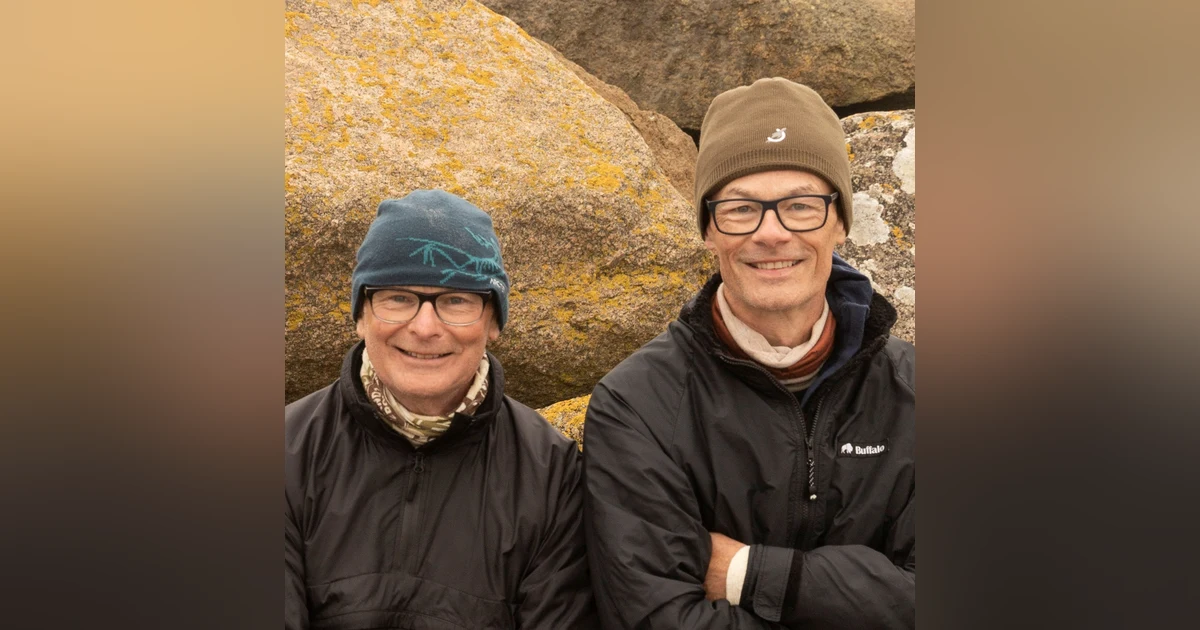
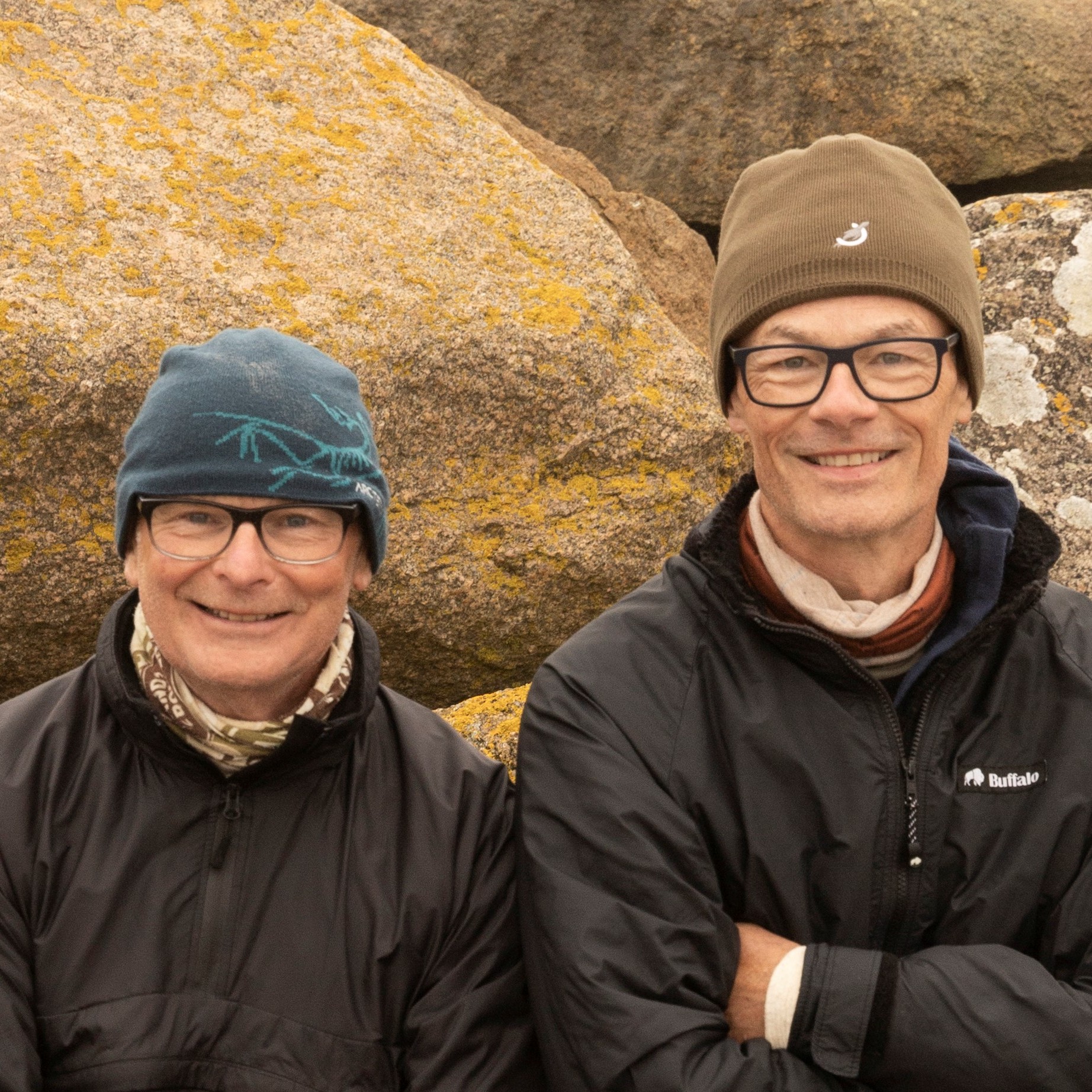
Join me in a conversation with adventurous paddlers Andy Mullins and Jeff Cater. Under the banner of Midlife Kayak, Andy and Jeff share their experiences, challenges, and the unique bond of friendship forged through sea kayaking.
Embark on an inspiring story that navigates from the scenic coasts of Cornwall to the thrilling waters of Ireland. This episode explores not only the thrills of paddling around the prominent British Isles but also delves into the personal growth, camaraderie, and life-changing adventures that the open waters offer.
Get insights into the essence of enjoying the moment, and how adventure leaves a lasting impact both on the paddlers and those they meet along the way.
00:09 - Introduction to Paddling the Blue
01:27 - Meet Andy and Jeff
03:42 - Stories from the Water
08:06 - Adventures in Cornwall
13:54 - The Midlife Kayak Blog
19:10 - Planning the Expedition
26:09 - Reflections on the Journey
40:36 - Overcoming Mental Challenges
45:38 - Paddling Around Ireland
49:37 - The 2024 Attempt
56:40 - Advice for Future Paddlers
01:03:22 - Connecting with Listeners
0:01 Welcome to Paddling the Blue. With each episode, we talk with guests from the Great Lakes and around the globe who are doing cool things related to sea kayaking. I'm your host, my name is John Chase, and let's get started Paddling the Blue. Welcome to today's episode of Paddling the Blue. Andy Mullins and Jeff Cater joined me for today's episode. They were referred to me by James Roberts, and I'm glad to have received the introduction, just as with all guests. I've talked with many others who've paddled around Britain and Ireland, but this one was just a bit different with a great message about paddling with really good friends. I hope you enjoy the conversation as much as I have. Before we get to today's conversation with Andy and Jeff, James Stevenson and Simon Osborne at OnlineSeekhiking.com continue to produce great content to help you evolve as a paddler and as a coach.
0:47 You'll find everything from basic strokes and safety to paddling in tides, surfing, coaching, documentaries, expedition skills, incident management, and more, and they're always adding new content. If you're not already a subscriber to OnlineSeekHiking.com, here's your opportunity to get started. Visit OnlineSeekHiking.com, use the coupon code PTBPODCAST at checkout, and you'll get 10% off just for being a member of the Paddling the Blue community. And for those who also enjoy Paddling Whitewater, their newest offering is Online Whitewater, and they're also giving the same discount to listeners. So check it out, onlinewetwater.com, use the coupon code PTBpodcast at checkout and explore. Enjoy today's episode with Andy and Jeff.
1:31 I'm joined today by Andy Mullins and Jeff Cater. Andy and Jeff, welcome to Paddling the Blue. Hey John, nice to be here. Nice to be here too. Thank you. So your story, so you operate under the name's Midlife Kayak, And tell us a little bit about your stories as paddlers. And Andy, if we could start with you, maybe. Yeah, sure. Well, I guess I'm fairly late coming to kayaking. I started kayaking back in about 2010 when I first moved down to Cornwall and wanted to do something on the water, seeing as I now live by the sea. I used to live in London. And so I went on an introductory course to sea kayaking with a local organization and loved it.
2:18 And I just carried on from there, really. All right. And just fell in love with the sport. Yeah, I did. I fell in love with the sport and very quickly realized that you could get out in the water very easily from day one and have fun. But then I guess over the year or so after that, you realize that you can take the sport that much further, whether it's going on adventures or learning new skills. And so it was really open to a broad range of people. And that's what I loved. So I love learning and I'm still learning and also just meeting others and helping others learn as they sort of fall in love with the sport too.
3:01 Yeah, you kind of hit it there that it's something that's accessible to most. You can just start, but then you can continue on and never stop learning in the sport. Yeah, absolutely. Absolutely. There are days when you're out on the water, you think, oh, yeah, I've got this nailed. I'm a proficient paddler. And then Mother Nature has a pretty good way of handing you your backside on a plate. And then you realize, gosh, I've still got an awful lot to learn. So you've got to have a healthy respect for the environment you're in. But yeah, you never stop learning. And I guess that's part of the thrill of it.
3:42 Super. And Jeff, how about yourself? Well, I probably started in my early twenties with a bunch of mates and we decided that we would get into some long distance flat water races, sort of a hundred miles plus in K2s. And we had no instruction. And I don't know if you've ever sat in like a K1 or a K2 boat, but the moment we left the shore, we would capsize and we just capsized less and less until we got fairly proficient at it but it was quite time consuming and with family and career we had to put that on hold so probably in my early 40s I decided that I'd give seat class backing a go and it was one of those sort of round peg moments where it just fitted and I just absolutely loved it and like Andy took some courses so that I had some knowledge and started getting more confident about going out by myself and more challenging conditions and and have just kept going really it's been a marvelous journey of course i'm much older than that now so i'm probably slowing down a little bit as andy likes to tell me anyway.
4:53 And you have also done some coaching, is that correct, Jeff? Yes, yeah. So I've got involved with a business in Cornwall, sea kayaking, coaching and guiding business. So for probably about the last seven or eight years, I've been doing a lot of coaching and guiding. Cornwall's a wonderful place to paddle, particularly for people that are looking to learn skills, because it's very rarely a way off the water. We've got some very sheltered spots but we're in a place called Falmouth and to get from the south coast of Cornwall to the north is only about half an hour so if we've got northerly winds we're on the south coast and if we've got south westerlies we're on the north coast and we can pick up surf and swell we've got some tide races that we can use so it's a great place to to coach and we've Got some really wonderful coastline, as the whole of Britain has.
5:48 But it's particularly special down in the southwest. Certainly. I had an opportunity to talk with James Roberts, who referred both of you. And we talked a lot about Cornwall and paddling in Cornwall and just what a paddler's paradise that is. It is, yeah. So James and I work for the same business. So we work closely together. And he's a phenomenal paddler. He's a very, very, very good paddler. Now how did the two of you meet well we yeah well we actually met on uh it was before jeff got heavily involved in sea kayaking cornwall the business he was he was mentioning we went on a week-long trip to with them to the isles of scilly and i had an amazing week it was just really good fun it was kind of in what they called an intermediate week none of us were particularly really good.
6:43 But we just loved the week. I got to meet Jeff there and other people as well, actually. It was just a really nice, friendly bunch. Just a lovely sort of team spirit feeling to it straight away. And so that's where we met. And we swapped contact details afterwards. And I think a few weeks later, I said, do you fancy a paddle? So we went off for a paddle up on the south coast to a place called Slapton Sands. And we stayed in a B&B or something up there and did a few days paddling and had an interesting experience in a very, very strong, almost gale force wind coming out of our harbour. And I think that's kind of set the tone for our relationship ever since, really.
7:27 That's fantastic. That's great. So just out of curiosity, I've talked to others about Cornwall. What is your favourite place to paddle in Cornwall? Maybe Jeff, I'll ask you that one. Oh, gosh. That's not an easy question to answer. Yeah, with all the places, right? In that, yeah, we are blessed with just so many wonderful places to paddle, depending on the conditions. I guess probably there's stretches of the north coast because of the heritage of the area in terms of a lot of tin mining back in sort of the 1800s. And you've got some of the old workings that are still visible. And it's quite a rugged coastline so probably I'm guessing somewhere up around St Agnes area which is a small little village up on the north coast and anywhere along there is just glorious but this is very fine margins here because there's equally wonderful places on the south coast as well particularly around Lizard Point which is the most southerly point in britain loads of seals lots of wildlife we're getting more and more whales being spotted this year there's quite a a topical issue about the seas warming and we're getting some new wildlife becoming more frequent visitors to the area all right and andy how about yourself yeah i think for.
8:56 Likewise, I do love the North Coast, but I think for me, it's definitely, there's a little beach called Kennex Sands, which is on the east side of Lizard Point. And if you put in there and paddle down to Lizard Point, there's just extraordinary stretch of coastlines and lovely features and caves to get into. And then of course when you if you get the if you get the tides right there's a really strong tide race around lizard point that you can go and have a play in and if you're if you really want a long day you can work your way up around to mullion cove and and and on the way there are just some glorious spots that you you just wouldn't imagine could exist in cornwall it's you think you're in the caribbean sometimes when you land on these beaches and you've got, glorious colored sand and turquoise water it's yeah it's very fortunate and a great thing of course as you know john about being on the ocean being in water is that every time you paddle a stretch of coastline it changes and you see different things and it's a different experience so but for me i think that's probably my probably weren't my favorite stretches around cornwall all right certainly thank you so have you either of you had a chance to paddle out to the sillies.
10:13 No we haven't done that we've done some long distances but that's been on our bucket list to do now for quite a few years and i haven't told andy this yet but i met up with a couple of fellow paddlers uh helen and ben last week and they're very keen to paddle out this year and we were just looking at some uh navigation things, doing it manually as well as using a gps of course so i was going to suggest to andy that all four of us paddle out this year at some point sounds good all right trip trip in planning it is exactly so i mentioned earlier you you've done a few different trips and you've created a blog midlife kayak so tell us a little bit about that yeah the um well it's funny where we well our first trip the first big trip and i mentioned earlier john that jeff and i we we met in the sillies and we we went for a little paddle at slupton sands and we stayed overnight and it was in as all of these things they start usually start over a pint of beer don't they and um and it was after a one or two pints of beer i think i said to jeff this this was me having had about six months experience of paddling jeff i'm thinking i really fancy a challenge do you fancy seen kayaking around Britain next year.
11:33 And I don't know whether Jeff thought I was serious or not. I think he just laughed and just ignored me and didn't respond. But eventually, about three or four weeks later, I think he said, yeah, let's do it. So we started planning in earnest. This was, I guess 2011 or the end of 2010, beginning of 2011. And we were trying to think of a name for the expedition. And, you know, we were, you know, we were thinking maybe GB360 or something like that. And what, but we, you know, what did we can, and my wife just said, she overheard us. She said, I think we were talking about, this sounds like a bit like a midlife crisis. And she said, midlife crisis, it's more like a midlife kayak.
12:18 And that was it. So I have Tanya to thank for, for the name of the blog but yeah we we try and i love blogging i'm not particularly good at it but i love capturing the stories and the raw emotion at the end of a day when you're on a trip because every day kayaking is is an adventure it doesn't matter whether you're doing one day or yeah or three months every day is an adventure and when you, When you go on that trip and you come back and you've got such vivid memories in the moment of what happened to you that day, whether it was a near capsize or you've seen a dolphin or you saw some amazing wildlife. I just feel really energized to try and capture that and share it.
13:01 And so as we started to do that on the Midlife Kayak blog, as we were preparing for the expedition, just more and more people were dropping us notes saying, please keep it going, because we love coming on the journeys with you. So that's what we've always tried to do, not necessarily just to fulfill what we wanted to do, but to help others come along and enjoy the experience. And we've met lots of great people that way, actually, through the blog. Sure. I have Andy to thank for the blog, John, because I wouldn't say it's my field of expertise. We'd sometimes discuss what Andy was going to write about, But I always admired the fact that we'd finish a day's paddling and we'd have something to eat.
13:44 I'd crawl into my tent or bivvy bag and go straight to sleep and Andy would stay up for another hour writing and I was there snoring my head off. I do admire him for that. Well Andy I think you've done a great job with the blog I had a chance to go through that and you know it's it's it's an art to be able to bring the story to life in words and as you mentioned you know people have enjoyed coming along with you on the trip although they may not physically be there being there through reading the writings is is powerful and you know I see the same thing with the podcast is it's an opportunity to be able to take people along although they can't see the trip they aren't there and experiencing the trip but to be able to experience it through your eyes.
14:26 Yeah, I don't know what it is. I mean, it must be the same for you when you're recording these podcasts. But I find I get a bit of an energy from people, knowing that people are reading it and enjoying it. And of course, you get an energy when people give you comments like, keep it going, guys are doing a great job, and all that sort of stuff. And then often if they're following you all the way around we had two or three people that, started to share what the expeditions meant for them because they were going through their own journeys in life and they found some you know we're two ordinary blokes just doing what we enjoy. But somehow sharing that story helped inspire people to do other things whether it was their own challenge whether it was about getting through health challenges or taking on their own physical challenge you know sporting challenge or something like that and that all of a sudden that that that just became a real motivation certainly for me to to want to continue with an expedition that was getting particularly tough or you know so you would think about it and think about them as they were reading your book so they were almost with you it felt like there were whenever we've done long expeditions it was it's always felt like there's a a big group of people with us really we didn't really feel alone out on the water so 2012 with six months of experience you decide i want to paddle around britain so what what started that thought process and then what was the planning process like up
15:58 to that trip when i when so with jeff and i met as we explained and one of the the chaps that was a bit of an inspiration for the trip that was a coach who worked with Sea Kayaking Cornwall at the time, Simon Osborne. And Simon had kayaked around Britain. And I always remember something he said, because I was in awe when he told me that he'd done this. And I thought, what an amazing adventure. And he just said, he said, but it's easy. It's just a series of one day paddles. And if you can paddle for a day and then paddle again the next day, you just string together 100 one-day paddles and you'll get round Britain.
16:40 And I just thought that was such a simple philosophy that I probably shouldn't have done, but it gave me confidence that, well, we can do this too. I think looking back on it, I might not advise myself having only six months experience to say, yay, go for it. So it was a steep learning curve, but one that I'm so glad we did. It was life-changing, really, for me. I don't think you can do trips like this and it not change your life. I'm not always entirely certain that you can recognize the changes, but because of the, not just the physical, it's the mental aspect to these sort of trips. As my good friend said before I was setting off, he said, Jeff, he said, I've got no doubt that you will do the job physically.
17:26 He said it would be the top six inches determines whether you can do it. And he was so right and it was it was lovely that andy sort of invited me along on the trip really because it was andy's idea and it literally was over a pint of beer and i think once i sort of thought about this sort of trip then it came very much about me wanting to prove something to me. And it's not something that i would have done by myself and i admire those people that do these solo trips but it's it's possibly like watching a comedy program on television it's so much nicer to watch it with somebody else and the number of interactions andy and i have had you know sharing so paddling all day with minky whale for example and just being able to chat about it and reminisce about it and if you're by yourself you can't really do that but it was quite an emotional thing for me and i think i've come to the conclusion that it was all about me the reason why i wanted to do it is just proving something to to myself.
18:36 So Jeff, Andy had mentioned earlier that it took you a little while to sign on to that. Andy had brought up the idea and it wasn't until a few weeks later. So what was that thought process like and what made you say, yes, I'm ready to go? Right well i was very much drawn to the idea but it's a massive commitment and of course it takes you away from your family and your home for we thought that it would be about three to four months of paddling which is what it turned out to be just over three months so it's it's a huge. Commitment not just on you but on the family you know i have two two daughters that were one was just about to embark on university the other had just finished my wife was at home and on on a trip like this it's very i've come to the conclusion that any sort of major explorer regardless of what they're doing it's very self-centered existence because the headspace for trying to think about what's going on at home is very limited or it was for me anyway and therefore i was leaving my wife for three months to deal with everything about the home you know the cars the children everything and whilst we spoke often my head was just full really of the trip in fact you know we've done numerous presentations and we called the presentation eat sleep and paddle because that really sums up the whole trip it was just about paddling for the day what we're going to eat and where are we going to sleep and there was very little
20:08 capacity to sort of expand in getting involved in anything else so it's interesting that you both had made comment to this being a series of one day trips and being better with friends and there's so many times when we've talked about so many trips on paddling the blue that we've made reference to both of those that it's it's better with friends and think about it in small bites think about it as a series of one day trips. I think it probably took us, the trip around Britain took us a while to get used to, on a day-to-day basis, it took us a while to get used to seeing a distant headland and how long it would take before the headland arrived.
20:56 And and then it also took us probably about three weeks to get to that we could actually look at the map of the of the coastline of of britain and and not feel completely overwhelmed by how far you had to go and i think we left from cornwall in that may back in 2012 and about a couple of weeks later we'd crossed the bristol channel and we were in wales and i think that It was the first time that I felt that I could actually look at the whole map of Britain and think, actually, we've started to make some progress without thinking.
21:37 Being totally overwhelmed and thinking, what on earth have we been off here? What on earth are we doing? With my six months experience, maybe a year's experience by that point. Yeah so what had to happen in order for you to be able to make that commitment for 115 days to arrange with families and careers and everything else i'll go to you jeff first well i'd my career was in the fire service foreign rescue service and i'd retired from that and at the time i was working part-time at an adventure center and they were quite happy to give me sabbatical for the time that i required to do the trip which was was perfect for me.
22:24 Andy yeah i so i i'd been i think i'd mentioned early on john that i was working in london or had worked in london for 25 years and i needed a bit of a break and for my career i had a wonderful job really great firm to work with and but i just i felt like i needed to do something different so So I asked them for a year off and a sabbatical and they were great and gave me that time out. And that's when we sort of said, well, let's go spend the year down in Cornwall. So I was very fortunate. And my wife, Tanya and I don't have kids. So in that sense, it was a slightly easier decision for me than it was for Geoff, I know.
23:06 And Tanya, my wife, was just incredibly supportive. I think she was almost as excited about the expedition as we were. So, yeah, she was brilliant. So, there was never any question that I wouldn't be going. So, I felt very fortunate from that point of view. So, taking that year off and spending that in Cornwall turned in longer than a year. Yes, it did. Yes. Yeah, I think I realized, although I absolutely loved what I was doing in London, the job I was doing was slightly intoxicating. So I was regularly working six, seven days a week.
23:47 And although I loved it, I was also thinking, I shouldn't really be doing this for the rest of my life. And so how do I do something slightly different? So in some ways for me, we were talking about trips like this, expeditions like this being life changing and not necessarily knowing at the time. But for me, it was a perfect segue really into a new, trying to reinvent myself, a new life down in Cornwall. So that time away, I do remember the very first day after all the months of planning, which actually I really enjoyed as well. I loved, you were asking earlier, John, about what was the planning like. Like actually half the fun of a trip like this is the planning.
24:28 We spent a good six months training, planning, buying kit. That was a really fun bit. Having parcels arrive every day with new bits of kit that you need or don't need. And so I think that, but that day I set off and crossing, there's a big stretch of water that heads over to the manacles from where I live, where we live in Cornwall, where we set off from Port Scatho. And it's an open water stretch of about 12 miles and it's a proper first little crossing really, and I suddenly felt physically felt all the stresses and the tensions and the strains of the busy career I had in London literally just melt away and I'd already been off work for six months but I just felt it melt away and there are very few times in life when you feel I think you feel genuinely elated and happy and in my mind that was one of them just for that that period not just content but genuinely elated to realize that all i need to do for the next three or four months was to think about eat sleeping and paddling and it was just an incredible feeling and i realized i made the right decision and also realized that i'm probably not going to go back to the life that I had in London before.
25:45 Didn't take long to realize that, I guess. No, it didn't. And it poses other questions like, so what are you going to do to earn some money and live? But at the time, that felt like a relatively small question, but I was worrying about surviving for the next three months on the ocean. Yeah. At that point, you've got another 114 days to figure that out. Exactly. Exactly. So, Jeff, what did the trip mean to you? I'm speaking specifically of the first Britain trip. Yeah, I was extremely excited about doing it. And I went through... Interesting thought processes, John, particularly for the first few weeks in that I would get on the water every morning and for the first hour, everything was fine.
26:33 And then I really started going through a process of having some negative thoughts about, well, on earth did I say I do this trip? Why did somebody with my experience think I could do it, my age? And it was really quite negative and then by sort of lunchtime or early afternoon that will have diminished and then you know i'd be fine for the rest of the day and the following day go through it exactly the same process again and that happened almost for the first three weeks and we got to a place called anglesey which is right upon the top northwest of wales and it was one of two light bulb moments that i had in that all of a sudden i thought well actually we've paddled this far so clearly i've got the skills to be able to do it and also if we stop now then i've just wasted the last three weeks and it changed my paddling completely it changed my mind thoughts to be much more positive for the whole of the day i mean we did have some big crossings where we're thinking flipping heck how long is this going on for but other than that yeah it was it was much more pleasurable once i got that first three weeks out of the the way and subsequent trips we've done i haven't had those thoughts at all it's always been a positive experience so to the the 2012 trip 115 days around britain so take us through that just just briefly and give us kind of some of the highlights and Andy,
28:04 I'll go to you on that one first. Yeah, sure. Do you know that people often say, ask us, usually Huskers a couple of questions. One is like you said, what's your favorite bit? And the other question I ask is, were there any scary bits? And the answer to the first question is probably all of it, but I'll give you some highlights in a minute because I realize that's not very helpful. And the answer to the second question, the scary bits, yes, and usually in places you weren't expecting. But the highlights, I think crossing the Bristol Channel, so getting across that was, I mean, it wasn't the first big crossing, but it was the biggest at that point.
28:48 Getting into Wales and sort of skirting up that beautiful coastline was quite amazing. Getting through soon. Incredible tide races around ramsey island and and that white sands bay when you're when you're bubbling along on the top of a tide race doing something like 11 or 12 knots it's quite exhilarating and so we were learning all the way and i think um i think for as we were crossing from north of england into scotland and i have to put my hand up i got the title planning all wrong so we we had a big crossing across Solway Firth and I'd completely misread the tide times by about six hours I think Geoff and I so we were we were paddling into a stream rather than rather than having it benefit us but we and we'd set off from England at four o'clock in the afternoon because we'd already had a long day's paddle but we felt like we were up for it at that stage so anyway I think about 11 o'clock at night with light fading we could see scotland and in the thing that really and it was a long long paddle john and we would we were paddling through a wind farm that just seemed to go on for ages and hours and hours and it was when we got close to one of the wind turbines i realized that we were paddling against about two and a half three knots of tide.
30:12 And so jeff looked i got i did get the the odd stern look from jeff at that point because i'd done the planning but then in the distance we could see what we thought was this lovely little pebbly beach that we would pull our kayaks up and that's where we would be spending our first night in scotland, But it just seemed to take an age to get there. And what I thought was a really lovely pebbly beach turned out to be massive ankle-breaking boulders that we had to scramble over with heavily laden kayaks. But when we landed, the incentive was, because we'd always said to ourselves, Jeff and I have got a bit of a thing about single malt whiskey.
30:53 So we always said that we'd carry a bottle of very nice Lagavulin in the kayaks and that we would only open it when we got to Scotland. So we carried this bottle, well, Jeff, to be clear, I think Jeff had carried this bottle all the way from Cornwall. We landed in Scotland, I think about 11, 11.30 at night. It was actually still light. It was beautiful. You know, it's enough light to set up your tent. And we poured two of the largest whiskeys you've ever seen and slugged that down and slept very well that night. It was a great, great feeling. But so that for me, I guess, were a couple of highlights. Yeah, coming across the top of Scotland, Cape Roth was quite intimidating.
31:34 And I don't mind admitting it that I found going around the corner. So Cape Roth means in Norse, the old Norse language, it means turning point. And that's exactly what Cape Roth is. It's a turning point. and that's where you know got these great big north going tide meeting whatever was coming around the corner from east to west over the top of scotland and we as we that day that we were paddling towards cape roth feeling quite tense i guess because it's it's it's got a bit of a reputation the cliffs are intimidating because they're so tall the dark clouds came over a swell picked up and the whole place just had this really intimidating feel to it and as we got around the corner the sort of stream from going across the top of scotland mixed with what was coming up from the south and and at that point it was just meeting in huge balls of water and energy that we were just finding ourselves i was looking at jeff at one point he's like 20 feet below me and the next minute he's 20 feet above me uh we're thinking i really don't want to be here but then you look at your gps and realize that your speed has slowed right down as well because.
32:58 And we looked up at the cliffs and Jeff, he said to me, so I don't care how bad it is, I want to take a photograph. So we rafted up and we're bouncing up and down in this water and Jeff picks out his SLR camera. He doesn't want to get it wet, so he's being absolutely so careful. Took a photograph of the cliff and the lighthouse on the top of it. And I was just praying that he would hurry up and take this photo and we could get going again. And as we paddled on a little bit and as things settled down just a little bit and you could feel the sort of tension melt away and we paused and had a bit of water and a bite to eat and the next thing we heard was this blow behind us and we thought, was that a dolphin?
33:47 And we're looking around trying to see it and it wasn't, it was a pod of orca. So in almost about three seconds we went from wow, that's a pod of orca to That's a pod of orca. Quick. We don't really want to be around here. But that was just an extraordinary feeling. And as we pulled into a campsite in Durness, which is a further 10 miles on, the first real place you can get out at the top of Scotland, we went up to the campsite. And as we were pitching the tents, this chap came over with two mugs of tea. And he looked at me and Jeff and said, did you just paddle around Cape Roth this morning? And we said yeah he said how did you know he said well i'm i'm the retained lighthouse keeper and i watched you come around and you deserve these two teas and so we're just in almost a moment and then he looked at me and he said and your wife says she loves you and this so that now i'm really confused and it turns out that my wife had phoned the cafe there's a cafe that just by the lighthouse that's open 24 7 365 and, and said, I'm sure they would never miss a cafe opportunity.
34:55 So you're likely to see two paddlers. Would you just tell my husband I love him? And of course, we didn't turn up there because the water was too unsettled for us to land. But they did pass the message on to the lighthouse keeper who came over to us. And it was just one of those moments I'll never forget. It was just, you know, tense, really tense, scary day, followed by elation. And just that connection with just extraordinary people you meet whenever you do an expedition like that. Yeah. So you went from alternately and at the same time from moments of I don't want to be here to I can't believe I'm here. Yeah.
35:36 Yeah, exactly. Yeah. And it's such a privilege to do that, to be in that position. So you give us the people story of the lighthouse keeper, and that's a great, great story. Jeff can you tell us about any of the other other people experiences because those often make the trip yes certainly it's again when you've completed a trip like this people will commonly ask you which was the best bit and it is difficult with so many best bits really but it it comes down to the coastline is just wonderful to see the interactions with wildlife are amazing but it's I think it's the people that we met are probably the highlight for me and we had numerous experiences but the two that spring to mind is we were in Wales and we landed after a long day's paddling and we were still in our paddling kit and there was a couple just sat on a bench overlooking the sea and we just asked them where the nearest shop was and he said well it's about 20 minutes walk.
36:40 Thanked him very much. And they asked us what we were doing. So we had a lovely chat with this couple. And anyway, we went back to the kayaks to get our shore clothes on. And the fellow came round and said, well, guys, you said, I'm driving that way. He said, I'll go and get some shopping for you. So we gave him a list, gave him some money and off he went. And after about 45 minutes, he came back with two bags full of shopping and all our money because he wouldn't take any money for it. And we ended up spending the evening with him. And he explained that it's the first time his wife had been out for six months. She'd been recovering from cancer.
37:21 And he said, it's the first time in six months I've seen her laugh. He said, and I can't tell you how wonderful that is, gentlemen. And it was just wonderful to share that with him. And we stood on this seafront as the sun was going down. And all of us had tears flowing down our cheeks. And it was just a wonderful moment and i think we both realized that what an impact on other people the the trip that we were on it was easy to get quite insular in this but the effect it had on other people was amazing and a few weeks later we were in scotland and again we landed after a long days paddling and there was a group of small children on the beach and they came over and we sat in the kayaks and we let them play around a bit and then we got chatting to the parents and anyway we said our goodbyes i don't know quarter of an hour later they turn up with bags of fishing chips for us you know some food to eat and say oh yeah we just wanted to to get you this to to thank you for playing with the children anyway the following day we there's a little campsite nearby so we we were camping down and the following day we couldn't paddle because the conditions were.
38:33 Strong winds and we thought it'd be safer to stay where we are and around about lunchtime this this chap turns up and he said guys he said he said we noticed that you hadn't gone on because they were looking at our blog site so they could tell that we hadn't moved he said i bought my truck and a trailer he said pack up he said i'll take you back to the the house he said and you can shower and we can feed and you can sleep there for the night and so we we went back to the house. It was about 20 miles away. It was quite some distance. And he was at a Gilead, a big estate in Scotland. And yeah, they fed us. We had a good shower or bath. I think we cut our hair for the first time, which was just wonderful.
39:14 And it was just amazing generosity that we were shown. Yeah, you reminded me, that was the experience in Wales. Up to that point, we actually hadn't told anybody what we were doing. So somebody asked, we just said where we'd come from that morning. We hadn't said that we'd paddled from Cornwall. But that was the first people that we'd met. And we said, we actually said, we're paddling around Britain. And we've come from, I think probably we were starting to get confidence that we might actually do it. And I think we, in my head, I think we both resolved at that point to say, actually, we should share the story because if that's the impact it has on people.
39:55 You know, we're not, we don't want to, you know, it's not about showing off. But if it has an impact on somebody like that and they take inspiration from it, then who are we not to share it? And I suppose we probably use that as a rationale then to tell our story from then on. Yeah. I mean, who would have ever thought that a trip that would mean that much to you would also have such a positive impact on so many others? Yeah, totally. And yeah, even now, when we tell, we both tell that story, if, you know, somebody asks, you know, if we're doing a presentation or something, it's, I still, I still get, I still get tears, tears in my eyes thinking about it. And yeah, it was a special moment. So I heard something in there a moment ago that kind of prompted another question.
40:36 So Jeff, I'll throw this one to you. At what point on this trip, did you know that you were going to make it? Well, for Britain, it was definitely three weeks in. And I can be very clear about that. And it was that time of sitting down and thinking, well, we've just paddled, I don't know what it is, 500, 600 miles. And I've clearly got the skills to get here. So therefore, I think I've got the skills to do the rest of the trip. And that really made such a difference to me psychologically. As I mentioned earlier on that, that the top six inches, it is such a mental game. I guess any endurance event is such a mental game and that that was quite a moment for me i had another one on the north coast of scotland and you know we were using numerous apps to sort of plan our route for the following day and one of the the problems with that that i found is that you know you be in your tent overnight and you start looking at the maps on a month or say it was a monday and you think right well Tuesday we're there you know by Friday we're coming out of Scotland two weeks later we'll be sort of the bottom south coast of England for example and then bad weather sets in and you realize that three days later you haven't paddled at all and again psychologically that was quite difficult and I remember ringing home in floods of tears I mean you've got somebody in his 50s absolutely distraught because we haven't paddled for a couple of days and it was really playing with
42:09 my head space and my daughter brilliantly just texted me she said dad don't worry about where you should be just be happy where you are and again it was one of those moments you go she's absolutely right there's nothing i can do about this and it was it was it was really enlightening to to hear that and it changed the way that i thought about where we should be and where we are. And it meant that I could enjoy, I think, the moment rather than keep thinking about where we should be. That's a pretty profound statement. Don't worry about where you should be. Enjoy where you are now. Yeah, yeah. And I've used that so many times.
42:49 And in fact, in our presentation, we do some tips and we talk about that. There's two things that we mentioned. The first tip is you're capable of far more than you give yourself credit for. And, you know, I've got numerous examples from my time in the Foreign Rescue Service where you come across members of the public in difficulty. And most of us will live our lives i think in what we might turn the comfort zone we only do things that we're comfortable with and occasionally we go into the stretch zone and then nobody wants to be in a terror zone so i think that first of all we're all capable of doing far more than we think we are but it's easy or it was easy for me to think about the longer term of the trip you know about that where we should be and so and therefore missing the enjoyment of living in the moment so that that was as soon as she texted me that it meant that i for me that i could enjoy most days much better so jeff how how was the the 40 days around ireland three years later so 2015 how is that different well psychologically for me it was different because we knew we could do it And it's a shortage.
44:01 It's about half the distance of paddling around Britain. It's an area that neither of us had paddled in before. So there was an element of the unknown, but we knew that we could do it. So in lots of ways, it was... Easier, I want to say. But on the other hand, Ireland is, I'd recommend anybody to paddle in Ireland, but the West Coast is something else. I would say if you're looking at day for day, Ireland is harder than Britain, but overall Britain's harder because it's that much bigger, of course, you know, twice the distance.
44:43 So you're out paddling and dealing with stuff for a much longer period but the west coast of ireland is is big it's open to the atlantic there is no protection and it is absolutely awesome absolutely awesome place to paddle yeah i think and jeff i think we we i think we've always said if we'd with our six months experience back in 2012 if we decided to do ireland first a i'm not sure we'd have done it and b we certainly wouldn't have done britain so i'm glad we did britain first because that was good training for for ireland and yeah there was there was you talked about a terror zone earlier.
45:27 Sometimes around ireland you cannot avoid being in a terror zone it just hits you unexpectedly and And the same is true in Britain, but it happens quite regularly when you paddle on an island. But I probably enjoyed day for day paddling around Ireland, maybe even more so than Britain. I loved paddling around Britain, but... When you're, I remember that trip when we went up to Loop Head and we had seven meter swells. We were paddling with Mick Amira, who's a wonderful character, who actually went on to break the record paddling around Ireland that year. And it just so happened that our paths crossed in an amazing bar at Brandon Key, the Murphy's Bar.
46:12 Brandon Key, which is a very famous bar now. And it was a gale force wind and we met up with we just literally arrived and it had been, the wind weather picked up and we ended up being a force nine as we landed so we were glad to get off the water and had no idea that there was going to be a pub just at the end of the quay so it was like a vision we fell into the pub had two pints of guinness and about four toasted sandwiches later and we uh we then we just had this feeling that something was up and i went out to check out on the boats and just to see mickamira come around the corner having been out in awful just truly awful conditions that i don't think anybody else would have survived in but he did and we picked him we helped him out the out the water we fed him some guinness and some toasted sandwiches and then decided to do the trip to loophead it's a 44 mile crossing up to kill key the next day and it was in a started off as a force a force seven behind us southwest so we were getting a bit of a push but we also got these enormous southwest city swells and i just remember at one point that we were all trying to give each other confidence that we could make this and at one point I just remember feeling this huge presence behind me to turn around and see this 7 metre swell with Jeff on the top of it and I think.
47:41 Mick and I just laughed I think to start with it was more of a hysterical laugh than anything else just couldn't believe the size of these things rolling towards us but we survived and it was days like that you suddenly realise what used to be your terror zone, suddenly becomes a bit more of a stretch zone. So you... Yeah, I wonder, we sometimes talk about Ireland. We started going around Britain. We use, I think we use the butterflies in our stomach to help us to gauge risk. So there were plenty of times when we were going around Britain where I would say to Jeff, I really don't like this, Jeff. I want to get it off.
48:22 And we'd find the next safe place to land or we'd make a decision about a course or something because we felt nervous. And it may be because we'd gotten used to things but you don't get the same level of fear as you get used to things and so we pushed the boundaries much more going around Ireland and we didn't feel nervous and I think the big lesson for us from that expedition was we had to recalibrate risk and you had to do that not from an adrenaline point of view and feeling nervous.
49:02 You had to do it from a cognitive process. You had to say, look at this, we can cope with this, but this doesn't look good. If we get into trouble, or you go in, Jeff, I can't get you out. Or if I go in, you can't get me out. And what would it look like if we had to call out the Coast Guard or the Arlenite? It wouldn't look good. So I think we had to be much more... I don't think we always got it right. We didn't always get it right, but that was a big lesson for us, was about how you calibrate risk on expeditions, because we were no longer feeling nervous. So you had mentioned Loophead, and so your most recent trip, you had attempted in 2024, if I'm not mistaken, to do both Ireland and Britain again combined, is that correct?
49:51 Yes, yeah. That one was cut short, I understand. What caused you to cut the trip short? Wind, basically. We got off to a wonderful start. Again, we started in Port Scaffo in Cornwall, south of England. And within three weeks, we were on the west coast of Ireland. But the weather systems had been such that for numerous weeks beforehand, and it had been blowing in north and northwesterly, and we had monstrous swell coming in. And we got to the southwest tip of Ireland, and we were held up for six days, which is we've never been off the water for that long before.
50:37 And finally, we managed to. Squeeze in probably just over a day's paddle and we got around the first headland was that sort of bottom southwest of ireland it's it's it's just headland after headland that you go across it's not a long stretch of coastline that you follow so every day is going to be a crossing of you know 10 to 20 miles and then you've got a headland to get around and those are all pinch points in terms of the swell hitting the cliffs and it it became very challenging and so we'd had these six days off we then sort of paddled for a day and it'd be another day off and we.
51:19 Finally sort of made the crossing over to loop head and bearing in mind we'd had the experience on our previous trip so as we're approaching it we thought yep we think this is doable we think we can we can get around here and as we were coming around we had these huge swells coming in just hitting the cliffs and refracting off causing a lot of clappatus you know very confused water and the only place to get out is at kill key which was another 14 miles further on and for the first time in paddling i was really quite scared because i think if this goes wrong now i'm not entirely certain what's going to happen because we would be a long way from any assistance you know the nearest lifeboat is a coast guard is some distance away and you know had andy gone in i think i would have really struggled to have got to him and conversely andy getting to me and so we kind of had all this stuff going around in our heads and we finally got to Keel Key having survived.
52:27 Just looking at the weather forecast and for the several weeks ahead it was just strong winds you know sort of you know the weather forecast can change but you know the way we were looking at it is perhaps four or five days time there might be an opportunity to paddle for half a day or a day and we knew that there was a section of coastline coming up where the cliffs are pretty vertical and so any kind of swell coming in it really is very confused seas with the swell bouncing off of the cliffs and in the end we decided that actually we wanted to enjoy our paddling and this wasn't going to be enjoyable and therefore we made a very painful decision to to terminate the trip and that was a difficult decision it really was a difficult decision but i think both of us feel that it was definitely the right one to make.
53:25 Yeah, I think there were lots going through our head, including, as you imagine, it was over a few pints of Guinness as usual. But we were sitting in one of our favourite pubs on that trip because we'd been there. It's a lovely bar in Kilke. And we'd experienced their hospitality before, so that was good. And yeah, I think you do, A, we were scared because the conditions had been really tough over the previous weeks. And that was quite a tension and we also realized that we were we pushed the envelope so we had been paddling in conditions that we wouldn't normally because we were so keen to make progress and we realized you know going back to my earlier point about risk we you know our the level of risk that we were taking was much much higher than we would ever have done going around britain and although.
54:20 We were coping with it and we didn't end up capsizing as Jeff said it would have been pretty difficult if we had and so yeah it was tough but I think the way we kind of thought about it the way I have to try and rationalize it now is that you know we we did nearly 700 miles if we'd said that we were planning on paddling to get to the middle of the west coast of Ireland from Cornwall having done the longest paddle we've ever done in our lives going across the Irish Sea that was 52 miles which we're really pleased to have done we we did a trip to londy island and then a trip over the bristol channel and then a trip to across the irish sea those were all on our bucket list of things that that we're really pleased to have done and you know and you know this expedition paddling wouldn't wouldn't it wouldn't be a challenge if sometimes you fail and you know we that that that time we did we didn't make it so we've got you know two out of three ain't bad And to be beaten by the weather on the west coast of Ireland is also okay, I think.
55:26 I've still got a feeling of unfinished business about it. But we also didn't want to spend five months away from our families. Again, you know, it's not Jeff and I are not getting any younger. Jeff, even more so than me. But the, you know, and we both thought, you know what, we've got nothing to prove. We've done this trip before, the rest of this trip before, every single mile of the rest of the trip we'd done before. And, you know, I miss my family and, you know, I miss my friends. And you know would i i'd rather be paddling or if i'm you know it's nice being sat in a pub or sat in a tent sometimes but but not for weeks on end so i think i think we made the right decision and but we'll but there's still some unfinished journeys i think uh that we that we want to take off and you mentioned one earlier john the uh the paddling across to the sillies at some point which you know it's local we've never done that so we'd like to do that at some point all right Well, I wouldn't consider it a fail.
56:28 You listened to yourselves and you recognized the conditions and said, this isn't the right time. And you made that proper decision. So congratulations on that. I would certainly look at it from that perspective. Any advice that you'd have for others? If you can give me one piece for each of you. Well i guess it's what i mentioned earlier is you're capable far more of things than you probably would give yourself credit for and i think paddling is you know with the clients that i've taken out people very often are far more skilled than they give themselves credit for i mean sure there's a few people that probably overestimate their skills but most people in my experience underestimate their skills and so i think for for major trips that they're they really are pleasurable they give you a huge sense of achievement and i think the reward is definitely worth the effort and as andy mentioned earlier the planning is such good fun as well you know we went through all sorts of things from rescues what happened if we get separated what happens if the boat fails what happens if there's thick fog all sorts of things you know that's really pleasurable to go through all those different sorts of scenarios and talk about kit and have you then embarking on a trip like that as i say the the interactions with wildlife the interactions with people make it a really special experience.
57:56 Andy, how about you? If I may, John, I have two tips. One is just do it. Don't worry about whether or not you think you've got the skills or not because the great thing about a paddling expedition is that you get so much experience and training on the way just through experience. So just do it. And although I joked about me only having six months' experience, I learned so much in the first three weeks. We did lots of training before we went, but nothing compared to what you learn in the first three weeks of an expedition. The other thing I would say is choose your paddling partner wisely. And I think Jeff is like my paddling husband.
58:37 So I've gotten to know Jeff so well, and I think he's gotten to know me so well, that we anticipate each other's needs. So you you've got to compromise and be aware of what the person next to you is feeling and what they need and you tune into that pretty quickly when you're spending so much time with someone i mean i know that. And Jeff would always stress about, well, where are we going to camp? I can't stop there, where are we going to camp? So I would focus on always making sure that we'd find a great place to camp and seek permission from somebody and sort that out because it relieved his stress.
59:24 And for me, I know that, bizarrely, on expedition, I feel stressed if I don't have clean clothes in my kayak. So jeff would always be uh somewhere. You can wash your clothes over there randy so there would be this kind of you you're living at the bottom of maslow's hierarchy of needs and so if you're you really are and so you're at that moment where you you need to understand the base level needs of your paddling partner and if you can anticipate those we didn't have a crossword i don't think we've ever had a crossword between us in god knows how many miles or 5 000 miles or paddling i'm sure there are times when you've been when i know there are times when you'd be we've been a bit grumpy with each other but we just separate the paddling distance for a couple of hours and then we get over it and come back together again but we've never heard a crossword and i think if you're if you're going on expedition so i guess my two tips would be pick your paddling partner wise but just do it just go because you'll you'll you'll never regret going on a paddling expedition yeah i agree with andy there but certainly with the paddling partner i mean i've been very blessed to have met andy and you know we paddle so well together and on a trip like that sure there's times when we would paddle apart we'd be in our own thoughts then we'd come back and we'd start talking about i don't know first car first girlfriend you keep the conversation going but.
1:00:56 The thing that underpinned everything is that we agreed that if one of us said i'm not happy about this i want to stop we would stop the other person wouldn't. At all costs, try and convince the other person to do something they didn't want to do. And we felt that that was really important. And I don't think we ever experienced a difficulty with that. I know there was a few occasions when we were paddling along where I said, Andy, I've just got to stop. I can't keep my eyes open. And he'd say, sure. And we'd just pull over and we'd have a sleep for an hour and then we'd crack on again. And it didn't cause any problems. And as Andy suggested, I mean, there were numerous occasions where we'd land.
1:01:36 And I don't know where we're going to sleep. I don't like this. And then he said, it's all right, I'll go and sort it. And he would. It just meshed. We just complemented each other really well, though not entirely certain what I did for Andy, but he certainly did a lot for me. Yeah, he did a lot of things. No, I wouldn't have. I can't. We're going to have a proper love in there, John. But I couldn't imagine. I couldn't have done those two trips with anybody else that I know. Even really, really good. Even my best mates who are land-based, if you like. Like I couldn't imagine actually going on an expedition on them. It was, it just really, that chance meeting on the Isles of Scilly just really helped. And Jeff's, and I guess that if I was to, if it helps Jeff, I can, I can summarize.
1:02:19 The quality that Jeff has is that he's so extraordinarily thoughtful about other people. So he puts everybody first and which I know we talked about sometimes is a weakness of his. But because he does that and i and i and i then try and mirror that it's with him we it works so we're always thinking about what does the other person need and if you do that on expedition, then you know you can't go far wrong and yes in that sense our personalities and our characters together just worked really really well that was never going to be a reason why we stopped an expedition it was always going to be something else broken equipment or bad weather yeah Because it's on a trip, you know, that's going to start lasting numerous weeks, you are going to be very low from time to times.
1:03:10 And if the other person isn't aware of those moments and thoughtful about those moments, then I think the trip's going to be an unpleasant experience. Yeah. On land, of course, Vicky can't stand me. Great advice and important words for everyone paddling to think about those very things. How can listeners connect with both of you? Well, we still keep the Midlife Kayak blog live. So if people want to follow that, then please do. And all the sort of archives of our journeys are written up there. And but you can also just drop a little message on there and that will that will get through to us on email so we'll always respond if anybody anybody's thinking about an expedition or has got any questions or queries about what's a favorite bit of kit and that sort of stuff then really happy to really happy to share share what we've learned over the years to help others do experience what we have real quick what's one piece of kit that you have to bring each of you oh dear oh well i've got one straight away it's really easy for me it's a sponge okay yeah i'm gonna go for the luxury i have to say and and it was a bottle of malt whiskey yeah just for those moments when you just need a little pick-me-up it's just nice something to have look forward to so a pedal, a kayak buoyancy aid a sponge and whiskey and you're good that's it yes you
1:04:43 just need the sponge if you're wondering it's just the sponge is just for housekeeping in the boat and just mopping up the way it's just we don't bother carrying pumps we just carry sponges all right. Fantastic one andy jeff it's been wonderful talking to you and learning about your trips and your philosophy not only in the trips itself but just uh in creating and maintaining a great friendship so thank you very much for that one last question that i have for you who else would you like to hear as a future guest on paddling the blue yeah i well i think we're thinking i We'd love to hear from a couple of our friends, actually, Helen and Ben, who are two just extraordinary people, lovely people, and talented paddlers.
1:05:24 And I think you'd struggle to find two more passionate people for paddling. Any time that they have off work, free time is always on the water. And they share that passion together. And I'd love to hear more about their story. Super. I will connect with you offline, and we will find a way to connect with Helen and Ben and hear their stories as well about their passion for paddling. Great. John, thank you so much. It's been lovely to talk to you. Yes, Andy, Jeff, thank you very much. I appreciate it. If you want to be a stronger and more efficient paddler, Power to the Paddle is packed with fitness guidance and complete descriptions, along with photos of more than 50 exercises to improve your abilities and enjoy your time on the water.
1:06:09 The concept and exercises in this book have helped me become a better paddler, and they can make a difference for you, too. The exercises in the book can help you reduce tension in your shoulders and low back, use the power of your torso to create leverage and use less energy with each stroke, use force generated from your lower body to make your paddling strokes more efficient, have the endurance to handle long days in the boat, drive through the toughest waves or white water, protect your body against common paddling injuries, and while you're at it, you might even lose a few pounds. And who wouldn't mind that? So visit paddlingexercises.com to get the book and companion DVD. Thank you to Andy and Jeff for sharing their story with us. I really enjoyed hearing them both talk not only about the trip, but more importantly, the respect they have for each other and the opportunity to paddle together.
1:06:54 Personally, it made me think of my friend Randy, who joined me for episode number 50 where we talked about our trip to Alaska and who has joined me on so many other adventures. We really don't have that many opportunities to form a friendship with such meaning. And when we do, we need to recognize how special that relationship is. I'll add links in the show notes to Andy's blog. Thanks again to our partners at OnlineSeaKyking.com and now OnlineWhitewater.com for extending a special offer to you. Visit OnlineSeaKyking.com or OnlineWhitewater.com and to the KubeCon code PTB podcast to check out and get 10% off just for being a member of the Paddling the Blue community. Until next time, thanks again for listening and I look forward to bringing you the next episode of Paddling the Blue.
1:07:36 Thank you for listening to Paddling the Blue. You can subscribe to Paddling the Blue on Apple Music, Google Podcasts, Spotify, or wherever you find your favorite podcasts. Please take the time to leave us a five-star review on Apple Music. We truly appreciate the support. And you can find the show notes for this episode and other episodes, along with replays of past episodes, contact information, and more at paddlingtheblue.com. Until next time, I hope you get out and paddle the blue.


