#143 - Amazon Source to Sea Adventure with Darcy Gaechter - Encore Episode

 Apple Podcasts

 Spotify

 Overcast

 Castro

 PocketCasts

 RSS Feed
Welcome to today’s episode of the Paddling the Blue podcast!
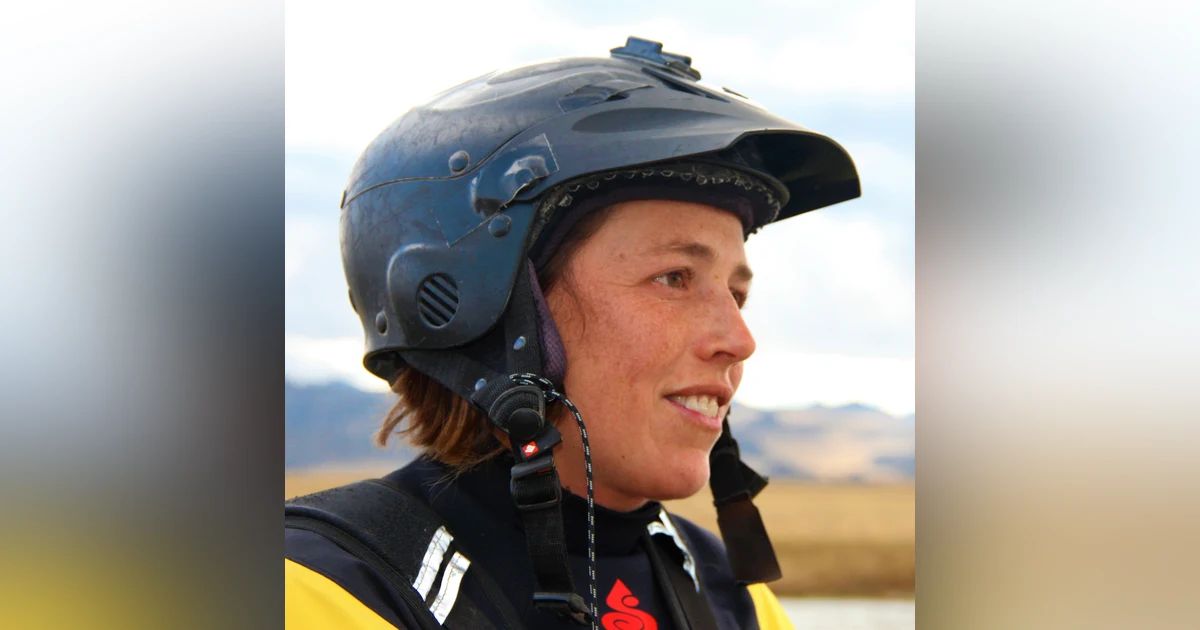
I was paddling with some friends recently and someone mentioned Darcy Gaechter. Darcy is an extraordinary adventurer and author of Amazon Woman. Darcy's journey down the Amazon River set a milestone as the first and only woman to paddle the entire length of the river. The paddler I was with was fascinated by Darcy’s story so I thought this would be a great opportunity to bring this one back to the top. In this episode, we explore the challenges, thrills, and fascinating encounters from her epic 148-day expedition where she achieved that milestone.
Learn more about mining's effect on the Amazon at Ecuadorian Rivers Institute
Connect with Darcy:
00:09 - Introduction to Paddling the Blue
01:28 - Encore Presentation with Darcy Gector
03:09 - The Amazon Source to Sea Trip
03:48 - The Expedition’s Origin Story
07:05 - Midge’s Unique Training Regimen
07:45 - Transitioning to Sea Kayaking
09:10 - Entering the Red Zone
11:56 - Navigating Permissions and Local Interactions
14:47 - Facing the Tides and Conditions
15:46 - The Journey’s Conclusion
15:57 - Dynamite and Danger
19:49 - Mental and Emotional Preparation
21:52 - Highlights of the Expedition
24:25 - Wildlife and Communities Encountered
25:49 - Lessons Learned in the Amazon
28:51 - Tense Moments and Cultural Insights
30:40 - Reflections on Future Adventures
31:46 - Advice for Aspiring Adventurers
34:43 - Gear and Support Crew Details
36:28 - The Journey of Writing Amazon Woman
38:01 - Exploring Small World Adventures
38:36 - Connecting with Darcy Gector
0:01 Welcome to Paddling the Blue. With each episode, we talk with guests from the Great Lakes and around the globe who are doing cool things related to sea kayaking. I'm your host, my name is John Chase, and let's get started paddling the blue. Welcome to today's episode of Paddling the Blue. I was paddling with some friends recently, and someone mentioned Darcy Gector. Darcy's the author of Amazon Woman, and way back on episode 21, she joined me to talk about her 148-day expedition, where she became the only woman to have ever paddled the entire length of the Amazon River. The paddler I was with was fascinated by Darcy's story, so I thought it would be a great opportunity to bring this one back to the top. Before we get to today's encore conversation with Darcy, James Stevenson and Simon Osborne at OnlineSeekHiking.com continue to produce great content to help you evolve as a paddler and as a coach.
0:48 You'll find everything from basic strokes and safety, to paddling in tides, surfing, coaching, documentaries, expedition skills and incident management, and more. If you're not already a subscriber to OnlineSeaKyaking.com, here is your opportunity to get started. Visit OnlineSeaKyaking.com, use the coupon code PTBPODCAST to check out, and you'll get 10% off just for being a member of the Paddling the Blue community. And for those of you who also enjoy paddling whitewater boats, like Darcy, their newest offering is Online Whitewater, and they're offering the same discount to listeners. Check out Online Whitewater at, you guessed it, OnlineWhitewater.com. Use the same code PTBpodcast to check out and explore.
1:28 Darcy's is an inspiring story and it's been fun to hear it again. So enjoy today's encore presentation with Darcy Gector. Hi Darcy, welcome to Paddling the Blue today. Hi John, thanks for having me. I appreciate you joining me. This should be a lot of fun. So Darcy, tell our listeners a little bit about your personal paddling background. All right, yeah. So I became a raft guide when I was 18 for a summer job. You know, kayaking wasn't exactly on my radar at that point. But, you know, I was quite young and all the other very cool, in my opinion, raft guides were kayakers. And so I wanted to spend more time with them. And therefore, I thought, well, I have to become a kayaker so I can hang out with these people.
2:09 And so I just started tagging along with them. And it was honestly a pretty rocky introduction to the sport because they were willing to let me tag along, but not that interested in teaching me like how to roll or any real skills that are useful for kayaking. So I swam a lot. I got frustrated a lot. For some reason, I stuck with it because I guess I could see how fun it could be if I got good at it. And so, yeah, that was 24 years ago. And since then, I have gotten better, thankfully. I am primarily a whitewater kayaker, and that's what I do for fun. That's what I do for my business is guiding whitewater kayaking trips, mainly in Ecuador, but also in the Grand Canyon and Middle Fork of the Salmon.
2:53 And the Amazon trip was actually only the second time that I had ever been sea kayaking, but I did get like 123 days of practice there. So I feel much better about my sea kayaking skills at this point. So tell us a little bit about the Amazon Source to Sea trip. Yeah, so we started at 15,000 feet in the Andes Mountains in Peru and traveled through tons of different ecosystems, a lot of different cultures. It was my first time ever traversing an entire watershed, and it was a very cool experience. You know, it's obviously not everyone has the luxury to take half a year off and go do something like that.
3:38 But I think even on a shorter river, any kind of source to see expedition is such a cool way to experience an entire river and see it in all of its different forms. So how did this trip come together? So it was the idea of a guy named David Midgley, and I'll just call him Midge from now on. That's the nickname he goes by. And he was basically having a midlife crisis. He's like a super brilliant computer programmer. He lives in London. And he, like in his early 30s, started to worry that he was going to waste his entire life sitting in front of a computer writing code. So he decided that like one big adventure would satisfy or maybe not satisfy but would like round out his life and so he started looking through the adventure archives and everything like climbing everest sailing around the world he thought it had been overdone and he somehow came across the statistic that more people had walked on the moon than had descended the amazon from source to sea and when Midge heard that he decided that is what he would do and specifically he wanted to kayak it from source to sea because no one had ever kayaked the entire thing the people that had previously descended it had either hiked around the white water or rafted the white water so Midge said he would be the first one to kayak it and when he decided this he had never kayaked before he'd never even sat in a kayak. He'd never camped out before.
5:10 He's totally not athletic, but he just decided this is what he would do. So he needed to learn how to kayak, obviously. And he started, he found my company, which is Small World Adventures in Ecuador. And he thought, well, this is perfect. Ecuador is like, has a bunch of tributaries to the Amazon. I can go learn how to kayak down there. And he came with my company for eight years and he stayed like sometimes just for two weeks, sometimes for two months. But anyway, he eventually built the skills to be a class five kayaker, which is what he needed to do to be able to kayak all the whitewater. And when he decided he was ready, he invited me and Don Beveridge, who's my business partner and life partner, to go with him.
5:55 So that's how I got involved with the whole Amazon expedition was through a crazy British guy. So an eight year lead up. It was actually 10 years for him because he joined the Regents Canoe Club in London and did some kayaking courses in Europe before he came to Ecuador. So he had about two years of practice under his belt before he found us. So it was an entire decade of training for him. And, you know, to this day, our expedition was seven years ago almost. And to this day, I've never met someone who came up with sort of such an outlandish goal, but actually had the determination to see it through.
6:35 And yeah, I'm just very impressed. I have a lot of respect for Midgley for that reason. Yeah, I mean, you hear about, you know, folks, like you said, climbing Everest, for example, or the Seven Summits, and they decide to do that. So they've got a big pile of money to throw at the goal. And they throw that big pile of money at it for someone to just haul them up the mountain. In this case, he spent 10 years figuring out what skills does he need, and then how to get there. Yeah, and there's some funny things about his training regime. He didn't have a driver's license, and I think he was 33 at the time, and he decided, well, if I'm going to be a kayaker, I'm going to have to drive myself to the river. So he had to start by getting a driver's license. And he found kayaking to be very, very scary.
7:19 So he also took up skydiving because that was the one thing he could think of that would be scarier than kayaking. So he thought he could sort of put kayaking in perspective that way. And he ran a couple of marathons to get his cardiovascular fitness up. And he took jungle survival courses. Like he really went all in on this idea. Wow. So you said 123 days. Was that on the water days? And then you had 148 days for the trip total. Is that right? Yeah, that was the 123 days was just the flat water portion. So we had 25 days of white water in the headwaters, and then 123 days of flat water after that. So you switch boats, you did sea kayaks for 123 days and then whitewater boats for the other 25?
8:04 Yep, that's correct. Okay. All right. So let's hear about the trip itself. Give us a kind of a rundown of the trip. It's such a long trip. It's kind of hard to summarize in a few sentences. But at the beginning of the trip, you know, we kayaked across a big lake and hiked up the mountainside looking for the highest elevation flowing water that we could find. And it was the trickle was like two inches wide there. So obviously we couldn't kayak it, but we hiked up to the highest flowing water we could find. Then we hiked back down to the lake, kayaked across the lake, and could stay in our boats, I mean, more or less, from there on out. And the first few days, it was kind of silly. Like, we were in irrigation ditches and wetlands.
8:47 But eventually, the river built and built and built. And after 10 days, we dropped into, like, the real whitewater canyons. We had about 15 days of, like, class 4-plus to 5-plus whitewater. And it was medium volume and quite steep, so really challenging whitewater. And Midge did quite well. You know, he had a few minor incidents, but nothing major. And then on the 26th day of the expedition, we hit the flat water, switched into our sea kayaks. And for about the next month, we were in an area that Peru refers to as the Red Zone. And that's basically sort of a notoriously dangerous part of the river.
9:30 And it's mainly dangerous. The indigenous people there are called the Ashanika, and they are very justifiably protective of their land and their people. And basically, for the last couple hundred years, any outsiders who have come in there have wanted to kill them or take something from them. And some of the problems in there now are there's a huge drug trade. In 2012, Peru overtook Colombia as the number one cocaine-producing country in the world. So there's huge illegal drug trade, leftover insurgents from the Shining Path movement now work for the drug trade.
10:10 There's a lot of illegal logging that happens there. And so when people are moving in or coming through this territory, they're usually engaged in one of these activities because tourism is not a thing there. We had we spent a lot of time getting permission letters from the ishanika and we hired a local to follow us in a motorized canoe so that they could hopefully help us with any uncomfortable situations and this was a very stressful part of the expedition for me because in the years leading up to when we went there had been six tourists that we knew that passed through and two of them were murdered and one more was shot but he survived and so these weren't great odds in my mind and I was very stressed out about this.
10:52 But with our permission letters, which basically just told them what we were doing, that we just wanted to pass through, we didn't want to stay or take anything, they were incredibly kind and open to us. As soon as we showed our passports in these letters, they would welcome us into their towns, say that we could camp on their beaches. But it was interesting, you know, as a leftover basically of the Shining Path, which was a lot of people call it Peru's civil war. All these little towns have a guard posted on their beach with a shotgun and someone is there 24 hours a day, seven days a week, and they just rotate through. And these aren't police or military, it's just local members of the community and, you know, just really looking out for themselves.
11:35 So anyway, that was, yeah, we were in there for about 30 days in the red zone. Oh, we also got an escort from the Peruvian Navy for the last two weeks that we were in the red zone. And then after that, we kind of didn't have the threat of whitewater or the threat of the red zone anymore. So within that red zone, did you seek all that permission ahead of time and hire the local guide ahead of time? Or did you do much of that while you were there? The permission letters we arranged in Lima before the expedition. So we We did a lot of preparation back home for Don and I in the U.S., for Midge in the U.K., and then we also spent about a week in Lima before the expedition, and yeah, one of the things we did during that week was get the permission letters.
12:26 And the Ashanika have sort of an organized governing body that, you know, that's helping them fight dams, fight the illegal logging. And so we talked to the president of that organization who tried fairly hard to talk us out of paddling through this region for safety reasons. But in the end, we convinced her, you know, we had to do this for the integrity of the expedition. And she gave us the permission letters, which were extremely helpful. Yeah, it sounds it. All right. So you come out of the red zone. Yes. And then we were bored because we didn't have these external threats to our lives anymore. So we started fighting a bit more with each other at that point. And, you know, it didn't really for like the middle month or maybe a month and a half, nothing overly exciting happened.
13:14 We did get to see pink Amazonian river dolphins almost every day, which was awesome. Yeah. And, you know, tons of interactions with the locals. I got to play volleyball with women in these tiny villages at night, and they were really, really good at volleyball, which was a cool surprise. And then, yeah, I guess about the time we were approaching Manaus, which was maybe we had a month and a half to go at that point. Thing the conditions got more challenging again we got like constant upriver wind i don't know how many whitewater kayakers will be listening but you know like a good gradient on a whitewater river is like 80 feet per drop 80 feet of elevation drop per mile that you go down the river in the amazon the average is like once the flat water begins the average is like one inch of gradient loss per mile that you paddle down the river that's brutal it's really flat And when we ended up, when we got into these windy areas, if we stopped paddling even for a couple seconds, we would just get blown back up the river.
14:21 And we were getting lots of storms, which made pretty big waves. And so then we had to start paying attention again. And with about 600 miles to go, we started feeling tides because tides come up the Amazon quite a long ways. At first, we could successfully paddle against them. But eventually, they got so strong that we'd basically paddle five or six hours as the tide was going out and then have to sit out five or six hours as the tide was coming back in. And one thing that was really cool on the expedition for most of the flat water, there was a very distinct high water line. And we were there at low water because that was the safest thing to do for the whitewater sections. And we could always see this high water line that was consistently about 40 feet above where we were paddling.
15:07 And once we got into the tidal zone, though, you kind of lose solid ground. So there's no more beaches or anything like that. It's mainly like mud flats and mangrove swamps and everything gets so wide this is the part of the river you can't see across anymore and there was no more like high and low water dictated by the rainy season it was just high and low tide now so at this point all the houses all the villages were built on stilts and they were all built the stilts were about 20 feet high because the tide fluctuates between 15 and 20 feet twice a day every day there's just a complete change in the landscape, which was really cool for us to see. And then, yeah, after 148 days of that, we finally made it to our little waypoint that we pre-programmed into our GPS out in the Atlantic Ocean.
15:57 That's pretty cool. So there's something about dynamite. Yes, that was in the whitewater section. So we kayaked down the Montaro River, and from 1950 to 2012, the whole geographical world agreed that the Apurimac River was the source of the Amazon. But in 2012, a guy named Rocky Contos discovered that the Montaro was actually 47 miles longer. So we switched our plans and we started on the Montaro. And the Montaro already has two dams on it. And they're building a third of. And so a guy named West Hansen had paddled or he rafted through the river the year before our expedition. And he had warned us that they were doing construction and he didn't know what the construction was for at that point.
16:49 But he said they were using dynamite and it was a dangerous situation for them. So we figured out beforehand that they're building a new dam. And again during our preparatory time in Lima we talked to the project manager and talked to him about paddling through and he also tried to dissuade us from kayaking through this area but Midge convinced him that again for the integrity of the expedition we had to do this and he agreed to have his team stop dynamiting when we got there so we kayaked until we saw like this tiny little construction trailer on the canyon rim, which is about a thousand feet above the river level.
17:29 But we also had the coordinates from West Hansen's journey the year before. And so we got there, we got the satellite phone out, called them and said, hey, we're here. Could you stop dynamiting? And they said, okay, you've got three hours. And because they had done so much work, you know, they were dynamiting to build a road down into the works area and it's a sheer walled canyon. So they had been very active. And they had just blown pieces of the cliff off. And so pieces of rock, like the size of houses, the size of buses, were laying in the river. And there was sections where the river was going underneath all the rocks instead of over the rocks, like in a normal river. So we had to do a lot of portaging.
18:10 A lot of the portages required rope work. And it was just a very dangerous and unnatural setting, you know, and all the banks, if we could walk, just, you know, walk around a rapid without using ropes, everything was so unstable. It was like walking along the base of a massive landslide. And it took us, I can't exactly remember, but five or six hours to get through the construction zone. And so I was also convinced that they were going to start dynamiting at any second because there's We couldn't see any workers because they were working so high up on the canyon walls. And so I also assumed that they couldn't see us to know where we were, if we were still in there or not. But they did not start dynamiting again, and we did make it through.
18:53 But we had a couple of close calls, including that was Midge's closest call of the expedition in one of the biggest must-run rapids in that canyon. But I don't want to tell the whole story because it'll ruin the book. All right. All right. I won't push it. done. What did you find most unexpected? The mental and emotional challenge for me was the most unexpected. You know, I've always been a fairly decent athlete. And just always, when I think of preparing for something, I just think of physical preparations. And, you know, the Amazon was no different. But I didn't, for a second, think like, oh, how should I mentally and emotionally prepare for an expedition this long for being stuck with the same three people for 148 days without any kind of break whatsoever.
19:42 It sounds stupid saying it out loud now, but that was a big surprise to me how challenging that aspect of the expedition was. So how did you both physically and mentally prepare for the trip? Well, I didn't mentally prepare, and that was definitely part of the problem. But physically, so Don and I in the wintertime, our season in Ecuador is basically end of October until the first or second week of March. And during that time, we normally kayak and work every single day. So it's like 120 days or more of kayaking in a row. So that was pretty good physical preparation for a trip like the Amazon, where you have to get up and go kayaking every single day.
20:24 We started the expedition in July. So leading up to that, we did with Midge some overnight kayaking trips. Midge had not done an overnight kayaking trip up to that point. So we wanted him to get some training paddling with a heavy kayak and how much different that is. So yeah, basically just going kayaking a lot was how we physically prepared. Yeah like I said it just sounds really stupid to say but I really didn't take a second to think of the mental preparation but that is like the biggest thing I've learned from the Amazon is I guess two things number one how a very slight change in my attitude or my perception of things can make like a world of difference in how I feel about a situation that I learned on the Amazon because of my lack of preparation on the mental side of things and I was kind of like losing it around day 120.
21:17 I was really frustrated by Midge and his pace. And I wanted to be on my own program, go at my own pace, get off the river sooner. And I just felt like Midge and all we had a support boat at that point, all these other little things were slowing me down. And I just kind of, you know, really almost got driven to the point of like a mental breakdown. And that's when I realized, why am I in a hurry? Why do I want to get off this river? Why can't I just be happy going at whatever pace. And as soon as I like talked myself into that, then I had a great time for the rest of the trip. But it was like a couple of weeks of agony to try to convince myself of that. What did you enjoy most about the experience? That's a good question. I almost immediately when I think of the Amazon, I think of the pink Amazonian river dolphins.
22:01 I had read Joe Kane's book before we went called Running the Amazon, and he was part of the first team that descended the Amazon source to see. And he talked about some infrequent sightings of the dolphins. He talked about how they were possibly being driven to extinction. So I was worried that we might not get to see any. And I was really hoping going into the trip that we could see one pink dolphin. We saw our first one on the 30th day of the expedition, and we saw them almost every single day till the end. They were pretty funny looking. They're really big. They have this big bulbous head. When they surface to breathe, they make a sound that sounds a lot like a fart.
22:44 They're just really funny animals. Even in our lowest moments, if we were fighting or we were tired or whatever, Whenever we would see the dolphins, it just really lifted everybody's spirits and was a really nice part of the expedition. Well, I mean, farts are funny. They are funny. Especially when dolphins do that. Sure. So how about other wildlife along the way? We saw tons of bird life, which was awesome. We saw the most mammals in the whitewater canyons because the Montaro canyons cut like a crazy chasm through the Andes Mountains. And a lot of it was really inaccessible to people that weren't in boats.
23:25 So we saw river otters, we saw fox, deer, a fair amount of mammals in there. Once we got to the flatwater part of the river, it's very populated. I don't know how much people think about that when they think about the Amazon. But like we never went a day without seeing at least one village. And there's tons of boat traffic because there's not many roads there. So everybody uses the river as the main highway. And so I think most of the animals get scared away or get hunted by locals. So we didn't see that many mammals down there besides the dolphins. We did get to see caiman one night, you know, just by shining our flashlights along the bank. And we saw one very small anaconda. and the rest of what we saw was mainly fish and really amazing bird life.
24:12 So I think when a lot of people think, and myself included, when they think Amazon, they think wild and remote. And it sounds like there were stretches where it was wild and remote, but like you said, you had a lot of the river where it's populated. Is that right? Yeah, definitely. So the whitewater sections were all quite remote. Flatwater sections were all quite populated, but it still definitely has a remote feeling. And there's a story... I was talking earlier about the illegal logging, and a lot of indigenous people have started groups to fight against these illegal loggers. Maybe three years before our expedition, one of those indigenous leaders got murdered by the illegal logging people. The people in his village wanted to go report his murder.
25:00 They were trying to get to the city of Pucallpa, where the nearest police were. And it took them six days by motorized canoe to get there just to report that a murder had happened. And so even though there are lots of towns, it still has a very remote feeling. You know, there's a handful of bigger cities like Pucallpa, Iquitos, Manaus. But for the most part, they're pretty small villages. Again, no like police force or very little military presence. And so lots of people, yes, but still kind of a wilderness wild feeling, I guess, if that makes sense. So it sounds like exploitation of the people and the land is a big problem.
25:42 Yeah, it definitely is a big problem. And I think it's not getting any better with the current president of Brazil, unfortunately. So what were your biggest learnings from the experience? Well, yeah, the one thing that I touched on before that I really take away from the Amazon is, you know, when things aren't going my way or not panning out like I would like them to, I just really work hard on my mental state my perception of what's happening because like I said that I just learned how what an amazing effect that can have you know I could look at a problem and treat it as a fun interesting challenge to overcome and have a really good attitude about it or I can look at a problem as a oh god why is this happening to me you know woe is me kind of attitude and then feel sort of powerless against it.
26:34 I think I was fairly decent at that before, but I just never realized what I was doing. And the Amazon made me think much more consciously about how I tackle problems in my life. And that has been really helpful in all aspects, not just kayaking, but business, relationships, anything. Good advice. Any particularly sketchy moments where you thought, this is it, we're done? I had a moment where I felt that way about Midge in the dam construction site where he, there was a rapid we had to run because there was just no way to walk around it. And he messed up the line and it was a class five rapid, maybe class five plus.
27:19 And usually in those situations, messing up does not have a great outcome. But Midge both did a great job and got lucky and he turned out okay. But really, when I saw him make the mistake, I thought that that is it for Midge. And then we had one sort of tense interaction with a group of Ashanaka people who we knew with our permission letters, they came along with a series of towns that we had to check in at. So we knew certain checkpoints we needed to stop at. And this was not one of them, but they still wanted us to come and talk. It started out as a really tense interaction, and they made us turn off all the GoPros that we had.
27:59 They wanted to know what our spot devices were, why they were flashing. And we definitely had this sense of impending doom. But then, you know, that was mainly, I think, because of stories we had read and because how we expected the Ashanika to react to foreigners. But they gave us basically a long lecture about why they needed to keep their people safe, why they are wary of outsiders like us. And after the lecture was done, they said, well, we're not mad at you guys because you're foreigners. You didn't know any better. But, you know, I said we had a local guy in a motorized canoe with us. They said, well, Cesar was his name, is his name.
28:41 They said, well, he needs to get punished because he should have known better. And so we all sat there for a few very tense moments wondering what punishment meant to them. And then the guy said, you have to do 50 pushups as your punishment. And I was thinking, you know, we're speaking in Spanish, which is their second language. It's our second language. And the word plancha for pushup in Ecuador also means like to grill or to iron. And so I definitely had a second of like okay is he being funny and saying push-ups or is he gonna do something really horrible to Cesar and then everyone on the beach started laughing and Cesar started laughing so then I knew okay he just has to do some push-ups and it it ended up being a great interaction but we had a few minutes of like what is gonna happen here yeah so would you consider doing it again, no okay I feel very fortunate it.
29:38 That I did it and that we made it. But I think the Amazon region has gotten more dangerous. In 2016, a British woman named Emma Kelty was kayaking down the flatwater section in Brazil by herself, and she got murdered by a local gang there. And I pay a lot more attention to the region now than I did before, but I hear so many stories of violence. And we did take a lot of precautions as a group, but I also believe that part of why we made it was just luck. And so I don't feel like I need to push my luck again. I would love to do source to see on another river somewhere. I guess I should also back up a little bit and say that we had amazing interactions, with all of the people that we talked to on the Amazon and they showed us nothing but kindness and they were very friendly. They offered to help.
30:33 And so we didn't actually have any bad experiences. And so my fear is all based on what has happened to other people down there. But again, I just can't help but feel that some of our success was due to luck and happy I did it once and that'll be enough. So what's next for Darcy? Like I said, we really enjoyed the source to see experience and it was such a great way to experience a river and a whole watershed. So we've got three Source to Sea rivers planned in northern British Columbia. And of course, we can't go to Canada right now because of the pandemic. But so hopefully this will happen in like late summer of 2021.
31:14 But they're a lot shorter than the Amazon. All the rivers that we want to do are about like 300 to 400 miles long. But they all start on what the locals call the Sacred Plateau. And it's the Stikine, the Skeena, and the Nass River. And, yeah, we're really excited to do those three from source to sea. Very cool. It doesn't all have to be as long as the Amazon, but everybody has their own their own definition of what adventure looks like and want to experience it different ways. Yes, for sure. What advice might you give to someone who's planning a big expedition? I guess a couple of things. The amount of logistics on an expedition that big are huge.
32:00 You know, we knew that going in and we did a lot of pre-trip planning. But also kind of the nature of South America is that a lot of things have to happen kind of last minute and on the fly. And so we spent a lot of time, you know, we'd kayak all day long and get to camp and be pretty tired, just want to eat dinner, go to bed, but have to like bust out the satellite phone and keep working on logistics. And that was like another mental adjustment that I had to make was like, okay, when you get to camp, your day's not done. In some ways, like the hardest part would start then because kayaking, you know, that was pretty fun being on the water all day. That's all enjoyable. but then to get done and have to be like, okay, where are the sea kayaks? Are they in route or not?
32:42 You know, I don't think it's really possible to get all of the logistics done before a trip of this length, because things are going to change and you're going to have to adjust plans. But just being mentally prepared to have to deal with a lot of that stuff as you go and maybe even schedule time in it, you know, only kayak seven hours instead of eight hours or something. So you have more time for logistics. Yeah, I guess just like the mental side in general would... Be something I would recommend people focus on. Physical fitness wise, it's like, it's great to be prepared, but you're also going to get more and more physically fit as you go down, you know, get into your expedition. So spending more time than you think necessary on the mental side of things would be a good suggestion.
33:27 What equipment did you use in the trip? Well, we had all kinds of stuff. So yeah, we started out in whitewater kayaks. We We all had tents at the beginning and Don and I kept using our tent all the way down and mid switched to like just a mesh bug net. Once we got to the warmer climates, we used jet boils. We mainly had dehydrated meals. Like we all brought 50 days worth of dehydrated meals. I'm vegan and the boys are not so I actually brought like 90 days worth of dehydrated meals because I didn't know how soon we would get to populated enough areas where I could buy food and we figured the boys could buy fish pretty early on and we used a jet boil for cooking.
34:13 The water we used camelback ub filters for treating the water we all had spot devices to track our progress down the river. And luckily, because Midge is a brilliant computer programmer, he wrote his own program to keep track of all of our data because with Spot, it only keeps track of seven days worth and then it starts deleting it. So Midge wrote his own program. So it would keep all of our tracks for the whole five months of the expedition. Yeah, I think that was the key gear. I mean, we had so much stuff, it really was ridiculous at some point. Now, you said that you had a support crew. Tell us about the support crew and the size of the crew and how often you met the crew.
34:55 We changed support crews a lot on the way down the river. The first 10 days, we actually had West Hanson and his wife, Lizette, and they rented a van. There was pretty frequent road access in the first 10 days of the expeditions. They would drive the van, we would kayak, and we would try to meet up pretty much every night in the first 10 days. Then in the harder whitewater sections there was there was only like two road access points and we found a guy a peruvian guy in one of the towns with a pickup truck who was willing to do food drops for us so we packaged up a bunch of food and we gave it to him and we said you know be at these coordinates on this date and so he did two food drops for us for the whitewater sections and, Then in the red zone, we had a total of five different motorized canoe drivers who would more or less follow us along.
35:53 We always met up at camp with those guys, and they would stick pretty close to us during the day. And then on the 50th day of the expedition, we got a bigger support boat called the Paralita that came up from Brazil to meet us. And we were with them until almost the very end. And we had to split ways the last few days because the conditions out towards the ocean were too rough and they didn't feel good about going out there. So that was our different modes of support. It definitely takes a village. It does. It does. So you have a book out, Amazon Woman, and that book chronicles your story.
36:33 So tell us a little bit about the book. I've always been somewhat interested in writing and had done a fair amount for the business about like river conservation Kayaking in ecuador stuff like that I had never written anything as long as a book and I thought well Kayaking in the amazon if we succeed in this it will be, you know, finally something worth writing a book about So I did keep like a journal a notebook for the entire expedition, And then I got home and I thought okay, i'm gonna bust out the book this winter we got home in January and I figured I'd have it done by spring. And then six and a half years later, I finally got it published. But I was very clueless when I started the project. Like I didn't know what a literary agent was, what a book proposal was, and it was a huge learning experience.
37:22 And, you know, I kind of say that writing the book was like my Amazon, you know, that's the longest I've ever worked towards something, you know, personally, you know, mid work 10 years for his Amazon expedition. I worked six and a half years for the book writing and publishing process, but it was extremely challenging, but extremely rewarding too. Where can someone find the book? Probably, well, it's on amazon.com. But if you don't like to shop on Amazon, if you go to amazonwoman.net, that's my website. And I've got a whole bunch of like independent books sellers where you can buy the books, and I've got links to them on my website. Fantastic. So tell us a little bit about Small World Adventures.
38:05 Yeah, Small World Adventures. Don and I own that company together, and our main business is guiding kayakers, whitewater kayakers in Ecuador during North America's winter. And we do class three to class five trips there. And then in the summertime, we do some Grand Canyon trips, again, for kayakers and some Middle Fork salmon trips. And yeah, it's kind of what Don and I put most of our energy into these days. Cool. That's living the life. We're trying. So Darcy, how can listeners reach you? So, yeah, probably my last name is extremely hard to spell. So probably going to that amazonwoman.net is the best way.
38:48 And I am on Instagram and Facebook and there's links to it off that website. Or if you're good at spelling, you can go to Darcy Gector, G-A-E-C-H-T-E-R, again on Instagram and Facebook. All right. Well, I would definitely put links in the show notes to your websites so we can direct people to your social media presence and have an opportunity to pick up the book. Awesome. Thanks. And I guess if I could, I'd just like to say one more thing about the book. Yeah, please do. A big motivation for me for writing the book is I am very short and skinny and puny looking. And I played volleyball in high school and college and became a kayaker and a raft guide and a business owner.
39:30 But all through my life, I heard people telling me like, oh, you can't play volleyball. You're too short. You can't be a kayaker. You're too little. Women can't run class five, all kinds of stuff like this. And I feel very lucky that I didn't listen to these people. It kind of had the effect of making me very angry and just deciding that I had to prove them wrong. It made me work really hard to prove them wrong, which maybe isn't the most pure motivation. But I have seen a lot in my life, people who do listen to this sort of outside noise of the world. And so a big message for me is like not to let other people's judgments of you dictate the course of your life.
40:10 And so I one big hope with writing this book is that, you know, I could show people like you can overcome all this stuff. You can do things that you maybe aren't stereotypically suited to do and just follow your dreams no matter what sort of feedback you're getting from the rest of the world. Don't let anybody tell you you can't until you try. Exactly. All right. Fantastic. Darcy, this has been great. I really appreciate your time and learning about you and learning about your story. And I've got one final question that I always like to ask at the end of our episodes. And that is, Darcy, who else would you like to hear as a guest on Paddling the Blue? I don't know her personally, but if you could get Freya Hoffmeister on the show, that would be awesome.
40:56 The German kayaker who does these crazy circumnavigations of many continents around the world. I think it would be fascinating to hear her story. All right. I've actually just talked to somebody just recently, and we were talking a little bit about Freya as well. So I'll have to reach out to Freya and see if we can get her on the show as well. All right. That'd be awesome. All right. Any final comments? No, that's it. Thanks so much, John, for having me. I appreciate chatting with you. It was fun. Absolutely. It's been a great time. I appreciate, like I said, listening to you and learning about your story and wish you the absolute best of success in the future. All right. Thanks, John. Thank you.
41:36 If you want to be a stronger and more efficient paddler, Power to the Paddle is packed with fitness guidance and complete descriptions along with photos of more than 50 exercises to improve your abilities and enjoy your time on the water. The concept and exercises in this book have helped me become a better paddler and they can make a difference for you too. The exercises in the book can help you reduce tension in your shoulders and low back, use the power of your torso to create leverage and use less energy with each stroke, use force generated from your lower body to make your paddling strokes more efficient, have the endurance to handle long days in the boat, drive through the toughest waves or white water, protect your body against common paddling injuries, and while you're at it, you might even lose a few pounds, and who wouldn't mind that?
42:17 So visit paddlingexercises.com to get the book and companion DVD. Darcy's book Amazon Woman is a great read, and you'll get all the things that we couldn't fit into an interview. You'll find a link in the show notes so you can get your own copy. After the interview, Darcy and I talked about mining along the river and its devastating effect on not only the people who live there, but the world. Learn more by visiting the Ecuadorian Rivers Institute. You'll also find a link in the show notes for that one as well. Thanks again for listening to this encore episode, and I look forward to bringing you the next episode of Paddling the Blue. Thank you for listening to Paddling the Blue. You can subscribe to Paddling the Blue on Apple Music, Google Podcasts, Spotify, or wherever you find your favorite podcasts.
42:59 Please take the time to leave us a five-star review on Apple Music. We truly appreciate the support. And you can find the show notes for this episode and other episodes, along with replays of past episodes, contact information, and more at paddlingtheblue.com. Until next time, I hope you get out and paddle the blue.


