#144 - Creating Artwork on the Isle of Man with Stephen Marsh

 Apple Podcasts

 Spotify

 Overcast

 Castro

 PocketCasts

 RSS Feed
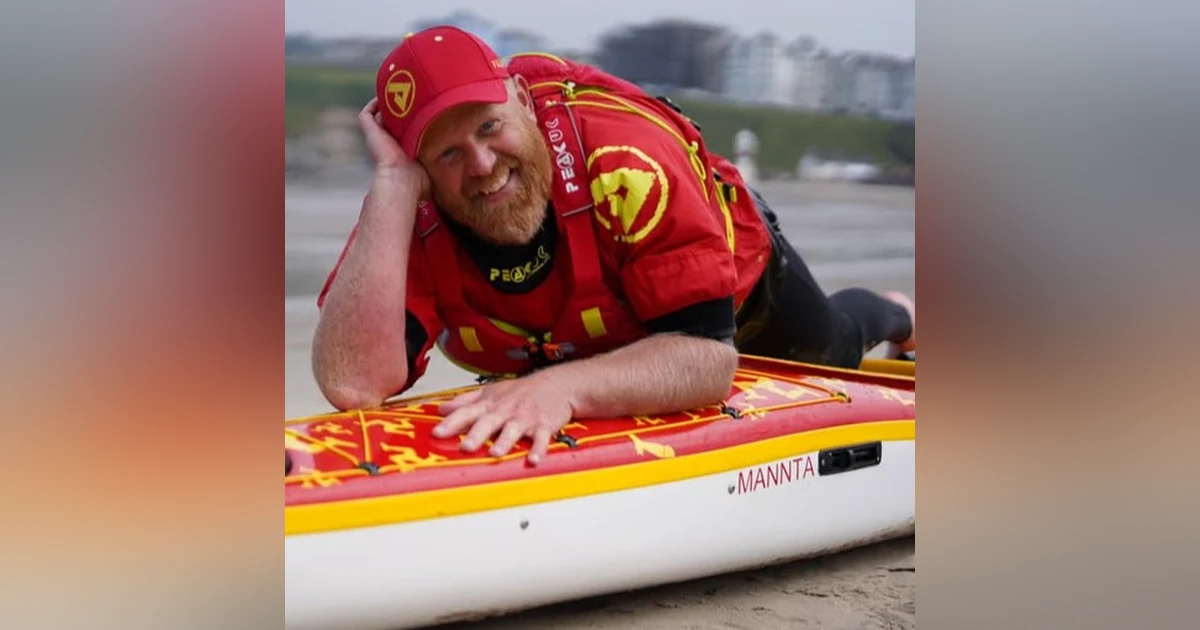
Stephen Marsh joins today’s episode of the podcast. Many of you may know Stephen as the master artisan behind Big Pond Kayaks. Dive into Stephen's life as a passionate paddler and explore the coastal waters of the Isle of Man, renowned for its vibrant paddling community and beautiful sea kayaking experiences. Discover the inspiration behind Stephen's intricate kayak artwork, the challenges of building custom boats, and the beauty of handcrafted designs that make each kayak a one-of-a-kind masterpiece.
00:09 - Welcome to Paddling the Blue
01:32 - Interview with Stephen Marsh
07:45 - Isle of Man: A Paddler’s Paradise
10:40 - Kayaking Crossings: A Challenge
16:11 - Nick Ray’s Epic Adventure
22:18 - Crafting Custom Kayaks
29:37 - The Art of Kayak Design
42:45 - Unique Deck Artwork
54:58 - Community and Connections
58:24 - Future Guests and Final Thoughts
0:01 Welcome to Paddling the Blue. With each episode, we talk with guests from the Great Lakes and around the globe who are doing cool things related to sea kayaking. I'm your host, my name is John Chase, and let's get started paddling the blue. Welcome to today's episode of Paddling the Blue. Stephen Marsh joins me for today's episode of the podcast. Many of you may know Stephen's name from his custom kayak company, Big Pond Kayaks. Today we'll talk about his home paddling waters around the Isle of Man, and we'll talk about the incredible artwork that he's known for in making his boats. We did have a small problem with the recording, so you'll hear a bit of noise in Stephen's audio. I've done all that I could to correct that out, and I appreciate you overlooking that little bit of scratching. It's still a great interview, still a good time.
0:44 Before we get to today's conversation with Stephen, James Stevenson and Simon Osborne at OnlineSeaKyaking.com continue to produce great content to help you evolve as a paddler and as a coach. You'll find everything from basic strokes and safety, to paddling in tides, surfing, coaching, documentaries, expedition skills, incident management, and more. If you're not already a subscriber to OnlineSeaKyaking.com, here is your opportunity to get started. Visit OnlineSeaKyaking.com, use the coupon code PTBpodcast to check out, and you'll get 10% off just for being a member of the Paddling the Blue community. And for those who also enjoy paddling whitewater, their newest offering, Online Whitewater, they're giving the same discount to listeners.
1:25 Check out OnlineWhitewater.com, Use the coupon code PTBPODCAST to check out and explore. Enjoy today's interview with Stephen Marsh. Hello, Stephen. Welcome to Paddling the Blue. Hi, John. Hi. Thanks for having me here. Oh, you're welcome. We've talked a little bit in the past. That's nice to be able to have the opportunity to connect. Yes, definitely. So tell us a little bit about you as a paddler. Me as a paddler? Oh, well, I've been paddling all my life, really. I can't really remember a time where I wasn't paddling. I come from a place called Leyland near Preston, and I paddled with a club called the Ribble Canoe Club, which was up near north of Preston.
2:08 And we would do a lot of our training, we would do on reservoirs and things like that, and we would move over to rivers and lakes. So we would do a lot of whitewater paddling around settle, places like that. And we would venture up to the lake district, We'd go on Lake Windermere, Ullswater, and a few of the rivers that lead down to these lakes as well. So yeah, I've always been an avid paddler. I've never gone down the road of being a coach or teaching other people, but it's sort of all my friends that follow along with me, I always end up teaching them and getting them into the world of kayaking. I sort of push my passion onto them, so...
2:49 But yeah that's uh that's my background in paddling and i moved to i left it for a little while i got busy while in my early adult life with work and one thing or another and but when i moved to the isle of man in 2007 and just absolutely fell in love with the the sea kayaking over here i first saw a group of paddlers paddling into the beach that i was just hanging out on and i thought that looks amazing and it was something. That never crossed my mind being a white water paddler and paddling on lakes and all that sort of stuff you think whoa the ocean I never thought that was a thing until I moved to the Isle of Man so yeah all right yeah it's it's one of my slogans now actually it's inspired by oceans it's just it's sort of my thing now really that's very cool so what brought you to the Isle of Man it was just work really I was married at the time and my wife she got a job offer here we didn't even know the isle of man existed and to be fair we we thought everyone would speak french here because i was thinking of like guernsey and all them sorts of places okay so i i thought that the isle of man would be something similar being a an offshore island and but no the the people here are called manx they're all obviously from the isle of man and you know they speak english with a manx accent which is lovely absolutely lovely people I think just moving to the Isle of Man was probably one of the best things I've ever done, really.
4:21 The people are great. There's no crime here. I mean, you can just leave your keys in your car. If you're going onto the beach, you can leave your house unlocked. It's just, it really is. It's such a fantastic place to bring kids up as well. It's so safe. You know, it's a really good community over here. Absolutely. Like I say, it's just, I feel like I'm on holiday every day, although I've been living here since 2007. All right. Now, is it a big vacation destination? It is, yeah. I mean, it's most popular really for motorbikes. There's a race over here called the TT Races. That brings possibly 50,000 people every time the race is on just to come here and watch it.
5:03 So it's got a big motorbike background here. And you had given a little hint to location. So for those that aren't familiar with the Isle of Man, tell us where it's located. Well, it's right in the middle of the Irish Sea, in between Ireland and England, basically. It can't be any more central. And then how about history of the island? The history of the island? I have researched the history quite a lot. I mean, it is a very independent island, and it always has been, but it's always been one that's been looked upon in the way of from the Vikings and all this sort of stuff. There's a lot of history, Cromwell and, you know, all that sort of history in the past, but the Isle of Man did settle and it is now its own, it has its own constitution.
5:47 It's not part of the UK as such. It has its own currency and it has its own government so we can make up our own rules and laws here, you know. So yeah, it's very independent. Okay. Yeah. You had mentioned Guernsey and Channel Islands. And so similar where it's a self-governing crown dependency. Yeah exactly the the strong ties with all the islands here just at the moment they've got the island games that's going on so a lot of like gymnasts and athletes are all competing in what what would be the olympics for us really in in the island games so it's all the small islands around europe england they all get together and have uh have uh like a sporty games now out of curiosity Are there any, you mentioned Olympics, are there different types of activities in the games that you might not find in the Olympics, something that's really unique to the Isle of Man?
6:46 Not really. No, not in the games as such as in the Island Games. It's all very much straight down the middle with athletics and gymnastics. But the Isle of Man does have a lot of its own little sports that are more local. You know there's one in in the new year where they they basically i think i can't pronounce it it sounds like, calac basically the the it's a it's just a rough game of hockey i mean people go to hospital after after the game of they basically find a stick that looks like a hockey stick they throw a ball into the middle of the field and they all just go for it so they have little games like that that's quite interesting to watch okay so they end up hitting people more than they hit the ball Exactly, yeah.
7:37 Yeah, there's no referee as such. It's just there's the ball and get as many points as you can, however you can get it. All right, I'll have to look that up. It sounds interesting, but I'm not going to play. And yeah, we also have Cavendish here. He was born here, Mark Cavendish, and he's been doing well, obviously, in the cycling. I was going to ask if you happen to run into him on the street once in a while. Well, no, I've never met him. I used to work with his brother, but I've never met him myself. So getting there, tell us a little bit about getting to the Isle of Man. Getting here, you can fly. So you can fly from Liverpool or Manchester.
8:23 I think there's a couple of other smaller ports that can bring you here. You can fly from Ireland. But most people come over on the ferry. So you can get the ferry. Uh there's a fast craft from liverpool or there's a slightly slower one that's a bit more like a floating hotel now that comes from heysham and liverpool but that's that's a ferry over it so it's about it's around about a three-hour journey really okay i think the fast one may be two and a half hours on a good day and the the slower ones may be three and a half hours so now in addition to the ferry in addition to flying people paddle over correct, well this is the other thing yeah and it's very rare that people do it and and you but we do get it you know maybe once or twice a year people attempt it or actually do it one of the recent ones that i know about was john willesey he paddled over from anglesey to the isle of man he didn't paddle back it tends to be what people do they'll paddle one way realize how hard it is and then they get the ferry back. Okay.
9:23 You know, because it is a bit of a, it's a mind game, so I've heard. There's a friend of mine, George Shaw, and he's done the crossings from the Isle of Man to Southern Ireland, Northern Ireland. He's done Scotland, Wales, and England. I think he's the only man to actually do that in a sea kayak. So he's doing well for himself. But there's a few people here that do crossings. I think when you look out from the Isle of Man, you can see what they call the Seven Kingdoms. So you've got England, Ireland, Scotland and Wales, and you've got the Kingdom of Heaven, you've got the Kingdom of the Ocean and the Kingdom of obviously the Isle of Man as well.
10:09 So it's called the Seven Kingdoms. So looking out from the Isle of Man, you can see all these places. And as a sea kayak, you think to yourself, I would love to paddle across that ocean to Scotland where I can see, you know, or England. But it is a treacherous crossing. It's not for the faint hearted and it's really got to be done on a nice day. And the only other thing here as well is there's so much tide. Because we're in the middle of what is a massive big bay, which is the Irish Sea, it just floods. So when it's flooding there's obviously tide that's just ripping past the isle of man and obviously when it's going the other way it's you know it just empties out and takes all the water with it so we've constantly got a tide here so when you're planning doing a crossing you have to plan on ferry gliding in a nest shape really so you'll you'll spend half of the time say paddling west and then half of the time paddling east just to counteract the tide that you're on there's a lot of planning to do a crossing to the isle of man well certainly sounds complex yeah definitely all right now in terms of in terms of crossing we first made our connection in having a conversation where you connected me with nick ray and nick made the crossing correct.
11:29 He did, yeah. I was actually surprised at that because I was so grateful for Nick actually ordering a boat from me. I've kept in contact with Nick for a little while because I was avidly following his expeditions, which he thought was fantastic. And I had spoken to him and he recognized that I make the kayaks. And I once mentioned to him, look, would you paddle one of my kayaks? I would absolutely love for someone like yourself to be doing your adventures in one of my kayaks. Anyway, one year he chose me. So he was planning on doing 12 months. So on his 59th birthday, he was heading off and doing a tour of Scotland.
12:09 He didn't know where he was going to go. All he wanted to do was just visit every nook and cranny and get around as much of the Scottish coastline as he possibly could do. And he chose to do it in my kayak which for me i was almost quite nervous at the time because i'm thinking well this could be the make or break from of my kayak really if it fails it's an epic fail for me but if it does what it needs to do and he enjoys paddling it then you know what what better testament you know for the kayak that i make so yeah and i was we were trying to organize delivery and he says oh i'll just paddle across and i was like are you sure about that so he paddled across in his old boat and he left his old boat with me to be fixed up because obviously it's it was it was well used from his expeditions so he left his old one with me and he paddled his new one back and again i i i waved him off.
13:08 When he paddled away in my kayak and i thought to myself this is the kayak's maiden voyage he's never kayaked in my kayak before and he's just about to do a big open crossing so i was like oh god you know this this could go one way or another anyway it went fantastic and the the he had like a gps tracker so every couple of minutes it would give you his location and i. Could see that he was going a different way and i thought well i wonder if he's just on the tide and if the tide changes i wonder if the tide will take him back again anyway he he what it was he lost he lost sight of land in the fog and he was just basically following the compass heading but but obviously because of the tide was rushing i think at the time it was rushing going towards the muller galloway so it was sort of pushing him that way so i think he he was when he eventually hit land he was a he was an hour away from his destination than than where he wanted to be yeah you know but thankfully it wasn't anything down to the kayak or anything like that it was just basically the weather changed the tide was strong and it and it was foggy okay you know so it was a bit nervous nerve-wracking for me because i was thinking has something gone wrong with the boat you know you know but anyway when he eventually made contact he got back to his car and he was more than happy so he was delighted with the boat and he'd filmed the crossing as well and he's put it on his youtube channel all right yeah and
14:39 so the boat performed well through the episode got him through 12 months of scotland it did yeah which to me was amazing i mean just i mean i see i see it from a different point of view because the first time i saw the kayak was a bucket of resin and a couple of rolls of fiberglass you know so i've got i've got to put it together into the shape of a kayak. So for me, somebody taking something that I've put a lot of effort into. You know, love and attention in building that kayak for him to go off and to do it. It was almost like a part of me was going with Nick cause he was in my boat, you know? So all the travels that he was doing, all the videos that he was putting up and, and the quality of paddling he had was absolutely amazing.
15:27 I just looked through his YouTube channel at the videos that he's got. It's just fabulous. Some of the caves that he was going through the coastline, the. Even now, when somebody wants to have a look into the manta that I make, I always send them Nick Ray's videos. I just say, look, if there's any ambassador for paddling the manta, it's Nick, and just go on his YouTube job and have a look at some of his videos because they're amazing. Absolutely amazing. He didn't capsize once. That was one of the other things. I said, have you never capsized it? No, he's just never capsized once. Wow.
16:11 So before we get to, I'd like to talk a little bit more about the boat and the work that you do there, but I just want to come back to the Isle of Man for just a moment. So tell us a little bit about paddling on the Isle of Man. Yeah, again, the Isle of Man, it's such a, at the moment, you know, we've got a good group of kayakers here and we're all looking out at the weather and seeing when we can paddle. It's just one of them places. You know, the weather can change here in an instance. and but i've honestly the the quality of paddling that you can have over here is second to none we've got a bit of everything and it's right on the doorstep the the island man is it's 45 miles long and 15 miles wide and we've got roughly about 100 miles worth of coastline we've got tide races we've got we've got calm days we've got a little island off the south coast of the isle of man called the calf of man and that's the favorite paddling destination for everybody.
17:11 And it has a treacherous crossing to get there which is only a couple of miles wide but it's called we call it the sound so there's a little sound and there's a big sound and there's a little rock in the middle called the kitaland so your first challenge as a sea kayaker when you sort of get good enough to venture out would be to try and do a crossing first so you first of all you you tackle the little sound which has like it can have like seven knots of tide just racing through it has standing waves that we all well play on and surf on and stuff like that and then if you venture around the other side of kitalang this little rock you then have the big sound to cross which has a lighthouse in the middle and then obviously you go and do a circumnavigation of the calf of man which takes about an hour and a half really something like that but it it's when you take a group around the calf of man people stop talking and you can see the antitipatization on people's faces that the.
18:13 It's it's it's a beautiful place to paddle but it also has some really big tide races and it's it's one of them that you have to commit to once you're in the flow once you're in that tide race you're you sort of go in that direction whether you want to or not you know so it's it's not for the faint-hearted some of the some of the big tide races that we have and it's always in the back of your mind is it going to be flat today is it going to be big today you know it's it's quite exciting you wouldn't believe it but the far end of the calf of man we have this rock called the drinking dragon which is a huge big rock right in the middle of a tide race and it actually looks like a dragon with its wings tucked in drinking the water i mean who put that there you know it's such it's such an iconic photograph you know so when you're a first time paddler around the calf of man just to see that and take a photograph of it you know is it's that that's your challenge done really you know you're you're one of the sea kayakers over here once you're doing that sort of stuff so you've got your you've got your wings at that point yeah that's it that's it yeah yeah the rest of the isle of man is absolutely fantastic we've got big long beaches a lot of them we can we camp on as well one of the challenges here again which is weather depending there's there's there's you could plan a certain navigation there's people come over to the isle of man clubs.
19:36 And just solo people coming to do a circumnavigation and just can't do it because of the weather. It's such a small island, and yet sometimes you just cannot get around it because it could be calm on one side and at the other side of the island it could be a 4.6 with two-meter swells. It's just exciting, but it makes it a challenge as well, doing a circumnavigation. And there's two ways of doing the circumnavigation. You've got people that come over like the likes of John Willissey. I think he's got around about a 12-hour circumnavigation of the Isle of Man, which when you think, let's say you're doing 80 miles, if you cut out some of the bays, to do 80 miles in 12 hours, how is that even possible?
20:20 It's just ridiculous, absolutely ridiculous. Most people I know will probably do it in about 18 to 20 hours in one go, but the the normal humans would probably do it in about a four-day trip so you you know you split it into like a to do 20 miles a day and and camp out on a beach you know and have a rest and then do it do it over four days that's what most people do it yeah i know uh i've interviewed a lot of paddlers who've been done record-breaking paddles and speed paddles and almost every time they say you know, I would, if I did it again, I'd slow down. I'd really experience it. And it sounds like a pretty spectacular place.
21:01 We've not had a chance to really talk the Isle of Man on paddling the blue yet, but now I think I've just added another place to my bucket list to paddle. Oh, it really is. I mean, there's so much footage to see. If you just jump on YouTube and have a look at some of the footage, just basically type in Isle of Man, see kayaking, and just have a. And sometimes with us being in the middle of the Irish sea, we're out of the algorithm of a lot of like Google searches and all that sort of stuff. So it's like a bit of a hidden gem for kayaking. I would compare it really to Anglesea. You know, so the similar paddling that you would get around Anglesea is probably what you would get around the Isle of Man. A beautiful place to paddle.
21:45 It really is a hidden gem for sea kayakers. So we talked a little bit about Nick, just a minute, and his connection with you and Paddle Over. And if folks want to hear more about Nick's paddle, we did talk to him on episode 101. So folks can check that out at paddlingtheblue.com slash 101. But many of people know you through Big Pond Kayaks, and you had mentioned the kayaks. So let's talk a little bit about that. How did you get start building boats? It was a hobby. It really was just a hobby. When I started getting into the sea kayaking, I realized they do cost a little bit of money as well. So I was looking into different ways. Do I buy a second-hand kayak?
22:28 Anyway, through my research, I thought to myself, well, oh, you can build one. So I started making the stripwood kayaks because I'm a joiner by trade. I'm actually a bricklayer and joiner by trade. And with them hand skills, I thought to myself, well, I've got a garage outside. I just emptied the garage and basically turned it into a... A stripwood kayak workshop you know and I was literally doing it as as a hobby just something to do really but it it sort of I just got a passion for it I couldn't get enough of it I couldn't wait to get home from work at the end of the day and go into the workshop and just you know work on the boat and when I eventually got it onto the water it was just it just felt amazing and, you know the the stripwood kayaks they get so much interest from people even people that don't know what a kayak is they'll look at it and go that's beautiful you know how have you made it and so anyway i i ended up building three stripwood kayaks and i thought well i've got to stop at this point i can't i can't have any more but what happened was.
23:31 All the sea kayakers on the Isle of Man were coming to me and saying, look, you've got some really good skills there at building the wooden kayaks and all that. Do you fix kayaks up? Because I soon realized that everybody on the Isle of Man was paddling around in boats that had just been patched up or masking tape over cracks and stuff like that. So I was inundated then with people wanting me to fix the boats up. And i think it was through that through fixing up the fiberglass boats i was thinking well maybe i should make my own fiberglass boats so what i did was i made i then made a fourth strip was kayak and took a mold from it and from the mold i made a fiberglass version, and straight away someone said can i buy it and i was like well i suppose so so i sold it and i thought well i better make another one and that's how it started okay literally is how it started I just never turned back from there and I just got I got busier and busier and busier and.
24:27 I was self-employed at the time as a builder so I was doing less work as a builder and more so on the boats yeah so that's how it started so that first boat that you molded off the off the strip boat so how does that mold process work I don't even I don't I don't know what that looks like yeah it is tricky so the thing that you're taking the mold from is called a plug so in the industry, no matter what shape it is, it could be a car panel, it could be a plant pot or anything. If you're taking a mold from it, it's called a plug. So my plug basically was a sea kayak. So again, I had to do quite a lot of research because it's a very secret industry.
25:10 Learning how to make a kayak is almost impossible to research because nobody really tells the trade secrets you know so it was a big learning curve and i did make some mistakes in the early days but anyway i sort of found a rhythm but yeah so basically you have to make the plug which is the model of kayak you want as neat as you possibly can do any mistakes any any anything that's misshapen or anything will be on every single kayak you ever make from that mold going forward you know so it has to be absolutely perfect and then basically you just take a mold from it so you just absolutely cake it in wax get it as shiny as you possibly can do you have to make a rim so you have to split the deck from the hull so you sort of have to make a rim that you can mold to.
26:00 And then you just basically just put as much fiberglass as you possibly can do on it you know just just to take that shape. Yeah. So once you've got the shape, you hope that it will release from the kayak that you made, you know, because that's where you get the sleepless nights. You think to yourself, have I put enough of releasing wax in it? Have I just basically glued a, you know, 20 kilogram of fiberglass to a lovely boat and ruined it? Yeah, that's what I was wondering is how do you make sure that it releases? So you're effectively building the boat and then you're covering that with the wax. Yeah and then yeah wrapping it's only it's only a thin it's only a thin layer of wax it's like you would polish in a car basically okay so you know once you wash your car and you get some wax and you and you basically wash the car up that's how you do it but you probably put about six layers of wax on it okay just to make sure there's there's so this is where things can go a bit wrong because there's there's so many different release wax on the market there's like a pva, and it's like a pva glue that that's colored blue and i don't like it if i've ever failed at releasing something it's because i've used the pva so i've basically now i just rely on a product called honey wax if you put honey wax on it it's just guaranteed to release now that plug is that slightly smaller than the actual boat that you want to build so then.
27:28 No it's exactly the same size because the the mold that you're making is on the surface of the kayak and it doesn't change so when you take the mold off the plug model it's exactly the same size a lot of people think that a lot of people think well when you make a boat it's going to be smaller because you've took them off and it's not it's exactly the same size you know the the mold is touching the surface of the model and that surface of the model will imprint onto the new boat so it's in exactly the same place okay now how long does it take to build a boat it can it can take a while depending there's a. Lot of there's a lot of uh things that can go wrong and and that could be like temperature moisture you know some days i'll look out there and and and there's fog in the air and you think well i'm not going to fiberglass today because that'll just the more it won't lighten moisture you know so you've got to get the temperature right in the workshop you've got to keep it nice and dry you know there's a there's a lot there's a lot that can go wrong but you know if i was to start a kayak i would hope that i'd have it finished within three weeks but i have been known to take longer than that you know i've still on some kayaks i've been still working on them six weeks later okay you know because because and i don't fully know why that is it's just the nature of the game with fiberglassing you know i think things can go slightly wrong you know you might pull the kayak out the mold and part of it's not.
29:01 The resin's not fully wetted it out, so you've got a few days of fixing something, or it's just all sorts can happen, you know. So it's hard to say. I mean, like I said, if everything goes well, you could have a kayak done within three weeks. But if you're struggling and, you know, everything's against you, you know, it can take a lot longer than that. And you've got some special artwork, which we'll talk about in just a moment that could extend that time just a little bit. So you've got two different models of boats, the Manta that you'd mentioned that Nick paddled and the Surge play. Did you design both those boats? i did yeah both of them are exact are my designs you know i mean this is the other thing when you're designing a boat i mean if you put 10 kayaks together all different makes they're all going to look like a sea kayak you know that so it's it's trying to somebody somebody mentioned it as.
29:59 Like a dagger in the sand you've sort of got to find your niche your you know when i started making the kayaks in the in people the the the most question that people would ask me is well what makes yours better than anybody else's you know and it's a really hard question to answer like is there any room for somebody building kayaks when it's already been done you know there's there's kayaks out there that are perfect and and don't need to be changed i get that you know but still it's it for me it was a hobby for me it was what what can i design and what do i need out of a kayak that maybe i can't find in another one you know so when i built the manta uh it's slightly longer really than other kayaks that are on the market and one elusive factor i wanted to put into the boat as well is is the the amount of carving that you can do on it you know you you it's easy to make a boat that will go forward and track well then making a kayak that you can put on edge, to a point where it's not going to be tippy and you're going to be capsizing all the time but one that you could put on edge and turn quickly or you know just having that more.
31:17 Maneuverability than than what you could find in other kayaks you know that that that was my interest that that was what sparked me into designing kayaks and what could i do you know, in in the way of designing kayaks so they are slight my kayaks are slightly different than other kayak brands on the market you know but it's sort of i've taken that bit of a risk in designing something that may or may not work and it works you know that's i think that for me it's just i took a risk that paid off and as you see you had an important word in there which is different so it's not necessarily making something better as much as it is making it different so it fits somebody in the way that they would enjoy the boat yeah this is it and so when you look at the manta that i make it does look like a mainstream kayak and that's one that's uh nick ray paddles but for nick he was interested in getting something that was a bit more customized to him as well in the way of moving bulkheads because he's got shorter legs so he was like well if i could have the bulkhead nearer to my feet i'm going to have more room for putting storage, you know that sort of thing so there's a lot of things that i'm willing to do.
32:34 From a custom point of view you know because they are like a one-off kayak and i think nick appreciated that really because he could work with me and get a boat made for some of the stuff that he needed as a as a sea kayaker so as a custom as a custom builder if someone purchases a boat and they go to your website and buy a boat it's not that they're just pulling something from inventory they're making a purchase and then you're then you're working with them to say what how would you like this what color would you like it what shade would you like it and you're custom building that boat from that point forward. Exactly. Yeah. And all of my customers have always got something that they want to add to the boat. I'm speaking to somebody at the moment and he's six foot two and he's got really long legs.
33:19 And one of his problems is that he just can't get his feet out of a cockpit without lifting his bum off the seat first and sitting on the back of the kayak. What he wants to do is sit in the seat and lift his feet out you know that's the way you would portage a kayak you sort of put a foot either side of the boat while you're still sat in the seat and stand up onto the beach that's the best way of getting out of a kayak but because he's tall and he's got long legs he can't do it so he's trying the conversation was along the lines of can you make me a custom cockpit where i can easily get my feet out you know and the answer is yes i can do that i'd love to do that and that's actually what drives me as a kayak builder is having being able to do them sorts of things you know and and help people out if they need something that's custom built okay then you just need to find a spray deck for to fit that that's it yeah, i mean yeah there are a few companies out there that will uh that will uh sell that will you know make make a spray deck to fit so now your differentiator is not only like the custom you know that design so where you can actually you know move a bulkhead you can change the size of the cockpit but where you've seemed to have differentiated yourself in is deck designs so you create some amazing artwork with your deck so tell us a little bit about that artwork.
34:40 Well you know this is you know i would love someone to ring up and say oh can i have a red kayak i'll be like yes that would be so it'll give me a little break from all the stress really but yeah what what i think one of the things that sets me apart from everybody else and it's not just the design of the kayak as such it's the artwork that i put on them so i use a polyester gel coat, And most companies would just spray or brush in a plain colour. Either it be red, blue, white, you name it, you can have a colour. And some companies will play around with putting their logo on the deck. So they'll put a stencil in there and they'll play around with, you know, putting logos in or something like that, you know.
35:28 But for me, I go on full on artwork. Why I started doing this, I don't know. But people have asked for sea otters they've asked for like crazy designs like different colored hexagons on the deck one of the one of the repeat kayaks i've been doing which are all slightly different i put octopuses so a full-on octopus over the deck of the kayak and the way i do it i use a clear gel coat with mica powder so mica powder is similar to what you would get in makeup you know that shimmery powder that you find everywhere okay coming off. Makeup it's that sort of stuff and it's mixed in clear resin so when i've made the octopus it the octopus ends up being layered and it almost looks like a hologram on the deck of the kayak it's bizarre it's bizarre even i'm quite impressed when i when i look at the kayak when it's finished and i go wow that's actually what it looks like because one of the major things is i call it reverse art because if I'm putting artwork onto a kayak like an octopus I've got to start with.
36:35 The finer details and I cover it up so as I'm working with the art I'm covering up the artwork that I'm making to a point where I'm then layering up the fiberglass on the back of it in the mold so I don't know what the artwork looks like until I actually finish the kayak it's all seamed together and it's ready to come out the molds and then I work out whether it's nice or not you know and i love doing it i do these little reveal videos so i'll i'll film from above and i'll crack the mold apart take the the deck mold off and it reveals what the artwork looks like and it's at that point i can look at it and go oh i've actually done that so it's a bit it's a big surprise to me and it almost looks like i've not done it because i've not seen the artwork i've sort of followed a process in my own mind of how i can achieve it it's some of it is look whether it actually turns out that way or not the gel coats it's a it's a big misconception because when a lot of people that come across my kayaks they think i just paint them they think i've just got a fiberglass kayak and i've just got a load of i don't know automotive paints and i've painted the deck of the kayak because one of the questions that people say to me is will they not scratch off.
37:47 You know, it's lovely seeing the artwork on a kayak, but everyone knows if you paint a kayak, it will just scratch off. So it's trying to educate people into the way I do the artwork is it's actually the skin of the kayak. It is the gel coat. If you was to order a plain red kayak, it's exactly the same thickness of gel coats, same materials, but I just done it in an artistic way. And the octopus that you'd mentioned, I've seen a couple of them. One that I've seen is a blue deck over, I believe it was a white hull, with the octopus spread across the deck, but then the tentacles of the octopus wrap around the boat.
38:30 I've done three octopus kayaks, and one, the customer said, just do the octopus on the deck of the kayak, I don't really want it on the hull. But the others have said, yes, I want the tentacles wrapping around onto the hull, which again is really hard work, because I'm covering up all the artwork. I've really got to mark on the hulls where the legs are going to go from the deck to the hull because I build them separately you know so what I do before I start I'll fix the hull and the, deck mold together and then I'll put some like pen marks in there or something like that so I've got a point of reference where I can work out where the legs are going to go and things like that but yeah when you when you've got eight legs on an octopus it can be really confusing the amount of times I've counted them to make sure I've got eight legs on the deck and eight legs on the hull, you know but so yeah it can be quite difficult but I think there's added difficulties to doing this sort of artwork and I think that's why a lot of companies stay away from it because polyester gel is really quite solvent it's it's really quite an active chemical as such so there's a fine line on doing layering up and things like that so it's not best to layer gel coat you want just one.
39:46 Layer of gel coat rather than multiple layers and multiple layers will also give you added weight to the kayak so what i try to do is separate so when i'm doing the artwork i'll separate the colors so i'm not overlapping you know i'm not i'm not causing any bridging of gel coats or it won't cause any debonding or anything like that so that's one of the difficulties and the other one is as well is when you're doing different colors say like i'm doing the octopus the color that you put next to it wants to burn and etch into what you've already put on so there's a fine window as well of of when you can but the you know the time allowance to do all the gel coat you've got to do it quite quickly so when you look at that octopus on the blue deck it actually looks really quite realistic and holographic in a way. And you look at it and you think.
40:39 Well, I've had to do that in hours. I've not got like days to do it. I've got hours to do it, you know, and each pot of mix that I do is, is set in within 20 minutes, you know? And again, any finer details you think, well, is this just going to burn up the finer details that I've put on? And, oh, it's just, there's so much can go wrong, but, and in sometimes as well, that chemical reaction that you've got between the gel coats and the colors and all that sort of stuff, i'm making it work for myself because i know that happens so one of the kayaks that i'm making at the moment i'm just about to finish it today and do a bit of a photo shoot for it i've done the northern lights over the deck of the kayak so the client said to me i love space i love things like nebulas northern lights stars all that sort of stuff so can we create like a northern lights on a starry sky.
41:32 And I was like, oh God. And I always say yes. I'll always try. So anyway, I tackled it and I thought, well, this is all going to be all sorts of different colours. And one of the colours, which is a beautiful colour, and it's actually called Hummingbird. I thought, well, that's going to be a nice colour to start off with. But that gives you that really nice turquoise colour that you would get from the Northern Lights. So I started putting it in with a sponge, just rather than brushing it in with a brush, I thought, well, I'll put it in with a sponge, and then the next colours that go over the top of it are etching in and burning into what you've already put on, and that actually gives it a realistic effect. So all the little sponge marks that I'm doing, the next set of colours that you put over the top burn into it, And I don't know, it's almost like creating its own little process in the materials that I've no control over.
42:26 But I know it happens, if you know what I mean. But anyway, so I finished the kayak and again did all the layers on it. And I thought, what is this going to look like? I'm not even sure. This is just going to look like a blotchy mess. When I did the reveal and I took the deck mould off, I was amazed by it myself. I was like, wow. I didn't even know i could create that myself you know and again it's just following the process of, the timing on the gel coats the colors i can use on the gel coats how much pigments to put in gel coats and all that sort of stuff and the way it eats into each other and the solventness all that process made the artwork come alive so for me it's a surprise i took the deck off and i was like whoa i've done it it's amazing and i could not wait to tell the clients because there's a client on the other end of the spectrum anticipating what it's going to look like as well you know and and they're buying the kayak they're they're funding the the process of building it so to get something to work and and look really nice and and better than what the client actually wanted is amazing i just can't wait to send them photographs of it and get their reaction brilliant i'll just love it it's just really a such an addictive thing to do.
43:41 You know, time and time again, getting that reaction of clients and exposing the artwork and all that. It's just amazing. Love it. Well, we'll make sure that we include pictures of that Northern Lights kayak in the show notes for this episode so folks could see that for themselves. Now, adding the gel coat, you can't just spray all that gel coat on because of the artwork. So you're hand applying that. Yeah. Again, there's all sorts of different ways I can hand apply it. Most of the time i'll try and use a brush because you've sort of got to get it like two millimeters thick so it's not it's not about just making the artwork look right because if you put the gel cut on too thin when you go over with the fiberglass it'll wrinkle it all up like a crocodile skin you know it'll just destroy it and if it's too thick when the kayak's made it'll crack so you know if you push a knee against it or you're tying it down to the top of the car with some straps you can actually crack the gel coat if it's too thick so it's it's getting the gel coats with, optimum thickness you know which is around about two millimeters i would say and and applying it i'd look so like i say the easiest way is to do it by a brush but sometimes you just you can't do that level of artwork with a brush you've got to use other things so sometimes i'll use a stencil.
45:01 Sometimes i'll use detailing tape and again all the detailing tape out there is made from vinyl you know like sellotape and vinyl tape and the polyester will burn it and melt it you know so early days i used to do artwork and i'd be taking my time with it and i'd go to take the tapes out and they're all melted like chewing gum and i'm like what's happened here so again you're you're You're working not to the timing of the gel coat, but how long you've got for your detailing tape that you've used before it melts, you know, so it's just ridiculous, you know, that, but I think cause I've been doing it for so long, I've like homed in on.
45:41 Exactly how everything works and all the tools that i can use to place the artwork in you know it's not easy it's not really something that i could teach someone you know it's you gotta learn by making them mistakes really now speaking of that what's been your biggest disaster biggest disaster was actually losing a full kayak and the molds and that was down to using the it was, it was being a bit of a novice not knowing some of the pitfalls so like i say i've learned by my mistakes and one of them was i i took a mold from a different model of kayak that i was playing around with and i left the molds maybe a few days to a week and then i put the pva in there and i even put some wax in there and i thought everything's looking great this is absolutely perfect.
46:34 And so i built the full kayak in the molds and i went to demold it and it won't come out and to this day it's probably it's in a scrapyard somewhere i had to throw the kayak and the molds away it just would not come out it just stuck together as as as if i was just adding more layers to the mold it just just it just destroyed and it it was such a wake-up call for me because i was like how has it not come out and what it was i should have just left the molds two weeks rather than a week so the chemical reaction in the molds was still happening in the polyester resin and so when i came to dress up the new kayak inside the molds the chemical reaction between each other just bonded you know it just completely ignored all the wax and all the pva and releasing agents are put in there and it just all bonded together so bizarre but heartbreaking as well and costly oh i imagine so you know because you've just lost you've lost all that time making the molds all the time making the kayak all the material cost and all that sort of stuff just crazy yeah you know so it's not it's like i say the fiberglassing is not for the faint-hearted and i know i've even heard from some of the bigger companies that make kayaks and they've reported there's going to be a big delay in making some of the orders because the mold's been ruined and that's because they've just the process has just gone wrong somewhere along the line you know and and it's just.
48:02 Messed up and ruined the mold you know how about your favorite design. Favorite design that doesn't make anybody else's design lesser it's just the one that struck you the most i think one of the favorite ones i've done is is probably one picked myself so there's three really one of the ones that i love doing is the hexagons design so i put hexagons on the deck and I can do different colours then. So I'll do the hexagons different colours, do the front and the midsection different colours. Love doing them. I think they look really sporty. The kayak looks fantastic. And it's it gives it a bit more of manufactured look if you know what i mean so because a lot, a lot of people sometimes when you see artwork it's very personalized you know so the person that owns the kayak absolutely loves it but it's not for everybody if you will so when i went designing a kayak and i'm thinking well i've i want the kayak to be sporty and all that sort of stuff in its design putting that sort of uh artwork onto them is my is what one of my favorite things to do so putting the hexagons on there and doing all the different colors and then standing back and going whoa that looks like a sports car you know that that's that's what i like to do you know that's it's so it's more of a graphic rather than art because like i say art is just personal to the person that's ordered it you know and what they want on the kayak well that's
49:32 one i've also seen in your uh in your gallery so we'll make sure we include that so so folks can see those as well um how much does it take to create a custom deck i know i know each one can differ but just average time to it can well so we talked about the northern lights one there yeah now believe it or not i did the whole artwork within two hours wow a lot and it's probably one of the most realistic artful decks i've ever done really you know as opposed to how it looks. The the finish that i've got on it the the quality of the art as such and yet it just took two hours to do and yet i could i could be working on an octopus that maybe has taken five days to do, you know and and so that's the difference between them and i feel to myself i don't actually charge people for the art that's that's a hobby that i actually just take on myself really okay because Because I think one of the things as well is people are really scared of using the kayak.
50:33 And I say to them, look, it's exactly the same price to buy a plane color as it is to do the artwork. The artwork is just a bonus for you. Feels better to them that when they're going out and actually using the kayak you know it's not it's not i mean i'd love people to just put them over the fireplace hanging on the wall as a piece of artwork but they've got to be used you know that's why it's made them with the paddles they're going to be putting spare paddles on and deck bags on there and all that sort of stuff so you know i think it makes it less painful for them to know that you know the artwork's just there as a as a bonus piece really for choosing one of my kayaks well it is truly artwork so thank you for doing that and uh bringing a little brightness to the to the kayak world yeah so how can listeners connect with you uh i'm all over the place really i'm on instagram youtube facebook and i've i really want to direct people towards my website really because i've put a lot of work into my website there's there's quite a few pages so i've got a welcome page i've got a few pages of featured kayaks so quite a lot of the artwork ones that have you know a bit more or inspiring i've put on the website for people to see and i've also got featured paddlers so the likes of nick gray i've put his story on there and links to his bios other people that have bought my kayak that may be like coaching or the owner club or you know they're a bit more in the public eye.
52:06 That I've sort of put featured paddlers on there as well and each one of the featured paddlers amenable so you can contact them and talk to them about the kayaks and all that sort of stuff and how they work I've also got some pages on there with just some merchandise that I like to play around with and I've also got a blog page so I've put a lot of work into the website and not a lot of people go there, they tend to find me on Facebook and all that sort of stuff. But if you just put into Google search, Big Pond Kayaks, I'm sort of established enough now for it to bring up everything everywhere I am, you know, but the website is www.bigpondkayaks.com. All right. We'll make sure we include that in the show notes for folks to check out as well.
52:47 And you mentioned some of those videos, so we'll make sure we include that. I know those are on the website as well, but we'll make sure people have the opportunity to see that. I also want to do some exciting things as well, because from an outside point of view, people just see my kayaks, you know, so either they're out and about or what I post on social media and all that sort of stuff. But what I see is all the clients that I've got on customers, which most of my customers end up friends. You know, we keep in contact. I love seeing what they get up to. Quite a few of them are quite social media shy, you know, so they do some epic adventures in the kayaks and nobody gets to see it so one of the things i want to do is.
53:28 Similar to what we're doing now like a little podcast where i can interview people that actually paddle my kayaks what. Have they been doing in them you know they're like nick ray's agreed already he sent me a message saying once he's finished this epic walk that he's doing in scotland at the moment yeah he's doing the four corners of scotland walking he says once i've got that i've finished we'll sit down and you know record a conversation and he can talk about that but i'd love to do that with more people that have my kayaks just so i can show other people what they're up to you know yeah create a little community around them yeah definitely because that's it it's just i'd love i'd love for other people to see what people do in my kayaks basically so it's not you know a lot of the time people see the artwork but they don't actually see how good the kayaks are you know a lot of my clients and the people that have my kayaks say look i know the artwork's really good steve but tell people how good the kayaks are you know i'm a bit modest when it comes to that side of things really so it's uh now do you ship worldwide yeah you know what that that is one of the hardest things in the world is to ship them further than europe most people just come and pick the kayaks up okay you know that's they basically people like to come and visit the isle of man because as soon as they know that they're ordering a kayak and then i they get to know me and we make friends on social media and they see the type of paddling that i do they're like oh i've got to come and pick my kayak up because i want to come and paddle with you you know i want to i want to have a go in that tide race and i want to go and camp on a beach.
54:58 It's lovely when people want to come and pick up the kayaks there's other ways of doing it which is slightly more boring but i can send it via freight over to lancaster for people to pick up, or like i say you can jump on as a foot passenger it's free to actually trolley put a kayak on a trolley and trolley onto the ferry if they don't charge you at the moment that's totally free and you just basically walk on with the cars other ways are that i've got that many friends from the isle of man that are going up and down the uk to different paddling spots sometimes they can just put a kayak on top of the car and deliver it for me on their travels you know so there's so many ways of getting the kayaks about but getting them worldwide really hard work i mean it's it had cost us i've had so many.
55:46 Inquiries from canada and america all these different places and the prices that i've been getting are you know ridiculous it's just unaffordable just to send the kayak yeah it's as much to get it here as it is to make the boat yeah i'm just not a big enough company to be able to make a container full and send them off to america or canada i just i'm not that big enough yet i'm just an artisan kayak builder really although i'd love to ship worldwide it's just impossible sure it's impossible so but i've gone as far as denmark one of my one of my customers he just basically got in his car and drove all the way to the isle of man from denmark picked his boat up and went home which i thought was amazing well good luck with the growth so yeah so one final question for you who else would you like to hear as a future guest on paddling the blue yeah well it's a friend that i've known through paddling i've i've gone to a few of her events and i've she's got a cracking story to tell but that's so amy apple gulden she's more famous for making the wave design woolly hats so amy's an avid paddler she coaches as well she's working up at open sea kayaks at the moment doing some coaching and she's done some open crossings from Pembrokeshire to Ireland and more so she runs events.
57:14 She's a great ambassador for female paddling and she runs a couple of events in Anglesey and one of the events that's more personal to her is the Hattie Rigetta. So everyone that's got one of her hats, she invites them to like a symposium a get together in october and it's normally held in anglesey and so everyone that's got one of their hats the event coaches there's a few coaches that volunteer their time we all raise money for the rnli basically i could be wrong in this exact figures but i think last year it was about 1800 pounds raised for the rnli and we all got together and handed the money over, in Anglesey to the RNLI.
58:01 So it's a really good event to go to, but the other ones that she does, the events are good as well. And everybody's wearing a fun hat. Yeah, the hats are brilliant. Yeah, if you're a UK kayaker, you're just not a kayaker if you don't have one of Amy's hats. Well, Stephen, thank you for sharing the Isle of Man and thank you for sharing Big Pond Kayaks and the artwork that you do with us. We appreciate it, appreciate your time, and it was good to get a chance to have a chat. That's great. Thanks for having me again. Thank you. It's been a good chat. If you want to be a stronger and more efficient paddler, Power to the Paddle is packed with fitness guidance and complete descriptions, along with photos of more than 50 exercises to improve your abilities and enjoy your time on the water.
58:45 The concept and exercises in this book have helped me become a better paddler, and they can make a difference for you too. The exercises in the book can help you reduce tension in your shoulders and low back, use the power of your torso to create leverage and use less energy with each stroke, Use force generated from your lower body to make your paddling strokes more efficient. Have the endurance to handle long days in the boat. Drive through the toughest waves or white water. Protect your body against common paddling injuries. And while you're at it, you might even lose a few pounds. And who wouldn't mind that? So visit paddlingexercises.com to get the book and companion DVD. Considering all the guests who've joined me from England, Scotland, Wales, and Ireland, we've never had a conversation about paddling the Isle of Man. and I've now got another place that I need to paddle.
59:29 Stephen's artwork is pretty amazing. I've added links in the show notes to some of Stephen's work. I hope you'll check it out. Thanks again for listening and I look forward to bringing you the next episode of Paddling the Blue. Thank you for listening to Paddling the Blue. You can subscribe to Paddling the Blue on Apple Music, Google Podcasts, Spotify, or wherever you find your favorite podcasts. Please take the time to leave us a five-star review on Apple Music. We truly appreciate the support. and you can find the show notes for this episode and other episodes along with replays of past episodes, contact information, and more at paddlingtheblue.com. Until next time, I hope you get out and paddle the blue.


