#147 - 1,000 Mile Vision Quest celebrating cultural connections on Canada’s West Coast with Ed Hill


 Apple Podcasts

 Spotify

 Overcast

 Castro

 PocketCasts

 RSS Feed
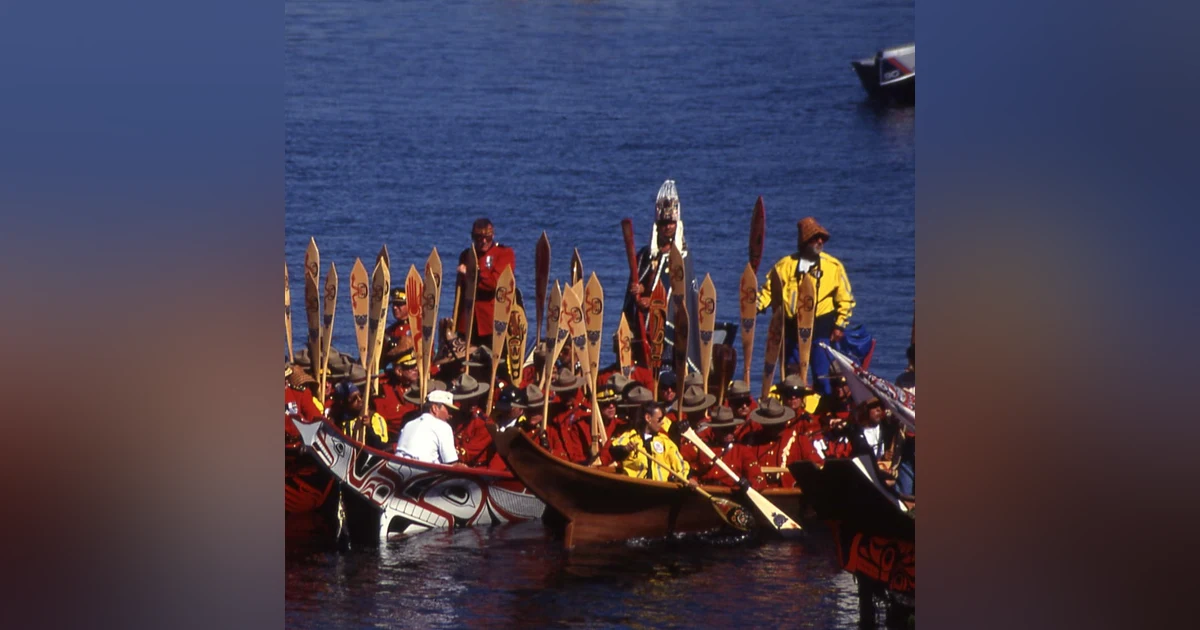
Ed Hill joins today's episode of the Paddling the Blue podcast to share a 1,000-mile canoe vision quest along Canada’s west coast that partnered the Royal Canadian Mounted Police and Indigenous communities to celebrate culture and offer alternatives to addiction.
The episode explores the physical challenges of the voyage, the restoration of canoe culture, powerful cross-cultural ceremonies and songs, and the creation of the Vision Quest recovery program.
Before we get to today’s conversation with Ed,
I shared a trip that I took to Alaska’s Prince William Sound back on episode #50. I’m doing that trip again and if you’ve been considering an intro to Alaska, you can come along too. Experience the beauty of Alaska’s Prince William Sound on this 6 day experience from July 12-18, 2026. Along with peaks rising 4,000 feet from the sound, you will experience glaciers calving in the distance, catch a glimpse of the area’s diverse wildlife, camp on remote beaches, and more. It’s a small group experience limited to a total group of six and I have two spots remaining. Learn more at www.paddlingtheblue.com/alaska.
James Stevenson and Simon Osborne at onlineseakayaking.com continue to produce great content to help you evolve as a paddler, and as a coach. You’ll find everything from basic strokes and safety to paddling in tides, surfing, coaching, documentaries, expedition skills and incident management, and more. If you’re not already a subscriber to Onlineseakayaking.com, here’s your opportunity to get started. Visit onlineseakayaking.com and use the coupon code PTBPODCAST at checkout and you’ll get 10% just for being a member of the Paddling the Blue community.
For those of us who enjoy also paddling whitewater boats, their newest offering is Online Whitewater and they’re also offering the same discount to listeners. Check out onlinewhitewater.com, use the code PTBPODCAST at checkout and explore.
Enjoy today’s interview with Ed Hill.
Connect:
- VisionQuest Recovery Society
- Pulling Together Canoe Society
- Vision Quest documentary
- Ed Hill Art - Check out the paintings called "FOREVER" and "SKOOKUM KALITAN".
- Clipper Canoes
00:09 - Introduction to Paddling the Blue
02:22 - Journey of Healing and Culture
06:36 - The Canoe Journey Begins
10:39 - Planning the Adventure
13:12 - Cultural Connections
16:32 - Arrival and Acceptance
20:19 - Trust and Understanding
25:32 - Training and Challenges
27:57 - Ocean Adventures
31:48 - Community Support
34:53 - Reviving Canoe Culture
39:14 - The Resurgence of Tradition
40:26 - Joining Tribal Journeys
44:05 - Sharing the Vision Quest Song
45:45 - The Impact of Vision Quest
48:20 - Continuing the Legacy
53:58 - Connecting with Future Guests
0:01 Welcome to Paddling the Blue. With each episode, we talk with guests from the Great Lakes and around the globe who are doing cool things related to sea kayaking. I'm your host, my name is John Chase, and let's get started Paddling the Blue. Welcome to today's episode of the Paddling the Blue podcast. Ed Hill joins me today to talk about a life-changing journey that was a partnership between Canada's Royal Canadian Mounted Police and Indigenous communities. The group paddled three Nootka-style 10-person fiberglass, ocean-going canoes 1,000 miles down the west coast of Canada to celebrate both cultures and alternatives to addiction. It's an emotional look inside the journey, the restoration of the canoe culture, and the respect and honor for the land and people of the communities they visited.
0:46 I'm really glad you're here to join us today. Before we get to today's conversation with Ed, I shared a trip that I took to Alaska's Prince William Sound back on episode 50, and I'm doing that trip again. And if you've ever been considering an introduction to Alaska, maybe you can come along too. Experience the beauty of Alaska's Prince William Sound on this six-day experience from July 12 to 18, 2026. Along with peaks rising 4,000 feet from the Sound, you'll experience glaciers calving in the distance, catch a glimpse of the area's diverse wildlife, camp on remote beaches, and more. It's a small group experience limited to a total of six, and I've got two spots remaining. Learn more at www.paddlingtheblue.com slash Alaska.
1:28 And James Stevenson and Simon Osborne at OnlineSeaKyaking.com continue to produce great content to help you evolve as a paddler and as a coach. You'll find everything from basic strokes and safety to paddling in tides, surfing, coaching, documentaries, expedition skills, and incident management, and more. If you're not already a subscriber to OnlineSeaKyaking.com, here is your opportunity to get started. Just visit online sea kayaking.com use the coupon code ptb podcast to check out and you'll get 10 off just for being a member of the paddling the blue community for those who also enjoy paddling whitewater boats their newest offering is online whitewater and they're also offering the same discount to listeners check out online whitewater.com again use the coupon code ptb podcast to check out and explore and you'll find out just how much fun paddling whitewater boats is and how much better it makes you at paddling a sea kayak.
2:22 Enjoy today's interview with Ed Hill. Welcome, Ed. Thanks for joining Paddling the Blue today. It is my honor on this beautiful west coast of Canada day. Yes. So your story is quite a bit different from many of those who've joined our show previously. So tell our audience a little bit about you as a paddler and what got you started with indigenous ocean-going canoes. Well, John, I'm a retired member of the Royal Canadian Mounted Police, the RCMP. I joined in 1968, and I had the distinct pleasure in my postings of being posted in a place called Bella Bella, which is a small Indian reserve 300 miles north of Vancouver, British Columbia, and in the middle of nowhere on an island up there.
3:12 And I was exposed to the indigenous culture. And I'm really paraphrasing this down, of course, over the years. A few years later, I was posted in a place called Tofino, British Columbia, which is on the west coast of Vancouver Island, again with indigenous culture in the area. But in that community was an artist by the name of Roy Henry Vickers. He and i became very close friends fishing socializing with his partner and my wife and so on and i watched him paint and was taken by his technique and his methodology in short he taught me to paint in his technique and style and what does this have to do with paddling well it gets there.
4:03 Roy quit drinking. He went for recovery treatment down in Arizona. I am an alcoholic. Almost simultaneously or thereabouts, I quit drinking. And so in 1984, basically both of us were clean and sober. I replaced my addiction to alcohol with painting. And so for 17 years of a 34-year career in the RCMP, I'd get up every morning at 4.30 or 5 in the morning and paint till 8. And then put on my uniform and become a Maude for the day.
4:48 Pretty quick in that time era, a Maude friend of mine was murdered up on Teslin Lake by a deranged draft dodger living up in that area. Shot and killed this Maude. Mike Bidet was the Maude's name. Mike Orris was the murderer's name. And at the time I said I'm moved to someday do a painting in honor of my friend Constable Mike Bidet well it was 10 years later when Roy Vickers contacted me and said that painting you wanted to do about Constable Bidet up in Teslin Lake we're going to do it together and so long story short.
5:34 I got the RCMP involved, and the RCMP flew Roy Vickers and I up to Taslin Lake. We found the image, and we ultimately did a painting together. But that doesn't sound like something the police should get involved with. But the way they got involved was Roy came to me with the idea that this was going to be a fundraiser. Roy Vickers, if you were to Google his name, you'd see he commands a big dollar for his artwork. And we were going to do a print edition of this painting and so on. And all of that money was going to go to build a recovery center here in British Columbia.
6:17 A recovery center of the likes didn't exist here at the time. And so I got involved with the RCMP because anybody who treats addictions and puts addicts on the street clean and sober, that's crime prevention. No longer people, you know, driving drunk, family assaults, doing all those stupid things that we do when we're intoxicated. So the RCMP bought into that and they invested time in getting us up there to do this painting. We basically came back, published the painting.
7:00 Sold out the complete print edition, and that print edition was the seed money to build a recovery center, but it wasn't nearly enough. And literally, as we were printing that in Victoria, Roy said to me, we've got to make some more money. We've got to bring attention to, to the cause of VisionQuest, because that's what we called this recovery center we were going to build. And I said, well, how are we going to do that? He said, we're going to do a canoe journey. Well, the only canoeing I had ever done was in a small canoe in Ontario, and that was maybe a dozen hours in a canoe. What do you mean a canoe journey?
7:45 Well, Roy had been born up the Skeena River in Hazleton, in that area, 210 miles up the Skeena River from the ocean. And he said, I've heard of the ancients, the old people who used to travel from here all the way down to the tip of Vancouver Island, where Victoria is now. He said, we're going to do that journey. He said, I'd like to see if we can get the RCMP involved. And so we contacted headquarters. I watched as Roy literally talked to the commissioner of the RCMP and said, we want to do this with the RCMP. And the commissioner agreed. And it was just about that fast.
8:30 And so I was introduced then to big canoes that I knew nothing about. We actually had to get a fiberglass canoe built at Clipper Canoe in Abbotsford, British Columbia. We built we had three canoes built from the same mold they're in the nutcase style of ocean going canoes they're about 31 feet long made of fiberglass optimum paddling for speed and balance in the works is with 10 paddlers that would be nine paddlers and one steers person The big high prow on that canoe, the model is called a northern dancer, and whenever you get into one of these canoes, you understand why they're called dancers.
9:22 And so we started training in those canoes and getting ready for 1,000 miles of paddling in 31 days. And the training was all a huge experience in those canoes for all of us. Virtually none of the RCMP that got involved with that had any experience paddling big canoes on the ocean or on the big rivers. So what's your reaction when Roy says we're going to do this journey and you haven't been in a canoe in 30 years? Well, I was 49 years old. I was in reasonably good shape, open to adventure.
10:03 Roy had already showed me so much about myself through my artwork. We had experienced this wonderful trip up north to find a painting that turned into money for Vision Quest. The cause itself was important to me. I knew the value of sobriety. I knew the value of beating addiction. And so I'm in. Let's do this. And it was just almost like jumping out of the plane with somebody saying, it's okay. I checked your pack. It's fine. So this is a collaboration with the RCMP. So tell us how the journey itself, well, let's first even go backwards.
10:46 How about the planning for the journey? Once you've made that decision, what happened from there? Well, you've got to appreciate that the west coast of Canada is a pretty rough place. There's not a whole lot of place. And talking to people who paddle canoes and kayaks, you recognize that when you're on the water, you're always looking for your escape route if something happens. Whether it's weather or an accident or whatever condition, you're always looking for an escape route. Down the west coast of Canada, there's a lot of places where when you commit to your day's paddle, there aren't many places to escape. It's rock walls and forest.
11:28 And so the planning was really intensive. You've got to appreciate that we weren't just out paddling. We were in indigenous canoes. We were RCMP members and civilians paddling along with indigenous people. We were paddling within the indigenous culture, which is different than most of your listeners know about. We had to learn the protocols. We had to learn how to travel within the culture. And most nights, we stopped in indigenous communities where we were culturally, with proper protocol, welcome to the community.
12:12 Taken into the community spent the evening in long houses with cultural ceremony and feasts. And sleep either in the long house or in our tents or even in the homes that we were given at the time next morning up and paddling again in all the weather and so on but always within the culture It was emotional. It was eye-opening in so many ways. The canoe was, you know, you've got a canoeing and kayaking show here. The canoe was merely the vehicle that took us back in time.
12:53 The canoe was merely the vehicle that connected us emotionally with the culture that we knew so little about when we shoved off in Hazleton. I think it always is. It's the tool that helps us get to and experience all those places and all those cultures. And you mentioned the cultural piece of it a little bit. Let's dig into that. Tell us about the blending of cultures and then the experience with the indigenous culture. Well, I've paddled continuously since 1997 on the ocean in big canoes. Twice a week, 12 months a year at least, we're on the ocean and so on.
13:33 To this day, I sing the indigenous songs that I've learned. When I'm in the canoes, even though I paddle in outrigger canoes, I'm singing the songs because I've learned that. That's part of the energy and the spirit of the canoe. That's part of... Talking to the land, to the ancestors, and so on. That's part of what I learned. One of the biggest differences, and I've experienced this with other canoe people on journeys, when they go on brigade journeys, they come into a community and they come ashore and they do their whatever they're going to do for the afternoon or evening or overnight or whatever.
14:16 When you travel in a cultural canoe, and you come to shore to a community, you don't just shove on shore. You approach the shoreline where you're met by the chief and the village or the number of people waiting for you. You don't touch that shore. You stand off. And if you're a fleet of 30 canoes, each canoe introduces itself to that community. Somebody in the canoe stands in the canoe and tells them, we are the people in the Skookum-Calatan, which was the name of our RCMP canoe. We are the people of the Skookum-Calatan canoe. We come from and we'd name various places from within the canoe.
15:00 We've traveled many miles today. We're tired. We're hungry. We'd love to come ashore and share some stories with you. And only then does the people on the shore speak and say, we like your story. We'd love to hear from you, come ashore. And then we turn those canoes around and you always come in stern first, backwards. That's a vulnerable, respectful way, non-aggressive way of coming ashore. When we travel with brigade paddlers, they're not used to that. We are a different culture in those canoes. What's a brigade paddler? Well, a brigade paddler, as I understand them, and you'd probably do well to speak directly to one of them, but from what I know of them, they're replicating the type of paddling that would have been done across North America, in the birch bark canoes that we can all envision from our school days and so on, the beaver traders and so on.
16:04 And those are the canoes that would come across and come ashore and trade and so on. And they traveled, the Courier-de-Bois and the Voyageur, when they would leave Montreal to travel up and around the Great Lakes and through the water systems, they'd travel as a group. And that's how they traveled. And it was with their culture in that canoe that they traveled, albeit having learned the paddling from the indigenous people. And those canoes if you think of it in terms of north america traveled east west east and west east back and forth on the west coast the indigenous canoes that we are with historically basically traveled north south up and down the coast and into the inlets and up the rivers and back but traditionally up and down the coast completely different cultural teachings of the paddlings.
17:02 Now, once you come ashore, what's that experience like? And I understand that's probably different in each location, but generally, what's that experience like? These already are starting in. These were extremely emotional and educational times for all of us. You come ashore, you're welcomed. The community is usually in regalia. You come ashore, you maybe exchange words once you get to shore and small gifts. In some communities, you were paraded through the village and were quite often in our red dress uniforms. We've changed maybe a mile back out of sight of the village and paddled in in our red surges and so on.
17:55 Quite a colorful ceremony parading through these villages and the drums. The drumming hits your heart and you're welcomed with such open friendship. And you come into the big house, the big long house with the dirt floor and the fire in the center of the floor and the building is resonating with sound. And then when you get into, and you're seated in a place of honor usually as the visitors and quite often it's the food that happens first And there'll be a spread of food, 10 yards long sometimes, of tables filled with the seafood and the traditional foods of that community.
18:48 And you go along and fill your plate and enjoy your meal. And then the evening would happen of songs and stories and legends. And we'd be called to the floor to sing our song because we traveled with a Vision Quest song that we would sing. It was just a sharing of cultures that was so emotional. So powerful that to this day, it lives in some of us that travel that journey. It can't be removed. It was so powerful. Now, is this a recurring journey or is this a one-time activity?
19:30 This was a one-time journey. Okay. The Vision Quest journey probably could never happen again, quite honestly, with the RCMP involved. The planners, and I was one of them who put that together, one of our people, one of our teachers and ocean experts in canoes was a man named Chris Cooper, who's a world traveler adventurer, not only in canoes but in many. He told us that the planning and the gear and the whole execution of this, he said, was akin to a Mount Everest expedition, to put so many people on the water with so much support and so much planning and so on.
20:16 It was huge to put together. I got to tell you something that it's important for you to hear about the longhouses and the halls that we visited up and down the coast. We were, a great number of us, members of the Royal Canadian Mounted Police. There was probably 30, I'm guessing at the number now, I don't have the exact number, 30, 35 RCMP members. We would experience in a number of the longhouses, the elders quite often were sitting at a place of honor, quite often at the very front row. And we'd come in in our red surge and be treated like royalty and so on.
21:02 And quite often, the elders would be sitting with stern faces, with their arms crossed quite often. Just the body language wasn't happy. They were just looking. And finally, in one village, an old lady spoke up. And she said, we don't trust you. We don't like you. We really don't feel good with you being in our community. And that was a shock. And she went on to explain that you in your red coats are the people that chased us down when we escaped from residential school, from starvation, from abuse, from what was going on in that horrible school.
21:53 You were the people who caught us and took us back. You were the people who in September would come along with the other authorities into our villages and search out children and steal them from our community to take them to residential schools. We don't trust you. And I wasn't the only RCMP member who was upset to hear that. And it wasn't that we were upset to hear our role. We were upset that none of us in our training with the RCMP and training in how to do our job and training of the history of the force and the like, none of us had ever been told in our training of our role with the residential schools.
22:46 It was a surprise to us. We hadn't done that. We were too young, as it were, to have done that. But I now know older guys who worked in the force who actually did that, and we hadn't been trained. This canoe has taken us to education, and now everybody knows. So how did you, along this trip, help change that perception going forward? First of all, when we heard that, and we heard it numerous times throughout the journey, first of all, we accepted it. We didn't argue. We didn't, yeah, but.
23:28 We listened. We heard. We owned it. I certainly own it. It wasn't me who did it. But the way I've worded it is, my police ancestors did that to your ancestors. I acknowledge that. And that goes a long way to healing. Sure. We developed a trust as we went. And you could tell that because by the time we were finished, and we were finished and leaving the next day, We would have danced together, sung together, ate together, laughed together, made jokes about each other.
24:08 You know, having lived in an indigenous community, one of the signs that... You're in, as it were, and we're accepting each other, is when we can joke about each other with no undercurrent, with no innuendo, just plain old laugh at each other. And when that happens, you know you got them, and you know they got us, and you know that things are good. To this day, I'm in touch with people up and down the coast that I met or first came in contact with in 1997 from My Seat in the Canoe. So from the point that you were made aware of that distrust, how did that change your entry into the villages succeeding?
24:56 Well, once we kind of knew that, it was easier to go into villages and understand why some people were standoffish. Why when we would go into the Longhouse, There'd be some that would be just sitting, watching, and listening with a stern face. We understood that. So it was easier to go over and talk to them and acknowledge and bring up the subject, you know. And don't get me wrong, we didn't live and breathe that the whole way down there, but we were aware of it and we were able to address it. We didn't have to wait to be told all the time. We did the accepting and the acknowledgement. So you had multiple canoes on this trip?
25:39 Yeah. So we started off with three canoes out of Hazleton. We had trained on the Fraser River. We'd trained on the Thompson River in these big canoes, going through big six, seven-foot standing waves, dealing with the pillows and the whirlpools and so on. We'd trained that way so that, and actually we had a canoe flip on the Thompson River when somebody was trying to eddy out and the canoe rolled over in those big 31-foot canoes. One of the paddlers on the head, even though we were wearing helmets, she ended up in hospital with concussions. So it was serious business.
26:22 We had trained for that. So we came down the Skeena River through some pretty good water and handled those canoes pretty skillfully. We lifted the canoes and trailered around the Kitsilas Canyon. It was just too treacherous to risk. And at Terrace, there's a canoe-eating whirlpool under the bridge that we smartened up and decided to trailer around that to be safe. But other than that, we managed the Skeena River. It was a wonderful experience to come down the river and get spoiled by the down current pushing it, because pretty soon at Prince Rupert, we were going to hit the ocean and be subject to tides and currents and weather and wind and so on.
27:07 So, the majority of the trip is river-based, and then you pop out into the ocean at Prince Rupert? Oh, yeah, I don't know. 210 miles of 1,000 miles is on the Skeena River. Okay. The rest, 800 miles zigzagging down the west coast is on the Pacific Ocean. Okay. And we were in behind cover most of the time in terms of islands and so on, the inside passages, it's called. But in that, that's the area that you don't find escape too easily if the weather turns because of the land that's beside you. We managed every day to get into cover and so on.
27:49 And there were days when we couldn't go on the water because of conditions and we'd have to stay in the village an extra day and so on. But if you were to check your charts, you'd see there's a place called Cape Caution on the west coast. And it's basically just north of Vancouver Island over on the mainland. And it's a point of land that faces the open ocean. And we'd spent the night at a place called Open Bight the night before. And we still have the sand from that beach in our gear all these years later because the sand on that particular beach was almost as fine as flour.
28:34 Every beach on the West Coast has a different personality and that particular beach, it was like white flour. And so it's still in our gear all these years later. We left there in beautiful calm water. or I actually have a photograph of us paddling out. Two hours later, we were in 20 foot swells and we weren't taking them head on. We were taking them from starboard to port side, rolling with them because we had to go that direction. So it was quite the trip. Two hours of basically head down, not a stroke could be missed. You just kept going because one wrong stroke and we'd have been on the rocks.
29:19 It was really quite, at one point I yelled out to the crew, hold on, I'm going to take a picture and you don't want me using profanity on your show because that was the profanity that came from the canoe because I was just trying to get everybody's head laughing for a minute. It was an attention getting time. We got into the beach on the far side of that point called Barnett Bay, and we rested for about an hour, and then we took off again. And the big Coast Guard ship, the Gordon Reed, had been following us, and they sent out their skiff and ordered us off the water, telling us we were bloody crazy.
30:04 And they actually lifted our canoes onto their ship and took us to Port Hardy because we were ready to paddle all the way. So that was one of our many adventures in those big canoes. Now, you mentioned the Coast Guard ship. So did you self-support, meaning that did you have your personal gear in the canoes or did you have another vehicle or another boat following? We had an indigenous Sane boat traveling with us. its hull full of donated food. One of our people supporting us. It was the owner of Super Value at the time, and through his food connections, they donated literally a hull full of food for us to support us, which incidentally, when we get to some villages that really couldn't afford to be, you know, accepting all those people. We'd help them with food from our hull.
31:03 We also had two yachts along. Two men, Greg Grant and Blaine Hagedorn, brought their yachts along, and they served as, because we were alternating crews in and out, the canoes would start paddling in the morning at 6.30, 7 in the morning, and maybe not finish till 5, 6, 7 at night. So throughout the day, there'd be two crews. One would paddle till noon-ish, and the other would take off from there to keep the canoes moving. So they supported us. And we had a Zodiac along with us. And in various communities, they'd send a boat along with us to support us for half a day or so.
31:43 So we were able to do all of that with help that way. Okay. So you had plenty of support along the way for that. We were really well supported and it was a community affair. Almost all of our gear was donated by a company called Navarro, who now no longer exists. But they clothed all of us. The paddles came from Clipper Canoe in Abbotsford. The canoe itself was made at Clipper Canoe in Abbotsford. We were supported because of the cause, because we were going to be building a recovery center for addictions here in British Columbia. It was just universal support everywhere we went.
32:31 The media produced a documentary about the trip. We had reporters embedded with us on the journey. It was a big historic journey for the RCMP here in Canada. So how did you arrange the connections with the villages? Well, that happened because we're the RCMP, because we have RCMP members in most of these communities and certainly associated to every community on the coast. That happened basically the year ahead of time, six months ahead of time, where RCMP members would visit each village and say, look, we're coming through with traditional canoes.
33:14 We're traveling within your protocols. We're traveling within the culture as we will learn it and absorb it on the way. Would you be interested in us stopping here? And virtually everybody said yes. You know, I'll tell you something here that's important to know, too. The non-Indigenous, the white man, let's use that term, throughout the early history, stole an awful lot of the culture, took it away from the Indigenous people. Their potlatches, their cultural ceremonies were forbidden by law. You'd be arrested if you were potlatching.
33:56 Residential schools took the language away. Their artwork was literally stolen from their communities and sold or given to museums around the world. Even now, they're being repatriated back. The stories associated with totem poles and artwork was basically stolen. You're forbidden to talk about it. It was gone. And with that went the canoe culture. The canoe, which has a spirit, which has a story, which has an origin in a community, that was discouraged as well. So an awful lot of these communities had no community contact with canoes anymore.
34:42 Now they fished from motor vessels and the like, but the canoe culture in many of these villages was gone. And so. In one village I visited, this was after, a year or two after, I visited a village in the RCMP canoe. We were met, this was on the Fraser River at Chehalis Reserve. And when we came in and stopped our canoes and did the protocol to come ashore, and then turned around and came ashore, the chief, Ron John, he met us with his elders.
35:22 And he had a circle of about a dozen older women in their regalia and we exchanged gifts and words and then that was it. Now we were going to go for lunch with them and we pulled the canoes ashore and we were going to go. But I talked to the chief, and this is really important to hear. I talked to the chief, I said, Chief Feek, I noticed that a number of the old ladies were crying. Can you tell me why? And he said, we had been about a half hour late getting there. And he said, we got down here a half hour before you came, and we were standing talking. And these old ladies, some of them would be in their 90s, they were telling us, because this village had been there for hundreds, maybe thousands of years, so it's got history.
36:12 He said, these old ladies were telling us how they would stand on this beach with their great grannies and hold hands and look up the river. And the great grannies, now you've got to appreciate if these ladies were 90 in 1999, their great grannies would have been born in the 1800s, maybe 1850. The old ladies said that we used to stand as little girls holding our granny's hand and looking up the river. And they'd tell us of the great canoes coming and visiting, and of the wonderful things that happened when the great canoes came.
36:55 And they said those were only stories. We thought we would die, said these old ladies now, never having seen great canoes come to our village. And today we did. So it wasn't that the communities stopped using the canoes, it's that the canoes were taken from the communities. In some cases, the canoes were literally taken because they were artwork or they were needed for museums around the world or whatever it might be. And the culture had been lost. As we traveled the West Coast, now, don't get me wrong, there are dugout canoes and there were communities in our communities who use dugout canoes to this day, huge dugout canoes.
37:39 And they travel in them, and they journey every year with them. And we ultimately met with them on this journey. But many of the communities, even with dugouts, when we would come into their villages and be in the longhouse, they'd, of course, tease us about our tonka toys, our plastic canoes. But when we'd leave, and they'd get talking, they'd realize the versatility of that canoe, the speed of the canoe, the ease of moving it on land, the ease of taking it up and storing it so that it can be used year after year and so on. And so while Clipper Canoe built these three canoes for us to take on this journey, now all these years later, Clipper Canoe has sold hundreds of these canoes up and down the coast.
38:30 There's an annual journey here on the west coast called Tribal Journeys, And it's all indigenous people who travel down into the States one year and maybe up the west coast of Canada the next, back and forth. And they travel with hundreds of canoes. But there'll be dugouts and the Tonka toys. There will be the plastic canoes that they laughed about. But many, many, many, many communities on the west coast have got those canoes. They still travel culturally. They still travel safely, but some of them use these canoes as well as their dugouts. So it's come back then.
39:14 Absolutely. Excellent. Way back in 1997. It was, quote me on the year, but Frankie Brown out of Bella Bella did the, got to us, I think it was called, canoe journey from Bella Bella to Vancouver for the big World Fair. And that was really the beginning of the resurgence of the canoe culture on the West Coast. And now every year, if you want a canoe story, there's one for you, is the tribal journeys canoe journey that now happens every year. And basically they're retracing the canoe journeys that their people have done for 6, 7, 8, 10,000 years.
40:01 And it happens every year here on the West Coast. And we joined up with them on this journey. We were honored when we got to Port Hardy, to the reserve called Fort Rupert. We joined up with Tribal Journeys. Imagine three canoes full of cops, white cops, traveling now with the Tribal Journeys. It was a huge healing experience, and it was really wonderful to travel in a fleet of canoes like that. And I go back now to the songs. Every canoe has its songs. Every culture has its songs that they sing on the water.
40:47 And so all day long as you travel, somebody's singing a song. It was our radio station as we traveled on the water. You're always hearing the various songs traveling, and they do provide energy on the water. They do provide solace in the long hours. They do provide diversion when the conditions get bad and you hear a song somewhere motivating you, encouraging you, and assuring you that it's going to get you through. Would you be able to share one of those songs? I sing on the water all the time to sing on the river.
41:28 Okay, I'll sing a stanza or a verse. All right. First, I'll tell you, though, that when we were training on the Skeena River, excuse me, on the Thompson River, just out of Kamloops, we were three days, we would travel about 19, 20 miles down the river, trailer back up, go down the river again, working the back eddies and the big standing waves and the whirlpools, learning how to maneuver around them and so on. And at night, we would camp up in the big Ponderosa Pines up in the flats above the river. And we'd have a campfire in our tents, and we'd sit around the campfire and talk about the day and what it's going to be tomorrow and so on and so on.
42:15 One night, sitting at the campfire. Set of headlights came up the dirt two-track road to our campsite, stopped, and out got an indigenous woman from the Kamloops area. And she approached our circle, which was probably about 30 or 40 of us there at the time. And she asked permission to sit and visit with us and did. And she told us that by now our Vision Quest event and journey was in the news. People knew about what we were training for. So she had heard about our journey. And she said, this is really important to me personally and to our community and to all Indigenous people is finding healing from addictions.
43:04 And she said, it's so important that it's been weighing in her heart. And she said, a song came to me, and this is quite often how we receive songs, is in this fashion. She said, a song came to me, and I'm told that I'm to give it to you. It's yours from now, from this day on, she said, and it's yours to use on the water and to share. And so for the rest of that evening in the darkness, we sat and talked to her and learned the song, and we sang it together numerous times, back and forth, back and forth, till we learned it.
43:45 And on this journey, there wasn't a day goes by that we didn't sing the Vision Quest song. Had I known you were going to asked me to sing it. I brought my drum up, but I don't have it here. This is the Vision Quest song that she sang. Usually it's done in four verses. I will just do one for you. Music. Hai, nai, nai, oh, hai, nai, oh, hai, oh, hai, oh, hai, oh, hai, nai, nai, oh, hai, nai, That's one verse of the Vision Quest song.
44:43 Thank you. Given to us that day on the bench land above the Thompson River near Kamloops. Thank you. Thank you for sharing that, for sharing the journey That's a first for me singing on the radio So tell us a little bit about the Vision Quest Society. Well, VisionQuest started when this journey, actually before the journey began, because we had already got the monies together. And it went through a number of years of difficulty in getting it together. There were always VisionQuest recovery houses. We had various people heading it up and helping us get it going.
45:26 But government support was meager. The Vision Quest recovery program is one of abstinence. It's not about controlled use. It's not about using alternate drugs. It's about detoxing and abstinence and the 12-step program. And it works for some, of course, not for everybody. And gradually over the years, Vision Quest has stubbornly grown. We have so many people who have found recovery through Vision Quest we have both men and women benefiting from this and presently as we speak in a place called Logan Lake British Columbia which is up near Merritt in the south central part of British Columbia is the Vision Quest recovery house known as The Lake.
46:20 And as we speak, there are 60 to 90 men in that recovery house in the six-month or more program to find recovery. And the RCMP proudly were involved with the beginning of this because it is crime prevention. If that person who's been subject to any kind of crime relative to their addiction now finds recovery, that crime isn't happening anymore. And that's the first job of a police officer, believe it or not. It's not to give traffic tickets or arrest somebody. The first job of a cop is crime prevention.
47:03 And that's where Vision Quest is right now. Thank you for your work creating Alternatives to Addiction. Yeah, and it continues. You should know that out of this canoe culture that I was introduced to, when we finished that journey, when I touched the beach at Victoria, the commissioner of the RCMP was literally standing on the beach waiting for us to shake our hand as we stepped off out of the canoe. And I hadn't planned on saying it. as I stepped out of the canoe, I said, this cannot be the last time this happens.
47:43 And anyway, ever since then, ever since then, there's been a journey called pulling together. And pulling together started way back then in, I think it was 2001 was the first journey. And that is police officers and non-Indigenous people and government employees working with Indigenous people. And it's usually a seven, eight, ten-day journey every year that happens here in British Columbia. And it's been going continuously ever since. What I like to say about that canoe that we traveled in down the West Coast, As we traveled, it left in its wakeâ.
48:30 Friendship, understanding, cooperation, a rekindled legacy, and it continues to this day. And every pulling together journey that's a child of Vision Quest sees anywhere up to 15, 20 canoes traveling 8, 10 days a year, continuing the good work. Because as much as Vision Quest was about finding a recovery center, we never realized how powerful the cultural and emotional connection would be with the indigenous people. And that's what pulling together is continuing.
49:10 It's continuing that mending, that cultural work, and that appeasement understanding that happens with us. Well, thank you for sharing that, and thank you for furthering the message. It was an experience. It was life-altering. I can open my journal at any given page any day and read it and just be taken right back in time. See, you can imagine for the indigenous people what it must be like to have that memory inside of them come back. Those old ladies who saw the canoe come in for the first time in their life. Imagine that memory that comes back for them and rekindles that in their community.
49:56 Absolutely. Ed, how can listeners connect with you if they want to learn more about your journey, about Vision Quest, or have any other questions? Yeah. First of all, I'm an artist, so I have a website. Edhillart.com. And you'll see in there that each painting has a story with it that's the indigenous teaching that every piece of artwork has a story so an awful lot of them are canoe related, The canoes themselves are Clipper Canoe, Western Canoeing and Kayaking. You can talk to them at clippercanoes.com because I'm sure somebody's going to want to see those.
50:42 Incidentally, they don't make the Northern Dancer Canoe anymore. As much as we traveled in those big heavy ocean waters in it all that time and never had a mishap, it's fine. To a newcomer, it feels very jumpy. So they've actually created two new canoes of the West Coast design, and they're far more stable feeling, and bigger, and bigger. If this was 31 feet, I think they're 41 feet or more. They're big canoes. Wow. Where are those three canoes today that you had? Pardon? Do you know where those three canoes are today that you used? Oh, boy. The RCMP canoe, yeah, the one canoe belongs still to Chris Cooper.
51:26 The other one belongs to Roy Vickers. The RCMP canoe, which was historic, and if you look up Vision Quest at the website, you'll see pictures of that canoe, visionquestsociety.org, visionquestsociety.org. That historic RCMP canoe, the RCMP actually sold it. Okay. I couldn't believe it. But it went through Clipper Canoe. And I happened to be going through Clipper Canoe one day, and Lynn Smith said to me, come and look at this. And I went and saw my old friend, Skookum-Calitan, up on sawhorses at the back.
52:12 And I said, well, the RCMP is selling it. It's going to be going to Oregon, and they're going to sandblast off all the crests and make their own canoes. I made a call to Gibson's, where I live, and the Sunshine Coast. And five hours later, we had a consortium of people who put $500 each in, as well as the local school district, who bought a great portion of it, and we bought that canoe. And that canoe, Skookum-Kalatan, lives here on the Sunshine Coast. We take school kids out in that canoe every year and educate them about the culture, about the canoe history.
52:56 We teach them and let them, and these are Indigenous kids, let them live their canoe culture in a canoe. So the good work of that canoe goes on today. Great memories and a great way to continue the legacy. Yeah. I should mention, do you know the name David Foster? Okay. David Foster, the musician, the composer, the composer of the music for Chariots of Fire, that ilk of God. He gave us a song in 97. It's called A River of Love. And that's our song. If you were to Google it, you may be able to find it. I don't know if it's still around or not. we'll see if we can track that down and we'll add that to the show notes and you've given me lots of other things to add to the show notes and we'll talk offline.
53:42 There's a few other things that I think I'm interested in learning about. You mentioned the documentary so we'll see if that's out there and we can include that in the notes for folks to check up on later. Okay. Ed, this has been fantastic learning from you and hearing about the journey and about Vision Quest Society. I've got one final question for you and that is who else would you like to hear as a future guest on Paddling the Blue? Well, there's a lot of them because of the very nature of what I do and the contacts I have and continuing. And I'm going to give you a name of one person to call, and she will literally exhaust you with the number of people she can connect you with that have done crazy canoe journeys.
54:27 And that's Lynn Smith, L-Y-N-N-E, Smith. and that's at clipper canoes.com. And Western Canoeing and Kayaking, Clipper Canoes, provision an awful lot of these journeys somehow with their canoes and other stuff. And they end up on these great journeys. And if anybody can connect you, rather than give you one or two names, I'm giving you access just to a ton of names, John. All right. Well, I will connect with you separately and we'll get Lynn's information and connect with her. So, Ed, thank you again. This has been wonderful. I appreciate your time and appreciate your journey.
55:07 Again, thank you for all your work in creating alternatives to addiction and congratulations on your own journey. Well, thank you. And I just think it's very relevant that a canoe did that job. Yes, thank you. You want to be a stronger and more efficient paddler, Power to the Paddle is packed with fitness guidance and complete descriptions along with photos of more than 50 exercises to improve your abilities and enjoy your time on the water. The concept and exercises in this book have helped me become a better paddler and they can make a difference for you too. The exercises in the book can help you reduce tension in your shoulders and low back, use the power of your torso to create leverage and use less energy with each stroke, use force generated from your lower body to make your paddling strokes more efficient, have the endurance to handle long days in the boat.
55:54 Drive through the toughest waves or whitewater, protect your body against common paddling injuries, and while you're at it, you might even lose a few pounds. And who wouldn't mind that? So visit paddlingexercises.com to get the book and companion DVD. A big thanks to Ed for sharing the 1,000-mile journey along Canada's West Coast, for his work creating alternatives to addiction, and for providing that respectful insight into the cultural experience. I really appreciate that Ed was willing to share that song with us. That was really cool. Ed mentioned a documentary about the trip, and you'll find that and more resources about the trip and Vision Quest Society at www.paddlingtheblue.com slash 147. If you're interested in joining me in Alaska in July 2026, learn more at www.paddlingtheblue.com slash Alaska.
56:40 And if you're not already a subscriber to onlineseacayaking.com or onlinewhitewater.com, Remember that you can visit either of those resources and use the coupon code PTBPODCAST to check out and you'll get 10% off just for being a member of the Paddling the Blue community. Thanks again for listening and I look forward to bringing you the next episode of the Paddling the Blue podcast. Thank you for listening to Paddling the Blue. You can subscribe to Paddling the Blue on Apple Music, Google Podcasts, Spotify, or wherever you find your favorite podcasts. Please take the time to leave us a five-star review on Apple Music. We truly appreciate the support. And you can find the show notes for this episode and other episodes, along with replays of past episodes, contact information, and more at paddlingtheblue.com.
57:24 Until next time, I hope you get out and paddle the blue.


