#151 - Breaking Waves & Records: Billy Butler's Kayak Endurance Push


 Apple Podcasts

 Spotify

 Overcast

 Castro

 PocketCasts

 RSS Feed
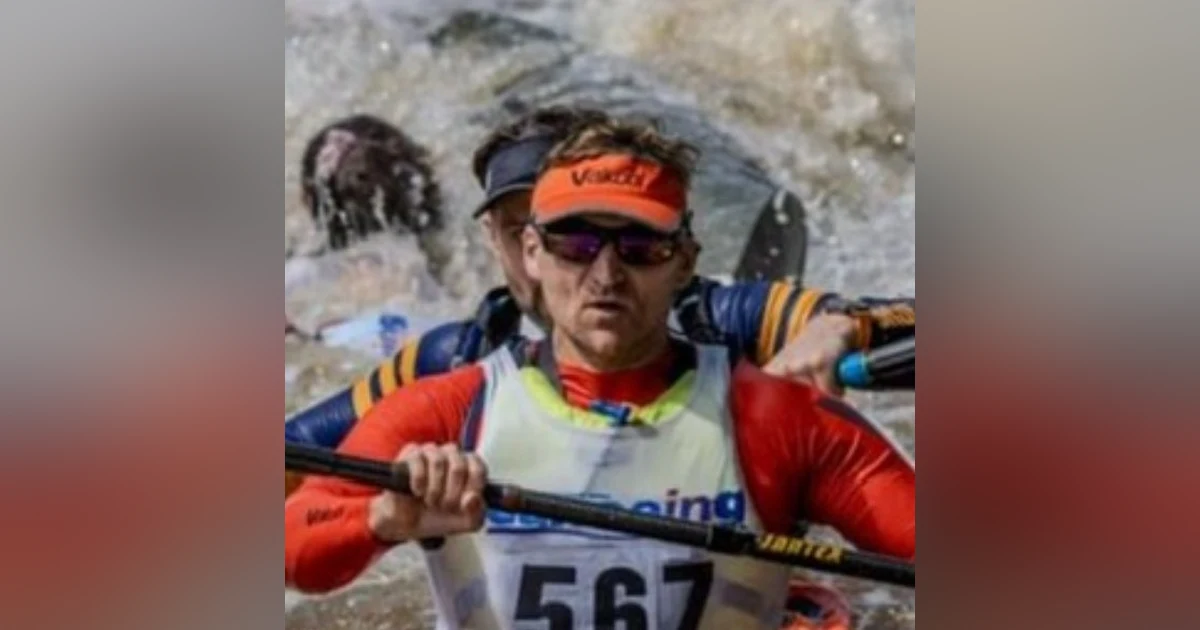
Endurance paddler Billy Butler joins today's episode to talk about his transition from rivers to sea kayaking, recent record-setting performances, and the training and preparation behind them.
The episode covers highlights like the Isle of Wight and Anglesey circumnavigations, a North Sea crossing, upcoming plans including surf ski competitions, and practical lessons for touring and expedition paddlers.
00:09 - Introduction to Paddling the Blue
01:22 - Meet Billy Butler
05:11 - Transitioning to Sea Paddling
07:17 - Isle of Wight Experience
09:18 - Hailing Island Record
12:02 - Thames Adventures
13:22 - North Sea Crossing
20:23 - Dougal Glacier and Records
24:49 - Training Insights
36:32 - Mentorship and Inspiration
36:49 - The Importance of Racing
40:16 - Lessons for Expedition Paddlers
43:23 - Interest in Expedition Paddling
44:30 - Paddling Media and Paddlecast
47:48 - Closing Thoughts
0:01 Welcome to Paddling the Blue. With each episode, we talk with guests from the Great Lakes and around the globe who are doing cool things related to sea kayaking. I'm your host, my name is John Chase, and let's get started paddling the blue. Welcome to today's episode of the Paddling the Blue podcast. Billy Butler has built a name in the endurance paddling world on rivers and has recently burst onto the sea kayaking scene and he's setting some pretty impressive speed records. Billy joins today's episode of the Paddling the Blue podcast to share what he's been up to, his training and preparation, how he finds inspiration, and what's possible for the future. Before we get to today's conversation with Billy, James Stevenson and Simon Osborne at OnlineSeaKyaking.com continue to produce great content to help you evolve as a paddler and as a coach.
0:45 You'll find everything from basic strokes and safety to paddling in tides, surfing, coaching, documentaries, expedition skills, and incident management, and much more. If you're not already a subscriber to OnlineSeaKyaking.com, here is your opportunity to get started. Visit OnlineSeaKyaking.com, use the coupon code PTBPODCAST at checkout, and you'll get 10% off just for being a member of the Paddling the Blue community. And for those of us who also enjoy paddling whitewater boats, their newest offering is Online Whitewater, and they're offering the same discount to listeners. Check out OnlineWhitewater.com, use the same code PTBpodcast at checkout and explore. Enjoy today's episode with Billy Butler.
1:26 Hi Billy, welcome to Paddling the Blue. Hi John, it's an absolute honor to be invited on. Oh, I appreciate you joining me here. We've had a couple references to you as a future guest and I really appreciate that you've taken the opportunity to come on and join us. So you've burst onto the endurance paddling scene in the last year, setting five records. So tell us a little bit more about what got you started in endurance paddling. Well, I've always been an endurance paddler really. My first sort of introduction to paddling was the Devizes to Westminster Canoe Club with my school. And we were sat in school assembly one day and the teacher stood up and gave the results from the previous year's race.
2:08 And I went into my next class and said to my mate, that sounds the most amazing thing in the world. Let's do it. And so over the next year, we got ready, trained with the teacher and then started. And so that was it really straight into ultra endurance paddling. But it was many years later that I met a young man called Dougal Glacier, who your listeners will probably be very familiar with. He set the GB Cirque record two years ago at 40 days. And he sort of opened my eyes to the world of of kayaking on the sea and in a surf ski and so you know i really got sort of got into that and and then found the performance sea kayak world which again your listeners will be very familiar with and just got completely addicted to that looking looking through the website finding something that inspired me and and then going after that yeah so speaking of performance sea kayaking so you one of your recent records is a record around anglesey where you just squeaked out a six-minute lead on john willesey, uh yeah a six minute funnily enough i met up with john after the after going around the island and and we were talking about i had my surf ski and he had his taran and he said oh you know is it is it fast how much and i said it's about six minutes faster than a taran john.
3:33 But no the the anglesey record was was brilliant i i started with the isle of white and it had been something i'd seen a few years previously actually as as but i'd never really looked too much into it so I did the Isle of Wight and then it was probably Dougal that said you know if you want one you you really need Anglesey and so I started looking at Anglesey and and I knew Anglesey would be on the very limit of my skill set you know it's it's a wild bit of coastline and and whilst I am pretty good on the sea I have my limitations and I knew that the the north coast of Anglesey was was going to be you know right on my limit so I had to really wait for the right weather window.
4:16 And I monitored it for for a long time and and then I did manage to to sneak around on on the right day and just get under the time but it was it was hard going I was I knew I was on the very limit from a long way out really from you know well over you know nearly four hours away from the finish and i knew it was tight and and i was i was redlining from you know the whole last hour really i'll bet i'll bet yeah now did you do that unsupported as well yes unsupported and solo so yeah i i quite like the the unsupported solo aspect and i sort of fall into line with with john willis's rules i i know he's he is very strict but i i like that you you know where you with all of his records.
5:05 When they say they're solo and unsupported, you know what happened. Excellent. So what is it that made you make the transition from rivers to the sea? Well, it got to a point in, well, late 2022, and I was paddling and I did a river race on sort of white water. And I realized I was very uncomfortable and I'd spent way too long in just a racing boat on very flat water. And being so uncomfortable in this moving water made me realize that actually it's a skill set that I'd lost. I had had it previously and I really needed to work on it.
5:46 And so it was at the same time as I met Dougal that I sort of started training on the sea as well. So the whitewater river paddling and the sea paddling came in at around the same time with me going, actually, you know, there's a huge hole in my skill set here and it's something that needs addressing. All right. And you found a way to address it, certainly. I found a way to address it. So yeah. That's why I sort of did it. When I realized there was something lacking in my paddling, I had to sort of fix that. All right. So was the Isle of Wight your really first experience with that?
6:28 Yeah, the Isle of Wight was my first experience. I sort of knew as Dougal was going around Britain, I sort of thought, I need to get into this. And the Isle of Wight is very accessible down on the south coast i it's very easy to find tidal information for the isle of wight the solent is is one of the most sailed areas in the uk the the tidal stream atlases are plenty you can you can pick any any one of a number of books to to find your tide information from it and it was it was easy to do i went and did a surf ski race in belgium on the the weekend and we got back into england on the uh train on the sunday night and i drove straight down to the isle of white to to do to do the uh circumnavigation on the monday and and and managed it.
7:17 And what was your time there? I believe it was somewhere in the region of six and a half hours. Okay. Yeah, it was a hard day out, but it's a really nice island to go around. It was a long day to get the tides right. I left the mainland very early and had to sit on a beach for a couple of hours, which was quite cold in that early October morning. And then eventually the tide was right for me to start from the needles on the western edge of the island. And I did my circumnavigation and crawled out the boat at the end on the same beach and then eventually managed to make my way back to the mainland. Tell us a little bit about the paddle specifically and what made that challenging for you, especially being your first one.
8:04 Well, I was still in my first sort of 12 months of paddling on the sea. And it's a long day out, but that was nothing I couldn't handle. But there's tidal overfalls on the south coast where the water just can't get round the headland at St. Catherine's Point. That was quite rough. And then you're just really getting the tides right. Now I do come from a sailing background, so getting the tides right was relatively easy for me. I have spoken to a couple of people that said I was about 15 minutes out at the at the crutch crux point at on the eastern side of the island but I think for my first to go being 15 minutes out after nearly four hours of paddling well it would be it would be three and a half hours of paddling it's not bad going 15 minutes and then having that sailing background certainly that that would have helped you yes I think it does it enables me the navigation then becomes a non-issue I think it really helps me with the safety side of being on the sea I'm well aware of, that sort of stuff and I think it just helps with the general sea knowledge.
9:18 What was next after Isle of Wight? So after actually two weeks later, I hooked up with someone who had gone around the Isle of Wight on the same day as me, Giles Hudson. And we were discussing going around Hailing Island, which is a very small island on the south coast of England. It's only about 20 kilometers. And Giles very kindly said, well, you know, it's fairly difficult to find tidal information about the island. If you want to go round in a double, let's do it. So we went round in a surf ski double and we did, we managed to break the record. Two young guys held it at the time. It was Alex Sheppy and Tom Holland.
10:00 And they're actually, they're really good paddlers, but they're sprinters really. And sprinters and wild water racers at a really high level. And Giles and I managed to sneak below them in the in the in the times and take the record. It's actually it's one of my favorite records because we forced them back to the drawing board and they did actually then the following year go back and re-break it and making some younger paddlers who are way faster than I am go back out there and and try and improve their time is something that I'm really happy that I've done. In some way, I've managed to improve two other paddlers who I have no other influences on other than, on some website yeah yeah i'm improving the uh improving the paddling landscape i guess you might say well in in some small way i i then two weeks later teamed up with someone else and then rebroke it so they do have to go out there and do it again i was gonna ask that when you go again but, there we go yeah we we did it two we only allowed them to have it for two weeks so but but i i think that's my last go on on the doubles on that island i i don't think i can improve my time on it so So if they can go out and get it back, then it's theirs to keep.
11:20 Well, if they're listening, maybe they'll now hear that you're not going to chase it again. Maybe. And then what was next? That's a good question. I think I went back to... Sort of inland paddling at that point all right and i think i got a couple of records on the thames, is is that correct i don't you may you may be looking at performance i'm actually not at the moment so are you not okay i believe i i believe i then went inland and went down the thames a couple of times so there had been lots of talk about doing the thames from the first navigable navigatable point down to the tideway.
12:02 And in the end, a friend asked me if I'd support him doing it in a single. And I said, well, that's quite awkward, actually, because I wanted to go down and do it in a single. And so in the end, we agreed to do it in a double. But the only available date was actually my birthday. So on my birthday, we went down the Thames. It was an easy day to pick really because you you're allowed to do whatever you want on your birthday so i i i got a free pass away from home all right and that was a good that was a good day out really it again that's that's quite a tasty record but perfectly achievable someone someone could put their heads together with someone else and and go and get that one if they wanted and now what was the distance on that that's a 200 200 kilometers wow and yeah it's a long day out yeah but there was a decent amount of flow so we got down in 15 hours 45 minutes well done yeah i know it's it's a it's a long day in the boat but you do get out actually the thames is a really nice river you get out around about every half an hour for a lock and and you just you know run around and and you get back in the boat so your legs get a nice stretch and it's not too tedious on on the uh on the behind End.
13:22 And one of your more recent is you recently cut the record for a solo North Sea crossing nearly in half. So tell us about that paddle. Well, it's a little bit naughty, really, talking about how much we cut off, because Dimitri, I don't think, was trying to set a time. He really was just going across. Okay. Fair enough. So, yeah, I did go after a time. I mean, it was partly because it was midwinter and I didn't have that much daylight. So I did start in the dark and I finished at dusk. But knowing that I needed to do most of it in sort of daylight, I did pick my route.
14:07 So I went slightly further south on the Belgium coast than Dimitri. I cut about 10 kilometers off his distance. and it was also slightly more favorable with the tides going west to east than the way he did it it did it was slight marginally better and and of course i was doing in a surf ski whereas he was doing in a sea kayak which i i think is slightly faster but yeah that was a that was a brilliant day out i don't particularly know why i did it in winter i think really just to prove that it was possible and and really wonder why people you know stop the stop the sea kayaking so much in the winter and and i just decided to go for it i found a weather window and and went for it.
14:54 So what was that like making that crossing in in such a busy area i was surprised actually, it really wasn't very busy i i saw 10 ships in in what's meant to be a one of the busiest shipping lanes in the world, I was really surprised. Really very limited shipping and and as a lot of people say about crossings a lot of the time they're quite boring and this was very similar you know I just got got paddling and and just kept going and then you saw a couple of shipping lanes and and you you you crossed them there was there was only one one ship but I even considered might be getting close and and I stopped and had a drink and had some food.
15:40 And by the time I got going again, there was no one near me and I carried on. So, you know, as crossings sometimes are, it was quite dull. Yeah. Somebody told me once that they keep all the interesting stuff near the shore. They do. They really do. And other than that, you just keep going. Yeah. On a crossing of that distance and of that length, how often do you stop? Well, I stop about once an hour. And unless I'm starting to feel like my energy levels are dipping, in which case I will stop on the half an hour. But really that is just to put some nutrition in me. And actually I had noticed when I do too much on the sea, when I do too much bimbling around on the sea, it does start to stop.
16:30 It does start to slow me up a bit and I do stop too often so in the first sort of hour and a half of going around anglesey i'd noticed that i was i was just fidgeting way too much so you know adjusting something or or just every kilometer i thought hang on a minute there's there's 10 seconds every kilometer here that that i uh i've stopped and done something and you you don't get that time back yeah you can't recover it you can't recover it and and so actually that's where some of the racing stuff comes in. When I look back on a, on a day's paddling, I'm, I'm not really very happy if I found that I've done that. And actually a fidget free, you know, completely no time wasting day will, will make me happy.
17:17 And, and I might actually, maybe at times I'm maybe not paddling as fast as I can. I don't know that. I don't necessarily know if I paddled as fast as I could the whole day, but the fact is that you can control. Did you stop and faff around? Did you, were you doing this? Were you, Did you want to adjust your seat when you didn't want to? Did you, you know, change the angle of your paddles when you really didn't need to? And just getting on with it is quite an important aspect to me. Yeah, those are good learnings. Not only for you and when you're trying to set records in a racing environment, but for those of us who might be doing more of expedition or touring, just to think about just get on with it.
18:00 Yeah, I do think that. And that's one of the controllables. And you can you can control it so so get on with it and and stop faffing one thing that people might have noticed from from that sort of brief uh answer there was that i i do everything in kilometers and that's my racing background and the sea kayakers will probably say why is he talking about kilometers and not you know knots and nautical miles but i i i do it makes it quite difficult when i get to the chart work because all my paddling is done in kilometers and then when i get to the chart to do any planning i have to go okay right convert that to uh miles and uh knots yeah. Because of that racing background, you know what⦠Just because everything came from distance of races was in kilometers.
18:47 The training was all done at pace. So what did we do that thousand in? What was the last kilometer split? And so yeah, that makes it⦠That's an interesting quirk, but I'm probably in the minority there. That makes sense though. Yeah, I suppose it does. So on that North Sea crossing, just to ask one other question about that. You mentioned you only saw about 10 ships but i have to imagine you have to plan for more so what kinds of things do you do to to protect yourself to make sure that you can potentially be seen. Well i go off the principle that you're not going to be seen and no matter what you do i don't believe that people on the bridges of these boats are paying enough attention to see you i would agree so i i make sure that i know where they are at all times i i check around me a lot you know that was the that was the one thing that you know i did allow for stopping you know i, regularly checked over the shoulder but funnily enough actually it wasn't really an issue that way that everything was coming left left or right of me so you know not much goes across the channel yeah it all goes along it so but no i go off the principle that they can't see me at all, and i am much more maneuverable than them and in general it's the big ships i i'm i'm not worried about them they they take very uh predictable paths it's the speed boats when you're closer to the shore that i'm really worried about speed boats jet skis and and the like because you can't predict where they're
20:21 gonna go that's a good point. Point but either way the law of tonnage always wins the law of tonnage yeah i mean yeah i'm definitely i'm definitely not wanting to hit one i think i'd come off way worse and and i go off that principle it's it's me that's got to keep out the way and and i just assume that you're never going to be seen yeah so you mentioned dougal glacier earlier and now you and along with dougal and another another fellow set a record on saint george's channel is that right, uh yeah we i forgot that was actually my introduction to sea kayaking was an irish sea crossing ah so yeah doogle doogle is type 1 diabetic with a with a slight heart problem and on his gb circ we decided that it was you know safer for him to have someone with him going across the irish sea so myself and matt roland's got in a double and went with him and and that was that was our introduction to sea kayaking all right i don't know it it wasn't the fastest time across that piece of sea but it was the fastest going that in that direction okay i believe there has been others maybe someone including at the team with jim morrissey and it was quicker going from ireland over to england over to wales sorry all right now speaking of doogle.
21:43 So Dougal had set the record for Mainland Great Britain at 40 days, which I think someone broke this year as well. They did, yes. Which is mind-blowing because Dougal's, I think he, I can't remember how many days he cut off the previous record, but significant, whatever that was. So when do you chase the record for Mainland Great Britain? That's a brilliant question. And it was heavily talked about this summer. And I really wanted to go and it just didn't happen. I'm actually very disappointed with this year. I've done very little on the sea and it just hasn't happened really this year. But going around Britain, it is on the list.
22:27 But I just, I do wonder whether I'll get around to it. Now, I really do see myself as a single day paddler. I don't know if I have it in me to get up in the morning, pack up all my stuff and put on the wet kit and get going again. I feel terrible the next day when I've done any of these record attempts. You know, a long day in the kayak is quite taxing on me, but it might just be the way I paddle. And if I can adapt that, then maybe a GB Cirque is a possibility. All right. Thinking of each day as just a separate paddle. Well, maybe. And just making sure that I look after myself on those days.
23:09 I was planning on doing a couple of sort of warm-up paddles this year, but they just never happened. I was looking at doing the length of the Netherlands, which I sort of thought I could get down to about 72 hours and which but I found out actually no one's really ever tried to do that fast lots of people have done it but I don't know of anyone that's that's tried to sort of set a record as it was and then another paddle I wanted to do where there is a record is the I, the circumnavigation of Denmark. Interesting. Yeah. But just, unfortunately, I just ran out of time. I sort of, I had a slight injury at the beginning of the year.
23:53 And I think I spent most of the winter sort of floating about a bit too much in my surf ski. I wasn't training hard enough and I wasn't in my racing boat enough, which I think I paddle it slightly different. And I think I was ending up with my stroke too far back in the phase and the power was coming on, you know, towards the exit of the stroke rather than at the catch. And through neglect of gym work, and this is something you'll appreciate, I didn't do the small exercises enough. And I ended up picking up some small niggly injuries because I wasn't, you know, really looking after, looking after myself with those, with those shoulder sort of stabilizing muscles. Okay.
24:40 And it sort of meant that I was playing catch up for most of the season. And it meant that I wanted to get back in my racing boat to, to sort of address some of these issues. And then it, it, it just didn't happen for me on the sea this year, unfortunately. Since you opened the door there, what does your training look like? Well, that's a good question. I do like a good bit of volume. I think that it's very important to get out as much as you can. If I can get up around 12 hours a week between running, paddling and the gym, not in that order. I feel I'm fit. But I like to look at it from a monthly point of view. If you sort of level out over the month you get a really good clear view of of where your training's at and if i'm gearing up for anything like the divisor to westminster i really want to start be getting up to 50 hours a month and then you know you're in a really good place but as i say you know i really like to to sort of balance it over the the paddling the running and the gym okay and i think that the gym is very important as well as the running you get very fit by running And I don't believe my heart rate gets quite as high paddling as I do running.
25:54 And then the gym, you know, as you will well know, you can't get strong enough to paddle just by paddling. And you can fix a lot of injuries that happen in the gym. Certainly can. Yeah, that's one learning I think a lot of paddlers can really look at is there's definitely no substitute for time in the boat, but you certainly can augment that and make your time in the boat more effective by cross-training. Well, it's very interesting you mentioned time in the boat because when you just mentioned Sebastian Scrubski's GB Cirque record, he really didn't spend a lot of time in the boat in the lead up to that, but he has done a huge number of long challenges and he said his body's used to it.
26:45 He's in the gym a huge amount. He runs a CrossFit gym. And so interestingly, time in the boat isn't always important, but it is something that I believe in. I wouldn't do that myself. So who's your inspiration who's my that's a brilliant question i like to take inspiration from lots of different people and from all different paddle sports really so i will look at people going really fast and think well if they can go really fast then maybe my speed can improve and i can go fast and if you look at someone doing something really long you go well okay they, they spent 24 hours in the boat then, you know, I've never spent 24 hours in the boat. So I'm, why can't I do that? And then, you know, in all those things, you know, okay, they crossed that channel. Well, if they can do it, I can do it.
27:40 So I like to take inspiration from quite a few people. Certainly took a lot of inspiration from Dougal going around Britain and really setting new sorts of limits, really pushing the envelope there. I took a lot of inspiration from sort of some of the i will i will upset people here by calling them the old boys but the the the previous generations of paddlers who who've done stuff with much worse equipment so all of the people that did early devices to westminsters in in boats that nowhere near to the standard of what we're paddling nowadays and and in in terrible kit which you know just they were sopping wet and probably cold for most of the time whereas now i nearly always paddle and i'm pretty dry and pretty warm and and then the guys that were on the sea in the in the early days really with with very little safety equipment in in kit that wasn't up to it sure and they they were going out and getting it done so i do like to take inspiration from a lot of people i'm the the early divisors to westminster's and sea sea kayakers as sort of ollie harding and ian white spring to mind from the uk they they had a really good varied background in kayaking doing some really interesting stuff at one point i had my story mixed up but i was corrected by ollie a couple of weeks ago actually they both separately did isle of man crossings from britain.
29:13 But Ollie said he had some sort of terrible compass. And other than that, that was all. You know, it really wasn't, you know, it was something that you had to sort of, it was a silver compass that you sort of had to fold up and put back in your pocket. Okay. So really, he kept a very rudimentary bearing a lot of the way. And they got there. And, you know, whereas now I'd be sat there with a GPS strapped to my leg, I'd have a compass, you know, sat between my feet. And you've got near constant sort of confirmation that you're doing the right thing. And and i love hearing that the stories of people who who just went out there and did it yeah got it done with with poor equipment and still still managing to do it yeah i mean here we are uh 50 years this year from the nordcap expedition and like you said think about the equipment and technology that they had at the time and and what they've accomplished yeah exactly and and and you know who's who's doing stuff like that now the numbers numbers aren't there people should take advantage of the stuff that we've got nowadays and go out there and get it done. Certainly.
30:18 So you mentioned that you take inspiration from a lot of different people. And depending on what you see somebody doing and you think I can do that. So what is today's inspiration? Today's inspiration, next on my list is the Fish River Marathon and then Surf Ski World Championships in Durban. Both races taking place in South Africa. So currently on my mind is is getting down this huge river. Anyone not familiar with the Fish River needs to have a look at it online, but there's some huge weirs and huge features. Likes of which we don't really get in the uk you could you could get something familiar similar in france and and europe but in the uk we we don't really have that so i've i've got to sort of push my skill set to the limit there and then again in durban we don't get the swell and the sea state that they get in durban in the uk so that really will push my surf ski skills to the limit but i will return to performance sea kayak again next year and i'm looking at i really want to get another irish sea crossing in and i'd like to do the angle sea to dublin route and.
31:34 I would really like to knock off hailing island in the singles i've done the doubles but i'd like to try and break the singles record and then i'd like to sort of push the limits of what you can do in a single day so i've got two things that that are on the list there there's an expedition sorry it wasn't an expedition at all it was dutch guys escaping the war the second world war and they paddled from the netherlands to the suffolk coast there's a memorial for them on the suffolk coast and they were called the england vaders or england invaders i think it translates to okay and they were escaping the Germans during the war and they paddled across the North Sea further up.
32:19 This is about a 190 kilometer crossing. It took them 56 hours and many people attempted it, but only eight survived because there was mines and the boats weren't good enough. And there was probably aircraft that might be taking potshots at them if they saw them during the day. And I'd like to try and recreate that expedition it's been done several times but no one's ever done it solo unsupported that would take me about 22 hours so I'd like to give that a go. And then the only other thing on the Performance Sea Kayak that's really, really intriguing me is the Isle of Skye.
33:01 And to go around the Isle of Skye nonstop really would be something that I'd really like to try. John Willis, he's done it, and I believe he took 56 hours, but that does include two sleeps. So if I can do it without sleeping, I think I can knock off a huge amount of that record. And but i don't know whether it's possible and and that that's that's what really makes me intrigued is is if if i believe something's on the borderline of being possible then i'd like to give it a go so when do you tackle the first one the first one i had wanted to do this summer and actually you know i had sort of made rough plans and it and it again it just didn't happen i think once i decided that i wanted to go to south africa and do the surf ski world championships i, knocked the really long stuff on the head so that may have to wait until next summer and both of these things they really do need all the daylight in the world whilst i could manage the north sea in the middle of winter both of these things need maximum daylight so they one of them may happen in june next year and i'd love for that to be the case but you've got to do an awful lot of preparation and sometimes these things fall by the wayside.
34:20 I don't like it when it does. And especially coming on an international podcast and saying you want to do one of these things. But they're on my bucket list and I do like to cross things off my bucket list. All right. Well, you've said it here publicly, the world has heard it. Yeah, I might be ringing you up and asking to take this episode down, I suppose, in the middle of next year when they don't happen. Well, they may not happen in one short period or in one year, but you've got time. Yeah, I have time. Yeah, I have time on my side. So in terms of the surf ski world championships, what are you doing to prepare for that?
35:00 Well, I'm not going to feature at the front of this race. And realistically, I'm still very new to the sport. So I'm learning how to surf and how to link up waves. But I'm trying to get out in the surf ski as much as possible. We're going out there a little bit early. We were going out there to do the fish river marathon before. And then after that, I will get straight in the surf ski and trying to get acquainted with the Durban swell. I may get lucky in it and it not be too big. But if it's big, I'm going to have a steep learning curve out there. Okay. So this is a learning experience for you. It's a learning experience. It's big conditions. I've now got used to sort of UK surf ski conditions, which is a lot of wind chop, but Durban's going to have a big swell, likely to have a big swell, which I won't be so familiar with.
35:49 And so it will be a fun learning experience and something that maybe I can build on in the future. Who do you consider your mentors? I was very lucky when I started paddling to have two brilliant coaches in les thompson and lee menday from the royal hospital school it was a an ex-naval school they were brilliant brilliant role models and brilliant kayaking teachers i'm very lucky to have them i also i take a lot of inspiration from john willesey actually he runs performance sea kayak and and he sort of sets the sets the rule book on the sea, You know, I can't thank him enough for running that website and sort of keeping that sort of going.
36:32 Other than that, it's just looking at role models for everyone, pushing the limits in different aspects of the sport. I wouldn't be able to put many names on it really other than those people. Okay. Why is racing important for you? Racing and the records for me is, I do like doing them for myself and knowing that if I wonder whether or not I can do something, going out there and proving that I can to myself is important to me but but also i i love promoting the sport and at some point someone's going to be annoyed that i've got these records you know and they keep seeing me on paddle daily and and this sort of stuff you know popping up on on social media with you know i think you said five records on performance sea kayak and they're going to go after them themselves and i'll be very happy when that happens because it will have meant that I've made someone go out there, research it, and train for it.
37:33 And as they do that, they will have dragged others with them. Almost like a rising tide floats all ships sort of situation. And that's a large part of why I do it. I'm not part of a canoe club for the last sort of 10 years. I've lived too far away from a canoe club to be involved. And I really want to get more people paddling and to just improve everyone. And so this is one of my ways of doing it. It's interesting that you mentioned that, hoping that others will break your records. I've had a couple of other endurance paddlers who've joined the show and have mentioned something very similar. And that is that there's a great camaraderie in paddle sports.
38:16 And when somebody else breaks your record, that means that you've spurred them on to be better. Yeah, that's exactly it. And I know they're going to have to try fairly hard. There's definitely faster people out there. And but you know i have a nice mix of endurance speed and ski skills that they're going to have to sort of try and navigate around themselves they might they might not they might not be as fast so maybe they need to do it on a day where you know the sea skills come into more of a play do it on a bigger tide maybe their sea skills aren't quite as as good as mine and they'll need to do it on a flatter day and just rely on their speed and endurance but at some point someone will crack them and and i'll be very happy i i hope some of them i hope anglesey lasts for a little while i do like anglesey record, And when they do that, that'll spur you on to be better as well.
39:07 Hopefully, yeah. And I'm not sure whether I can improve the Anglesey record much. I would like to give it a go. If someone goes around a bit quicker, then yeah, maybe I'll have to go back out there and have another go. Well, John Willissey, as you mentioned earlier, has quite a few records for Anglesey. And there's probably at some point in one of those records you thought he wasn't sure if he could do better. And here he is. i i do the tide wasn't massive on the day that i went round so i i would i would be curious to know what would happen if i could do it on a much bigger tide although with the slightly smaller tide that i did it on i i think it definitely helped with with the tide races and it kept the sea a lot calmer on the north coast and so as i've discussed with john privately you you don't always get, you know, you think, oh, bigger tide, I'll be quicker, but it changes everything.
40:03 So might not necessarily be true. I may have done it in perfect conditions. And, you know, unless I had a computer simulation to run it in all of these different conditions, I won't know unless I go around again. Always worth a try. Yeah. So with most of our audience for Paddling the Blue being touring and expedition paddlers, what can we learn from what you've experienced? That's a good question. And one that I may find fairly hard to answer. I think it makes you a very good paddler. Trying to paddle fast makes you a very good paddler in a way that just makes you paddle well and a stronger paddler.
40:48 I think when I've bimbled around and gone everywhere slowly it has been to the detriment of of my paddling and i find i i am better when i have tried to paddle with a bit more emphasis on on speed and power but everyone every each to their own and and i i i don't get the pleasure from sort of floating around as as much as others do and and and i i can respect that they wouldn't enjoy what i do as much i think it just adds to the wide variety of our sport that that everyone enjoys their own thing really so you mentioned earlier that you know you might not find a lot of joy in in slower paddling and that faster paddling makes you makes you better and improves you so what are those things in that in that focus on speed and application of energy that can apply to someone else who's not necessarily looking for that speed but just wants to be more efficient and more effective in their paddling.
41:49 I think it just very much depends on the way you paddle. When you paddle fast, your stroke is much more efficient. And you can get yourself out of certain tricky situations if you can put a bit of power in sometimes. You certainly find that sometimes when the boat's not going fast, you find yourself getting into certain situations. Now, I've always paddled with a rudder. So you do need some sort of flow over the rudder. And certainly in waves and flowy water, being able to put a spurt in and get some water moving over the rudder does get you out of trouble sometimes. The added strength I think that you get from paddling fast and efficiently certainly helps me out at times.
42:36 You know, I know that if I wasn't particularly fit because I've not been training that way, I know that I can get into difficulty that way sometimes. I think that's where I'd sort of look to advise people. Yeah, and long distance paddling and touring and expedition paddling it's not always the same speed. There's some points where I need to go a little bit faster and I need to be more efficient and more effective in that stroke for that particular moment. And that's certainly something we can learn from the endurance paddling world. I think so. I think it improves the core a lot. And when I slow down, I find that I slouch a bit more. I don't sit quite as efficiently.
43:16 And certainly if I sit up and try and improve my catch in my racing boat, then my core improves. Yeah. And I think that's an important part of paddling. Do you have an interest in expedition paddling? I do. Although, as I mentioned earlier, I'm from a sailing background. And I think if I was sort of doing some of the more expedition stuff, I'd rather do it from a sailing boat. But, you know, the expedition stuff, you know, as I said, I don't really think of myself as a multi-day paddler. I still appreciate the views that you get from paddling. You know, I'm not paddling so fast that I don't see anything and nothing soaks in.
43:56 But still, I still get to look at the beautiful coastlines that everyone else does. I don't go and explore the caves and the cliffs that everyone does. I do often go past them a little bit. Yes, expeditioning. Yeah, I do like exploring. I actually am living in the Netherlands right now and I'm right by a national park called the Bijbosch and it's full of islands and it's good fun to go exploring. You can go exploring all day sort of in this big national park full of islands and trees and wildlife. It's actually famous for its beavers, but they're quite hard to spot. What is paddler media?
44:37 Oh, Paddling Media is run by a friend of mine, Betsy. And I've recently joined her on a podcast called Paddlecast. And we focus on marathon racing, surf ski paddling and descent racing. So we're actually somewhat rivals here, John. But we have started a podcast. We've been going just over six months now. And it's growing. It's something I'm really enjoying doing. It's a good way to promote the sport fantastic so i would not consider uh another podcast arrival certainly uh we all make each other better and like you said our rising tide lifts all ships.
45:17 And the more of us the better the more ways we can get the word out the better exactly yeah so if any of your listeners do do like dabbling in marathon paddling surf ski paddling and descent racing then we're the place to go to all right where would someone find uh find the paddle cast so we stream on spotify apple podcasts and youtube we do actually have the video on youtube as well so it probably is slightly better on youtube and if you type in paddlecast then you should find us all right we'll uh we'll include links in the show notes so folks can find that information as well how can listeners connect with you billy well you can find me instagram as billy likes kayaking or you can get me on billylikeskayaking at gmail.com Alright, love the handle Well, I came up with it many years ago and it stuck and it sort of works because I really do like kayaking.
46:17 As we all do. Yeah. Billy, one final question for you. First of all, this has been great listening to you and hearing from you and learning about your experience in the endurance world and how we can apply that and kind of what's coming up next. So thank you very much for sharing that. One final question that I have for you. Who else would you like to hear as a future guest on Paddling the Blue? Well, it's... Knew this question was coming as everyone does and i i put a lot of thought into it and i i think i would quite like to hear from ollie harding he has done an awful lot of of stuff that i'm interested in and in marathon paddling and on the sea most recently they they did a a descent of a danube, and him and two other friends yeah but you know as i said he he did a an isle of man crossing many years ago he's done a lot of a lot of very interesting stuff on the sea as well as some really top level racing he he held the divisors to westminster record for a number of hours and it was broken when another crew came came through in a slightly quicker time who had started earlier so for a few hours he was a divisors to westminster record holder but unfortunately it didn't stand long so it would be ollie if if uh if you speak to someone i can put you in touch with him super Well, we'll connect offline and figure out how to connect with Ollie.
47:41 So, again, Billy, I appreciate the opportunity to chat with you today and to hear from you, learn from you. And I'm certain that our listeners will also enjoy the experience. Thank you, John. It was a pleasure. You're welcome. If you want to be a stronger and more efficient paddler, Power to the Paddle is packed with fitness guidance and complete descriptions, along with photos of more than 50 exercises to improve your abilities and enjoy your time on the water. The concept and exercises in this book have helped me become a better paddler and they can make a difference for you too. The exercises in the book can help you reduce tension in your shoulders and low back, use the power of your torso to create leverage and use less energy with each stroke, use force generated from your lower body to make your paddling strokes more efficient, have the endurance to handle long days in the boat, drive through the toughest waves or white water, protect your body against common paddling injuries, and while you're at it, you might even lose a few pounds, and who wouldn't mind that?
48:38 So visit paddlingexercises.com to get the book and companion DVD. Thanks to Billy for joining us for today's episode. He's putting up some pretty impressive numbers and shows no sign of slowing down. It's interesting that the endurance paddlers I've talked with are both very competitive and very cooperative among each other at the same time. They get excited in a positive way when someone breaks their records because it tells them what's possible and forces them to find a way to improve. In the show notes for this episode at paddlingtheblue.com slash 151, you'll find links to John Willis' Performance Sea Kayaking website, the source of truth for endurance paddling records where you can find Billy's records and a whole lot more. And if you're interested in the latest news from the endurance paddling scene with an emphasis on surf ski and stand-up paddleboard, there's a link to Billy's Paddlecast podcast at that show notes page as well.
49:27 And if you're not already a subscriber to OnlineSeaKayaking.com or OnlineWhitewater.com, remember you can use the coupon code PTBpodcast at checkout on either of those two sites, and you'll get 10% off just for being a member of the Paddling the Blue community. Thanks again for listening, and I look forward to bringing you the next episode of Paddling the Blue. Thank you for listening to Paddling the Blue. You can subscribe to Paddling the Blue on Apple Music, Google Podcasts, Spotify, or wherever you find your favorite podcasts. Please take the time to leave us a five-star review on Apple Music. We truly appreciate the support. And you can find the show notes for this episode and other episodes along with replays of past episodes, contact information, and more at paddlingtheblue.com.
50:10 Until next time, I hope you get out and paddle the blue.