#120 - Riding the Waves: Finding flow surf kayaking the Great Lakes with Keith Wikle

 Apple Podcasts

 Spotify

 Overcast

 Castro

 PocketCasts

 RSS Feed
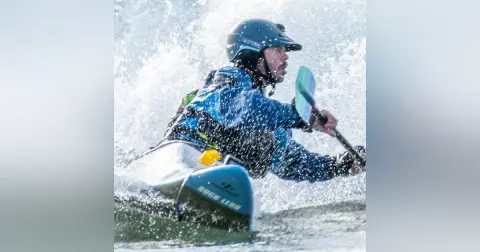
Welcome to today's episode of Paddling the Blue. Our guest, Keith Wikle, is a prolific surf kayaker and coach from the Great Lakes region. In this episode, Keith shares his journey into the world of surf kayaking, his mentors, and his experience organizing paddling events. He also offers valuable tips to enhance your surfing skills and enjoyment when the waves kick up.
Join us as Keith discusses his background, the transition from sea kayaking to surf kayaking, and the unique challenges and rewards of surfing the Great Lakes. He also reflects on his contributions to the paddling community through events like the West Michigan Coastal Kayakers Association symposium and his own event, the Gales.
Whether you're a seasoned paddler or just starting out, Keith's insights and stories are sure to inspire. Enjoy the episode!
Connect:
Want to level up your paddling skill?
James and Simon at onlineseakayaking.com continue to produce great content to help you evolve as a paddler, and as a coach. Everything from basic strokes and safety to paddling in tides, surfing, coaching, documentaries, and their latest addition, expedition skills and incident management. it’s all in one place. If you’re not already a subscriber to Onlineseakayaking.com, here’s your opportunity to get started. Visit onlineseakayaking.com and use the coupon code PTBPODCAST at checkout and you’ll get 10% just for being a member of the Paddling the Blue community.
00:01 - Welcome to Paddling the Blue
11:28 - Coaching Evolution
17:55 - The Influence of Scott
21:10 - Surfing the Great Lakes
33:13 - Transitioning to Surf Kayaks
37:47 - Favorite Surf Spots
39:46 - Santa Cruz Paddle Championships
42:23 - Organizing Events
48:09 - Future of the Gales
53:36 - Ultimate Paddling Choices
0:01 Welcome to Paddling the Blue. With each episode, we talk with guests from the Great Lakes and around the globe who are doing cool things related to sea kayaking. I'm your host. My name is John Chase, and let's get started paddling the blue. Welcome to today's episode of Paddling the Blue. Keith Wikle is our guest today. Keith is a prolific surf kayaker and coach among other disciplines here in the Great Lakes region. And today we talk about how Keith finds flow surfing a boat, his mentors, his experience organizing events, and what's next. And Keith drops some excellent knowledge and key tips to help you grow your enjoyment when those waves kick up. We'll hear from Keith in just a moment. James and Simon at OnlineSeaKyking.com continue to produce great content to help you evolve as a paddler and as a coach.
0:45 And you'll find everything from basic strokes and safety to paddling in tides, surfing, surfing coaching documentaries and their latest edition expedition skills and incident management it's all in one place so if you're not already a subscriber to onlineseakayaking.com here is your opportunity to get started visit onlineseakayaking.com use the coupon code ptb podcast to check out and you'll get 10 off just for being a member of the paddling the blue community enjoy today's episode with Keith Wikle hey keith thanks for joining paddling the blue Hi there, John. So, Keith, you've got a pretty wide background. ACA, a Level 5 instructor, a surf kayak instructor, sea kayaker, symposium director, and music lover, and more.
1:28 So, tell us a little bit about you and how you got started paddling. Yeah. I moved kind of out to the west side of Michigan in about 1999, 2000. And then I was kind of done playing soccer, which I'd done for a long time. So I was kind of in my late 20s, early 30s, and then was looking for a more individual sport to get into. And brother-in-law up on Thumb Lake put me in a kayak and just kind of looked down and the water's on both sides. And I was like, I think I get this. And really, really got into that, you know, in the late 90s, starting in the metro Detroit area. But my paddling really took off when I moved out to the to the west side of Michigan, where I was able to get access to Lake Michigan pretty much whenever I wanted.
2:17 And that really kind of catapulted my love of, you know, both sea kayaking and kayak surfing because I was able to, you know, watch the weather and kind of be able to get out whenever I wanted to. Which is a big thing for, you know, early paddling is to get out in a variety of conditions and really start developing. And that's kind of where things got started. Cool. So what do you attribute to developing your skills? I think a number of things like in the early days of paddling going back, you know, almost 25 years. When I first got into paddling, it was on the east side of the state in the metro Detroit area. And Great River Outfitters had pool lessons out at Schoolcraft College.
3:01 And that was my first exposure to anybody who knew anything about kayaking. And there's this guy named Bert and another guy named Scott Faraday that taught me to roll in the pool in about 98, 99, something like that. And that was my exposure at the beginning. And then even when I moved out to the west side of the state, you know, Lee's was a shop in Kalamazoo. And a buddy of mine, lifelong friend now, Jason Ruhn, spent a little bit more time with me refining my role because that's obviously a gateway skill for the kind of paddling that I do. That really helped. And then Lee's would have, you know, surf days out at the lake. And then I got really interested in, you know, finding better and better equipment and being able to develop that and being really focused on skills.
3:48 And I, I still like to think that like the trick is like getting exposed to good coaching and then getting, you know, direction for good focused practice and then really making sure that you, you put it into play as often as possible. And just, you know, hundreds and hundreds of hours out there catching waves. Yeah. Seat time in the boat makes a difference. It does. Yeah. It's the big separator between people who develop and people who don't. Yeah. So, so 99, you started paddling. When did you start your coaching journey? So in, I think it was like 2003 or so, I did a four-star with Kelly Blades and Laurie Stegmaier, and I think it was Paul Fishback.
4:31 And so we did a four-star, and then... That was like my first exposure even to like, you know, kind of certification training type of things with sea kayaking. And then after that, I did an early kind of coach to development thing through Ron Smith in the very old days of the BCU stuff. Cause I think, I don't think they even had a coach one at the time, or if they did, I didn't take it. I went straight to a coach too. Cause I done a four-star. And then after that, I had also done a few years later when kind of the BCU stuff was waning a little bit. I did an ACA program with Ryan Rushton in Chicago, Ryan Rushton and Scott, when Scott went over to Geneva. Okay.
5:20 So interesting. You started BC first. Yeah, BCU was really popular in like late 90s, early 2000s. Yeah, it was very, very popular. Like obviously because of GRO, Great River Outfitters was heavily invested in the BCU system. And to my surprise, when I went to Kalamazoo in Lees, they had developed more people in the ACA system at that time. So how do you see just obviously they're different systems today than they were in the past. But just out of curiosity, what do you see comparisons between the two? Yeah, I mean, the total separation of paddler skill from coaching practice was the biggest one.
6:01 And that just because you had the skills to paddle didn't mean that you had worked at all on your coaching practice. And I was really fortunate later on, even after my ACA certification, that they'd revamped the British coaching system. And we got a number of coaches that WIMCA sponsored actually through their symposium that I really pushed hard for them or advocated, you know, for them to bring on as guest coaches for their event, but also to train paddlers before the event to do the new British coaching system. So the British canoeing coach one and coach two and Shauna and Leon from Body Boat Blade came and did one section of the program.
6:43 And then Nick Cunliffe from, he's actually from Liverpool, but you know, from North Wales also came out and did a section of the program. And then I think we even had Steve McDonald come out and do from Scotland as part of the Gales to help people finish up some of their canoeing certifications, because that was the new practice in about 2010s is that in the early parts of the British coaching system, it's both independent. In other words, like paddling is paddling. So both canoeing or stand-up paddleboarding and kayaking are part of the curriculum until you get into sea kayak coaching, which is like a whole way to kind of track out their system so that in the early parts of the program, paddling is paddling, whether it's with a single blade, whether you're standing, sitting or kneeling.
7:29 So, and I think that approach to paddle sports coaching is really valuable. But the other part of it is kind of this paddler pathway idea that the British coaching system has is that, you know, not everybody's going to turn into, you know, a competitive, you know, racer or surf kayaker or, you know, whitewater freestyle. Some people are casual or some people want to develop as sea kayakers. Yeah. In the past, coach-centered paddling would basically everybody gets kind of the same input and output, whereas in the British coaching system, depending on what you're interested in, we may tailor the coaching activities based on what you want as an outcome, which turns it into paddler-centric or student-centric coaching.
8:15 Coaching and that was a huge shift in about the 2010s is that all of us got in on that program and almost every single person that was involved in that program has really gone on to develop as a pretty great coach because of that so pretty novel idea of listening to your student and figuring out what they want yeah yeah that and the the idea that paddling is paddling and this goes into whether you know euro or greenland paddling like it's all pretty much the same at the beginner level. There's definitely more advanced things that you can do. But, you know, when you're just getting interested in paddling, you know, trying out canoeing or stand-up paddle boarding and seeing how things are more the same than different is really, really valuable to people.
8:57 And as a result of those programs, I ended up getting a canoe and a stand-up paddle board and still canoe all the time because I hadn't really worked much on my canoeing. And if anything, it informed a lot of my kayaking with different strokes and approaches and And thinking about how you shift your body weight and all that to reshape the boat. So I found it really valuable. Cool. So do you still stay engaged with the BC system? So, you know, the trick was, is that at the time there was Paddle Sports North America or BCUNA as kind of an entity. And there were some coaches that were involved with that that could do certifications and run programs and things.
9:39 But what ended up happening is that British coaching elected not to enable North America or U.S.-based coaches to run all of their own programs. And as a result of that, what that meant is that we would either, A, have to go to England or always get somebody from the U.K. To come give coaching and certifications here. and that ended up being counterproductive to us wanting to run our own, you know, country and system. And believe it or not, you know, I'd always advocated for the, to invest that energy into the American Canoe Association rather than continuing to invest in a system that frankly, probably didn't really care that much about us or want us involved.
10:25 And, you know, the American Canoe Association, as soon as that dried up, a lot more people got more invested into the ACA. So it may have actually been a fortuitous turn of events for that door to close off, because as a result, a lot of different people then got really invested in the ACA. So why do you suppose BC shut the door? Yeah. I think they were worried about standards and practices and that, you know, was the coaching going to be of the level of quality that they would like? And, you know, maybe there's a little bit of kind of cultural prejudice and belief that they were superior. You know, I don't think anybody would argue too hard with me that maybe the English or the British in particular may have a little bit of cultural superiority.
11:09 And they did develop a lot of great coaching practice. this. And like, you know, I still use a lot of that almost every time I coach, but at the same time, you know, like they, I think they felt like, you know, we were not really up to scratch and that they wanted to keep sending British coaches to ensure the purity of the program. Okay. Do you see that changing? It's hard to say, cause I don't really participate in any of the BCU programs. I can say from the ACA, there have been a number of massive improvements in terms of thinking about isolating paddle or skill from coaching activities. And they mandated that you have to have a skill assessment in order to do a coaching program, where almost all of the coaching programs that I did in the early days was a huge mix of both teaching people to paddle and then maybe certifying them as coaches.
12:01 And I think in the years since that happened 20 years ago or whatever, that that is massively improved. And that for in a lot of cases in these programs now that there's a lot less paddler instruction and a lot more coach instruction. And I think that is a huge improvement. Yeah, I would agree. Definitely agree. You mentioned a name in there that has been a big impact on you from the beginning, Scott. Tell us a little bit about Scott. Yeah. Yeah, it'll probably be hard to talk about it without getting a little bit worked up. But, you know, the beautiful part of it is, is that, you know, I've known, I knew Scott for a long time, you know, like 97, 98 or something like that, all the way up until he died.
12:44 And, you know, I was really fortunate to, after he left GRO, to reconnect with him when he started working at Geneva and then also at Power of Water, where he eventually ended his career. But, you know, Scott and I did a ton of stuff, a lot of long road trips together, you know, going to do rivers or going up to the UP. And then he was massively influential in my coaching and my paddling. And, you know, I think everybody talks about things that Scott would tell them. And, you know, I think for somebody that was, you know, not from the Great Lakes, I think he was from Vermont originally. And the Northeast, he came out here and started working for GRO. And, you know, I don't really think they ever took full advantage of Scott.
13:28 And, you know, obviously, when that shop closed, you know, he went over to a new shop in Chicago. And it was really interesting to see him balanced with a newer business owner who was a younger coach, very athletic, great paddler, Ryan Rushna is a great coach. You know, he's really talented and just an amazing athlete. But then there's Scott, who, you know, had done so much stuff, so much sea kayaking, so many rivers. And he really balanced out some of that, you know, that younger energy that Ryan had and really put a lot of like good kind of risk assessment, you know, thinking into what Ryan did. And then, you know, when Geneva ended up closing and Scott came back to Michigan, ironically, I tried to put him with the Lees and had him have a couple of initial conversations with Skip Lee at Lees about working there because, you know, all of us wanted to keep Scott close because of how much we valued his, his friendship and his, and his paddling.
14:28 And then fortunately at that time, you know, Trey kind of, uh, started up power of water after having come to the gales and us giving him kind of a leg up and some of his coaching and stuff. And I think he was really impressed with Scott, obviously. And then that's where he ended up spending the most time. And, you know, I told Tara this and Trey that like the happiest I ever saw him was at Power of Water out of all of those jobs that he had. And, you know, his coaching really took flight when he was at Power of Water because obviously, you know, Scott had tons more experience than Trey in coaching and paddling. And so, you know, in those early years, Trey really relied on Scott's judgment and his ideas on paddling and coaching and stuff.
15:10 And then, you know, that really helped Trey get his feet underneath him to develop into what he's developed into. And for me, like, you know, what I miss is, you know, the, the, you know, times when I'd go out to, you know, go surfing and Scott and, and a few other people from Lansing would come out and it was always just such a hoot to have him out because, you know, if, if it was big and dangerous, you know, you could kind of get a bit of wisdom from Scott where he'd just shake his head and say, you know, the calories to fun ratio is off. It's just too many calories and he wouldn't go. And, you know, for the younger group of us that were out there ready to go into, you know, 30 knot direct onshore winds like we were talking about before the recording started, you know, that's where Scott would have said, maybe another day is better.
15:56 And I think I think all of us picked up on that on the risk reward piece. And that is still one of the bigger ones. But the other part is that, you know, you could make fun out of just about anything. And that was a big Scott thing that like, you know, hitting class five moves on class two water was his saying, right, that were like, if you could hit a really classy move in class two water, then it was time to worry about the conditions being bigger. But until then, you know, like you, you, you should make a meal out of something smaller until your skills get better. And, you know, having worked with him on the gales and all these other kayak coaching events, you know, he could entertain anybody with a really basic challenge in and around rocks or a pier or whatever it was for a very long time.
16:43 I mean, he had high level people that would come and he would give them a task and some of us would be doing that task in a basic, basic way. And Scott, you know, if somebody was, was having a lot of success, he would give them something even more difficult than what the other people were doing until like their skills would break. And then he would pull them back and then break down the skill and explain, you know, how they might succeed. And this is with really skilled paddlers. And like, to this day, I don't think I've ever seen anybody that gifted that way, where they could basically keep a wide variety of paddlers entertained in a very small area, doing something, you know, really simple, but that would keep your brain challenged the entire time.
17:25 Yeah, I only had the chance to work with Scott a couple of times, but each time, more and more impressed. And he really came alive on the water, had a lot of fun. Yeah, had a lot of laughs with Scott. And I have a lot of good memories of him pulling faces and just making people laugh. He had a phrase, two words. Yes. Yeah. Suck less. Yeah. Although the often forgotten part was the paddle more, suck less. All right. Like you said, time in the boat makes a difference. So you mentioned another acronym, WIMCA. So tell us a little bit about that and what it stands for. WIMCA is the West Michigan Coastal Kayakers Association. And it's a club that when I moved to the West side of the state was super active with a lot of really talented, fun people that has an annual event on Big Blue Lake on Memorial Day weekend.
18:18 It's like the really one of the only beginner kind of kayaking events that's left. And the club is at that time when I joined was super active and a lot of great people. They had pool sessions. And that's how I met a ton of people and got to do amazing trips in my early days because, you know, finding people to do cool stuff with was a big part of joining that club and was really fortunate to meet, you know people like fritz quant and laurie stagmeyer and paul fishback and especially doug van doren who was really really formative and for my paddling and i've gotten to do a ton of paddling with these people and that's really what i think about when i think about the club and you know the event and those and that kind of like probably like oh three to about 2010 2010 was, I mean, just off the hook great.
19:12 I mean, we had great guest coaches and all of the local coaches that would come like Rob Taylor and John Holmes and Laurie and Rick and, you know, Doug Van Doren, Ron Smith and, you know, Michael Gray and Laurie Levkinect in the old days, Adrian Levkinect's mother, who's really fun and a great paddler in her own right, all came and Bonnie Perry and people like that who, you know, really became mentors of mine. And it was just like a fun kind of summer camp vibe at the symposium. And, you know, there would be, you know, slideshow presentations and talks and, you know, the number of people that have come up to me about the people that I recruited for the slideshow talks in those years, you know, and mentioned things like the John Turk presentation that was given or Jeff Allen, Alan, who came and gave a great talk at WIMCO or Simon Osborne that we got to come over when Simon was brand new into coaching and expeditioning.
20:10 Justine Kurgenvin, you know, for this is the C2 that we made sure to try and get Doug in front of the lens at the time to kind of celebrate Doug a bit like those were and Nigel Foster. I think we had Nigel Foster twice and Sean and Leon came twice and everybody just really, you know, it really fed both the coaches energy and the participants energy to be excited to be there and made paddling a lot more fun. And then as a result, you know, I made a lot of lifelong long friends out of that. You mentioned a lot of names in there that have been guests of the show as well. Oh yeah. Yeah. And Wimka, I think a lot of people would probably credit Wimka with their exposure to some of those people in the Midwest because, you know, Great Lakes didn't always have guest coaches in that way because this was back when, you know, that was the, the kind of mode for symposiums, but Great Lakes didn't always do that.
21:02 Sometimes they did, but Wimco we were really focused on that and I think that really helped kind of fuel the excitement for the event. So we have a lot of listeners all around the world and many listeners may be surprised to learn that just what a paddling mecca and what a surf mecca that the Great Lakes is so tell us a little bit about surfing on the Great Lakes. Yeah so surfing on the Great Lakes has actually gotten really, really popular. When I first started, like I've been mentioning in the early 2000s, there'd be maybe four or five guys on long boards out there while I was out trying to catch waves, either in a sea kayak or as I developed into a smaller surf kayak.
21:44 There'd be long boarders out there. Now, there's a mixture of all kinds of different boards and crafts, up to and including foil boards with wing sails and that kind of thing. But all of the lakes to a greater or lesser extent have a very dedicated group of both board surfers and some paddle surfers paddle surfing is still probably the most underground of the types of surfing that there is to to do i mean a part i mean there's lots of sup or stand-up paddleboard surfing but not i think if i see someone in a surf kayak it's usually because I sold them one. Um, so the, but it's surfing in general has gotten really popular and everybody, you know, has, especially the board surfers and I, which, you know, I've got a lot of friends in the board surfing and standup paddling community that are either local or from all over West Michigan.
22:37 And, you know, those, that crew is kind of pretty tight and we all watch the weather together and people text each other to get out at the same time. And as an example, yesterday, a bunch of us were texting early in the morning about whether or not it was going to be worth going out to Lake Michigan in a north storm. But yeah, it's developed quite a bit. So what got you started surfing? I think as soon as I got into, you know, a sea kayak and then was out on Lake Michigan, you know, figured out really quickly that, you know, surfing was going to be really fun, but that, you know, some skill development was going to be required. But, you know, that thrill of, you know, getting the boat planing and, you know, traveling down a steep face and really is like probably the closest thing to, you know, perfection that there is just in the sense that, you know, you really can't think about your job or how much money you have in the bank or whatever problems you're having at work or at home or anything when you're surfing.
23:39 Like you have to be focused in the moment all the time. Otherwise it just doesn't work. You'll just capsize and get wiped out if you're, if you're not focusing on what you're doing. So that's kind of what I was after was that sensation of being a hundred percent in the moment, really focused and, you know, trying to get good enough that, you know, you could surf rather than be surfed if you follow, like to really have control of the boat and which direction you're going. And I really loved the challenge and like, it doesn't matter which type of boat or even board at this point, I still really love it. So what advice would you have for those looking to start surfing? You know, obviously the gateway skill, kind of like when we talk about gateway wave skills for other sports, you know, like windsurfing, it's being able to jibe or water start your board.
24:27 Kite surfing, it's definitely water starting the board and making sure that, you know, you don't foul up the kite. And for kayaking, it's definitely rolling. And so you have to be able to roll like, cause until you can roll, it's basically just a bunch of swimming. Because you will get flipped over. I mean, it's very rare that I go out and don't get had flipped over at least once while i'm out surfing and so rolling is the big one but the next one past that like in terms of like just thinking of basic core skill stuff is that you know the advice is to start small you know like if you can catch you know one two foot waves and. Keep everything under control and have control of your direction of travel and everything and then you know not really getting yourself exposed to you know crazy crazy conditions at first because you want to make sure that you have everything under control and then the other thing that you know makes this really challenging for people is you know whitewater is a great gateway sport into surfing where being able to surf in a little boat on a green water wave where you can hit the same move over and over and over again on a green wave really makes your life easier and then you're not as committed if you just go out to a little play spot in a whitewater boat.
25:44 Whereas like in surfing, you from you can see from the beach what it's going to look like and how big it's going to be. And it may be over your head, whereas a little play wave, you know, without all the wind and and those types of things that, ends up letting you really develop your edge control, how your body weight affects your trim and your pressure on the rail and how fast you need to be going, how much paddle speed you need, all of those types of things. They're completely translatable between the two. So that's probably the best advice I have. And it's to think about trying smaller and smaller smaller boats. So with that in mind, what, what made the transit? So did you start surfing in a sea kayak?
26:29 I did. Yeah. Yeah. I had never even seen a surf kayak. This was in the early days of the internet. So there was a little bit of information about surf kayaks and that's how I found out about it in kind of the early two thousands when the internet really kind of got cooking. So what was it that made the jump for you from a sea kayak to a surf kayak? Again, I have to go back to Lee's like shops are so valuable and it's really a shame because we've lost so many good shops over, you know, just a little bit before COVID and then through COVID, the pandemic really caused a lot of different shops to close. But being able to go out on Lake Michigan and Lee's had like a whole suite of composite boats and whitewater boats to surf. And so I had surfed whitewater boats on the Great Lakes and it was like it was better, but it wasn't quite best.
27:14 And that's when I started doing research on surf kayaks and finding out that some of them were basically like surfboards that you sit inside that had fins on the bottom. And as soon as I saw that, I was like, oh, I get that. And because I had already made friends with a lot of board surfers, it made a lot of sense to me that a surf kayak for where I live, because I only live 45 minutes from South Haven, that a little boat that you could surf like a board would really work well for me. So I bought a Riot bogey, which is like, Riot is a whitewater kayak manufacturer. I think they're still around, and I think they may even still make the bogey. But it's like this kind of incredible Hulk, lime green looking boat that was plastic that had fins in it.
27:54 And it did surf a lot better than a whitewater boat and a lot better than a sea kayak. So what has surfing taught you that's helped you in other paddling disciplines? Man, nothing. I think a big thing that I think about that I introduce as concepts for probably more advanced students is a concept of, you know, where your body weight is distributed and about how your torso and your head effectively, like most of the time when you're paddling, your head and your torso are centered over your seat. But in surfing the whole objective is to get your chest and your head away from the boat in order to provide what i call a phantom seat so that your your chest and your in your head which weigh kind of a lot when put together and what you're doing is you're getting your your most of your body weight of your chest and your head out over the water and not over the boat.
28:56 And what that does is it frees up the boat to get more and more dynamically up on edge. And in surfing terms, that's called up on the rail or over the rail because surfboards have rails, not chines or a side. And so when we talk about surfing, we refer to it as the rail. And so that kind of over the rail sort of body weighting really completely frees up the boat and allows you to do a lot more dynamic carving and edging. So that's one big thing, and that translates into whitewater and even into canoeing and other things that, you know, without that ability to get your torso and your head out over the water, you're always going to be limited by the mobility of the boat.
29:41 It doesn't matter how dynamic the conditions are, right? That, you know, if you're only ever over the center mass or the center line of your boat, You really are only experiencing about, you know, like 20 to 30% of the boat's mobility or maneuverability. So that's a big one. And then the other one I would say is that on a more basic level, the, what surfing has taught me is that, you know, efficiency and positioning out on the water, because, you know, being in the right place at the right time is a key skill in, you know, So paddling, whether it's whitewater or flatwater or whatever, but like where you're positioned is a big piece of surfing and being able to recognize your environment and where you should sit or not sit.
30:30 And even if, you know, your positioning is to avoid being surfed, because obviously, like as an example, on the Nova Scotia trip, you know, with a fully laden, you know, sea kayak with, you know, 12 days of camping gear and water in it, you don't want to get surfed over rocks. So having that awareness of your environment, it really teaches you like where the energy is and how the energy flows in and around the land and how current or other things might affect it. So like if you've spent a ton of time surfing, like you have a much better awareness of your environment. So you mentioned getting your head and your torso out over the boat. Boat so for those who have been taught keep your nose over your navel how do you how do you take that and translate to not necessarily keeping your nose over your navel all the time but get yourself out away from that boat how do you suggest that people can work on that yeah really fun kind of entry-level design into this thinking is you know a low brace game where you throw a series of balls that float out into the water around you.
31:37 And the objective is to float past the ball and then low brace, but with your face almost looking directly into your paddle blade so that someone who might be a little reluctant to get their body mass out over the water, what they'll do is because they're playing a game and they're trying to get their paddle out over the ball to dunk it under the water and they have to look at their blade, they'll automatically get their torso and their head out over the water, looking down at their blade. And then that's a great entry level sort of activity like that to get them to be more comfortable getting their body out over the water. The other one is kind of a progression exercise. So, you know, thinking about how skills and progression link together, I'll often teach ruddering where you, you know, build up some forward momentum, throw in a stern rudder, And then the trick is to blend that rudder into a skimming stroke, not necessarily a brace, but just with the blade gliding on the water and have them make sure that they're really following the path of the paddle with their head and looking at their blade. And you can...
32:48 Kind of baby step them into an edge and committing to the blade once it's out at 90 and putting their weight out over it. And that's, those two things have been really good progressions to kind of get people used to moving their torso and head off of the center line of the boat. Many would say that surfing the Great Lakes is harder than ocean waves. Man, I would say that's an, it depends. I I will say that I don't think surfing the Great Lakes has done me any disservice. I mean, having surfed in California and, you know, on the East Coast and up in Skookum Chuck Narrows with, you know, sea kayaks and stuff, you know, all surfing is surfing.
33:32 Like if the boat is planing, you know what I mean? And you're getting speed out of it and the boat is, you know, moving faster than the water, it's surfing. And then, you know, the Great Lakes can be really challenging because I will say most of the days when I surf, most of my friends from California that I know wouldn't even paddle out because it's just, you know, it's trashy and too windy. They would see the big waves, but say, oh, I'll wait for the wind to die off. But unfortunately, that just never happens in the Great Lakes. You just won't have the waves without the wind. Right. And as a result, you know, like, you know, you end up building a pretty solid set of skills about how to manage even a really tiny boat in big waves with lots of wind.
34:12 And you also are managing shorter periods. And people say steep. I don't know that I would say that waves on the Great Lakes are any steeper. The period is shorter, but it's not that they're steeper per se. And then sometimes the shape of the waves obviously is not anywhere near as nice. But over the last 25 years, I've kind of gotten to the point where I can find waves that, you know, like when I show people videos of them, of me surfing, they're like, where is this? Because they can't quite figure out how I got a wave that looked like an ocean wave. And that has a lot to do with being really picky about when and where you surf, which, you know, kind of coming back to that conversation of not surfing on a due west day, because that basically is just all wind coming into shore and the shape of the wave isn't very nice because it's very short period and they basically just crumble right away.
35:04 Whereas if you get any sort of a north-south bend in the wind direction, you can use something as a windbreak. And as the waves refract around that windbreak, it slows them down. And by slowing it down, it makes it seem like the period is much bigger, but it also definitely cleans up the face of the wave so that you're basically getting a more ocean-like wave to the point that, you know, there's a couple of spots in Michigan where I would say I've had some of the longest rides that I've ever had on a little surf boat on an unending left, you know, kind of in the middle of the state on a south wind. So basically you drop in right next to a pier and drop down the face of a wave and start carving left.
35:44 And because of how nice that shape is, like it just keeps breaking left for like a quarter of a mile. Favorite places to surf? Wow. On the West Coast, I, you know, you'll never hear me say bad things about Santa Cruz and steamer lane, you know, after, you know, having been able to surf there in the surf competition, being able to surf during the competition, you're only surfing with three other people on, I mean, probably one of the most famous point breaks in the world. And it's just a beautiful peeling wave that goes on for like, you know, a quarter of a mile along the cliffs. It's steep and fast, but not mean. I mean, it can get really big because I've been out there when it's been you know like 12 14 feet and like yeah i mean like you definitely it has your full attention and if you're careless you'll wind up in a world of hurt but it it's.
36:37 It's a peely ride rather than a dumpy ride and it's really fun and then down in san diego there's some spots in and around la jolla that are kind of local spots that are really awesome one of them called bird rock that's like a little reef and even in really small conditions like you'll get at a beautiful four foot bully reef break. That's amazing. And then in the Great Lakes, Some of my favorite spots, definitely South Haven is one of them because of the, the, you know, prevalent wind conditions out of the north and northwest and fall, like you will get waves about every three days in fall. So that's a big part of, you know, why I've gotten really focused on it is that I can do it, you know, really frequently, especially throughout fall and spring.
37:26 And South Haven, you know, it can hold a really big wave that's really fun to surf. I mean, probably one of the bigger waves I've ever surfed, the biggest wave I've ever surfed on the Great Lakes is definitely in South Haven. And, you know, right up by the edge of the pier and the lighthouse, there's, you know, the sandbar from the Black River will dump sand out there and form a sandbar over the course of the summer. And, you know, a six, eight foot wave peeling over that, you know, makes for a really long, fun ride that's steep and dynamic and really fun. And then the other one is up north of Muskegon in Montague, which I think most people have heard of. But that is the unending left that I'm talking about in a really fun south.
38:07 It's a shorter pier, so it doesn't take as much wind to make a big wave there. Because, you know, on longer piers, it takes a bigger wave to kind of make it around and refract around the bigger target. Target and in Montague, because it's a little shorter of a pier, you can get a quite a big wave and it's just really awesome up there. And you know, it's not too popular. So you can often have long rides with no competition, like no one's out there. Tell me about Santa Cruz surf championships. Yeah. So the paddle Santa Cruz paddle fest, I think it's been going since like the mid nineties or something like that. And unfortunately, it's also on hiatus because they're looking for an organizer.
38:50 Someone even asked me if I would organize it because they knew I had to organize things. But... You know, it's a great event. And like to have paddle surfing have its own competition, on, like I said, one of the world's most famous point breaks where like, you know, it's really like the home of American surfing. They have a statue of a guy on a longboard out there right on the point in Steamer Lane is really cool. And it's an amazing event, super friendly people. And like they have different events from, you know, they've got stand-up paddle surfing now. They've got high-performance kayak surfing, which is the type of boat that I have. They have IC or international competition, and then they have wave ski.
39:33 And then I think they have a SUP race now as well. So they have a race that goes out and around some buoys in the harbor in Santa Cruz. But this competition gets the best from all over the world. Everyone loves that competition just because of how great the spot is and how amazing the people are. So that's gone on for a long time. But I mean, some amazing paddle surfers have won that competition, you know, from Sean Morley and Vince Shea, who designed boats for murky waters. And then Dave, Dave, the wave Johnson, who's a local guy who runs a guiding business. I mean, he's still like, total character, amazing guy. And, you know, usually places in the the top three and he's won it before as well and then there's some other newer younger guys like zach boyd who's local to california who's an incredible surfer just an amazing guy i mean he's just really powerful like i love watching that guy surf and there's a always people from overseas who come so there's a new cadre of bosque kayak surfers so there's a bunch of young people and And a few people that are closer to my age that come from the Basque country, Edu Ekstabera and Ode Ekstabera. Okay.
40:50 And I think Edu is the father and Ode is the son. And... You know, they're incredible. I mean, like, and very, very nice people. Like they were giving me tips when I was there, like when I was surfing with them and, you know, just incredible kayakers. I mean, who like, you know, can pull super hot moves where they basically drop down the face, come up to the lip and then get air and then flip the boat and land back on their butt, you know, just, you know, really, really good surfers. So a lot of really, really great people, But I mean, you know, the competition, you know, it was great to be in it, but it was definitely humbling because of how great most of these surfers were.
41:34 But it was also a really great experience for me to see that I was like, you know, all the training and all the courses and things that I've done that like, you know, I wasn't terrible, but I wasn't the best. So it was definitely like very middle of the pack, you know, kind of thing. But having been, I think, the only competitor from the Great Lakes ever in the history of that competition, I felt really proud of having gone out there and, you know, caught waves, scored points and not been, you know, you know, totally trounced by the conditions. But, you know, luckily, I'd been out there, I don't know, four or five times before that. So, you know, I kind of knew what I was getting into. too. Well, definitely a cool experience. And I will tell you that when you were out there, I do remember that.
42:15 And I remember following the leaderboards on a daily basis and just kind of seeing how you were doing. It was pretty cool. Yeah. You mentioned organizing a minute ago. So you have been an organizer for the WIMCA, so West Michigan Coastal Kayak Symposium for a number of years, but you've also organized your own event. Tell us a little bit about that one. Yeah. So I organized WIMCA for a number of years where I was kind of part of the planning commission. They have a whole kind of committee and board that helps plan the WIMCA event. And there's a, you know, a symposium chair and a lead instructor. But in those years, in the early years, I was just like a floating at-large board member. And they would reach out to me about like, hey, who should we get to guest coach and that kind of thing.
42:58 And they would put me on the planning committee. I was really young in those years, like, you know, probably not even 30 at the time. And so, you know, I got really excited by things like This Is The Sea with Justine Kurgenvin and, you know, saw Sean and Leon from Body Boat Blade in there. And then obviously Simon Osborne and Jeff Allen and people like that. And all of those people ended up coming to WIMCA. And that helped kind of fuel the event and make it really fun to attend and participants in particularly the coaches got a lot out of that to see, you know, know, what other people were up to from other regions and how they approach coaching and what got them excited and what they were thinking about. And that really got me put into a position where I was thinking like, okay, this beginner event is really good.
43:44 And I'd been to Great Lakes. Obviously, I've been going to that since the beginning of my paddling career, not the beginning of Great Lakes. But, you know, what I really started thinking about was the opportunity that I would have wanted when I first started at WIMCA, which was, you know, kind of a rapid skill development that was based on getting people out in the conditions where they would actually use the skills that we were trying to teach them. So whether it was, you know, bracing and rolling or, you know, surfing or rock gardening or navigation and risk management, things like that, to actually have an event that focused on those things. And there wasn't one in the U.S. And I think at that point.
44:24 There was lumpy water, but I don't think Golden Gate had started. And then so I tried to plan, you know, some of those through Wimka, you know, and basically have like a surf weekend or whatever. And, you know, two or three people would show up for that, but it didn't really gain any sort of groundswell of attendance. And after I did a coaching program over at Geneva Eva Kayak with Scott Faraday and Ryan Rushton, I decided to try and partner up with Ryan to put on a more advanced event. And we organized it and put it in Marquette with Sam Crowley. And that ended up being kind of a flatter weekend, but we had Sean and Leon out and people signed up, you know, and we had a good weekend.
45:13 And then the next year we had talked about doing another location. And we did Wawa up in Canada with David Wells at Naturally Superior. And then it kind of gained some groundswell after that because the conditions were big, the pictures were beautiful, like the pictures of Nick Cunliffe going over the falls in a tide race sea kayak on an eight-foot wave. Ironically, he still uses that picture to advertise programs that are in a saltwater environment in Wales all the time. So every time he posts that picture on social media to advertise a program, I remind the entire audience that that's Lake Superior just because it's compulsory for anybody from the Great Lakes to point that out because people are always wowed by that picture.
45:55 Like, wow, where is this? And it's like Lake Superior. That's a lake. So, yeah, but, you know, the event, you know, really was about those things. And like, it turned out that, you know, there was always a small but very dedicated group of people who would go to Wimka or Great Lakes and then want to grab for that next rung on the ladder right past Great Lakes or Wimka in order to have the next challenge in their skills. And we tried to, in the first couple of years, we tried to have guest coaches, but the economics of kayaking really changed probably around 2010, 2012, where the guest coach thing, 2014, probably around then, the guest coach thing really kind of dried out in terms of how Like how economically that made sense.
46:44 And the big differentiator for us was that for the Gales is that we paid coaches and we paid them, you know, what I would consider to be a fair rate, right? In terms of daily, you know, per annum per diem sort of rate. And so us paying a guest coach that we would potentially end up paying for their flight, whether it's from Orcas Island in the San Juans or from, you know, England or wherever, ended up eating through most of our budget. And I have to credit Scott Faraday with saying, like, maybe there just shouldn't be celebrity kayakers. It's like celebrity knitting, right? And, you know, Scott really made the case that, like, he says, no, I think, like, we're good enough.
47:25 Like, when these people come here, it's not like we're talking about apples and oranges of, like, their experience or our coaching experience, you know? And we ended up kind of evolving away from guest coaches. And that isn't to say that I didn't get tons out of those guest coaches, because like I've been talking about with WIMCO or even for the Gales, like I've really got a lot out of that. But we noticed through our participant surveys that most people just didn't care about who coached them. They cared about what they were doing and that they were safe. And that was it. And so the event evolved towards that. So it ended up being really good because local coaches ended up getting the spotlight and being treated like the rock star paddlers from the other regions.
48:09 What's the next step for the Gales? I think the evolution of the Gales will probably be that some younger whippersnappers will probably take it on and evolve it further. I've had a couple of conversations with some younger folks who are up-and-coming coaches, and they seem excited by the idea. I'm not sure if they'll end up taking it over or starting their own event or whatever it is, but I would be interested to see what they would come up with because they're kind of at the age that I was when I wanted this event, and they're already really good coaches. So I would say I would almost be more interested in what they would do than what I would do, because we've seen what I would do. And obviously, like there are pros and cons of everything that I did in being self-reflective on that.
48:50 But I would say that what someone new might do with that event, if I managed to hand it off, I'd be really excited to see what they would do with it. Yeah. I mean, somebody will take it in a direction that you never would have expected and make something even more amazing. Yeah, but to have somebody kind of pick it up and carry on the thing that you built and really loved. It was like Christmas every year I did it, where, I mean, it was so much fun. Everybody enjoyed it and, you know, was having a really good time, you know, doing the event. So, it'd be great to see that carry on. And you kept the event pretty small, right? We did. We got up to, I think, about 70 one year. I think it was the third year when we went to the apostles and we ended up having the event at the casino up in up near Redcliffe.
49:38 Yeah, Redcliffe. That was it. The Redcliffe casino. And it was too big. I felt like the quality wasn't as good. And, and that, you know, like, I didn't get to talk to everybody and not everybody kind of got the same vibe from it. And obviously, it being held in kind of a strange environment, you know, a casino that wasn't exactly to everyone's taste, particularly mine. I'm not a casino person. So that was it was really kind of strange, to be honest. And then when in the next year, we kind of moved it down. And that's where we got some amazing help from Bill Thompson. And when we moved the event to Munising is really when I felt like the event finally kind of figured out what it was, is when we moved to Munising for a number of years in a row where we were above.
50:23 I think it was called Sydney Shark Bay Bar and Grill. It was like an Australian themed seafood grill and bar, bar and grill. And Bill Thompson held Ice Fest above that restaurant every year. Okay. Yeah. And Bill turned us on to that, which gave us a room where we could plan every day with the with the participants and have our meals together, which was another huge lesson from Wimka is that when everyone eats together that you kind of get a little bit of extra face time with the participants where they get to ask questions and you get to learn about them as well as them getting to learn about you. So you get to see people in a light that you wouldn't if you didn't eat together, because you end up learning about like what things that they are good at, right? Because everybody's up there to learn.
51:08 And so they might not necessarily be great at what they're up there to learn. But you kind of get to hear about them in the context of things that they do every day that are that they are really good at. And it kind of builds a relationship with the participants that I think is really different than a lot of the other events. And I really enjoyed that. and so the getting to meet uh you know for meals in that spot was really good and when we eventually moved to marquette we were using bodega which if anybody wants to visit marquette you should go to bodega libby is the owner there and she really was very tolerant where our event was basically hosted in half of her restaurant on the weekend where like you know there it's like a college weekend and there's festivals and stuff and she really like you know pulled out all the stops on both the food and the hospitality while we were there.
51:55 And that, you know, those two places really, I feel helped form that kind of final stage of the gales where it was not moving around so much, but had a really good location because what we were looking for is places next to rocks, but with some surf beaches and where you could kind of find a way to either A, get into the wind or B, get out of the wind, depending on the, on what was going on. And those two spots, Both Marquette and Munising were really good for that, and we ended up working with the Park Service as well for Grand Island and Pictured Rocks National Lakeshore, and they were really accommodating to us. Well, thank you for your years of organizing and working both Wimka Symposium as well as the Gales.
52:37 So definitely made a huge contribution to the sport in those areas and more. So a couple of questions here. So you can only pick one, surf boat, whitewater boat, seaboat. You know, man, that's a really tough one. You know, sea kayaking has given me a lot, you know, in terms of like, you can go anywhere, you can do anything. But I always think like, if I had to go down to one thing, depending on where I lived, it might be surf boat. All right. Because surfing is so important to me that I would say at this point, it might actually be surf kayak with like, but it's like a, how to put it like a 60, 40 tie with a, with a, a small, amazing sea kayak.
53:23 Like, you know, the one that I paddle now that surfs awesome, but you can also do trips out of it. But I'd be really, really torn, but I would probably just nudge it towards surfing. All right. There's no wrong answer. Favorite sea kayak? Oh, Ares 15.5. I've tried all of these other kind of newer, super maneuverable boats, and I still have not found one that it is as much fun to play in as the Ares. And I've surfed almost everywhere in it from down in Matanzas. I managed to hop in and somebody's on Skookum Chuck Narrows, and I've surfed it on rivers, I've surfed it on the lake, I've surfed it in the ocean, and done trips with it. And it's like, it's good enough on a trip that like, you know, trading into another boat that I don't like as much is a little painful.
54:09 But like, it's one of those boats where, you know, like I get a new one. And then all I do is adjust the hip pads and the foot pegs, and then I'm off. It just fits amazing. And it's still one of the only boats where I may have to send a video for reference where like you're surfing down wave, the boat broaches. And as soon as the foam pile releases even a little from the tail, the boat points on its own back down wave. And I haven't seen too many other boats do that. And it's really, really fun and super stable to paddle in. So very hard recommendation on that one. And those new carbon Kevlar pre-impregnated layups, like having a boat, because I remember having like the first areas that I had probably weighed about 70 and now they're down to about 40 pounds.
54:54 So a huge difference and it definitely like you know being a smaller guy like i'm only five foot nine like being able to totally lift my boat over my head to get it onto the roof rack even in the wind is really important let alone the the difference in surfing performance all right one other here's a sport that i know nothing about admittedly but we've got a lot of international international listeners so they'll be interested in this one favorite soccer team and why Oh, the mighty Tottenham Hotspur. Yeah. I went to study abroad in Ireland in 94 and I stopped in London and someone gave me a ticket to go see Tottenham play in the FA Cup midweek.
55:38 And the FA Cup is the longest running cup competition in the world for football because it goes all the way back to the 19th century. And it's an amazing competition where you can have a team picture like a baseball tournament where you could have the Mississippi Mudhens playing the Tigers or the New York Yankees. That's what the FA Cup is. And sometimes the Yankees get knocked out of that cup by the Mississippi Mudhens. But in this case, Tottenham Hotspur is a North London club that's been around since 1882. And there was no MLS when I went to England. So Tottenham became my club because I'd been there. And there was no American club system at that point.
56:19 So I followed Tottenham for a very long time. And like, you know, obviously, you know, kind of like most Lions fans in Michigan, right? If you had to think of an analogy about the performance of the team, Tottenham is kind of like the Lions in that regard, where like, you know, they have not won anything in a very long time, but. Deep, deep affection for Tottenham and for the football. And I even put their motto on one of our Gale shirts, which is, which means to dare is to do. And, you know, that's definitely the Tottenham motto because like, they'll go out swinging against, you know, the biggest club that there is. And like, they may end up losing 5-1 or something like that, but you can't say that they didn't try. All right. And you mentioned one other kind of reference earlier.
57:03 So you were mentioning Ireland, but we talked a little bit before. So the next question is, why should everyone be a U2 fan? Man, you know, U2 is so eccentric and so great. And when I think of like what a band should be, it's four guys who've been friends for like, you know, gosh, now it's probably like 50 years or something like that. And same members of the band and they have their crew and all of their, you know, kind of investments in Ireland rather than going abroad. They could have, like, because a lot of Irish bands went and moved off to England or America or whatever. And they stayed in Ireland rather than do that.
57:45 And in terms of their performances, like, you know, they kind of go back to that. Very early punk rock stage and the post-punk movement because they're contemporaries of bands like Joy Division and you know television and the ramones and people like that like people forget that and that you know understandably like some of their later catalog releases and tours like you know huge stadiums and things like that but their ability as a four-piece to connect with an audience i still have not seen anybody who is as good at that as you two is and i mean like i saw the original Joshua Tree tour in 1987, when I was like 14 years old at the Silverdome.
58:28 And if anything, the 2017 reunion tour where they played the entire Joshua Tree was actually better than the first one that I saw. And still blown away by that. That might have been one of the best live concerts that I've ever seen. And obviously anybody who follows me on social media, like I've seen a lot of shows. Yeah. But that was really, really special. And I really enjoyed those the two reunion tours that i got to see they're just a great live act and you know i hope in the future that we might get a little bit more of risk taking and experimentation than, pop music because that's what i really enjoy and you too is like you know that, right at the edge of experimentation and disaster is where i think they're best, I was in an elevator in Dublin once, and I'm listening to the music, and I'm like, this sounds really familiar.
59:19 And I finally figured out that it was Sunday Bloody Sunday and elevator music. So one short anecdote of when I first went to Dublin in the 90s, I showed up in Dublin, and the very first pub I walked into was one that I'd read about in the guidebook called Mulligan's, which is in Poolbeck Street on the south side of the Liffey. And that's It's where a bunch of writers from the Irish times go and hang out and watch football and stuff. And it's definitely a cool old man style pub, but the, the barman walks over and he says, what do you have? And I said, well, I have a Guinness. And he goes American. And I'm like, yeah, I'm an American. And he's like, he says, Bono and the lads were just here. You just missed them. And I'm like, I knew they were on tour.
1:00:01 So I knew he was kind of putting me on a bit. And then, you know, he, he goes on about that for a bit. And I knew windmill lane is actually quite close to that pub. So like, you know, it stood a chance of being true, but then I was like, I think they're on tour. I don't think that's true. Cause you know, this is before like, you know, the internet was widespread at all. So I didn't have like a total way to validate that. So on that day, I went to another pub, pretty close to that, walked in, ordered again as barman says, American. I go, yeah. And he says, but on the lads were just here. You just missed them. And then i knew i was i was i was being put on.
1:00:41 Keith where can listeners connect with you, I still have my internet presence for coaching and paddling called gokayaknow.com. That's probably one of the best ways. And then the other way is either on Instagram or Facebook at gokayaknow. All right. We'll get links to that on the show notes so folks can make that connection if they've got questions about surfing, the Great Lakes, and any of the other areas as well. So, or bands. I can talk bands with you or football. Yeah, yeah. Bands, football. Yeah, anytime. All right. Keith, one last question for you. who else would you like to hear as a future guest on Paddling the Blue? You know, somebody like Nigel Law from Savannah Canoe and Kayak.
1:01:22 Nigel has been really formative in my paddling and surfing and did my surf kayak coach training and assessment. And he runs a really nice shop down in Savannah and definitely has probably one of the most successful shops in the US at this point, apart from Rutabaga, which probably is pretty, pretty big as well. But that that. He's really good, great coach, great shop and like organizes nice trips and does a lot of really good stuff in Savannah. I mean, his shop is effectively a community center for Savannah and people come and do exercise classes, folk shows, art shows. They had a kid's band recital at his shop. So, I mean, he's really a fulcrum of that community and he's a very knowledgeable guy and a great coach.
1:02:08 Cool. Well, he and Kristen have done some cool things, so we'll definitely Let me reach out to him and get him on the show. So Keith, thank you very much for the opportunity to talk to you, to hear from you, learn all about great lakes and paddling and surfing and, and in your history as well. So thanks for all your contribution to the sport. Oh, well, thanks John for calling me up. Great chat. Thank you. Thank you. If you want to be a stronger and more efficient paddler power to the paddle is packed with fitness guidance and complete descriptions along with photos of more than 50 exercises to improve your abilities and enjoy your time on the water. The concept and exercises in this book have helped me become a better paddler and they can make a difference for you too. The exercises in the book can help you reduce tension in your shoulders and low back, use the power of your torso to create leverage and use less energy with each stroke, use force generated from your lower body to make your paddling strokes more efficient, have the endurance to handle long days in the boat, drive through the toughest waves or white water, protect your body against common paddling injuries, and while you're at it you You might even lose a few pounds, and who wouldn't mind that?
1:03:10 So visit paddlingexercises.com to get the book and companion DVD. Keith is a great guy, and his passion for paddling really shows through. He commits to intentional development by working with others and spending time on the water to grow his personal abilities, and that's definitely something we can all learn from. Personally, I appreciate his tips and for sharing love for our Great Lakes. Keith has committed many years to bringing fantastic events through the support of the West Michigan Coastal Kayaking Association's symposium and his own event, the Gales. And I really commend his willingness to turn an event that he started and grew over to someone else, and to hear his excitement for the evolution of the gales. Learn more about Keith and the things we talked about in today's episode by visiting the show notes for this episode, number 120, at www.paddlingtheblue.com slash 120.
1:04:01 And thank you to everyone who has clicked the buy me a coffee link on our webpage at www.paddlingtheblue.com and thrown a few dollars our way to help offset the cost of producing the show. It's a real labor of love, and I really enjoy bringing these stories to you and your help to cover the cost of hosting and production the episodes is appreciated as well thanks again to our partners at onlineseakayaking.com for extending that special offer to you visit onlineseakayaking.com and to the code ptb podcast to check out and get 10 off just for being a member of the paddling the blue community until next time thanks again for listening and i look forward to bringing you the next episode of paddling the blue thank you for listening to paddling the blue you can subscribe to paddling the blue on apple music google podcasts spotify or wherever you find your favorite podcasts please take the time to leave us a five-star review on apple music we truly appreciate the support and you can find the show notes for this episode and other episodes along with replays of past episodes contact information and more at paddlingtheblue.com until next time i hope you get out and paddle the blue.
1:05:09 Music.