#178 - What Pat Rodgers learned about himself while chasing tides around Ireland

 Apple Podcasts

 Spotify

 Overcast

 Castro

 PocketCasts

 RSS Feed
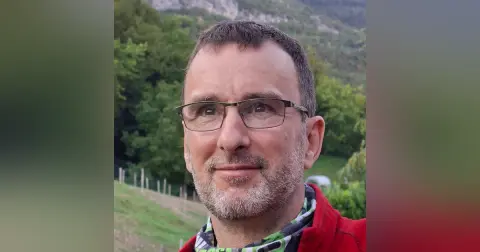
Today’s guest on the Paddling the Blue podcast is Pat Rodgers.
Pat recently released a book titled Chasing Tides where he writes about his experience paddling the emerald isle in 1997. More than just circumnavigating, today's episode also covers how the trip reshaped Pat’s life—boosting his confidence, influencing later endurance challenges, his recovery from chronic fatigue syndrome through writing and diet, and his work running H2O Sea Kayaking and guiding courses.
00:09 - Paddling the Blue
01:38 - Meeting Pat Rogers
01:51 - A Young Paddler’s Beginnings
04:33 - Launching ”Chasing Tides”
07:00 - Why Circumnavigate Ireland?
10:43 - Planning the Irish Journey
14:19 - Gear, Weather, and Going Solo
18:23 - Kindness Along the Coast
19:57 - Ireland’s Great Crossings and Challenges
28:44 - The Journey’s Lasting Impact
34:32 - Endurance, Guiding, and Sea Kayaking
38:09 - Chronic Fatigue and Recovery
42:26 - H2O Sea Kayaking and Island Life
45:29 - Adventure Racing and What Comes Next
48:19 - Books, Recommendations, and Farewell
51:39 - Paddling Fitness and Episode Wrap-Up
0:02 Welcome to Paddling the Blue. With each episode, we talk with guests from the Great Lakes and around the globe who are doing cool things related to sea kayaking. I'm your host, my name is John Chase, and let's get started paddling the blue. Welcome to today's episode of the Paddling the Blue podcast. Today's guest is Pat Rogers. Pat recently released a book titled Chasing Tides, where he writes about his experience paddling the Emerald Isle in 1997. And more than just circumnavigating, Pat shares what he learned about himself and his abilities and how that shaped the rest of his life. Before we get to today's conversation with Pat, James Stevenson and Simon Osborne at OnlineSeaKyaking.com continue to produce great content to help you evolve as a paddler and as a coach.
0:44 You'll find everything from basic strokes and safety to paddling in tides, surfing, coaching, documentaries, expedition skills, and incident management, and more. So if you're not already a subscriber to OnlineSeaKhiking.com. Here is your opportunity to get started. Visit OnlineSeaKhiking.com and use the coupon code PTBPODCAST to check out, and you'll get 10% off just for being a member of the Paddling the Blue community. And for those of us who also enjoy paddling whitewater boats, be sure to check out OnlineWhitewater.com. They're offering the same discount to listeners using the code PTBPODCAST at checkout. And I'd love to help you put those skills to work. I offer a wide range of programs in the Great Lakes and beyond, from paddling skill development instructor certifications, workshops, CPR and wilderness, first aid, guided trips, and more.
1:30 So visit PaddlingTheBlue.com, click the Courses and Trips link at the top of the page, and I hope to see you on the water. Enjoy today's interview with Pat Rogers. Hello, Pat. Welcome to Paddling the Blue. Hi, John. How's it going? It's going fantastic. It's a beautiful day here, and I'm looking forward to a sunny fall afternoon. Very nice. Very nice. So well thank you for joining me today i appreciate the opportunity and you've got a lot of things going on especially lately and but first before we get deep into that what got you started as a paddler. Well, I started as a 13-year-old, went away on a school weekend away to an adventure center, and kayaking was one of the options. That was the very first time I went kayaking. I loved it.
2:17 And the following September, a kayak club started up in the school, the canoe club, as you called it back then. And I was one of the first members, and started from there. Started mainly paddling on rivers down the river shannon, this is back in the 84 85 and it was a long time before i got into sea kayaking but yeah that's where i started okay now i understand that you were, there was something with that club you only had a certain number of boats and those boats were taken but you kept showing up every day. Yeah i mean there was i don't know four of these boats in the club, skelligs, big, ugly things.
3:02 And I think one member had their own boat. So our teacher, Maura Ryan, would borrow a couple of boats. So yeah, so on the weekend trips, there was only enough boats for half the club to turn up. But I would turn up every week instead of every second week. And on the times when somebody didn't turn up, i could i i i got a i got a spin in the boat, sometimes i'd have to walk back home with my gear but that that was okay i was willing to take that that chance yeah, the price to pay to know that you might have the chance to paddle that yeah, absolutely yes all right all right and then at some point along the along the journey there you had you won a contest and there's quite a prize with that contest.
3:48 Yeah, there was a money, a fundraising effort for the club. So everyone had sponsorship cards and whoever collected the most money would win this kayak that PJ, one of the organizers in the club that was donating. So yeah, I won that kayak because between me bugging friends and family and neighbors and my father who brought the sponsorship card into work, I collected the most money. and that's how I got my first kayak. All right. That had a little bit of a challenge to it though, right? Well, it was because I was up against a brother and sister, Mike and Michael and Josefa. They were combining their efforts, but yeah, I still managed to win. All right.
4:34 Well, that's a couple of things that are in your recent book here and I won't share too many of the stories. I'll let people find those for themselves, But you recently did a book release for Chasing Tides, your book, at the Irish Sea Kayaking Association Symposium in Bantry. Yeah, I did. I mean, I finished the book in August. So the symposium being in Bantry, which is local to me here, just was very, very good timing. So, yeah, we did a little book release there, a launch, and did a Q&A session and talked about the book. And yeah, it was a great, great event and a great weekend with the Irish Sea Kayaking Association.
5:19 Well, tell us a little bit about ISKA. So there's ISKA and there's also the international ISKGA. Yes. So the ISKA is a pretty active association, runs the annual symposium, which is the big get-together every year, different parts of the country, different every year. Then there's weekends, several weekends through the year where we just get together, and go paddling together, do skills training all that type of thing okay and then about how many people attend the symposium. There was super between 80 90 people there so it's great to see you know drive into the car park and the hotel and see boats on every roof is very cool you know you're you're with your people at that time yeah absolutely that's that's a great turnout, yeah yeah it's very good it's i mean compared to 30 odd years ago, i mean the number of sea kayakers in the country was was very very small you know but now there's so many it's fantastic yeah good good now and you, also do some weekend kind of more formal weekend gatherings rather than just a you know a couple of friends getting together but it's a more formal club arena event yeah it's just a forum this was and a way for people to get together.
6:42 And on the ISCA website, all the meets set up there. So it's just a little bit more structured than friends getting together. Well, we'll put some links in the show notes so folks can check that out as well and maybe get a chance to visit one of their paddles or go to a symposium. Definitely, yeah. So your early start at age 13, 14, something in that range, led you to have a life of paddling, which led you to circumnavigate Ireland in 1997. So why circumnavigate? And, when I was that kind of age, I had a few different goals in life, big ideas.
7:27 I wanted to climb Everest after reading a few books about Everest. I wanted to paddle down the Dud Cozy after seeing the video of Mike Jones and his buddies. And when I learned about sea kayaking, I thought, well, yeah, paddling around Ireland is an obvious one. And, I don't know, I like surfing navigations. It's nice to close a loop. So yeah, I mean, it was the obvious challenge for anyone sea kayaking in Ireland. I mean, yeah, it's a good challenge. It's a good distance and it's right on our doorstep. So now, how close to the coast were you living?
8:11 Back then i mean i was living at the time in connemara so yeah 20 minutes drive from the coast then right now i'm 100 meters from the sea that's a bad, yeah even that 20 minutes to know that i can drive 20 minutes away put my boat in end up back at the same place 38 days later not so bad yeah yeah it was good it was very good good how did you know you were ready, I wasn't really ready, to be honest. I mean, okay, so the summer of 96, I was working as a guide, guiding French tourists down the River Shannon.
8:51 And at that stage, I didn't own a sea kayak. I had never paddled a sea kayak, but there was a couple of sea kayakers in one of my tours. And they started talking to me about sea kayaking and how it was great off the coast of Brittany and all that kind of things. But I thought hang on we have ireland here it's surely much better so that just put the idea into my head and yeah that summer i decided i was going to paddle around ireland, i almost did it that september at the end of the the tourist season but i didn't, obviously have a kayak or anything like that at that stage so over the winter i got my gear together, bought a boat bought a boat from harry whelan who you may have come across harry had bought this boat specifically to paddle around island in it but but didn't, and harry is a short arse so i had to before i could even fit in the boat i had to get the boat modified, so that was the boat i had all right a copy of a copy of a north cap got on a gear together over the over the winter learned how to sea paddle a bit and And yeah, but was I ready?
10:05 Maybe not entirely. Okay. So 96 was when you first set your behind in a sea kayak. Yes. Okay. And that was the time where you said, this is the thing for me. I'm going to paddle around Ireland. Yeah, absolutely. Go big or go home. And I think I heard you throw a challenge down to the rest of the world a minute ago. You said, we have Ireland, certainly much better. Yeah. Okay. Yeah. Okay. No, Ireland is very good. I know there's lots of nice places, Alaska, Canada, West Coast of the States. Yeah. But Ireland is special. There is something certainly special about Ireland. Yes, sir. Yeah. So what was your planning process like?
10:51 Keep the land on your right. Yeah, pretty much in that navigation. Yeah, I did a Reddit Q&A session recently, and I was asked that. But yeah, keep Ireland on the right. When I decided to do it, I hadn't planned on paddling with anyone. But by chance, I ended up sharing a house that winter with a guy who had paddled three quarters of the way around the previous year, a guy called Jimmy. So that was the reason we started in West Cork, because Jimmy had finished there. So I paddled with Jimmy as far as Connemara. Then I was on my own for most of the time after that. But in terms of the planning, that was about as much as we did.
11:34 Charts and title work and all that, how did you figure that stuff out? So I like to use the Ordinal Survey maps, so 1 to 50,000 scale maps. At the time, they didn't cover the whole country. So Jimmy had some charts, some Imeret charts. So between what he had to what I had, we covered most of the country. Tides, I didn't use a single tide table the whole way around. I just looked at, okay, high tide today is at 7 o'clock. Tomorrow it'll be at 8 o'clock. And I looked at the shape of the coast. And from paddling rivers, you kind of translate that to paddling on the sea, where you have a narrowing, the current is going to be faster there.
12:23 If there's a headland, the current is going to be faster there. So I didn't use tide tables at all. Okay. So I just used intuition. Yeah, intuition and observation. Okay. As you traveled along the coast, how did you make your decision as to where you wanted to cross and where you wanted to go into a bay? Yeah, so it's a good question because the southwest of Ireland, if you look at it, there's lots of fingers, lots of peninsula sticking out, so, some fairly big crossings. We started in West Cork, so we got into these peninsula straight away. We had a few good days of weather, so we just crossed, took the shortest crossing.
13:09 After that, we got stuck for four days, five days in Valencia, and then another ten days in Dune Queen on the tip of the Dingle Peninsula. So that put me under time pressure. So after that, it was really headland to headland as much as possible. That was the reason mainly that I just kept pushing on rather than taking a more leisurely, maybe a safer tourist route, if you like, closer to the coast. Okay. So just more of a speed issue and time efficiency as opposed to when the travel in.
13:49 Yeah. I mean, there was a guy a couple of years ago, went around and he took his time. His name escapes me now. But he was sharing it on Facebook, YouTube every day and took his time, which is a great way to do it. I wasn't trying to set any records by any stretch. I just wanted to get around within the summer season. So yeah, that was part of the decision-making process. Okay. Aside from communications, what was different upon Ireland in 1997 from today? Different, obviously, the technology, not being able to get your weather forecast on your phone and your smartphone.
14:34 Being able to land on beaches, leave your boat there, leave your gear there, and walk into town to find a pub to get the weather forecast, that's the kind of thing we had to do. But what hasn't changed is the welcome that you will get into people's homes, when people see, especially a solo traveler, on the water. They're very helpful. and that that really was a high point on my journey around and continues to be now maybe even more so now because people will be able to follow your journey if you're on social media, and people could be waiting for you on beaches to to bring you to the house and feed you dinner and give you a shower all that type of thing, so i think yeah, i think things were a lot cheaper back then, obviously I did this on a budget on a shoestring as the, as the subtitle of the book says.
15:33 Nowadays. People seem to think they need a lot more fancier and more expensive gear to do this kind of trip, but you don't actually at all. Tell me about your kit. So I had a second-hand copy of a Nordcap. I had fairly basic paddles. I mean, they were robust enough for the time, but they weren't carbon fiber, anything like that. Spare paddles were very, very basic, you know, 30 euro type of paddles. I invested in a half-decent CAG. I didn't use a dry suit, but, you know, a tent that I borrowed, a petrol stove. Petrol stove was good because you can get petrol most of the way around the coast, whereas you couldn't get camping gas.
16:24 Yeah, it's a fairly basic kit. Okay. And when you say copy of a Nord Cap. Yeah. There's a guy called Mark Downey who created his sea kayak, which was. Strongly inspired, we'll say, by the North Cap. Okay. That's the politest way to say it. All right. Yeah. Interesting. I love that your weather forecasts came from the pub. Yeah i mean i had a little little walkman radio as well so you could get the forecast there but it's nicer to go, get a pint as well as as well as the forecast at the same time well it's a good excuse right yeah it is i need to get the weather forecast it's just that's how it has to be absolutely yeah, that's good that's good solo or pair you mentioned that you did a fair amount of the trip with jimmy yeah did you prefer the solo or did you prefer the pair.
17:21 I liked being solo. Being with Jimmy was interesting because Jimmy had to paddle a quarter of the way up the coast from West Cork to Canamara. So he was in no real hurry. I was, of course, especially with our weather delays at the start, I was in a hurry to get going. So with Jimmy, maybe do 30, 40 kilometers on a good day. When I left Jimmy, I just spent more time in the water. So I did enjoy paddling on my own. You're responsible for all your own decisions. Any mistakes you make are yours. But you have the benefit of being able to push on when you want to.
18:06 But yeah, I did enjoy. I really enjoyed paddling with Jimmy. It was great. It was great to start off with him because he had paddled three quarters of the way around the previous year. He had that experience. So it was great to start off with him. But equally, it was good to be on my own as well. I'll bet. I'll bet. So tell me about some of those people experiences you mentioned. I mean, one that keeps coming back to me was I had sent some maps to the post office in Mallon Hedge, the northernmost point in Ireland, so to post restaurant. So I called into the post office there, asked, you know, have you got a package for me? And the lady says, no, but let me check. And it turns out that my package had gone to Malin Post Office instead of Malin Head, which is just, you know, five miles away.
18:56 But she said, don't worry, John, we'll drop it up now in an hour or so. But she invited me in to test her homemade brown bread. She'd tried a new recipe and wanted me to test it. So we sat there chatting with her and having brown bread and a cup of tea. So that's quite typical of the kind of thing that would happen, the kind of people you'd meet. what else. Another time paddling along the East Coast, not too far from Dublin. I had a VHF radio for some of the journey. I had borrowed it, so I had a VHF at this stage. And it turns out that there was a guy listening to me talk to Dublin radio as I was communicating with them.
19:42 And he met me on the beach because he knew where I was paddling in. And he just invited me up to his house, himself and his brother. They gave me dinner, fed me up. Yeah, just things like that would happen quite frequently. That was really nice. Aside from the end of the trip, what was your favorite part? Crossing Donegal Bay was the highlight. It had to be. I mean, for anyone paddling around Ireland, that's always a big decision. Whether you paddle in around the bay, take two or three days, or you go straight across. So for Donegal Bay, a friend of mine, Ciarán, was available that day. It happened to be a weekend. He was working nine to five. The weather was perfect, so we set off across Donegal Bay together.
20:27 That's a 10-hour crossing, or it was for us at least. And again, we had good conditions, but there was zero chance of anyone being able to find us if anything went wrong across the way. The mobile phone signal was patchy, even at the coast, not to mind, 10, 15 miles out to sea. But that was an amazing day, going across Donegal Bay. So it's interesting. I think most people may have said that it was something along the coast, as that's where they keep all the interesting stuff. Your choice was, say, the open crossing. So what made that crossing so special? It was just dealing with Ciarán, with a good mate. It was the challenge of it.
21:09 Obviously, yeah, open crossings can be boring and tedious, you know, but this was different for that reason. But yeah, I mean, talking about the coast, I mean, the North Mayo coast the day before that is spectacular. The Cliffs of Moher is spectacular. But yeah, crossing Donegal Bay with Cairn that day was just special. How far is that crossing? 60 kilometers, 40 miles, give or take. Okay. 40 miles, yeah. And no landing in there? Or are there other islands you might be able to stop on? Absolutely nothing. Nothing at all? After the first kilometre, first couple of kilometres, you're close enough to the shore, on the route that we took at least.
21:52 But then you're paddling out into the big wide open. We were on the Compass Bay for the first while, so just paddling into the fog. And yeah, it was an hour before we could see the opposite side. We were paddling towards the Sleevely Cliffs, big, big cliffs. So we could see them all day, but they're a very, very long way off. Ah. So what was your decision-making process leaving the coast for that crossing? We didn't say it out loud, but we thought, you know, once we're going for this, we're committed, we're not going to turn back. Once you're three, four, four hours in, you may as well keep on going anyway. Sure. But yeah.
22:36 We were pretty much decided at the start that we were going to go for it. Okay what what was it that made you say that this is the day, uh the weather conditions were good and and kieran was available i wouldn't have done a solo that's for sure okay but that was it but the way the weather was good kieran was there, yeah that was it it was just let's go let's go and do this all right what was the most surprising part of the trip for you. Surprising was leaving Ballycastle, Northern Ireland, going around Fairhead and paddling down the coast there. So this is where the whole North Atlantic is trying to squeeze in between Northern Ireland and Scotland.
23:23 So the tides were just incredibly strong there. All around the Northern Ireland coast, it's well known for strong tides. But I paddled 50 kilometers in five hours there. And it wasn't even springs. It was just incredibly powerful tides. That was the most surprising thing, I suppose. So only having a very limited amount of experience in a sea kayak and now facing that strong tidal area, how did you feel? At that stage, I'd gone halfway around the country. So at that stage, I said, I'm an expert now. But a bit intimidating. But I mean, a few days before that, two, three days before that, I'd come up to Malonhead.
24:08 And coming up to Malonhead in a really murky evening, late enough in the day, again, there was the same kind of big, powerful tides going on. You could really feel it. It's intimidating. It really is intimidating. But I just had belief in myself that I could stay upright no matter what. I had a very, very good role. I was a river paddler and a kayak surfer. So, yes, in my oversimplified brain, I thought as long as I can stay upright, everything will be fine. I imagine that the feeling of intimidation as you're encountering those large headlands is probably pretty great, just as you had mentioned.
24:50 Did you find it anticlimactic, like, oh, this is it? Or was it as challenging as you thought it would be? No, I mean, some of them, I mean, Misenhead, which at the other end of the country, that has a reputation for being big and nasty and big tides and big swells. But that was day two of our journey. And we just paddled around us without a second thought. I think at that stage of the journey, ignorance was bliss for me. So it all depended on the days, you know, some days these big name headlands can be terrifying, other days it's just a nice paddle on the sea. Yeah, never underestimate them.
25:32 No, absolutely not. I think I probably did at the start, but later on when we got to the end of the Dingle Peninsula, going around Mount Brandon and the Three Sisters past the Blasket Islands, And there I was made very well aware of just how intimidating and nasty the coast can be there. So tell us about that. So that was after myself and Jimmy had been waiting around on the coast there for 10 days or so. There'd been big winds, big swells for ages. And the day we decided to go, the wind had dropped down, but there's still that big nasty swell there.
26:14 And the clappatus going around the headland beneath the three sisters at the western tip of the dingle peninsula that was just incredible like two kilometers offshore and we were still being bounced around the place, it was the only time i'd ever felt seasick in a kayak before or since, so that was that was intimidating but yeah we we that was that was the tough day on the water I bet, I bet. What would you say, when you said the Ballycastle was the most surprising part of the trip, what would you say was the hardest part of the trip? The hardest day was that day going around from Dune Queen to Brandon, going around the Three Sisters. That was the hardest and most challenging kayaking conditions for sure.
27:01 Was there anything other than the kayaking conditions that might have made you say, this isn't worth it, I don't know if I'm going to keep going? There was never any question of stopping, but at the time, this was 1997, so towards the end of the Troubles in Northern Ireland, this was before, the Good Friday Agreement had been signed, I think. So, politically, here I was, a young Irish Catholic fellow up in Northern Ireland. So, there was one place where I felt very intimidated. I pulled into a place called Portavogie. Actually, my longest day in the water was 72 kilometers.
27:45 I pulled in there and needed food, needed fuel for my stove. And walking through this little town, it was very, very much a unionist Protestant stronghold with union flags everywhere and the pavements painted red, white, and blue. I just did not feel in any way welcome as a young Catholic lad there. That was intimidating. That was not a fun time. Was it just the landscape and the feel of the area, or did you feel challenged by the people at all? Yeah, I mean, the couple of people that I met, you know, asking for directions, they just weren't very welcoming when they heard my accent.
28:32 Okay, I was saying, could they tell you you weren't from there? Oh yeah, yeah. It's blatantly obvious to anyone that I wasn't a local. Okay. Yeah, yeah. Now, how many days were you on the water, and how many days for the trip as a whole? So, yeah, on the water, 38 days. But between start and finish, I think something like 66 days. Okay. Yeah, there was the bad weather at the start, and then another bad weather system, when it was up in Newcastle County down, that took another week out of things. All right. So that's what, 18 days, 28 days? I don't know, it's a bunch of days. There's a lot of days off the water. Yeah, it was. And then a few days here and there as well for various reasons, a couple of rest days and things like that. Okay. And then how many kilometers overall?
29:23 1,500, 1,510, I think I measured. So yeah, not short of it, not far off a thousand miles. Okay. Would you do it again? I would do it again in a heartbeat. Yes, I would. And you could go around Ireland, three or four or five times. It'll be different every single time because the weather would be different. I mean, you can go out kayaking here in Roaring Water Bay where I live, you know, five days in a row and it'll be a different experience every day. So yeah, I would love to do it again. But there are other challenges out there as well. There are other things to do. Sure. Would you do it the same direction or would you go anticlockwise?
30:06 I think I'd go the same direction. I think it kind of makes more sense with the prevailing winds. I know Mick did it this year in record time going the wrong way around, but he is Mick O'Mara. I'd say at 20 days, he probably considers that the right way around. I think so, yes. So how did the circumnavigation change you? So for me, in my life, it's always been before and after 97, so before and after my trip around Ireland, because it gave me just the belief and confidence that I can do big things. Having completed the trip around Ireland that not too many people had done before, Yeah, it just increased my confidence levels.
30:52 I mean, academically, I had tried third degree education before and, you know, didn't do very well. But after the trip around Ireland, I decided that I was going to try to go back to full-time education, did three years part-time, and then in 2021, No, 2001. I went back full-time for four years and ended up with a first-class honours degree in mechanical engineering. And that started off a whole different career for me. Sure, sure. Now, what was it about the trip specifically that made that difference and gave you that confidence?
31:33 I mean, it's just. The size of it. Just the fact that it hadn't been done very much before. And the fact that I did it solo, I suppose, or largely solo, that just gave me the confidence and belief, self-confidence and belief in myself that I could do big things. Did you go into the trip hoping that that trip would be the thing that built your confidence? Not at all, no. It was just, the trip was just something I decided to do and wanted to do. I wasn't expecting any major life changes out of it, but it's just what happened. So that four years in between the trip and going back for additional education, what happened in there?
32:19 Well, I mean, there was a lead-up to going back to full-time education in that I did three years part-time, so I did evening courses. Okay. I worked in retail, I worked in an outdoor shop in Limerick and carried on mostly river paddling and hill-walking, mountaineering. In fact, less than six months after my trip around Ireland, we went to South America. Myself and a group of friends went to South America to try to climb Aconcagua, the highest mountain in South America. We tried, but unfortunately, mainly because of conditions that year, we didn't get to the top, but we had a great adventure.
33:02 So, after the trip, you did a little bit of river paddling, as you mentioned, but then went education and went through your engineering career. So, you stepped away from sea kayaking for quite a few years. Why? I did. I mean, the main reason is because I was the only one I knew that owned a sea kayak. While the canoe club, Lima Canoe Club that I was in was an active club, did lots of white water, lots of surfing. Nobody had any interest in sea kayaking, amazingly, even though we have some of the best sea kayaking, as I keep saying. But yeah, I was just the only one I knew with a sea kayak, so I could be antisocial and go off on my own, which is fine, or I could try to do something with, my girlfriend or my friends at the time, and that happened to be more hill-walking, mountaineering, and river paddling.
33:56 So out of curiosity, if sea kayaking had fell out of favor in those years, what was it that brought it back to its current state? I don't think it's much that it fell out of favor. It's just that it was never in favor. Some people, I mean, I remember a group paddled the Cliffs of Moher, but in dancers, in just riverboats, as part of the training course they were doing. But really... Very few people, in Limerick at least, where I was. Maybe in Dublin it was different, but there just were very few sea paddlers around. So how did the trip influence your later endurance activities?
34:38 Well, later on, when I'd gotten into ultra running, I started off with marathons and then progressed to ultra marathons. I had done, in 2017, I'd done a big race called the Spine Ultra. And after that, I was wondering how I could convert the lessons learned running ultramarathons to other activities. So I thought, well, let's bring it back to kayaking and sea kayaking. So I decided I'd try to do a fast descent of the river Shannon. Using the no sleeping approach and just keep on going day and night.
35:20 So that's what led me to paddle down the River Shannon in what at the time was a record time. It has since been beaten by a young guy called, well, young relative to me, Shane Young, who I knew as a two-year-old when he worked for his father in Little Killery Adventure Center back in the early 90s. So it's fitting that Shane has taken the record from me. You mentioned, or we talked about ISKA, the Irish Sea Kayaking Association, earlier, but you had also mentioned, you know, Distinction, ISKGA, the International Sea Kayaking Guiding Association.
36:00 Tell us about, and you're an advanced guide through International Sea Kayaking Guiding Association, correct? That's right. I am. So that's run by Jeff Allen. And I think it takes the best of the kind of national governing bodies like the, what was the British Canoeing Union? I'm not sure what it is. Canoeing Ireland and the UK equivalent. And just takes it to the next level, I think. It is all about guiding rather than, instructing specifically well more about guiding than instructing, but yeah it prepares you to to lead groups guiding anywhere in the world effectively, yeah it's very very good very good training course so what is that process like uh in the course programming the kind of training you do a lot of do a lot of incident management Obviously, there's some very advanced first aid.
37:01 You can do different modules. So you can do a 5-day incident management. You could do the sea survival modules. There's camping and bushcraft type of things. And you can come and do various sections. That's the way I did it. I went up and to, again, this is up around Northern Ireland. And I spent five weeks there doing everything that was on offer. And I found it really very, very good. And you said five weeks? Yeah, I was there for five weeks, the best part of five weeks, yes. Wow. Between the training and the assessment then as well, yeah. And this was doing something every day. Yeah, that's quite a commitment. Yeah, it was.
37:43 I mean, the benefit to me, rather than, say, the canoeing Ireland one, is that you can do it all in one chunk. With the canoeing Ireland, you're going at weekends here and there, or two days here and there. And it was just good for me to up my skills level in one fell swoop if you like okay so how has that program benefited you. So here's a funny thing right before i right before i started that training course i got a flu and the sensible thing would have been to stay home in bed But I went up to do the course anyway. And that led to me indirectly maybe getting chronic fatigue syndrome.
38:28 So right after that course, I had great plans. I was going to run a trip to Corsica, bring a group out there. But unfortunately, two and a half years, I was in bed or on the sofa. So that changed all my plans. So but this winter i'm going to be going back to do some more refresher training with with iska with the with jeff allen, and back in operation with the sea caulking business next spring that's the plan, so tell me a little bit more about the chronic fatigue syndrome. So chronic fatigue syndrome, it's not very well understood by the medical profession.
39:13 There's no cure for it, there's no treatment. So I spent two and a half years either in bed or on the sofa. It's very debilitating. It's very hard for family as well, especially for my wife, Tina, my main carer. And i mean it it's funny because it's not serious in that you're not going to die from it but in my view, it's very serious because you lose connection with people people don't know how to say you don't get the same sympathy that you might have if you had cancer for example if you have cancer you've got an established protocol you get the sympathy vote, but with With chronic fatigue syndrome, medics either think you're lazy or crazy.
40:03 You lose the social interaction with friends and family as well. During my recovery, that was when I started writing the book. So writing the book was a huge part of my recovery. And also, I mean, doing all the publicity for it and doing launch events for it has been a way for me to get back out into the public as well. So I catch up with all friends and make paddling plans again. So it's been a great tool for me to, for my recovery and getting back out again. Yeah, I would imagine that it's one of those unseen illnesses that you can't really explain, and it doesn't visibly show something, but internally you just don't feel like moving.
40:51 That's exactly it. I mean, you go for blood tests and everything else, then everything comes back as normal, which is, you know, someday a root cause will be found for it and a treatment will be found for it. But at the moment, it's still a mystery to the medical profession. So how did you come out of it? I mean, do you just wake up one day and you're like, I feel great? There are different treatments of different people, try different things, but really it was down to Tina and my wife researching lying awake at night, researching and finding things, finding different things. And she came up with a diet called a low histamine diet. So, and that has made a huge difference to me.
41:33 Gradually over a few months, but a low histamine diet means no leftovers, no aged foods, nothing fermented. So no nice mature cheeses, no wine, no beer. and then some odd funny things like no tomatoes or no spinach. But if you stick rigidly to that diet, for me, it worked at least. It seemed to have made a big, big difference. From the time that you started that, how long did it take to come through? From the time I started that dive to, say, get back paddling, it was about five months, four or five months.
42:15 So, and anyway, I'm steadily recovering now. I wouldn't say I'm fully recovered, but I'm pretty damn close. All right. Well, congratulations. Thank you. It's been so good to get back out. I can imagine. So tell us about H2O sea kayaking. So H2O was set up originally by John Hines. You'll have come across him. Oh, absolutely. Yeah. And then John passed it on to Sandra and Sandra. I bought her from Sandra a few years ago when I came to Sharkin Island. This was 2021. I was working as an engineer, but during COVID, all those kind of things were affected. So I was made redundant.
43:01 And with my redundancy money, I bought H2OC kayaking from Sandra and set up the business here. So I run the usual half-day tours, full-day tours, weekend trips. We do some skills training, one-to-one sessions, anything from the basic stuff to some quite advanced training. I took a round island paddler for some training to Gaskin and Sound in the biggest conditions we could find, so that was good fun. So yeah, I do a bit of everything. Okay.
43:44 Now, have you been on the water with that for the last couple of years or had others that have been helping you out with that? I haven't. I had to park the business pretty much, but I did have a friend of mine run it for a little while, Anula Joachim. She normally paddles in Iceland, but she had me out here for a little while. But mostly, the business was shelved for a couple of years. There was no way I could run it. Even the administration side of it had to be parked. Glad you're back. Thank you, John. Yeah, it's so good to be back on the water. So what is it that brought you back to West Cork?
44:25 Yeah, before COVID, we were living in Kerry. We were going to sell our house in Kerry and we were going to move to the Alps. So I had sold all my kayaking gear because we were going to be focusing on climbing and ultra running and that kind of stuff. But then COVID came along, changed our plans, and we decided we were going to stay in Ireland and started looking for someplace in West Cork. I eventually found a house for sale on Shurkin Island. We'd never thought about living on an island, but Shurkin Island happens to be a home to a lot of artists. My wife, Tina, is an artist, so it was a good fit from that point of view.
45:08 And I just thought, well, if I'm not going climbing, then let's get back to, my love of the sea and get back to the sea kayaking. And Shurkin Island in West Cork is, I keep saying it, one of the best places you can come for sea kayaking. It really is amazing. Excellent. Well, maybe we'll get a chance to see you on Shurkin sometime. Yeah, that'd be cool, John. Yeah. Yeah. So you mentioned a friend of ours, John Hines. Yeah. And you and John and I share something else in common, not only paddling, but adventure racing. Oh, yes, we do. Yes. Yeah. We did a lot of that. Yeah. Yeah. So the Beast, Aitera, other races.
45:48 What's been your favorite? I mean, over the years, The Beast has been an amazing one. It's The Beast and iTero run by the same guy, Ivan. Yeah, hard to beat that. I mean, there are lots of shorter adventure races where, you know, you're finished in, you know, four or five or six hours. But the Beast, I think the longest one we did was 72 hours and then ITERRA was over five days. So those kind of endurance things are a great challenge. I love them. Yeah. Yeah. So what drew you to that sport? Well, that was Tina, my wife, actually.
46:28 When I met her, first of all, she was training to do a marathon and she was doing a little bit of adventure races. So our first date actually was climbing in the Reeks and the McGillie Cuddy Reeks in Kerry. Second date was orienteering and her third date was an adventure race up in Northern Ireland. And Tina started me on the adventure racing. Okay so for those listeners who aren't familiar basically take all your favorite events climbing, paddling biking ascending repelling orienteering mash them all into one race and that's anywhere from four hours to eight days long and, so you've got the physical readiness you've got the mental challenge the route finding team dynamics all that stuff together yeah the big part of it is the big difference to the between the, you know the beast and things like that and the one day races is the navigation.
47:21 That's, that's where, that's where we, we generally did fairly well. Yeah. Being able to navigate night and day and kayak and bikes and yeah, it was good over the hills. So as you're coming through a chronic fatigue and building back into H2O, any adventure races on the horizon for you? I think, I think I've retired from there. They did adventure races. I know Tina might do some more. Tina and John did one together a couple of years ago. No, I think I'm focusing now on the kayaking. Yeah, definitely. What I want to do is I'm hoping to get myself, I'm planning on getting myself a new boat soon, which will open up new things like, you know, kayaking out to the fast net rock more frequently, doing some longer distance stuff, some faster stuff.
48:07 So that's where my focus is now. Excellent. What do you have your eye on for a boat? Ooh, a rock pool taron. Ah, all right. Yeah. Looking for some speed. I am, yes. It's a special treat for myself yes alright well good well how can listeners connect with you Pat? So you can you can learn all about the trip around Ireland through a book I've written called Chasing Tides and that's you can find that on chasingtides.ie or you can find me at. H2ockayaking.com alright well I'm in the middle of reading Chasing Tides right now and enjoying the read so So it's a fun journey.
48:52 I've interviewed several folks who have paddled around Ireland. Each person's journey is different from the other. Yeah. And it's an opportunity to read yours, so I appreciate the... I'm glad you wrote the book, and it's an opportunity for me to see it through another's eyes. Thank you. Thank you, John. Yeah. And one final question that I have for you, and that is, who else would you like to hear as a future guest on Paddling the Blue? Well, somebody I have been in touch with recently, a guy called Paul Caffin. He's based in New Zealand. He is a kayaking legend. I have to admit, I didn't, know of him until he got in touch to buy my book.
49:33 But yeah, Paul Caffin has kayaked, I think the first kayak around Australia, around the Southern Ireland in New Zealand, and Great Britain, I believe as well. I mean, yeah, he's definitely somebody. Yeah, he's done a huge amount of stuff. Yeah, you're right. So Paul is an absolute legend in the sport, and I appreciate you putting him forward as one of a potential guest, he would make a great guest and I look forward to the chance to talk to him someday. Yeah. And somebody else, if I might mention him. On the other end of the spectrum altogether, a guy called Danny Wilkes. I came across Danny on YouTube. He was kayaking the Inside Passage and he wrote a book about it.
50:18 Now Danny, I don't think he would mind me saying so, but was not an expert kayaker, He had much less experience even than me when I paddled around Ireland. But he managed to put together his own expedition to paddle from Seattle or Vancouver, I'm not sure where he started, up the Inside Passage. On borrowed kit, on very basic kit, very little money, fishing along the way because if he couldn't catch fish, he would go hungry. To me, he just epitomizes. The spirit of going on an adventure without having all the fancy kit and loads of money.
51:02 You can still go on adventures on a budget. I think that's what Danny is all about. Well, fantastic. I really look forward to the opportunity to talk to Danny as well and learn from his experiences. And you're right, you don't have to have all the kit, just have to have a plan, and be able to put that into action. Exactly. So, Pat, thank you very much for the opportunity to talk to you, to hear about your wide variety of experiences, your trip around Ireland, and other activities as well. And I wish you the best, and hopefully we get a chance to paddle together someday in the future. Thank you, John. That would be really nice. My pleasure. Nice talking to you. Thank you. If you want to be a stronger and more efficient paddler, Power to the Paddle is packed with fitness guidance and complete descriptions along with photos of more than 50 exercises to improve your abilities and enjoy your time on the water.
51:52 The concept and exercises in this book have helped me become a better paddler and they can make a difference for you too. The exercises in the book can help you reduce tension in your shoulders and low back, use the power of your torso to create leverage and use less energy with each stroke, use force generated from your lower body to make your paddling strokes more efficient, Have the endurance to handle long days in the boat, drive through the toughest waves or white water, protect your body against common paddling injuries, and while you're at it, you might even lose a few pounds. And who wouldn't mind that? So visit paddlingexercises.com to get the book and companion DVD. I've interviewed quite a few round Ireland paddlers, and each story is different, although Pat might be the first to admit that his weather forecast came from the pub.
52:34 I found his thoughts on how the trip changed him personally to be very interesting, too. And another vote for Paul Caffin. Paul and I have talked, and I agree that he would make a fantastic guest. And I know that many of you have expressed an interest in hearing from such a legend of our support. I hope you've enjoyed the episode, and thanks for joining me today. Visit the show notes for this episode at paddlingtheblue.com slash 178 to find Pat's book. It's a fun read. And if you're not already a subscriber to onlineseekhiking.com or onlinewhitewater.com, use that coupon code PTBpodcast to check out and you'll get 10% off just for being a member of the Paddling the Blue community. And as a reminder, you can find programming and trips from me at paddlingtheblue.com. I hope to see you on the water. And thanks again for listening.
53:16 I look forward to bringing you the next episode of the Paddling the Blue podcast. Thank you. Thank you for listening to Paddling the Blue. You can subscribe to Paddling the Blue on Apple Music, Spotify, or wherever you find your favorite podcasts. Please take the time to leave us a five-star review on Apple Music. We truly appreciate the support. And you can find the show notes for this episode and other episodes, along with replays of past episodes, contact information, and more at paddlingtheblue.com. Until next time, I hope you get out and paddle the blue.