#124 - Martin Rickard - Greenland Calling: Respecting and Paddling Through History and Ice


 Apple Podcasts

 Spotify

 Overcast

 Castro

 PocketCasts

 RSS Feed
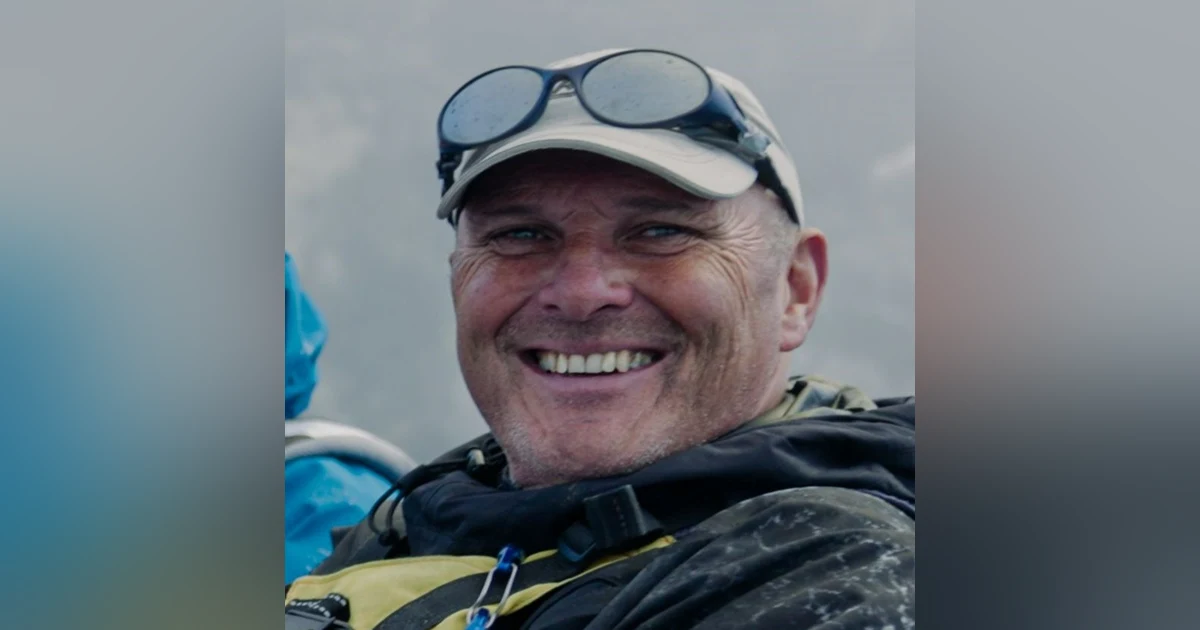
In this episode of Paddling the Blue, Martin Rickard shares his deep connection to Greenland and his love for the county and its people while following the legendary paths of explorers Gino Watkins and Freddie Spencer Chapman.
Discover how a chance encounter with a book ignited Martin's lifelong love for Greenland and hear fascinating stories about his two-decade-long experience guiding expeditions through its stunning landscapes. Martin also discusses the impact of climate change on Greenland's environment and the evolving role of tourism in the lives of its indigenous communities.
Join us as Martin reflects on the challenges and rewards of guiding in such a remote and breathtaking region, the importance of connecting with local people, and the unique experiences of paddling among majestic icebergs and humpback whales.
- GreenlandKayakExpeditions.com
- Gino Watkins
- Freddie Spencer Chapman
- Discovery of Shackleton's 'Quest'
00:09 - Introduction to Paddling the Blue
01:04 - Meet Martin Ricard
02:53 - The Call of Greenland
05:16 - The Legend of Gino Watkins
10:16 - Exploring Greenland’s History
20:58 - Local Connections and Tourism
26:47 - Climate Change Impact
34:51 - Whale Encounters and Wildlife
49:27 - Challenges of Guiding in Greenland
51:48 - Closing Thoughts and Connections
0:01 Welcome to Paddling the Blue. With each episode, we talk with guests from the Great Lakes and around the globe who are doing cool things related to sea kayaking. I'm your host, my name is John Chase, and let's get started Paddling the Blue. Welcome to today's episode of Paddling the Blue. Martin Ricard is today's guest on the show, and today we talk about his love for Greenland and its people, what started his passion for this beautiful land, and about following in the footsteps of Gino Watkins and Freddie Spencer Chapman. Thanks to George Shaw for helping make the connection to Martin. Before we get to Martin, James and Simon at OnlineSeaKayaking.com continue to produce great content to help you evolve as a paddler and as a coach. You'll find everything from basic strokes and safety to paddling in tides, surfing, coaching, documentaries, expedition skills, and incident management, and more. And it's all in one place.
0:49 So if you're not already a subscriber to OnlineSeaKayaking.com, here is your opportunity to get started. Visit OnlineSeaKayaking.com use the coupon code PTBpodcast to check out and you'll get 10% off just for being a member of the Paddling the Blue community. Enjoy today's episode with Martin Ricard. Hi Martin, welcome to Paddling the Blue. Hi John, thanks for inviting me. I feel quite honoured to be here. I appreciate you taking the opportunity. So we've got a lot of things to cover today, so let me start with this. Why paddling for you? Paddling for me? I think it was just something I was introduced to as a kid my father was quite outdoor focused introduced me to rock climbing and kayaking i suppose really actually kayaking is i i got really into kayaking when i started working in a an outdoor center in in england and i probably i went there primarily as a climbing instructor.
1:49 But at the same time I was there, Nigel Dennis was there, and obviously he's well-known for sea kayaking. He just recently paddled around Britain. So I was working alongside him, and I'd kind of take him out after work and scare him rock climbing, and then at weekends we'd travel down to Anglesey and he'd scare me, sea paddling. I just fell into it, really. It was a good alternative. Sea kayaking was something we didn't at that time do at the Centre. We worked at and it was something that you could go to fresh wasn't something you'd been working a week on teaching a week or whatever so yeah and nigel obviously influenced quite a few of us to to take up sea kayaking sure that's quite a mentor to have at a young age yeah i think he's a bit oh he's a bit older than me but uh yeah i was just a kid 18 something like that i suppose we both started out as training instructors and he primarily went there i think to obviously.
2:53 Learn how to run an outdoor center and then set his own up subsequently set his own up in future years so he was still in a heavy learning mode at that point as well yeah i think it was it was an exciting time really i was rubbing shoulders with lots of people sadly some aren't here anymore that's the nature of the game but a lot are and they've all gone on to do quite impressive things in in the outdoor fields that they've chosen as have you so we'll certainly talk about that here as well so do you still do any rock climbing no okay i might let my son drag me up a few routes but uh no i'm not uh not into climbing anymore i've had too many injuries damaged my back i've got two two replacement hips so i'm just glad to be able to do what i can do well in terms of what you've you've been able to do you've had some some pretty amazing adventures around the world and a big part of that has been guiding greenland so you've been guiding greenland trips for more than 20 years what what started the interest in greenland well ironically it was a canoe trip an open boat trip on the River Wye, which is in England.
4:04 And it's quite a nice, lazy river. We used to take groups of youngsters down the river over a week or so. But one of the highlights for us is we started at a place called Hay-on-Wye, which is famous for secondhand bookshops. So at the start of the trip, we'd go into the bookshop. And again, we mentioned Nigel earlier, he picked up a copy of Gina Watkins' Last Expedition, written by Freddie Spencer Chapman. We read it on that trip and that sort of inspired me to one day go to Greenland and never thought I would, Eventually made it in 2000, started my obsession with Greenland in 2000.
4:44 I was working on a school's expedition as a sort of mountain leader. But at the same time, there were people who I knew on that trip helping the school. Pete Jones from Anglesey was there as a kayak guide. I'd known Pete for years before that. So we kind of teamed up afterwards and decided that, well, why don't we have a go at paddling up to where Gina Watkins died? So we put a trip together to go up there a year or so later. So tell us about the legend of Gina Watkins. Well, I don't know. It's difficult to try and sum it up. If you read the book, it's just, and the books by Chapman, they're very easy to read.
5:29 It really sort of puts you back in in the era of the 1930s and when you realize what these guys did with no Gore-Tex no GPS no satellite navigation basically you know old school hobmail boots tweed jackets and the such like and it's very humbling and quite inspiring and Gina Watkins was obviously the leader of the two expeditions that i was. I have researched over years and their mission really was to be self-sufficient live off the land by adopting inuit greenlandic lifestyle of hunting from kayaks while they were in greenland they were doing research into the weather conditions because they were sponsored by pan.
6:19 Airlines, as was in those days. So it was the British Arctic Air Route Expedition. They were doing research to try and see the feasibility of having overland routes with hop-off spots, one of which was going to be on the east coast of Greenland. In the days when transatlantic flights, you couldn't go all the way. You had to obviously refuel on the way. So they're looking for overland routes across Greenland? Yes. So obviously from the States to the UK, trying to research potential landing sites for aircraft. Okay. So they could go basically from America, Labrador, West Coast to Greenland, East Coast to Greenland, Iceland, and then UK.
7:05 Okay. When planes weren't able to do it in a one-er, we'll take for granted nowadays. Sure. Yeah. I was thinking you were talking for a minute there about actually driving overland and being able to set up routes. Sorry. That's all right. So, yeah. So basically, I sort of, I read a few books and got inspired to one day kind of visit Greenland and see the things I'd read about in the books. Yeah. And I contacted Nigel, actually, in probably 1999. And he'd just come back from Easter Island. He'd made a three-piece kayak that he'd taken out there and developed and sort of proven it was successful.
7:49 So it was a hard-shell sea kayak in three pieces that bolted together. And I was keen on seeing if I could borrow it to do a trip of my own in Greenland. And, of course, he said, sure, that's not a problem. But also then he put me onto this guy a guy called Gareth Bunnell who was running a school expedition out there. Suggested I contact him with a view of seeing if I could borrow these kayaks or help out and within about 10 minutes of talking to Gareth I was on that trip, and it was life changing for me it was life changing for quite a few of the youngsters on the team but for me certainly, It was jaw-dropping coming out of the airport in Kulisuk, looking at the icebergs on the beach stranded there at low tide.
8:36 And I don't know, I fell in love with the place straight away. And although that was supposed to be a one-off trip that was a chance in a lifetime to go, I've been back pretty much every year since then, really. So I've been lucky. Now, what's the age of the group that you were with? At that time they were all youngsters so they'd have been i think youngest was 14 and the oldest was probably about 20 sort of a student that had left but came back to assist with the expedition and we had about 30 kids out there all youngsters doing a variety of things from, mountaineering and going up on the glacier with me doing a bit of ice climbing and snow holing to So then they'd rotate round, they'd be with Pete, see kayaking.
9:24 Others would be doing some scientific work and community projects within the community. So was this an outgrowth of a school program or was it the outdoor center? This was a separate thing from where I worked with Nigel back in the 80s. It was an independent school from the UK and they had a big expedition every other year. Particular year they were going to to Greenland I didn't realize at the time where they were going when I first spoke to Gareth but it transpired quite soon that he'd read the Watkins books I'd read the Watkins books and we had a very strong mutual interest in the history of Gina Watkins and Freddie Spencer Chapman and and the other guys so we we were very excited to wise very excited to join that trip and explore the area.
10:16 And that set the seeds for me, really, to be going back on numerous occasions since then. So for those who aren't familiar with Geno Watkins who are listening, tell us a little bit about the expedition, aside from the crude gear they had at the time. What was significant about the trip, and then where was that trip? Well, he was an explorer. He'd done quite a few things. He was in his early 20s from the UK. He was very much into living off the land and doing trips where he was as self-sufficient as possible to obviously save expenditure. And this particular trip was in 1930-31.
10:59 They sailed on a boat called the Quest, which was also quite famous from the story of Shackleton. And they used the quest to take them to the east coast of Greenland with all their kit there was I think 13 expedition members they based themselves just south of Amazlik or Tasilak as it's now called just south of Amazlik Island a place called Natavi and they had a prefabricated wooden hut that had obviously been built in a bit like an Ikea hut which they, erected once they landed and they set up a base basically for over a year so they could go up onto the Greenland ice gap establish a tented base site up there and record on a daily basis weather conditions so that they would be able to send this stuff to Pan Am with a view of the feasibility of whether it was possible to regularly fly the planes that they had in that era, over the Greenland ice cap, with a view of establishing this transatlantic air route. So they moved in, established their camp.
12:18 Gina was very keen on getting his team trained up. So they all had kayaks purposely built for them by the locals. The idea behind that was so they could actually use them to hunt seals and feed their dogs, which they used on the ice cap to pull the sleds. Obviously any seals they caught also would be for for their own food they hadn't taken a huge amount of dry stores and it was very much a case of living off the land as locals did and you mentioned they used boats that were built by the locals so did freddie i'm sorry gino and his team have much kayak experience prior i think before they went to greenland they would have had if any it would have been very limited they didn't from my knowledge they didn't get boats built until they arrived in Greenland on the first expedition and then it was a case of being taught by the locals how to roll and hunt I think Gino was quite proficient at that chaplain obviously was good as well and I think that they were the main two Gino predominantly though who were hunting to try and bring in seals for the expedition members food supplies and freddy spencer chapman tell me about him well it's interesting because the book is called the book i first read was watkins last expedition and when you start
13:50 reading about him you think well actually watkins was the figurehead of this these expeditions but in many ways i think it was freddy spencer chapman who was Gino's right-hand man, so to speak. Obviously, the biographer, too, of the two expeditions, the 1930 and 1931-32 expedition in 1932. So his story of Greenland was cut short. Chapman's was obviously extended. He became a very well-known figure in the Second World War, the war hero in Malaya. In the jungles they're training resistance people and chapman's yeah the more you read the more you realize that chapman was a very solid equal in personality and skill to to watkins it's fascinating because how things take a route and you think oh that's a coincidence but sometimes things are so bizarre that you think well actually that can't be just coincidence there's more to it than that i'll give you an example i was in i used to live in shetland for many years and i was taking a youngster who i worked with running alternative programs for him out with school and i decided to introduce him to see kayaking he was fairly enthusiastic we went down to the local club night at the swimming pool which was unusual for
15:21 me because i didn't really get involved too much in in in the pool nights but on this occasion because of this youngster I was working with I decided. It would be appropriate to to go down to the pool so I'm stood on the pool side first evening people are being sort of divided off into different groups and there were four or five ladies there feeling obviously a bit self-conscious hadn't been adopted by one of the coaches at that point I've and I just said right I need four volunteers or five volunteers whatever it was and just went you you you you and you pointing and said right off you go if you go and join my colleague in the corner of the pool there up in the deep end.
16:05 We'll um we'll get started and one of the ladies was quite anxious about going in the deep end. It transpired that talking to her that she'd had quite an adventurous in her earlier years she was Her family was quite adventurous, and it had all sorts of interesting expeditions and things. And we got talking, and I wasn't thinking at all about Greenland. Anyway, I can't go to two. Her father-in-law was Freddie Spencer Chapman. And of all the people to meet on the side of a pool, by chance, like that, Freddie Spencer Chapman's daughter-in-law, Sarah, there by chance, working with this lad in the pool.
16:47 She was in Shetland by chance for a month, just doing some supply work as a osteopath. And yeah, it was most bizarre. So that was very fascinating to talk to her. And she said, well, you know more about my family than I do, which isn't true, obviously. But it was great. So we built quite a good, strong relationship and connection through father-in-laws or my interest in her family, I suppose. And what Freddie did. I'm hoping that perhaps in the future to get her son out, Stephen. Because that would be tremendous to be able to assist Freddie's grandson in visiting the two base camps that he was at in the 30s with Gina Watkins.
17:36 That is a fascinating connection, how that happens. Yeah, I think it's something a little bit more sometimes than just coincidence. Something guides you sometimes. Something. So tell me about your experience in Greenland outside of that first trip. Well i i've kind of been obsessed by it it's just such an amazing place to paddle yeah the the wildlife's amazing the scenery is incredible you've got alpine type peaks sticking up out of the water they're not that high they're probably about 4 000 feet but they look like huge alpine peaks in which where the valleys have been flooded there's an awful lot of sea ice freezes and the local people are traveling around a lot from snow machines now and dog sleds but the ice it's the ice that people go for and you know huge icebergs the size of a shopping mile when that's the bit above the water there's eight times that i've amped down to something the size of a shoebox in size and then obviously sea ice during the winter it freezes maybe a couple.
18:46 Meters thick huge big flat pans of ice it's all moving around very dynamic situation environment to be paddling in and quite challenging very rewarding on a clear sunny day or even a misty murky day with the clag down and fog in it's very atmospheric very very exciting i love it and the other thing is not just the it's not just the paddling it's the people their history is very you can almost feel their history because they've gone from the Greenlandic people now on the east coast have gone from living in turf houses.
19:30 And turf house remains with wooden buildings constructed inside them so they've gone from that in the late 1920s, And certainly during the time of Gina Watkins, a lot of people would have been living in traditional turf houses. They've gone from that to modern housing, satellite TV, mobile phones, Gore-Tex, everything that we have. And obviously they aspire to have what really is for a lot of people, a lack of employment and income. To obviously chase that dream of having the things that we have.
20:15 But the history, the history of the local people, their culture, their ability to using very skillfully made but very basic hunting tools in the days of Watkins and Chapman in the 30s, and the friendliness and outward going attitude to us coming in is very gratifying. And I think that's partly perhaps because I was told once that, Martin, you must tell your people they are not tourists, they are kayakers. And to have that from a local hunter is quite rewarding.
20:58 Tell us about the reception that the local people have had towards your groups. It's always been very positive, I think, because we're kayaking. They acknowledge the fact that they always say welcome to our country, welcome to Greenland they're very proud of, where they are in their history and culture and to see people putting the effort in that we do to palady well I'm not on working but the people who come with me they're leave from work, they're on holiday they can afford to, take leave and come so that's kind of It's kind of hard in Greenland.
21:39 Any people who visit who are tourists are obviously in a much better financial position than a lot of the people in East Greenland who do struggle a bit and don't have the opportunities that we have. In what ways has tourism changed Greenland? I think it is changing Greenland. I think in many ways tourism is there... If they can manage it and there's there's a difficulty there but it will bring in income and it will provide work for for locals it is now and in many ways it needs to be met it needs to be managed sympathetically so that more local people are given the opportunity to get involved in tourism at a meaningful level so as guides and i know several people out there at the moment who are helping facilitate this where i am but so in the winter for example there's a lot of local hunters who are now working as dog sled drivers as guides for expeditions or tour operators, and in the summer there's a lot of boat drivers again hunters who are driving boats to take visitors to various areas whether it's even just a photographic tour to go and see icebergs or whether it's a a tour to go and visit a historic site or a different settlement so that's so that's in encouraging
23:13 the locals to get involved what we need to do is try and help develop the local. Young young men well not exclusively young men but culturally for them kayaking was the male dominated activity and the women would have other responsibilities within the home but the men would be the hunters with the kayaks so to encourage local kayak guides and develop that is something I'm keen to do I have done some of it in the past I've run workshops for locals teaching them kayaking skills which is a bit ironic and I helped establish the kayak club been to sea like back in 2000 which was at the time of this school expedition one of their aims was to work with the local school children or they weren't really children they were more youth older older pupils from school and we established a kayak club at the end of that.
24:15 And then for many years pete and i would go back as part of our trip time frame when we were on expeditions there and we would help develop that by running safety courses rolling clinics and things so to further develop that would be something i would well i am developing are you seeing more operators engage the local population and involve them in their their operations to Tosilak has a population of about 3,000 people, tops. And it encompasses five, the main settlement of Tosilak and five other smaller satellite communities.
25:02 And the communa, which is like the town council, manages an area the size of Great Britain, and it only has 3,000 people in it. So there's a lot of scope, and there's a lot of wilderness for us to explore as kayakers, and also for those that are mountaineers. But there's quite a lot of scope for tourism, sympathetic tourism. And there's several danish tour operators in the area i work with my kayak trips who are again developing things with the locals local greenlandic people going out of their way really to to train them and give them quality skills so they can then be effective and interact with visitors tourists and and do the best really to to promote the area how has climate change affected Greenland I think generally climate change has affected the seasons so the winter is ending later spring is later summer's later summer seems to be shorter and then you get a shorter summer and the stormy season comes in sooner and then the winter is late in coming and i think for them i'm not an expert at it but from what i've gleaned from talking to local greenlandic people the the winters are harsh sorry the winters
26:34 are harder for them because they're not as reliably cold so the sea isn't freezing as much as it used to for as long as it used to. When I say as much as it used to, so the ice isn't getting as thick as it used to. So it's difficult for them to get out in the winter on the ice with the dogs hunting. A lot of people still use dog sleds there to take tourists out and also for their own mode of transport. Dogs don't break down like a snow machine will. Snowmachines are obviously very popular too. And then the summer season is less predictable.
27:19 When I started going there 20 years ago, you could guarantee having six, eight weeks with basically wall-to-wall sunshine, very little rain, very stable, settled conditions for kayaking. Absolutely perfect. Now it's becoming wetter, windier, less predictable, more storms coming in. We had, we've had several storms called peteracs, which are generated on the Greenland ice cap and come off the ice and it's an offshore wind of sort of gale force, storm force magnitude. They were something that generally you would only get in the winter or maybe once in the summer if you were lucky to experience it or unlucky, however you view it.
28:10 Last year there were two and on the year before i think there was again two during the summer when i was there and that's that's you know an indication that things are changing. Also we had a situation a few years back where we were paddling along and there was a huge roar rumble as we came around the corner of this headland you could see where a hanging glacier had collapsed and had basically the whole thing had fallen into come cascading down the mountainside and fallen into the sea fortunately we weren't there at the time but that was ice that had been in that mountain valley hanging there for thousands of years and gradually it melted sufficiently for it to become detached and that will never grow back It's gone forever.
29:04 So that was very visible for me, an indication of how things are changing. That's got to make your guiding more challenging. It can do. I think the mere fact that the conditions are less predictable makes things more challenging. There's either more ice or we end up in a situation where the ice goes quickly and then we're exposed to sort of conditions you would expect. In Scotland, where I live, where the coastline is open to ocean swell. And normally the ice, if you have a lot of pack ice going out to sea, maybe in the old days you'd have 20, 25 miles of sea ice dampening down the swell.
29:49 So if you were inshore of that sea ice, it was flak arm. And when that goes, then it makes conditions harder for guiding, but also harder for the locals getting about because they're relying on boats. Again, obviously the sea conditions affect them, particularly at Tisilac on Amazlik Island where the entrance to the harbour is quite exposed. Is it mostly subsistence level living and farming or is there other industry there other than tourism? Well, there's no farming. I guess I was thinking fishing maybe. Yeah, there's fishing and that's something that's quite encouraging that's on the up. So there's a little place we go to, which is one of my favorite places. It's called Kumute.
30:34 It's a satellite settlement from Tasilak. They have quite active fish processing plant there. It's privately owned, but locals are encouraged to go and fish, bring in their catch, and it's frozen and processed and shipped out of Greenland. So that's a good source of income for locals with a boat who can obviously provide for their family by fishing. Tasilak doesn't quite have that. It's a bigger settlement. Perhaps the good things and bad things of human population are more noticeable in Tasilak.
31:17 There's a lot of people who have a lot of money. And like anywhere else there's also people who don't have any so it's it's reliant more i think on tourism but a lot of the benefits of tourism into sealac possibly are just for the benefit of those that are in a position to organize it there's less trickle down benefit to to the guys on the streets from tourism. There's quite a good network of artisan craftspeople. They're very skillful carvers, something that could perhaps be developed more.
31:59 And there's obviously service industry and that type of employment in the shop, working on the harbour. There's not a lot of employment unless you're employed by the commune, the council. There doesn't seem to be a huge amount of tourism. I'm sorry, not tourism, about employment unless you can tap into the people who provide facilities for tourists. Are cruise ships and that sort of thing coming there as well? Cruise ships have started to arrive. I do really question that. Yeah.
32:41 The benefit of that, a cruise ship often arrives. Got to be a bit careful what I say now because I do work in Antarctica on an expedition cruise ship. That's slightly different in the winter. But in Greenland, the most productive cruise ship event was in the winter. It was a nice breaking cruise ship, French, I believe. And it came in drove in into the harbor cracked its way through the ice and stopped and then what was great a friend of mine lena with some other guys she had organized a lot of the local hunters to facilitate activities for the cruise ship so basically they they pulled up to where the steps came down picked up people put them on dog sleds took them off on day tours same as snow machines, took people off ice fishing.
33:36 Tour of the village. And it was very well done. And there was a lot of benefit. Financially and also sort of in their pride for the locals having facilitated the cruise ship in that way. I do know people that they were all invited at the end of each day, having done activities with the guests on the cruise ship, they were all invited up to the restaurant to have a meal with the people, with the guests and the crew on the ship. So I think that was very positive for everybody and gave a good representation of you know the culture and the, community of to see that but it's when they come in in the summer and they just sort of get off wander around take photos and don't contribute in any way to the economy that it's that's that's the issue isn't it all the time yeah yeah you can you can do it right or you can do it wrong and And obviously, you can either be a participant and engage with the community, or you can effectively use the community.
34:45 And it sounds like the first one became much more of a participant and engage with the community. And I think hopefully that's a friend of mine, Lena. She runs a tourist company, a small little company in Tasilak. Basically taking small groups of people and giving them the real experience of what it was like to. Go hunting and go off on the inland ice cap and so she's she's running sort of more cultural, tourism than the sort of tourists that would come in on a hotel tour great and and hopefully that will continue i think perhaps there'll be other cruise ships coming in the winter from the success of the the one she helped develop the other year so it shifts gears just a little bit so So logistics.
35:38 Tell me about logistics of being able to both get there and then be able to manage a trip while there. Okay, cool. So for me, it's quite easy. We fly to Iceland, Keflavik, the international airport, and then they have now flights going straight from there to Kullasuk on the east coast. There's only two airports on the east coast of green and one at kulasuk and another at itokotomi which i challenge you to say took me years to get the pronunciation of that right. So you arrive in kulasuk and you then need to get a helicopter or a boat a hunter with a boat or a water taxi run by a tour company to take you to the main settlement or any of the satellite settlements that you're planning on visiting all the food and everything that we buy in greenland when we arrive for our kayak trips has to obviously come from denmark remember early on there would be i think maybe two ships a year supply ships but we're again we you we mentioned climate change the the ice is making life or the lack of ice is making life a little easier so they're they're getting much more of a service now from all walk with the uh the container ships so they might have you know 10 10 ships a year now so that's
37:10 that's from our point of view easy and then if if from a kayak point of view we basically arrive gear up i've got all my stuff stored in a couple of shipping containers and we'll allocate boats to people issue kit and then, frantic pack because we want to get out on trip as quickly as possible some people will have nipped down the shop to top up on food supplies they need some people will bring out all the food they need with them. Especially if they've got sort of some dietary requirements that are more difficult to cater for, buying food locally. And then we'll be away on trip, moving every day for 10 days, 10-day trip, 11-day trip, tremendous campsites.
37:59 We tend to stop quite often at historical sites where there's turf houses, an old settlement. It's always fascinating just to sort of sit there and imagine what it would have been like to have lived there 100, to 200, 300 years ago. And there's always graves, old houses, not houses as such, but remains of turf houses of interest to have a little look around. And then, you know, they're usually a good place where there's a breeze to keep the flies off. Mosquitoes can be a bit of a pain. A lot of these old settlements are also in areas where the view is not just good for keeping flies off, But good to see if there was any game out there, seals, whales, that they would be actively hunting back in the day.
38:48 Also, people visiting. The neighbors come in from another settlement, you know, a few miles down the coast. So, yeah. And then we just move on every day. Try and explore as much as we can, given the conditions that we've got. And how many trips do you lead there? well i started off sort of running a couple of trips a year this coming year i've got four trips that have been sufficiently subscribed to to to run make them worthwhile running, it's a short season that's the thing so we're looking at really july and august are the times for sea kayaking and any anything in september is a little less reliable because the weather's changing you do get tremendous northern lights starting to show in september so it's always, kind of tantalizing to try and stay on a bit longer and hopefully see and see them and that's quite an event for folk who've joined me and then early in the year june's a bit early now seems to a bit early for trips and even July this coming year I've put, the trips back a bit until early July.
40:11 But then, of course, the advantage is we want to be paddling amongst the ice and experience that, but we don't want so much ice that it means we can't really get anywhere. And we've had that happen to us where we've arrived and the coast has been so chock-a-block with sea ice that's drifted in that it's been impossible to really do anything. So it's a case of managing and kind of predicting what conditions will be like. I'm always checking online to see what the satellite images of the sea ice are which is very useful tool to uh to make use of you can actually see individual icebergs moving around from one day to another right if it's if it's clearing up which kind of shows you how big they are i paddled one round one the other year that was over a kilometer long and that had been, spawned, I suppose, is the word born from a big glacier in Sermolick Field called Helheim.
41:15 Sorry, Helheim Glacier. And this iceberg had been produced up there. And it was absolutely huge. You just couldn't imagine it unless you saw it. You just wouldn't think it would be possible to get anything as big as that. So this 1k iceberg cracked off the glacier. Yeah. Yeah. Wow. Sorry, it was a kilometer to paddle around it. Okay. Yeah. It was absolutely huge. Yeah, yeah. You mentioned bugs. So what are the bugs like? Well, I'm kind of a bit immune to them now. They don't like the taste of my blood. They're not too bad. They're not as anyone who's been in the west coast of Scotland and experienced our midges there. They were near as bad as that. And I lived in Ontario for quite a while.
41:59 And the black flies there in June and the mosquitoes were much, much worse. So if there's a breeze, the mosquitoes are unable to fly. So they're not too bad, really. But that's what there is, mosquitoes and black flies in August. But as soon as the frosts come or a bit of wind comes, or the temperature drops in the evening, then they're gone. Okay. And then to mention temperature, what are the temperatures like there generally in the July, August time that you're there? Yeah, well, I tend to go for the nice weather and come back with a lovely suntan from the wrist down and the neck up because we're obviously wearing dry suits. Yeah, so during the day it can be, if there's no breeze, it can be really quite warm.
42:45 High 18, well, high 18s, I suppose, 18 degrees, see? Yeah. For us, that's pretty â living on the west coast of Scotland, it's warmer. I go for better weather there than here. Okay. But, of course, we're wearing dry suits and thermals. If there's a breeze, any breeze at all, it's super chilled because it's coming off the sea, off the ice, and it can feel quite chilly on the water. Yeah, that's still a lot warmer than I think a lot of people would have expected, though. Yeah. Oh, yeah, people say, oh, it's too cold. I can't go. And you say, well, no, it's fine. It's not that cold, unless the weather's bad. And then, well, you'd expect it to be cold.
43:28 And if it's very still at night, then you get quite a bit of fresh water, melt water, from the ice on top of the sea. On many occasions, we've had that thin veneer ice first thing in the morning. It's so still you paddle away from the campsite and you're crunching through little little pans or pans of this thin ice so obviously gets cold enough at night to uh for that to freeze but we tend to use like a good three season sleeping bag good tents that's pretty important out there to have a good four season mountain tent because when the weather's bad the best of tents can get Destroyed.
44:16 It's a big place and when we're out there, there's no help. You're on your own. So if the weather comes in and you have to hunker down for two or three days, which is rare, but it has happened, then you're on your own and you've got to be able to look after yourself or the group has to look after itself. That's what it's all about, working in a team on these trips. If you have a tent, get blown away. I've heard of some groups that have lost a tent and then the whole trip's ruined because they've got to bail out and get rescued and if the weather's bad enough to rip your tents down then it's going to be a bit questionable as to whether you'd be able to get your local contacts in with boats to help you anyway yeah well live tell me about the well live oh it's amazing whales humpback whales that's the thing there's not a lot of like on the west coast of scotland or shetland where i've lived before and still run trips the seals the seal populations there are huge but on the east coast of greenland you rarely see any seals and i think they've either been over hunted or they live further out at sea on the fringe the margins of the sea ice and the ocean or it's perhaps the wrong time of year for us to see the seals when we have seen them we've seen packs of sort of 30 40 greenlandic seals, all porpoising.
45:43 It's quite spectacular. But the main thing for us is humpback whales. And we've had, well, this past summer we were out there and we did take a bit of time to hang around to get that perfect shot. Without any exaggeration, you've had a whale come up 15 feet from the front of your kayak, completely aware that we're there. We're just sitting there bobbing. We're not chasing it. We're chasing the optimum photograph, but we're not obviously following the whale. We're just watching. They know where we are. They're pretty clever, and they just ignore us and avoid us. Tremendous pictures. and also just seeing them bubble net and then spy hop where they'll come up and sort of almost tread water like we would and they're looking at you, and then calling to one another and hear them underwater calling.
46:42 Don't get many instances of them broaching like you see on trips in Alaska but we've had them certainly tail flapping, the dorsal the fin the side fin flapping that. Yeah do you find they're pretty curious I think they're, they're not hunted the humpback whales aren't hunted in Greenland, talk about hunting actually discuss that but the smaller well fin whales are minke whales whether minke or fin it's always debatable but they hunt those but again and I think it's a real bonus for tourism that they don't hunt back whales and that gives them a good opportunity to run whale watch tours.
47:36 It's Wales. There's not really much else in the way of wildlife other than the Arctic fox and polar bears. And there is a chance of seeing polar bears on the East Coast of Greenland because they follow the pack ice down in the spring or in the winter they come, it's frozen. And then as the ice breaks up and moves down the coast, they'll stay with that ice hunting seals until the ice all goes and then invariably it's kind of disappears south of Tasilak and then you know there's a slim chance then where bears will be around in the summer because they've walked inland because the ice is gone and they're making their way back up north.
48:22 So you find polar bears much more of a rarity? They are they are rare in to see like which is actually the reason one of the reasons i chose it's a tremendous place to run trips like i do it's got a huge variety of places to go, historic sites and a lot of interest so it's ideal to take people who've not been there before. But also i chose it specifically because the chances of having polar bear encounters is a lot less than if we were further north at Itokotormi, where I've done some trips before. Bears are very, well, not like Svalbard, but there's thousands of bears in Svalbard, but there are more bears in further north at Itokotormi than Tosilek.
49:10 Tosilek has more to offer and less bear threat or risk of bears than further north. So that's great. It's tremendous to see one. but you want to see it when it's kind of walking away from you rather than to you. What's the most, what would you say would be the scariest part of guiding in Greenland? When the, when the ice is moving very quickly, that's scary, but it's all a case of managing that. And I've been doing it now so long. I'm not at all blase about it. If anything, I get more and more cautious because every time you go, it makes you realize, well, it doesn't take prisoners.
49:56 There's no one out here to help you. And in a blink of an eye, things could change very quickly. So if anything, I've become more cautious because it's very easy to get caught out with the ice, and you just have to avoid those situations, you know, perhaps early on you would learn your lessons. Not the hard way, but you'd have to learn them yourself. So, you know, ice that I would naively paddle into, me and Pete and Phil would paddle into years ago and get away with it because it was just the three of us and I wasn't working, then we don't go into environments like that now because it's just too risky with a group of eight, albeit very experienced clients, but eight clients.
50:47 It's very it's very easy to get split up in moving ice and to lose somebody not lose them but get separated from them and for them not to be able to easily relocate with you because the ice is moving around and that's what would obviously be very scary for them and just too stressful for me to to put myself in that position or risk nowadays for paddling in those conditions and the other side the most rewarding aspect yeah it's just just sharing the place with people really i think when from we've had a good trip and they've just been left gobsmacked by the the ice, icebergs and the sort of magnitude of it all having a really good whale encounter close up as we talked about before it's just that um it's just that big smile on someone's face and the laugh or whatever.
51:48 Reaction they get to what they're to what they're doing and and on and on a more personal level i suppose for me i i certainly go back to greenland or to to sealac rather than venturing to to new places because of the connection i've got with some of the local people there that's important for me as always it's the people that make the difference yeah i think yeah yeah i'd agree how How can listeners connect with you? Well, I have a website, which is for my little business. It's GreenlandKaikexpeditions.com. And the other thing to do, probably easier, is just to type in my name, Martin Rickard.
52:31 So if you typed into Google Martin Rickard Greenland, that would come up fairly quick with me. I'm also on one of Nigel Dennis' expedition centers. So if anyone's familiar with sea kayak in uk and sort of follows nigel then on his website there's links to me and what i do all right we'll make sure you include that in the show notes both to the uh the website and to the expedition center out of curiosity when you're in greenland do you use a greenland paddle or a euro paddle well i must admit i use a celtic paddle which is uh, something part of nigel's company it's what i'm used to i did actually all last summer i used a greenland paddle because aesthetically if you're going to use a greenland paddle that's the place to use it and i did it i do enjoy it yeah i enjoy the rolling with it and everything and out in it just feels right to use a paddle i had a nice paddle lent to me by east pole paddles which was very good aesthetically it was wood and it just was perfect and.
53:44 I guess I'm an old dog and it's hard to teach me new tricks. So I just stick to my Euroblade. I can, I feel bomb proof with that. All right. One last question for you, Merton. Who else would you like to hear as a future guest on Paddling the Blue? Well, I did know this question was going to come up. I think there's a lot of history in sea kayaking. And I think someone who would definitely be able to, or would certainly be of interest to your listeners is a guy called Sam Cook. He was involved right in the early days of developing gear with frank goodman valley kayaks sea kayaks it was the same sort of time nigel paddle around britain in late 70s early 80s, and and i know sam did a lot of development of equipment helped design the nord cap.
54:33 Hatches bulkheads all that sort of stuff pumps paddle gears radex for the trip he did early on when they paddled around Spalbard and Nord Cap as a training trip for Spalbard, which is how the boat got its name. So if I can help you track down Sam Cooke, then I think he's forgotten more about expedition sea kayaking than most people will ever know. So he will be great to listen to. Super. Sounds like a fascinating interview. I know Sam's name has come up once or twice in conversations and I'll look forward to working with you for that opportunity. And you've mentioned Nigel a few times as well I mean we'll have to see if we can get Nigel back on the show and for a part two to hear about some more of his experience, I think I sat in with great interest and listened to Nigel's podcast with you and chuckled on numerous occasions thinking, well there's more to that story than he's telling, so I think it would be good value to get Nigel back and see what else he's prepared to divulge to you Yeah.
55:37 All right. Well, this has been fantastic, Martin. Thank you very much for the opportunity. It's been wonderful learning about Greenland, learning about Geno Watkins and Freddie Spencer Chapman and their connections. I'll have to pick up a copy of the book. I'll have to look around and see if I can find Watkins' Last Expedition by Freddie Spencer Chapman and learn more from that perspective. All right. Well, thanks very much for the opportunity. Hope it's of interest to all those folk out there listening. Absolutely. Thank you. Thank you. You want to be a stronger and more efficient paddler, Power to the Paddle is packed with fitness guidance and complete descriptions along with photos of more than 50 exercises to improve your abilities and enjoy your time on the water.
56:19 The concept and exercises in this book have helped me become a better paddler and they can make a difference for you too. The exercises in the book can help you reduce tension in your shoulders and low back, use the power of your torso to create leverage and use less energy with each stroke, use force generated from your lower body to make your paddling strokes more efficient, have the endurance to handle long days in the boat, drive through the toughest waves or whitewater, protect your body against common paddling injuries, and while you're at it, you might even lose a few pounds. And who wouldn't mind that? So visit paddlingexercises.com to get the book and companion DVD. I really appreciate Martin's ethic as a paddler rather than a tourist and creating a strong, positive engagement with people in Greenland.
57:01 If you're interested in the history of kayak expeditions and making a real connection with locals, as well as learning more about Gino Watkins and Freddie Spencer Chapman, Martin is your guide. He's done a great amount of research on their expeditions and could be fascinating. Visit the show notes for this episode, number 124 at www.paddlingtheblue.com slash 124 for more information and to connect with Martin. And you'll also find all past episodes and their show notes, as well as links to our great partners. Thanks again, as always, to our partners at OnlineSeaKyaking.com for extending that special offer to you. Visit OnlineSeaKyaking.com, enter the code PTBpodcast to check out, and get 10% off just for being a member of the Paddling the Blue community.
57:42 Until next time, thanks again for listening, and I look forward to bringing you the next episode of Paddling the Blue. Thank you for listening to Paddling the Blue. You can subscribe to Paddling the Blue on Apple Music, Google Podcasts, Spotify, or wherever you find your favorite podcasts. Please take the time to leave us a five-star review on apple music we truly appreciate the support and you can find the show notes for this episode and other episodes along with replays of past episodes contact information and more at paddlingtheblue.com until next time. Music.