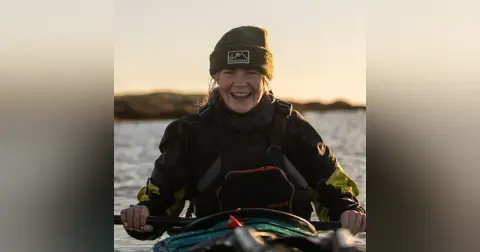
#125 - Exploring Ireland's East Coast, RNLI, and the challenge of going solo with Caoimhe Connor

 Apple Podcasts

 Spotify

 Overcast

 Castro

 PocketCasts

 RSS Feed
In this episode of Paddling the Blue, host John Chase welcomes Caoimhe Connor to discuss the hidden treasures of Ireland's East Coast. Caoimhe shares her insights into the often-overlooked paddling opportunities in this picturesque region, highlighting its unique landscapes and vibrant wildlife.
Caoimhe also delves into her personal experiences with the Royal National Lifeboat Institution (RNLI), offering valuable advice for paddlers on safety and rescue techniques. She candidly discusses her adventures and challenges with solo paddling, including her incomplete circumnavigation of Ireland and her attempt at Iceland, providing a reflective look at the ups and downs of solo expeditions.
00:09 - Introduction to Paddling the Blue
01:13 - Kiva Conner’s Paddling Journey
03:36 - Exploring Paddling in Ireland
06:33 - Understanding Sea Lochs
13:56 - The Hidden Treasures of the East Coast
15:33 - Kiva’s Involvement with RNLI
18:49 - Training with the RNLI
19:28 - Lifeboat Experiences and Impact on Paddling
25:31 - Journey to Advanced Sea Kayak Leader
33:32 - Solo Circumnavigation of Ireland
39:35 - Plans for Iceland Expedition
50:10 - Challenges Faced in Iceland
53:01 - Reflections on Solo Paddling
54:32 - Connecting with Kiva
55:25 - Final Thoughts and Recommendations
0:01 Welcome to Paddling the Blue. With each episode, we talk with guests from the Great Lakes and around the globe who are doing cool things related to sea kayaking. I'm your host, my name is John Chase, and let's get started Paddling the Blue. Welcome to today's episode of Paddling the Blue. Kiva Conner is today's guest on the show. Kiva shares the inside details on the lesser-talked-about East Coast of Ireland and its wealth of paddling opportunities. We'll also talk about her personal involvement with the RNLI, why she's not a big fan of solo paddling, and her unfinished business with Ireland and Iceland. Thanks to Amber Champion from episode 112 for making the connection. Before we get to Kiva, James and Simon at OnlineSeaKyaking.com continue to produce great content to help you evolve as a paddler and as a coach.
0:45 You'll find everything from basic strokes and safety to paddling in tides, surfing, coaching, documentaries, expedition skills, incident management, and more. It's all in one place. If you're not already a subscriber to OnlineSeaKyking.com, here's your opportunity to get started. Visit OnlineSeaKyking.com, use the coupon code PTBpodcast to check out, and you'll get 10% off just for being a member of the Paddling the Blue community. Enjoy today's episode with Kiva Conner. Hello, Kiva. Thank you for joining me today. Hi, Joel. I appreciate you taking the time. So you've got quite a varied water background, so tell me about your history with water. Well, I suppose I have always loved the water. I used to play water polo as a kid.
1:31 And then in 2011, I did a traineeship in Tullymore where I work now, the National Outdoor Centre here in Ireland. And I really wanted to take on whitewater paddling. But Ireland, we don't really get a lot of whitewater unless we have lots of rain and consistent rain or else our rivers drop. So that year wasn't a great year for getting into my whitewater paddling. So Mike Baclera, a local coach here who worked at the centre, used to run Tuesday night sea kayaking sessions for him and his friends. And he invited me along to see if I'd like sea kayaking instead. And he had a bit of a competition. So I'm quite competitive, even though I'm not very good at anything.
2:17 And I came second because Mike came first, obviously. And he said because I'd done so well I could get a prize to go to Scotland with him and it was the first time I realized that sea kayaking had white water really he brought me to the grade augs which is just south of Lunga Island in Scotland in the open region and there there's a tidal race that It goes up to, I think, 8 knots. And it creates this, he described it as a grade 5 rapid. And I went through that following him and didn't capsize. And I just remember the adrenaline and trying to take a video of it after on my camera.
3:00 And my hand was just shaking. And so I was kind of hooked off of that. And that trip, we went to the Garbellix, which overlook the narrow straits of Corrie Reckon. And there was this oil tanker trying to make its way up through the strait there. And it was just pushing against this massive flue. And it was just amazing to watch the power of the ocean. Yeah, I think that was kind of where it all started. But I enjoy all aspects of paddle sports. I do a bit of open canoeing as well, mainly in whitewater, but I do a bit of open water too.
3:43 We have quite a lot of like Stratford and Loch Nye and Loch Arne where we can paddle on locks here. and then I do a bit of whitewater kayaking to paddle boarding as well. Okay, so you still get down on whitewater a little bit too? Yeah, actually yesterday was my first time out this year in my little kayak, and we went down Bimburb Steps. The level wasn't amazing but it was really nice to be back in a little boat but a little bit terrifying I hadn't been in it in so long and just you know in a open canoe which is what I would paddle most in whitewater you're able to stand up and see pick a line and get quite a good view coming up the drop but in a little kayak you're just seeing the horizon line and hoping for the best sometimes so yeah it was it was a good day so 2011 you took that first uh that first course how long was it from there when you when you did that competition and then end up going to scotland.
4:48 So Mike would have ran a Tuesday night throughout the summer. So it usually started, I think, in May and run through till end of August. And that was every Tuesday evening. Okay. And it was just like a little bit of a bit of crack, you know. See, you know, you got points for if you had to roll or if you had to self-rescue, you know, you got three points. If you turned up, you just got one point. And then the paddles were graded as well, depending on. What level like if there was you know strengthford there's the narrows there so that would have been a grade three paddle because you need to have a bit more experience whereas if you were doing further up into the lock it would have been a grade one paddle because it's a bit more sheltered with the islands and things like that but yeah so after august i think he invited me and i think we I went off at the end of September to Scotland and did a long weekend trip.
5:49 And I was actually preparing Ciaran Tasna and Nileman for his level five. I think it was the last level five that ran. That's a pretty short period of time to be able to go from start to handling some big Thai races. Yeah, the funny part of it was that I hadn't done any qualifications yet in sea kayaking. Okay. And Mike had said, you know, if you want to get your three star, we can do that, which was it's a personal performance award in the old system. So I went and did my three star and probably what is now seen as advanced sea conditions. So yeah, it was a lot of fun.
6:33 You mentioned a term in there that I want to make sure that I kind of level set my expectations and everybody else. You mentioned loch. And so loch, is that what I would refer to here in the US as a lake? So Stringford loch is actually a sea loch. So it's an opening into the land. So if you look at Ireland, it's kind of like a teddy bear sitting on its side. Okay. And at the top of the head there, you'll see, if you look at Google Maps, there's a little opening just towards the end of the teddy bear's ear. And that would be Strangford Lock right in there. We do have lakes, which are called locks. So Loch Ness is the big lake almost at the top of the head too, you'll see.
7:23 So I just wanted to make sure that I was equating those similarly. So what are some of your favorite areas to paddle on? You're near Belfast, right? So I actually live in Newcastle County Down, which is just at the foot of the Moor Mountains. Okay. So yeah, we've got some amazing water. so from Belfast right down to Carlingford Lock which is another sea lock. So working your way down you've got the Gobbins there which is a sea cliff area with a little island above it Muck Island and you have some good tides running through there because you've got the squeeze of Scotland and Ireland together in the air sea there so I think it goes up to about five knots in between Muck and the mainland land and I suppose our east coast is always underrated which is quite unfortunate but there's actually some amazing paddling we have then more local to me Strangford Lock and like I've said Strangford Narrows there so it is at the opening of the lock there the narrows it's about nine kilometers in length and at its most narrowest point that's about 600 meters wide so that section of strengthford lock runs like a river because it's so narrow and that's why it's called now on an ebb and tide it's probably it's most interesting because
9:00 you have things like up at Stranford, between Stranford and Port of Frey, just below that you have the Routon Wheel and the. Has some really cool features like boils and whirlpools which is caused by a ridge of rock that runs under the water i think it's only about four meters under the water um and below that is about 18 meters of depth so you can imagine whenever the water hits that shallow it just, creates all these mental. Features which is really cool, really good feature to play on but it also has some really good eddies so if you are experienced enough you have lots of safe water to paddle into and then play in that area and then below that you've got Angus Rock which is literally a rock with a cool lighthouse that sits on top of it and it's a really good spot for a barbecue or a picnic now but also because the flow of the water hitting there you get some good waves that form off there at different heights of the tide but also there's a little wrap at the forms beside the lighthouse on the ebb and it's not too big or intimidating so you can really play with your ferry gliding and even dropping into it is quite fun and then somewhere that's never really paddled apart from people who are really
10:34 local part that would be not really spoken about as much would be the mouth of the Narls. It's super deep so it creates this really nice clean zone for surf. Now that you need to be aware because it can get dangerous in strong southerlies and southeasterlies and even easterlies. So it is for more experienced paddlers and being at the mouth of the loch as well. If things do go wrong, you're going quite a distance out from the loch on an ebb, which.
11:14 Be a bit intimidating so maybe why we don't see as many people playing there but it is a fantastic place to surf yeah that's some unique features for sure yeah no it isn't actually in the pilot for the yachts um it's it's described as one of the most dangerous places to get into because of all the tile flow that's going on. But in our Stranford Lack, there's a lot more options for chilled out paddles. There's lots of little islands that create shelter on even a windy day. You can find lots of little spots to hide and just go for nice paddles and see some wildlife.
12:00 Now, what is the wildlife like in that area? We have quite a lot of seals. We have a good population of birds as well. So you'll have the cormorant and lots of kittiwakes, guillemots as well. You'll sometimes stay around. Okay. And do the seals and such come all the way up into the logg? Yeah, yeah. All over Ireland, we seem to have so many seals and they're very friendly. So they'll come up and be very interested and follow you. Around. They're cool. Now you mentioned the east coast there just doesn't see as much interest or as much press, I suppose you'd call it. Why do you suppose that is?
12:46 I think because we have the Atlantic Ocean on the west. It gets a lot more exposure and just looks cooler. Yeah. What is the landscape like over in the east side? It's mixed so going from yeah like you get so much variation so where i live locally we have newcastle there's a big bay here we have sandy beaches which can be a bit boring to paddle along but then we have these cool cliffs that run up into the mooran mountains and along that coastline there's some caves we have lots of history around the cliffs as well you've got bloody bridge and maggie's leap and there's lots of little local stories based on those which i won't try and explain yeah you've got two massive locks as well so strangford lock carlingford lock, both with tide running in and out of there.
13:56 So to some degree, do you prefer to keep it quiet? Yeah maybe maybe you kind of like not having uh all that uh all that press because you can kind of enjoy the area and make it feel a little wild i think like ireland is just so unique in that we have so much coastline that's so different and it doesn't take very much distance to get something different so you'll always find something in your local area where you can paddle even in the lakes of of belfast where it's a city you don't have to travel very far to find somewhere that feels like it's in the middle of nowhere okay and and see wildlife and islands and races, we have got it all and so but I think people just like the idea of being on the Atlantic coast it's like next up is America and the RC it feels like quite small because Scotland's only across the road really.
15:06 Still interesting nonetheless and you've got a varied territory Yeah it's incredible So, yeah, we've got a lot going on, which is... If you could recommend one paddle to somebody in your area, where would that be? I think it would be going to Angus Rock and, yeah, playing at the mouth of Strengthford Lock. If you like a bit of surf, it's cracking. So now you also do some work with the RNLI. Yeah. So tell me about that. How'd that start? So I started as a crew member in Aberdovay. I used to live in Wales and work for Outward Bound in Aberdovay.
15:48 And after an incident on the beach, I decided to join the lifeboat to see, to get trained up, I suppose, and learn more about how you can help people who are in need on the water. And the RNLI are just a fantastic organisation it's all voluntary, our crew but with all the donations that are made to the RNLI we as crew get trained up to a really high standard so last year I completed my helm pass out which means i suppose in theory the captain of the d-class which is the smallest on the fleet of boats that darnel i have smallest lifeboat it's just a very small rib we can take four crew on that boat and you kneel in it so you can imagine in the rougher water it's not exactly great for the knees but it's a fantastic boat for getting into small spaces and on the beaches.
17:01 During LA have done research and it's actually the workhorse of the fleet so I'm very proud to be the helm of that boat yeah congratulations thanks so what is the training like. There's a range of training, so it depends on where you are on your pathway as crew. But the first thing that you'll do as a new member is you'll do a CEP course, which is all about sea survival. So you're brought over to Poole. Poole is in England, south of England. And they have a massive college there right on the Poole harbour.
17:46 And they have a big pool built there, an actual swimming pool. And there you are put in your kit and they capsize boats. You're on the boat being capsized. You have to climb back into the boat. You're then put in life rafts. You have to swim in your full all-weather clothing as well. It's pretty intense. the last thing that they get you to do as well is jump off a large platform i think it's about 10 meters into the water so that you can feel your life jacket going off and then you swim over to your life raft and i think we spent about 15 minutes in a life raft with strobes going off and the wind machine blowing waves everywhere a couple of the trainers throwing things at you I think there was a shark and someone's severed arm and bits and pieces like that.
18:46 So it is a lot of fun, that course. But it's a really good learning experience of what you're putting yourself into as well, because we are going out in the worst conditions to save lives. We do other things around seamanship, navigation. There's really good command course, which teaches you about being a leader. And that usually is whenever you're going for your helm pass out so that you're really switched into how you actually lead your team and making the right decisions about whatever rescue mission you're on. Well, again, congratulations. Now, how long have you been working with RNLI?
19:28 It's probably close to 10 years now. I did have a gap because I went traveling to Canada, so I suppose in total maybe seven years I'm actively volunteering with them alright now how has working with the lifeboat helped you as a paddler. I think being a paddler has helped me more with the lifeboat in that I understand the sea. I think as paddlers, we get a lot more intimate with the coastline and beaches in particular, sometimes with a mouthful of sand at the end of the day. We get humbled a lot easier, a lot quicker, I suppose, in a small craft.
20:11 But also you realise what a small kayak is capable of doing. You know at the amount of times I've been out at sea doing a downwind run and maybe a 4-7 came into a harbour and a fisherman's been there going were you like not today. They're pretty amazed by what our kayaks can actually withstand and that has carried through that when it comes to teaching my crew about surf landings and actually you you know where you want to position yourself in a big swell with breaking waves because we've got a small inflatable boat they can capsize so quickly so we have to understand that trim of where we want the boat to be on the wave so that we don't get thrown over i'd love to hear one of your favorite experiences of working on a lifeboat i would say probably just the crew that you have like we have training nights every Thursday and we've had some tough times and the crew we always have the crack in Ireland crack is.
21:25 Laugh you know and they definitely make it all worthwhile you know even whenever we're having the hard times the crew will will always bring ourselves back together it is kind of a nice family community feel to the organization and i think the rnli have always been that's what it's always been about was every every community was kind of centered around that lifeboat in a lot of rural areas as well in Ireland. Well, again, congratulations on your work there and thank you for your work there. If you could pass along one thing to paddlers as a member of the lifeboat crew, what would you want to pass along to paddlers?
22:12 Knowing how to look after yourself and your team that you have out paddling with you. Making sure you practice those rescues at the start of every season, being slick at them and doing that with the people that you paddle with so that you're all on the same page having a means of communication whether that's a phone a vhf a plb somehow that you can ask for help if you need it and i think not being afraid to actually ask for help if you need it i always make the the comparison that if someone hurt themselves on the street and you know it broke an arm you would ask for help so why at sea do so many people find that difficult.
23:00 Why do you suppose that is that people find that difficult right and we see that here in u.s as well i think it's that fear of seeing being seen as a failure and. Know as the helm more than happy to go out happier if i'm called out and to be stood down from you know to find out someone's actually made it safely to shore then to hear another story which is not going to be a good outcome yeah i think you know it's better to just ask for that help and And if you have to turn it away, that's absolutely fine.
23:42 Does the RNLI charge for a rescue? No, we do not. So I'm guessing the theory is very similar to the Coast Guard here is that they choose not to charge because you don't want somebody thinking with their money on whether or not they should make that call. That's exactly it. All right. And it's a charity. So a lot of the community are actually funded on it. So we're here to save lives, I'd say. Good. Well, again, thank you. And we'll tell everybody to give freely. Now, in addition to the training with RNLI, you've also undergone a pretty significant amount of training.
24:24 And that has brought you to the Advanced Sea Kayak Leader. So tell me about that. Yeah, it feels like a very long, long journey. Yeah, I started out by, obviously with Mike paddling, getting that three star in Scotland. And yeah, quite early on, I was like, yep, I want to be a sea kayaker. So whenever I was in Wales, decided that I would do my four star sea kayaker leader, which is now the moderate sea kayaker leader. That wasn't as simple as I thought it would be. I had struggles with my self-rescue, my role.
25:06 I had bad days and good days. And I went and did the award, but didn't pass successfully the first time. So that was quite a hard time. And that was just before I was going to go solo paddling around Ireland. So it was a big knock on my confidence. Thinking okay i can definitely lead in these conditions but it was a big learning curve about the types of about assessment stress and the the old system of british canoe and some assessors were quite scary back then and yeah so i went around ireland pretty much knocked but going around I built that confidence quite slowly but surely went off to Canada and Dave and Amber gave me a brilliant opportunity on Vancouver Island with Blue Dog Kayaking to lead and get into the Paddle Canada system I moved up through that system pretty quickly within the season and was actually providing awards by the end of it and that i didn't really realize that you could become a provider so easily so it was a nice boost in my confidence and just having the likes of amber and dave
26:38 encouraging you and wanting you to progress and doing everything that they could to help you become the best coach to be the best leader it was really it was really nice. And I came back and did, actually, no, I'd done my, I literally had just done my four-star before I went to Canada with Nick Cunliffe. And it was a totally different assessment. He was encouraging and very upfront about my leadership. And we had a really good debrief about things that, because even whenever you get your leadership award, You're never going to be perfect unless you've been leading for years and years and years.
27:29 So there was lots of things that I had to go away and work on. So then I went off to Canada and yeah, my confidence was just slowly being built. But I think from that, after doing my assessment with Nick in Anglesey, I kind of went to myself, no, I'm never going to do this at Bancy. It's a bit much. So Canada yeah it slowly but surely started you know those guys are fantastic especially Amber and just an inspiration to women paddlers came back to Ireland then and I was working in Tullymore where I work now which is our national outdoor centre and.
28:12 Started thinking, well, maybe I could do this advanced C leadership thing, you know, the old five star. And I think about a year, maybe six months passed, and Jeff Allen was over, and myself and my friend Peter Kirk decided we would go and do our advanced C with Jeff. And we put a lot of effort into it and I think that's one of the main things when you're doing these awards surround yourself with like minded people and people who are going to push you to your limits and Peter definitely is one of those with any time we were out I'd be like right keep up let's roll now let's do our self rescues let's do re-entry and roll, let's do some towing now, he was great for like just getting you.
29:05 Pushing yourself and in every condition didn't matter what type of day it was at the end of the day we'd be doing everything and we really were paddling well and feeling confident and out with people constantly so when it came to actually doing it with Jeff it felt really slick it was I think it was the least stressful assessment I've ever had it didn't feel like an assessment I just felt like I was out for a paddle with a couple of people and it was just really nice even though actually on the day it was probably top well there is no top end advancey but you know we had all the conditions it was all above what they state so we had two meters of swell at least we had good surf had had lots of incidences actually happen for real so someone got seasick that we had to deal with and there's someone who who wasn't doing great with i think they hadn't had enough that day, so actually fell out of their boat for no reason at all.
30:21 Weren't taking instructions very well due to it as well, so went to do a rocky landing. Yeah, it was pretty full on day, but it. Just didn't feel stressful well that's okay part of the big difference is probably just working with people and being with people who are positive and encouraging and like you mentioned that working with with amber at blue dog yeah that sounds like it was a big confidence builder for you yeah massively like i definitely wasn't at my best i just spent a whole winter learning how to dog sled weirdly and learning how to ski so had done no paddling and like i said before i'd had some issues with my role they were all kind of back but amber although she is a talented paddler she's really understanding of you know developing people and she doesn't look down her nose at someone who's lost their role you know she's really supportive and she was brilliant she got me into actually Greenland rolling so I learned so much from that just about water confidence and body positioning and none no more of this grunting roll up it was like okay if I get my body in the right position it's really easy it's just happens and one other thing that I wanted to mention you had made a comment earlier that you were surprised how how easy it was to be able to get to a point
31:51 where you were offering provider programs for the Panel Canada program. But that doesn't say that you shouldn't have your skills and you did have your skills. It's just a matter of the way that the scheme was different and to get to that level. But, you know, you still have to be physically, mentally and leadership qualified in order to be able to do all that. Oh, yeah, definitely. Like coming home back to Ireland after being in Canada. To actually go on a pathway of becoming a provider but the process is a bit more complex I would say in that you have to wait for an orientation to become a provider and then you generally have quite a long action plan.
32:39 So the process takes a lot longer whereas Powell Canada as long as you had someone who was willing to bring you along anybody could really do it with the right amount of skills obviously there's a criteria there you have to meet it right but yeah they were like amber was able to yes i may offer quite a lot of things and like the two of us went and ran a level four, even though I'm not a level four instructor with my British Canoean qualifications, it meant I was able to transfer across to support her with the process of taking the first level four all women's crew.
33:27 And I went with that, but that was a few years ago. Very cool. Now, you also mentioned a few years ago, you did a solo circumnavigation of Ireland. Yeah. So tell me about your preparation for the trip. To be honest, I was very green. I went and was preparing to be a CKC leader and didn't pass that. But yeah, I spent probably a year chatting with John Himes. He had previously done circumnavigation with a friend.
34:07 And he was great for telling me what I needed to do, got me some contacts as well for, you know, getting kicked and things like that. But really, I didn't know what I was doing and just kind of went for it. Okay. Knowing that every day I would have to plan and, you know, where I was going to go and all that jazz. But yeah, I didn't really have a set plan as such. It just kind of had the kit and then... Of when and about so I would go and headed home and chose the paddle from Newcastle and unfortunately I didn't get finished the circumnavigation I got from Newcastle and County Down and I went clockwise to Ackham.
34:57 Okay. So I have about a third to do. Okay. But it was amazing learning experience for me that you know I'd spent years paddling with other people and a lot of time in the industry it is a lot of men and they are very good at okay this is what we're going to do xyz and i'd be doing my planning too but i always felt like well i've i've done what they said rather than for myself sure and so this was the first time that really i was depending on myself i had a couple of days with other people who would have joined me.
35:38 But majority of it I was I think I had maybe five days where I had people paddle with me but the rest was on my own and even that was was hard going which is why whatever going to do Iceland I was like I'm never doing a solo paddle again the fact she was willing to do it I was like yeah this is about to be we're meant to go and paddle around iceland together yeah but yeah, i was turned into a solo paddle as well but i knew that solo paddling isn't easy on expedition and i think i hadn't done i'd done maybe two paddles by myself and i think that was a psychological thing to go okay if I don't do it that much I won't realize that I'm not a big fan of this but it was a big learning curve of how you actually get your boat off the beach and get your camp set up and eat and do everything yeah what what was the uh what was the most most challenging part of soloing for you I think it's the end of the day and definitely that.
36:55 Paddling is easy enough on a good day if you've had a good night's sleep it's just you need to paddle from A to B but whenever you land, it's hard on the body firstly lifting all your stuff up a beach or up a slipway, and then having to find a camp having to set up a camp having to cook yourself some food and you're constantly worrying about is my boat ok. Is probably the hardest part for me okay and so that experience told you that soloing wasn't for you yep but in hindsight now i go oh ireland would be so easy so though because i think now i've got far more experience and i realize how well connected we are in ireland like it's probably one of the best places to do a circumnavigation because there's so many spots and doesn't matter what the wind direction is there's always somewhere to land we have so many little harbors slipways that you can always find somewhere to land and there's generally a couple of houses around that area as well so you're never far from people okay and help which is amazing whereas somewhere like Iceland it just feels so remote and out there and even just crossings like I remember thinking of Ireland and I didn't get to do it but Donegal Bay and just
38:29 worrying about that crossing because it's the biggest part of Ireland when it comes to crossings is Donegal Bay and yeah I think I did Donegal Bay twice, Whenever I was in Iceland. So now I'm like, oh, it's not too bad. So now you mentioned you got to Eccle? Yep. Okay. So will you finish it off? It's definitely something that I would like to redo. Yeah. I need to think about how I'll redo that. But yeah, I think I would like to start it clean and get it done. picked off.
39:12 Now, would you start from where you ended or would you do the whole thing again? I would do the whole thing again. Okay. Yeah. I think it would be really good to compare because like I said, I hadn't really got a clue. I just had this notion that I wanted to paddle around my country. Okay. And yeah, now I think it would be quite different. And now you've mentioned Iceland as well. So I know that you did a, or you were working with Susan Honan, is that right? Sue Honan, yeah. Sue Honan, sorry. Okay. And you were planning a trip around Iceland. So tell us a little bit about that trip. What was the plan there? So myself and Sue, we work all women's festival in Cork, actually organized by John Hangs.
40:00 And because we were coaching, we were staying in the same house. And me and Sue had known each other from previous courses and just being in the paddling community she would have done quite a bit in Tully more and one of the nights we were chatting about paddling and Sue had mentioned that she really wanted to do Iceland, and mentioned that me and a couple of friends had actually talked about doing Iceland a long time ago and. Really got anywhere slowly but surely my friends dropped out of that and as i said i didn't want to be solo paddling so it kind of just got moved to the side and that conversation then let this far i suppose that okay we can do this together so we started planning that nigel's been fantastic Nigel Dennis and then he sponsored me with a boat for Ireland not knowing who I was okay knowing who I was you know I had no no one as a paddler okay and no real track record just no track record no he me without knowing who I was to go around Ireland and after that he just kept supporting me which was actually one of the reasons I have been able to actually progressed so much in paddling
41:31 because the cost of a boat probably would have took me years to actually save that type of one I had to buy a nice boat yeah but yeah so he he got on board with Iceland and me and Sue started making more plans and we booked flights and off we went Back on the 30th of May, we landed in Iceland to start our circumnavigation. And that was the 30th of May, 2024? Yeah. Okay. And so what happened? Well, when we arrived, we had a weep of really bad weather.
42:14 So we did a bit of the touristy thing and we were so lucky that Maggie, who is one of Nigel's distributors of NDK boats in Iceland, he put us up along with his wife, Wendy. And then the two of them are actually bus tour guides in the off seasons and they they brought us on some of their tours so we were able to do that for a few days which was really nice and then eventually the winds looked a little bit more suitable still not great but we decided right we'll start so on the 6th of June we started paddling, we didn't get very far I think we did maybe like 8km on our first day but it was just to get started and the second day was kind of similar I think.
43:10 15k but we just needed to get started and then from then we started getting a bit more mileage under our belts do a bit more like 40k just under 40k days and we started to realize how expanse Iceland actually is just nothing like Ireland the the mountains are bigger the the winds are just crazy they accelerate off the mountains and send the wind going in various directions with a lot more than what the forecast says and so it was real really interesting just learning about what the weather was doing and what effect that would have on the sea state So then I think we got into our, well, on our eighth day, actually.
44:08 I think we'd had one day off before that, which was maybe a couple of days before the eighth day paddling. And we had quite a big day where we decided to sit out. There was some islands and rather than go right into the bay below the island, we decided to sit out and do, so it was more of a crossing. And it was about 40 kilometres we did and about halfway through that day I had just been feeling strange I think about 10km anyway the weather was pretty windy and there was quite a lot of reefs so you had some boomers kicking off and things about 10 kilometres into that day I didn't feel great halfway through the day then I started getting a spasm in my shoulder so.
45:02 Was a long, long paddle. I think we arrived in at a beach about 11 o'clock at night. And in Iceland at that time of year, it doesn't get dark. You get a bit of a sunset and the sun will go down, but you just have that twilight where you just have a dullness in the sky, but it's still light so you can still see everything. So we were arriving onto this beach which was really beautiful but i just could not take in any of it because i was just in so much pain couldn't talk to sue went set up my tent and went to sleep and got up the next morning lovely day and felt so much better we paddled on a shorter day because of the long day that we had and that day then Sue arrived into the beach and we were outside quite a fancy hotel in Iceland and when I arrived Sue just got there, she was saying her back just sciatic nerve was really irritating her she just didn't know she just needed to lie down type thing and uh i was fine we went and actually stayed in a fancy hotel.
46:32 It's cost a small fortune and but the next morning then sue's shoulder was actually caused the sad pain and it dissipated but the shoulder was now giving her a lot of jip and she was getting a numb hand and. That led to then Sue saying, I can't continue on. And so I had to make a decision. Do I go home with Sue or do I continue on? And I think I spent three days. Well, I suppose a full good day, 24 hours, trying to decide what I do next.
47:16 Maggie and Wendy were in the area, so they were actually able to take us back to their house and then it meant I could sort stuff out because I decided, actually, I can't go home because I'm the type of person that I'll be at home going, what would have happened? What if? Like, could I have? And that would have destroyed me a little bit inside so I decided, okay, I'm going to go solo. So spent some days prepping and set off again. Solo, Vega, who circumnavigated, I think just after COVID actually, she was fantastic.
47:56 She came and helped me psychologically prep my head for going solo and drove me back out to where we were. So when we arrived, I did a very short stint by myself, which was good for my head game, I suppose. It was only about 15 kilometers, just a farbour nearby. And the next morning, Vega set off with me to do a bit of a tricky point because we were going around a bit of a headland with some cliffs. So it meant I had a bit of company for my proper first day, which was really, really kind of Vega.
48:40 And she's fantastic, as you know, from interviewing her. Sure. It was pretty inspiring and then where we landed there was weather from coming in so i spent two days camping before i set off again and yeah like i suppose i spent i think i did another 10 days in total of paddling with about four days off due to weather and eventually I got to an area, where it was pretty remote and there was a big storm came through and I had a bit of an epic with my boat got sandblasted and near buried And my tempt decided to take a little trip, even though I was attaching it to the ground with rocks.
49:41 And I realized how extreme the weather could get. And yeah, I had a bit of an epic. And Goodney was a lifesaver because he knew there was a hostel type campsite hotel. It was probably about two miles from where I was camped, but it was across Sand Dunes. So he contacted the owner and they came down on a quad to pick me up. So I could dry out all my, my soaking belongings, sleeping bag, everything, you know, like I really realized how much like your, your shelter is so important.
50:36 If you don't have that, you don't have the simple things like food, shelter, warmth, like expedition life is, is not fun anymore. And I think I had made quite a clear decision in my head whenever I set off I said once the fun goes beyond type 2 fun type 2 fun being once you have a good night's sleep and you wake up and you go actually I was just tired I can continue on this is great once it goes beyond that I'll call it a day, so I paddled to Patrick Fjorder, on the West Fjords and Good Night in Vega came and picked me up so that I could just call it a day which was pretty nice of them.
51:28 If I had it continued on it was just going to get more and more remote and harder to get accessed like a shelter I suppose yeah at some point it just doesn't it's no longer fun, yeah but again I'm like... Learning i had from them 10 days of paddling solo was massive but i've re-evaluated you know the likes of ireland trip going why was i making that so hard for myself like that's great um and i think like iceland i enjoyed far more it's you know i realized how nice expedition life is it's so simple it's just you wake up you look at weather you make a plan you paddle you eat you paddle you eat a bit more you go to sleep and you do it all again it's very stress-free in some ways The only thing that's worrying is what's coming next, weather-wise.
52:42 What's that headland going to look like? What's this little point going to look like? The crossing. But other than that, you know what's ahead, really. You just have to get from A to B. So what's the big takeaway? What's the big thing you learned that you can apply? I think bring a bigger team so if they get broken, you have more people. Okay. That I do want to do another expedition and I hope that third time is a lucky lucky one.
53:24 All right well we'll look forward to hearing about that that third expedition whenever and wherever that may be um how can listeners connect with you so my email address is kiba connor at gmail.com if they can spell that well done i'll include it in the show notes, or they can contact me through tullymore if you just google tullymore national outdoor center, get our contact details there all right excellent what types of things do you uh do you lead at tullymore so we do all things paddle sports so i'm the lead in in paddle sports so any paddling qualifications through British Canoeing we can provide or we could do bespoke things for private groups run expeditions we do personal development coaching Fun as well, Right. It's been wonderful learning from you and hearing about the RNLI, your solo trip of Ireland, your trip of Iceland, and really about your home waters, too.
54:32 It's an area, as you mentioned, one we don't talk about all that much, and it doesn't get as much love from the paddling community, but certainly no shortage of variety in the area. So thank you very much for the opportunity. I do have one final question for you, and that is, who else would you like to hear as a future guest on Paddling the Blue? I think it would be great for you to talk to Barry Shaw. He's a good friend of mine. He always has a really good story to tell, but he also has a wealth of experience in lots of expeditions. And he always has a really funny story to tell in them as well. So I think you would have a lot of fun with Barry. Excellent. Well, we'll make sure we connect with Barry. We'll talk offline and make that connection.
55:15 But again, I appreciate the opportunity to talk with you and hear from you. And we wish you the absolute best of luck on that next expedition and any other activities and fun in the future. Thank you so much for having me. Thank you. If you want to be a stronger and more efficient paddler, Power to the Paddle is packed with fitness guidance and complete descriptions, along with photos of more than 50 exercises to improve your abilities and enjoy your time on the water. The concept and exercises in this book have helped me become a better paddler and they can make a difference for you too. The exercises in the book can help you reduce tension in your shoulders and low back, use the power of your torso to create leverage and use less energy with each stroke, use force generated from your lower body to make your paddling strokes more efficient, have the endurance to handle long days in the boat, drive through the toughest waves or white water, protect your body against common paddling injuries and while you're at it, you might even lose a few pounds and who wouldn't mind that.
56:09 So visit paddlingexercises.com to get the book and companion DVD. To Kiva for joining me today. I appreciate her willingness to talk about the dark side of soloing. While some may enjoy the experience, there are some real considerations in addition to personal skills to factor in when deciding if soloing is right for you. I also appreciate Kiva's work with the RNLI. As she mentioned, it's a donation-supported charity, so please consider donating at rnli.org. Thanks again to our partners at OnlineSeekHacking.com for extending a special offer to you. Visit onlineseekhiking.com, enter the code PTBpodcast at checkout, and you'll get 10% off just for being a member of the Paddling the Blue community. Thanks again for listening. I appreciate you. Until next time, and I look forward to bring you the next episode of Paddling the Blue.
56:57 Thank you for listening to Paddling the Blue. You can subscribe to Paddling the Blue on Apple Music, Google Podcasts, Spotify, or wherever you find your favorite podcasts. Please take the time to leave us a five-star review on Apple Music. We truly appreciate the support. And you can find the show notes for this episode and other episodes, along with replays of past episodes, contact information, and more at paddlingtheblue.com. Until next time, I hope you get out and paddle the blue.