#127 - The Yukon River Quest Uncovered


 Apple Podcasts

 Spotify

 Overcast

 Castro

 PocketCasts

 RSS Feed
Welcome to today's episode of Paddling the Blue.
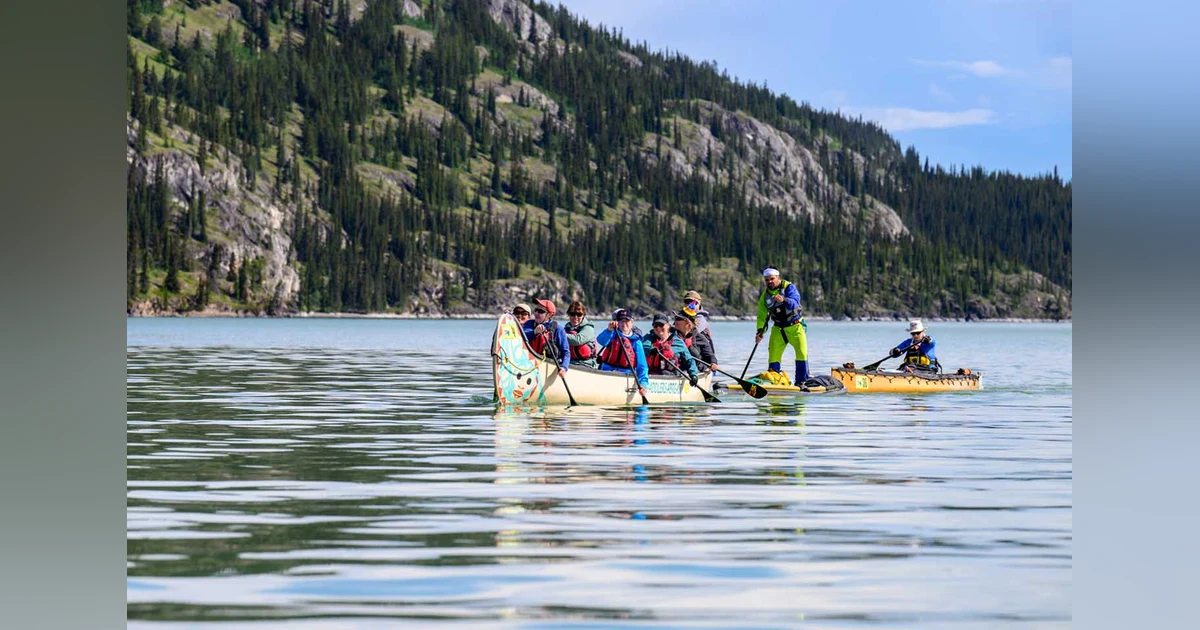
In this special feature, we dive deep into the world of the Yukon River Quest, an exciting race set in the stunning landscape of Canada’s Yukon territory. Four veteran racers, Thomas Schillig, Bill Siersdorfer, Mirko Prufer, and Esther Wheeler, share their unique experiences and why this challenging event holds a special place in their hearts.
This episode offers a glimpse into the camaraderie, personal triumphs, and the spirit of adventure that define the Yukon River Quest.
Photo Credit: Mark Kelly Photography
00:09 - Welcome to Paddling the Blue
01:34 - Meet the Yukon River Quest Crew
02:55 - Thomas’s Paddling Journey
05:43 - Mirko’s Paddling Path
08:25 - Bill’s Racing Roots
10:09 - Esther’s Unique Experiences
12:11 - Understanding the Yukon River Quest
13:33 - Comparing Tourist and Racer Perspectives
19:16 - Preparing for the Race
30:57 - Mental Strength in Racing
33:13 - Favorite Yukon River Quest Stories
41:20 - Getting Involved in the Race
43:31 - Reflections on the Yukon River Quest
0:01 Welcome to Paddling the Blue. With each episode, we talk with guests from the Great Lakes and around the globe who are doing cool things related to sea kayaking. I'm your host, my name is John Chase, and let's get started paddling the blue. Welcome to today's episode of Paddling the Blue. Today's episode is a bit non-traditional. There's a race called the Yukon River Quest, and of all places, the Yukon. It's a race, But even more, for everyone who enters, it's an experience too. And personally, as a former and maybe again future adventure racer, it's an event that has intrigued me for many years. I'm joined today by four veterans of the event who share their experiences and why it's important to them and why it may also captivate your attention.
0:44 Before we get to the Yukon Rivercrest crew, thanks to everyone who's helped us out with contributions to offset the cost of running Paddling the Blue. You can help out if you're interested by visiting paddlingtheblue.com slash support. James and Simon at onlineseacayagin.com continue to produce great content to help you evolve as a paddler and as a coach. You'll find everything from basic strokes and safety to paddling in tides, surfing, coaching, documentaries, expedition skills, incident management, and more. And if you're looking to improve your role, they also have a 36 lesson rolling course. It's all in one place, so if you're not already a subscriber to OnlineSeaKhiking.com, here is your opportunity to get started.
1:25 Just visit OnlineSeaKhiking.com, use the coupon code PTBPODCAST to check out, and you'll get 10% off just for being a member of the Paddling the Blue community. Enjoy today's episode with Thomas Schillig, Bill Searsdorfer, Mirko Proofer, and Esther Wheeler. Hello, Thomas, Mirko, Bill, and Esther. Thank you very much for joining me today for Paddling the Blue. How are you today? Fine, thanks. Thank you. Excellent. So you're all racers. I'd love to hear a little bit about your background. Tell me a little bit about you. Thomas, I'll start with you. Tell me a little bit about yourself and your history. I'm working since 10 years in the sub-business as a product manager.
2:06 10 years ago, it was 2014, I was one of the first sub on the Yukon River. Together with a local guy, we made CarMax 2000 City. Yeah, and it was a wonderful time and... Two years later i came back and we made lake labors to carmax and then i heard about you can request and that probably soon stuff will be allowed to and never ever i said so that's the nature is too amazing to just rush through so then it was just no way to to do that but yeah that time came about two years later i made it was i think it was in 2018 i made a video documentary.
2:55 About the peddlers barter tward and alexis saying and yeah then i made my decision i get addicted to that race all right for those of us who are who are seated in a boat just just thinking about a 444 mile race or a thousand mile race on a stand-up paddleboard is just over the top so kudos to you on on that certainly how did you get started uh paddling a stand-up paddleboard well yeah it was more than 10 years ago i just tried it somewhere in over here in switzerland and yeah that's it was a really unknown sport in europe and then it was a really really nice nice for me and i just public yeah about one or two years later i became a job offer from swiss sub-brand so then it's became bigger and more intensive yeah and became part of life yes great thank you merco tell us a little bit about you.
4:05 Yes, thank you John. Well, I live in the eastern part of Germany and it's a very beautiful landscape and here we have a lot of rivers and lakes and therefore I'm connected to paddling and to water since I was a child. And in 2009 I joined the dragon boat team. This was the first time I paddled more professional and for the following years dragon boating was my main focus. And in 2016 I had a pretty hard time and I chose to have a vacation, the first vacation for several years and it led me to the Yukon and I had no idea about outdoor paddling and this kind of sport and I was there as a tourist and I paddled down the Trombitos to Dawson City 17 days.
4:49 And on day two, we saw these amazing athletes which has done the Yukon River Quest. And I was very fascinated. When coming back to Germany, I talked to my paddle buddies from the Dragon Boat team and I said, well, I want to do it as well. We established a Voyager team and we took part in the 2017 Yukon River Quest. We were the first German Voyager boat. Well, and we finished And this was the beginning of my, well, let's call it a paddle career. Since then, I finished three Yukon River quests. And due to COVID, when we were not allowed to enter, and therefore I paddled at the moment, I think, seven or eight of the big races. And I'm addicted to paddling. And as you already mentioned, I paddled in a surf ski, kayak, sea kayak, canoe, dragon boat.
5:34 I was with Esther in a dragon boat in the MR340. Well, that's a short overview regarding my development so far. Okay. And you've done what I guess are termed the seven most extreme paddle races in the world. Yes, it's a moment. And well, it's not the end. I read the book three years ago. It was from an endurance pedaller. And he said he had finished the 12th most extreme pedal races in the world. And I said, well, I will do it so as well. So I have some other races on my bucket list. But next year I will be back in the Yukon. And I said, coming back to the Yukon is like coming back home because it started for me. And I'm connected to this race in a very special way. It's always a pleasure for me to be back on the Yukon and back in the races in the Yukon.
6:21 Okay. Now those seven races, what are those seven? And then what makes up the rest of the 12 that are considered that 12? Yeah, just a short overview. The first races were the Yukon River Pass. And in 2021, I entered with Alabama 650 mile race in the southern part of the US. Across the state of Alabama, it was a beautiful race. and I finished it second place in my category. And after this, I have done the Swanee River Race. It's a 2030 mile race in Florida. I've seen so many alligators, which I've never seen before and after it. It was pretty interesting. Well, then I was in the MR340, as I already mentioned. We were in the Dragon Boat last year with Esther.
7:05 And then I was in the Texas Water Safari. I also completed, like Thomas Schilling also did, the Loire race this year. It's the longest race in Europe. And then there is one of the biggest races by participants. It's in Estonia, the Wahandu Marathon. I was last year and I think I will be there next year. And at the moment I will paddle next year's Yukon 1000. Well, I guess that's it. I think I counted three, maybe four of those in the U.S. Interesting. Yes. And regarding the second part of your question, which is still on my bucket list, it's Evergate Challenge in Florida. And then I'm very interested in doing races on other continents, for example, the Ducie Marathon and South Africa.
7:51 And I also saw that there are pretty interesting races in Australia, which are also on my bucket list. So, yeah, we will see what the future will bring. And I'm very happy by every race that I finish because for me, it's a privilege to be in these races and to be healthy to do it. So you don't have a lot of alligators in Germany? No, no alligators. But I live in an area in Germany where we have wolfers. That means if I go running during the evening or so, I sometimes see not wolves, but I see their footprints. All right. We're going to move to Bill. So, Bill, I heard one race in there that Mirko had mentioned, the Alabama 650.
8:33 And so you are also a veteran of the Alabama 650 as well as the Yukon River Quest. So, Bill, tell us a little bit about you. I got started in paddling as a kid in Boy Scouts, and we had a Scoutmaster that was into downriver racing. And I grew up in the Pennsylvania area, and there's a lot of whitewater up there and a lot of downriver races. And then career and children kind of kept me out of racing for a while then once I became an empty nester retired I started getting back into into racing and I heard some friends at a party talk about this crazy race down in Texas which ended up being the Texas water safari and I thought well I'm gonna do this race and so in 2012 I did the Texas water safari and just you know how to blast doing the race i always like kind of the the journey aspect.
9:25 Of of paddling and i'm also you know a little competitive and this is a fantastic opportunity to combine you know both of those aspirations and then once i did the the first race i was kind of hooked and then i heard about all these other races and so i tried the mr340 in missouri and enjoyed that. And then I'd heard about this Yukon race. I'd never been in that area of the world. So I went up in 2016 and did the Yukon River Quest and I was addicted. And I've been back a total of five times. Wow, that's an impressive number. All right. And then Esther, so I heard Mirko talking about alligators.
10:09 I know you don't have alligators, but you've got crocodiles and lots of other things trying to kill you down in Australia. So tell us a little bit about you. I know you've been on the show before in episode 98, where we had a chance to talk about the Yukon River Quest and a few other things, but just remind our listeners. Yeah, sure. And thanks for having me back again. So I started to learn to paddle in 2011 in London, in the UK, which is where I'm from. As a reaction to a rafting, almost drowning incident in Nepal, I thought I'd learn to paddle properly. So I joined a club and off we went together and it was a great way to make friends. In the UK, we went off adventuring, whitewater rivers, a lot of sea kayaking, which is actually my first love. And just getting better at all sorts of paddling. and I read about the Yukon at some point. I did what everyone else here did.
10:56 I went once and fell in love and kept coming back. Like Bill, I've done five Yukon River quests and one Yukon on thousand. And then about halfway through that, I now live in Australia. I moved out for work. So we have snakes, water snakes that can get in canoes, sharks. So I don't look down into the water too much. I hope they're just happily swimming around and letting me do my thing. And I just ended up being one of these people who likes the adventure, likes the teamwork, wants to go back and challenge myself and do better and better. And I went from someone who just enjoyed paddling to someone who really wants to race.
11:38 So I don't have quite Mirko's 12 goals. I do have some coming up where I really want to push myself in the next couple of years. I go back to the Yukon next year, 25th anniversary, which will be hopefully a cracker of a year to be there. And then a surprise race in 2026, which I haven't yet decided I can tell the public about. You know, once you tell the public, you have to do it. I know, I know. I've told my head. My head knows I'm doing it. All right. Well, if you want to reveal it, we'll let you reveal it, but we'll also let you keep it a secret. So, again, I mentioned that we had a chance to talk a little bit about the Yukon River Quest in episode 98, but can you remind listeners, what is the Yukon River Quest?
12:22 Sure. So the Yukon River Quest is a 444 mile or 715 kilometers downriver race from Whitehorse to Dawson in the Yukon territories of Canada. It's a wilderness expedition race. Really, there's no support apart from designated campsite about 24 hours in. You're on your own on that river. There's very little access. It's fantastic scenery. It's a big river. Once you start to get about three quarters of the way down is easily a mile across with lots of islands and braided routes as a race itself you can enter as a soloist tandem paddler a c4 or a voyager and those voyagers that take up to eight people like that paddler's a breast team, So it's very much a race that you can really go into and race hard.
13:12 You can really try and win, whichever class you're in. But you could also go into it and be like, okay, I'm a paddler. I'm learning my craft. I'm enjoying myself. I maybe want to go with my friends. Maybe I want to take a family member. You can get some experience and you can still do it. It's not sort of all in elite race. It caters for everybody, no matter what they want. Okay. All right. And Merkle, so you had mentioned something earlier. You said that you were in the Yukon as a tourist and you did Whitehorse to Dawson in 17 days. Is that right? Yes, that's right. All right. So 17 days as a tourist. And then what's your average time in a race? Well my last time was 56 hours i guess it was 2019 and well for me it was an advantage so if someone is thinking about doing the river quest and has a lot of time do a tourist tour you can do it from from whitehorse to carmex or from carmex to dawson city because you can really enjoy the river the nature and you you don't have so much from the landscape if you do it adjust the race so some friends of mine who joined our voyager team in 2017 they said i've never been in canada i've never been in the yukon i want to see it but the race itself well it's it's horrible from time to time at the end especially so for me it was it was a big advantage because i i know the river very well i've seen it from a totally different perspective by pedaling very slow and
14:42 then by doing it as a racer okay and so from from the difference between as a tourist in 17 days you basically shaved 15 days off it for the race portion yes all right that's that's pretty cool now esther i'm going to ask another question so this is a non-stop kind of adventure race style right so it's it's straight through you've got the one one camp area is that a mandatory stop at that camp area. Yeah, it's a mandatory 10-hour stop. The race has been different over a couple of years. Sometimes there's two stops, but that 10 hours is fixed. Prior to that, previous versions have had a seven and a three-hour stop, but it's a 10-hour stop now, one solo one, and that's it.
15:24 Okay. I mean, if you're tired, definitely people do stop and sleep on the side. I saw someone once sleeping in a tree, wedged their canoe in, and off they were. And there's a, I don't know if it's true, but there's this tale that always goes around that one year there was a Voyager where everyone was asleep and the Voyager just circled around in this big eddy. So people do take rests at other points, but obviously you don't win if you do that. Okay. And so it's a mandatory 10 hours for everybody. Is it the same 10 hours? Like, is it a dark zone or is it just a mandatory 10 hour time period whenever you happen to get there 10 hours from then? Yeah, mandatory when you get there. So it's a designated stop at CarMax, which is the only really big settlement accessible by road where you can get some support, and that's allowed there. So you can get more food and that sort of thing.
16:11 So you arrive there, and then 10 hours from when you arrive, you leave. Okay. All right. And Mirko, what are the qualifications required for someone who wishes to participate in a race like the Yukon River Quest? Well, if you want to participate in the Yukon River Quest, you have to register, but I think people from the board take a closer look if they said okay it's possible for you so the the best way is and of course the way i choose to to do it first not in the solo boat for example in the voyager boat or in the tandem canoe and you have to well prove that you are experienced because like est already mentioned you have one stop 10 hours but between white horse and comics and comics and doors the city there's nearly nothing that means if you get into trouble it's really hard to get rescued therefore on the one hand training is very important to be prepared very well is very important and so my advice will be if you want to do it in the solo boat at least you have to head finish some similar shorter races for example because you can work with this totally different from other races during daytime it's sometimes really hot and you sweat and some hours later during nighttime it's nearly zero degrees celsius so temperature can drop very fast so well i have respect uh about the race okay a friend of mine used to give an example and you mentioned experienced in there he used to talk about bowling and he would say that i i've bowled ever since i was a young child and
17:44 so i've bowled for 50 years but i'm terrible at bowling. And so in that case he was an experienced bowler but he was not a competent bowler so there's a big difference between being experienced and being competent so in what ways do you need to show competency to do this race or do you. Well i think competence is in this race you have to know how to deal with the unexpected so when you're in the race something will go wrong for example some some smaller things some bigger things so you have to know how to rescue yourself even at the finish line the river is very wide so if you slip your kayak if you capsize you have to know how to get back into the boat or to agree that rolls for example then it's very important regarding your gear and for me it's very good point from the race that they have a very strict gear policy that means as i control it and i said it's not to to be bad to the better it's about you because if you have for example such a bb and you can get into it you can stay warm so your experience means that you paddled a lot competence means that you can help yourself.
18:59 I think there are not so many races in the world like the Yukon, where this should be the main competence that you should bring with you to the race. Being able to manage yourself on the water, but then also being able to manage yourself off the water and handle that adversity as well. And you mentioned gear. Is there a mandatory gear list that everybody has to carry a couple of certain items? Yes, it's a long list of mandatory gear but every item on the list is very necessary i think some things you will not need because i like stores and things like this or tents if the race goes very well you only stop at carmex have your 10 hour stop go to sleep have a shower eat something and then you will continue to to paddle on but there are also sometimes some thunderstorms you have to go off the water or you get for example some problems in 2022 i had to dns because i had that heartburn because of yeah the wrong end of reaction i made it to comics but in case i wouldn't have made it to comics i had to go off the water put on my tent put on my stuff and use it so the mandatory gear on the list is very elementary and very very good for my country okay thomas how do you prepare for a race like the UConn River Quest or any other races that you've done for that matter?
20:19 My first preparation was just pushing myself to even every day or every week, month, longer distance. And then I realized kind of. After four paddling four hours of paddling i'm not more tired if i paddle six or eight hours so. Four hour hours that was was my limit and then i then i started to do to add multiple days in in a row and just to see how my my body reacts to to that training or just to that to that stress so for example even even now if i pedal uh three hours the shoulders the arms they start hurting and i exactly knew know that's after six seven hours it disappears i did a lot of long distance or long time low long durance training just to know how my body reacts okay so there's no do you do any any very specialized training or is it just a matter of time in the boat or in your case time on the board well i especially during winter time i'm also on the sub but also often in the gym and i do some kind of interval trainings like long interval trainings on high capacity things
21:52 things like this and yeah usually i i train half a year and push me up and up for for how the year towards you can request and then it's it's it's it's a race and after that i i do a little more relaxed. Training or yeah kind of relaxing part all right so half the year working hard the other half the year on the couch yeah but it was it was for the first you can request i really trained slowly raised my training for half a year then for my second you can request well i did it maybe for three months but just raised the training a little faster okay all right bill any any uh different training that you might perform to get yourself ready for racing i try to keep myself at a certain level of conditioning year round but generally you know if i'm going to do a long race tonight i used to pick like one long race a year a multi-day event i would start training probably about six months before the race and.
23:02 First, I would do strength training for a couple of months to try to get myself stronger and then develop a paddling base when I'm paddling about three or four, six to eight mile sessions, low heart rate. Zone two type paddling for about 10 weeks. And then I kind of switched to strength endurance, strength training, and then gradually increase my paddling load to maybe three or four you know 10 to 12 mile paddles a week and then one of those days when i get to within about three months of the race one day we'll try to increase you know do a longer paddle i'll go like 10 to 12 to 14 till eventually i'm doing a about a 25 or 30 mile I'll paddle once a week or once every other week.
23:54 And then about one or two months or, you know, six weeks before the race, I'll try to do what I call a shakedown paddle where I'll go out and I'll spend, pick a river somewhere. I'll do, you know, 10 to 12 hours just to make sure that my gear set up, my nutrition set up, I'm not, you know, feeling ill or weak while I paddle or nothing is chafing. My hands are, are okay. I'm not blistering too early. and then I'll work on correcting whatever I find in that battle and then I feel pretty well prepared for the race. Okay. I think the race is basically, from a physical standpoint, is already won or lost when you get to the start line.
24:37 There's a lot of preparation. Sounds good. Esther, what would someone experience in a race like the Yukon River Quest? That is such a good question. they would experience so many things really positive emotions possibly some less positive emotions they'd be tired and sore but they'd also they'd also experience the wonders of the yukon landscape and the river and most people if they're not from northern canada or maybe maybe some of the mountainous areas in europe they'll never have seen a river like the yukon i mean even though some of the US rivers are bigger and wider.
25:21 It's quite a unique environment and being there and being in that environment, whether you're on your own or whether you're with a team, I think one of the interesting things about a race like the Yukon of people experience is that you're always working with somebody. If you're in a big team boat, which most people are in team boats, then there's always someone with you to experience that, to talk about it, to have the joys, the highs and the lows. And if you're a solo paddler, you take all the rest of your friends and family with you in the boat to help you, which I always sort of stick with. You'll also experience an amazing volunteer and local community because the race is a vibe. Yes, there's the hours on the water, but there's the days before gear check, experiencing the North, the Yukon, which is different and new and exciting for many people.
26:10 So many people come out and volunteer. I mean, it's a volunteer run board, it's a volunteer run race. For example, people at the communities and the First Nations through Whitehorse, Carmax and Dawson. All of that experience translates on land as just as it must from the water. I mean, out of the group of us here, I've paddled behind Thomas halfway down Lake Labage behind a Voyager trying to stay in his wash. I've spent quite some time on my first roller race trying to keep up with Bill and failing. And I haven't yet chased go down the river but that might come one day so you have all of those experiences when you do a race like the Yukon it isn't just getting a boat and paddle from A to B okay so it's not and it sounds like there's people that are treating the race as a race and then there's people that are treating the race as an experience 100 the first time I did it I sort of wanted to race and then rapidly realized it was an experience my second time in a Voyager was an experience so I could then go solo and as i've done more races i go now to race flat out okay but obviously not yeah not everyone does and i've certainly paddled past i well one story which was hilarious on our first one we capsized in a really wicked eddie with a tree and we were rescued by a father and son team and the father was smoking a cigar so some people do all kinds of things yep you do you you're experiencing the race in your way.
27:41 Yeah. You mentioned something else in there. You said, if you're a solo paddler, you still take all your friends and family with you. So tell me what you mean by that. Well, there's going to be times as a solo paddler when it's going to be hard, really hard. And you'll wonder why you're there. And as we've talked about, there's really no way out of the Yukon after a certain point. You have to have a why. And the why is often supported by the fact that to train this hard to be a soloist, especially if you want to do well, you've had to sacrifice some things. Your family have to support you. Your friends have to support you. And they have to be engaged in that journey. And I think, I can't speak for anyone else, but for me, it helps to know that they were there before and then they're there in the boat. I know they're willing to be on.
28:28 I know that when I go down the river, there's lots of people watching my little dot, my tracker device on the map, I think every 10 minutes, watching it bounce up and down. And if I ever stopped, they'd be shouting at me from the other side of the world as to why I was stopping. So you know they're there. And I certainly take a great deal of comfort and strength and determination from the fact that I know that they're in the boat with me. That's very cool. Thomas, what are some of the biggest learnings that you've gained from racing? I learned even more to create this loneliness, to be just out by myself.
29:08 I'm always a person who can manage it but especially in the in the ucon as a solo toddler even more learn that just to you have to spend your time or to entertain yourself you start to think think about life how do you entertain yourself you're you're in a long race you're alone you're the only one on that board in what ways do you keep yourself occupied, one thing is reading the map this this old style broken map everything is written every band every mountain and that's also about reading the river see what river goes taking the wrong side of the river made may may cost you a lot of time then i also start with some kind of calculation games like time kilometers just to keep my brain occupied so you're playing playing those mind games with yourself i'll be here in an hour i'll be there in two hours i'm watching for this this piece of landscape.
30:17 Something like this, yeah. Just kind of stupid calculations. Yeah. Mirko, I've interviewed a lot of people who've set circumnavigation records. And so they've paddled around something. For sea kayakers, paddling around something is a big thing. And they've all said that they wish they slowed down. You originally did this stretch as a tourist in 17 days. And then you changed that and went as a racer to 56 hours and more or less, depending on your race. Do you still have an opportunity to soak in the atmosphere and experience it? Or are you racing through it too fast to really grab onto that?
30:57 Yes, you always have the chance to soak in the atmosphere. There are several spots where I've been only as a racer, but I also saw a lot. This is, for me, one of the big advantages, the big benefits of the sport. You travel around the globe you go to different places and you see these places from a different perspective even if you are in the race for example the texas water safari this year i've never been in texas and i was there for the race and we were in the race for i think nearly 77 hours or so with my with my pedal body and i've seen so many new things and it was so fascinating from the beginning to the end.
31:41 So yes, to do it as a tourist, you have the chance to slow down, to have some sightseeing, to see the landscape is even better. But even as a racer, you have the chance to get so many impressions from the area, from the country, even from the people. Thomas, what advice would you give to a new racer? Well, my advice will be, you need 20% physical strength, but 80% mental strength. When this first was told to me, I didn't really understand the meaning, but it's true. And it's not only this, yeah, I can, I can do, I can do it.
32:22 It's much more. it's also important that you put finish or go completely completing the race not in an insanely high goal so just put it into a good perspective because otherwise in bad moments on the river maybe doubts may arise and you start start asking yourself why i'm doing this it's too crazy i'll always knew it it's it's too crazy it's too too high but if you keep it in relation and you always keep in mind i can can do it because i trained for it and it isn't that hard it will help you a lot okay that's really important you have to be you.
33:13 Have to be physically prepared and there's that 20 percent atmosphere or 20 percent segment that you mentioned you know you that's that's only one-fifth of your training the rest of it is the mental training your brain will take you out of the race so much faster than your body your body will keep going but your brain is what's going to trick you into thinking you can't do that so that's really important so thank you for sharing that bill what's your favorite yukon river quest story you know you mentioned about when you do the race if you have time to enjoy the the scenery or soak in what's going on around you and one of the you know techniques i used i think one of the keys to success on the race is you you're always trying to stay in the fastest current.
33:57 And i use my gps a lot to as kind of a check to make sure i'm in the current and one year when i was doing the race i was paddling i came alongside i wanted a first nations team with. A mother and her daughter and i kind of got out of race mode a little bit and generally like you know towards the later stages of the race when you pass someone or meet up with someone you you know, exchange some pleasantries. And so I started chatting with them. I said, you know, this year I haven't really noticed much wildlife. I said, I don't even think I've seen a bald eagle. And they both looked up at me and one pointed and said, there's one there.
34:41 And the other pointed another way and said, there's one there. And I realized that I'd had my head kind of stuck in the GPS and hadn't been paying attention as much as I liked to what's going on. And I think one of the things you don't want to miss, especially with this race is that the country is so big and beautiful that there are certain times where you need to, you know, make sure that you're able to take yourself out of the race a little bit and enjoy what's going on around you. All right. So stop for just a moment. Soak it in. Experience the world around you. Very cool. Esther, how about your favorite Yukon River Quest race experience?
35:21 I think I'm so lucky in that I've had so many good experiences down there. I think the one that makes me laugh. I've paddled alongside the Paddlers of Rest team only once of their five years and they're a group of breast cancer survivors from the Yukon and friends and family and they go down in this awesome great boat and they are quite incredible paddlers and it's just such a wonderful thing that they do. and the last race, I was paddling behind them. Thomas was in front of me going down the lake and we were all sort of using their speed to go through. One of the good things about being in a Voyager or a team boat is it's a lot easier to go to the bathroom if you need to because there's other people stabilizing the boat.
36:02 So every time that they need to go to the bathroom, Thomas and I would pull off to the side and they'd go to the bathroom on the other side of the boat and we'd all just sort of chat and laugh. And it makes you realize then that everyone's doing it for their own reasons but there are people out there where the race means a great deal for them and they are putting lots of effort into it and i'm there maybe trying to race for a title or a place or a record but that's sort of second to what most people are doing in some ways and it in terms of what racing means to all of us like as bill said keeps us fitter it keeps us healthier it gives us an environment experience that so many people in this world don't have the opportunity to see. And for me, I can still remember that and chatting to Thomas and trying to stay on his way because he has a super cool board that's actually quite hard to stay with.
36:50 And I just thought this is such a cool experience in that one moment following along. We're all in the same boat, but in different boats. Exactly. Thomas, how about your favorite Yukon River Crest race experience? Well, one of my favorite race experience, it was it was paddling towards Dawson City the last night when the sun doesn't really disappear it disappears a little bit but it went up again and shines through the trees this view it gave me such incredible strength such an incredible force I don't know what happened to me but then I just started to speed up i had a huge energy and i remember it was for about three and a half hours just i was almost flying over the yukon river i skipped canoes i four four person boats i just overtook them, i just had just such a mental high it was incredible just most of the beauty, beautiness of the nature it was after after maybe four 40 hours of paddling i just had kind of a high and i just was flying over the river beautiful towards the sun.
38:12 Beautiful. Mirko, how about yours? There are so many very interesting and beautiful moments on the river, but I would like to point out one. It was in 2019. I paddled nearly, I think, two-thirds of the race with Bartosport. Bartosport is the standard paddleboarder, and I think he is the one who well dealt with the board. They are allowed to join the race as paddleboarder, and he was such, or he is such an experienced paddler. And it was fascinating chatting with him. He didn't even use a GPS. He used the river very well. And also regarding sleeping, he only made some short naps, one minute or two minutes.
38:52 And I catched up with him and I paddled, yes, two-thirds of the race with him together. I learned so much about the race and so much about the current. Because in the years before, I always was where there was no current. Other boats well got me. So at the end of the race, before the city, we had a lot of headwind. And he said, okay, keep on paddling. Because as a standard paddleboarder, you have a little disadvantage. You have a lot of headwind compared to the sea kayak, which I paddled. And at the end of this race, I finished third in my category. It was my best result. And, well, it was a beautiful race. It was very challenging. But I always remember this race as an event where I learned so much.
39:37 So you mentioned that camaraderie with Bart de Swart. And so it sounds like the race is, yes, it's a race, but it's also a community where people are connecting with one another and you're having an opportunity to talk to others on the river. So it's not all a dogfight where you're just battling it out, but you're in this together and experiencing it together with the other paddlers. Yes, you want to win, but still having a good time. 100%. Mirko, I've got actually one other question for you. So coming from effectively the other side of the world from the race, how you get a boat there? Well, regarding the Yukon Rover Quest, it's pretty good for people from Germany, from other parts of the world to get the boat because you can rent one.
40:21 There was a guy, he was a German guy or he is a German guy. He had a big fleet. Now there's another guy which has the fleet so you can rent the boat. You have really good race boats. And so you pay to have a boat for this week. You have also included some training sessions, and they bring the boat back from Dawson City to Whitehorse. So if anyone is interested in doing the race for the first time from Europe, for example, you don't have to worry about the fact how to get a boat. Just have a look at the website. It's connected. There are several US outfitters who will give you boats, and they are pretty good boats.
41:04 Okay. So that's great to know that there is that opportunity to rent a boat. So no matter where you're coming from, you don't necessarily have to figure out the logistics of getting your boat there. It's just you, your personal gear, and you could be able to rent a boat there on site. So that's fantastic. Esther, how would someone get involved in this crazy thing? Registration opens on the 25th. It's the year of the 25th. So the 25th of November registration is open, and the race starts on the 25th of June on 2025. So you get involved by registering and then there's a process to go through some resumes will get looked at if they're solo paddlers or novice or paddlers that haven't been seen before, there's a forum a facebook forum to get engaged with with lots of experienced racers and ask questions and get some insights read the website check everything out ask questions and then, especially if you're newish to racing or don't know anything about you can't find a local paddling club if you're not in one already in whichever town or country you're in hook up with some people there that's always a good idea the yrq itself will put webinars and what calls on and things like that in specific areas if people have questions to look at race training and that sort of thing it was the kind of stuff that we've talked about at gear and that sort of space but But that's how you get involved because, as we've said, you get involved with the community.
42:29 You don't just get involved with turning up and going A to B. Sure. What is that website address that people would go to to get more information about the race or register if they're ready to go? It's a classic, YukonRiverQuest.com, probably, or maybe .ca. All right. I'll make sure that I put a link in the show notes to the Yukon RiverQuest website. You can also just Google Yukon RiverQuest, and it'll take you there as well. But we'll put that link in there for folks to be able to check that out. And good to know that they've got a Facebook group that creates that community ahead of time so people can start to understand the race and then figure out what they're getting into and then learn from the community around them. So Thomas, Mirko, Bill, Esther, thank you very much for your time.
43:10 This has been great. I really appreciate the opportunity to hear from you. Your common connection is that you're all racers, but that you're also veterans of the Yukon River Quest. It's a race that has personally captivated me and my attention for many years. I've not had the opportunity to do it, but your experiences in it certainly raised that awareness. And I hope that if somebody else is thinking about the potential for racing and thinking about racing in a beautiful, wild environment, that they consider Yukon River Quest. So thank you very much for joining me today. Thank you, John. And John, anytime you want to seat in a tandem kayak, there's a few of us who will go.
43:50 All right. Good to know. Thank you. If you want to be a stronger and more efficient paddler, Power to the Paddle is packed with fitness guidance and complete descriptions, along with photos of more than 50 exercises to improve your abilities and enjoy your time on the water. The concept and exercises in this book have helped me become a better paddler, and they can make a difference for you, too. The exercises in the book can help you reduce tension in your shoulders and low back, use the power of your torso to create leverage and use less energy with each stroke. Use force generated from your lower body to make your paddling strokes more efficient. Have the endurance to handle long days in the boat. Drive through the toughest waves or white water. Protect your body against common paddling injuries.
44:31 And while you're at it, you might even lose a few pounds. And who wouldn't mind that? So visit paddlingexercises.com to get the book and companion DVD. Thanks to Thomas, Bill, Mirko, and Esther for sharing their experiences with this interesting race. While competency is certainly key for a wilderness event like this, They show that it's achievable as long as you put your mind to it, put in the training, and be mentally ready. Even if racing isn't your primary focus as a paddler, testing yourself in an amazing environment still sounds like a good time. 2025 will be the 25th anniversary of the race. I'll include links in the show notes to resources provided from this group along with a link to the race website. And maybe we'll see each other on the start line one day.
45:11 Thanks again to our partners at OnlineSeaKyking.com for extending a special offer to you. Visit online seacocking.com enter the code ptbpodcast to check out and get 10 off just for being a member of the pedaling the blue community until next time thanks again for listening and i look forward to bringing you the next episode of pedaling the blue. Thank you for listening to Paddling the Blue. You can subscribe to Paddling the Blue on Apple Music, Google Podcasts, Spotify, or wherever you find your favorite podcasts. Please take the time to leave us a five-star review on Apple Music. We truly appreciate the support. And you can find the show notes for this episode and other episodes, along with replays of past episodes, contact information, and more at paddlingtheblue.com.
45:54 Until next time, I hope you get out. Music.