#132 - Living a Courageous Life as a Kayaking Nomad with Wendy Killoran


 Apple Podcasts

 Spotify

 Overcast

 Castro

 PocketCasts

 RSS Feed
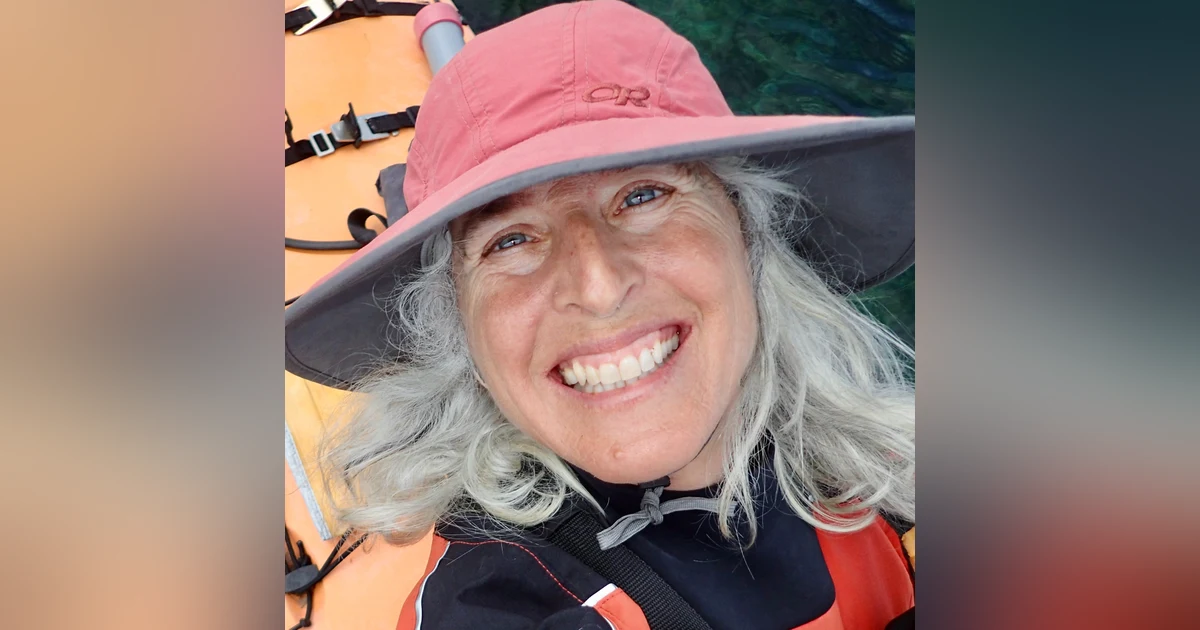
Wendy Killoran joins today's episode of the Paddling the Blue podcast. Wendy is a passionate sea kayaker and adventurer and she shares her transformation from elementary teacher to a paddling nomad, living life on her own terms. As she takes us through her extensive kayaking experiences, from circling Prince Edward Island to the rugged shores of Newfoundland, Wendy reveals how these journeys have helped her feel more alive and connected to nature.
Wendy discusses her philosophy of living courageously, facing fears, and constantly questioning what truly matters. Her adventures are not just about kayaking but about personal growth and the freedom she finds on the water, whether paddling solo around Newfoundland or exploring the icy fjords of Iceland.
Join us as Wendy inspires with her tales of resilience, discovery, and living a life full of adventure and purpose.
00:09 - Welcome to Paddling the Blue
01:31 - Meet Wendy Killoran
03:42 - Pivotal Moments in Kayaking
05:27 - From Canoeing to Kayaking
07:23 - The Prince Edward Island Adventure
08:33 - Tides and Challenges
10:46 - Great Lakes Explorations
12:29 - Mystical Manitoulin Island
16:11 - Circumnavigating Lake Superior
20:52 - Life Lessons from the Water
24:12 - Facing Fears and Hardships
27:32 - Discovering Inner Strength
32:31 - Paddling in Iceland
33:26 - The Newfoundland Journey
44:22 - Living Life on Your Terms
46:49 - Future Adventures Await
49:21 - Connect with Wendy
51:22 - Conclusion and Reflections
0:01 Welcome to Paddling the Blue. With each episode, we talk with guests from the Great Lakes and around the globe who are doing cool things related to sea kayaking. I'm your host, my name is John Chase, and let's get started paddling the blue. Welcome to today's episode of Paddling the Blue. Wendy Killoran is living life as a paddling nomad. While she has a soft spot for the Great Lakes, you might find her anywhere in the world experiencing life on her own terms from the seat of a kayak. And today we'll talk about how being on the water, circling large lakes like Superior, and islands like Newfoundland and Prince Edward Island help her feel fully alive. Before we get to today's conversation with Wendy, our good friends at OnlineSeaKyaking.com continue to produce great content to help you evolve as a paddler and as a coach.
0:45 You'll find everything from basic strokes and safety to paddling in tides. Surfing, coaching, documentaries, expedition skills, incident management, and more. If you're not already a subscriber to OnlineSeaKayaking.com, here is your opportunity to get started. Visit OnlineSeaKayaking.com, use the coupon code PTBPODCAST to check out, and you'll get 10% off just for being a member of the Paddling the Blue community. And for those who also like paddling small boats, their newest offering, Online Whitewater, is also available. And they are offering the same discount to Paddling the Blue listeners. Check out Online Whitewater at OnlineWhitewater.com. use the coupon code PTBpodcast to check out and explore and get 10% off for being a member of the Paddling the Blue community.
1:31 Enjoy today's episode with Wendy Killoran. Hello, Wendy. Welcome to Paddling the Blue. Hello, John. It's a pleasure to be here today with you. Thank you for inviting me. Thank you. So we've been talking for a little while about having you join the show. And I think when we first talked, you were in Morocco, and then you were in somewhere in Canada, I think Vancouver or something to that somewhere along that line so where are you now I'm presently back in Canada I'm in my home province of Ontario visiting family all right so tell us about you. Okay, I guess I'm a middle-aged lady who has done major transitions in life, and a lot of that occurred because I discovered sea kayaking midlife in my late 20s.
2:20 I was a former schoolteacher, and now I'm a retired schoolteacher and an adventurer. I've been traveling the world, and I do a lot of long-distance solo sea kayak journeys all around the world. That's very cool. So what inspired you to start paddling? I had two pivotal moments in my life. I believe when I was 28, I was walking the Southwest Way in Southern England along the Devon and Cornwall shore. And I was standing on a cliff and I looked down upon the ocean. And it looked like a pencil case of coloring pencil crayons had been strewn over the sea.
3:00 And I realized those are sea kayaks. And I'd never seen that before. And it absolutely, yeah, it really caught my attention. It captivated me. And then about half a year later, I was sitting five months pregnant in the Florida Everglades, watching a sunset. And there were silhouetted palm trees and diving pelicans. And into that sunset was a solo kayaker that paddled right towards the setting sun. And I knew in that moment that I wanted to make kayaking part of my life, but I was in a different phase right now in my life because I was five months pregnant and I was an expectant mother.
3:42 And so kayaking waited for about two years, but I found it in my memory and it just became something that really sat with me. It never left me. I knew it was like a soul calling. As it is for many of us. Yes. So you said you waited about two years and then how did you get your start? So, because I'd never sea kayaked, although I had had lots of experience in a canoe, because during my university years, I studied geology, and I was lucky enough that during my summer months when I was in university studying geology, I worked for the Ontario Geological Survey. So I did a lot of shoreline geology in a canoe and spent, you know, entire summers up in the wilderness mapping bedrock.
4:28 But I got my start in kayaking when I decided I would go for a week-long paddle with a tour company. So Blackfeather Wilderness Adventures in Ontario offered a paddle up on the Georgian Bay. So it wasn't far from where I lived. And the Georgian Bay is renowned worldwide as a very beautiful paddling destination. So I did about a 125-kilometer trip on the Georgian Bay from Bing Inlet to Killarney, and I realized when I arrived from Bing Inlet on Georgian Bay, it was pouring rain, but the bay was absolutely mirror calm, and the water droplets were bouncing off the surface of the water like popcorn.
5:14 And I saw these ripple effects and then just these beautiful droplets being sucked into the water. And I realized in that state of presence that this was something that I wanted to do, really integrated into my life. So was that really the first primary experience? That was my first experience in a kayak. I did a week-long trip on the Georgian Bay. I didn't do any short day paddles or anything. because I had my family. My father was a high school teacher and we did a lot of camping. So I was basically integrating a lot of things that I already knew. I mean, I did a lot of canoeing already. I did a lot of camping. I loved water. You know, I was well qualified to be like a lifeguard and so forth. So I love being in the water.
5:59 And I was just sort of integrating things so that it could become a part of my life where I could expand upon really exploring planet Earth from a different perspective. I love it. I love it. So you jumped right in, did that first full week with Blackfeather up in the Georgian Bay, which is an absolutely beautiful area. And then how long was it before the first big solo? The first solo, yeah, that took a while because I actually did go with other companies. Like, you know, I paddled in Belize and I paddled in the Bahamas. And I paddled sometimes with just groups of people and so forth. But my first solo was in actually 2005, where I decided I would paddle around an entire province.
6:43 And so my first experience on the water was 1992. But in 2005, I decided to paddle around Prince Edward Island, and I paddled around the outside edge of all rocks and little pinnacles and so forth, so that I could say I actually circumnavigated entire province. Yeah. So that was about 650 kilometers, but I felt I was still married, and I felt very compelled that I needed to get back home. So I did that in 12 paddling days. I was actually averaging over 50 kilometers a day to get around Prince Edward Island. Yeah, that's moving for your first big solo. Yes, it was. So tell us about Prince Edward Island. What's the experience like?
7:26 Well, I feel that the universe blesses me. I feel that when you are doing what you love, that the universe conspires to make it happen. And so I was very blessed because I was paddling in basically late May. I had taken a leave of absence from teaching, so I was able to accomplish that. And I had, for the most part, very calm conditions. And any time when I came to a pivotal point where I was a confluence of like a cape or a head, where water conditions could be quite rough, it was, I was just blessed with always quite calm conditions, and I could just easily shoot around. And I was just very blessed to meet kind-hearted people and helpful people and, yeah, you know, and even some comedy on the ocean where, you know.
8:16 A fisherman offered me a lobster, and he was holding the lobster up, you know, basically hanging from his groin. And I said, no, he's too big for my pot, so he gave me a smaller one. And so, that was before my vegan days, because now I'm a plant-based kayaker. And so, I actually, for the first time in my life, I boiled up a lobster on the beach. So, yeah, I had some interesting experiences on my first ever solo. But in Prince Edward Island, the gradient of the shore is very, very minimal. And so, tides are quite something. You could have a difference of almost a kilometer from high tide to low tide to get to the water's edge. Yeah.
8:58 Yeah. And so, how did you manage that? Yeah, you know, it was a learning experience. So, that was, I didn't have wheels or anything at that time for the kayak. So, I was basically dragging my kayak over sand, which, you know, is not something I would recommend. But it was a learning experience. And luckily for me, I didn't always launch at low tide. Okay. Yeah. Now, was that your first real experience with managing tide in a trip? I know you had mentioned you've paddled other places around the world. Yeah, that was the first time where I really had to manage tide that was very, very noticeable. Because most of my paddling before that had been done on the Great Lakes, and that's very, very minimal.
9:41 Yeah. You really don't notice tide. Yeah. So now, Great Lakes paddling. So tell us a little bit about some of your Great Lakes paddling. So I had acquired a use kayak where I started paddling at a park in southern Ontario called the Pinery. And so that's on the southeastern shore of Lake Huron. And there's about, I'd say, 12 kilometers of park shoreline where it's just sandy dunes and beach that touch, that meet with Lake Huron. And so I've paddled the Lake Huron there in all seasons and in all conditions.
10:22 I've paddled on near calm water. I've paddled on very lively, challenging, you know, bigger waves. And the waves would never be too huge because there are always sandbars. So the waves diminish as they get closer to shore. And I've even paddled, you know, after snowmelt, and there's still some beautiful ice features on the lake. And so I've paddled in all seasons on the lake. And just by, you know, paddling in all seasons and paddling in all different kinds of conditions, I was able to build up my confidence to start doing more adventuresome trips away from what I would call my home base because it was about an hour's drive always for me to get to my playground but it literally is my playground I grew up camping there as a little child and I basically as a teacher for my sanity would go there once a week whether it was summer spring autumn or winter okay now so tell us about some of your favorite Great Lakes paddles.
11:22 Yeah, I would say I've had, it's hard to say because, I mean, they're all so different and they're all so epically beautiful, right? Yeah, we're blessed to live in this area where we could paddle a different week for years and never have to duplicate the same trip. I agree. I mean, you know, the Great Lakes alone can offer a lifetime of sea kayaking. Absolutely. But, you know, if I had to pick, I would say I paddled around Manitoulin Island, and paddling around Manitoulin, and it's known as the world's largest freshwater island. And I do like geographical extremes, so that really appealed to me. And I had seen Manitoulin Island from the sky when I was a university student, and it was absolutely beguiling. It was just calling to me.
12:12 It was like this white-rimmed island in this azure-blue water, and I filed it in my memory that I needed to come back and explore it. And I didn't realize at the time, because, you know, this was then literally at least 30 years later, that I would return and explore it by paddling around it in a sea kayak. And so I had a very mystical experience where I had thought to myself, never in my life have I seen a great white egret in the Canadian wilderness ever. And literally 30 seconds to a minute later, a great white egret flew by me. Landed in Burnt Island Harbor. And as that happened, my entire body prickled.
12:55 And I realized in that moment that this was a pivotal moment, that this was like a divine, sacred gift. and I landed on shore. I set up camp and for at least an hour, this great white egret was about 100 meters away from me fishing at the shoreline. And that was basically my introduction to becoming more spiritual and understanding what that is and knowing that there is a force on the planet that is an unseen mystical force that we tap into. And so that was, and I had one more experience with just inexplicable miracles, because the first time that I ever paddled around Manitoulin Island, and I've circumnavigated it twice, and it's about, I believe, just over 300 kilometers to paddle around Manitoulin Island.
13:49 The first time I came there, I realized that the limestone was way too abrasive for my kayak, but I had no protection for the hull. And I thought, oh, I wish I had a pool noodle for my kayak so I could protect the hull. And literally the next day when I was kayaking, there was floating in the North Channel a lime green pool noodle, which I retrieved from the water and I used for the remainder of the trip to, you know, save the haul of my kayak because there are alvars on the south shore of Manitoulin Island. So the north shore of Manitoulin Island is the Niagara Escarpment, steep cliff areas, but the south shore...
14:30 It's this very low incline of limestone that goes into Lake Huron. And so these alvars are like pavements. It's quite beautiful with a lot of karst topography. So alvar. So I'm not familiar with that term. Yeah, A-L-V-A-R. So they're just limestone pavements. Interesting. Okay. Yeah. So for those who aren't familiar, Manitoulin Island is in Georgian Bay. And it's at the north end of the Tobermory Peninsula, I guess you might say. Yeah. And so I've actually done that crossing. Okay. Yeah, yeah. So now how long is that crossing? Yeah, you know, it's a beautiful, if you take the Chichiman, which is the ferry that goes from Tobermory to South Baymouth on the southern tip of Manitoulin Island.
15:20 I would say it's just over 50 kilometers, but there's a string of islands that you can follow. And so, I've been able to make the crossing and, yeah, you know, I call it stealth camping. I know that I'm sometimes camped on areas where I'm not supposed to be, but I leave no trace. And I'm always very, very grateful for, you know, having a safe landing because I know a lot of the land in the area is also Indigenous territory. And so, I leave no trace and I'm just very, very thankful. And I'm moving in a very sustainable, earth-friendly way. I've never had a problem I guess I've had one problem once because I actually paddled on Lake Superior and I only once in my entire paddling career had a person tell me I couldn't camp where I was camped, so that was on Lake Superior so in 2018 I gave myself five months to explore the Great Lakes.
16:11 So I paddled a good part of Lake Huron, but I solo circumnavigated Lake Superior in a clockwise fashion, paddling the American shore and then the South Shore, and then paddling into Canada and paddling the North Shore. So where did you start that journey? That's an interesting question, because I had wanted to start the journey from the Pinery, which was my home base for kayaking for many, many years. But I discovered when I called up customs that if I entered the Great Lakes waters by kayak crossing a border, that I could only stay 72 hours, and thereafter, every 72 hours, I would have to contact customs.
16:53 However, if I came across the border like a regular tourist in a car, I could stay in the States for six months and not have to make any contact. So it was a no-brainer that I asked my twin sister and her husband to drive me to Port Huron so I could launch in the States. And I started following the west coast of Lake Huron. Cut across Saginaw Bay, so that was a bit of a crossing, but I was blessed the day that I made the crossing. And, you know, I get up really early on paddling days. I usually get up at about 4.30 so that I have usually the quietest moment of the day where, you know, especially if I'm making a crossing.
17:35 And so I paddled up to, I didn't go right up to Sault Ste. Marie. I actually had someone drive me up to Sault Ste. Marie from the very, I didn't want to have to paddle up the St. Mary's River. And so then I launched from Sault Ste. Marie on the American side, paddled the South Shore, and then came around the North Shore of Lake Superior. And I spent, I would say, about a month and a half doing that. And then I still went through a lock on the Canadian Sault Ste. Marie. There's a phone number, and I called them up, and I paddled my kayak into the lock, and they dropped me seven meters down. So I could now, you know, enter the St.
18:19 Mary's River and paddle into Lake Huron. And then I still paddled for another month and a half, I would say, on Lake Huron. But by then it was becoming mid-September and I was, you know, meeting a lot of inclement weather. So at some point you just say, I think the journey has run its course. Okay. Yeah. So how long were you on Superior proper? Yeah. So I would say again about, I think just over a month and a half that I was on Lake Superior. And I was it was 2018 and I was just blessed with 99% of the time having almost near calm water yeah that's that's a short time yeah it was incredible how much calm water I had but the one day when I was paddling into Marquette there was a, a thunderstorm, and I sat it out, and it was very, very calm water.
19:11 So when the thunderstorm passed, I did a short crossing, I'd say of about three or four kilometers to get towards Marquette. And as I was approaching Marquette, all of a sudden, an unscheduled wind showed up, because I always check weather. And I was like on very, the lake changed within minutes. And it was, I was like a bucking bronco and i was i would say i had to make about a 500 meter sprint to get to shore where it was quite challenging but you know i'm always very humbled and grateful when i do make it to shore and i was very grateful too that i practiced safe paddling because even though most of the time it was very very warm and and you know beautiful paddling conditions i dressed for immersion good because lake superior can be very unforgiving and i was given a little taste of that when i was approaching marquette yes yeah even uh you're you're nearing the end of the journey at that i'm sorry no that was beginning right that was early around that was sort of the the beginning because i went clockwise you know and then of course about halfway through was duluth and again did some great stealth camping outside of duluth um i actually did a radio interview and then so, I guess it was a TV interview, sorry.
20:37 It was a TV interview, and people had seen me then on a little feel-good news clip. And when I walked into a restaurant, I was offered a beer because people recognized me. Oh, she's the kayaker. That's cool. It's funny, when you're doing what you love and loving what you doâ you become radiant. You are in the zone. You are living life on your terms. And I simplify my life so my life has just this quality of being very deeply connected to nature and all that is and beauty. And when I was walking through Duluth, just wearing the same clothes that I always wear, I'd been wearing them for about a month at least.
21:19 A gentleman just looked at me and he said, natural becomes you. Because, I mean, I was just, you know, I had my, you know, wild woman looking hair and just wearing the same clothes, but I had this globe to me that you get when you kayak. When you're doing something that you truly resonate with, you're just living life on your terms and you're living life courageously, the universe flows with you and you just feel this joy for life. You feel so alive. Kayaking will certainly make that happen. Yeah, and you know, when you feel alive, it's like, you know, a lot of us don't get to have that feeling because a lot of us just, we think about, oh, what if this goes wrong?
22:01 Or what if that goes wrong? Instead of, oh, what if I'm gifted this, you know, beautiful reward or whatever? And so it's like, it was an important step for me to start to face my fears, because my greatest fear was not about what could potentially happen to me on the water. My greatest fear was what could potentially happen to me when I was camped alone as a woman, hidden on beaches and in dunes and so forth. And I overcame that fear. I decided I'd rather live my life and do what I'm loving than live life in fear and live with regret. I chose not to live with regret. Was it simply that mental change that helped you manage that, or was there something else?
22:46 I have been on a journey where I started to question everything. I started to question whether my beliefs were serving me, whether my lifestyle choices were serving me. And so I started to make quantum change. And I recognized even though I had taught elementary school for almost 30 years, at the age of 51, I changed my life. I retired early from school teaching and I decided to pursue life on my terms. And so I call myself a frugal adventurer because I live from my reduced teaching pension, but I'm a minimalist and I live a very simple life.
23:31 You know, and when you're camped in the wilderness, it doesn't cost anything. It just costs you, you know, you have to decide, I want to prioritize this because I feel that there's no such thing as excuses. The only thing that we have is we can prioritize what's important to us, what matters, because we're all born with 24 hours a day. So I decided I needed to prioritize what was important to me. And what's important to me is connecting deeply with nature, being active, staying healthy, and kayaking affords all of that for me. So all this paddling hasn't come without some hardship, though.
24:12 So how have you managed the personal impacts? So this is true. So there are, you know, there's also hardship in the journeys themselves. Because I mean, there are definitely, you know, challenging paddling days. Sometimes rather than paddling into a headwind, I'll sit still or, you know, I think I'll be, oh, I can do it, I can do it. And I realize it's quite demanding and, you know, I'm giving so much energy and making very little progress. Then I've decided that I'd rather sit still and go with the flow of what's being offered to me. So, just enjoy a land day instead of fighting nature. And so, I've learned to do that. But it's also come out of, you know, there's been hardship in my personal life.
24:55 Because in 2006, when I told my husband at the time that I wanted to paddle around Newfoundland, he basically said, that's a big one. I said, yeah, that's big. And there was a moment of pause. And he just said, basically, when you come home, you can come home to a divorce. And I thought, you know what? I'm going to paddle around Newfoundland. And I think this is an opportunity then to align my life with what I truly want to have in life, which was a life of adventure and a life where I felt that I was doing what I love to do. How did you manage that going forward? So one of the lessons that I learned when I paddled around Newfoundland.
25:37 Because I was the first woman in the world to paddle around Newfoundland. And I started that journey for two weeks with a woman named Freya Hofmeister, and then she departed. And I paddled solo, and it was 68 kayaking days, but it took 104 days to get around Newfoundland. It was about 3,000 kilometers of paddling. And so, all in all, it was about 40 kilometers per day that I paddled, which is close to a marathon. So, I basically did 68 marathons in 104 days. And that taught me that I was stronger than I was ever taught to believe that I am, stronger mentally and stronger physically. And when I realized how strong I was, because I faced so many incredible challenges, like a near lightning strike and a rogue wave on the last day and very, very thick fog, and then also like some big challenging headwinds and huge waves that came all the way down from Antarctica at Cape Race.
26:33 And when I realized how strong I am and how resilient and, you know, and also mentally how strong, I realized that I had greater potential than I ever thought I had. And I decided that if I had the courage to paddle around Newfoundland, I could also have the courage to change my life, to make it more aligned with the values that deeply resonated with my soul, which was this feeling of liberation, this feeling of living life unleashed, to experience life on the edge. Like, you know, when you're in very powerful water and there's no room for error, you realize how alive you feel in that moment because your life is so exhilarating and one moment of error and your life could be snuffed.
27:24 And so I've had these experiences and to feel fully alive deeply resonates with my soul. It seems like you knew you had that strength long before 2006, though. Yeah, I was working up to that. And in fact, you know, before I even paddled solo around Newfoundland, I've had some interesting experiences where I paddled up in Iceland with a group of six Viking men. And it was up in Iceland where I really started to recognize that I had courage and strength because I was a minority. I was the only foreigner in a group of six Viking men. and I was the only woman. And so I got to experience what it felt like to be a minority, but I also got to experience what it felt like to paddle up on the Arctic Ocean in very powerful water.
28:15 But I felt quite safe because I was with very experienced, competent kayakers. And it was up in Iceland where I got to learn, you know, I was in my mid-40s at the time, where I learned how to roll a kayak. And I realized, you know, we're never too old to try new things and to learn new things. So, I was blessed that in a geothermally heated swimming pool coached by six Viking men, I learned very, very quickly how to roll a kayak. So, we got to talk a little bit about this trip. So, how did this Iceland trip happen to come about? That's a unique one. That was a very unique trip. My father and I had decided that we were going to travel with my daughter to Iceland together.
29:02 And I had said to my father, you know, we would rent a vehicle, but I said, we probably have to do a little bit of camping because I said it's an expensive country. And at that point, I lived very close to my parents, only about three, four houses away. And the next day when I visited my parents, my father said, oh, I've booked a trip to Holland, which was his home country. and I thought, oh, I thought I was going to Iceland. And ironically, like when you're in the flow with life and when you really live a life with pure intention, I had gone on to a website called paddling.net and they always have photo of the week. And unbelievably, very miraculously, the photo of the week was a photo of people paddling an icy fjord up in Izafjadur, which is the west fjords of Iceland.
29:48 And the caption beneath the photo said, Come and visit us next summer. So as a Canadian petite woman, I was communicating with a man named Haldur Svambjørnsson, and I said, I want to visit you next summer. And basically was told that my friends are a bit worried because they hadn't paddled with women. And kayaking was quite new in Iceland. And it was actually thanks to Haldur that kayaking became a sport in Iceland because he had decided to import some kayaks once he had made a trip to Italy, and he brought some kayaks up to Iceland. And then started having them imported into Iceland. And so paddling with these Icelandic men was quite a journey because we paddled up in the west fjords where it's quite remote, went up to Hornbjörg, paddled very, very remote, steep, clifed area, and then paddled back to Ãsja Fjöður.
30:46 But because it was the start of July, it was basically 24 hours of daylight because we were up at 66 degrees north. And so we would even paddle at, you know, at 11 o'clock, Helder would just say, we shall depart. And all of a sudden at 11 o'clock, we're breaking down camp and we're paddling under the midnight sun. And it's just quite a phenomenal experience to be paddling under this glow of light during the middle of the night. I had some epic experiences there. Yeah. Well, tell us more. It's memorable. Oh, yeah. You know, I paddled with, you know, thousands and thousands of seabirds, especially puffins.
31:31 Puffins are just such beautiful seabirds. And even then, early 2000s, I was not a plant-based paddler yet. But we were grilling lamb on top of rocks, and they would be eating like primitive cavemen with their Leathermans, and I'd whip out my little Leatherman, and everybody'd have a big laugh because, oh, it's the Lady Leatherman. Oh yeah yeah yeah so we had a lot of fun we had a lot of fun because you know the very first day i actually got off to a slight rough start because helder had said oh it would be a quiet trip and no no radios and stuff like that and one of the gentlemen on the trip had a radio playing while we were setting up camp up near horn bjarg and i sort of opened my mouth and said i thought there wouldn't be radios here and he looked at me and he said and no women and i was taken aback because they had never paddled with a woman, and they didn't know if a woman could, you know, handle the conditions of paddling on the Arctic Ocean.
32:31 And I proved that, you know, I'm a competent paddler. And I basically was lucky enough to be witty in the moment and said, and I think we should have only one rule for the trip, and that is to enjoy ourselves and have fun. And so, and that's what we did. We became a very fun team that just, you know, we were able to exchange a lot of cultural stories and so forth. So, it was a great experience where I got to learn a lot about the Icelandic people, and they got to learn about Canadian culture and Canadian people. Good. Well, it sounds like a great experience. Yeah, it was a wonderful experience. Are you still connected with them today? Not so much, but, you know, if I wanted to, I'd be more than welcome to come visit.
33:13 That's great. Yeah, yeah. That's great. So I'm going to step back for a minute. We were talking Newfoundland for a minute. You mentioned the first woman to solo circumnavigate, or mostly solo circumnavigate, with the exception of that little South Shore part with Freya. So first, let's talk about that piece of it. How was Paddling with Freya? You know what? I really enjoyed paddling with Freya. It was, we had met through, at that point, there was Sea Kayaker magazine. And at the back of the magazine was always a photo of each issue. And so in that photo was a black kayak with a woman dressed in black, with black hair, black paddle.
33:53 She was doing a floating brace, but the photo had been rotated so that it was upside down, so it looked completely ethereal. And I was very, very drawn to the photo because it was just so unique, so beautiful. And there was contact information, so I contacted her, and we started communicating through email. Then we started communicating through telephone, and then I shared with her that I had this dream that I wanted to paddle around Newfoundland. And she and I decided that we would paddle part of it together. She didn't want to invest the amount of time it would take to completely paddle around Newfoundland. She was really a very inexperienced expedition paddler at that time.
34:35 She had only done a one-week paddle in Japan solo, and so her second paddle that was like an expedition paddle was with me for two weeks in Newfoundland. And at the end of that, she decided, yeah, you know, I really like this, And I think I'm going to really continue doing some expedition paddling. And as we know, she's become a legend in the kayaking world. Yeah, she's done a little paddling. A few continents. Yeah. So how about the rest of the trip? Tell us a little bit about Newfoundland specifically. Well, Newfoundland, the moniker is The Rock. So it's a very rugged shoreline. And I had visited Newfoundland many times previously in my life as a child traveling with the family and also as an adult taking my daughter to camp there and once walking the East Coast Trail with my mother.
35:25 So, I'd made numerous trips to Newfoundland, and I knew that Newfoundland is a very unique place. People are very down-to-earth. It's not like a huge population. Cities are fairly small. A lot of people who still live in these seaside villages, some of them are not even connected by roads. They're connected by just boat traffic. Like, it's a different way of life. And I knew that if I paddled around Newfoundland, it would be a safe place to be. And people could relate to me because most people in Newfoundland have a strong affinity to life on the sea.
36:06 And so I would often come ashore in small little fishing villages, would be setting up camp, you know, along dry docked boats and so forth. And fishermen would be curious. And before you know it, you have an invitation to dinner. And because most of Newfoundland, the youngsters have left and they've gone up to Fort McMurray to make money because the collapse of the cod fishery has, you know, made the economic times in Newfoundland more challenging. And so youth were up in the northwestern part of Canada making a living. And so there was basically an older generation living in Newfoundland where the young people had departed and so a lot of spare rooms.
36:49 So usually a dinner would always result in an invitation to stay overnight in a bedroom. And I was one of the first people who started to do a blog while I was actually traveling. So I had a blog. I'd use dial-up internet from the people who invited me to stay up in their homes and I would sort of update my progress of my kayaking. And so people would be able to say, oh, she's in such and such an area of Newfoundland. And this way, people who had been very kind and helpful and supportive for me. They would know where I was on the journey and.
37:31 Yeah, it can also have a negative effect because, you know, people know where you are. And so if someone has unsavory intentions, you know, that wouldn't be a good thing. Because one time I was just camped at a place. I was very surprised when a man showed up with two neoprene booties and two beers. His name was Bernie Howgate. And he had been following, he had found out about my journey when he was selling books door-to-door in Stephenville, and he came to a house where the people said, oh, there's a woman paddling presently around Newfoundland, and she's got a blog. He can figure out where she is. And Bernie Howgate, who was, you know, selling books door-to-door, he had also actually paddled solo around Newfoundland many years before.
38:17 So it was quite a serendipitous meeting, and it was a great meeting. But, you know, I realized when you post live on a blog, people can figure out where you are. So I'm a little bit more careful about that now when I paddle. Okay. You mentioned earlier a couple of other things about that paddle. You said a near lightning strike and some rogue waves. So tell us about those more challenging parts of their trip. Yeah. Also, when I was paddled just before rounding Cape Race, there had been a storm, so I'd stayed put for the day. There'd been a lot of wind and rain. And then, you know, you look out to sea and you think, oh, it's not that bad because, you know, it's always worse out there than it actually looks from when you're standing on shore.
39:02 So, by the time I got out onto the ocean, it was a very exposed part of Newfoundland because Cape Race is the southeastern tip of Newfoundland. And next stop literally could be Antarctica. It was like the, you know, the fetch of the ocean there was extreme. And I realized when I got out there that I had two opposing directions of waves. And they're rebounding off the cliffs of Newfoundland. And I'm in such an exposed area that it was quite a lumpy piece of water that I was paddling. And so I stayed about two kilometers away from shore. I didn't want to be close to all the rebounding waves.
39:48 And like I say, it was quite lumpy because, you know, I had residual waves from the wind, but I was now having new waves from what was happening during the day. And I made it around. I said, you know, some days were quite long in the kayak. For example, with Freya, our longest day was 17 and a half hours. And I've never done anything after that. And we paddled over 70 kilometers that day. I've never done that before or since. But that day, rounding Cape Race, I made it through very challenging water, big, big waves. And I always have a mantra where I talk to myself, where I say, I can do it. I can do it. And I don't let any kind of self-doubt creep into my mind.
40:30 Because when you let self-doubt creep into your mind, then you're giving the window of opportunity for something to occur. So I'm always saying, yeah, I can do it. I can do it. And I found a sheltered bay. It was just becoming dusk. I found a little stream that I saw on my map. I was using one to 50,000 topple maps, so I had very detailed information of the shoreline. And I shot into this tiny little creek, and I startled about four or five fishermen and one fisherwoman who were there because it was just getting dark, and they're in the middle of nowhere, and this kayak lady shoots into their creek.
41:12 And, you know, people are so friendly. The lady walked over to my campsite, and she offered me a billy can of chicken gumbo stoop. Yeah, and so, but, you know, other challenges that I've had, I had when I was camped. I had paddled most of Newfoundland by that point, probably around 80%, and I was camped on the west coast of Newfoundland, because I started in Isle of Moor at the southwest corner, and all of a sudden, I just, there was lightning, and I just felt like this electrical charge, and the lightning strike was not that far away, and it really frazzled me. Because I was walking to go to a house to see if I could request fresh water, because sometimes that's what I would do for obtaining fresh water.
41:58 I would just walk to a house and request it. And a rope wave, that was interesting too. I was on my very, very last day of paddling. I knew I would arrive back where I had started the journey 104 days earlier. And probably about two kilometers before I arrived, I looked over my right shoulder and I saw about a four-meter wave coming at me. The water was quite calm where I was, and I realized, turn the kayak and start paddling into this wave. And so I just crested the wave, and I thought, whoa, that was very unexpected. And so then, you know, about an hour or so later, when I arrived where I could see the launch, where I had launched 104 days earlier, I sat and ate an apple, and I looked at the launch, and I thought, yeah, you know, I did this.
42:49 I did this, and it was very emotional for me because I somehow had imagined that, you know, maybe my family would surprise me and be standing there, but there were three fishermen standing there, and they looked at my kayak, and they were up on this, you know, high-pillared dock looking down upon me, and one of them asked, where'd you come from? And I said, Isle of Mort, which was, you know, where I was at the moment, and there was a pause, and they said, you didn't go all the way around, did you? And I said, I did. And then when I landed, they were very helpful. They helped me get the kayak away from Water's Edge. And so that was really nice. People were always helpful.
43:31 Yeah. So I remember reading a story about Ed Gillette and his trip across the Pacific to Hawaii. And you just kind of reminded me of that, that when he ended, there was nobody there. And he pulled ashore and pulled his kayak up and went and bought an ice cream and sat next to a tree and it was just kind of, it just ended. It just ended. Yeah, and you know what? But, you know, not a lot of people talk about that, but there is sort of this experience where now you have to reintegrate into society. Oh, yeah. And so, and that's challenging because you've truly lived a... Free as a bird, life on your terms, and now you have to, you know, regulate your life more to fit in.
44:16 Yeah, if you're 104 days of your own experience, then suddenly you have to join the rest of the world. So, what advice do you have for others looking to live life on their own terms? You know, I always say it's very important to question everything. To question your beliefs, to question your lifestyle, to question what brings you joy, you know, because we're meant to live happy, fulfilling lives. And often that's, you know, what you loved as a child, you know, it will bring you to what you loved. Because I remember as a child, I always just loved being active in nature, and so connecting with nature.
44:58 So I would say, question everything. And I would say, face your fear. It takes courage to go through your fear. But once you face your fear, the life on the other side of fear is unimaginable. There's so much richness and experiences, and it opens your life. You just become so expansive. And so I would give two recommendations. Face your fear to live life courageously, and question everything. What do you value? All right. And now you're writing a book about your journey through life.
45:41 I am, because I lived a very conventional life. I did everything that was expected of me. I came from the generation where women were, I guess, programmed to be people pleasers. And I started to question things. And so, I basically went from living a very conventional life, being a housewife and being a mother and being a teacher, to changing my life so that I have greater freedom. I'm like a minimalist. I have changed my values. I am plant-based, and it's enhanced my vitality, and just I feel I'm contributing to life by living by example.
46:25 And so also living a more compassionate life because I love all life. I love all creatures. So yeah, I just questioned everything. And I recommend people to really sit down and start to look at life because, you know, we have one life to live. And it's like, how are you going to thrive? And how are you going to but make it the best life that you want so that you feel fully alive. And you've certainly made that your best life. You know, kayaking is a big part of my life. For two years now, I've been a global nomad, haven't really been much in a kayak, although I did use my track kayak in Thailand and Malaysia and Spain. I'm going to be returning very shortly to Vancouver Island, working with track kayaks, and thereafter, I'm going to launch another expedition.
47:12 And right now, I'm in the planning stages of, where do I want to kayak? Ah, so you don't know where that is yet? Yeah, the world is my playground, and I've got a folding kayak. I can paddle up in Greenland. I can go paddle on Lake Titicaca. I could paddle wherever I want. What's on the top of the list? You know, I actually like the idea of paddling up to Alaska, because in 2020, during COVID, I was notâI guess it was 2021. Sorry, 2020, I paddled the north shore of the St. Lawrence. In 2021, I wanted to paddle from Victoria on Vancouver Island up into Alaska. And the Alaska border was closed to recreational Canadian boaters. So I did a U-turn and I paddled back. So I paddled the length of BC twice in 2021.
47:56 And now instead of doing a U-turn and paddling back and asking, why am I still doing this? Even though I paddled, I decided to dedicate every paddle stroke to the power of love. And so then after that, the magic happened. I would love to do that trip again, but go up into Alaska. Okay. Yeah. What's been your favorite place to paddle? I know they're all different. Everyone has their own experience. But if you could only paddle one place again, which one would it have been? Yeah, you know what? That's almost impossible to say. I love water. But, you know, I think Newfoundland really, really is a unique place to be. But it's not a place that I would recommend for beginner kayakers because it is the rock. And a lot of the shoreline is cliff and big boulder beaches and stuff like that.
48:41 But Newfoundland, just the people there are so altruistic and so kind-hearted, and the beauty is so incredible. And there's also lots of places where you've got some archipelagos where you can paddle in more sheltered water. I definitely love Newfoundland. Okay. What is your country count up to for paddling? You know, I've never actually counted that. I've paddled in many, many different countries. I've paddled up in Greenland. I've paddled in Mexico. I've paddled in Sweden. I've paddled around Sardinia 90% of the way, but caught by wind. I've paddled in Greece. I've paddled the States and paddled in Canada. I've paddled in Spain and Malaysia and Thailand. I've never really counted.
49:21 The statistics are not important to me. I don't know. I'd say I've probably paddled at least 20 different countries. That's fantastic. Yeah. Yeah. Wendy, how can people connect with you if they've got questions? I would say for social media, I have an account called Kayak Wendy, all lowercase letters and all one word. And so just message me through Kayak Wendy. That would be the best place to connect with me. All right. Well, we'll make sure we put a link in the show notes for people to be able to make that connection for you. Yeah, that was Instagram. Good. Well, thank you, Wendy. This has been fantastic. I do have one last question for you. It's a question that we ask of all of our guests. Dinesh, who else would you like to hear as a future guest in Paddling the Blue?
50:04 Oh, that's a great question. Yeah, you know what? Helder Svambjørnsson in Iceland really, really was a great mentor. He really helped me advance my paddling skills, so I'd recommend him. And another paddler who is a paddler that I work with when I'm at track kayaks is a man named Rodolfo Vivanco. And he's big time into kayaking. He loves teaching kayaking and exploring by kayak. So they'd both be great people to interview. Okay. All right. Now, have you taken your track kayak on a lot of those trips? I've only taken my track kayak. I've only had it for about two years.
50:44 And I've only had my track kayak out in Canada and Spain and Thailand and Malaysia. So this summer, the track kayak is going to see some mileage. And I did a retreat when I was in Spain, a 10-day sonnet retreat, and I had this idea of seven continents in seven years, and I thought self-propelled adventures, and I thought the track kayak is going to be coming with me on a lot of these adventures. All right. Well, when you can fold it into a bag and take it with you anywhere, you've got portability. We'll be looking for seven continents, seven years. All right. We'll be looking for that. Wendy, thank you very much for the opportunity. This has been wonderful having a chance to talk to you and learn about the life changes and your advice for others to face their fear and question everything.
51:33 Wonderful. Well, thank you so much for allowing me to share my story of my life journey, including kayaking, and have a great day. Thank you, you too. Okay, thanks. Bye-bye. If you want to be a stronger and more efficient paddler, Power to the Paddle is packed with fitness guidance and complete descriptions, along with photos of more than 50 exercises to improve your abilities and enjoy your time on the water. The concept and exercises in this book have helped me become a better paddler, and they can make a difference for you too. The exercises in the book can help you reduce tension in your shoulders and low back, use the power of your torso to create leverage and use less energy with each stroke, use force generated from your lower body to make your paddling strokes more efficient, have the endurance to handle long days in the boat, drive through the toughest waves or white water, protect your body against common paddling injuries, and while you're at it, you might even lose a few pounds.
52:26 And who wouldn't mind that? So visit paddlingexercises.com to get the book and companion DVD. Pursuing life on her own terms, facing her fears head-on, and questioning whether what she's doing at every moment is important to her in her life. Congratulations to Wendy on discovering what truly makes her happy. We'll look forward to hearing about her future adventures as well. Thanks again to our partners at Online Sea Kayaking and now Online Whitewater for extending a special offer to you. Visit OnlineSeaKayaking.com or OnlineWhitewater.com or both and enter the code PTBPODCAST to check out and get 10% off just for being a member of the Paddling the Blue community. Until next time, thanks again for listening and I look forward to bringing you the next episode of Paddling the Blue.
53:09 Thank you for listening to Paddling the Blue. You can subscribe to Paddling the Blue on Apple Music, Google Podcasts, Spotify, or wherever you find your favorite podcasts. Please take the time to leave us a five-star review on Apple Music. We truly appreciate the support. And you can find the show notes for this episode and other episodes, along with replays of past episodes, contact information, and more at paddlingtheblue.com. Until next time. Music.