#134 - Exploring the 2025 Quiet Adventures Symposium - Lansing, MI USA


 Apple Podcasts

 Spotify

 Overcast

 Castro

 PocketCasts

 RSS Feed
Join this for week's episode of the Paddling the Blue podcast as we take you to the 30th annual Quiet Adventures Symposium in Lansing, Michigan. This episode features conversations with show exhibitors and enthusiasts in the world of Great Lakes paddling, including representatives from the U.S. Coast Guard Auxiliary, Michigan Sea Grant, the BOAT Bus, the Wolf Moose Foundation, The Connected Paddler, and Woods and Waters Adventures. Discover initiatives focused on paddle safety, environmental education, and community enrichment.
Join us on an adventure!
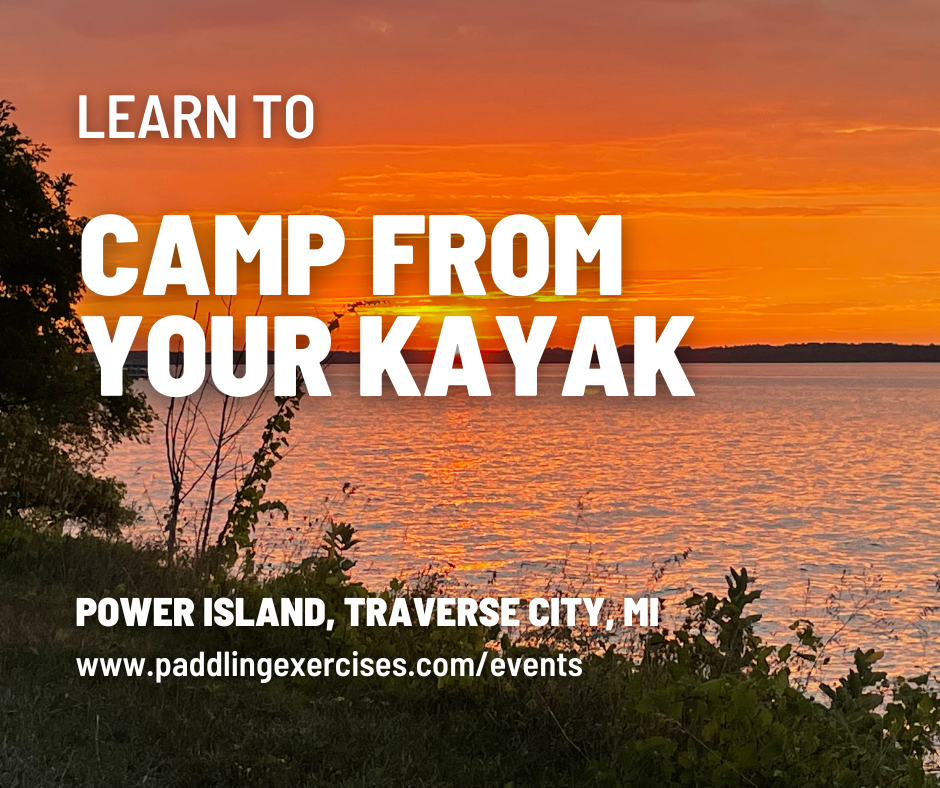
I am very excited to be partnering with Woods and Waters Adventures to lead a fantastic skills weekend September 18-21, 2025. Beautiful Lake Huron and the Eastern UP will be our playground to gain confidence, develop personal and group skills, and work on risk management strategies to stay safe and best enjoy time on the water. This weekend is about the willingness to play, learn, and try new things while enjoying camaraderie among a small group of outdoor friends. Over the 4 days, participants will learn and improve their outdoor skills while paddling premium P&H sea kayaks and enjoy chef-curated meals by a Les Cheneaux Culinary School graduate. Details, pricing, and registration is available at woodsandwaters.eco.
Resources from today's episode:
00:09 - Introduction to Paddling the Blue
00:14 - Quiet Adventures Symposium Overview
01:31 - Coast Guard Auxiliary and Paddle Safety
07:28 - Michigan Sea Grant and Paddling Programs
13:43 - Boat Bus: Mobile Wilderness Programs
21:44 - Wolf Moose Foundation and Ecosystem Research
30:48 - The Power of Water and Connected Paddler
41:54 - Woods and Waters Adventures: Women on the Water
43:19 - Upcoming Skills Program Announcement
0:01 Welcome to Paddling the Blue. With each episode, we talk with guests from the Great Lakes and around the globe who are doing cool things related to sea kayaking. I'm your host, my name is John Chase, and let's get started paddling the blue. Welcome to today's episode of Paddling the Blue. Today's episode comes to you directly from the show floor at one of our favorite events, the 30th annual Quiet Adventures Symposium in Lansing, Michigan. Quiet Adventures is a celebration of quiet sports like ours. And as paddlers, when we hear symposium, we often think on-water education and experiences. And this one's a little different. It's more like a trade show with the Great Lakes emphasis. But even if you're not from Michigan, or even the USA, or our neighbors in Canada, I'm certain that you'll find value in hearing from today's guests.
0:46 Our guests today include representatives from the U.S. Coast Guard auxiliary michigan sea grant the boat bus a super cool concept by the way the wolf moose foundation the connected paddler and woods and waters adventures with a special announcement on an upcoming adventure featuring yours truly all of them are working to educate and excite paddlers protect our waterways and keep our great lakes great if you're not already a subscriber to online sea kayaking.com you're missing out on some great content and a growing community So visit OnlineSeaKeyaking.com, use the coupon code PTBPODCAST to check out, and you'll get 10% off just for being a member of the Paddling the Blue community. Enjoy the live show floor energy in today's episode from Quiet Adventures Symposium.
1:31 I'm here with Denise DeKett. Denise, welcome. Thank you, John. Yeah, Denise is with the Coast Guard Auxiliary Air Station Traverse City. That's our home here. And we are talking a little bit about the AUXPAD program. So, Denise, tell us a little bit about AuxPad, what it is. Okay. AuxPad is a paddle craft safety program that the Coast Guard is involved in. We have kayakers that come into the area, and we try to educate them with wearing their PFDs, wearing clothes that would be appropriate for the water, the weather, educating them in paddle safety. Okay.
2:13 So now the Coast Guard Auxiliary, what is the Coast Guard Auxiliary and how does that differ from Coast Guard proper? So the Coast Guard Auxiliary is a volunteer program. We have people from all walks of life that come in and they want to work with the Coast Guard to help out the active duty Coast Guard. So we have people in the auxiliary that do boats for border safety, such as fireworks. They help out with kayaking programs to assist them. We have culinary assistant programs where we help the Coast Guard. We have classes that we teach the public.
2:56 We have pilots that offer their airplanes to help fly, to do search and rescues for people in the water. That's quite a range of activities that the group does. Your focus is the AuxPad programs, the auxiliary paddlecraft, and really focusing on paddlecraft safety, right? Yes. The AuxPad program started around COVID, maybe even a little bit before COVID. And one of the reasons that it did start, we have a lot of people that wanted to get out of their homes into nature. They started kayaking.
3:37 Unfortunately, a lot of people started kayaking without the safety aspects of it. We have had a lot of deaths, injury, recoveries, searches, because people were unprepared for the water. And so what the AuxPad program mainly does, again, is trying to educate the public into the paddle craft safety. Okay. And you have both an AuxPad ashore and AuxPad afloat, right? Yes, we do. The aux pad afloat is when an auxiliarist paddle craft goes out on the water.
4:17 We usually start up a conversation with a fellow paddler out on the water and to try to find out what level skills they have, what type of information they might need. And then we try to get them, if they need more skills, you know, to offer them classes that we have. We might talk to them just in general, you know, what type of PFDs to wear and to prepare for the water. So we're not in any way law enforcement. We don't do any enforcement. It's not like we're out writing tickets. All we're doing is trying to educate people on the water.
5:00 Sure. Now, the Ashore program, what we do is we set up booths in different festivals where there's large groups of people. And we offer literature, again, telling them where the classes are available. Encourage them to wear the PFDs. We also go into schools and try to educate the kids, middle school, early high school, the importance of wearing their PFDs. Give them good stories and bad stories on people that have worn them and didn't wear them. Okay. All right. So people interact with the Coast Guard Auxiliary both through the events and festivals, like you'd mentioned, that you're giving out that education and information, and then through in-person interactions on the water.
5:45 Yes, it's amazing on people when we do the ashore or afloat of all of the different questions they have. You know, one of the things, you know, on the jackets, the PFDs, you know, we really try not to get people to wear blue PFDs when if they capsize and the helicopter's out looking for them, It's very, very hard to find someone floating in the water with a blue PFD. So we encourage the colors, you know, bright colors to be found. Anything that we can do to educate. But there's such a range of questions that we are out there helping in any way we can on paddle safety.
6:28 Great. Well, thank you for that education that you're providing and for continuing to bring safety to our community. So how can people interact with or connect with the Coast Cutter Auxiliary? Well, our flotilla in Traverse City is at the air station. We don't have cutters at our flotilla where we're at. If anyone is interested in more information about the auxiliary, we can offer you a link where you could contact someone else. The air station, Traverse City Air Station. Okay. I'll make sure I put links in the show notes to both Air Station Traverse City as well as just a general link. So if somebody outside of the Traverse City area is interested in connecting with Coast Guard Auxiliary in their local area, and then you're nationwide, correct?
7:14 Absolutely. Yeah. So there's flotillas all over. And if somebody's interested in getting involved in that and helping continue to promote the safety message, we'll give them that opportunity. That's great. Thank you. Denise, thank you for the opportunity to join us today. Thank you very much, John. Yeah. Erica Kledz has joined me. Welcome, Erica. Thank you. So Erica is with Michigan Sea Grant. So Erica, what is Michigan Sea Grant? So we are a program that does research, outreach, and education about the Great Lakes. So we do have staff that are based all over Michigan. So we cover all of Michigan's coastal counties. Then we cover all different topics. So we have colleagues that work on fisheries and fish health. I do some work on habitat restoration for paddlers.
7:55 We've actually got a couple programs for paddlers. The biggest one is called My Paddle Stewards. And that's where we teach people to identify invasive aquatic plants in the water. So while you're out paddling, if you see something weird, you can learn how to recognize what that is through our training classes and then also report it so that people know that it's there because that's our best chance for invasive plants. It's best to find them early. Sure. Now, how long has that program been running? It's been running almost, I think, six or eight years now. So we're on our second grant for it. So since I think around 2019. Okay. Yeah. All right. And you mentioned other paddling programs as well. Yeah. So one of the other areas that I work a lot in is in education around harmful algal bloom.
8:40 So sometimes when we see the water turn really green, it can be an indication that we're having an algal bloom. And so we do a lot of education programs about that because paddlers, of course, when they're out, they might not just encounter invasive species, they could encounter, yeah, water that's green from an algal bloom as well as just like other sorts of like. Charges or, you know, something weird coming out of a pipe, any kinds of things. But yeah, harmful algal blooms are unfortunately becoming more common or at least more recognized in Michigan. And so they've occurred in most of the counties in Michigan and want people to be aware because often even when they're reported and there's testing done for them, that process is not immediate. So it's best if people just know how to recognize them that way. If they're ever in an area that's having one of those, they can just avoid that area.
9:23 Sure. Now we've got listeners all around the world for the podcast, and some may not be familiar with algal blooms. So tell us a little bit about an algal bloom. What is it? How does it happen? Absolutely. So algae is a natural part of our ecosystems, and it's actually a really important foundation of our ecosystem. So everything that goes all the way up to fish, we need to have algae as part of the food. But some algae does produce toxins, and since it's all around the world, that could be just different ones that produce those toxins. And so when algae, algae is often not visible unless you use a microscope. But when it blooms, that's when we can see it with the naked eye. And so we might notice something in the water. And then we want to try to figure out what type of algae is it.
10:05 Because there's algae that are more sort of like clumpy and you could put a stick in it and it would be more, have more structure to it. That algae is typically not harmful. But then there's stuff like, at least in fresh waters, cyanobacteria is one of the ones we have an issue with. and... That looks more like spilled paint or pea soup in the water. So a really darker color that you'd be looking for. But depending on what region you're in, it's good to research like what might be an issue. So you might have heard of like red tides or things like that in more coastal areas. So yeah, that's a good thing that you could encounter while you're out paddling. Okay. So what can we do as paddlers to help stop that? Yeah. The big thing with harmful algal blooms is to reduce the amount of nutrients going into the water.
10:48 So if you do happen to live along a lake or a water body, if you can install like a buffer strip of plants, using less fertilizer, anything that removes additional, that's not putting more nutrients into the water. Because typically they're occurring in warm water and in areas where there's kind of an excess of nutrients. Okay. All right. Thank you. And now you also kind of support another program. We've got sea lampreys in the Great Lakes. And I think you kind of get involved in that program a little bit. Yeah, we don't do any direct of the hands-on work for it, but we do do education as part of our partnership with the Great Lakes Fishery Commission that does that work. Yes. So sea lamprey are, before we were able to control the sea lamprey, they were one of the main things that was causing a big, there to be not that many fish in the Great Lakes because the sea lamprey, we were eating them.
11:36 So they are an invasive species that came from the Atlantic Ocean all the way through the lakes and eventually throughout the lakes. And they do kill millions of pounds of fish here. So keeping them in check is part of what helps us have healthy Great Lakes fishery with fish for people to catch. And what are some of the things that agencies do to keep them in check? So a lot of it involves preventing them from getting to an adult stage. So sometimes they actually use traps that like draw them into certain areas and sometimes they will, when they're still in like a larval stage, that's typically going to be in streams and rivers. So they try to trap or control them at that stage before they can get out into the lake. Okay. And so it's really important that we have people that are doing that work to make sure that we are controlling the sea lamprey population.
12:23 Because a good example would be the year of COVID when people couldn't go out and do field work. We saw a significant increase in the amount of lampreys. So they have a schedule of where they go at different times. And most areas don't need to be controlled every year, but they do need to be controlled on a regular schedule. So whenever years are missed, they do see that difference in the amount of lampreys. The more lampreys that are out there just means the more fish that are going to be killed by them. Okay. All right. How can people connect with Michigan Sea Grant and learn more? Yeah. So they can go on our website, michiganseagrant.org. And depending on where you are, if you're in the U.S., there's Sea Grant programs in all of the coastal states. So you can check those out. And we also have an email newsletter as well as social media.
13:03 So people can follow us on any of those platforms that they'd like to and find out more. We do a ton of webinars and other free educational events and training. Okay. Well, we'll make sure we put links in the show notes so folks can check out Michigan Sea Grant and the other educational resources you have. And definitely appreciate the work that you do for My Paddle Stewards and for supporting and helping stop harmful algal blooms. Excuse me, I didn't pronounce that correctly. And then the work that you support through the Fisheries Commission for the Sea Lampreys. So thank you very much for all that work. Absolutely. Yeah, it was great talking with you. Thank you for talking to you, too. Micah Leinbach has joined me, and Micah is with Boat Bus. Micah, welcome. Thank you. Glad to be here. Appreciate it. So, Boat Bus. I saw the Boat Bus here, and then a couple of days before the event, I saw something about Boat Bus, and the concept just fascinated me.
13:54 So, it's pretty cool. Tell us a little bit about Boat Bus and what it is. Yeah, happy to. So, Boat Bus stands for the Bus for Outdoor Access and Teaching. Although, I'll warn you and any other listeners, we're actually going to be renaming the organization soon as we grow and expand so they find us under a different name i can't tell you what it is yet but the concept still applies the concept applies and what we are is it's a bus it's actually several buses and we turn those buses into mobile wilderness programs which means we have enough camping gear and equipment for over 30 people to a bus and the seats to train. Do with that is we partner with different organizations and community leaders who want to add camping trips to the work that they do. And we bring them the resources they need to run those camping trips with their own vision on their own terms.
14:40 Okay. So if you're like a teacher and you want to run a really cool field trip, but you don't have 30 sleeping bags, or you don't feel confident enough to take 30 kids camping for days at a time, you can call us. We'll provide the transportation, we'll provide the gear, and we'll help train you to run that trip so that you can lead your own trip, but you'll have support from the organization that we are. So it's their vision, and then you're supporting their vision for them to make it happen. Yep, that's exactly right. So we spend a lot of time thinking about how do we make the outdoors more inclusive. And one of the ways to do that is to let people tell the story they want to tell. And I noticed that a lot of the programs that were out there, fantastic programs, but if you went, you got their curriculum, you got their style, you got their schedule.
15:21 And I said, oh, wouldn't it be awesome if people could go out and have a trip feel like them, feel like their culture, feel like their community? And we just empower them with the resources. That is very cool. Tell us about one of the trips. Yeah. So it's so hard to just talk about one because they're so different. But here at the Quiet Adventures Symposium, we've got a group from Detroit Outdoors. They're tabling with us. And we have done so many trips with them. And what's really cool is they're working with a lot of high schools to start outdoor adventure clubs. And those outdoor adventure clubs are just like kids can go to school and join a chess club or join the football team. Now in Detroit, they can join an outdoor adventure club. And with those groups, they get to go both with us and sometimes without us for local trips.
16:03 And just last week, we took a crew up ice climbing and curling and doing all the classic Upper Peninsula activities in Michigan's UP. I mean, a couple of weeks, we're taking them skiing down up at Crystal Mountain. Over the summer, they've done backpacking trips, including some pretty like rugged off-trail learning to navigate backpacking trips. And that's something they're getting exposed to through school. So we're reaching those kids where they're at. All right. And what I love about the group is a lot of them have parents who don't camp. And I ask people this question all the time. Why do you camp and why did you start camping? Most of us get introduced to it by family. For a lot of kids in America, their families don't camp. So what's the option for them? Now, in Detroit, we have this solution, and we've been helping to build it with Detroit Outdoors that they get to do it through school. So that's one of my favorite examples.
16:47 Yeah, yeah. So, yeah, you're right. There's so many people that would like to be able to start getting involved in outdoor activities, but aren't really even sure where to start. And the gear is a big investment. And so you're able to meet people not only where they are physically and be able to get them to that location, but then you're able to outfit them with gear as well. Yeah, we basically tell people, show up ready for gym class. Okay. If you have the clothes that you need for gym class to get a little dirty, a little sweaty in, and a good pair of shoes, we can take you from there. You also got to bring a toothbrush. We don't provide that. But what will happen when you show up, we're going to give you coats. We're going to give you backpacks. We actually have a bare barrel that you'll get with a number on it, and it'll have a headlamp and a bowl and a spoon and a compass. So down to the details, we have learned that if you solve for just one barrier to outdoor access, you don't solve the problem. It's what we call limiting factor, which we got from ecology.
17:36 It doesn't matter how much carbon and hydrogen you have. If you don't have enough nitrogen, the ecosystem doesn't thrive. Similarly, if you solve for gear but not transit or transit but not gear, you're not solving the problem. So that's why we try and make sure that our model is going to factor in all the different barriers we see frequently and try to address each one strategically piece by piece. Okay. Now, when did boat bus start? So we launched in late 2019, which if you do the math in your head, was a terrible time to start a new outdoor program because pretty quickly, while a lot of people were going outside during COVID, they weren't doing it by cramming into a small metal tube and flying far away from definitive medical care. So we relaunched in 2021 in Michigan with an ice climbing trip with James Mills, works for National Geographic, and we've been bopping around the Great Lakes ever since doing all kinds of programs.
18:22 That's pretty cool. Now, how do groups that are interested in the service connect with you? honestly, it's mostly word of mouth. And they hear about us from someone else who's heard about us and they'll reach out. And the questions are simple to get started. It's what is your goal? What do you want to use the outdoors to do for you? For some people, that's character development or leadership. For other people, it's just relaxing or getting to see somewhere else. Or for yet more, it's, hey, I have this curriculum or this place I want to go. So we figure out the goal. We figure out how many days, how many people, how many miles. And that lets us figure out what is this going to cost? And then it's a conversation about, do you have budget? Are we fundraising? We do have grants that we bring to the table. We try and raise dollars to support trips. And many of our partners pay because they've learned that we're the most cost-effective way to do this compared to traditional summer camps and other models.
19:09 We're typically between 30% to even, I kid you not, 100% or more cheaper. And that's where we'll go from there. But every trip looks a little different. And we found that that is part of what has made us so in demand is because folks are really looking for like that set of. That's really cool. Now, how many guides do you have that are helping? Is it guides or how is it structured for the group? Yeah. So most trips are going to go out. There's going to be a bus and there's going to be a guide or a driver or as we call them, the driver guide. And that's the person who has the medical training. They know how the bus works. They're going to get you oriented to where do you find the stoves. They're there to help you. Yeah. And then the leader of the trip is actually the person from the community that we're working with who has that connection to the people we're going out with.
19:51 Often youth, but many of the trips are adults. We hire throughout the year. Actually, if anyone's interested, we're doing a training in June. It will be in Milwaukee, Wisconsin for folks who want to work with us or volunteer with us to learn the bus and also to learn how do you be on a trip and be a resource, but not take charge of it, you know, and make sure that you're balancing that. But we have a variety of folks who've worked with us over the years around the country. There's two of us on it full time. And then we bring other folks in trip over trip based on the numbers, based on the needs. And we also hire folks every summer to guide for us. Okay. And how many programs do you run a year? Right now, we're looking at about 24 trips this year. We did about 26 last year. We just finished our 100th trip last weekend. Congratulations. We've done about 5,000 days of camping in that time, and every year is getting bigger.
20:35 So I mentioned that we have had one bus that's been kind of our old reliable for the last couple years, and it's just no longer able to meet the demand. We have folks who are scheduling the same week. Everyone wants it, especially in the summer. So we're expanding our fleet. We're going to have three buses that are going to be operating out of different areas to support more programs. That's fantastic. How can people connect with you and learn more? If you go to our website, www.theboatbus.com, that's T-H-E-B-O-A-T-B-U-S.com, you'll be able to find us. There will be a chat. You can reach out to me there. You can find my email there. That's the best way to get started. And even with the name change, that website will be live. So that's a good way to start the journey. Okay. And I know we talked earlier about paddling is not your first and most frequent trip.
21:20 You've got some paddling trips, but the concept still applies. You can still meet people where they are. You can still outfit them with gear and be able to get them to places. So whether we're paddling or whether we're on foot or we're on a bike, we're still enjoying the outdoors and that's really what it's all about. Yep. That's exactly it. And we had a bunch of disciplines through other partners. So if there's something you want to do, ask, we'll be able to figure it out. Super. Micah, thank you very much for joining me. Thank you for having me. Michael George has joined me from the Wolf Moose Foundation. Michael, thank you. Well, it's a pleasure to be here. Yeah. So what is the Wolf Moose Foundation? Well, the Wolf Moose Foundation, actually, it's relatively young. It just was where 501c3 just set up really within the last year and a half. The idea there was to help support the research that takes place on Iowa Royal National Park. Okay.
22:06 And the research, I don't know if your listeners know, but it has been running for about six and a half decades. Yeah. It's the longest predator-prey study in the world. So what we try to do is to bring awareness to the project, and we want to help sustain it into the future in terms of the cost of doing it. And then maybe one of the biggest things is advocating for research and education as it pertains to predator-prey relationships, and particularly IRL National Park. So we want people to feel the importance of predator-prey studies, not just at Isle Royale, but throughout the world.
22:51 And what we learn at Isle Royale can often be easily transported to other parts of the world. Sure. They can understand things. So predator-prey studies are important, and predator and their prey, as the animals, it's important for ecosystems to beâ healthy. Yeah. So tell us, tell us what is the importance of that study and how does it happen? Well, again, we're basically collecting, I'm going to back up here a little bit. A lot of the people that are involved in it are actually on the ground. We're volunteers. We're called moose watchers. We go to the island. There are four teams that go to the island each year. And what we're trying to do is literally collect bones.
23:37 Once you have the data that you're collecting, the bones and things like that, those then can be measured. They can be analyzed. DNA analysis can help. Teeth of a moose will give us a lot of information in terms of actually the health of the environment. They can take the teeth. They can analyze that. We can actually find levels of mercury that might be in the environment or sulfur or nitrogen, things like that. And that actually goes back to the Clean Air Act back, I think, I think the 70s. I'm not sure if they will quote me on that. But within actually a fairly short period of time, early 80s, we actually found out that the Clean Air Act was doing its job.
24:19 We were actually finding the things were being cleaned up. And you can tell that from the moose and from the wolves. From the moose, particularly because of what's in their teeth. The wolves, of course, that relationship... Is quite dynamic, Isle Royale offers the opportunity to really look at a single prey and a single predator situation, which, and I'll use the term simple, kind of a grain of salt, because it's a little more than that. But when we compare it with Yellowstone National Park, and that whole area out there, where they deal with the predators are grizzly bear, wolves cougars and then the prey species not just one but elk bison and and deer and deer.
25:08 So it's it's more dynamic with this situation at our royal it it allows for us to really key in on this these specific relationship without having to have a lot of other things going on around it that might maybe give us different kind of data points so and then the nice thing about our royal the key word there is isolation. The island is isolated from the mainland by 15 miles or so. And that helps to keep certain things, well, back up. There are about approximately 30 species of mammals on the mainland that are not found in our world. Okay. So it allows us to kind of more easily, again, I should be careful with easily because there's a lot of work there, but more easily maybe look at the dynamics of these particular two animals.
25:58 And without having a lot of other stuff that might get away, if that makes sense. But that's basically what we're trying to do. We, you know, again, it's been going on for a lot of years. We're trying to support the scientists that have been doing it for so many years. And, you know, it's kind of like boots on the ground. And we try to do our best to, you know, get the things they need so they can best do the measurements that they need to determine, you know, what's how the island, how the study is going. Okay. Yeah. So, in addition to being able to tell what's going on with the environment from the animal specimens that you're collecting, you're also able to better understand the relationship between the prey and the predator. And so, tell us a little bit about that and why that balance is important to maintain.
26:41 Well, the importance there is also how those two prey and the predator, how they affect the rest of the ecosystem. You know, it's not as, again, I've used the word simple again. We have to be careful. But it's not as simple by just saying, well, if the, say, if the moose population goes up, the wolf population is automatically going to follow. You know, the numbers will increase and vice versa. What we found over the study is that that's not always true. There are other things that come into play that you just can't predict. You know, maybe there's a severe winter, and I'll give you an example. Winter of 96, 97 at IRL, just before that winter, there were about 2,500 moose on the island.
27:23 Within that winter, almost 2,000 moose starved. Winter was so severe, it came early, stayed late. Wolves were... Somewhat impacted by that to a degree, but that's what the weather did to it. Again, I mentioned kind of different things here, but the weather, the climate changes, I mentioned isolation of the island. Back in the 60s, 70s, in usually every decade, four or five, maybe six ice bridges would be formed from the mainland to the island. That allowed for immigration wolves to come and go if they wanted to now it's like once or twice a decade so we don't we so that's changed the.
28:07 It changed the health of the wolves because they're i don't want to get real technical but there you know when when the wolves when they're the genetic diversity is less so when there are no new wolves coming into you know into the environment sure so if an immigrant comes brand new starts mating with the wolves some of the wolves there the genetic diversity increases and you and the wolves are healthier when when that doesn't happen the wolves become less healthy they don't reproduce the way they should so that's maybe in a nutshell how that works and of course well that's how that's how that would work yeah i think the last time i was there there were two two wolves on the island that was probably 2018 and and they were if i'm not mistaken they They were brother and sister and a mating pair.
28:59 So you do the math on that, and it's not very sustainable. Yeah, and they had a pup they actually produced, and the pup didn't survive because it was just so malformed. And it wasn't healthy enough to do that. And you were very right. And then, of course, the National Park Service decided right after that, when you had been there, 18, 19, they brought wolves to the island. Right. Now we're seeing that, the benefit of that, 30 plus wolves now, moose are, you know, maybe a little more in balance, right around between 700, 800 now. But we'll have to see how that plays out over the next, even the next decade, because things can change. And, you know, again, that.
29:40 Back in the early part of the study, maybe about 30 years ago or so, a canine parvovirus got to the island. And that devastates domestic dogs. Well, somehow it got into the, someone brought, maybe on a boat, they brought their dog or something like that. They're not supposed to do that. But the wolves somehow interacted with what was left. Maybe a scat, but the dog left. They got it. And the population in one, no, two years dropped from 50 to 14 animals. Wow. So there's an outside thing we didn't know about. It just happened, and it affected the relationship then. Sure. So if people wanted to learn more about the Wolf Moose Study and the Wolf Moose Foundation, how would they learn more?
30:23 Well, actually, there's a couple of sites you can go to. You can go to the Wolf Moose Foundation. And then another one that is more specific, it'll draw you right to the volunteer part of becoming a moose watcher, is ioroyalwolf.org. All right. And once they go there, hit volunteer and it'll tell you all about it. Fantastic. We'll put links in the show notes to both of those. Michael, thank you very much for joining me. Thank you for having me. All right. Trey Rouse has joined me from The Power of Water. How are you doing, Trey? I'm doing great, John. Thanks for having me. Super. So we're having a good time at the show here and you've released a new tool. So tell us a little about that new tool that you've released here at the show. Yeah, it's an online learning platform called the Connected Paddler.
31:05 There's resources for people to learn how to teach themselves how to paddle or be better prepared to take instruction from people like you. All right. All right. So who's the audience with this? The tagline is learn to paddle where you are. And that doesn't mean just geographically, but also where you are in your paddling journey. So it really spans all levels and all types of craft. It's about mindset and our approach to paddling and building the foundations and the conceptual bits that kind of get skipped and filling in those gaps so that when you're out there, you're actually in a learning place. Okay. So, different than the mechanics of how to paddle, it's how to be in the right mindset to learn to paddle.
31:53 Correct. Yeah, there's many people out there that we respect that have made many good videos on how to do a forward stroke or how to go sideways. So, that's not what this is about. Well, this is about the foundations of how a boat moves and why, how we function as humans and why, how we work with each other, how we debrief incidents, how we decide whether or not the people we're paddling with are the people we should be paddling with, how we decide if the environment we're in is the appropriate environment for ourselves. Okay. So what was the impetus for this? What kind of got you started on it? Well, we designed a course for Michigan State University during COVID, where we had to teach paddling.
32:36 We didn't have to. We were given the opportunity to teach paddling online and thought that that would be impossible. And true to a learning mindset as opposed to a fixed mindset, we were open to the possibility. And I was pushed in a way from a gentleman friend of mine who created a course with us that actually is very unique, collaborative, and innovative for online learning and found that you can get people prepared to teach themselves how to paddle online. Okay. And then the name of the tool again? The Connected Paddler. All right. The paddling course is called Kayak, Canoe, Sup, and You, and it's all blended together, and it's about being curious, being a little bit uncomfortable or having discomfort, just like I do right now trying to talk this close to a mic. This is really weird. Yeah.
33:27 And then in that process, we get growth. And that's what we're exploring in the Connected Paddle. All right. Now, where do you see it going from here? We see it going worldwide, man. It's unlimited. And eventually, there'll be other layers to it. But for now, we're focused on just getting this out and building this community and supporting the people that are involved in that community. Because you will build a community as a result of being a participant in the Connected Paddle. Okay. So, yeah, you mentioned that community aspect of it. So, how are you building the community? within the Connected Paddler. So once you join the course, you become a part of that community, which stays open for as long as you want it to be. It's a closed community, so you're not bombarded with all the social stuff that we all are trying to navigate away from.
34:14 But you can share, collaborate, and be a part of a community inside the course itself. Okay. All right. And you've had another program that you've been doing this year, kind of that teaching bit, right? So focusing on the stuff that as instructors, we might not be taught at the initial training, the initial certification, but kind of what you learn after that. That's correct. So that's hosted on the Connected Paddler platform as well. And that focuses on the things that we didn't learn in our instructor workshops. And it's not a criticism of workshops. They're filled with all these other things, but we didn't really get to spend a whole lot of time on how we teach. And so just like we look at different strokes and maneuvers and concepts as a paddler, as a teacher, we need to look deeper at the techniques and the ways that we're actually teaching.
35:00 So we're building on things that people are already doing, but actually exploring them in a little bit more detail and how they can apply to make people better, better teachers, better instructors, which is more fun for everybody. That's right. That's right. So where can people find the Connected Paddler? At theconnectedpaddler.com. Wow, that's pretty creative. Yeah, we nailed it. And so you're, in addition to Power of Water, in addition to the Connected Paddler, Great Lake Sea Kayak Symposium, what year is this year? You would have to ask that. For us, I believe it is going to be our ninth year hosting it as organizers. I think it might be the 37th. It's the longest running sea kayak symposium in the country. I don't know the exact year. Okay.
35:43 Still, that's a pretty good run. It's a pretty good run. And that's July Grand Marais, Michigan. That's correct. All right. We're sold out this year. There is a waiting list. If you go to the website, thegreatlakeseakyatsymposium.net, you can get on a waiting list, but we have already sold out for the event. So, yeah, it's great. And I think your tagline is, this place will change your life. This place will change your life. All right. And if people want to register, you know, they're thinking, I can't get in for 2025, but they can get in for 2026. When do you open registration? We'll have that open later this month. Awesome. All right. Trey, thank you very much. Good luck with the Connected Paddler, with the Power of Water, with the Great Lakes Sea Kayak Symposium, and wherever the future may go. Great. Thanks for having me, John. I really appreciate it. Thank you. I'm joined by Sue Bacala. How are you, Sue? I'm doing great.
36:26 How about yourself, John? Fantastic. So, Sue, you joined us last year for a little short part of this episode coming from the great event here that is Quiet Adventures Symposium, and you're with Woods and Waters Adventures. I am. So, Woods and Waters up in the eastern UP on Lake Huron. Yeah. So, tell us a little bit about Woods and Waters. Are you the second owner of Woods and Waters? We are the second owner. We have officially been around now for six full years. So we're entering our seventh season up in the Le Cheneau Islands, which is, let's say, the eastern UP, about a half hour from St. Ignace. Okay. All right. So for those not familiar with it, so Michigan is two peninsulas.
37:07 So there's a lower peninsula and an upper peninsula connected by the Mackinac Bridge. And so you basically go across the Mackinac Bridge, take a right and go about a half hour. Correct. All right. So what makes the area so special? Well, there's really no other place quite like it, especially in Michigan in terms of the Great Lakes. And so there's 36 islands that are just off the shoreline, which gives us the advantage of having both protected water and big water. So lots of different paddling opportunities. It's a beautiful area. We are lucky enough to have lots of public land that is both part of the Hiawatha National Forest, as well as preserves from Little Traverse Conservancy and the Nature Conservancy. Okay. And how much area are we talking?
37:49 So the Les Cheneaux, we have, we like to say dozens upon dozens of shoreline miles. So some of the islands are actually quite large and some of them are really tiny. So Marquette Island, which is the largest of the Les Cheneaux, is about three times larger than Mackinac Island. A lot of people are familiar with Mackinac as a tourist destination. So Marquette Island is over 25 miles around. So some of the islands are pretty big. Yeah, that's a good size. So now you run a lot of day programs up there, but you run other programs as well. We do. We offer all sorts of, you know, short day paddles, two hours, four hours, full day, sunrise, sunset. But so we've recently added three night trips and we started featuring ones that were called WOW, which stands for Women on the Water.
38:35 And those are once you come, we have two guides that are working with you. We're doing paddling trips. We're doing other fun things, some short hikes. And the biggest thing about it is the food is absolutely fantastic. We work with a graduate of the Le Cheneau Culinary School, and she does all the meals for us, working within people's accommodations in terms of allergies and other things. Food is everybody, they like having fun on the water, but they always want to know when the next meal is coming because once they're there, they just become so excited by this amazing food. So we have been doing that. We're going into our third season of offering these women-only trips. And then this year we decided that we would reach out and work with John to try offering an ACA paddling skills weekend.
39:23 And so that we will be doing that in September of this year. So the one thing I kind of want to say about with Woods and Waters, with these multi-day trips, we do do an overnight camping trip. But what we like to kind of say is that we're white glove service. You know, we are not, and that's where the food is so good as well, is it is not about suffering in the woods. It is not about suffering with, you know, eating just lunch meat, you know, off the beach. It's really about, you know, enjoying time outdoors, getting to know people, but taking care of, you know everything in your well-being and part of that is good food and time spent with other people that like things like you do sure it doesn't have to be suffering we can we can have the finer things as well and have nice accommodations you've got up north chic is that what i what i uh i don't know if it's chic but it definitely is very comfortable the for the women on the water and then the weekend paddling with john the accommodations that are available to people are are very comfortable That's right on the water on McKay Bay, which is just to the east of Cedarville.
40:27 And I mean, where else can you just like park your own kayak right on the water? Beautiful beach. You get to watch sunsets and just take off from there and have, you know, laundry, a hot shower. And great food. And great food. All right. So, yeah. So, September, we're going to run this program so people can go to paddlingexercises.com. And there's a link there that'll take them there. But more importantly, your website. And it has all the details of it and the registration. Exactly. So, our website is woodsandwaters, both plural, .eco. So, that's woodsandwaters.eco, which is E-C-O. Right. So, this is a three-night adventure. And so, great food, great accommodations, and we'll have great instructions.
41:09 We'll have a lot of fun with that. So the instruction content, we're going to make this about what the participants want. So this isn't a pre-formatted program. We're going to talk to you as participants and find out what you would like, and then make sure we can tailor that to meet you where you are. Exactly. And also with regards to the price, you don't have to bring your own boat, but you are welcome to bring your own boat. We are a P&H shop. So all of our solo sea kayaks are P&H. So we have Scorpios, we have Virgos, we have Leo, and even Delphin. All right. So you heard it here, folks. Go ahead and you can join us for the ACA Skills Weekend, and I'll be your instructor for that program.
41:49 We're going to do that in September in the Le Cheneau Islands with Woods and Waters Adventures. Thank you very much, John. You're welcome. Thank you, Sue. If you want to be a stronger and more efficient paddler, Power to the Paddle is packed with fitness guidance and complete descriptions, along with photos of more than 50 exercises to improve your abilities and enjoy your time on the water. The concept and exercises in this book have helped me become a better paddler, and they can make a difference for you, too. The exercises in the book can help you reduce tension in your shoulders and low back, use Use the power of your torso to create leverage and use less energy with each stroke. Use force generated from your lower body to make your paddling strokes more efficient.
42:31 Have the endurance to handle long days in the boat, drive through the toughest waves or whitewater, protect your body against common paddling injuries, and while you're at it, you might even lose a few pounds. And who wouldn't mind that? So visit PaddlingExercises.com to get the book and companion DVD. Thank you to all our guests from today's episode. I am very excited to be partnering with Woods and Waters Adventures on this upcoming skills program. If you're interested in joining us, the dates are September 18 through 21, 2025. Beautiful Lake Huron in the eastern upper peninsula of Michigan will be our playground to gain confidence, develop personal and group skills, and work on risk management strategies to stay safe and best enjoy your time on the water.
43:12 This weekend is really about the willingness to play, to learn, try new things while enjoying the camaraderie among a small group of outdoor friends. Over the four days, participants are going to learn to improve their outdoor skills. You're going to paddle premium P&H sea kayaks and enjoy chef-curated meals by a Les Cheneaux Culinary School graduate. Details, pricing, and registration are available at woodsandwaters.eco, and you'll also find a link in the show notes for this episode to learn more. For those listeners from the Great Lakes region, I really hope you learn something about a new place, an outfitter, or an event. And if you're from somewhere else, I hope you also found another reason to visit the region that is home to 21% of the world's freshwater.
43:54 We may not have ocean tides, but our Great Lakes are pretty great. In the state of Michigan, you're never more than six miles from water and 85 miles from a Great Lake. Don't forget to check out online sea kayaking.com and take advantage of the great video programming that James and Simon have assembled and enter the code PTB podcast to check out and get 10% off just for being a member of the Paddling the Blue community. Speaking of online communities, we'll also have information in the show notes about the Connected Paddler, which you heard about from Trey Rouse. In our next episode, we're on the road to another longtime favorite event. Our next episode is going to come to you from Madison, Wisconsin, where we'll be recording directly from the P&H Piranha Kayaks booth at Canoe Copia, the world's largest paddle sports expo.
44:36 We'll be talking with paddlers, exhibitors, and share some of the newest and most interesting gear from the show. Until next time, Thanks for listening, and I look forward to bringing you the next episode of Paddling the Blue. Thank you for listening to Paddling the Blue. You can subscribe to Paddling the Blue on Apple Music, Google Podcasts, Spotify, or wherever you find your favorite podcasts. Please take the time to leave us a five-star review on Apple Music. We truly appreciate the support. And you can find the show notes for this episode and other episodes, along with replays of past episodes, contact information, and more at paddlingtheblue.com. Until next time, I hope you get out and paddle the blue. Music.