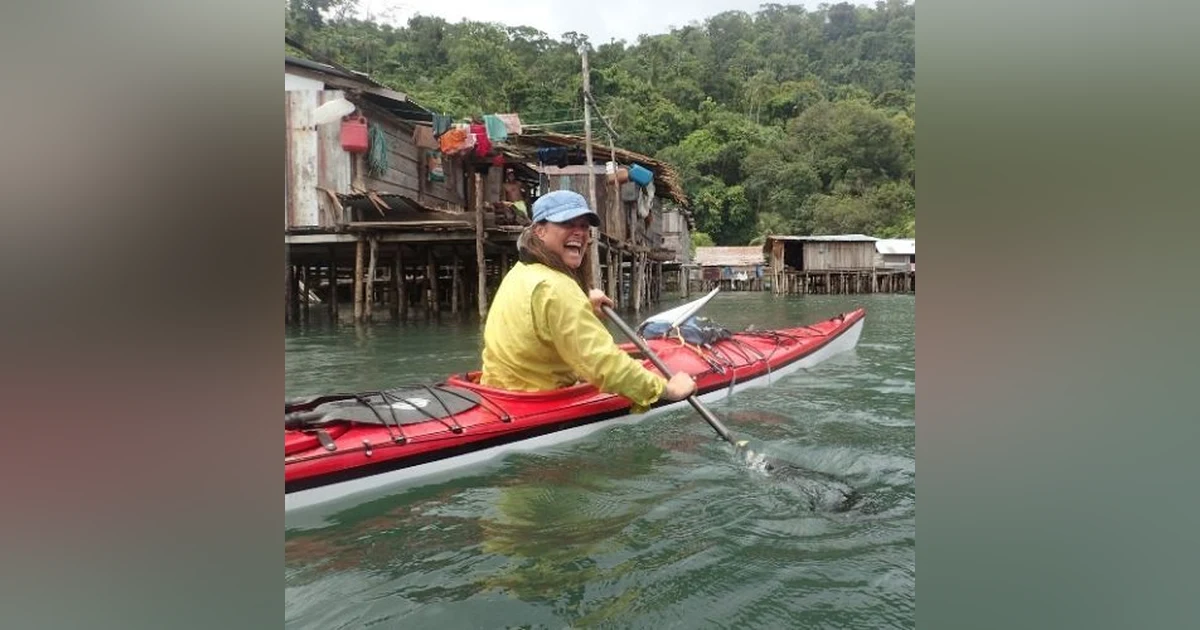
#141 - Justine Curgenven's Aleutian Kayaking Adventure - Encore Episode


 Apple Podcasts

 Spotify

 Overcast

 Castro

 PocketCasts

 RSS Feed
Join us for an exciting encore episode of 'Paddling the Blue' as as we revisit a fun conversation with Justine Curgenven.
Dive into Justine's incredible journey through Alaska's remote Aleutian Island chain with Sarah Outen. Learn about her preparations, the breathtaking landscapes, and unique wildlife encounters. This episode is packed with inspiration for kayakers and adventurers alike. Plus, discover how Justine's stories continue to captivate audiences and her ongoing contributions to the paddling community.
This episode also features exclusive offers from our partners at OnlineSeaKayaking.com and Online Whitewater to help you make the most of your kayaking adventures.
00:11 - Welcome to Paddling the Blue
01:50 - Conversation with Justine Kurganvan
04:16 - The Aleutian Islands Adventure
09:54 - Life in the Aleutian Communities
13:31 - The Experience of Wild Places
14:57 - Challenges Faced on the Journey
19:39 - Preparing for the Unknown
21:24 - Training Sarah for Adventure
22:57 - Advice for Aspiring Adventurers
24:28 - Essential Equipment for the Trip
26:05 - Funniest Moments in the Wild
28:39 - Wildlife Encounters on the Journey
32:04 - What’s Next for Justine
32:27 - Making Adventure Films
38:02 - Cackle TV and Its Origins
0:03 Welcome to Paddling the Blue. With each episode, we talk with guests from the Great Lakes and around the globe who are doing cool things related to sea kayaking. I'm your host, my name is John Chase, and let's get started Paddling the Blue. Welcome to today's episode of Paddling the Blue. Welcome to summer, at least here in northern Michigan in the USA. It's been a pretty busy summer so far with leading instructor and guide training programs, and now we've got family in town to enjoy our region's biggest Festival of the Year. So I'm giving myself a little bit of break this week to make sure I have time to attend to all the other bits of life. Today's episode is an encore from the archives. Nearly five years ago, I had the opportunity to sit down with Justine Krugenman, and she joined me to talk about paddling Alaska's Aleutian Island chain.
0:46 Now many listeners will know Justine from her DVD and download series, This is the Sea, among many other videos, all available at her website, GackleTV.com. She has a seriously impressive paddling resume, but even more important, she brings fun and a great laugh to everything she does. Before we get to today's conversation with Justine, James Stevenson and Simon Osborne at OnlineSeaCayaking.com continue to produce great content to help you evolve as a paddler and as a coach. You'll find everything from basic strokes and safety to paddling in tides, surfing, coaching, documentaries, expedition skills, incident management, and more. If you're not already a subscriber to OnlineSeaCayaking.com, here is your opportunity to get started.
1:27 Visit OnlineSeaCayaking.com, use the coupon code PTB podcast to check out, and you'll get 10% off just for being a member of the Paddling the Blue community. And for those of you who also enjoy paddling whitewater, their newest offering is Online Whitewater, and they're also offering the same discount to listeners. So check out Online Whitewater at OnlineWhitewater.com. Use the coupon code PTB podcast to check out and explore. Enjoy today's episode with Justine Kurganvan. Hi, Justine. Thanks for joining me today. No problem. It's nice to be here, John. Ah, this has been a great opportunity. I've really been looking forward to the chance to talk to you. So, Justine, you're here to tell us a little bit about the Aleutian Islands. So, why don't we start by telling us a little bit about your personal paddling background.
2:11 Well, I didn't start paddling until I left university and my best friend dragged me along to my local kayaking club. And I didn't think it was that interesting to start with because we just went around in circles in the harbor and tried to learn to go straight, ironically. But I soon discovered that they went for a paddle on a Sunday in amongst the caves, between different beaches, along the beautiful coastline. Then I thought, okay, now this is why people go kayaking and this is why I want to learn to go straight and I want to learn to turn and I want to learn to go through the caves and everything like that. So I became quite inspired by it quite quickly. I soon discovered that I loved going on journeys in a kayak.
2:53 And I mean, it's an amazing vessel for it. You know, you can carry a month's worth of supplies and you can go to some amazing places that people can't get to any other way or easily anyway. And so, yeah, I kind of quite quickly, once I started, I started doing more and more. And I moved first of all to England and then to North Wales to be closer to kayaking, good kayaking. So I moved to Anglesey where they have amazing tidal races. And at the time I was trying to make it as a filmmaker, an adventure filmmaker as well. And that wasn't always going great. So that meant I had quite a bit of spare time. So I spent a lot of time kayaking and going out in the races, going out and surf, and it really improved my skills.
3:37 And then I was always keen to try to find people to go on adventures with. And my first kind of big adventure, I suppose, was kayaking around Wales with Fiona Whitehead. And we went around the sea and through the canal and river system. I think that took us about three weeks. And then I went to Kamchatka in Russia. I went to Iceland by myself. And, you know, I just soon became hooked on going to these amazing places and exploring them. So you first started kayaking, didn't find it interesting, and then found it so interesting that you moved. Well, yeah, I guess that's not really why I moved to England, actually, but it is why I moved to Wales. One of the main reasons, for sure. That's pretty cool. Now, you mentioned your film career. Now, that certainly took off in terms of being an adventure filmmaker with five This is the Sea DVDs now?
4:23 Yeah, five This is the Sea and then a few other DVDs, rolling DVDs and an open canoeing DVD as well, yeah. Give us the background on the Aleutian Islands trip. Well, the Aleutian Islands is somewhere that I really had in my sight, somewhere that I really wanted to go. It's wild, it's remote, it's dangerous. There's extremely strong currents and very little information about what direction they go in and how fast they are. And it's very windy. I just hadn't really found anyone to go with. And then my good friend, Sarah Ooten, who was traveling around the world under her own power, I had previously kayaked from London to France and from Russia to Japan with her as part of her round-the-world trip.
5:04 And that was meant to be the end of my role. But she was rowing across the Pacific from Japan to Vancouver, and she basically got taken around in circles and all over the place by winds and currents, and she wasn't going to make it. So she ended up going to the Aleutian Islands. So she phoned me up from the middle of the Pacific Ocean and said. Justine, how do you fancy kayaking along the Aleutian Island chain with me next year? And I thought about it and I'm like, well, I'm not saying no, but it will be the most challenging trip that either of us have ever done. And I did have to think about it because Sarah's way less experienced in a kayak than I am. At that point, she didn't have a reliable role.
5:45 And as I mentioned, it's an incredibly unpredictable and wild place with no one to help us in most of the places. So, but Sarah's got an amazing attitude and she was basically, she arrived in ADAC, the western most inhabited island in September and we weren't going back till the following April. So she was coming home in between. So we had seven months to train her up. And she also agreed to use sails. To me, that was a big plus because it meant that we could just have a little bit of extra speed when the wind was, was favorable. And also I figured the worst case scenario would be that one of us kind of repeatedly fell out of our boat on a long crossing you know to the extent that we just had to raft up because it would just keep happening and I thought well if we have sails we should be able to go somewhere either back to the island that we've left or to the island we were trying to get to so I figured it was a big safety an extra safety issue and some of the crossings were long we had a lot of 20 mile crossings.
6:48 We had 140 nautical mile crossing. So you're looking at paddling all day, possibly landing in the dark on a remote uninhabited island where you don't really know much about the landings. So I think it was okay to use sails. So how did you learn about the area? I don't remember how I first learned about it. I mean, it's an amazing feature if you look on a map or a globe. I mean, the Alaskan Peninsula and the Aleutian Island chain stretches right the way across all the way to Russia. And I think I'd heard about Stan Chaddock had done some kayaking there and a few other people had been there. And John Bowermaster wrote a book about kayaking and some of the islands there. And everyone just said how wild and remote that they were and how challenging it was with all of the currents.
7:32 And so, yeah, I just really fancy taking on that challenge. And yeah, it just gave me the opportunity when Sarah ended up there in her rowing boat. So you mentioned that there's not a lot of information about the area. How did you gather that information to get an understanding of where you could land and basically how you'd make the journey? Well, there's a coastal pilot that's available for free online. So we read through that and we got all the information that really is available. So in some of the. Channels that we went across between islands does have tidal information, but it's not particularly accurate.
8:13 But we took that and we sort of used that as our baseline. And we often found that it was vaguely correct, but it could be two or three hours out. So if it said the current was going to go north for five hours and then south for six, seven hours, then it was probably vaguely right, but you didn't really know when it was going to change. And one channel actually was the total opposite of what we were expecting, but it gave us something to work with, to start with. And there was a little bit of information about currents at 12 knots in this particular passage, for example, mostly information that was a bit scary sounding. And then we also found people that traveled the area in boats.
8:54 So there's a couple of boats that travel in the area through the season, dropping off researchers and things like that. And so we spoke to one of the captains who had been, you know, sailing in the area for 30 years. And he was an amazing source of information, giving us local knowledge. And I just looked wherever I could as well for information. Previous people that had been there, I read John Bowermaster's book, you know, whatever we could find. And how many miles and how many days were you out on this trip? It was two and a half thousand kilometers, so about one and a half thousand miles. And it took us 101 days. And I mean, I think we only paddled 67 of those. We had a lot of days off, either due to bad weather or because we were in civilization.
9:37 I mean, the biggest, we had a couple of stretches of 250 nautical miles with no villages, but there are a few villages and communities along the island chain. And whenever we were there, it was hard to get Sarah to leave. I mean, like for her, it was just a totally out there trip. I mean, for me, it was challenging, but Sarah was very much outside her comfort zone quite a bit of the time. and she was very brave to do that because ultimately she wanted to, to do that distance in a season and so to do that you can't wait for calm weather every crossing or every day you just would never get anywhere so uh you know we had to go out in some conditions that were that she didn't really like but you know i felt confident that i could could i could deal with any situation that might arise if anything did i mean actually sarah didn't swim or capsize or anything on any of the crossings so that was great but yeah she had to push herself and then And yeah, in the various villages, we would ship ourselves some food and we managed to find a contact in every community, somebody that we could kind of stay with and would help us out and give us an insight into the community. So that was great.
10:48 Yeah, I've sort of forgotten the original question, but I think I vaguely answered it. Oh, sure, sure. So, I mean, that's a pretty impressive, I guess I'll call it record for Sarah for not capsizing and not having any swims during the trip in conditions that she just wasn't comfortable with. you mentioned civilization. So describe what civilization looks like out in the middle of the illusion chain. Well, it's quite interesting. I mean, one of the communities that we stayed at, Nikolsky, only has 17 people. That's one seven people that live there. And so it was fascinating really to go and see these communities. And a lot of the smaller communities are Aleut communities, native villages. It's great to see them still there trying to live a somewhat of a traditional way but it's very hard for them because it's very expensive to fly in and out of the islands they're very much cut off and they have a very limited number of people and Nikolsky the the 17 people community doesn't have any children so you think ultimately that one probably can't survive unless something changes unless they have an influx of people and then other communities like Atka has about 90 people that live there and they do have kids and they do have a school so hopefully that community can continue to exist and to do well and they're still you know they're eating sea lion and they're collecting kelp and various different things that creatures that grow in the sea to to supplement their their you know what they eat they don't eat it they don't have a hundred
12:20 percent traditional life anymore they have a store they buy things like you and i would but yeah they're very much trying to keep their community alive and their language alive as well. And then the biggest community that we went to is Dutch Harbor, which is where they filmed Deadliest Catch. And that's about 5,000 people that lived there. So that was probably a little bit different, the only sort of non-native, non-exclusive native community that we called in at. And after that many days out, and with the biggest town that you see having 17 people, Dutch Harbor must have been quite a culture shock at that point. Yeah, it was. I mean, it was nice. We went to a restaurant and had an all-you-can-eat. That was pretty cool. And a pilot gave us a free flight to one of the neighboring islands and we went to a museum and yeah, it was good.
13:09 And some people that we met there invited us for dinner and someone had got a freshly caught king crab that they had dived down for that day. And so we got some treats, some lovely home cooked meals and civilization. And yeah, that was pretty nice. And it's always nice to get a shower, of course, when you've been a couple of weeks out in the bush. Certainly. So what did you enjoy most about the experience? I think several things. I love being out on any trip. I just love the journey aspect of journeying through wild places. And I think one of the really nice things about that part of the world is that for, you know, two and a half thousand kilometers, there was very little influence of man.
13:51 And, you know, in this day and age, you hear a lot of news about things being logged, things being mined, things being destroyed. And it was very nice to see that there is a vast area of land that hasn't been, that's largely untouched. I mean, the sea is fished and, you know, there are obviously some places where humans live, but, you know, a lot of it is still pretty wild and as it was, which is was fantastic to see. And I mean, it's helped by the fact that there's no trees in the Aleutian Islands. It's too windy. So there's not going to be any logging there. But yeah, no, it was really cool. And I think just doing the journey with Sarah as well, who it was very challenging at times. And we had our moments of disagreement, but mostly we got on well.
14:37 And Sarah is one of my best friends now. So I think that, you know, if you can go through something like that together and be there for each other and support each other, then, you know, you do develop a very strong friendship. So, yeah, I think that's the best thing that probably has come from the trip is my friendship with Sarah. You know, the people always make the difference. Yeah, for sure. So what were some of your biggest challenges along the way? Well, I think the biggest challenges were the crossings and the unknown. I mean, the pilot said, you know, broadly speaking, when the tide is flooding, the current runs north between the islands. And when it's ebbing, it runs south between the islands. And then, as I said, we did have some information for a few of the channels which ships occasionally go through.
15:21 But, you know, trying to do a crossing where you don't know how strong the current is going to be. it could be one knot, it could be five knots, you know, it could be faster than you can paddle. And not knowing what direction it's going to be in and when it's going to turn is extremely challenging. And so you have to just kind of make an estimate and kind of constantly adjust depending on what's happening. You know, GPS is absolutely essential. And our longest crossing of 40 nautical miles or about 75 kilometers, basically we aimed towards the island and looked at the GPS, saw where the arrow was pointing and adjusted our angle so that we were basically going to end up within three miles of the island, either north or south.
16:02 Because if you can't constantly try to go on a straight line towards the island and sort of, you end up fighting the current sometimes and not really getting anywhere and it takes you longer, longer to get there in the long run. So my aim was to get us to go east as fast as possible, as long as we were going to end up within three miles of the island north or south. And so for a few hours, we'd be going on a bearing of northeast, for example, and then the current would turn and we'd go on a bearing of southeast. And then the current would turn again, and our bearing would change. And we didn't know until we were within about five miles of the island, whether we were going to be landing on the north coast or the south coast, you know, it just was all down to what the current decided to do we actually did really well on that crossing we were averaging a little over three knots we had a little bit of help from the wind and but then you know 10 miles from the end the current turned and it was slightly against us and we went from doing a little over three knots to a little under two knots and so if you do the math that for 10 miles that's like just over three hours to get there versus the new the new time of five hours to get there.
17:07 And, you know, that's a big difference when it's getting dark. So that basically meant we would be landing in the dark, which is what happened. So we're landing in the dark on a cobble beach that we have very little information about, a steep cobble beach. But luckily, the wind had been largely from the northwest. So on the south side of the island, we were quite protected and it was very calm. There was a storm the next day and we really would not have wanted to land on that beach, even in the daylight the following day. It was crazy rough. Yeah. So, you know, to some extent we had some luck. But I think also we just, we had the guts just to get out there and try, which I think was the important thing. We had faith that we would get there eventually. We just had to keep paddling.
17:50 Any particular really sketchy moments where you thought, this is it, we're done? I don't think I ever thought this is it, we're done. But there were definitely a few nerve-wracking moments. One of them was we went to do a 20-mile crossing on a reasonably windy forecast. But the wind was in our favor and as I said you can't wait for I think it was 15 to 20 knots wind the forecasts so you can't wait for a super calm day for every crossing and we went and it was okay you know the waves were behind us and it was not that rough but then we ended up getting caught in an eddy behind an island it was a massive eddy we're a couple of miles away from this island but there was a big eddy there and so now we were in wind against current conditions which you may know means that the waves are a lot rougher.
18:39 And so suddenly the sea just really kicked up and it took us like an hour to get out of that current and back into current that was with us. And that was one of the roughest seas that we had. And yes, I was very nervous that Sarah was going to capsize or take a swim or, you know, she certainly wasn't very happy, but she did great and it made for some good filming. And then right at the end of the trip as well, we had to do a long crossing to we were nearly back in home and we were like a few days away and we had to do a big crossing and the day before we'd had a bad forecast and we'd sat it out and it was calm the whole day really frustrating and so the next day we tried to cross yeah we ended up going close to a tidal race and just this big wave just kind of crashed down out of nowhere quite close to us and I thought if that had hit us that would not be great and so we decided that we would turn around and leave the crossing for another day.
19:34 So yeah, I think those are the two kind of heart in your mouth moments that I had. How did you prepare mentally and physically for the trip? I think the preparation is just a culmination of all the different trips that I've done over the years. I mean, since 2002, I've been doing sea kayaking trips. Most years, I've done a trip of at least a month. And I think it's just you build up experience. And I've also done a lot of rough water paddling for fun. I love paddling in tidal races, surfing in tidal races. I love surfing. And so my skills are pretty good. And my reading of the sea is pretty good from doing all that rough water paddling. And my stamina is good from all of the trips that I've done.
20:17 And I've learned pretty good judgment over the years as well. You know, every situation you're in that's slightly different, every little mistake you make makes you a better paddler. And I think judgment is something that you can't overestimate the importance of, really is. And like with Sarah, that was my aim. Our aim was not to like take on the biggest, craziest seas and show how tough we were. The aim was to plan a trip where we minimized the risks and the challenges. We had a 15-mile crossing. We would sometimes do a longer crossing, a 20-mile crossing or longer, to avoid crossing at the narrowest point where it's often roughest, for example.
21:00 And we sat out bad weather. We had to use good tactics. So yeah, I think preparation is just a culmination of years of experience. So you mentioned that Sarah had a lot of preparation to do and you worked together for seven months prior to the trip. Tell us a little bit about that preparation and how you worked with her and how that might help others thinking about how they want to develop their own personal skills. Well, Sarah was actually quite ill when she got back from the row. She developed pneumonia. She reacted to mold that was growing in her cabin and she got very poorly. And to the extent that she reacted really badly to her mom's dogs and had to go to hospital. And so she wasn't feeling that well.
21:43 So that sort of cut into the training a little bit. But most months we would do a few days to a week's worth of training. She'd come up to Wales a lot of the time and we'd just go out in conditions. She learned to roll. Barry Shore also did some training with her to help her prepare. And we just did as much as we could, just putting her into conditions so that when they happened in the Aleutian Islands, it wasn't a shock. The remoteness is a shock. But if you've already been in rough conditions, then it's much easier to handle if you like. So yeah, I think it's definitely important to improve your skills so that you can handle the conditions that you're likely to encounter and also just to improve your confidence because I think that you need to feel confident going into things not not reckless not overconfident but I find personally that if I feel good about something then I'm going to paddle a lot better I'm going to be reactive I'm going to be pro so I'm going to be proactive rather than if I'm feeling nervous about something I'm more likely to be defensive to lean back to to not paddle well so yeah I think it's training is great to prepare you for physically and mentally for what you're going to encounter.
22:57 So having done a big trip of about a month every year since 2002, what advice might you have to give to somebody who is also planning a big trip? I think it's really good to build up to things. Don't go and try to paddle the Aleutian Islands for your first ever sea kayaking trip. Pick something closer to home within your ability levels that stretches you a little bit. And if you can persuade someone more experienced to go with you, then that's a fantastic way to gain experience with a built-in safety net. You know, a lot of the trips that I did, I did with someone more experienced than me early on, or someone equally experienced than me later on so that we could, you know, be there for each other if necessary and be a sounding board for, you know, decision-making.
23:45 Yeah, just work up to something. And if something feels really scary to you, then it's probably a bit too much. If something gives you goosebumps and makes you a bit nervous, but you feel like you've got the skills to handle it, then that's perfect. Yeah. And yeah, build up one thing at a time. So If you're going to a place with strong currents and you don't have experience in currents, then make sure you get some experience in currents before you go. If you know it's going to be super windy, then practice paddling in wind. Probably don't go somewhere that's going to be super windy and with currents and with swell if you've never handled any of them before. You know, pick one and get familiar with that. And then you can gradually build up the layers of challenge.
24:28 Excellent advice. So tell us about some of the equipment that you used on the trip. Well, I used a Valley Attain kayak and Sarah had a Rockpool Alalbark. And we took three-piece kayaks in the end because if we had shipped kayaks out there, we'd have had to have done that several months in advance. We needed to practice with the sails. And so we needed our kayaks with us in Wales, in the UK, to practice with and get our system sorted. So we decided, yeah to take three-piece kayaks that we could fly with and as I've already mentioned we use sails we use the flat earth sails which were fantastic and we didn't just use the sails we were always paddling but they just helped you know helped us get a little bit more speed sometimes and also just took a little bit of weight off our bodies as well just the sail just helps a little bit like that and I found actually they were most useful in like a side wind or even in a wind that was a quartering wind from the front, because then you could really get some good speed, whereas normally you'd be paddling quite slowly with the wind against you.
25:32 Behind us, they didn't add a lot because you're already surfing, but they did help for sure. We had a Hilleberg tent, a Tara, which is an amazingly strong tent. You need a very good tent for places like that where there's no trees because it's so windy. We used Mitchell Blade paddles, which is made in the UK paddles. We had Ortley dry bags. We had a variety of usual sort of equipment, optimus stoves, the usual kind of camping stuff. All right. Stepping back to the trip for just a moment. Funniest moment of the trip. Oh, my goodness. Funniest moment. Well, I mean, it's like a type two fun, I suppose.
26:17 We landed on this one beach where there was a stream and it was getting towards like salmon season, salmon spawning season. And so we went to look in the stream. We were concerned it might be a salmon stream, so there'd be bears around. There's no bears on the Aleutian Islands, except for the one closest to the Alaskan Peninsula, but there are on that island and on the Alaskan Peninsula. So we were on the peninsula by now. We thought, okay, no salmon, it's fine. It's not a salmon stream. And then Sarah said she was going to have a wash. So she strips off and she's washing in the stream and I'm giving her some space a bit further away by the tent. And then she suddenly goes, Justine, there's a bear. And I'm like, okay. And the last time she had said there's a bear, the bear was like 200 meters away and it really wasn't a problem.
26:59 And so this time, instead of grabbing like the bear spray or the flares, I grabbed my camera and sort of scurried up to the top of the bank, which was right by the river. And I saw the bear and the bear was like 30 meters away at the other side of the stream and it was coming right towards me. And by now, Sarah had scurried behind me. In fact, she had run away behind me. So I was the closest thing to the bear that was edible. And it really looked to me like the bear was coming straight towards me. And it was kind of scary. And I just swore. Unfortunately, I have to say, all I could think of to do was swear at it and shout. And Sarah then got some rocks and she started throwing them in the stream by the bear and the bear kind of reared up on its hind legs and then it ran away and I looked at the video later and the bear's actually going for Sarah's clothes that she had left by the stream it's not coming towards me at all but it really looked like it was coming with great purpose towards me so that was kind of scary and we later found out that it was a salmon stream it's just the salmon weren't there yet the bears were all there waiting for the salmon basically and they heard this big splashing around of Sarah in the stream and they were like, oh, the salmon are here.
28:05 It's time to eat. But no, it was just us. And luckily the bear ran away and we saw one more bear on the beach later as well, but they didn't bother us. So little opportunity to see wildlife like that. And then all of a sudden you just happen to run into it at that particular time. I know. And actually another really cool event that happened is that I said already a pilot from Dutch Harbor had given us a ride to another island to just sort of see that and get an overview of all the different islands. Well, when we were then kayaking that part of the route, the same pilot was flying again and he saw us and he flew over our heads. And oh my God, he was so close. I felt like I could have touched the plane in fact sarah actually ducks to get out the way of the plane and that was amazing we just laughed our heads off and and amazingly i happened to film it because i happened to have the camera rolling already and then i saw the plane and i was like oh my god the plane and so you know it's it's it's pretty cool that sounds like it so um you mentioned that the bear and that there really were no bears on the illusion chain with the exception of those couple islands what about other wildlife oh we saw so many otters we saw so many sea lions we saw loads of seals loads and loads of birds it's like a famous birding area in fact the the boat which takes people along the island chain the tigler it's often taking bird watchers and bird researchers yeah and we actually stayed on one little island where some bird researchers were living and we spent the day with them and we went around and they were sticking their hands in the burrows to see if there were marbled mulelets i
29:36 think i forget i think it was marbled mulelets some sort of. Borrowing bird anyway they were they were just pulling them out to see if they had how many eggs they had or if they had chicks yet so that was pretty cool yeah to spend a day there and there were loads of different cormorants and yeah lots of other oyster catchers yeah so many different birds rhinoceros orklets yeah it was yeah the wildlife was amazing and lots of whales as well. Lots of humpbacks and we saw orca, I think only once, and some other whales that might have been fin whales, we weren't quite sure. So what's next for Justine? Well, this year is kind of funny, isn't it? Because, well, this year I've been doing a lot of things closer to home.
30:20 So my partner and I, we spent just like a, we've done a few week long trips. Like we live right near a group of islands called the Deer Group that I'd never been to. So we paddled there from home and had a few days like exploring around that. So that was pretty cool. And then we went up to, we paddled up to the Bedwell Sound, which is not far from Tofino. And we did a hike up the Bedwell Trail and came back. And then we went up to the Brockton Archipelago for a week and did a trip around an island up there and I've been to Skook a couple times and I've just been trying to connect with friends more because during the season I tend to work on sort of guided trips which are great fun because there we like to do sort of more advanced trips 19-day trips along the Great Bear Rainforest or around the Brooks Peninsula for 14 days etc so I haven't done any of that this year so yeah I'm trying to.
31:09 Reconnect more with friends locally because I'm often away so that's been quite nice just doing more local walks and bike rides and surfs and things like that for a big trip well this year we were planning to go to paddle around to go to Greenland and do some paddling and then we changed the plan to Haida Gwaii and then we changed the plan to the local trips so I think next year if the season happens then I'll be pretty busy doing all the guided trips that got postponed from this year and the ones that we already had on the schedule for next year. So I don't think there'll be a big trip for me next year. But the following year, I definitely like to do something. And we still might go to Antarctica this January as well. At the moment, we're scheduled to do a month long trip on a sailing boat with five clients down to Antarctica, which is something that I do most years.
31:55 At the moment, that's still going ahead. I mean, we'll see. But yeah, we're due to do that next year as well, and then do a trip in the Chilean fjords afterwards. So yeah, a few things on the horizon, but no big, big trip plans at this stage. All right. So you mentioned a couple of times that you were filming and you had the camera rolling, for example, when the plane flew overhead. And as I look across the room here, I look at my bookshelf and there's a number of This is the Sea DVDs. And I also have a copy of Kayaking the Aleutians on my bookshelf here. So can you tell listeners a little bit about your DVD series. Well, that's very good. You get extra brownie points. Yeah. So I guess I never really knew what I wanted to do growing up.
32:39 And it didn't really worry me either. And then when I was at university one day, I saw a nature documentary and I thought, I want to make nature documentaries. I had no idea what I wanted to do. I didn't really know how all the different roles were, but I just wanted to make nature documentaries. And then I guess that evolved a bit. I took some time off after university to go traveling. And then I got into kayaking and adventure stuff. and I. Decided that at some point that I wanted to make adventure films and I had I had a job as a tv journalist and then as a multi-skilled program maker for a number of years so then I got the skills to make films and yeah so then I just decided right let's try and let's try and make films and sell them and actually one of the things I did was I made a program about two whitewater kayakers for BBC Wales and I went on tour with them kind of in Europe on the competition scene and I met a couple of whitewater kayakers that were making dvds about whitewater kayakers and they didn't have any filming background and the films that they made were not technically particularly good but they sold a few thousand copies and so I was like wow that sounds pretty cool no one's doing that for sea kayaking maybe I could do that for sea kayaking and so that gave me the idea and so then at some point I just yeah I got on with it and I made films different interesting people and trips and and made this is the c1 i think in 2002 and it was a really good time to bring out a kayaking video because there wasn't really much else like it out there and the internet was just kind of taking off
34:09 enough that people were found out about the film and got excited about it but it hadn't taken off so much that everybody had a gopro and was making their own films gopros didn't exist back then so i had a similar a camera system which like was a small camera that I could mount on my kayak that was a bit like a GoPro. If you like, way before GoPros came out. So that also grabbed people's attention. And it sold really well. It was really, really popular. And so I made another one and then I made another one and then I made another one. And the five This Is The Sea DVDs, they all feature a variety of films. Each one has got at least one kind of long expedition on it that I did. The first one was Kamchatka in Russia with the novice Russian kayaker.
34:51 And then, you know, the South Island of New Zealand, around Haida Gwaii, you know, whatever it is, around Tierra del Fuego. And then occasionally I would also edit someone else's footage. So I did some footage of three Australians who paddled in the Antarctic Peninsula and Jeff Allen and Hadass Feldman who kayaked around Japan. So, and then I would just do features about interesting people. And each film would also have a section on either a tidal race or, for example, paddling down the Ottawa River with Ken Whiting. So there's a bit of action, a bit of culture, a bit of expedition. There's a bit of interesting people on each one. And then at some point I thought, you know, I love paddling around the outside of things in a sea kayak, but wouldn't it be cool to paddle down the middle of something?
35:38 And so then I decided I would make a canoeing video, largely because I wanted to go on a remote canoeing expedition somewhere. And I thought making a DVD would be a good way to allow me to do that. And so I did. I approached Blackfeather and they got me on a trip going down the mountain river in the Northwest Territories in Canada, which was amazing. And then i also filmed various other interesting people and aspects of canoeing for this is canoeing dvd and then i also teamed up with sherry perry and turner wilson and made a couple of rolling dvds instructional rolling dvds on the greenland style rolls so the first one covers like the three fundamental roles the standard green and roll which is your typical sweet roll and then a forward finishing role and the reverse sweep.
36:24 And then the second DVD is all the funny, quirky, 30 different roles they have in the Greenland competition. And then the Aleutians film was its own film. It wasn't a This is the Sea because it was such an amazing expedition and there's quite a long film. So that was just kayaking the Aleutians with a few, I think, three or four extra films, short films on there as bonuses. Yeah. So it's been busy. It's amazing. I've made nine different dvds and probably over probably approaching a hundred different individual films as well which is amazing well they're they're definitely fantastic dvds so i would certainly recommend them to everybody and i can tell you for certain that i think for a long time people looked at sea kayaking and thought it was just a bunch of folks with gray beards out taking a tour and i I think your DVDs and what you've done has really helped open a lot of people's eyes to realize what you can do with a sea kayak.
37:23 So thank you for putting those together. No problem. It was my pleasure. It's nice to be able to, you know, make a living. I was able to make a living out of it doing what I love by selling the DVDs. You know, things have changed these days. People don't buy films as much. And I can't make a living out of it anymore. It supplements my income. Some people do still buy DVDs and I sell everything as downloads. But, yeah, times have changed. And there's a lot of free content out there now and you know people less people will will pay for good films but that's okay i'm not bitter about it you know life moves on and i'm doing other things, So the site that you sell them under is Cackle TV. Yes. All right. So where did the name come from?
38:04 Well, I'm a bit reluctant to give you a demonstration because I think I will definitely make this microphone pop. So people should just listen or watch one of the videos. Yeah. Well, yeah, exactly. It's basically after my laugh. It was a nickname that I had at university from my hockey playing friends. And when I've started to try and think of a name for my company, it was weird. Cackle came into my mind like really early on and I'm like no don't be stupid you can't call an adventure filmmaking company cackle tv it's stupid but I tried to think of all these other different evocative words and I just couldn't think of anything that I really liked better you know a lot of things were taken and plus I didn't I didn't want to limit myself to just sea kayaking so I didn't want to call it like sea kayaking I don't know I just couldn't think of anything better.
38:52 So in the end, I'm like, well, why not? It's my company. It's driven by me. So why not have a nickname that refers to me? And also it's a humorous name and hopefully it'll remind myself not to take myself too seriously. Well, if I remember right, and it's been, I have to admit, it's been a little while since I've watched them. I got to pull them out again and watch them here soon. But don't you end most of the episodes with your laugh? Yes, exactly. I thought, well, Well, if Miramax can have a lion that roars, I can have a cackling me. That's great. Justine, how can listeners reach you? Well, my website, you already mentioned, cackletv.com. I'm also on, I have a Facebook page, which is facebook.com slash cackletv.
39:36 I'm on Twitter as at cackletv. And I'm on YouTube and Instagram as Justine Kagenben. Yeah, so any of those ways work. I'm too old to use Snapchat or TikTok. Yeah, my daughters have tried to get me into Snapchat and it's just not my thing. Yeah, I've never even really considered it until just telling you I'm not on them and that made me think, oh, maybe I'm not too old. Maybe I shouldn't give in to that. But I doubt I'll go on them justine this has been fantastic i really appreciate your time thank you for joining me this evening on the on peddling the blue and any any final comments for you no thank you very much for that i'm sorry i know i i took a while to find a time when i could talk to you so thank you for persevering and i'm glad we finally got to do this absolutely justine thank you very much and i appreciate it okay thanks bye.
40:30 If you want to be a stronger and more efficient paddler, Power to the Paddle is packed with fitness guidance and complete descriptions, along with photos of more than 50 exercises to improve your abilities and enjoy your time on the water. The concept and exercises in this book have helped me become a better paddler, and they can make a difference for you too. The exercises in the book can help you reduce tension in your shoulders and low back, use the power of your torso to create leverage and use less energy with each stroke, use force generated from your lower body to make your paddling strokes more efficient, have the endurance to handle long days in the boat, drive through the toughest waves or white water, protect your body against common paddling injuries, and while you're at it, you might even lose a few pounds, and who wouldn't mind that?
41:11 So visit paddlingexercises.com to get the book and companion DVD. Thank you as always for joining me for today's Encore episode with Justine Kirgenvin. Her videos are still available for download on her website at cackletv.com, and today you'll also find her on the British Columbia coast leading programs as part of the skills leadership team. Thanks again to our partners at OnlineSeaKayaking.com and now Online Whitewater for extending a special offer to you. Visit OnlineSeaKayaking.com or OnlineWhitewater.com, enter the code PTBPODCAST at checkout, and get 10% off just for being a member of the Paddling the Blue community. Until next time, thanks again for listening, and I look forward to bringing you the next episode of Paddling the Blue.
41:53 Thank you for listening to Paddling the Blue. You can subscribe to Paddling the Blue on Apple Music, Google Podcasts, Spotify, or wherever you find your favorite podcasts. Please take the time to leave us a five-star review on Apple Music. We truly appreciate the support. And you can find the show notes for this episode and other episodes, along with replays of past episodes, contact information, and more at paddlingtheblue.com. Until next time, I hope you get out and paddle the blue.