#145 - London to Marrakech and New York Spare Seat with Richard Harpham


 Apple Podcasts

 Spotify

 Overcast

 Castro

 PocketCasts

 RSS Feed
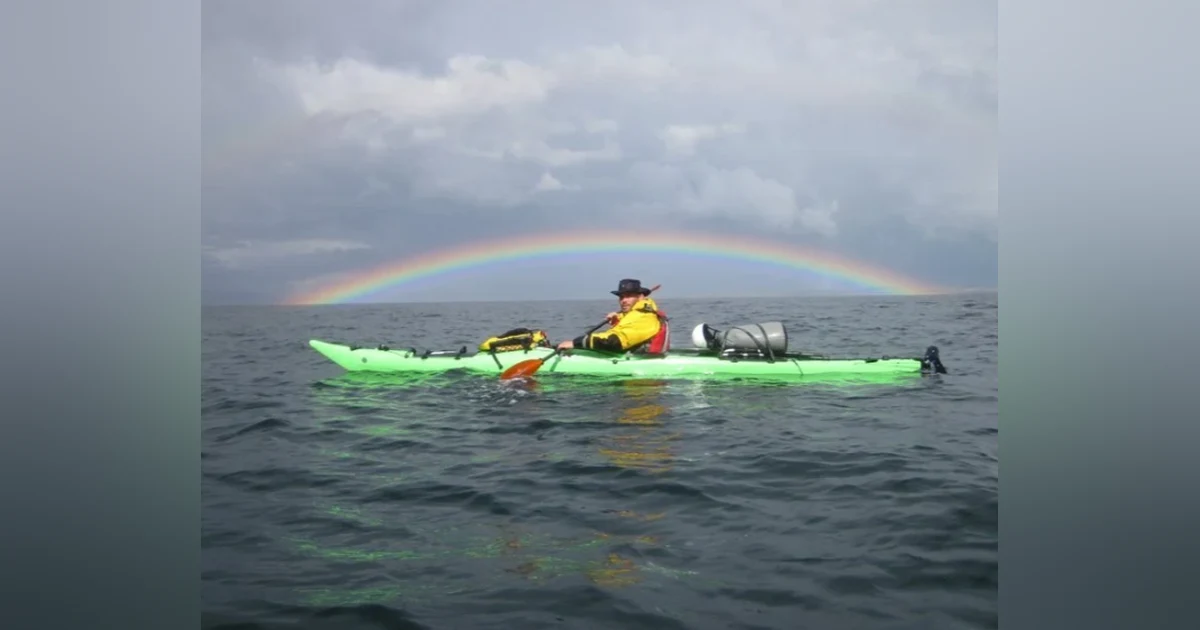
Richard Harpham has more than 14,000 miles of human-powered adventures under his belt and he’s not slowing down. Today we talk about two, London to Marrakech by kayak and bike the challenges and triumphs encountered along the way, from the sea conditions off of Casablanca to the bustling Strait of Gibraltar, and a unique twist on a trip that he called the New York Spare Seat Kayak Expedition.
- Rich Adventure
- Canoetrail.co.uk
- Great British Paddling Adventures: More than 50 routes for kayak, canoe, and paddleboard
00:09 - Introduction to Paddling the Blue
01:21 - Meet Richard Harpam
03:28 - Adventures with the Ghana Ski Team
07:22 - The Big Five Kayak Challenges
11:24 - London to Marrakesh Journey
13:22 - Life in the Slow Lane
31:18 - New York Spare Seat Adventure
39:31 - Connecting with Communities
46:57 - Future Adventures and Plans
49:15 - Promoting Outdoor Activities
51:29 - Richard’s New Book
52:51 - Closing Thoughts and Reflections
0:01 Welcome to Paddling the Blue. With each episode, we talk with guests from the Great Lakes and around the globe who are doing cool things related to sea kayaking. I'm your host, my name is John Chase, and let's get started paddling the blue. Welcome to today's episode of the Paddling the Blue podcast. Richard Harpam has over 14,000 miles of human-powered adventures under his belt, and he's not slowing down. Today we talk about two of those adventures, London to Marrakesh by kayak and bike, and a unique twist on a trip that he called the New York Spare Seat Kayak Expedition. Before we get to today's conversation with Richard, James Stevenson and Simon Osborne at OnlineSeaKayaking.com continue to produce great content to help you evolve as a paddler and as a coach.
0:44 You'll find everything from basic strokes and safety to paddling in tides, surfing, coaching, documentaries, expedition skills, and incident management, and more. If you're not already a subscriber to OnlineSeekHiking.com, here is your opportunity to get started. Visit OnlineSeekHiking.com, use the coupon code PTBPODCAST to check out, and you'll get 10% off just for being a member of the Paddling the Blue community. And for those who also enjoy paddling whitewater, their newest offering is Online Whitewater, and they're also offering the same discount to listeners. So check out OnlineWhitewater.com, use the coupon code PTBPODCAST to check out and explore. Speaking of Explorer, enjoy today's interview with Richard Harbam.
1:26 Hello, Richard. How are you today? I'm in fine fettle. Excellent. That's great to hear. So you have quite the resume, more than 14,000 miles of human-powered adventures under your belt. I would love to hear about a couple of those adventures in particular, but first tell us a little bit about you as an adventurer and what got you started. Yeah. What got me started, that's always one of those difficult questions and it feels a little bit chicken and egg. But I guess when I was much younger than I am now, I was very fortunate that I joined our local scout troop. I joined our local rugby club and I joined our local kayak club. And the blend of those things meant, coupled with family holidays, it was nearly always outdoors, climbing mountains, camping in the rain, and doing lots of paddling.
2:17 So after school, every day was paddling and scouts led into doing different kind of expeditions. And I think for a long time, that was how I saw life until I guess I started to do some bigger challenges and then felt a bit more liberated and thought, well, you know what? Actually, if you dream it, you can plan it. And if you plan it, you can do it. And then suddenly you end up doing thousands of miles. So those are three pretty distinct areas, scouts, rugby, and paddling. Joined all those at the same time? Pretty much. I was a late diagnosis of ADHD, but I think that I often say to people that if I hadn't joined those particular groups, those clubs, then maybe I'd have done something more silly and got myself in more trouble.
3:13 Whereas being part of a club, being part of really an extended community of people meant, you know, there were people to sort of, I guess, give you boundaries and give you guidance and help you learn. So you've got quite a varied resume, as I mentioned, not only such a varied resume from an adventure standpoint, but quite a business resume. And then one that really caught my eye, manager of the Ghana ski team to the Vancouver Winter Olympics. Yeah, where to start with that? People usually associate that with the sort of cool runnings type scenario. You know, we're from Jamaica, we're from a country with no snow.
3:55 What are we doing here with a bobsleigh. And of course that was epitomized by the film. So I try and avoid the John Candy reference, but my job was manager, not coach. And as such, my friend Kwame Nkrumah at Chimpong, people really struggled to say that. So he was dubbed the Snow Leopard by the media and he started working in an indoor slope near us in a place called Milton Keynes and from there he six years later qualified for the Vancouver Winter Olympics and all Olympics have this you know they search for the underdog story and I think he was very much that with no funding from a country with no snow competing against some of the best in the world on the day and of course, almost impossible to imagine achieving that, and definitely impossible to imagine skiing for a medal, but that wasn't really his aim.
4:58 His aim was to set a pathway that perhaps other African nations and aspiring athletes could follow in the future. And how did you get connected with that? How did you get connected with that? well an interesting way of telling that story is that i the way i tell it if i was in the pub or if i was in a hostelry would be i had the same idea as facebook and after i left a very respectable job and that was safely behind me i went for a hundred mile walk on my own and decided that i didn't really want to be in that environment in the big corporate world and had the same idea that Facebook had before Facebook was known.
5:46 And the idea was you'd have this community of sport and leisure, and you would share a love of sport and leisure in that community and celebrate birthdays and upload images and all the things you can do on Facebook. But we would also have an online store with equipment from paddling kit, Jackson kayaks to... Opium paddles to all this sort of different kit and you could earn a commission for your sports club or charity if you made any purchases and the third thing we had was sort of celebrating events and athletes and places you could book your online sport or your activity and if you go back to 2001 no one really had a website and well in fact 30% of the activity providers had websites so we started from nothing and we worked with all these Olympians and athletes and adventurers and that was part of my genesis of being involved in the Ghana ski team but it was also an awakening as I was writing about other people doing incredibly cool adventures thinking well I've got the skills why don't I give this a go it didn't quite work that's the thing I should tell you about the the Facebook thing was going really well all up until the credit crunch hit and the bank withdrew our funding and then at that point suddenly you lose a lot of money and realize that it didn't quite work which is something you have to dust yourself
7:17 off from and I decided at this point in my life. Having had no job at that point and just having lost a business I'd worked on for six years, that I would do five challenges that were called the big five kayak challenge at the time. And that got me into doing these bigger adventures. So what were those big five kayak challenges? Good question. The big five kayak challenges, I had four. So I would kayak the channel, the English channel, kayak to France. And I would kayak around a small island off our south coast called the Isle of Wight. So that was about 85 miles.
7:58 And I would kayak Land's End to the Isles of Scilly, which was 36 nautical miles. So a nine and a half hour crossing. And I would do the length of our River Thames in, well, it turned out I would do it in 33 hours during the blizzards with a team. And so I had four and I just thought, well, big five, the big five sounds better. And then someone told me about the inside passage that runs off the Canadian coast up to Alaska. And I thought, yeah, that would be it to sea kayak the inside passage. So we did from Vancouver Island up to Glacier Bay in Alaska.
8:38 That's quite a mix. I mean, you've got four in your home area and then one out in Alaska. Yeah. I remember as we got closer to it thinking, I mean, to take a couple of steps back. By this stage, I guess I was heading into my early 40s and I didn't own a sea kayak. Okay. I'd always played in the sea and I loved surf kayaking and messing in the sea, but I didn't own a sea kayak. And so to embark on these trips that were crossing the channel 21 nautical miles or the 36 across to the Isles of Scilly, that was some undertaking.
9:22 And by the time I got out to Canada to Vancouver Island, I remember thinking, you know, what have we done here? And when we loaded our sea kayaks, Port Hardy on the north tip of Vancouver Island, I remember thinking, crumbs. This is the first time i've really paddled a sea kayak fully laden and we were aiming for a thousand miles in around 30 days so it was 35 miles a day average come wind rain or shine that's a that's an aggressive schedule for sure it was and some of my friends have subsequently said you should not be the one doing the planning because you played rugby for years and you quite like pain.
10:08 So how many days did that one take we spent 27 days and covered just around a thousand miles i think we were just shy of the thousand mile mark wow like by a few miles so you beat the expectation yeah i think we grew into a new space and i remember sitting on admiralty island just south of Juno. And I had one little bar left on, in those days, an iPod. Obviously, you'd probably use a phone now, but with an iPod. And I had one bar of music left and I had a fire. And narrative was there's one bear per square kilometre on Aberdeen Island. I just watched the Orcas patrol up and down the channel there.
10:51 And I thought, this is amazing. I've arrived at a place under my own steam. And I've achieved things that not I necessarily didn't think were possible, but we've achieved something worthwhile and meaningful. And I just decided at that point, well, why wouldn't you do more of this? Because I felt like it was my awakening and my calling had sort of been satisfied. So was that the first one that you did in the big five? That was the last one of the of that year's big five and we raised i can't remember about eight or nine thousand pounds for different charities and then of course i got to the end of that year having spent almost five months of like you said aggressive paddling a lot of training trips a lot of being ready to paddle the length of the thames for example 183 miles in 33 hours is a tough schedule before you add in it was the blizzards of 2009 and we were just super fit super you know i don't know goal focused probably raising money for charity doing something we love doing why wouldn't you absolutely some of the things you mentioned in there just those are the truly the beauties of human powered travel.
12:16 I think so. There's quite a lot of references and a friend and associate wrote a book called Life in the Slow Lane. And I often feel I've just come back from running a sea kayak trip on the South Coast. It's a UNESCO World Heritage destination called the Jurassic Coast. And it's incredible arches, geos, caves on our sort of South Coast. And I've said to people, you know, watch people go by in a fast boat in a speedboat on a jet ski whatever it is but they're not seeing they're not immersed in that same landscape that we are as sea kayakers or paddlers where you're up close and you're seeing a cormorant dive off a cliff or i mean we didn't see any seals but on trips where i've seen seals or sea lions or orcas or you you're just not in that place if you're in a big boat or moving fast.
13:13 Whereas as soon as your life in the slow lane, you get these magic moments that I think begin to define how you see the world. Certainly. So a couple of those trips, I'd love to hear about a couple of them. And so one of those, London to Marrakesh by Bike and Kayak. So how did you dream this one up? London to Marrakesh, I'm not quite sure how we arrived at that, but it was this search for London to a destination. And it was almost before the budget airlines, people like EasyJet had started flying there. And it was one of those places you weren't quite sure where it was. Anyway, with a little bit of research, I concluded that it was in North Africa.
13:58 And it's one of those things you probably knew, but then confirmed. And when you. I started very simply by using Google Maps as a, okay, that's roughly the distance, 2,400 miles of kayaking and cycling. And then I worked out that if I had a support vehicle, I could switch between bike and kayak. And that had pros and cons, probably more on the cons from my perspective of freedom and adventures in that that meant you needed a support crew and drivers and different people were going to join me for the trip but no one was going to be with me the whole way other than the driver so i remember setting out at tower bridge the bridge that i think the americans thought they were buying years ago and um we we sold them the other one and we started from there and paddled off down the thames and it was a strange feeling knowing that you were going to be, you know, over a month, nearly two months on the road and away doing this exped.
15:09 And I remember getting down towards Dover, where we were going to be sea kayaking across the channel, which would be my second time of kayaking the channel. And the heavens just opened. It was absolutely biblical to the extent that your tires felt like they were floating on the road. You probably could have got a kayak onto the drain kind of gullies. It was that sort of level of water. And then arriving down in Dover and looking across thinking we're going back to France. And what I had done when I did the sort of route planning was look at, well, where would be amazing to kayak?
15:50 Obviously the channel again, where were these bodies of water? And so when you look at the South Coast, the Mediterranean, that meant places like Marmonore and some of the beautiful kind of, I guess, rocky atolls and outcrops along that Southern Mediterranean. And then halfway up France you've got Fort Boyard which was where Napoleon I think was imprisoned and that's you know you leave and paddle around in you're quite far out at sea really and that was a really stormy day it was a full six and I think somewhere online there's a bit of video of us with one of my French friends who just came to join me for the day and we paddled like we'd never you know never been apart and then of course we arrive at the strait of gibraltar another really busy shipping lane and although it's shorter than the channel it's only 12 nautical miles and you can see africa that was such a symbolic bit of kayaking because it was paddling to another continent and that really meant something to me yeah how does so how was paddling what may be the busiest shipping lane in the world like?
17:08 Sorry, can you just repeat that? Sure. How was paddling what may be the busiest shipping lane in the world like? Well, I think paddling these big crossings, it always feels to me like there was that old computer game called Frogger where you'd be going across, I think in that case it was a road and then a bit of water and there were crocodiles and there were cars and the little frog had to dodge all of these things. And it does feel a bit like that. And one of the things I don't think I'll ever get used to is you're there in your little kayak and you might be on the VHF radio.
17:51 Kayak one, kayak one, two, you know, big boat. You're receiving me over nothing and radio silence. And I experienced that quite a bit on the inside passage in Alaska and Canada. And maybe people are making a cup of tea or I don't know, but rarely do you get an answer. And then as you're crossing in front of them, there's this moment of relief where you see the other side of the hull of this big ship and think, I'm out of the firing line as it were, and I'm going to be safe. So I think that's part of it. There are some tide races off the end of the Gibraltar, the rock.
18:36 So that was a bit interesting. And then, you know, arriving into Morocco, you're arriving into North Africa and a new continent, and then I guess adapting to a different environment. What was the order of events? You mentioned you did both kayak and bike. So how did that, how did that work? Where'd you switch off? I think we just sort of looked at the route and thought, well, this looks an interesting place to kayak or something along those lines. I mean, clearly on a bike, you are substantially faster than a kayak. And so in that sense, it was quite exciting to switch as well.
19:20 You know, some days I remember getting to the Pyrenees on the bike and thinking, what have I done? This is seriously steep and demanding cycling over a mountain range but equally for example being or sea kayaking off casablanca in four meter surf was probably one of the most challenging things i've ever done it sounds like it. So you uh you started on the kayak paddled across the channel at what point did you pick up the bike, Well, pretty much when I got to France, we jumped on the bike because I suppose there was an option to do the inland waterways and maybe paddle some of the canals.
20:06 And I know other people have done other challenges with, let's say, slower meandering water or even, I suppose, slow moving. it. I wanted to be on the sea. I wanted to test myself and, you know, anyone who was joining me at a particular point in that 3D land of, you know, it's a continual dance floor of motion. And that's the thing I fell in love with is about sea kayaking is infinite variables. So when I looked at the map, I looked at, you know, knowing there was big tide ranges in the Bay of Biscay, knowing that there was Fort Boyard, you know, that seemed a landmark worthy of a, of a sea kayak.
20:50 And then the other thing I was very conscious of was if I didn't mix in the bike, I was going to be six months and I, I just didn't have six months available. All right. Yeah. I was wondering why, uh, why you didn't just paddle around, around Spain and Portugal and make your way to the straight of Gibraltar. Yeah i think the other thing is if you look at sort of good days bad days in terms of weather i would imagine there are probably i think i there would have been more days that i would have made less distance headwinds tides or just absolutely getting nailed by the weather that would have slowed my progress more if i tried to do it all in a kayak versus some of it on a bike.
21:38 So with the volume of ships coming through the Strait of Gibraltar, how did you have to time that? If you look at the channel, sea kayaking Scotland to Ireland, sea kayaking the Pentland Firth off John O'Groats in the north of Scotland, and the Strait of Gibraltar, all of them, these bigger open water crossings have different challenges. And some of that's the nature of the water. So is it that there are three main flows coming through that gap? Is it that there's a tide race in one place two places is it that there's a north and a south channel like in the english channel where the shipping lanes are in the case of the straight gibraltar i don't remember it as being any better or any worse than any of the others i think you feel like, I guess, it's constant alert, really, of wondering or making sure that you're in a good paddling pace.
22:45 We are quite quick in sea kayaks. We're doing those crossings at five to six miles an hour, probably about four knots, cruising speed. So I think with that in mind you're you're just making sure you've got the gaps but to i suppose flag up on the strait of gibraltar and the channel then under the regulations you need a support boat whereas when i've done the pentland firth off the north of scotland or kayak to ireland i haven't had a support boat and it's us versus the elements but on those two because of border crossing type.
23:26 Restrictions then if you don't have a support boat the the advice is that they didn't pound your kayaks and i didn't want that so you had a support either a boat or a vehicle with you the entire time so on the strait of gibraltar in the channel on both of those we had a support boat on the strait of gibraltar it was more interesting because we were just going for it And then the sort of border guards were like, no, you can't. And we luckily persuaded a local yacht to kind of act as our pilot, which I guess takes some stress out of it. But for us, that wasn't the point, really. It was just, I don't want to lose my kayaks, you know, get them impounded or confiscated or something.
24:11 Right but i think if you look at that journey of london to marrakesh the more the more challenging or the one where i guess i would describe it as my everest was the sea kayaking off casablanca and four meter waves on a reef break yeah and for most people that that idea of being in such big powerful surf. Is both terrifying and impossible. For us, it was terrifying and we thought we could do it. But we spent over an hour observing the surf patterns and there were no surfers out. It was just too big and monstrous on that day for them, maybe, I don't know.
24:52 But no one was out and we made this decision that we would go for it. And that was one of those times in my life where I've definitely put myself in harm's way. I'm way beyond the comfort zone. I'm in harm's way. I've gone into the discomfort zone and now I'm risking things for this bigger challenge that, you know, we were trying to achieve. So that one's interesting. So why did you choose to go that day as opposed to wait, wait for the next day when it might look better? The go don't go question is something that we often get asked about when we're doing talks for companies or in schools and and the the very much the media portrait is of adrenaline and risk takers and so forth and most people that are good at what they do are probably the other end of that funnel where they are risk managers and observing thinking you know i don't want to die.
25:55 I want to achieve something that is gritty or tough, but I want to have my wits about me. And so we were definitely in that category. We'd done a lot of sea kayaking by that point. We were very honed. We were in this sort of skill zone and then looked at it and thought, well, we think we can do this. But to give you an example, the time period between each of those Atlantic breakers from the storm that had been in the US was about 13 seconds. So when the surf was breaking and hitting the reef and the beach, it was like listening to thunder. And as we paddled through it, which was an absolute battle, you know, it felt like there were bits coming off your kayak and deck bags getting sort of ripped and everything else.
26:46 As you were going through it, it was this exhilarating yet terrifying, what am I doing? And one of the things we'd done as part of the risk management was to recce where we might land and how we would land. Because coming in through four meter surf, breaking surf, if you were going to hit a reef break or something is probably as close to death as you're going to get. So we'd recceed a place where there was effectively a natural harbor that we could use so that the waves weren't quite breaking in the same way. And we would surf a bit, but it wasn't four meter breaking surf.
27:27 And that was where we exited thinking, Crumbs, you know, that felt like the edge of, we were on the edge of where we'd want to be. And how did you identify that point? What, the get out? yeah yes identifying the get out was we spent about an hour watching the breakers and there is a video on our on our youtube channel somewhere that you can kind of look at the surf and go what because even. I watch it and go what we spent an hour watching the surf at the get-in and it was really interesting that the surf patterns were very confused waters and it would refract and you know from the reef action and you would get double waves to half so it would flatten out and then just go monstrously big but within a short space of time so that was the get in and i would say you know for most people that are sea kayaking we know in surf the fifth and sixth wave are likely to be bigger and you'll get some road waves this felt like a pattern we'd never seen and then the get out we we simply wrecked all the way down the coast and I think we paddled off the top of my head for about an hour and a half down the coast outside of the breakers just listening to this pounding surf hit the beach feeling on edge feeling like have we done the right thing here have we got ourselves into a pickle are we going to be landing upside down you know front looping
28:59 back looping we just weren't sure but you know our our investigation and our wrecking were sound and actually the getting out of the kind of sea was much easier good glad it worked for you yeah so how uh once you cross the uh the Strait of Gibraltar how did things change or did Could they change once you reach Africa? Once we reached Africa, then we were much more back on the bike other than sort of doing this sea kayaking around Casablanca. It was interesting landing. Effectively, as you're doing these day to day adventures, you get to these decision points.
29:44 And what I think I was unaware of in my planning was that we were actually landing in a Spanish enclave. So Suta on the North African coast is actually under Spain's sovereignty. And so we would land there and then we would go into Morocco, albeit it was all on the same continent. And then we were back on the bike. And like I said, we got to Casablanca and really that was the end of our sea kayaking exploits. And they say, or I've been told in Alaska, they often say it's the schedule or the airline tickets that kill people. You know, you're chasing a schedule or you're chasing times or you're available time and people rush and make mistakes.
30:28 And so we were very conscious of this is the schedule, you know, we're going to see kayak here and then we're on the bike. And when I say they, mostly me, but joined by some friends who had, you know, agreed to come out and do certain stints with me, certain legs of the challenge. So you did the full challenge and then you had people cycle in and out along the way. Yeah. So I had some friends join me for some of the sea kayaking. I had some friends join me for some of the cycling. I think I did 2,400 miles of sea kayaking and cycling. I think the next person did about 300, but different people did, you know, some people did 200, some people did a hundred and some of it was on my own and that was okay too.
31:15 What would you do different if you did it again? Yeah. Think I really want to avoid trying to have a support vehicle or support people. I believe that it changes the dynamic. There's a real freedom to being on the road, on the water, on a trail, following a path or a journey. And I think that's interrupted when you have to switch and do other things. And I get it. It was, I didn't have the available time to do it all in a sea kayak. I'm glad I did it the way I did it. But I think as I look at other adventures I want to achieve, I'd rather break it down into different chunks in a different way and try and make that freedom one of the key objectives in following that trail.
32:03 The other thing I guess is in that life in the slow lane is allowing time for the serendipity and the kindness of strangers. And if you if your schedules are full and i've i've done long distance races i've done the yukon river quest which was amazing and i've done the muskoka river x which is the friendliest race and i've done the ones in britain the divisors to westminster when you're racing you don't have that available bandwidth and space to i suppose have communion with people or have communion with nature that you miss through the racing activity. And to give you an example, when I was sea kayaking on the Mediterranean coast, I saw a sort of dinghy on the horizon and they sort of waved and I waved and they waved again. So I waved again.
32:55 And this pattern continued till I realized that perhaps they weren't waving in the way I thought. And I sea kayaked out to sea, you know, further in that coastal corridor and eventually caught up with this dinghy that was taking on water and had lost one of its hatches and so the hull was filling with water and. The kind of situation changed and I had a deck pump and I had tow lines and eventually with their hatch missing, we pumped out and then, you know, I towed them and we, between us, we kind of got them back to land and then they became friends and they, hospitality, hospitality of strangers, they put us up for the night for a couple of nights.
33:39 And, you know, I guess these things are part of why we do adventures too. Yeah. It's always the people that make a difference. Yeah, definitely. Yeah. So speaking of experiences with people you don't know, so I'm going to go to a different adventure here. New York spare seat. How did that work? How did the spare seat work? Well, the New York spare seat, again, how I would often recount that story if I was giving a talk somewhere, you know, like a motivational talk is, so I rang up New York and of course that usually gets a laugh. And I rang them up and I said, hey, you know, you're New York, you've got Niagara Falls, you've got the Statue of Liberty, you've got the Erie Canal, wouldn't it be good to do an adventure in your backyard?
34:26 And how I describe that story is, you know, they went, yeah, I was expecting them to say no. But they went, you know, what's your pitch, Rich? I literally on the spot thought well what's this going to be and so we called it the spare seat kayak expedition and my vision was that we i would be in a a double kayak and every day someone i didn't know would join me in the in the spare seat and through that we would connect with the landscape, the waterways, and the people, the communities that we were paddling through.
35:09 And that was, in that sense, an unwritten ending to a beautiful story. And that was really what the essence of the spare seat was about. So you had a different person every day in the other seat in your boat. Yeah. So as I said, it was an unwritten story really. But to give you an example, Paul, the oldest was 83, I think, dressed as a pirate. And the youngest that came out to join us because it did have the Forrest Gump effect, the youngest was six months. And so every day someone would join in the spare seat and there were two of us, myself and another American adventurer called glenn charles and they would join us and as they joined us we would we would chat and we would become friends and but what happened through the media exposure of this story was people just came to join us in that forest gump effect you know i just kept on running but in this sense it was i just kept on paddling and you would turn around and people would have joined you for that leg of kayaking from wherever it was on the route.
36:29 So Albany, Finger Lakes, Poughkeepsie, all these different places, Stony Point, West Point, and all these different bits. So what was your route? When I first created the concept of the New York spare seat, it was brilliant in the sense that I got to work with the local communities all the way along the Erie Canal and then the Hudson Riverway, the waterway. And so if you think of the Hudson River, very famous, ends in New York. That's quite well known. And there was quite a lot for things like the Clearwater movement about challenging how you might clean up a waterway.
37:18 And the Erie Canal I knew very little about, but the Erie Canal was the brainchild of DeWitt Clinton. And it was finished in 1825, I think, but connected the interior of the states of, you know, back from Lake Ontario back to Albany and then down to New York. And by having that connection, it was very much a trade route and an opportunity to make sure that the United States was more thriving, that you could trade better and so on. And there was a thing that they did called the Wedding of the Waters, where they poured water from, if you like, the headwaters back into the Atlantic in 1825.
38:08 And DeWitt Clinton was under immense pressure. People called it DeWitt's Folly. You know, why are you building this thing? Why are you spending seven years building this canal? And he'd been across to Britain to look at our canal systems. And that's what he modeled it on. So to arrive at Buffalo and to be thinking about Silo City and starting on the Niagara River and then turning down the Erie Canal, it just entered us into this world of iconic history and world's firsts. You know, the world's first women's rights movement at Seneca Falls, the world's first challenging of a government around environmental performance to do with the Clearwater and the Clearwater Sloop.
38:53 Stony Point, where the British were defeated by the Americans, you know, all these different things, West Point, you know, Military Academy, were along the route. And as we got into it, we just got this exposure to these incredible communities. Kodak, you know, their HQ had been along the Erie Canal, all these different things that had happened. And then we got to be a mirror back to those communities talking about our adventure and the Erie Canal. And I think it gave this real sense of optimism about what the canal represented in the modern era. And we were totally, you know, received in such a, it was almost like being royalty, paddling royalty.
39:39 That's pretty cool. You did talks along the way in the different communities. Thank you. Yeah. So I don't think we had, when we came up with the idea with a guy from New York state. The green heart, you know, this upstate New York and I knew upstate New York through, I'd played rugby in Long Island for five years. So I thought I knew it. And then I found all these other hidden gems. And so many people will visit the city that never sleeps, you know, the way we're in new york we're gonna see all these things and they don't realize that just in that whole state is this incredible green belt of and waterways that are just stunning and i would say if anyone's listening to it i would say go and explore new york state go and see what it's about and i worked with the the director of i think he was i don't know his title but he was responsible for destination marketing, a chap called Mark Lee Wilson.
40:40 And he just connected us with all of these different communities along the way. And we would finish sea kayaking or kayaking on a day, get out and something would happen. There'd be a community event and we would meet the local mayor and we would talk about our trip. And it was just incredible. Sounds like a cool adventure. How did you find the spare seaters? So there was such a. I don't know if you call them victims or volunteers, but you decide. And as I said, they went from an 83-year-old pirate or dressed as a pirate to museum curators.
41:22 We had serving senators come out and welcome us. When we got to Albany, the mayor, Mayor Jennings, had had Obama with him the day before. And, you know, so on one sense, you've got Barack Obama serving president in Albany. The next day he's welcoming two smelly kayakers with gusto. And you couldn't have written this. There were six TV crews and newspapers and everything else. And the British press were following it too. So sometimes in the spare seat, we had a journalist from the UK. And so we had the Sun newspaper and we had Rosie Fuller from Adventure Travel magazine.
42:06 And we had different people and when we got out in albany the mayor mayor jennings read this proclamation and it was like by the power vested in me henceforth from this day forward we will call this day glenn and richard you know new york spare seat kayaking day or something and somewhere in a drawer i have this proclamation that was decreed and of course we felt like rock It was quite funny, really. Well, hold on, we're just two smelly kayakers doing what we love doing. And actually, we were getting to touch lives. And for a very long time, we've talked about doing a sort of return and maybe...
42:49 Taking bikes or maybe some paddle boards and a mixture and going, say, up to the Adirondacks or, you know, following through a different part, but also reconnecting with some of these beautiful communities on the Erie Canal and on the Hudson. So did people compete for that spare seat or how were they awarded? That's a really good question. How did people get selected? I think a lot of that was done with people volunteering through the local, if you like, the community, the town mayor, that sort of agency. But then we ran a competition that was come and join an adventure with real life adventurer type of competition.
43:34 And we flew two people over from the UK who won their competition. And Mike and Katia came and joined and they were already paddlers, but they spent, I think they spent two days with us. I can't quite remember. Two days kayaking with us, and then they had a city break in New York City. So for them, I guess it was like win the trip of a lifetime, join an adventure, and then go to New York and have a good time. It doesn't sound like a difficult sell to me. No, no, not at all. Did you fancy it? And where did you start and where did you end? so we started at silo city in buffalo and we finished by the statue of liberty doing this wedding of the waters this symbolic act that was done in 1825 to pour the water from the headwaters back into the atlantic and it's hard to say exactly but if you were to look into the erie canal and the building of it effectively they were building a canal through swampland and marshes and all sorts of other things and it's been expanded over the years but.
44:47 Definitely sacrificed their lives to make this canal. And communities have grown up along that canal and that waterway. So to be part of that, you know, I remember one of the guys we met, Len Cross, ran Fort Rickey Discovery Zoo on Oneida Lake. And we were just, you know, we got to walk and dance with wolves because this guy runs the zoo. You know, we were hosted in a castle at Amsterdam. We got to sleep at Stony Point in the reenactment camp. I mean, these are things that you just can't imagine, really. And you mentioned everything from an 83-year-old dressed as a pirate to a six-month-old.
45:31 Who gives you their six-month-old child and puts that child in the spare seat and says, have at it? Well, the six-month-old child was a family that had traveled for like eight or nine hours to come and join the spare seat entourage let's say and so the baby was sat in a double kayak with them okay but that was part of this forrest gump thing yeah and there was a guy i remember it'd be amazing if he reached out to your show but he was called casey and casey had traveled from memory two days to come and paddle with us and i'm like what an honor what a what a cool bit of serendipity and Casey was something like four months out of open heart surgery and Casey came kayaking with us and one of the things I remember about Casey was he had a he had a signed guitar from Johnny Cash wow and I was like yeah yeah you know when you've arrived when you've got a Johnny Cash signed guitar right that's pretty cool do you bring it with him?
46:36 No, I wish he had. All right. I'll be like, come on, dude, play some tunes around the campfire. So what's next for you? So life has evolved quite a bit since I first started all these challenges 15 years ago, 15,000 miles, so about a thousand miles a year that I register on my tally. And since then I've got married. That's been good. and that's been excellent, I should say. Congratulations. Thank you. And my wife has done a lot of adventures in Canada and the Yukon with me and Manitoba, the North Seal River. So she's a paddler too. And we run a company. So that's a blessing, but it also means time is...
47:22 More difficult to go, yeah, I'm taking 46 days to kayak and cycle London to Marrakesh. So quite a bit of our time is on running our own trips for customers. So we did a Yukon trip earlier this year, and that was amazing to be back in the Yukon and paddling on the Yukon River following the gold rush. And in three weeks, we come out to Canada again to spend time with my brother and other friends where we're going to paddle in algonquin park and paddle some of the whitewater rivers there and then later on in the year we'll be in scotland paddling the river spay and i've got a my sort of grander plan i guess besides all these trips where i get to paddle anyway is london to the top of norway okay and that's three and a half thousand miles by bike, kayak, ski, and probably a bit of paddleboarding.
48:20 Well, you've got a lot of great adventures planned between now and then, it sounds like, through your company. How can people connect with you through that? Our company is called Canoe Trail, and you can visit canoe-trail.co.uk. And on there, you'll see we run 12 to 14 expeditions a year. We do a lot of whitewater of coaching in canoes, a lot of sea kayak trips. And we're this year more than ever, I'm not sure why, but we've seen a lot of private trips where people have said, my family, my group, we want to go and do this on our terms with some guides as our handrail, we can be safe. And that's also brilliant. And this year I've run some trips.
49:04 I ran one on the Scottish borders on the River Tweed And my oldest person on that trip was 86 and he was a vicar, a retired vicar. Then i ran a different trip i've literally just come back last week from the south coast the jurassic coast and there was a family and the youngest on that trip was 17 so what i love about the outdoors and paddling and you know it's just this gateway to get people outdoors active better mental health good for your well-being it's just an easy sell really and you've written recently written a book to help people get out and find their own adventures.
49:48 That's a great segue, isn't it? I just read a book. I've got to tell you, I don't know if your listeners will ever find a copy of it, but my first book was about industrial effluent treatment. Fascinating. It wasn't that exciting. But my second book is so much better, and that's called Great British Paddling Adventures. And I've tried to, with my wife, we jointly wrote it, and it started during lockdown so can you imagine you know as the different lockdowns became eased we were allowed to travel more and so we would visit different places but on some of them we ended up camping in our van in a you know a covid test place and all the rest of it and we got to paddle we paddled about 70 different destinations and it was a real labor of love to think how would a paddler or a novice want you know read about and be inspired to go and paddle this route and what would they need to know and so for example with the updates in navigation it includes what three words grid references postcodes like your zip codes and but it also includes things like a little tube map like our london underground so you can see start two kilometers we are four kilometers portage eight kilometers lake.
51:13 And so you've got these landmarks as well as a map, which I think really helps you navigate and say, well, where are we? Do I know where the hazards are? Do I know where the points of interest are? And of course, it's full of vibrant pictures to get people inspired. That's what we hope people will see from it. Super. Well, they're helping people find their own adventures. We will include links in the show notes to that book as well as your other adventures. You mentioned some videos and things along the way. So I'll make sure we include all that information for folks to check out. So one final question for you. Who else would you like to hear as a future guest on Paddling the Blue? Well, I can think of quite a few people, actually.
51:56 As you asked that question, my brain just opened up into a little radar screen of people. But there's definitely, there's a guy I did my sea kayak leader training with called Nick Cunliffe, who is very extraordinary. And there's an adventurer who i've interviewed called steve backshaw who's both raced and done some pretty extreme white water paddling and i i was aware that i didn't want it to lack gender balance so a really good friend of mine is a lady called helen reeves who's now married helen darby downman and she's an olympic medalist and she has a great story which i'm not going to spoil by telling you all right well i will connect with you and uh we'll have the opportunity to connect with nick steve and and helen as well and see if we can have them share their stories.
52:51 Richard, thank you very much for the opportunity. It's been great to hear from you. Great to talk to you. Loved hearing about London, AmeriCash, New York, Spare Seat, and your other adventures along the way. And like I said, we'll include links in the show notes so folks can check them out and find their own adventure. Excellent. I think the best adventure is the one you take. There we go. Thank you. Thanks very much. If you want to be a stronger and more efficient paddler power to the paddle is packed with fitness guidance and complete descriptions along with photos of more than 50 exercises to improve your abilities and enjoy your time on the water the concept and exercises in this book have helped me become a better paddler and they can make a difference for you too the exercises in the book can help you reduce tension in your shoulders and low back use the power of your torso to create leverage and use less energy with each stroke use force generated from your lower body to make your paddling strokes more efficient, have the endurance to handle long days in the boat, drive through the toughest waves or white water, protect your body against common paddling injuries, and while you're at it, you might even lose a few pounds.
53:53 And who wouldn't mind that? So visit paddlingexercises.com to get the book and companion DVD. The spare seat adventure particularly captivated me. The trip itself, well, really isn't all that epic, but the way that it was done truly brings it to life. Quite an interesting way to meet and interact with so many unique people and make great connections with the local communities. Thanks to Richard for joining me and for sharing his adventures. You can read more about both of the adventures we talked about today, as well as Richard's other globe-trotting exploits at his personal website and more at his business website. You'll find links in the show notes to the sites, along with a link to get a copy of his book. Thanks again for listening, and I look forward to bringing you the next episode of Paddling the Blue.
54:36 Thank you for listening to Paddling the You can subscribe to Paddling the Blue on Apple Music, Google Podcasts, Spotify, or wherever you find your favorite podcasts. Please take the time to leave us a five-star review on Apple Music. We truly appreciate the support. And you can find the show notes for this episode and other episodes, along with replays of past episodes, contact information, and more at paddlingtheblue.com. Until next time, I hope you get out and paddle the blue.