#148 - 1,500 Miles Solo: Linking the Northern Forest Canoe Trail and Maine Island Trail with John Connelly


 Apple Podcasts

 Spotify

 Overcast

 Castro

 PocketCasts

 RSS Feed
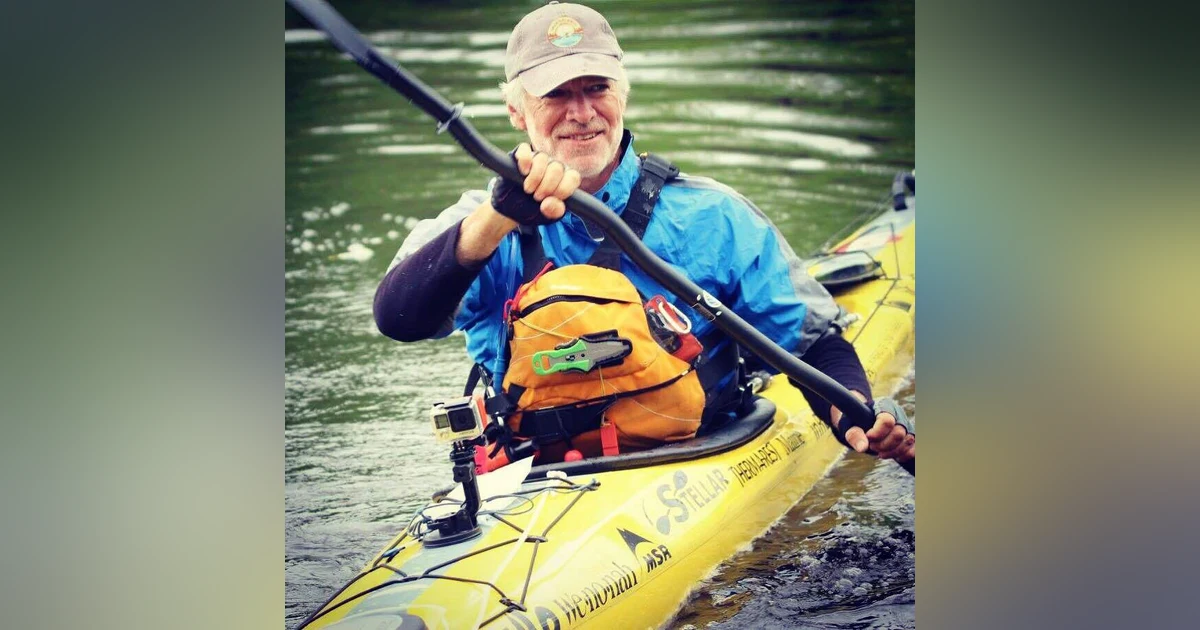
In today's episode, John Connolly recounts his 75-day, 1,500-mile solo journey connecting the Northern Forest Canoe Trail and the Maine Island Trail, traveling by canoe and sea kayak through rivers, lakes, portages, and the tidal Bay of Fundy.
John describes the trip’s challenges and highlights—upstream paddling, long portages, dramatic tides, wildlife encounters, and community support.
"Dying out here is not an option: PaddleQuest 1000--A 1500 Mile, 75 Day, Solo Canoe & Kayak Odyssey"
Maine Island Trail Association
Photo credit: Rafael Gallo
00:09 - Introduction to Paddling the Blue
10:42 - The Northern Forest Canoe Trail
22:02 - The Main Island Trail
37:42 - Wildlife Encounters on the Water
42:16 - Changes Along the Maine Coast
44:25 - The Spirit of Trail Angels
49:26 - Reflections on the Journey
50:23 - Sustainable Tourism in Japan
54:48 - Future Guest Recommendations
0:01 Welcome to Paddling the Blue. With each episode, we talk with guests from the Great Lakes and around the globe who are doing cool things related to sea kayaking. I'm your host, my name is John Chase, and let's get started paddling the blue. Welcome to today's episode of the Paddling the Blue podcast. After many years running whitewater rafting and sea kayaking operations, John Connolly found himself at a turning point birthday where the time was right for his 1,500 mile, 75 days solo, stringing together the Northern Forest Canoe Trail and Main Island Trail in the U.S. Northeast. Join us as Job describes this unique region and the beauty of each of these water trails. Before we get to today's conversation with John, I shared a trip that I took to Alaska's Prince William Sound back on episode 50.
0:44 And I'm doing that trip again, and if you've ever been considering an intro to Alaska, you can come along too. Experience the beauty of Alaska's Prince William Sound on this six-day trip from July 12 through 18, 2026. Along with peaks rising 4,000 feet from the Sound, you'll experience glaciers calving in the distance, catch a glimpse of the area's diverse wildlife, camp on remote beaches, and more. It's a small group experience limited to a total of six, and I've got two spots remaining. Learn more at www.paddlingtheblue.com slash Alaska. James Stevenson and Simon Osborne at onlineseakayaking.com continue to produce great content to help you evolve as a paddler and as a coach. You'll find everything from basic strokes and safety to paddling in tides, surfing, coaching, documentaries, expedition skills, and incident management, and more.
1:33 If you're not already a subscriber to OnlineSeaKayaking.com, here is your opportunity to get started. Visit OnlineSeaKayaking.com, use the coupon code PTBpodcast to check out, and you'll get 10% off for just being a member of the Paddling the Blue community. For those of us who also enjoy paddling whitewater boats, their newest offering is Online Whitewater, and they're offering the same discount to listeners. Check it out at onlinewhitewater.com. Use the same coupon code PTBpodcast at checkout and explore. Enjoy today's interview with John Connolly. Hi, John. Welcome to Paddling the Blue. Well, hello, John. I am delighted to be here. Thank you. I appreciate it. You reached out to me and you had a really interesting story and I'd love to be able to share that story and that's what we're going to do today.
2:14 But first, tell us a little bit about yourself as an adventurer. You've got a cool background. Yes, yeah. I first discovered the outdoors when I was very, very young. But then in high school, I discovered whitewater kayaking and canoeing. And I actually left my high school graduation. And the next day, this is in 1974, next day I started my whitewater guiding career. And so I've been a whitewater rafting guide for, well, ever since then. and I used... Being able to be at the river guiding rafts for a summer job, I used that as my opportunity to get really a lot more proficient at whitewater kayaking and canoeing.
3:02 So I started training for slalom, and I paddled slalom in both C1 and in the single-person deck canoe, and also in kayak. This is whitewater slalom, of course. And I also did a lot of downriver or wildwater racing. And when I was in my senior year of college, I had started studying business because I wanted to start my own rafting company. So in my senior year of college, I started a rafting company on the Gauley River in West Virginia. And then the following year, I started operations in Maine. And so I was operating on the Gauley in West Virginia, and then the Kennebec and the Penobscot and the Dead Rivers in Maine. And then I moved on to also include the upper Hudson Gorge and the lower Moose rivers in the Adirondacks of New York.
3:55 And then I expanded operations to the upper Yacogania River in western Pennsylvania. And so eventually I built the business so that I had operations in Maine, New York, West Virginia, Maryland. And also I started rafting companies in Italy and Switzerland. And I had sea kayaking operations in Maine, North Carolina, and Florida. And so I did that for 20 years. And during that time in 91, I was on the United States canoe and kayak team and race and world championships and World Cup races. And then after I sold my company, I did consulting in the outdoor recreation space and tourism and then I was recruited by L.L.
4:47 Bean, an outdoor retailer here in Maine. I was recruited by them to develop the L.L. Bean Outdoor Discovery Schools and all of the courses, trips, tours, and in-store demonstrations and all the things associated with the activities that are supported by the gear they sell. And so I did that for another decade. And then subsequent to that, I've moved into consulting in the adventure travel industry. And so I really specialize in safety, risk management, and customer experience. And I've been doing a lot of work with the Adventure Travel Trade Association and developing adventure tourism throughout all the islands in Japan.
5:35 And so that's kind of what I'm currently doing. Wow. That's quite a background. That's quite an operation that you had set up with raft guiding and then sea kayaking, just not only East Coast, but worldwide. Yes, it was quite an operation. And in fact, you know, it got to the point where, you know, I was flying my plane location to location, managing spreadsheets, managers and bankers. And so that kind of led to my saying you know this is the ideal job till it's not and then i then i moved on to the next thing but it treated me incredibly well and it was it was.
6:18 Amazing chapter in my life yeah that's cool now is that one of those examples of if you i'm trying to think of the right words but if you make your passion your career it no longer becomes your passion well you know that that can develop and it and it kind of did but it took almost 20 years for that part to develop okay now you get away from you kind of one day one day you realize like you said i've been flying to all these places and managing staff and managing managers and managing the operation but i'm not spending time on the water, I wasn't paddling as much, not nearly as much. I wasn't paddling my C1 or my kayak as much as I wanted to. And that was just really important to me. I've done a lot of first descents on rivers that had never been run before and done a lot of paddling in incredibly beautiful, wild places.
7:11 And I just found that I wasn't doing that as much, not nearly as much. So actually, the year I sold the company, I had over 100 days of paddling the next year. The following year, right? The following year. And how many in the year prior? Oh, a fraction of that. Well, that's a good year. If I can be on the water one out of every three days, that's not so bad. Yeah, that's pretty good. Good, good. Now, back in 1974, what was it that made you gravitate toward the water? What made that be the thing for you? Well, actually, it was in 73. I had a couple of high school buddies who said, hey, John, you want to go on a whitewater canoeing camping trip?
7:59 And I, of course, was like, I've never done that before, but yes. And so so we did we went on a i think it was on deer creek toward the maryland pennsylvania border north of bel air and it was just a one night trip and it was on small stream and i loved it so much that the next week i had my own canoe and i was determined to you know learn how to paddle that, and I was excited about all the places that it would be able to take me. And so that's really when I got the bug. So now that you've got more time to spend on the water, you did an interesting trip.
8:43 And we haven't had much chance on Paddling the Blue to talk about the Northeast U.S., but we have talked about the Main Island Trail before with Dan Carr back in Episode 81. But you've taken the Main Island Trail and you've combined it with another trail. So tell us about your 75 days solo. Well, yes, I was approaching my 60th birthday and everybody was saying, hey, John, you need to do something special. It's a really big birthday. You need to do something special for yourself. And of course, I was in age denial. I'm like, yeah, it's just another number. It's just another birthday. No big thing. But then at some point, my incredible wife, Nicole, said, hey, John, you really need to do something special for your 60th.
9:28 Now, I think she was thinking more along the lines of, we should go to Italy together. But a light bulb went on for me. And I was like, you know what? I've always wanted to kayak the main island trail, which is the length of the main coast from the New Hampshire border all the way up to the border with New Brunswick, Canada. And I've always wanted to canoe the Northern Forest Canoe Trail. You know, of course, they're not really next to each other. So I thought, well, what if I connected the two? Because you can actually connect the two by completing the Northern Forest Canoe Trail, which begins in the Adirondacks of New York, and it ends in northern Maine.
10:12 And I could continue down the St. John River and paddle the Bay of Fundy in the North Atlantic, then join the Maine Island Trail and take that south through the New Hampshire border. And so the idea was born, and it just turned out to be 1,500 miles. And I said, I think that's what I want to do. All right. And she's like, what, not Italy? Yeah, so. So you mentioned the two trails, the Northern Forest Canoe Trail and the Main Island Trail. Tell us a little bit about the trails themselves, in addition to where they run to and from. Give us some of the background on those trails. Okay, absolutely.
10:57 I'll start with the Northern Forest Canoe Trail. Now, the Northern Forest Canoe Trail is a network of water trails going watershed to watershed, and they're Native American water trail. The way it has been organized by the people who had the vision of knitting these water trails together to make one trail called the Northern Forest Canoe Trail is to have the western terminus of the trail be in Old Forge, New York, in the Chain of Lakes, and then go through the Adirondacks, up Lake Champlain, up the Messisquire River, into Quebec, Canada, And then back down Lake Memphremagog into Vermont and then go across Vermont, across New Hampshire into western Maine and then all the way up the state of Maine to the top of Maine in Fort Kent.
11:53 So that's about 740 miles. And you go watershed to watershed. And I believe there are 54 portages and carries totaling 63 miles, something like that, that are involved. Some of those portages and carries are over improved surfaces, such as roads. But also, some of them are very much unimproved surfaces that make it actually very difficult to portage. And so you're literally going watershed to watershed. And it included about 163 miles of upstream paddling as well. Quite challenging going watershed to watershed. You said 160 miles of upstream paddling and 63 miles of portages?
12:38 That sounds terrifying. You have to be in the right frame of mind for it. And training in advance is actually a very very good idea yeah and what i did though is i i i planned you know through my through my experience in outdoor retailing and the outdoors business i know a lot of the designers and manufacturers and the companies that produce the outdoor gear The watercraft, the paddles, the camping gear, all of it. And so what I did is I chose products that were designed to be reliable because you don't want to have things fail or de-repairing things constantly.
13:28 You want them to be reliable. You want them to be very durable. You want them to be very lightweight. And lightweight is very important. And I took a real minimalist view toward the trip. A lot of people, when they do a canoe trip... So the Northern Forest Canoe Trail, I did that all by canoe. A solo canoe is a Winona Voyager. And... I organized myself so that I could do all of my portages and carries on with one trip. So I didn't take my gear and then come back and get my boat. So I did everything in just one trip. And so that makes everything go much more quickly and much more easily.
14:11 Sure. And that makes that weight really important. Very important. And because some of those improved portages were up to five, seven miles long, carrying all of that was just a bit much. So I did carry a set of lightweight canoe wheels. Those were just absolutely indispensable for those improved surfaces, for being able to wear my pack and tow my canoe behind me. But that meant that on the unimproved portages and carries, I had to carry those too. So I had to tie those into the boat and carry the boat over my head.
14:52 So tell us, what makes the Northern Forest Canoe Trail special? We'll talk that one and then we'll go down to the Main Island Trail when you get there. I think one of the things that makes the Northern Forest Canoe Trail special is the fact that it is a network of Native American canoe trails going watershed to watershed. I mean, to follow in the footsteps, as it were, of our Native people experiencing the hardships of portages and upstream travel and going through very diverse landscapes. Experiencing different types of waterways, you know, the lakes, the ponds, the rivers, the streams, the beaver bogs, the beaver flowages.
15:37 You know, and some of the more rugged portages. It just kind of takes you back to the whole idea that that was the way people got around. There were no roads. There were no cars. And waterways is how they got it done. And I think that that's that's incredibly special now there's an organization called the northern forest canoe trail that envisioned maintaining this network and providing resources for people so that people could enjoy segments of it or they could enjoy the whole thing as through paddlers and so they have they have a guidebook and they have a companion guide for through paddlers my face of the guide book talks about all the different sections that you could do as day trips or overnight trips.
16:26 But the companion guide is kind of brilliant because it's for the through paddler. So if you're going west to east or east to west, you can use the companion guide to be able to put your trip together quite easily. I think that that's really special that paddlers have that kind of resource available to them. And they also, they have confidence markers along the way. So, you can come across a confidence marker and you know that you're on the trail and that you're on track. So, those are really good. Plus, they maintain all of the day use and the overnight sites. So, there's actually some maintained infrastructure. I think that's pretty special.
17:11 And I went early in the year. I went as early as you can go. I wanted high water. I'm a whitewater paddler. And so I really wanted, I wanted high water if I could get it. And it was a good snow season, but it was an early ice out. It was the second earliest ice out when the ice goes out of the lakes after winter. Second earliest in, I think maybe you've recorded history, but it was like April 16th. I was able to get on the water in Old Forge, New York, in the Adirondacks. And by all measures, that is very early. I did wait a week after the ice had gone out because I wanted the water to warm up enough so that if I had freezing temperatures overnight and I was in a lake, I wouldn't get stuck on an island with a refreeze.
17:58 I had the benefit of the spring flows. So the whitewater was actually very exciting. But of course, that means all of the waterways that I'm going up, the water's going in the wrong direction. And so while that requires a lot more work, when you're hopping from eddy to eddy, calm section in the current to calm section in the current. Attaining up rapids and going up the river against the current, while that is significant effort, it's far more interesting than going when the river is dry and you're having to find a road to drag your canoe down. So, I was really looking for the upstream paddling and for the whitewater paddling.
18:43 So, the challenge of the upstream paddling was overcome by the excitement of the high water downriver paddling. Oh, absolutely. Absolutely. And there's something to be said for the upstream paddling, too. Because when you're going downstream, you're going kind of fast. And you're focused on the water features and choosing your route through rapids and around rocks and around fallen trees and around logs. So your attention really is the details of the features of the water in front of you. And you're really not noticing the scenery very much. When you're paddling upstream against the current, you're going slow.
19:23 And so you have the opportunity to take in a lot of that that you otherwise don't get. Well, the strategy of picking your route and figuring out how to attain upstream, and that is also got to add some of the mental stimulation to it. Oh, it certainly does. It certainly does. Yeah. Yeah, it does. Now, you had mentioned the route earlier. Does it cross international borders? Yes, it does. You cross into Quebec, Canada on the Missisquoi River, and then you cross back into Vermont on Lake Memphremagog. And that's it for the northern forest canoe trail however when i continued and i went down the saint john river toward the bay of fundy i crossed from maine from the u.s into new brunswick and then passed out of new brunswick back into maine on the main coast on to begin the main Island Trail headed south.
20:22 Okay. And are those developed points where you're crossing or is it remote points? They're developed. You're actually crossing where there are roads and there's a customs station. Okay. However, they're really not accustomed to having people come by water to the customs station. So when I come walking up with my PFD on with VHF radio on it and a knife and a whistle and a dry suit, they definitely want to talk to me. Something's not right here. Yeah.
21:06 I even went to the U.S. Customs when I was passing into New Brunswick from Maine on the St. John River because there wasn't a dock on the Canadian side. And I didn't want to just crawl up over the embankment and surprise them at their custom stations. So I went over to the U.S. Customs because they did have a dock. And I went in and I said, OK, here's what I'm doing. Could you let those guys know that I'm coming? Because I don't want to be too much of a surprise. And they said, yeah, sure, we'll do that for you. Were you close enough at that point that you could see the Canadian customs and know that there wasn't a dock? Yeah. Oh, yeah. It's straight across the river. Okay. It's straight across the river. Yeah.
21:50 So I trusted that they called them, and I ferried across the river, and I pulled my boat up on the embankment between some rocks so it wouldn't go away. And I climbed up over the embankment, and I went and I knocked on the door, and they had not received a phone call. They were actually very surprised to see me. But they were very helpful. They were really nice. Does the trail feel remote? I mean, certainly there's parts of it that are remote. Is it more remote than it is as populated? Yeah, the Northern Forest Canoe Trail is very remote, yes. I mean, there are parts of it that do go through towns and villages, which is really wonderful. It does go through Plattsburgh, New York, which is a fairly large town.
22:34 For the most part, it's remote and when you are in civilization, it has a very small town feel. And how about the wildlife experiences along the way? and speaking specifically of the Northern Forest Canoe Trail. Right. Well, you know, I was early in the season. I did see a lot of waterfowl. Over the course of this entire 75 days, which included the St. John River Bay of Fundy and the Main Island Trail, I went from seeing Canada geese and ducks. I went from seeing them building their nests to sitting on their eggs to having their hatchlings following them around in the water to the hatchlings getting big enough that they almost looked like the parents.
23:18 So that was interesting to see all of that unfolding over the time that I was doing this expedition. I didn't see any black bears. I was kind of surprised at that. I really didn't have interactions with very many other animals at all, a couple of fisher cats and pine martens. I did almost get run over by a moose, though. That was an interesting story. All right. Now, how do you almost get run over by a moose? Well, it was on a portage. I was portaging from the Rapid River in New Hampshire.
23:59 I went up the Rapid River, and then I put my canoe on its wheels, and I was going up the road that takes you up around the dam, to get on Lake Umbegog, and I would continue on Lake Umbegog. So it's a very twisty, windy road. It's a paved road. I'm, of course, walking opposing traffic, and I hear the unmistakable clip-clop of moose hoofs running in my direction down the road ahead of me. And so I stopped and I put my canoe down and around the corner comes this bull moose at a dead run.
24:49 Now, there are only two things that are going to make a moose like that run the way he was running. And one is an even bigger moose. And the other thing is a vehicle. And so I figured it would be a vehicle. And sure enough around the corner comes an f-150 pickup truck you know right on the heels of this moose and i'm convinced that when when moose start running their vision is so bad that they don't see, the the woods looks like a tunnel to them and it's like they're running through a tunnel and they don't see very many off ramps unless the off ramp is really big luckily there is an off ramp, a gap in the woods, big enough for him to recognize it right in front of me.
25:37 And he took a hard right-hand turn, you know, right in front of me and went crashing through the woods and the pickup truck drove by. And that was that. All right. Yeah. Dodge the moose. Yes. I'm not sure how it would have worked out if the, if the way out hadn't, hadn't been just before he got to me. So what's the landscape like for the Northern Forest Canoe Trail? The Adirondack Mountains are, for the East Coast, they're a high elevation range of old mountains. So they're not jagged peaks. They're more rounded. However, there are some that are treeless, that are above treeline at the top.
26:18 It's really spectacular, especially in the evenings with the low light. And you have the bluish grayish layering effect of one mountain behind the next, behind the next, behind the next over the water. And so you have that mountainous, you know, giant hills kind of feel, that type of landscape. And there are also narrow valleys. And they're also gorgeous, you know, with a lot of rock. Okay, so you have that. And then you have the wide expanses of the lakes. And the mountains and foothills are just backdrops. So Lake Champlain in New York is as you're headed north to Quebec.
27:09 It's a giant lake and it feels oceanic, in fact. And it can, in fact, be like the ocean, depending upon conditions. I was lucky enough to hit it when it was glassy, and everything was like a reflecting pool. It was fantastic. But it's very, very big and wide open. And you can see the Adirondacks. When you're in the middle of it, you can see back to the Adirondacks, and you can see the green mountains of Vermont kind of at the same time, which is really spectacular. Some of the portages are around waterfalls in tight gorges. And the biggest waterfall on the route is Grand Falls on the Dead River in the state of Maine, And it's about a 40, 40, 45 foot, you know, 40 foot vertical free fall waterfall.
28:03 And it just falls down into essentially a chasm and it's just really beautiful. And so you have, you know, some of these dramatic landscapes and you also have beaver ponds and beaver flowages, you know, where, you know, the water is, You can barely discern that it's moving at all, and it feels very, very intimate. Big contrast to the big, wide-open lakes, of which there are many. Sounds like a beautiful place with a lot of variety. Oh, it's fantastic. It's fantastic, yeah. So how many days were you on the Northern Forest Canoe Trail?
28:44 It was probably just about exactly half that time that I was out there. Yeah and i was out there for 75 days 70 of it was paddling the other days the other five days were a combination of having being pinned down with weather and storms and taking taking a one day break in vermont okay yeah you mentioned 740 miles on that trail and 1500 miles overall so about half and a half between the two right right right so so it was the way i broke it up with the canoeing versus the sea kayak, it turned out to be 800 miles by canoe and 700 miles by kayak. Okay.
29:26 Yeah. So you leave the Northern Forest Canoe Trail proper. You head down the St. John's River, I think you mentioned? Yeah. And then you're making your way out to the main island trail. So how do things change when you get out to the main island trail? Well, that transition between the St. John River, And the tidal waters of the Bay of Fundy is the first real big change that is experienced along the route. The St. John River pours into the Bay of Fundy in the city of St. John, New Brunswick. On the approach to that, you notice that there are some tidal fluctuations in the river.
30:10 Because when the, when the tide comes to its highest, when it's its fullest, it actually covers what is called the reversing falls, which is a, which is a giant geological feature. This is cascading falls in the river. And of course it's visible when the tide is low. And as the tide comes up, it becomes buried and it's super high tide. You can drive motorboats through it to get beyond it because it's completely submerged so on the approach to that you notice that there's a fluctuation in the water that's created by the tide when you approach the falls and i approached the falls during that window of time when the water had just started going out from high tide i didn't want to experience the falls when it was at its gnarliest because it's just not even navigable in even whitewater kayaks or anything.
31:13 I mean, it's just, there are lots of holes in hydraulics and whirlpools and it's just absolute chaos and it's a very violent place. And I was also hitting this just perfectly at the spring high tide of 29 feet. So when the tide is all the way out, it's a 29 foot tide. You know, there's the entire falls is exposed and it's running hard with all of the water that's coming from upstream. I caught it about an hour or so after the tide had started to go out and it had some very interesting whitewater features. It was amazing. You know, there are lots of boils, standing waves, whirlpools, and the way it was created geologically is kind of unlike most other places.
32:03 And so there were, it's a little more chaotic as you're descending this big ramp of water before you're making a mandatory right hand turn to avoid a giant whirlpool. So it's actually very exciting. And then immediately after that, you're in the city of St. John. Then the next day, you're on the Bay of Fundy, and you still have this 29-foot change of tide twice a day. And that's a lot of water moving back and forth. And so when you're going, there are actually tidal rapids that are created. And it's a place where if you didn't have whitewater skills, you could definitely get in trouble.
32:46 And of course, the water is incredibly cold. And it's notoriously foggy. Really good to get through all of that safely and finally arrive in Lubec, Maine, beginning of the Maine Island Trail. So I interviewed Christopher Lockyer on episode seven. So going way back at the beginning of the podcast and Chris's playground is the Bay of Fundy. And he told me at the time that the volume of water that is exchanged from the Bay of Fundy with each tidal exchange is equivalent to the volume of water in all the rivers in North and South America combined. And that does not surprise me at all. It doesn't surprise me at all. It's a phenomenal volume of water.
33:27 And it just really is. And any reef or shoals or rock or anything creates water features when that much water is moving quickly through or over it. So it's a super dynamic place. So you switch boats. You go from your Winona single, or solo, to a Stellar. Yes. In fact, my incredible wife, Nicole, met me in Grand Falls, New Brunswick, on the St. John River. And she got me my Stellar S18R sea kayak. It's a fast sea kayak. Basically, it's their S18S surf ski, but instead of a bucket seat, it has a deck and it's compartmentalized and is a full-on sea kayak with an over-the-stern rudder.
34:22 Because it has a surf ski hull, it's long, it's skinny, and it's really fast. And so, that's just perfect. Yeah. So she took my Winona Voyager from me, a 17 and a half foot canoe, and she brought my stellar 18 foot kayak to me and I completed the rest of the trip using that. Okay. So tell us about the Main Island Trail. Main Island Trail, super fond of it. Like I had mentioned, I had always wanted to kayak the Main Island Trail. And one of the things that's really unique about the Main Island Trail is that there's an organization called the Main Island Trail Association.
35:07 And they had this vision of knitting together a trail along the entire coast of Maine, going from New Hampshire to New Brunswick, with a, day use and overnight sites on islands and on mainland, providing a recreational resource for all kinds of boaters, not just paddlers, to be able to experience the Maine coast for day trips and for overnights. And so my wife had been on the board of directors of that, and I was a volunteer monitor skipper, driving their boats off the coast and helping with the maintenance of those sites and being a cheerful liaison with the public who were using the sites.
35:58 And I just always wanted to kayak it. So this infrastructure that has been created by maintaining all these sites, and also they provide a guidebook and they also have an app that you can get that's incredibly detailed, even has a weather feature on it and such so that, you know, you can use it for trip planning and you can use it when you're out there. They've really created something special. As long as you have the app and you have the guidebook and you've done some planning in advance. You know exactly what to expect. And you also know that if the weather turns or things aren't going the way you had hoped, you know where all the access points are, you know, where the alternative campsites are, all of those things to help keep you safer.
36:47 And it truly is a water trail that you can do beginning to end, self-contained. And there aren't very many places where you can do that kind of dynamic paddling over that period of time and that many miles. So it's really super special that way. And the Main Island Trail Association's guide, you know, lays out not only the locations and the islands and all the uniqueness of that, but then all the camping locations as well. So it's readily, you can wild camp the whole way. Absolutely. Absolutely. Yeah. So you can wild camp the whole way, or you can also take advantage of the small towns and villages along the way and, and stop in D&Bs or motels.
37:36 Yeah. Yeah. So you're in that fast sea kayak, but I imagine you're also wanting to take in the sights. So tell us a little bit about some of your favorite spots along that Main Island Trail trip. Yeah, the beginning of it at the north end, the town of Lubeck, Maine, on the new Brunswick border. I've always been very partial to that. It's a nice little seaside town. It's a fishing village that also has a little bit of tourism, not a whole lot. Definitely has a small town shield. They have a great brewery. Uh, and, and, you know, it's, it's just a, it's just a quaint village and a really lovely place to, to, to visit.
38:20 And it's near Cobbs Cook Bay and Cobbs Cook Bay has a state park and there's a reversing falls cause it's tidal there. There's a reversing falls in Cobbs Cook Bay. And this is all in what is called the bold coast of Maine. And they call it the bold coast because it has these towering cliffs that plummet straight down into the north atlantic ocean there's they're literally vertical cliffs going straight down to the water you know that are really quite high and there are very few places to go ashore, There are stretches that are miles and miles long, where if you had an issue and you had to get to shore, it's just not something you can do.
39:07 So for a paddler, it's potentially quite consequential if conditions deteriorate on you. But it is world-class spectacular. Those towering cliffs with the surf crashing at the base of them is fantastic. And there are gray seals in the area too as well as varieties of whales and the gray seals are huge. They get into the hundreds of pounds and they're curious and they have a little bit of a poor attitude as far as I'm concerned. They're a serious predator in the sea and they're just pretty cool when you see them.
39:57 So that's a unique feature. Also, there are puffins. Really? Yeah, there are puffins. Saw puffins and saw some other birds that you typically don't see further south on the coast. Yeah, so you've got a vastly different wildlife experience here with seals, whales, of course, I mean, ocean. But you sound like you had much more wildlife than you saw on the, northern forest canoe trail oh yes absolutely i saw bald eagles on both but you know when i when it yeah there's far more i saw far more diversity of wildlife on the coast i was paddling uh also one of my favorite sections is that whole section between, Monahegan Island and Port Clyde, Maine, down through Muscungus Bay.
40:52 I stayed on Black Island one night and I got up early in the morning and it was just glassy, glassy water. And it was so pretty there. And I was headed toward Tamaquod point. And I was going to meet my wife and I was going to meet my daughter in Booth Bay Harbor because it was Father's Day. And right in front of me are two minke whales coming straight at me. And they turned right in front of me, very, very close. And right behind them was a pod of harbor porpoise. And they came very close as well. And it was a severe clear, blue day with glassy water and all of this was happening and it was just like an out of body experience it was like a net geo episode but I was living it it was great, you know but I really like that part of the coast because.
41:48 It there are there are lots of coves and you know there's you see a lot of marine And a lot of marine life through that section. So we've got Lubeck and the Bold Coast and that whole area and Copscook Bay, you mentioned, that have the sheer walls. And now you're down in the Booth Bay Harbor area, which is different. And how does the how does the landscape change as you continue further south? Yeah, things flatten out considerably. But, you know, there are some hills. There are some hills. Of course, you have to go around Mount Desert Island. And Mount Desert Island is where Acadia National Park is and the town of Bar Harbor.
42:32 And that's where the mountains are in the sea in Maine. And there are many mountains on the island of Mount Desert Island. And, you know, there are cliffs that come down to the sea. There is also a sand beach. There's a beach. Scattering of islands about in particular the cranberries so that's quite mountainous so you go from the vertical cliffs of the bold coast and then it then it's kind of hilly and then it's and it's mountainous then the mountains aren't quite as near to the water from that point on and you go along sections where there are beaches you know beautiful beaches.
43:17 And lots of harbors. And it's, of course, Bar Harbor up on Mount Desert Island is very tourist-focused, and there are cruise ships, and there's all of that. Booth Bay Harbor sees a lot of tourism as well as commercial fishing. But it's iconic. I mean, it's like the main postcard, right? And, yeah. And so then from there, it goes south, And it's very beachy. You've got Reed State Park on one side of the mouth of the Kennebec River on the north side. And then on the south side of the mouth of the Kennebec River is Popham Beach State Park, which is extensive sand beaches.
44:05 It's absolutely gorgeous. Great place to go surfing in kayaks and surfboards. And then you continue down from there and you get into Casco Bay and it starts to feel a lot more populated the further south you go. Speaking of populated, how about some of the people experiences along the trip? My faith in humanity was really restored on this trip. I'm sure a lot of people are familiar with trail angels for hikers, so on hiking trails. Okay, so trail angels, they're people who, as soon as they realize what it is you're doing, they somehow feel like they want to be part of your success and part of that experience.
44:50 And they offer to do whatever they can to help you. And that's just a beautiful gesture. And I discovered that this is alive and well. Trail angels are alive and well on water trails as well. And I had a lot of people offering to help me. On the Northern Forest Canoe Trail, I had a lot of miles to do along roads, dragging my canoe. and I can't tell you how many people stopped to ask if I wanted a ride. They're happy to put my canoe in their pickup truck and I'd say, no, no, no, I'm doing this in a human powered way.
45:31 I want to do it just human powered and thank you very much for the help. And to a person, they just would look at me and say, you're a nut and they'd drive away. But the whole spirit of offering to help i thought was fantastic and you know and i had, so i was i was coming down the saint john river and i've got the i've got new brunswick canada on my on my left and i've got the state of maine on the right and there's a big thunderstorm coming, and it's coming a whole lot faster than I thought it was going to come.
46:13 And the anvil-shaped cumulonimbus clouds got so close that you couldn't see the tops of the clouds anymore. And, you know, it was starting to get real. Well, there was a boat ramp that I made it to. And I wanted to get off the water, and I wanted to get to shelter as fast as I could to avoid this, you know, the lightning associated with, and possibly hail associated with this, this vicious thunderstorm. So I've got my canoe in tow and I'm going up the boat ramp and I see this woman setting up a video camera on her porch. The storm was so crazy looking that it inspired her to video it.
46:56 So, so I wanted to find out where I could, I could camp. So I asked her, I said, So, hey, you know, is there any place around here where I can camp? And she said, well, you got off the water in time. No, she said, you got back in time. I said, I didn't get back. I'm paddling through. Is there any place I can camp? She said, you're paddling through? I said, yeah. She said, no, there's no place to camp around here. She said, but in 10 minutes, you're going to be sitting with us having dinner at our table, And you can spend the night in our yurt overlooking the river, in our gazebo overlooking the river.
47:37 So I was like, okay. So literally, 10 minutes later, I was at their kitchen table. Starting to have dinner with them and they provided me with a place to stay. And it was, it was Armageddon. I mean, the, the lightning and the hail, it was, it was, I'm so glad I wasn't out in that. Yeah. But that was just an incredible act of generosity, incredible act of generosity. And I saw that time and time again. And I found that people are very eager to help. They're just very eager to help. And they're curious. They're curious what you're doing, why you're doing it. But they're very big-hearted.
48:17 Why was this trip important to you? Well, throughout my entire life, I've found tremendous peace and self-centering in being in the wilds. This was a huge opportunity for me to really spend an extended period of time doing one single endeavor and just living out of my boat and camping and really experiencing solo travel through the woods on rivers, lakes, and streams. And I just love that sort of thing. For me, it was a real luxury to have the opportunity to be able to do such a thing because 75 days, that's a long time to spend away.
49:04 And it takes a few dollars to make an expedition like this happen. So it's a big commitment on a lot of levels and you need so much support, not only from your incredible wife, Nicole, but also from, you know, people, you know, all the people around you, you know, and from your work life and the whole thing. So I was very excited to have the luxury of this time. Spent in this way. And it turned out to just be everything I was hoping for and more. Well, congratulations on making that dream come true and experiencing all that you experienced during that 75-day trip.
49:47 How can listeners connect with you? Well, I'm on Instagram at Connelly Outdoors, and that's C-O-N-N-E-L-L-Y Outdoors. Also, I have a website that's connellyoutdoors.com and also on Facebook, John Connell. And you mentioned that you're spending your days now consulting in the outdoor risk management space. Yes. Yes. Yeah. Risk management, safety, customer experience, and doing a lot of guide and tour operator training as well. Yes. Okay. Now, you mentioned the islands of Japan. How did you happen to get connected with the islands of Japan?
50:29 Yes. Yes, I've been doing work with the Adventure Travel Trade Association. And one of the many things that they do for the adventure travel industry is they provide consulting services to help develop adventure tourism. And this project in Japan is really extraordinary because, of course, when you think of tourism and you think of Japan, you probably think of mass tourism. You know, busloads upon busloads of people coming in for a short period of time, you know, taking their selfies and, you know, and moving on to the next thing. Or you think of cruise ships and you think of, you know, like more high pack, high impact kind of big numbers of tourists kind of tourism.
51:17 Okay. Well, we've discovered that that has its place in some places, but it doesn't have its place every place because you have â. You can have negative impacts on cultures, on environmental resources, the very things that make a place a unique place. And so with adventure travel tourism, you have fewer people having these in a destination. You have fewer people, but they're spending a lot more time and they're integrating more into the local culture.
51:57 And they have a lighter footprint than masses of people would have. So you have fewer people for longer periods of time with a great deal of attention to sustainability. And that's environmental sustainability as well as economic and cultural. And so this is the type of tourism that they're wanting to develop much more of throughout all of the islands of Japan, from Hokkaido in the north all the way down through Okinawa. Thank you for working in that space and bringing sustainable tourism to areas. It feels like very worthwhile work.
52:39 And I also find that when you take the time and you really connect visitors to a place, they value that. They have a visceral connection to it. They feel like somehow they are part of it and it is part of them. And that connection makes them care about conservation and stewardship. And so the more people that you can get in the outdoors to have those types of experiences, to have that connection, to care about conservation and stewardship, the more worthwhile that work really is. Yeah. If we can make people better stewards of the land around them, that's a good thing.
53:22 Sure is. So one final question for you, John. Who else would you like to hear as a future guest on Paddling the Blue? Well, let's see. I spent quite a bit of time in southwest Florida. There's a paddler by the name of Jay Rose, and he's actually a stellar surf, ski, and sea kayak rep. And he knows that part of the world incredibly well and does a lot of paddling down there. I think he would be quite interesting. All right. Yeah. And without hesitation, I'd say Michael Hammond. Michael Hammond, I've spent quite a bit of time with him. He's a good friend and great paddler.
54:07 He's with Lee County Parks and Recreation in southwest Florida. And he's the coordinator for the Great Colusa Blue Way water trail, paddling trail. And that's an extensive trail throughout lee county in southwest florida it has it has day use and overnight sites it's very well marked there are resources for being able to preview the trail and sections of it in advance and they've just done an incredible job of developing in that resource for paddlers.
54:48 And I think he would be just a really fun person to interview. Well, super. That's two. I appreciate that. So Jay Rose and Michael Hammond, I'll look forward to the opportunity to connect with both of them. I've actually, somebody else had referred Jay previously, and we've had a chance to talk a little bit by email, but we've not had a chance yet to connect for an episode. So I'll give another nudge to Jay. And then as a park professional myself I look forward to the opportunity to talk with Michael and see what they've done from a parks standpoint to improve the area so thank you again this has been great talking to you John it's been great learning about your trips on the trip I should say on the Northern Forest Canoe Trail linking with the main island trail over 75 days and 1500 miles so congratulations on making that dream happen I know that there's other trips that are happening in the future for you and I wish you the absolute best on those but thank you again for spending time with me today Indeed, my pleasure.
55:44 It's a pleasure having this conversation with you. And one thing I should mention is that my incredible wife, Nicole, who was so supportive, she had two conditions for my doing this expedition over the 1,500 miles over 75 days. And one was that she needed to know at the end of every day that I was safe, and then the second thing was that I wasn't allowed to die and. So I respected both of those things, but she is the inspiration for the title of my book about the expedition called Dying Out Here is Not an Option.
56:25 All right. Well, fantastic. Where can one get the book? It's on Amazon. And I'm delighted to say that it's still five-star rated, and it's available on paperback, Kindle, and Audible. That's fantastic. We will make sure that we put links in the show notes so folks can check out the book and they can hear firsthand in detail all about the trip experience. So thank you very much. Appreciate it, John. Hey, I appreciate it very much, too. Thank you, John. You're welcome. If you want to be a stronger and more efficient paddler, Power to the Paddle is packed with fitness guidance and complete descriptions, along with photos of more than 50 exercises to improve your abilities and enjoy your time on the water.
57:08 The concept and exercises in this book have helped me become a better paddler and they can make a difference for you too The exercises in the book can help you reduce tension in your shoulders and low back Use the power of your torso to create leverage and use less energy with each stroke Use force generated from your lower body to make your paddling strokes more efficient Have the endurance to handle long days in the boat Drive through the toughest waves or white water Protect your body against common paddling injuries and while you're at it you might even lose a few pounds and who wouldn't mind that? So visit paddlingexercises.com to get the book and companion DVD. Thanks to John for sharing his experience with us. This trip brought everything from remote forest land to rocky coasts, tide races, and sandy beaches all together.
57:51 You'll find links to John's books about this trip and his follow-up Everglades trip, along with information about the Northern Forest Canoe Trail and Main Island Trail Association at www.paddlingtheblue.com slash 148. If you're interested in joining me in Alaska in July 2026, Learn more at www.paddlingtheblue.com slash alaska. And if you're not already a subscriber to online sea kayaking.com or online whitewater.com. Remember that you can visit online sea kayaking.com or online whitewater.com and use the coupon code PTB podcast to check out and you'll get 10% off just for being a member of the paddling the blue community. Thank you as always for listening. And I look forward to bringing you the next episode of paddling the blue.
58:34 Thank you for listening to paddling the blue. You can subscribe to paddling the Blue on Apple Music, Google Podcasts, Spotify, or wherever you find your favorite podcasts. Please take the time to leave us a five-star review on Apple Music. We truly appreciate the support. And you can find the show notes for this episode and other episodes, along with replays of past episodes, contact information, and more at paddlingtheblue.com. Until next time, I hope you get out and paddle the blue.