#149 - Sea Kayaking Oman 3165 with Mark Evans


 Apple Podcasts

 Spotify

 Overcast

 Castro

 PocketCasts

 RSS Feed
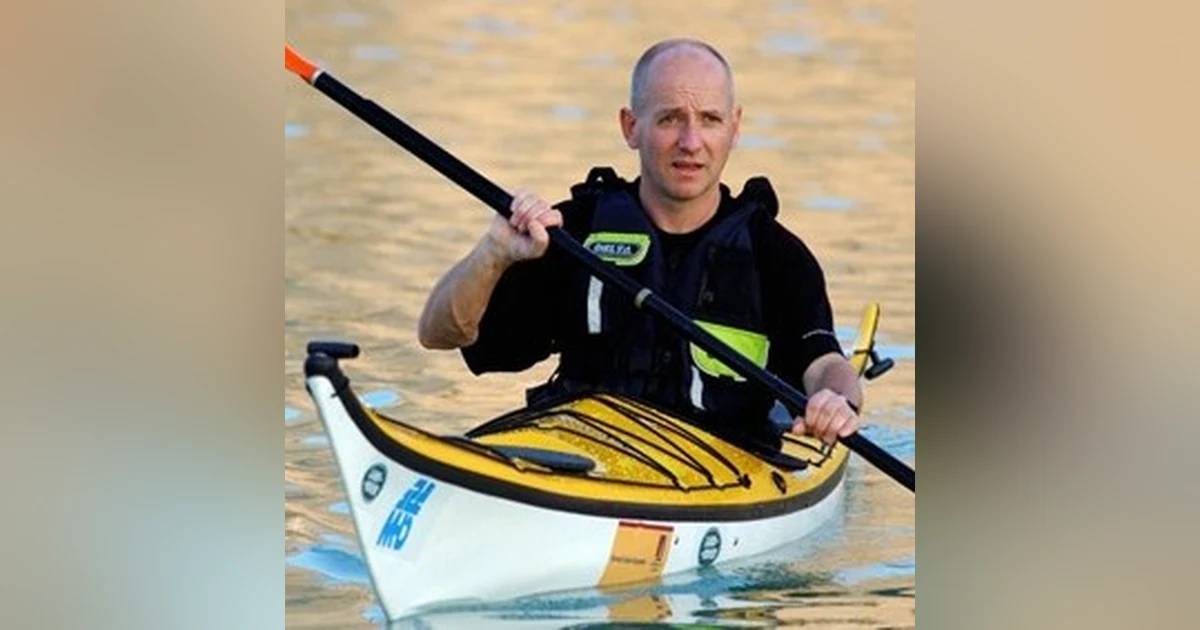
Today’s episode with Mark Evans is a bit backward from our other episodes. Normally we talk about a trip that has already happened. Well, this one hasn’t happened yet and is about to kick off. Mark Evans brings a vast adventure pedigree, from crossing Greenland, a year in Svalbard, teaching in Africa, and retracing famous routes overland through Africa. His latest exploration is a second attempt at paddling the coastline of Oman, a country not known for kayaking but surprisingly rugged by land and rich in water.
The trip combines expedition paddling with science and education: eDNA sampling, hydrophone recordings, daily podcast updates, VR 360° imagery and classroom outreach. Mark explains support logistics and the coastal landscapes and challenges he expects to face.
Listeners can follow the journey and access podcasts, live tracking and resources at oman3165.com and via the Oman 3165 podcast feed.
00:09 - Welcome to Paddling the Blue
01:20 - Online Sea Kayaking Resources
02:22 - Alaska Trip Announcement
02:25 - Interview with Mark Evans
09:29 - Adventures in the Middle East
11:23 - Discovering Sea Kayaking
14:58 - Oman 3165 Expedition
18:22 - Preparing for the Journey
21:23 - Science and Education Goals
29:50 - Oman’s Unique Landscape
32:57 - Involving Local Communities
34:16 - Documenting the Expedition
36:51 - Sponsors and Support
40:34 - Future Guests Suggestions
0:01 Welcome to Paddling the Blue. With each episode, we talk with guests from the Great Lakes and around the globe who are doing cool things related to sea kayaking. I'm your host, my name is John Chase, and let's get started paddling the blue. Welcome to today's episode of the Paddling the Blue podcast. I have the pleasure today of talking with Mark Evans. Today's episode is a bit backward from our other episodes. Normally, we talk with a guest about a trip that has already happened. Well, this one hasn't happened yet, and it's about to kick off. Mark Evans brings a vast adventure pedigree from crossing Greenland, a year in Svalbard, teaching in Africa, and retracing famous routes overland through Africa. His latest is a second attempt at paddling the coastline of Amman, a country not necessarily known for paddling, but surprisingly rugged by land and rich in water.
0:49 He's got a great story with this, and a great education component with this trip. Before we get to today's conversation with Mark, James Stevenson and Simon Osborne on OnlineSeaKeyaking.com continue to produce great content to help you evolve as a paddler and as a coach. You'll find everything from basic strokes and safety to paddling in tides, surfing, coaching, documentaries, expedition skills and incident management, and more. If you're not already a subscriber to OnlineSeaKeyaking.com, here's your opportunity to get started. Visit OnlineSeaKeyaking.com, use the coupon code PTBPODCAST to check out, and you'll get 10% off just for being a member of the Paddling the Blue community.
1:29 For those of us who also enjoy paddling whitewater boats, their newest offering is Online Whitewater, and they're also giving you the same discount for a listener. Check out onlinewhitewater.com, use the same code PTBpodcast to check out, and you'll get 10% off for being a member of the Paddling the Blue community. And I shared a trip that I took to Alaska's Prince William Sound back on episode number 50. While I'm doing that trip again, and if you've been considering an intro to Alaska, you can come along too. Experience the beauty of Alaska's Prince William Sound on this six-day experience from July 12 to 18, 2026. Along with peaks rising 4,000 feet from the Sound, you'll experience glaciers calving in the distance, catch a glimpse of the area's diverse wildlife, camp on remote beaches, and more.
2:12 It's a small group experience limited to a total of six, so I hope you'll be able to join me. Learn more at www.paddlingtheblue.com slash Alaska. Enjoy today's interview with Mark Evans. Hi, Mark. Welcome to Paddling the Blue. Hi, John. Greetings from London. Oh, well, thank you for the opportunity. You've got a wonderfully impressive resume of expeditions. Tell us what got you started as an explorer. Well, I think that goes right back, sadly for me, many decades to when I was at school, really. Because I grew up in the countryside on the west of England on the Welsh border. And when I got off the bus at the end of every school day, you know, there was nothing around, John.
2:56 So, you know, I grew up in an environment where you had to make your own entertainment and that often involved getting the dog, getting a fishing rod and walking across the fields to the nearest stream to go fishing or, you know, just... Backpacking up into the hills so you know i had a childhood which was i would say outdoorsy and based around exploration but i think the key thing was when i was 17 i happened to be listening once in school assembly and the teacher read out a little notice from an incredible charity that is based in the attic of the royal geographical society in london and this charity in a couple year celebrates 100 years of operations, which tells you how impactful it's been.
3:40 And it was set up by a survivor of Scott's South Pole Expedition. One of the scientists that wasn't chosen to go to the pole. But in the pursuit of science, he saw that there were great things that people could learn by working together in pursuit of science. And so they ran expeditions every year, usually to the Arctic, six weeks, scientific research, adventurous travel. I signed up, I got chosen, not because of my skill set, but really because they saw a young person, a 17-year-old who could benefit from such an experience. And that for me was life-changing and just set me off on a life of exploration, really. Wow, that's fantastic. Now, what is that charity that's based in the attic?
4:23 It's called British Exploring Society, and it's just amazing. It has this incredible heritage of being really born in the brain of a man who was spent four months in an ice cave in which it was impossible to stand up, survived all that, kept everyone together, made it safely back to Britain and set up this incredible charity in 1932. So they do some amazing work with all sorts of young people. That's incredible. So now that expedition that you went on at 17, tell us a little bit about that. Well, it was a six-week expedition. I. Six weeks living on glaciers and in glaciated valleys in the Norwegian Arctic, north of the Arctic Circle, just north of a community called Tromsø, sharing a tent with two people you'd never met in your life.
5:14 And every day, up that mountain, up onto the ice, surveying, doing geology, botany, whatever, doing multiple scientific disciplines. But all the time, if you weren't involved in science that day, you'd be doing a 20-mile round trip down to the fjord, filling your backpack with 30 kg of food and rations and bringing them back up to base camp. So an incredible adventure, really. And then now, did you pursue adventure throughout your life or other activities as well? Yeah, pretty much adventures all the time, really, which resulted in me. So I got the bug for the Arctic in a big way from that journey.
5:54 I got into climbing, summer climbing here in Wales and in Scotland. And then you progressed to Scottish winter ice and then you go to the Alps and I enjoyed climbing in the Alps. But you know, there were so many people, even when you wake up at three or four in the morning to do a route, when you look around you on the Argentier Glacier or Mont Blanc, all you see is chain after chain of head torches going up every gully. And a lot of people, there's nothing wrong with that. But for me, I just preferred the quieter places. And so I turned into a sort of horizontal mountaineer and went north. And with that same charity, I led... Five or six expeditions to the Arctic island of Svalbard off the north coast of Norway.
6:37 And one of those expeditions was for an entire year. So we overwintered through four months of total darkness and skied across Greenland, followed Nansen's 1888 crossing of Greenland, and then went further west into northwest territories, did two expeditions to Melville Island in pursuit of a British explorer called Sir William Edward Parry. And so all that was fine and dandy until I realized I was in my mid to late 20s and had a great exploration CV. But the only person that really wrote to me, other than my mother, was the bank manager because there was nothing in the bank. So I went into teaching for all the wrong reasons of a bit of money coming in and still time to do my exploration.
7:27 So, uh, and that teaching took me to Kenya and then that was really my passport to the Middle East, which is where I've lived for the last 25 years. Okay. I was going to say that, you know, all those expeditions that you'd mentioned, Svalbard and the Melville islands and, uh, and all that was by your mid twenties. Yeah, it was pretty intense time actually. Yeah. I think, I think I peaked too early in life, but it was, uh, it was, uh, it was just great. But you know, when you're young and single, it's, it's, it's, you, you've got the time to do these things. Now, your teaching, what did you specialize in? Well, you know, probably other than physical education, the least academic subject of all, probably geography. So, it was a bit of an easy subject for me to teach because of my love for travel and exploration.
8:11 Absolutely. And you mentioned that that led you toward the Middle East. So, tell us about some of your Middle East work. Well, the Middle East is just great. I started teaching in Britain, did two years in Britain, and then went out to Kenya and fell in love with Kenya, but then soon discovered this incredible organization called Outward Bound. I had a school in East Africa under the foothills of Kilimanjaro. So I started volunteering for them most weekends and in my school holidays and was having a great time in Kenya. But really, that wasn't resolving any of my pressing problems of getting some money in the bank because, you know, you're paid in Kenyan shillings. And as long as you stay in Kenya, that's absolutely fine. But as soon as you get off the plane at Heathrow and try and rent a car for a week, you realize just how little you're earning in reality.
8:59 So it was it was pursuit of a tax free salary just to sort myself out once and for all that took me to the Middle East. And I got a job as head of geography and economics at a school in Bahrain. And I thought I would hate it because I'd spent my life in the cold climates. But you know what? I ended up really loving it and loving the culture and the people. And yeah, it's been my home for 25 years now. Now, as you kind of alluded to, most of your expeditions have been land-based with a combination of cold and now warm. Why take to a sea kayak at this time? Yeah, good question, John. Well, I volunteered, when I was at university, I volunteered for this incredible organization called Outward Bound.
9:47 And Outward Bound have a school in Scotland near Fort William. I wrote a very speculative letter to the warden of Outward Bound in Scotland and not expected to hear anything. I offered to work for free, volunteering for... Six months of my summer, six weeks of my summer holidays. And lo and behold, he wrote back and said, look, there's a job in the equipment stores. It's our busy time of year. You work three weeks on in the stores and then we'll give you a week off. You can shadow the instructors and just watch what they do and learn. And we'll even give you a bit of pocket money, which is great. So I noticed there was a kayak store down near the side of the lock.
10:29 And whenever the young people went kayaking it was in single day boats and and there were always one or two longer. Sleek very slender very graceful looking boats that never got touched and when it came to have my when it came to have my day off i inquired if it might be possible to borrow one of these boats and it was something called an anus acuta which is the latin name for the pintail duck this duck with a beautiful, long, slender, upswept tail. And I took this boat out on the water, so this beautiful sea kayak made by Valley Kayaks. And oh boy, I just fell in love with it. It was like driving a Maserati and just a beautiful, beautiful boat, incredibly unstable. I spent as much time underwater as I did on top of it.
11:15 But once I got the hang of it, it was just beautiful. And I just, you know, I'd done a bit of river kayaking. I enjoyed the adrenaline rush and the buzz but it was overall so quickly and I was so focused on the water that I didn't really absorb what was going on around me in terms of nature and, I just found the tranquility of sea kayak but also the mental challenge of juggling the tides and the weather and the currents and looking at the charts and all that kind of stuff I just discovered a world that I really really enjoyed and and I've been sea kayaking ever since all All right. I think it certainly sounds like you've caught the bug for the same reasons that many of us have as well.
11:58 So from that first experience in the Anasakuda, tell us about some of your sea kayak experiences. Well, many really around the northwest coast of Wales, around Anglesey, and then west coast of Scotland. So I live on the east coast of Scotland. Over on the west, as you probably know, there's some beautiful islands and sheltered waters and some great country, apart from the midges, but in the summer. But so lots of hiking there. My friend Nigel Harling got a Winston Churchill Memorial grant many years ago when we, We bought an Aleut 2, which is this huge Expedition Double Sea kayak, which bolts together.
12:40 And we tried to kayak around the northern coast of Svalbard, this island only 500 miles from the North Pole. We got quite a way. We got a Russian icebreaker to take us as far as our credit cards could stomach. And then they winched us over the side and we were off with a rifle for polar bears and a waterproof bag on the deck between us. and about three weeks or four weeks worth of food and fuel. And kayaking around northwest Svalbard is extraordinary because there aren't many bits of flat land. Those bits that are flat are full of the graves of whalers from hundreds of years ago.
13:20 And so it's not unusual to be paddling past ribcages and with all the frost heave and the ice churning in the ground since they were buried because they couldn't be buried in the ground because of the permafrost. So the rocks were just piled on top of them. And there were hundreds of whalers, sailors who died there centuries ago. So, you know, trying to find somewhere to camp where you haven't got a skull staring straight at you is pretty tricky there. And polar bears also, you've got to be on your toes a wee bit. And some pretty committing paddling, you know. There was a place down the west coast, the Seven Glaciers. and just glacier after glacier.
14:02 So it's just a wall of ice for, you know, for mile after mile. So if you fall in, you know, there's no way you're going to get to shore and get out. You've got to get yourselves back in. And so quite committing paddling, but really exhilarating and really interesting stuff. And then I paddled around, I tried to paddle around the coastline of Oman many years ago, but then I was teaching and I was limited to holidays. So I didn't quite complete that journey due to lack of time. Well, the experience in Svalbard where everything has either died or is trying to eat you, sounds quite interesting. Yeah, it is. Yeah, life takes on a certain pace when you're not on top of the food chain, that's for sure.
14:48 So you mentioned Oman. And so tell us about, you said you tried to paddle around the coast of Oman, but you're doing that again. So tell us about that. Yeah. So the first time I tried to kayak around Oman, it was 20 years ago, John. And the world was different then. So I just saw an opportunity to replay that journey. But now I have the time not to have to rush it, not to have to rush anywhere, to do it in its entirety and to travel slowly. No need to rush. But what's different? What's different is that next year is the first COP dedicated purely to oceans taking place in Kenya. And so oceans are in the spotlight right now we launched this next project it's called oman 3165 3165 is the length of the coastline of oman in kilometers so your listeners can go to oman3165.com and there they'll find everything they need to know about the expedition and the podcasts that we'll be doing and the idea is that we will i will paddle from the north in the straits of Hormuz near Iran, around the coast of Oman and down to the border with Yemen down in the far south.
16:03 And that'll take me, you know, don't know, maybe about 70 days. I think it's whether it's shorter or faster or short or further, it really doesn't matter, but I think it'll probably take me about 70 days. And what is your preparation for a trip like this? Well, the theory or the reality. The theory is, of course, I should be in, I should be, you know, first of all, John, you know, falling in, in Oman, it sounds like I fall in a lot. I don't, but you know, it's, it's a pleasure to fall in, in Oman because the water is warm. You know, you can, I could be in there all day and it really wouldn't matter. But, you know, falling in in Scotland is a slightly different kettle of fish.
16:44 So in theory, of course, we launched this journey last week here in London, or September the 25th and we launched it at the Royal Geographical Society which is the home of exploration and we chose September the 25th because it is the International Maritime Organization World Maritime Day and the focus this year it's called Our Ocean, Our Obligation, Our Opportunity. So we'll start paddling on the 11th of the 11th. So November the 11th. It might be a couple of days after that, depending on various things that we can control. But about that date, we'll start the journey in the north.
17:25 And of course, that's now only six weeks away. So I should be in the peak of physical condition. I should be paddling and training every day or every other day. And I've got no excuse because I've got a river at the bottom of my garden in Scotland. But sadly for me, six weeks ago, I went flying over the handlebars on my mountain bike and I broke two ribs. But most infuriatingly, I broke my left wrist. So I had the cast off about 10, 12 days ago. Now it's getting better by the day. I've still got six weeks for it to get better. And so if people happen to walk past my house in Scotland, they'll see a crazy Englishman standing in his garden with a kayak paddle in his hand.
18:06 So I'm whirring my paddle around as if I'm on the water, which is as brave as I can be at the moment, but just trying to get all the joints used to that motion and just get my wrist stronger and stronger in the hope that it'll hold out when I start the journey in November. So aside from physical preparation in your garden and elsewhere, what is the logistical preparation like for the trip? Uh well reasonably straightforward actually it's uh i've got i've got uh the boats have been built here in nottingham so by my friends at valley kayaks and when i tried this journey 20 years ago i had a nordcap which is the kind of original sea kayak design you know this year i think is the 50th year since that boat was first produced so it's a real milestone year for for for the nordcap And so those boats have been built there next week, I hope. They'll be shipped out to Oman.
19:03 And we've got a whole raft of companies behind the project, one of whom providing us with a four-wheel drive vehicle. So whilst I'm on the water, there'll be a land-based team who will look after me, just check them okay. They'll be flying a drone and running sort of a mobile base camp and comms center. So most times we'll come together at the end of every day, but there'll be certainly times when we can't because of the nature of the coastline. So I'll be on my own. I'll obviously have tent and stove and food and water on my kayak for a few days just to deal with that potential. Situation. But, you know, really the logistics are pretty simple. I've still got a lot of my camping gear out there and, you know, there are no dry suits or wetsuits required.
19:48 It's kayaking in a t-shirt and short. Your biggest enemy is the sun. And so it's just protecting yourself from it. And that sun also influences the sea state. So I'll be aiming to start paddling about 4.30 every morning. Sunrise will be about 6.30 every morning. So during the night, the sea calms down and and at dawn it's like a mirror usually it's like a mill pond it's beautiful i can do about seven kilometers an hour for hour after hour and and by the time you get to mid morning 10 11 o'clock i've done 30 35k which is you know getting towards the end of enough you know i intend to approach it in especially with my wrist issue just everest base camp style you know just walk bit by bit and paddle myself fit but you know incrementally build up the distance in the first 10 days, two weeks, because I don't want to overstretch myself.
20:42 But about 10 o'clock, 11 o'clock every day, you know, the sun's starting to warm up and you're actually looking forward to a waft of wind. And pretty much you can certainly watch that waft of wind will come at about 10 or 11 o'clock in the morning. And that's caused by the land heating up faster than the sea. So the air over the desert will rise. It'll pull in air from the ocean. So you get this onshore breeze kicking in. And that builds up and up and up and up into the early, but, you know, early afternoon, what was a mirror of a sea is now quite choppy. But, you know, I will be off the water by 11 o'clock midday every day because we've got too much to do. We've got a lot of science and education to do on this project, too.
21:23 So speaking of that, so there's certainly more to this trip than you paddling 3,165 kilometers along the coast of Oman. You mentioned science and exploration. So tell us about that part and why this is important. I like to do what I do with a purpose. And so science and education, education in particular inspire the next generation, really important to me. And so in terms of science, we'll be doing a few firsts. We've partnered with an incredible New Zealand environmental company called WilderLab. And they very kindly have provided me with some free eDNA sampling kits. And eDNA is the way now in terms of monitoring the state of the ocean you know every living organism from protozoa to blue whales shed dna one way or another through mucus or poo or just you know bits of your body dropping off i mean we're both shedding e-dna now as we record this podcast and so so i'll be taking samples periodically systematically around the coastline of omar it's not the water that i send off to New Zealand, it'll be the filters through which I draw that water.
22:31 And then within two weeks, they will come back with an incredibly complex biological living tree diagram of what has been in that water in recent weeks. And it's just extraordinary. Nat Geo are using it right now in a big project called Pristine Seas off to Minica. It's really revolutionizing ocean research. It's never been done in the waters of Oman before. So we're really excited by that. And we're also, of course, you know, there's a hell of a lot going to be going on underneath my kayak. So the waters of Oman are nutrient rich and absolutely prolific with life, from turtles to tuna to sea snakes to humpback.
23:13 Humpback the only population of humpback whales in the world that don't migrate because the monsoon brings the hot and the cold water to them so i'll be towing underneath my boat five meter cable with a hydrophone and so i'll be recording what's happening underneath you know i won't be able to hear it but that's where the specialists at saint andrews university in scotland come in the sea mammal research unit uh you know we'll have at the end of every day and this will be the job of the team in the support vehicle, be a hell of a lot of data that will need to be downloaded. Uploaded to be accessed by the scientists around the world. And then, you know, off I go again the next day harvesting the data in my kayak.
23:53 So, you know, that's the science work we're going to be doing. And how did you get connected with the scientific team for this? Oh, just reaching out, John, to, you know, key people that I knew who were loosely connected to this. And it's like the sea kayak world it's actually a pretty small it's a pretty small network of people and once you start talking to one or two they'll always say well you know what you should talk to this guy you should talk to this girl she's incredible and and you know the network grows and you know it's just at the launch last week you know a room full of extraordinary people doing amazing things and so we've got science on one side but we've got education on the other and we're doing some great work with some educational charities here in the UK.
24:38 Probably every other day, when we're on the beach and all sorted, there'll be Zoom conversations with thousands of young people in the UK and also in the USA and Canada. We've partnered with an amazing guy called Joe Globowski, exploring by the seat of your pants, so bringing expeditions into classrooms. So we'll be engaging and hopefully inspiring young people all around the world into why oceans are important and why the way we dispose of our litter is important and all sorts of things like that. What do you expect to be your greatest challenge along the trip? Well, the sun is a big challenge every day, but that's relentless and you do get used to that. And I think the biggest challenge from my memory of trying it 20 or so years ago, John, was when you turn the corner.
25:28 So if you look at a map of Oman, there's a kind of a right angle turn. And at that right angle, that's the most easterly point of the entire Arabic speaking world, a place called Ras Salhad. And at that point, the Gulf of Oman becomes the Indian Ocean. And that ocean is enormous. And then you're exposed to quite a big swell. And so if my day is not going to plan and I'm on the water a wee bit too long you know some of the surf I've got to land through is pretty meaty stuff so I remember a few dish dishwasher like moments on the last trip so I'll try and avoid those this time if I can but it's you know it's there is a big swell and uh and and so the waters will be quite different and yeah that's that's really about it it's it's not there's nothing technically difficult as long as I keep the land to my right.
26:20 Navigation isn't an issue. It's not. It's not a circumnavigation because much of Oman is landlocked to the northern border and the western border, but it's very much following a coastline and just enjoying it and not enduring it. Looking at the map and looking at the coast, it looks pretty desolate. Once you get away from those cities near the Straits of Hormuz and then down a little further, what do you expect to find other than water? Well, I mean, there are a lot of land features, actually. It just doesn't show up when you look at a 2D map. I mean, there are mountains that go up to 10,000 feet in Oman. And, you know, we have a few days of snow and ice every year there and in the depths of winter.
27:05 So the start will be, you know, my challenge in the first two or three days will be finding somewhere to get off the water because the mountains come straight down into the sea. It's really dramatic. And then just incredible coastline of sand dunes coming down. There's an area of desert, which is one of only three fog deserts in the world. The others being in Namibia, the Skeleton Coast, and the Chilean Desert. But there's an area of enormous sand dunes that come down into the sea, which are quite spectacular. And then large areas of mangroves, and then some incredible rocky headlands again, and then some lovely white sweeping beaches with lagoons full of flamingos.
27:45 And then at the end, into some really big mountainous cliffs again. But this time, you're in the land of the hyena and the Arabian leopard, and the cliffs are covered in frankincense forest, which is just a beautiful way to end what I hope will be a magical journey. Wow. Well, I certainly show my naivete of the Oman coast, and it sounds much more spectacular than I expected than what appears on a map. Yeah, yeah, yeah. Well, as I've learned in the past, Google Earth is great, but there's a lot it doesn't tell you. Is sea kayaking very popular in Oman? It's an area of the world that we don't get a chance to talk about much. Yeah, and purposely so, John, because Oman chooses politically to fly under the radar.
28:33 It's the Switzerland of the Middle East. It's a country full of humility, but quietly always working behind the scenes to get hostages released from Somalia or Iran, but not wanting to take credit for it, not wanting to be front of stage. So it's, you know, most people don't know much about Oman. It's, you know, just to give you a bit of perspective, it's the size of UK, but with only 5 million people. So imagine UK with only half the population of London. So much of it, as you rightly said, is wilderness and which makes it a gorgeous place to travel in. But in terms of sea kayaking, because of the small population, very few people, you know, I've seen one or two people kayaking around the capital city, Muscat, but not really.
29:21 I've never seen, you know, I was on the water for 55 consecutive days last 20 years ago. I didn't see a single sea kayaker anywhere and lived there for 23 years. And other than seeing one or two people recreationally out at weekends on the capital city, then absolutely nothing. A lot of people paddle surf kayaks or whatever you call them, these sort of fishing sit-on-top kayaks. But in terms of expedition kayaks, I've really not seen anyone. And is there much of a tourism activity there? Yeah, huge tourism actually. And that's seen and hailed as one of the great ways to decarbonize the economy and shift away from an oil-based economy, which it primarily is, but increasingly less so.
30:09 You know oman's doing a really good job of diversifying its economy into and there's a lot of tourism there and it's growing and and unsurprisingly everyone who goes there just falls in love with it you know the fact that i spent 23 years there john tells you all you need to know about oman it's if you love the outdoors it's absolutely paradise it's really gorgeous now what is the uh the outdoor draw there if not water is it is it land or what's what are people going there for. I think culture and heritage as much as anything else. You know, it's not a Dubai is just up the road, five hours drive up the road, but they're chalk and cheese, really. Oman has done a great job of retaining its heritage, retaining its culture, retaining its identity.
30:57 And you bolt onto that, that incredible Arab hospitality. So me taking an Inuit Greenland design kayak to Oman, it's a kind of fusion of Inuit and Bedouin cultures. But actually, it's not just my kayak that unites them. I would say that the Inuits and the Bedouin, what they have in common is that both peoples live on the edge of human tolerance. One on the edge of cold, one on the edge of heat. And I think those extremities bring out the best in people and I think it was the desert explorer Wilfred Thessage who said the heart of the life the finder the person and that hospitality that you receive in Arabia is just the same as you receive from the people of the far north you know it's absolutely genuine and I think you know a lot of travelers come for the culture the heritage to the incredible hospitality, but also this spectacular landscape of 10,000-foot mountains, incredible coastline and diving.
31:59 Getting out into the desert, into some of these beautiful desert camps and seeing that incredible starry sky come out at night. It's quite extraordinary, really. It does sound spectacular. So do you get the local people involved in any of the trip? Absolutely, I do. Yeah. So paddling alongside me will be my friend Mohamed Zajali, who is an Omani. And that's very important. So for the last 13, 14 years of my time in Oman, I worked with Mohamed and a bunch of other young people to establish outward bound in Oman, the first outward bound in any Arabic speaking nation. And now, you know, they're absolutely flying. They've got 45 full-time staff.
32:41 They've trained 32,000 young people and using the deserts and the mountains. But now they're moving on to the ocean. And guess what? They've just bought a fleet of double kayaks. And so I will be stopping in to talk to them and do a podcast with them. So Mohamed will be with me when I start. I'm not sure how long he can stay because he's got a proper job he's got to get back to. But certainly when I reach Muscat, I'll be making a point of going to visit them on the water and just talking to them about their kayaking in Oman, which has really just started to take off. Well, it sounds like a spectacular place and a wonderful journey. So how will you document the trip? Well, we'll be, you know, in the old days, John, I used to write a daily diary, but I don't bother anymore because we podcast all the way.
33:27 So if you go on to Spotify or Apple, wherever you get your podcasts, if people go on and search Omar 3165, the second podcast just went live at nine o'clock London time today. And that's the podcast that covers the launch last week. So people will be able to track us via the podcast. But if they go to the website, they'll also be able to track us. We're working with the Durham University. I'll have an Insta360 camera on my kayak, and every day I'll be sending 360 imagery to Durham, and they will be creating, if you're into virtual reality, put your goggles on. You'll be able to follow me and do a complete sort of interactive 360 look at the water and the landscape, which I'm paddling through.
34:12 And you'll be able to access all of that through the website once the journey starts. So I won't be documenting it in a in a sort of written form but it'll be audio visual and social media well it sounds like quite an experience and quite immersive so I'll make sure we include links in the show notes so folks can check that out and follow along with you now 11 11 25 why did you pick that specific date well I would have started earlier John if I could but which I'm in now because tonight I'm doing a lecture at the Royal Geographical Society. We did a 30-day journey earlier this year on camel through Oman. And the book of that has just been published. We just got it.
34:54 The first copies have just reached us from the printers. In London, in the first week of November every year, is an enormous travel and trade fair called WTM, the World Travel Market. And it's utterly huge. Every country in the world that has any bit of tourism will have a representative desk there trying to out compete and shout louder than the neighbours and so the Minister of Heritage and Tourism from Oman will be in London for that and he is very keen that we use that opportunity to launch, And so I cannot travel before that has happened. And that happens on November the 6th. So as soon as that's done, straight to the airport, fly out to Muscat on the 7th.
35:39 Then we'll have about three or four days to get everything ready, kayaks on the roof rack, drive north. It could take us half a day to drive north and camp up and get ready to launch hopefully on the 11th. If not the 11th, it'll be the 12th or the 13th about then. Okay. Any sponsors that you'd like to give recognition to? Thank you. That's a very kind question to ask, John. Yeah, so Asyad Shipping is Oman's biggest shipping company. And, you know, I always think long and hard when it comes to sponsors because their values have to resonate. And so, you know, often when you're doing expeditions in the Middle East, it's easy to go to the oil and gas companies like Aramco and Shell and BP.
36:20 But actually, you know, a lot of people don't like to be connected to that carbon based industry anymore. So I try and shy away from the oil and gas people. And so I'm always very sort of forensic when it comes to partners. And Asia are great. And they really do walk the walk when it comes to sustainability. And do some really innovative stuff with wind turbines on the decks of their boats, these huge carriers that go across the oceans. And just great. It was a meeting of minds, really, when I went to them to talk about would they support this project and and of course with with world maritime day i mean they're very keen to and rightly very proud of what they do in terms of sustainability so we've got we've got as you had we've got vodafone as well who are our comms partners so they're giving us free unlimited data sim cards which enable us to have these interactions with young people all around the world through zoom and a few other partners too wilder lab the incredible people in new zealand who have given us these free eDNA kits.
37:26 So the list goes on. If you look at the website, you'll see there's an entire podcast just talking about that community, actually. So I better stop there. All right. And again, can you just remind everybody of the website and how folks can connect with the expedition and yourself? People can follow us, John, through the website, which is www.oman3165.com. And there you'll be able to access all the podcasts, social media feeds, And there's a track the journey icon, which, of course, at the moment is inactive. But once we start, then you'll be able to see where we are. We're using something called a yellow brick tracker that many of your listeners will know. But on top of that, we're layering on this virtual reality 360 degree imagery.
38:11 Fantastic. So before we begin to wrap up here, I've got one other question for actually two other questions, but one first. Tell us about the MBE designation following your name. Oh, well, MBE is a member of the British Empire. And so that's one of the... One of the medals that get dished out to fortunate individuals like me, really, by Britain. And so I think, gosh, I can't remember now, John, it's probably 10 years ago. And you never know who nominates you. So, yeah, a really special day for me, really. I think I was recognized for my work in the field of outdoor learning and using the outdoors to promote a greater understanding of the Arab world and promote intercultural dialogue.
39:02 I set up something called the University of the Desert, which brings young leaders together from all around the world. And always lovely to have a pat on the back, but completely unexpected. And so that's what it stands for, MBEs, Member of the British Empire. Yes, well, congratulations on that designation, being a member of the British Empire, and for your work in the scientific exploration exploration and furthering the outdoors. So, thank you. I do have one final question for you, and that is, who else would you like to hear as a future guest on Peddling the Blue? Gosh, well, John, I have no idea who you spoke to in the past, but the two people that spring to mind immediately are Peter and Jason, the guys behind Valley Sea Kayaks.
39:47 You know, they were the people that, going right back to our earlier conversation about that Anasakuta that was made by Valley. I always remember seeing the sticker inside the hull of the boat. So for me, Valley have always been synonymous with quality and the heritage of sea kayaking. And so when I wanted two boats building for this 3165 journey, I went to Valley. I met Pete and Jason. They're just lovely, lovely people. And so they are the sort of co-directors of Valley Sea Kayaks and doing really well. And so their knowledge of the heritage of sea kayaking and the 50 years of this incredible kayak, I'd suggest you talk to them because they'd have a great story to share.
40:30 All right. Well, we will definitely work with you to connect with them. And thank you very much for the opportunity to talk about Oman 3165, your kayak expedition coming up in November of 2025 along the coastline of Oman with the science component of that. And so we will look forward to making sure that folks can follow along with that. and maybe we'll get a chance to talk to you while you're on the trip and experience some of that science right alongside you. For sure, yeah, we can do that. Yeah, thanks very much, John. You're welcome. Thank you, Mark. Thank you. If you want to be a stronger and more efficient paddler, Power to the Paddle is packed with fitness guidance and complete descriptions, along with photos of more than 50 exercises to improve your abilities and enjoy your time on the water.
41:14 The concept and exercises in this book have helped me become a better paddler, and they can make a difference for you too. The exercises in the book can help you reduce tension in your shoulders and low back, use the power of your torso to create leverage and use less energy with each stroke, Use force generated from your lower body to make your paddling strokes more efficient. Have the endurance to handle long days in the boat. Drive through the toughest waves or white water. Protect your body against common paddling injuries. And while you're at it, you might even lose a few pounds. And who wouldn't mind that? So visit paddlingexercises.com to get the book and companion DVD. Thanks to Mark for sharing his plans for Oman 3165 with us and for his past adventure history as well. It'll be really interesting to follow along with Mark and learn more about his trip as it progresses.
41:58 You'll find resources to connect with Mark and follow him and his team in the show notes for this episode at www.paddlingtheblue.com slash 149. Remember, if you're interested in joining me in Alaska in July of 2026, you can catch more information at www.paddlingtheblue.com slash Alaska. And if you're not already a subscriber to onlineseekhiking.com or onlinewhitewater.com, Remember that you can visit either of those two sites. Use the coupon code PTBPODCAST to check out, and you'll get 10% off just for being a member of the Paddling the Blue community. Thanks, as always, for listening, and I look forward to bringing you the next episode of Paddling the Blue. Thank you for listening to Paddling the Blue. You can subscribe to Paddling the Blue on Apple Music, Google Podcasts, Spotify, or wherever you find your favorite podcasts.
42:47 Please take the time to leave us a five-star review on Apple Music. We truly appreciate the support. and you can find the show notes for this episode and other episodes along with replays of past episodes, contact information and more at paddlingtheblue.com. Until next time, I hope you get out and paddle the blue.