#152 - Kayaks, Kiviak & Ketosis: A 3,200 km Greenland Experiment with Paddling Chef Mike Keen


 Apple Podcasts

 Spotify

 Overcast

 Castro

 PocketCasts

 RSS Feed
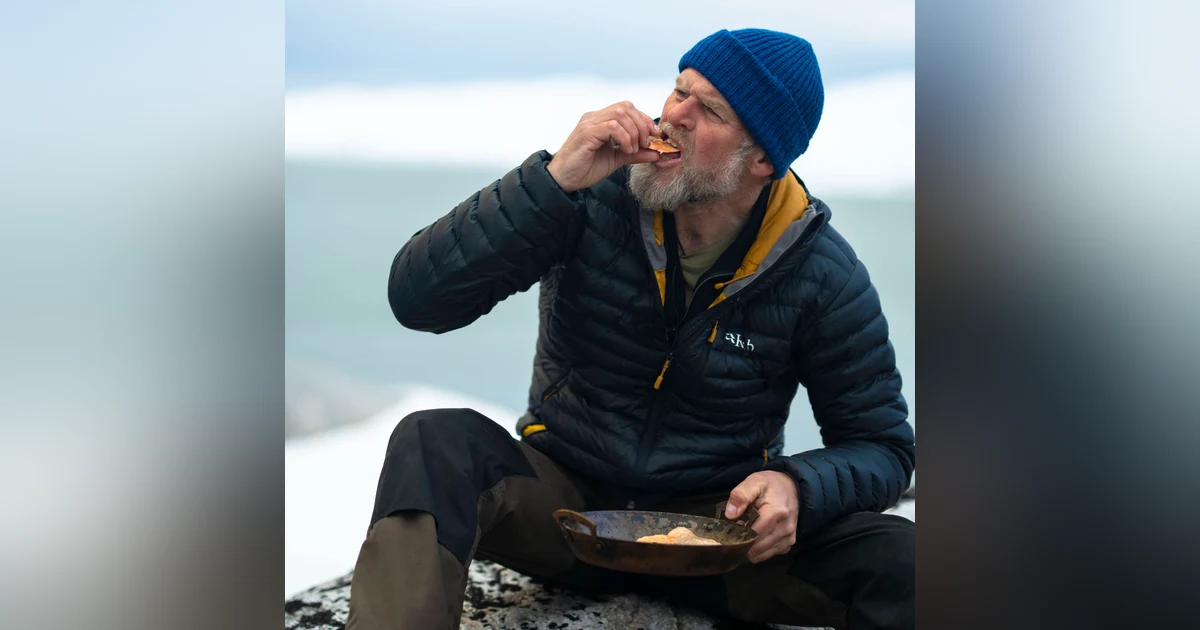
Paddling Chef Mike Keen shares his solo 3,200‑km kayak journey up the west coast of Greenland, where he lived on a traditional Greenlandic Inuit diet of seal, whale, fish and fermented foods while researchers tracked his health and microbiome.
In this episode of the Paddling the Blue podcast, we discuss his preparation, camping and paddling challenges, surprising physical results, the role of fermentation in food preservation, and ongoing scientific follow‑up — all framed by vivid Arctic landscapes and encounters with local hunters.
00:09 - Introduction to Paddling the Blue
01:24 - Meet Chef Mike Keen
04:35 - The Culinary Experiment Begins
10:04 - Preparing for the Journey
15:34 - Embracing the Ancestral Diet
27:51 - Sourcing Food in Greenland
29:50 - The Journey and Its Challenges
46:58 - Life in the Wild
49:57 - Reflections on the Expedition
52:57 - Sharing the Experience
55:35 - A New Perspective on Diet
58:52 - Closing Thoughts and Future Endeavors
0:01 Welcome to Paddling the Blue. With each episode, we talk with guests from the Great Lakes and around the globe who are doing cool things related to sea kayaking. I'm your host, my name is John Chase, and let's get started paddling the blue. Welcome to today's episode of the Paddling the Blue podcast. Mike Keen has been working as a chef in Greenland for several years, and he decided to take on a culinary experiment to see how he would fare on a 3,200-kilometer solo kayak trip solely eating a traditional Greenlandic Inuit diet. It's a fascinating experiment comparing the results from a standard Western diet. Before we get to today's conversation with Mike, James Stevenson and Simon Osborne at OnlineSeaKayaking.com continue to produce great content to help you evolve as a paddler and as a coach.
0:46 You'll find everything from basic strokes and safety to paddling in tides, surfing, coaching, documentaries, expedition skills, and incident management, and much more. So if you're not already a subscriber to OnlineSeaKyaking.com, here is your opportunity to get started. Visit OnlineSeaKyaking.com, use the coupon code PTBPODCAST to check out, and you'll get 10% off just for being a member of the Paddling the Blue community. And for those of us who also enjoy paddling whitewater boats, you can do the same thing with OnlineWhitewater.com. They're offering the same discount to listeners. Check out onlinewhitewater.com, use the same code PTBpodcast at checkout and explore. Enjoy today's fantastic interview with paddling chef Mike Keen.
1:30 Hi, Mike. Thanks for joining me on Paddling the Blue. Hey, John. Glad to be here. Yeah. So you've combined an interesting culinary experiment with a kayak trip. So tell us how you started this combination. Yeah. So I'm 56 years old now, and I've been a chef for probably about 35 of those years. No kind of history in kayaking or army, military, special forces, anything like that. But I have traveled quite extensively during my career on cruise ships from the States to the South China Sea, working in New Zealand and all over. And recently, well, fairly recently, from about 10 years ago, I started talking and doing workshops on kind of ancestral ways of food preservation and how we used to process food and survive.
2:23 Because it quickly became apparent to me that we haven't always had fridges or environmental health offices and sell-by dates and all that kind of whatnot. So it was kind of a gradual process into looking into fermentation and salting, preserving, drying, all the kind of stuff that we used to do. And it turned out that the most interesting forms of preservation, like fermenting the strangest foods happened in the most harshest environments. So I was kind of following the Vikings as they left Norway and kind of migrated across the North Atlantic to the Faroe Islands, Iceland, and then Greenland, all of which are amazing kayaking destinations.
3:13 And it was in Greenland that I kind of had my epiphany, in the form of this foodstuff called kiviak which is there about four to five hundred little seabirds little black and white tiny little birds that are packed inside a seal and the seal is sewn up and then it's the air is pushed out and it's kept underground under rocks for about six months and then the seals dug up and the yeah and the birds totally intact when they go in they've got there's guts and everything and they've been they've fermented and they're safe to eat which for me as a kind of professionally trained chef was was a revelation because we're always taught that you know everything's got to be within fridge temperature if it's past its sell by date you got to throw it away and here was this food stuff that was essentially a chicken inside you know a pig.
4:08 That had no salt. The ambient temperature was above a fridge and it was safe to eat. And people had been surviving off this kind of food for thousands of years in this really hostile environment. So that kind of piqued my interest. And I managed to get a book deal just about three months before COVID. And the publisher sent me out to Greenland to kind of investigate a little bit more. And then COVID hit, I got stuck out there and I got dropped from my book deal. Yeah, this is obviously 2020 but by that time it was too late I'd spent their travel money and I was I was stuck in Greenland but Greenland's a fantastic place for making connections and yeah making friendships and that was yeah back in 2020 and since then I've now been out 14 or 15 times working different places all up the coast and this one time I was working for about three months in this remote camp about one hour two hours away from nuke down a massive fuel system and i was cooking for these yeah luxury glamping lodges and i was chatting with one of the inuit chefs there about just how incredible it was that humans survived for so long and thrived for so long in this super hostile environment way before we had things like gps or gore-tex or yeah all the mod cons and super high-tech stuff we have nowadays you know they were making kayaks out of driftwood and and seal
5:41 skin and you know making their clothing out of the same stuff it was it's just mind-boggling to our kind of modern perspective that people can actually do that so i was i was thinking wouldn't it be interesting if you could. Somehow do some kind of expedition that incorporated getting as close to those kind of ancient technologies as we could. And part of the intrigue about Greenland for me is the language. It's totally alien to any kind of European-based language. It's got a lot of cues in it. The way they express different vowels and consonants is different. And there's a hell of a lot of cues in there. And then the town right in the far south is called Kakotok, and the town in the furthest north is called Karnak.
6:30 And then, obviously, the Greenlanders invented the kayak, which in the Greenlandic way of spelling is Q-A-J-A-Q. So, it kind of came into my brain that wouldn't be cool if you could kayak from Karkotok to Karnak, and you've got all this gospel Q's going on. I think I might have had a beer or two by this point. So, I was just kind of exploring that. And that was it, really. from there I'd kind of set myself on this trajectory of um telling as much many people as I could and I was kind of committed to it and I would look pretty stupid if I if I kind of backed out of it so I I kind of talked myself into this expedition and I'd only been kayaking for two years previously and never only once with a group or yeah of more than me I'd been also working in the far south of Greenland where this remote hotel had a really ancient sea kayak that I used to just go out in and kind of teach myself, yeah, how to navigate around the icebergs and the basic skills of kayaking.
7:35 And so I didn't have a real, you know, solid base on which to say that I could do this or pull off this, you know, enormous trip, which from Kakhotok to Karnak is 3,200 kilometers, So I kind of reckoned that I could do, if I averaged 30 kilometers a day, that would take me, yeah, about 100 days, maybe more, depending on storms and down days because of weather. And, yeah, that was it. So I kind of talked myself into this kayaking from Kokotok to Karnak. And because I was a chef and because I was talking about fermentation and all these ancient ways and this kiviak and they have fermented seal and fermented cod and a lot of incredible food that, you know, us as kind of Westerners.
8:26 Just don't regard at all or we don't assume that it's going to be safe to eat and you know traditionally we've kind of looked down on that kind of food but then I thought okay I'm kayaking for between five and ten hours a day for a hundred days perhaps I should try and find something to kind of occupy my time as well like maybe do some scientific experiments but then I thought the Inuit were doing this for thousands of years you know kayaking out in all kinds of weather in these, yeah, what we'd call makeshift kayaks. Wouldn't it be cool if I could, as a Westerner, just go onto an ancestral Inuit diet and maybe get a couple of scientific organizations behind to do the testing and the medical tests, stool tests and all that.
9:13 And so, yeah, that became the kind of biggest aspect of this upcoming kayak tour. So I went out there, as soon as I got back to england i i went out on the sponsorship trail trying to get equipment and yeah clothing kayaks for starters i didn't i didn't own a kayak yeah so looking back i probably wasn't the best prepared to do this kind of enormous journey but come april 23 i had secured enough equipment to yeah to manage to to undertake it and also the backing of kind of a lot of different scientific parties that were super interested in whether or not it was possible for a genetic westerner to go on this totally different diet which is effectively a keto diet so only sea mammals fish and reindeer.
10:04 There's virtually no fruit or veg in there at all that's pretty impressive now i know with a with an as a new kayaker effectively how did you prepare yourself and your skills for the trip, Yeah. Yeah. Again, with hindsight, I probably should have done a little bit more. I spent one day in Anglesey, again, a big hotspot of kayaking here in Great Britain, in the top left corner of Wales. And I actually went out with an instructor and four or five other people just so I had the basic skills. You know ideally I would have liked to have been a lot more comfortable with my role I did a lot of practicing on the role and self-rescue and the role and I you know I'm still a little bit rusty on the role but self-rescue I'm pretty good at and I managed to do it yeah yeah I'm very comfortable with the self-rescue which which is the fail safe so that was that was fine but I had a lot of kind of.
11:08 Kind of not kickback, but a few seasoned kayakers said, yeah, you should never go out alone in the kayak. And a few in the medical community were saying, yeah, there's no way you're going to survive on this diet. You're going to have to take a backup, a whole bunch of, you know. Ration packs, army packs, that kind of stuff, just in case, because you will get sick. But luckily, I kind of disregarded all this, mainly because I'd been looking into the Inuit. And if you go to the capital nuke there's a the most amazing museum there and they've got all these really old kayaks from you know 100 200 300 years ago that were just made out of like the thinnest driftwood and seal skins and bird skins and and you know some of them used to sew themselves into the kayak yeah to make it waterproof it's just astonishing to our kind of our very much molly coddled kind of way of life now where we wouldn't dream of taking risks unnecessarily but way back then and for thousands of years the inuit have gone out in all conditions because without the kayak they wouldn't have survived or had the breadth of geographical spread that they actually ended up having so it's for them it's not just oh it's a nice day i'll go out for a nice kayak it's it's if they don't go out and kayak and hunt a seal or fish then they're not going to eat so that puts puts their their community at risk yeah so that was that was kind of where i was coming from with the whole thing i thought if if they could do it several hundred years ago then surely
12:41 i can do it you know with you know you know a modern kayak and you were able to do it and modern equipment yeah yeah and and i did it i'd never kayaked in camp before um. I wasn't even sure if I could do the 30 kilometers, you know, for every day for 100 days, which is quite an ask. But yeah, I managed to do it. And the diet was, it just exceeded all expectations. You know, as a trained chef, we're probably even more kind of indoctrinated into that Western way of thinking of you've got to have vegetables. You've got to have a wide range of diverse veg, fruit, carbohydrates, proteins, fats, et cetera.
13:23 And it turns out, yeah, for the whole four months, I didn't eat a single piece of fruit or a single piece of vegetable. I just had meat and fat. And about 35% of my diet was sea mammal fat. So this big blubber from seal or whale. So it was a total kind of about face on my regular English diet or Western diet, and the results were phenomenal within three weeks I'd lost two stone 14 kilo which kind of worried me because that was yeah after three weeks I'd reached a capital nuke and that was the first time I actually stood on a pair of scales and I had to ask the guy if they're actually working because I couldn't believe I'd gone from 90 kilo down to 70 I think 76 kilo after three weeks without some kind of serious injury looming up sooner.
14:15 I had visions of me burning through all my stores of energy, which I thought that that's what I've been doing. And then being 10 miles out to sea and keeling over and collapsing and drowning. But luckily, my kind of blind optimism and ignorance saw me through that brief wobble. And I stayed the same weight for the remaining three months. So for me, that was a real eye-opener because everything. Kind of made me realize as I went along that it's very rare for us humans nowadays to be so immersed in our natural environment, you know, without cars or planes or phones or artificial light and all that.
14:58 And especially on top of that, to be eating that ancestral evolutionary diet that we had for millions of years before the kind of modern world took over, where we would have always eaten super seasonal stuff, stuff that had been caught or foraged or picked up in the immediate environment. So within say 10 kilometers of us. And there were periods when I went seven or eight days without seeing another human. So no villages, settlements, anything on the way. I was wild camping. And yeah, it wasn't until kind of sometime after I finished that I realized how lucky i was to have experienced that kind of a little snapshot of what life had been like for us humans for millions of years beforehand and it's you know it's very rare for us to do that but that's i i i really believe now and the more i look into it and look at the medical results i really believe that that's how we fitted in with our environment we were part of that whole ecosystem and that 76 kilos that I came down to is kind of my my perfect evolutionary weight for that environment, How did you prepare yourself for that diet? Did you slowly wean yourself away from Western food prior to the trip, or did you just make a hard cut once the trip started?
16:27 Yeah, not at all. Part of the deal with the scientific people were that I took samples for three or four weeks beforehand, eating my normal English diet. And then I went straight, as soon as I got to Greenland, I went straight into the keto diet. So there was no buffer period at all. I went from eating my standard British kind of European American diet straight into immediately onto the keto diet. So seals, seal, whale, reindeer, and. That was probably, I gave it, I think it was eight days in the end, pre-kayaking that I was on that diet.
17:08 Because speaking to the scientists and the doctors, nutritionists, there would be a fairly explosive reaction to going straight onto that diet. And I didn't want to be caught out 10 miles to sea in my dry suit while I was having diarrhea or any kind of adverse reaction to the diet. So, yeah, I had that diarrhea for probably three or four days. As soon as I went on to it, I felt fine. I didn't feel ill or fluy or anything like that. It was just my body trying to come to terms with a complete about face on my diet. So, yeah, it was super. Yeah, that was some good planning, really.
17:50 I would advise anyone who's going on to that diet not to be committed to a dry suit for long periods at sea while you're going through that transition. But yeah yeah within five days i i my body had got back totally to normal and i was yeah on on this diet so i'm saying i'm picturing you on those seven to eight day stretches without seeing another person so i'm pitching i'm picturing you with a a seal packed full of birds strapped down to your back deck as your food source how did you source food along the way. All from the people of Greenland. So, yeah, there's only 57,000 people in the whole of Greenland.
18:31 And, you know, the length of journey that I was undertaking was, yeah, 3,200. So most of the population has spread along the West Coast. The capital nuke has got 17,500 people. So for a capital city, that's tiny. But there are, you know, probably, I don't know, 50 or 60 settlements spread all the way up the coast. So the plan was i had a fishing rod with me but i'm a terrible fisherman and i had a rod set up on on the kayak which i thought that's gonna be great i just you know i cast my hook and then put put the rod in the rod holder and carry on paddling and hopefully i'll have a fish fit to eat at the end of the day but yeah i'm a terrible fisherman but to start with and then the second and was, yeah, seaweed, just the whole time you spent pulling in the line, taking all the snaggled up seaweed off the hook and then recasting it.
19:28 So in the end, I gave up on the fishing as I went kind of idea and fished as I, you know, once I'd set up a tent or anything like that, fish from the land. So that's a handy tip for anyone who's fishing. Possibly going to be relying on catching their own fish as they go yeah be aware of seaweed because you have to keep stopping put your paddle up pull the blooming thing in and yeah it's it that it's not great and also because it's just me by myself and the average seal was probably 20 kilo i had a rifle because of um polar bear risk it wouldn't have made sense for me to shoot a seal because i wouldn't have been able to eat it all in one go and i didn't fancy dragging an extra 20 kilo of dead weight behind me.
20:16 So I was relying on either buying seal or fish or reindeer from Greenlanders as I went. And if I knew that I had a long period of eight or 10 days without seeing anyone, then I would obviously buy enough food. And I chopped it up and packaged it into bags. So I knew that I had enough. And also the dried food. Dried food is a very big part of their diet out there and I guess I hadn't really thought about why that would have been but you know dried halibut, cod, seal, whale jerky is kind of ubiquitous over there and it's not until you expose yourself to those old ways of living like you know no mod cons and no fridges or.
21:09 Ovens or anything like that that you realise you're totally at, mercy of the elements. And there was this one time, probably almost halfway through the whole trip that I was stuck in the tent for three days and three nights with this crazy storm. And yeah, going outside was a challenge. You almost had to crawl, otherwise you'd been blown over. And my tent, if anyone wants to go and look at my Instagram, there's pictures of my tent, yeah almost at 45 degree angle and at one point on the on the third night the wind that actually picked the kayak up and and slammed it through through the tent and snapped the pole in half gashed me under the eye and and the kayak had been been blown about eight meters up a hill and ended up in a in a frozen tarn a tiny lake which yeah for almost a it's 27 kilo for the kayak and it had about 10 kilo worth of gear in it and it was turned upside down with rocks on top wow because because the wind was picking up and and yeah that kind of savagery and that rawness of the of the of the you know landscaping environment was was incredible and it's only it's only then i kind of realized yeah these these storms happen quite frequently you know we you obviously didn't have weather forecasts and gps systems you know way way back then so people would have had to have a big stock of dried food because there's no way you could you could fish or get out or yeah pretty much leave your tent so if you
22:43 didn't have a good stock of dried food yeah you're serious serious risk of starvation. And it seems obvious talking about it now that, yeah, of course you've got to expect that, but it's not until you actually experience and put yourself in that situation that you can, I think, fully appreciate just how reliant you are on yourself and your skills to survive in that landscape. Yeah, we're so used to our preparation methods of cooking foods and storing foods and that. And so it doesn't sound like you really had to cook as much or prepare it. It was dried or fermented or other.
23:23 Yeah, so that's a great question. That was another thing that I hadn't fully appreciated. Before I went out, I had kind of had visions of myself, you know. Collecting some driftwood, starting a little fire you know getting a little pan on the go and cooking some seal maybe chopping up some herbs or something that i could find from the landscape but the reality after 10 hours of kayaking and and yeah just how how cold it was out there as well that the last thing you want to do is spend any time cooking so a lot of the food i had probably at least half after food was was raw so raw seal meat or seal fat walrus and whale as well and then fermented as well so you know just through the actions of time the you know that raw meat is going to ferment or another word for ferment is rot basically so yeah you have to have a yeah a fairly strong stomach and a really solid microbiome which when you're living in that kind of environment you do have to process that and if you do cook anything you know energy conservation is is absolutely paramount so you're not going to spend three hours slow cooking a joint of seal because it tastes nice yeah if you don't need it raw you're just going to sear it yeah.
24:44 Cook it for maximum 10 or 15 minutes and then you're eating it so you're eating you know semi raw very blue rare rare meat and you're chewing the ligaments off the bones you know just to get that sustenance and that energy conservation is is something again that i hadn't really appreciated beforehand because it's you know there's to start with there's virtually no driftwood you know i had expectations of coming across branches and stuff that had come across from newfoundland or canada or somewhere but hardly anything the most of the wood that i found was kind of modern process with like broken pallets not that there was a lot of garbage out there at all but you know that that kind of processed man-made style of wood was was out there but nowhere near enough to rely on to cook i only only only made one fire from from wood the rest of it i had a little tiny camping stove.
25:39 And if i wasn't eating you know the the food raw i was i was searing it very quickly and using the fat from the seal to kind of to kind of act as my as my buffer between the the food and the and then the cast iron pan that i had with me so it was yeah yeah that was that was a real eye-opener you can see why they're yeah the fermented and raw raw meat out there has got such a big part of their diet. And there's no tradition of slow cooking or any kind of fanciness with the food at all, because it's so cold. The last thing you want to do is spend any time doing unnecessary energy sapping tasks.
26:24 The foods, you give us a kind of a glimpse into some of the food types. Give us a little more example of some of the different foods that you were eating and the ways that they were already prepared. Yeah. So if you look at the landscape in Greenland, it's sea, ice, and rock. And that's pretty much it. There's virtually no trees. There's a few trees in the south. There's virtually no greenery, apart from a kind of a shrubby lichen type thing that grows over the mountains. It's there's no obvious agriculture so the ancestral and historic diet has always been a keto that carnivore diet so seal is probably the most common food out there seal then whale walrus which is probably in the top half of the country and then you've got the land mammals such as a reindeer or muscox.
27:20 Muscox is like a bison, North American bison, big shaggy thing, very fearsome looking. And fish. And there are non-meaty or non-fishy parts of the diet. There are mushrooms grow late summer. There's a kind of, I guess it would be a citrusy type berry called a crowberry that is great and tasty, full of seeds, but it's good and it's a good source of vitamin C. And there are herbs and there are some tubers growing right in the south. But predominantly, it's going to be seal, fish, reindeer, walrus, whale, porpoise as well they eat out there, porpoise.
28:00 And you can find prawns and sea urchins and mussels growing. And actually, as I'd left the south in Karkortok, I kind of followed the lumpfish row season. It's quite a short season, but pretty much all the hunters and the fishermen, start catching lumpfish and take the eggs out the row for the lumpfish caviar industry. So as I was going up, I was kind of following that. So whenever I came across a hunter in a speedboat... They pretty much always give me a bag full of caviar. So I was eating like half a kilo of caviar some nights, which was kind of bizarre in this minus 10 degree temperature tent.
28:46 Yeah, just stuffing my face with caviar. It was amazing. And another thing that I kind of spring to summer is you're following the seabirds. So you've got all that availability of seagull eggs, which I used to stop at quite a few different rocky outcrops and knolls and harvest some seagull eggs. And obviously either eat that raw or just bang it into a pan and you've got scrambled egg pretty much instantly. And they're really tasty as well, really good. Did you have a favorite food? Yeah, it's always going to be the kiviak, that food that I told you about, the little orcs stuffed inside the seal.
29:28 And it's any kind of the fermented meats, like, yeah, any fermented meats, walrus, seal, or birds, have got a really strong kind of blue cheese tang to them. If you shut your eyes, you'd swear you were eating a strong blue cheese that you'd left at the back of the fridge for a year. Yeah, it takes the skin off the roof of your mouth off. But it's incredible that you can eat this stuff and and that's just one of the other aspects of out of my expedition that has now developed into a into into quite a big research project is is looking at where that line is between fermented and rotten and indeed if there is actually a line or does it just depend on the person who's eating it if they're going to get ill depending on how strong their microbiome.
30:18 So that's an experiment that is ongoing for the next two years now with Nuke University in Greenland. Just purely from the outcome of my expedition has kind of brought up this really interesting question is that does it have to be salted or is it possible. That we can actually process and safely digest these rotten meats, which would have massive implications for parts of the world where they can't get energy and electricity to refrigerate stuff. Because if you look at it, we've only had fridges for the last 100 years. And we've been evolving for millions of years. So how were we processing and preserving our foods for all those millions of years before technology came along and gave us the fridge?
31:06 So um yeah it's it's it's it's it's a really interesting part of that diet so but kiviak was was fantastic and it's it's something you learn very quickly to to actually like yeah the first taste or two you would have been oh that's kind of interesting and and but then you you very quickly get used to it and because you're in that environment and people are expecting you to eat it and that you haven't got an option of having a pizza or a chicken nugget as an alternative to it. You eat it and you go, actually, that's not too bad. And then really, really quickly, you get into liking it, which to me was another really interesting part of this trip.
31:49 From your initial description, that does not sound like the one food that you'd be looking forward to the most. Yeah. I think it's got, like loads of foods, it's got that kind of emotional subconscious thing going on as well, where it's not just the nutritional value of the food, it's the memories that it invokes, and it's the environment where you're eating it. And it's the backstory of that kind of food. And to me, the kiviak has all those things in bags. It's got that connection to our evolutionary kind of progress over the last few million years. It's got that kind of how the hell did they survive eating this food?
32:32 And how do they come up with this idea that that would be okay to eat? And it's something that's developed purely from the harshness of the environment and the ingenuity of humans in that kind of situation. where they've eaten it and they've not only survived on it, but they've thrived on it. That's something that, yet one of the many things I hadn't really thought about before I went out, but it soon became a really big aspect of it for me and has done ever since. Now you were working with the scientific community along the way, as you mentioned, in a university in Nuke. How did they collect data along the way and then how is that data being used now? They gave me a kind of a fairly big box full of sample tubes so I was collecting samples of my poo basically for yeah almost a month before I.
33:21 Three times a week during, and then for the month afterwards as well, just to see how my microbiome and the bacteria changed during that time. But also I had quite extensive medical tests in London the day before I left. So I had like a DEXA scan, which measures your bone density. Grip tests, lung tests, weight, blood, genetics, pretty much everything. And that there's a very well-known scientist professor over here called um professor tim specter who's written a few books now but he he was part of king's college london team that did these tests on me and at the end of it he said that i had gone out like an average person you know i wasn't particularly unfit i wasn't fit i just a normal guy and i'd come back in in an athlete's body which to me no one's ever accused me of that before so i'll i'll happily take that one but yeah that that that was absolutely incredible to me and you know the the page of the report that i got back which is that 64 page report of you know all my blood tests and then to me it was it was most of it was over my head and to have nutritionists and doctors look through it and say this is incredible you know you've gone yeah you've gone from this average joe kind of guy to this you know this athlete's physiology which which really yeah really really surprised surprised me and you know the kind of the more apparent aspects of the diet to me while
34:52 i was actually doing doing it was the energy levels i had were incredible i i'd never i i'd never. Experience that kind of yeah I almost didn't get fatigued while I was while I was kayaking and as I said before the plan was to do 30 kilometers a day which I which I was managing quite easily from the start and then my best day and that that was slowly increasing so on a good day my best day was 85 kilometers in one hit which yeah I think it was about 14 hours which was a pretty long kayak, and yeah, it was just astonishing to me that I could have those kind of levels of energy without keeling over or passing out and I didn't have any injuries as such.
35:43 I didn't have any kind of repetitive strain type problems and anything like that at all. In fact, the only problem I had was right towards the last month when i had to increase my my daily distance and i was using euro paddle you know you know you're familiar with the euro paddle sure and yeah i i had to increase my daily output and i was doing 60 or 65 kilometers a day just because i had to get back to england to you know to do some events and stuff and then my my my elbows and shoulders start started to kind of give me a bit of pain. And I was strapping off at night and they were starting to really hurt and in this one settlement I thought right I'm going to see what it's like going onto a Greenland kayak so I looked around to see where the kayaks were outside people's houses I just knocked on some guy's house and said look he didn't speak any English, And I speak no Greenlandic, but between the two of us in sign language, I indicated that it would be great if he could make me a paddle, if that was at all possible.
36:51 And he goes, yeah, come back in one hour. I came back in an hour and he had his electric saw and plane and taken this plank, this rough plank that was outside his house and turned it into a Greenlandic paddle, which, yeah, again, most of your listeners will know that it's a lot longer. And not longer necessarily but thinner the blade is a lot thinner and i thought i'd give that a go and yet again that you know the greenland has surprised me and from that day i didn't have any problems with my with my joints which again that you know the impact when you're dipping the end of the blade into the water and pulling the impact isn't as as instant i don't think.
37:37 As it was with the euro paddle but the the surface of that long thin blade I think is pretty much the same as a euro paddle but I guess the initial impact isn't as stressful on the joints as the euro paddle was but I was still doing the same distance and the same average yeah average speed per hour which again was another thing that surprised me, Why would something like that have such a different impact on my joints? And again, to me, it was another example of thousands of years of ingenuity by the Inuit and by humans up in that environment. Kind of, you know, come up trumps again. It was, and it, and it worked.
38:19 Yeah. So that was, um, that, that, that was pretty amazing. Yeah. Certainly they did something right for, for hundreds of thousands of years that, uh, we need to pay attention to them. Yeah. Yeah, totally. It's, it's not just, just a luck that that happened out that way. It's yeah. Thousands of years. And that's something I think us humans are really bad at doing is looking at the long game. We're very short termist and looking, you know, looking barely beyond the next month whereas yeah in reality if if we could comprehend just the vastness of two million years of evolution or yeah 20 000 years of kayaking and and the development of the tools necessary to to make it efficient yeah we we i think we'd be in a lot a much better place if we if we had that kind of depth of knowledge and the ability to grasp that but really fascinating stuff.
39:13 Yeah. You mentioned a little bit about your route. So let's talk a little bit about that. So you went from south to north, is that right? Yes. Okay. So tell us what that route was like. Yeah, it's the landscape... Ranges pretty much from almost two kilometer high mountains, some in the south and then the rest up in the far north. And it's very, you're pretty much following the coast. It pretty much goes directly from south to north. And there are some pretty big fjord systems in there. So there's some really massive fjords, which for a kayaker. When you're traversing the mouth of a 10 kilometer wide fjord the tides can have an effect and i noticed it a couple of times where it's you know because it's such there's such a big distance that you can't really plan for the tides because you know you're just going to take seven hours to cross this particular stretch of water so you're going to start you know unless you're you're super on it with your tide predictions and stuff then you may as well just go for it and there was a couple of times where i was cutting through fjords and they're quite narrow kind of almost canyons in some places and you can really feel the tide either pushing against you or with you but apart from that the tides didn't have a big impact but there's thousands of tiny islands loads of crags and headlands to kind of navigate between so you
40:44 cannot you know it's like when you're kayaking you spot the next headlands and you think okay the weather looks okay i'm just going to go straight across and then you can end up being 10 or 15 miles away from land at its furthest point or if the weather's a bit a bit rougher and the waves are bigger and you think man this could be a bit dodgy yeah and and you kind of scooch a little bit closer inland so yeah you yeah you're trying to cut. Cut corners but cut time sometimes so you think yeah i'm just gonna go straight across to that headland the wildlife is incredible along the way the whales yeah as soon as you hit disco island or disco bay which is pretty much halfway up the west coast of greenland every day numerous whales would would surface you know the closest came with about five or six meters of the kayak and the first thing you hear about it is this great big of of the spray as they surface and yeah half the time you get covered in this really fishy mist but you don't really think about that because you're so terrified because this massive yeah animal has just breached the water right yeah it's so close feels like you could almost touch it with your paddle incredible pretty much every day you see seals so seals are bobbing up the whole time just just you know see seeing what's out there and then when you're landing quite a few times i i i startled you know small herds of reindeer or muskox as i beached and then the biggest geological or or geographical feature
42:18 that impacts you as you're kayaking there which i was doing from you know spring into summer was was the ice yeah obviously there's icebergs everywhere and they're they're they're. Terrifying they yeah in the two years before my my expedition i was kind of practicing in in the far south lots of icebergs and you kind of very quickly learn. To get a healthy respect and keep your distance from the icebergs. Because they're not just static things. They're changing, they're moving and rotating the whole time. And then when one carves, so a big chunk of ice falls off, it alters the whole center of gravity for it.
43:00 And sometimes these icebergs can spin 360. And you're talking 100,000 tons of ice. And sometimes when they carve, they almost explode. So you get showers of icebergs. Ice lumps you know baseball size lumps everywhere and you're often kayaking for this kind of brash ice where you know you're just getting hit by chunk chunks of ice as you're paddling through so definitely keep your distance from the icebergs and and the icebergs are endlessly fascinating that everyone's different and you get seeing incredible sculptured icebergs of with arches and towers, some look like Disney palaces or castles with turrets and everything, and you find yourself looking...
43:47 Looking for faces and recognisable features within the iceberg and several times you swear you can see i know there's one time there's that there was that absolute spin image of batman batman face and mask was was in this iceberg it was yeah just just amazing the whole time but the ice also features heavily when you're landing as well so when you're looking for a place to camp that there's this ice shelf at high high tide because the you know i think the average temperature it's changed a lot because of the changing climate and the seasons aren't as easy to predict anymore. So I was leaving late April when the weather should have been turning quite quickly into not warm, but not too cold conditions.
44:31 But several times it hit minus 12 overnight. When I say overnight, it's pretty much 24 hour daylight as well. So you don't have any dark, which is another thing that affects your sleep and and and to your kayaking so yeah if you feel like kayaking from midnight you can go out there because it's it's perfectly light it's indistinguishable from from midday which is another kind of bizarre thing to get around but i managed to keep pretty much to my diet day and night kind of routine so i used to try and stop around you know somewhere between five and seven o'clock and the first thing you do is is look to see if it's possible to get over the ice if it's high tide, you can sometimes scooch up onto the ice and then you just drag the kayak to the.
45:17 Couple of meters above the high water line but other times sometimes you just got to land on the beach and then try and drag your 60 60 kilo kayak with all the gear in up and over this ice shelf which yeah several times if i'd had a camera following me it would have been hilarious because it was just stumbling and falling through the ice and yeah yeah the kayak just slowly dragging you back into the sea because it's so heavy so that was a big issue so but as soon as you've done that you start you start trembling from the cold yeah yeah the the potential to get hypothermic is is incredible and it happens so quickly that the big probably the biggest change that i made to my packing of the kayak was to move my my kind of my go bag my grab bag of dry clothes and shoes.
46:08 Into the first hatch that yeah the easiest and first hatch that i could open so as soon as i got the kayak safe i used to strip pretty much naked and get get my dry gear out as soon as you got your dry gear then you can start worrying about where you're going to camp pulling the kayak up slightly higher and getting some food in you as well but it was it yeah because i guess where you are sweating slightly inside the dry suit so you've got that moisture that is instantly turning really really cold yeah so that that that's that that's a big take home from this expedition was make sure you've got a really good dry bag and you, and never rely on it actually being dry. So yeah, I had my clothes within a dry bag, within a dry bag, just to make sure that it wasn't going to get wet because that's not much fun at all.
46:58 Not at all. So you mentioned camping earlier and that you had not camped before. So how did you adjust to that camping life? Yeah, I loved it. And I've done, you know, I haven't got a lot of experience kayaking, but YouTube is a great teacher And that's how I learned of what to pack and where within my kayak, because I hadn't gone out in a group before. And I didn't make many other changes, really, to my initial kind of packing routine, apart from a big one was any electrical gear, stick it in a plastic bag, within a plastic bag, and then within a really good dry bag, because everything in the kayak gets wet.
47:39 You know all my hatches were leaking at some point and on on the particularly kind of wavy days yeah the you know the bottom of the of every hatch or every compartment in the kayak had a good inch or two of watering so you just got to make sure that anything yeah that you don't really you really don't want to get wet is is is in that kind of double bagged kind of dry bag thing going on But the camping was, yeah, I've done a lot of camping before, just not with a kayak. So I had a really good expedition tent and... Trying to find a place to pitch it was probably the most problematic.
48:21 A couple of times I had to pitch it on snow or ice and then a lot of time you get this kind of mossy lichen kind of ground cover which is great as a mattress which is brilliant. Yes, the camping was surprisingly easy. Like I said, I got a great expedition tent that was quick to put up apart from the time that The wind blew the kayak through and smashed it to bits. And then I kind of limped along for a week or so before I got to a town that was big enough to have a shop that's actually sold tents. So I had to buy a new tent halfway through.
49:01 But yeah, the camping was all right. And a lot of the time, when you see a place that might be suitable to land a kayak, a lot of the time, you'll find evidence that the Inuit or the ancient Inuit also had the same idea because you'd find a big ring of stones or burial sites of the ancient Inuit. So it was kind of reassuring that sometimes when you pitch your tent, you can almost feel the history of thousands of years of Inuit kayakers who have also had the same idea and camped in that very same spot. So that was kind of reassuring as well a lot of the time. Yeah, it must have been quite a moment.
49:43 Yeah. What did you enjoy most about the trip? A lot of the stuff I didn't realize I enjoyed until afterwards. You know it's the the actual physical satisfaction of completing it and. I think the biggest one overall would be kind of the self-education and that reliance on yourself, which again, in modern society, we just don't experience that. We've got this whole hierarchy and we've surrounded ourselves with so much insurance like emergency services and we've got electricity and all those mod cons that kind of support us and lift us up in our modern civilization.
50:29 Whereas out there, you're totally living on your wits or as close to how ancient humans used to live as it's possible to get nowadays. And if you make the wrong decision and leave when the weather's not good, that could have disastrous consequences. So to have got through the entire trip without any serious mishap felt great. It felt really good. And that moment of coming into the final harbour in Karnak was an absolutely incredible feeling. So I think that self-reassurance that you can do stuff like this and you don't have to be a special forces or ex-military or have been in the adventure trade for decades before you actually do it was a big one for me.
51:27 That the normal kind of average Joe can do something like this and do it successfully in the end. That was really good. Other stuff that I enjoyed, the landscape and that feeling of not having another human within several hundred miles of you was incredible. And that's something that kind of built up as I went along and got closer to the end. I was very aware that very soon I'd be back in England or wherever I was going and I'd be 100% surrounded by other people the whole time. At the very start, I didn't appreciate it one shot. I had no kind of idea that that's how I'd feel, but it became an increasingly bigger part of my psyche as I went along that I'm doing this and I haven't seen anyone for six days.
52:18 And when was the last time that had ever happened? And it never happened. Every day you see people, you see evidence of civilization. The only thing I saw sometimes was the airplane trails 30,000 feet up in the sky. So that was a massive part of it for me. So yeah, I guess a big part would be more spiritual than the actual physical results of the expedition. Well, thank you for sharing it with us. We appreciate that. Is there someplace that any of the data, like a summary is available or anything like that? Yeah, if you get on my website, a big part of this is my kind of kickback to what you experience on social media and out in general media land.
53:08 Everyone's got a book to sell or a supplement to sell or they're giving you this advice and the... People who get passionate about it are shouting about it really hard whereas for for me i'm not out there to tell people how how they should be eating or what they should be doing but i am more than happy to put all that evidence out on my website which is up there for free you can look at it and look at the results and and take your own yeah conclusions from it yeah i'm not going to say everyone should be on a carnivore diet and go out and eat seal and whale because clearly that would be ridiculous but if you want to live kind of as we evolved yeah dietary wise and you're in Greenland then that's what I believe we should be eating you know likewise in England or if you're in Bangladesh or South America or Australia we've got to be looking at how we have evolved so that has become a real big big point of this for me is to seriously look at our diet our modern diet and how we got in this position with heart disease and diabetes and et cetera being such a big issue nowadays.
54:18 And I firmly believe it's because of our diet. Have you changed your diet since then? Yeah, 100%. Absolutely, yeah. I'm trying to look now into what we would have eaten over the last 30,000 to 50,000 years ago in England and Great Britain. So I don't eat any carbs anymore unless it's like a really long fermented sourdough. But any of the carbs that we have were only really introduced 10,000 years ago with the advent of farming. Before that, carbs were minimal. And part of my research has shown that it takes us between that 20 and 50,000 years to adapt to any big shift in our diet.
54:59 So for us to be eating so much carbs and so much highly processed carbs as well is something that we're not adapted to, which is manifesting itself now in all the problems that we have in our general health. So carbs cut down has been the biggest shift in my diet. And now I'm kind of launching onto this secondary career for me, apart from chefing really, which is looking into indigenous diets and how they affect us and other experiments like looking into where that line is between fermented and rotten. Is that a thing or is that just something that we have segregated now because we've got such a weak microbiome and we're not eating as evolution intended us to eat so yeah there's there's been loads of questions yeah come up from this and and it yeah i find myself going down multiple rabbit holes all the time because it is such a vast subject certainly an interesting experiment and uh it certainly has like you mentioned changed your uh your career and uh and what you're doing from now on, Yeah, absolutely. Yeah, yeah, yeah. Instead of chefing in restaurants and stuff now, I find myself going all over the place, giving talks, workshops, working with incredible people who are at the top of the field, science-wise, with diets and evolution and nutrition.
56:26 And giving, hopefully, a more kind of human, layman aspect to what they're talking about. So I'm loving it. It's great. Very cool. What is that website that people go to and connect with you as well as connect with the information? Yeah, thanks. Pretty much everything that I've got online and website wise is Eat Your Environment. So the website is eatyourenvironment.com and my handles on Instagram and TikTok are at eatyourenvironment. That's pretty much it. All right. Well, we'll put those links in the show notes so folks can connect with you and learn more about the research that you've done and we'll be continuing to do. And I'll also connect with you if they've got additional questions.
57:08 That's amazing. Thanks so much for having me, John. It's been a pleasure. You're welcome. Mike, I've got one final question for you. Who else would you like to hear as a future guest on Paddling the Blue? Oh, that's a good question. There's probably two, actually. And I know you've done a lot of episodes. So there's one guy who works up in Scotland, a few hundred miles away from me, called Will Copestake, which I think you might have had him on already as a guest. But failing that, there's an amazing guy in Nuke in Greenland called John Peterson. And he... He took me in for a day and, and was giving me advice when I, when I ended up in Nuke and he actually gave me his, his pair of lucky sheepskin underpants to wear on the kayak, which were my, my lucky talisman.
57:54 But he, he's an incredible guy. He has been a skateboard champion, a windsurf champion. And I think he won the Greenland's kayak championship five, five years on the trot, which to do that in Greenland you've got to be a pretty amazing kayaker so yeah John Peterson in Nook is fantastic he'd be a great guy you might have to brush up in your Danish or Greenlandic though to communicate although his English might get through all right well uh Will's been a great friend of the show as well and he's uh you know given us a couple of guests and he's had some great stories himself so definitely I appreciate that referral and also appreciate John Peterson.
58:34 So we'll connect with John. I'll connect with you offline and we'll connect with John and go from there. So again, Mike, thank you very much for the opportunity to chat with you, learn about your trip to Greenland and the food experiment that you completed and how that went. So thank you very much. Thank you, John. If you want to be a stronger and more efficient paddler, Power to the Paddle is packed with fitness guidance and complete descriptions, along with photos of more than 50 exercises to improve your abilities and enjoy your time on the water. The concept and exercises in this book have helped me become a better paddler, and they can make a difference for you too. The exercises in the book can help you reduce tension in your shoulders and low back, use the power of your torso to create leverage and use less energy with each stroke, Use force generated from your lower body to make your paddling strokes more efficient.
59:22 Have the endurance to handle long days in the boat. Drive through the toughest waves or white water. Protect your body against common paddling injuries. And while you're at it, you might even lose a few pounds. And who wouldn't mind that? So visit paddlingexercises.com to get the book and companion DVD. Thanks to Mike for joining me for today's episode and sharing his trip and the food he ate along the way. Pretty cool that his trip could have positive implications for feeding people in other areas of the world. Now picture a group of hunters sitting around a campfire a couple thousand years ago and one person says, hey, let's take that seal, open it up, stuff it with birds, bury it and leave it there for six months, and then eat it. Doesn't sound like a great idea, but it certainly seems to work.
1:00:03 His next trip is going to involve skiing across Melville Bay on sea ice with one seal and seeing how that seal rots over the four weeks and how it provides vitamin C from the fermented fat. In the show notes for this episode at paddlingtheblue.com slash 152 you'll find links to mike's website where he describes the project and its results and if you're not already a subscriber to online sea kayaking.com or online whitewater.com remember you can visit both websites use the coupon code ptb podcast to check out and you'll get 10% off just for being a member of the paddling the community thanks as always for listening and i look forward to bringing you the next episode of paddling the blue.
1:00:44 Thank you for listening to Paddling the Blue. You can subscribe to Paddling the Blue on Apple Music, Google Podcasts, Spotify, or wherever you find your favorite podcasts. Please take the time to leave us a five-star review on Apple Music. We truly appreciate the support. And you can find the show notes for this episode and other episodes, along with replays of past episodes, contact information, and more at paddlingtheblue.com. Until next time, I hope you get out and paddle the blue. Thank you.